
In Time for the Show

Today on the site, Frank M. Young talks to comics scholar and prolific biographer Bill Schelly about his latest book subject, the publisher James Warren.

He was a very social guy. He wanted to be around people; he had lots of friends whom he’d invite to his house out at the beach; he didn’t isolate himself. He did that later, in the 1980s, when the magazines were struggling, and he was dealing with some demons of his own. He could have done a great deal to prevent the collapse of his company. Bill Dubay said, later, that if Warren had made the effort, he could have saved the magazines.

But times were changing. The newsstand distribution system was falling apart, and that was what Jim knew. He had been involved with Phil Seuling from the ground floor of the direct market, but he still needed newsstand distribution for his magazines. He saw that was going away. His survival would depend on whether the direct market would have supported his magazines or not. There are things he might have done to address these challenges, but he chose not to, and the book explains why.

Once you start looking into a person’s life, you begin to realize why things happened the way they did. For example, with Harvey Kurtzman, people say, “If he’d just stuck with Mad magazine, he could have become a millionaire.” He could have become Al Feldstein, who stuck with the magazine for many years and became independently wealthy. But Harvey Kurtzman could never have done what Al Feldstein did. Kurtzman would have never wanted the magazine to remain the same year after year, decade after decade. He would have always been trying to change it, and evolve it, and would have probably self-destructed at some point.

We certainly wish our heroes, like Kurtzman, didn’t have to face such great adversity in later years. In Warren’s case, he came out of it and today has a good life. He dealt with depression and some other physical issues, but he’s still with us. His mother lived to 104, so Jim, who turns 90 next year, may well be with us for a long time, and I hope he is.

Meanwhile, elsewhere:

—Interviews & Profiles.
Tobias Carroll talks to Mark Alan Stamaty.

My parents were both gag cartoonists, and so I grew up reading single panel gag cartoons. They had a whole bunch of collections of them and then I’d see the magazines of that day they had. So there was that and there was reading comics – Little Lulu, Dennis the Menace, whatever. And then when I was 14 the thing that really expanded my world was seeing Sick, Sick, Sick by Jules Feiffer. Which was a revelation to me, because I had, like I said, my parents did single panel gag cartoons, but that wasn’t really what I wanted to do. I realized, especially seeing Jules’s work, that I wanted to do narratives, and he really exploded the possibilities of that.

When I started doing MacDoodle St., I had been doing children’s books mostly at that point and I wanted to really play with the form as loosely as I could. I wanted to innovate, I wanted to hopefully bring something to it that I hadn’t seen, that I didn’t know. So it was really like, this is a great form, what else can it be?

Rosemarie Anner talks to Flash Gordon artist Bob Fujitani.

Fujitani worked alongside such legendary giants as Will Eisner and Nick Cardy. It was a grind, he admits, even later when he did most of his work at home. It sometimes took three people to complete an illustrative comic strip: writer, artist, letterer. Fujitani would get the text from the writer and do the artwork to accompany the words. Then he and his wife, Ruth, also a painter, would drive “over the Tappan Zee Bridge and down 9W to letterer Ben Oda’s house.” Oda would open the door in a cloud of cigarette smoke, Fujitani remembers, laughing heartily at the memory. It was Oda’s job to fit in texts in the “speech balloons,” working in the spaces left in the drawings done by Fujitani.

—News. The New York Times ingenuously writes about the launch of a new comics publisher devoted to developing potential film and media properties.

It’s an approach reminiscent of old Hollywood. “The model here really is the old United Artists model, where people who are actually doing the creative have ownership, control and decision-making power over the work that they’re doing,” said Bill Jemas, a former vice president of Marvel who is the chief executive and publisher of AWA. Joining him at the helm are Axel Alonso, a former editor in chief at Marvel, as chief creative officer and Jonathan F. Miller as chairman. Miller helped broker a deal in 2017 between the comic book writer Mark Millar and Netflix, which bought his library of characters for development on the streaming service. Jemas and Alonso say the first of AWA’s titles will arrive some time this fall.

—Misc. The cartoonist (and former TCJ columnist) Julia Gfrörer has launched a Patreon.

Crew (Fake)

Today at The Comics Journal, we're pleased to share our latest in a long-running but never officially titled series where one comics creator gets into the heart of this thing with a fellow comics creator. Today, it's living legend Jaime Hernandez alongside the critically acclaimed and diabolically talented Katie Skelly. I hope people read the shit out of this one. I've gone through six (!) different things to copy and paste as the teaser. It shouldn't be surprising that our greatest living cartoonist makes for such a tremendous interview subject, I suppose.

In the new collection, the panels where Maggie is lying on the bed with Ray and you have that wonderful foreshortening of her leg, you can see exactly where her weight is shifted to, and how she’s existing in space -- in one hundred thousand years, I could never get something down where people would be able to parse that line. And that’s a very easy visual vocabulary for you at this point. Do you ever feel awestruck by that? Do you ever search your work for places you could improve?

Well, say the panel you’re talking about -- I probably went like, that’s the ticket. This is exactly what I wanted to portray here. It’s not always, but there’s certain images where I just know that’s the one. I didn’t need any words for it. When I was 16 I was drawing and then I sat back and looked at it, I realized I’d gotten to the point where I can draw anything I want. And of course there were a few more years where I had more to learn, and how to polish it up and get things right, and I’m still doing that. But I guess that’s another reason I wouldn’t trade this for something else is because I can get the exact moment -- not always -- but I can get that exact moment of exactly what I’m thinking. It’s kind of like -- this could go in a different direction, but what the fuck -- it’s kind of like people with fetishes. People have to go to stores to buy that, people have to look at DVDs, they have to seek that out. I get to draw exactly what I’m thinking.

Our review of the day comes to us from Keith Silva, fresh of vacation and full of vinegar. He's here with a look at Neon Future #1, which is connected to an incredibly successful series of albums released by Steve Aoki. 

Neon Future uses ambition and cloying vanity to paper over a vapid, derivative and insipid story. What merits it possesses function as a quasi-Turing test of its reader’s credibility, viz. heart-on-sleeve devotion to 1990s comics and the imitative sci-fi that slouched out from placental expulsion post-Matrix.

Those are its redeeming qualities. It gets worse.

I'm not the kind of maniac who would say "I'm glad Steve Ditko died before he could see this", i'm the kind of maniac who wished I had died before I saw it. What an atrocious cover design! (Is this the random blog entry where I confess that I've read the first nine issue of Doomsday Clock and found them to be a complete delight, and would argue it's the best comic that Geoff Johns has written since he did those psychotic Doug Mahnke comics where a leather covered Green Lantern villain spooned with the dead bodies of his parents? Looks like it! Like that comic--and the taste-free gonzo murder festival that followed, which included Donna Troy battling a zombiefied version of her infant son and a three issue grindhouse retelling of Assault on Precinct 13 set inside a Gotham City police station--Doomsday Clock is packed so firmly with wacked out numetal choices that Scott Snyder is probably stomping around the DC offices in his pajama pants right now trying to remind everybody that he used to be cool too. It's been so long since I've seen Johns go this fucking hard that I forgot how fun the guy used to be when he had something to say--and while "Fuck Alan Moore" isn't a very catchy tune, I have to admit, he sure is singing it with gusto.)

Over at Newsarama, Chris Arrant's tireless commitment to keeping up with the various job postings related to comics publishing has paid off with an article about DC making the best decision they've made since giving the okay to publishing Doomsday Clock, which is that they're casting a net for a new hire in such a way that they might actually end up finding somebody from outside of the comics world. Here's some simple math that's eluded every major comics periodical publisher for the last however many decades: if the pool of people who are available for a given job have a track record of being really shitty at that given job, then don't hire from that pool of people. People who have a history of failure, bad ideas, and/or sucking in general will invariably continue to fail, think of dumb shit, and suck. At some point, it's not recycling anymore: it's just garbage.

Over at Comicosity, there's an article that I don't even know how to process. If you've got years of experience knowing that the way you talk about comics on dates tends to derail the date, why would you assume that the solution is to talk even more about comics? Why not try like--A) listening or B) talking about different subjects or C) at the bare minimum, not assume that the reason that monomaniacal monologuing alienates people is because of some ethereal stigma against comics that can be repaired by even more detailed monomaniacal monologuing? There's entire swaths--swaths in this case meaning millions--of people who love jabbering about baseball statistics but are at least able to put a cork in it during the dating process so that the person on the other end of the table gets a chance to talk too--why does it never seem to occur to people who like talking about Tom King comics that shutting the fuck up can be a viable, sexier alternative to talking about Tom King comics? 

Abhay found this David Letterman clip where he talks about Harvey Pekar. I think Harvey would have been proud to know that the prospect of Letterman talking to Howard Stern about Harvey Pekar is what is being used by Sirius Xm as the teaser to get people to sign up for Sirius Xm.


Maelstrom

Today on the site, Rob Clough reviews Liz Suburbia's Thee Collected Cyanide Milkshake.

Liz Suburbia's anthology comic Cyanide Milkshake is a mix of '80s alternative comics variety and '90s DIY punk ethos. She effortlessly blends romance, fantasy, rock, feminism, punk, autobio, dogs, and superhero gags into a surprisingly coherent package, held together by a singular visual aesthetic. The simplicity of her tools (Sharpies) is belied by her relentless work ethic. Indeed, Suburbia eschews the sort of ratty line that a lot of punk-inspired artists use in favor of the clarity that can be traced back to Archie artists like Dan DeCarlo and Bob Bolling. It's not surprising to see a blurb from Jaime Hernandez for this collection of comics, given that he drew from many of the same sources. It's a different kind of punk, drawing from the same frustrations with society but expressing them in a fluid, elegant, and witty manner.

Thee Collected Cyanide Milkshake is in turns silly and personal, slapstick and revealing, a hoot and a howl. Published by riot grrrl zine legend Janelle Hessig's Gimme Action, I can't think of a better match between artist and publisher. While working on what eventually became Sacred Heart, a sweeping punk genre book published by Fantagraphics, Suburbia used Cyanide Milkshake as her repository for every other idea. It was her personal laboratory to write autobio, pen an epic zombie romance story, write about her beloved dogs and their increasingly weird adventures, and make fun of Scott Summers from the X-Men. In every issue, Suburbia writes editorials that rail against defeatism, complacency, or the idea that the punk aesthetic and lifestyle is a mark of immaturity--something one grows out of when you get a mortgage.


Meanwhile, elsewhere:

—News. Tom K. Ryan, creator of Tumbleweeds, has died. We will have an obituary on the site soon.

—Misc. Longtime fan Russ Maheras has published a very thorough account of his various encounters with Steve Ditko.

Steve was a fairly-thin, gray-haired older man. His thinning hair was combed back, and he wore narrow-frame glasses. He was wearing a short-sleeved soft-plaid shirt (with pocket) that buttoned up in front, a white t-shirt, and slacks. He stood nearly erect and appeared in excellent health. He was alert, moved deliberately, and had no signs of any age-related issues. His hearing was fine, and his mind was very quick and very sharp.

He is a friendly, articulate and affable man, who, while he may have strong opinions (as do I), was easy to talk with. He listened carefully to what I said, and if he agreed, he nodded or affirmed his agreement. If he disagreed, he would say so and explain why.


—Interviews & Podcasts.
The most recent guest on RiYL is Nick Thorburn, and the most recent guest on Chapo Trap House is Eli Valley.

Cloak Psychology

Today at The Comics Journal, Alex Dueben is opening the week talking Gasoline Alley with the man who has been its faithful captain for decades: Jim Scancarelli. As the strip recently reached its 100th anniversary, Alex asked "the question".

I have to ask, are Walt and Skeezix ever going to die?

I’ve been asked that. In the back of my head, I have a scenario that would work. I have told Bob Harvey, but I swore him to secrecy. I don’t know. Uncle Walt is too good a character. You can kill off Phyllis and nobody is going to miss her much, but you don’t kill your main character. I’m having too good a time with him. Skeezix? I think he should stay around. All of Uncle Walt’s cronies that he used to work on cars with have all passed away. That was the realistic part of what I was doing. Uncle Walt has good genes. You just don’t kill off your main character because you don’t have a strip anymore. You have other players, but people seem to like Walt and Skeezix.

Our review of the day comes from R.C. Harvey, and its a look at The Unknown Anti-War Comics, a recent anthology put together by Craig Yoe.

Slightly more than three dozen Charlton anti-war comics stories from mid-1950s and 1960s are collected here, beginning with four tales from Never Again Nos. 1 and 8, the first anti-war comic (which appeared in only two non=chronologically numbered issues). The work of 15 artists includes eight stories by Ditko, but Bill Molno drew the most, twelve, and Ross Andru, Charles Nicholas, and Rocco “Rocke” Mastroserio are also represented almost as often as Ditko.

Almost Done

Today on the site, Tom Kaczynski returns with his Event Horizon column, this time focusing on a Batman comic he finds particularly revealing.

Batman: Son of the Demon (BSOTD) falls squarely into the "traditional" camp. Batman was one of the few characters that was not hugely affected by the Crisis of Infinite Earths (Apr 1985-Mar 1986, more on that next column) continuity reboot. The monthly Batman titles were not numerically reset to #1, unlike, say, Superman. Batman’s origin was tweaked a bit in Batman: Year One, but that come out after BSOTD and had no effect on its continuity. The key revisionist Batman, The Dark Knight Returns, came out just a few months before BSOTD. The other key Batman title from that era, The Killing Joke, would not come out until 1988; post-Event.

BSOTD occupies an awkward position in the Batman canon… and in the Event. On one hand, M.W. Barr tries to disrupt the Batman mythos by introducing new elements into the canon, and takes new liberties with violence and brutality. On other, in execution, it’s a nostalgic callback to the then already classic Denny O’Neil & Neil Adams era of Batman. (That run itself was a callback to the original pre-camp, pre-TV-show Batman). The artist Jerry Bingham may have put it best. Bingham was “half-way through working on Batman, Son of the Demon, when Frank Miller’s first Dark Knight hit the comic shops. My brain nearly exploded. I felt like Roger Corman watching a Spielberg movie, and I had to force myself to pick up the pencil again.” This is an interesting admission. All around him, creators like Miller, Sienkiewicz, Mazzucchelli, and others were competing with each other to innovate comics storytelling. Meanwhile, Bingham felt like a dinosaur drawing in the classic Batman style.

Brian Nicholson is here, too, with a review of Mike Taylor's In Christ There Is No East or West.

Mike Taylor’s book In Christ There Is No East or West begins with its lead character having what is possibly a panic attack, before the rest of the narrative unfolds in an oneiric state, where he wanders a landscape that might be best understood as a Bardo, a space between death and rebirth, though it’s never explicitly identified as such. It is from the very beginning as gripping as the cataclysm it describes, impactful as a car crash, a jolt you will remember.

Taylor’s artwork is visceral and impactful, occupying space on the Raymond Pettibon/Gary Panter continuum. It is pretty easy to see the debt to Panter on any page of this comic, but Taylor also has a substantial body of single-image “fine art” that incorporates the use of text in a Pettibon-like way. This is the lineage of the good kind of “punk art,” and Taylor is definitely the good kind of punk, committed to the exploration of diverse bodies of knowledge without entering into or replicating hierarchical systems. I recently learned, from a Twitter thread Nate Powell posted about his formative influences, that a decade before I encountered Taylor’s work he was collaborating with the now deceased zine-maker and zine-library-maintainer Travis Fristoe, to whom this book is dedicated, and had work published in the zine HeartattaCk. (The H and C are both capitalized to signal coverage of hardcore.)

Meanwhile, elsewhere:

—News. This year's National Book Critics Circle award winners have been announced, and Nora Krug's Belonging won in the autobiography category.

—Interviews & Profiles. Ty Burr at the Boston Globe talks to Bill Griffith.

Q. Was making “Nobody’s Fool” a way of paying back the success you’ve had with Zippy the Pinhead?

A. Well, yeah. I always periodically feel I owe my public an explanation for Zippy. Like, what’s this all about? I even have another book in mind that I’ll probably never do, it’s just a joke book to me, called “The Key to Zippy.” Like “The Key to ‘Finnegans Wake.’” And I would absolutely, dead seriously, completely explain Zippy in infinite detail. I’ve done it satirically a number of times in the “Zippy” strip. [But] this book has some quality of that, of me saying “Here’s the inspiration for Zippy.”

Paul Morton at The Millions interviews James Sturm.

James Sturm: With historical fiction there is more of an element of excavation to the undertaking. Switching gears to contemporary fiction, I enjoyed being more attentive to the current moment and my immediate environment, especially because the story was set in a place similar to where I live. There were times while writing Off Season that it felt like I was working on a documentary.

TM: What do you mean by documentary? Do you see similarities between the methods you employ in Off Season and those employed by non-fiction comics creators?

JS: After working on the book a year, my characters felt real to me. With characters set in another era you have a sense of the history they are moving through. When I decided to set this book during the election season, I didn’t know what was going to happen, I had to let things unfold and record my character’s response.

Roz Chast appeared at The Strand:

—Misc. At Hyperallergic, Natasha Seaman writes about a Botticelli exhibit at Boston's Isabella Stewart Gardner museum that incorporates interpretive comics by Karl Stevens.

Beyond harnessing the illustrative advantages of images, as demonstrated by Stevens’s work, the show is also making the point that Botticelli’s paintings are a lot like cartoons. His forms are wired into taut outlines, his characters’ gestures are theatrical and expository, his palette prefigures mid-century Disney, and his trick of containing different episodes of a story into architecture is just like the multiple panels of a strip. However, Stevens’s work, here entirely in black and white, and like all his pen-and-ink drawings, obsessively cross-hatched, offers instructive contrast rather than mere parallel to the Renaissance master’s paintings.

He’s Dead Tired

Today at Comics Journal, it's time for one of the sharpest conversations in the conversation drawer: Matthew Thurber and Austin English. We've had this one in the hopper for a minute, and we're pleased to see it make its way into the world. Here's a taste:

You don’t go to Columbia grad school and talk about the money the other students make. It’s just not going to enter the critique, or how much money you were able to spend on it.

I imagine now if a minimalist artist come up, it’s probably like, “And these guys were able to do this because they had a little bit of money.”

Donald Judd was canny with real estate. I don’t know if he grew up with money.

A lot of those minimalists were able to sustain their practice because they had these studios in SoHo, when real estate was nothing. That work remains relevant and I feel that the economic stability those artists had through making those real estate decisions is part of that, though unacknowledged.

There’s twenty other people waiting in the wings, who didn’t have the money, who you don’t really hear about. That’s an interesting issue. You had all kinds of people doing all kinds of things, and the Fluxus guy, George Maciunas, was starting this utopian buying program, of buying up buildings. So, the Fluxus guy became like a slumlord to all these different artists. The real-estate-preserving history.

I hope that people are taking more about race, economics, what is valid expression. Trying to get back to making a sensible statement about this—in terms of school, you talk about, in a way, the free of context art the students are making. You don’t talk about realities. And that’s reflected a lot in Art Comic, where you have students of various economic backgrounds all improperly equipped by their teachers to deal with the weird reality of that the capitalist system. The art world is really just a metaphor for capitalism in the book. They come out of art school, and they are just trying to be idealists, and, so the teachers are victims of this system as well, and they’re oppressing the students.

Our review of the day comes to us from a guy familiar with both academia and those who never climbed the ivory tower: Paul Buhle, who is here with his take on Bill Schelly's James Warren book.

Perhaps, for most TCJ readers, the most outstanding contribution of James Warren, Empire of Monsters is the careful enumeration of the top-flight comic artists who migrated from EC comics or high-placed perches in the superhero mainstream, into the horror mags as well as Help. Al Williamson, Jack Davis, Frank Franzetta, Wally Wood, John Severin, Steve Ditko, Joe Orlando, Reed Crandall… The list goes on and on. It was a tough world for freelancers and Warren had a paycheck for them, if a small one. Forty dollars seems to have been a normal page rate for genius work; then again, rents were cheaper back then.

dd

Cherish Our History

Tucker's on semi-vacation in Florida right now, but before he left, he arranged for today's posts, including an interview with the longtime comics critic and scholar Marc Singer, about his new book, Breaking the Frames: Populism and Prestige in Comics Studies.

You argue that critics are often too quick to read in a critical stance or a critical perspective in the works they write about. So, for example, to use an example you don't directly address, people argue that V in Alan Moore and David Lloyd's s V for Vendetta is a repudiation of terrorist violence, rather than a glorification of it. Why do people want comics to have a critical perspective? And why are you certain in some cases that they don't, when so many other readers see that in them?

To the first part of the question about why people, I think that it becomes a passport to intellectual credibility for the comics themselves.

There's a common formula in criticism, not just in comics criticism by any means, where if you can show that the work itself is participating in a kind of cultural critique, then you've justified its place in the academy, you've justified its place in the academic journals. And you've justified your own work, because essentially at that point all you need to do is draft along behind it, and say, "Well, this work is criticizing terrorist violence, or this work is criticizing any other ideology we don't care for, and I can just sort of expose the critique and ride along behind it, and I've done some critical work as well."

I don't think that stance is always wrong. I think there are lots of comics that do perform that kind of critical work, and it's worth exploring it when they do.

Matt Seneca is here, too, with a review of Ruppert & Mulot's erotic comic, The Perineum Technique.

French cartooning team Ruppert & Mulot (whose mamas named them Florent and Jerome) are tough to put a label on. Setting aside the fact that "their creative partnership has grown so organically as to obscure the individual contribution of the work of either hand," per this book's press packet, their published efforts range as far and wide as any more familiar name that I can think of. Their first two offerings to the US market, an enigmatic short in Kramers Ergot and the bizarre metafiction Barrel of Monkeys, positioned them as hardcore avant-gardists, makers of work so full of sharp angles and jagged edges it could cut itself - literally, Barrel of Monkeys invites readers to employ the blade in rendering a magic lantern-type device from its pages at one point. I was genuinely shocked at encountering Le Grande Odalisque, the duo's frothy action-girl series with Bastien Vives, which shows that Ruppert & Mulot have another gear - or a whole different set of them. Odalisque's impactfully staged melodrama plays as well to the multiplex as Barrel of Monkeys does to the gallery space.  

The Perineum Technique, which is the first Ruppert & Mulot work you're at all likely to encounter in a regular comic store, squares the circle. This is a very heady comic that's fun and easy to read; unusual to say the least. On the surface it's smooth and sleek, about as far from "experimental comics" as can be, but much swims in its depths. One is compelled to turn its pages over again and again, scrutinizing the smooth shell in search of a chink or flaw that might explain why this fun, easy book also feels so strange.  

The Perineum Technique is unabashedly a romance comic, a new entry in a genre that's spent the past half decade poised for a big comeback that hasn't materialized. Romance is a genre comics has always done well, and one where new ground is currently offering itself up begging to be explored. Maybe it's symptomatic of the fact that comic books are mostly made by unlaid losers that the 2010s have delivered so many great comics about Being Online but so few about the way it's impacted modern romance? Regardless, Ruppert & Mulot are on the case with this baldly put tale of a love affair that starts on the apps and spills out messily into rl. 

Meanwhile, elsewhere:

—News. Slate and CCS have announced the nominees for their annual Cartoonist Studio Prize.

—Interviews & Profiles. Henry Chamberlain talks to Bill Griffith.

In 1976, Zippy began to appear in about 50 alternative weekly newspapers–syndicated only by me. From ’76 to ’85, Zippy was a weekly strip that I syndicated alone. In 1985, the San Francisco Examiner, a daily Hearst paper, was given over to a new generation. Will Hearst III called me into his office and offered that I do a strip for the paper. I thought he meant weekly. No, he wanted daily. That was a huge shock. I remember telling him that I’d have to think about it. I came back with a proposal for six months of backlog, running my weekly archives daily to help give me time to get into the flow of doing new material. He agreed so there I was in 1985.

Then, in 1986, one of the vice presidents at King Features came down to visit me in San Francisco and proposed that King Features take on Zippy as a daily comic strip. Once again, I was very surprised. This was not something I’d sought. Right away, I didn’t think the material was going to work around the country in places like Kansas City. King Features said to let them worry about that. I thought I’d try to kill the deal by asking for a lot more money than I’d been getting from the Examiner and King Features agreed instantly. They agreed to not censor me too. Suddenly, I was in New York signing a contract and trying to show salesmen how to sell Zippy. A couple of them got it and the rest looked like they wanted to be somewhere else.

At Popula, Shuja Haider interviews Eli Valley about his recent online encounter with Meghan McCain.

Do you see monsters in the right-wingers you draw, just when you look at them, or does it emerge as you draw them?

You’re asking if I see them in—what’s that film noir word?

Chiaroscuro?

Yeah, thank you, no, I’m not quite a dog who sees things in, such, whatever. But I do see them as monstrous personalities, and ethically beyond the pale of what we’re supposed to be when we’re acting with empathy towards other humans, and I try to convey that in my art.

But I’ll be honest with you, it’s my personal aesthetic, I like drawing this way, even when I’m drawing friends. I find the art to be aesthetically appealing, but others might find it offensive.

—Reviews & Commentary. Tom Brevoort tries to glean as much info as he can via a close examination of the original art from Amazing Fantasy #15.

Even the logo for AMAZING FANTASY was redone from the version on the original Ditko version. This is due in part to the fact that, despite what legend has often said about it, AMAZING FANTASY #15 was not intended to be the final issue of the magazine when it was being put together. In fact, researcher Will Murray was able to lay out a compelling case for what the contents of AMAZING FANTASY #16 would have been, working off of the story job numbers written on each story’s splash and used for accounting purposes.

—Misc. Bill Frisell's got a new guitar with Jim Woodring art.

Mr Body

Today at The Comics Journal, we're pleased to share the opening salvo from Marc Singer's recent release with The University of Texas Press. If you like what you see--or you don't, either response is fine in a click-based economy--make sure you're here tomorrow for Marc's interview with us on the project.

My aim is not to belabor this or that point in an online dustup over a comic book, nor to choose sides between Wilson and Lepore. Instead I want to highlight the telling divergences between their critical approaches, but also the surprising convergences—for the only thing that was at all strange about this exchange, which followed well-worn formulas for criti­cal discussions of popular culture, was that both parties held one principal but unspoken assumption. Lepore’s review is indicative of the approach taken by many academics who are unfamiliar with comics: she doesn’t engage with the actual comic in any detail, doesn’t place it in the contexts of its publication or its genre, and doesn’t seem to think it merits any more sustained critical argument. Wilson’s response is equally indicative of the approach taken not only by fans and creators but by many academics who identify as fans and who are intimately familiar with the world of comics: defensive, anti-intellectual, and adamant that good criticism should be aspirational, Wilson also exempts comics from sustained critical argument if that argument should prove too unsympathetic. What one rules out in her offhand dismissal, the other rejects in favor of populist resentment. Neither approach is adequate to interpreting even the most mundane comics, particularly in an academic context. This book attempts to chart another course, showing how comics studies can benefit from more care­ful engagement with comics texts and their many material, historical, and cultural contexts.

Extending this debate to the academic study of comics requires an important caveat. It’s one thing to criticize Harvard scholar Jill Lepore for her breezy indifference, even when she’s writing for a popular magazine, but G. Willow Wilson is not an academic. This doesn’t indemnify her from criticism either, but it complicates any attempt to cast her comments as representative of the populist tendency in comics studies. However, many academics who work in comics studies share the same assumptions and make the same arguments, including the celebration of unreflective reading and the suspicion of academic scholarship. Sometimes they even take the opportunity to prescribe these values for the field as a whole.

Today's review comes to us via Leonard Pierce--and it's of James Sturm's Off Season. He's into it, friend.

Did the election split open new wounds in our psyches, or did it just expose the damage that was already there? That’s the question that shades every panel of James Sturm’s moving, disturbing, magnificent new graphic novel, Off Season. Politics doesn’t intrude in the narrative in any obvious or arbitrary way; it simply crowds into the lives of its characters in the same ways, big and little, that it does to us all. Off Season isn’t a book with a political axe to grind, in which ideology stands in for our personal problems; it’s a book that illustrates how politics is inextricable from our emotional lives, and functions as both an influence on and a reflection of our interior lives.

Over in Florida, a state I am flying directly towards, probably at the exact moment you are reading this, ReedPOP has continued its expansion: they took over the Florida Supercon. ReedPOP is the part of Reed Exhibition that handles a bunch of geek culture conventions, some of which have healthy comics components. I don't go to any of these shows, and i've worked professionally in comics longer than many of them have existed. It gives me great pleasure to ignore them on a near permanent basis.

One thing you shouldn't ignore is the Comics Journal Newsletter: the new one came out today. If you're a daily reader, well God bless you, but if you're not, the weekly Newsletter is the best way to keep up with what's happening here.


Composition Problems

Today on the site, we have a report from the new Naoki Urasawa exhibit in Los Angeles.

The Japan House gallery is accessed through its storefront, which is filled with a range of tastefully made, lovingly displayed Japanese housewares, decorations, and books. “This is MANGA!” features some elaborate installations, such as a “tent” of banners bearing series of striking Urasawa panels, as well as a map showing where he’s been published throughout the world. There’s a mannequin wearing the costume of “Friend,” the cult leader villain of 20th Century Boys, from the Japanese movie trilogy adaptation of the comic. A table out front has laminated recreations of notebooks Urasawa kept when he was young, which show off his early artistic progression.

But the show’s main element is a series of three-sided displays throughout the gallery, each of which is dedicated to a specific Urasawa series. With manga-style arrows helpfully telling visitors where to start and how to read, each side follows the process by which a manga page goes from concept to completion. This is illustrated via original art from Urasawa, with a wealth of nēmu (storyboards) provided for the show. There are around 400 pieces of such art in the exhibition, giving patrons a detailed look at the nuances of comic art, and helping laypeople understand how things like layout and framing play into one’s understanding of a scene.

Helen Chazan is here, too, with a review of Michel Fiffe's licensed GI Joe comic.

Blessed with the opportunity to tell his own stories at whatever pace he wants, Fiffe reanimates the cliches and visual licks of the comics that clog the quarter bins (and our hearts). Whether in the '80s superhero analogizing COPRA or the continuity calculus of Bloodstrike: Brutalists, Fiffe’s artistic exuberance doesn’t just make good comics, it makes for comics that make you want to read comics.

With GI Joe: Sierra Muerte, Fiffe continues his foray into personalized expansions of the quarter stack with an official tie-in comic from IDW, the patron saint publisher of glossy new toy commercials. Unlike previous works in this vein from Fiffe, there are some serious constraints on what he can do in this book. COPRA had the benefit of being an original story, albeit one populated by familiar faces with serial numbers filed off, and even Bloodstrike was continuing a narrative that honestly few people remained attached to (at least not moreso than Fiffe). GI Joe is not the media force it was in the mid-'80s, but it still is one, and Fiffe has both fan and publisher expectations to bear in mind on this title. There are genuine external constraints on this book - he can’t push the formula too far. And besides which, Fiffe is a diligent fan himself in many respects, and the house style of GI Joe is not quite as outlandish as some of the material he’s riffed on in the past. As such, there is something of a ceiling on the excitement of this comic that I haven’t really felt before in his comics. The storyline is captivating, but a little boilerplate, and the parade of characters tossed by the reader in issue one are entertaining but it’s hard to have much attachment to them without the excitement of prior familiarity. Even the visual flair seems a little tampered down in comparison to other Fiffe books, although still wildly experimental in comparison to anything else on the Wednesday racks.

Meanwhile, elsewhere:

—Interviews & Profiles. At Smash Pages, Alex Dueben interviews Cathy G. Johnson about her new YA comic, her work as a teacher, and her podcast, among other things.

Drawing a Dialogue is a comics scholarship podcast that I do with my friend and peer e jackson, and it’s about putting comics into historical and educational contexts. So we’ll take a topic that pertains to comics, such as transgender identity or autism, and then we will share academic research with our listeners to broaden our collective understanding of comics. My segment of the podcast is particularly about education. I am part of the equity and inclusion committee at the school I work for now, and it’s something that we talk about a lot, that people’s knowledge about subjects limits us and can gatekeep others. This is also true in publishing and the art world. So our effort with the podcast is to take knowledge out of the ivory tower and change the conversation around comic books, to hopefully create a more equitable future.

The New Yorker has an ultra-brief interview with Jaime Hernandez.

Nadja Sayej at The Guardian has a brief profile of Robert Crumb to go along with his current exhibit at the David Zwirner Gallery in New York, images of which have been posted over at The Paris Review's site.

—Reviews & Commentary. I usually try to avoid spending much time covering superhero movies, but because this is an issue that also bleeds into comics, I thought I'd link to two recent articles on complaints that Captain Marvel demonstrates a too-cozy relationship between Marvel and the United States military.

Behind the language of representation and inclusion, some critics see evidence of a problematic relationship between Captain Marvel and the Air Force, which had an active role in the film’s production, received numerous plugs throughout its promotion, and assisted in publicizing the movie. The film comes at a time when the Air Force faces a severe shortage of pilots (especially women), a recent “readiness” crisis due to its fleet of aging aircrafts, and a worsening epidemic of sexual misconduct. Even with all this baggage, the Air Force plans on expanding back to Cold War-levels, making public opinion more important than ever.

Over the course of the production, the Air Force gave the film access to Air Force historians, Edwards Air Force Base, and Air Force-operated F-15Cs, according to Lt. Col. Nathan Broshear, director of the Air Force Entertainment Liaison Office, who was the project lead officer for Captain Marvel. During the film’s pre-release marketing, the Air Force performed at least two flyovers to publicize its opening, one at Disneyland and another at the Hollywood premiere. Broshear says that “all costs are passed on to the production company.”

Derik Badman writes about a recent Sam Glanzman collection.

[The] first issue is just totally crazy. The Admiral of the submarine has this long vision of the destruction of New York City due to the effect of what “the Enemy” has done in the Mariana Trench to cause sea levels to rise. In a most unusual move, throughout all four of these issues the antagonist is always just referred to as “the Enemy”, never seen, never named, never explained in the even the slightest way (are they aliens? is it a they or a single individual? why do they keep trying to destroy the world via created natural disasters?). I do notice on rereading a panel that shows a mysterious looking clawed glove crumbling a map of the United States, but the sketchy panel borders on that image make it read like another vision not a glimpse of the actual Enemy (oddly, it reminds me of the gloved antagonist in the Inspector Gadget cartoon).

—Misc. Eli Vally and Meghan McCain had an interesting exchange on Twitter last week.

Monster Brains has a great gallery of Gahan Wilson cartoons up right now.

Pew Pew Pew

Today at The Comics Journal, we're pleased to share Oliver Ristau's take on an exhibition of Émilie Plateau and Jul Gordon's work, which is taking place until March 23rd in Bremen, Germany. 

Serving as a model was also a point brought up while I was talking to dessinatrices Émilie Plateau from France and Germany's Jul Gordon during an exhibition of their creative work, which wasn't limited to the showing of drawings alone. After years of publishing fanzines – Gordon with the Tiny Masters bunch consisting of the likes of Anna Haifisch or G.W. Duncanson, Plateau with the collective Nos Restesfounded by Belgium's conscientious objector to mainstream comics Jérôme Puigros-Puigener – both now share first-time releases of their comics in hardback editions. You can read this as another manifestation in terms of reification by emerging from the world of self-made zines and their fleeting nature.

And here we are at Day Five of Jesse Reklaw's Cartoonist Diary, where things get meta, and he reads...Cartoonist Diaries, here at TCJ? I did not see that coming.

Today's review comes to us from Tegan O'Neil--she's fallen pretty hard for Julie Delporte's This Women's Work.

I’ve always loved books assembled from artist’s sketchbooks: there’s no more exciting version of comics to me than something small and intricate made by hand and reproduced in such a way as to not merely preserve but to lionize the format’s material limitations. It’s hard to forget that we are supposed to be reading someone’s personal narrative when the story comes in the form of a personal scrapbook or illustrated notebook. A few years back I noticed that more and more books I was receiving from women artists seemed to be going for a raw and studiously rough presentation in terms of medium and execution - specifically, directly reproduced colored pencils seemed to be multiplying. Eventually I came to see the move - a widespread gesture with clear roots in Lynda Berry’s nonfiction comics, among many others - as a studied turn away from the hyperfocus and discipline of the masculine-coded industrial precision of turn-of-the-millennium comics auteurs, to say nothing of the pervasive slickness of most computer-based commercial art in 2019. There’s room to breathe here. Negative space isn’t bound by tight panel grids. She mentions Louise Bourgeois at a couple points throughout the narrative, and you can actually see the influence, with swaths of minimal, almost primary color set as stark central design motifs at various points.

In the streamlining services department, Image has shut down a subscription service called Image Direct. Based off the laziest form or research--looking at the reactions in the two places that acknowledged this news initially, which was Bleeding Cool and reddit, it doesn't seem like this was a very well-used service that Image offered, and should not be used as proof of any one particular argument or theory about the future of the direct market. Unless you really want to, of course.

Heidi MacDonald watched Fox & Friends so that you don't have to, and she's got the tapes to prove it. Ben Marra's team up with Joe Casey--six years in the making, you're welcome--featuring our Lord and Savior in full hyperviolent regalia was the current topic du jour on that television show. Please to enjoy!

On the Margins

Kim Jooha returns today with a look at the work of Stefanie Leinhos, which Jooha considers to be a kind of "conceptual comics" akin to conceptual art.

The impression of eternity generated by the repeated image appears again in The Long Goodbye (2014, Printed by Stephan Rosentreter & Photo by Peter Hermans). The "long" in the title acknowledges the endlessness. The forever departure has another conceptual meaning in addition to the appearance of the work. According to the artist:

The drawings … were made directly on the zinc plates and only existed for the time being of the printing process itself. The plates were washed out afterwards and handed over to the next user.

Say Goodbye to the original drawing and Hello to the original print!

The original is destroyed, and the reproduced becomes (the nearest to) the original. In The Long Goodbye, Leinhos literally erases the privilege of the original.

And we have day four of Jesse Reklaw's week contributing our Cartoonist's Diary.

Meanwhile, elsewhere:

—News. Wiley Miller has issued an apology for the anti-Trump message found in a recent strip, which led to a number of newspapers cancelling Non Sequitur.

Remorse is an understatement. I'm gutted by my own poor judgment.

"Non Sequitur" has been my pride and joy, as well as livelihood, in a cartooning career that has spanned 42 years. The strip has been in print 27 years, and garnered many awards. During that time, I've drawn just shy of 10,000 strips, and not a single one contained such a vulgar, foolish, unprofessional "venting."

CRNI has written a letter to the Supreme Court of California defending Ted Rall in his recent case against the Los Angeles Times.

Of course we recognize that Mr Rall’s case differs in the scale and gravity of the alleged criminality at its heart, (neither jaywalking nor the allegedly exaggerated blog post are acts of sedition) but the intent and effect of the ensuing events have produced alarmingly similar results. That a freelance cartoonist could be expected to pay the legal fees of one of the country’s largest and most powerful news outlets seems an injustice so skewed as to be clearly intimidating to other writers and artists. That the incident involves the police could be construed as a further warning against challenging the authorities. Those in positions of power have seized upon an opportunity to silence a critic and serious, perhaps irreparable, damage has been done to the career of a popular and acclaimed cartoonist.

—Interviews. I missed this recent interview with Yoshiharu Tsuge at Zoom Japan.

Starting in 2019, your work will be translated into both French and English. It was quite a long wait, though.

T. Y.: You wonder why it took so long?… It’s hard to explain… For a long time I tried to escape other people’s attention. I’ve never liked to be put under the spotlight. I only wanted to lead a quiet life. In Japan we say ite inai, which means living on the margins, not really being engaged with society, trying to be almost invisible if you like.

Beginnings

Today at The Comics Journal, we've got another go round with Josh Kramer--today, he's speaking to James Sturm about all the various life experiences that ended up getting poured into the creation funnel on the way towards the creation of Off Season, his most recent graphic novel with Drawn & Quarterly.

This is kind of a different mode for you to work in. So many of your books are set in the past, in America or Eastern Europe. How did it feel to be working in a contemporary setting?

I liked it. I liked that it reengaged me to my surroundings. That car that Mark drove, I’ve sold it since then, but it was my car at the time. That house that he’s doing construction on is basically my house. The snowstorm, the streets, those are all Upper Valley. The tire place, etc. I really enjoyed that.

I remember, within a week or two of the election, talking to the cartoonist Summer Pierre and both of us expressing a visceral need to just draw things in front of us. That was that big question after the election: why weren’t we paying attention? And it was my big question, after being conned. This need to just kinda ground yourself, as opposed to all the online stuff, and even doing historial stuff, you are pulling resources offline and looking in archives.

For another taste of contemporary life, we've got Jesse Reklaw with the second day of his Cartoonist Diary. Today, he's using one artform to describe another!

My apologies for today's late and abrupt blog entry. It's my daughter's sixth birthday, and we have brownie sundaes to eat.

How to Make God Laugh

Today on the site, Greg Hunter concludes his two-part look at how the character of RoboCop was used in comics, and whether or not the satire and social commentary of the original film survived its adaptations...

After departing Dynamite, RoboCop found his next home at Boom!, which adopted an approach similar to Avatar’s, bringing in Steven Grant to adapt Frank Miller’s unused screenplay for the third RoboCop film, this time with artist Korkut Öztekin. The result, the RoboCop: Last Stand mini-series (2013), is a diminished work, even by the measure of Frank Miller’s RoboCop (Avatar). Whereas Miller’s original screenplay for RoboCop 2 managed to approximate RoboCop’s post-human manneredness, the Miller script Grant uses for Last Stand gives the character stock noir dialogue. The story’s take on a corroded Detroit is also more perfunctory; when readers see a commercial for something like the forced reprogramming of rude children, it has a direct link to Last Stand’s larger plot. The work here resembles The Spirit (2008), a film in which unchecked Millerisms smother the identity of its source text.

Last Stand begins with RoboCop in hiding, framed for a series of murders but committed to protecting Detroit’s most vulnerable. The city’s police force has collapsed, and RoboCop is effectively at war with OCP, aided by a rogue engineer and RoboCop super-fan named Marie Lacasse. Battles rage within OCP as well, allowing Faxx, a scheming researcher, to rise to the top. Faxx, whose work involves “molding [a person’s] existing personality to a more socially acceptable matrix,” is a character nearly identical to Margaret Love of Frank Miller’s RoboCop, down to Last Stand’s irony-free attempts at titillation. These resemblances occur often throughout the series; it’s a wonder Boom! had any confidence Last Stand might stand on its own. The comics read not just like an echo of the film RoboCop 3 or Grant’s Miller adaptation at Avatar but also of Miller’s other works.

Jesse Reklaw is here, too, with the second day of his Cartoonist's Diary.

And Josh Kramer has a review of Lucy Knisley's pregnancy memoir, Kid Gloves.

Before I get into reviewing Lucy Knisley’s new book, Kid Gloves: Nine Months of Careful Chaos, I need to own up to something. Until giving Kid Gloves a serious read, I thought of Knisley solely as a memoirist. Her five autobiographical graphic novels recall the mostly charmed twenties of a middle class American white woman.

Knisley has long acknowledged her privilege. "I am lucky. I am aware of that," she writes in 2014’s An Age of License. "Yes, I make work about food and art & travel BUT THERE IS MEANING IN IT if to no one else but me."

And clearly others have found meaning in her work as well. Knisley is an award-winning and New York Times best-selling author. She attended both the School of the Art Institute and The Center for Cartoon Studies. [I did also but we did not cross paths.] Six books by age 34 is no small accomplishment. But here’s the thing — I was wrong about her.

Meanwhile, elsewhere:

—News. This weekend brought the announcement of one of our greatest living cartoonists, Gahan Wilson, is suffering from dementia, and in need of help with funds for medical care. His stepson has set up a GoFundMe site here.

Gahan and my mother had been residing in an assisted living facility in Arizona. With my mother's passing, the facility is about to discharge him. We must find him a memory care facility immediately.

—Interviews & Profiles. The most recent guest on RiYL is Mimi Pond, and the most recent guest on Virtual Memories is James Sturm.

No Ledge

Today at The Comics Journal, we're starting up another Cartoonist Diary--this time, it's with Jesse Reklaw. His week starts off with Tai Chi! I'm already at superfan level.

That's not the only thing we're launching--today also sees the first installment of Greg Hunter's two-part study in Robocop comic books. Young people may only have heard of Robocop via a series of Kentucky Fried Chicken commercials featuring the character, but prior to those appearances, the character was featured in multiple comic books. Mr. Hunter, please to enjoy:

Numerous iterations of RoboCop after 1987 exist outside of comics: two film sequels, a reboot, and multiple television series, none of which benefited from Verhoeven’s black humor or the push into the grotesque he gives eighties action-violence. Even a couple of the non-comics spin-offs have a notable sequential connection: Frank Miller. Coming off the success of The Dark Knight Returns (1986), Miller turned to Hollywood, with mixed results. Although he received a story and a co-screenwriting credit for RoboCop 2 (1990), the final film is far afield from Miller’s vision for the sequel. Miller returned to work on RoboCop 3 (1993), again receiving a story and a co-screenwriting credit, with the finished movie again disappointing him. “Don’t be the writer,” Miller later said of the experience. “The director’s got the power. The screenplay is a fire hydrant, and there’s a row of dogs around the block waiting for it.”

The experience may have slowed Miller’s cinematic rise, but it did not mean a break with the RoboCop character. Before the release of the third film, Miller scripted perhaps RoboCop’s best-known comics appearance, the RoboCop Versus the Terminator mini-series (Dark Horse, 1992). At this stage, Miller maintained much of his deftness as a comics writer. He neatly combined the two franchises through the premise that RoboCop’s merger of human and machine supplied the self-awareness necessary for the eventual robot takeover of the Terminator films. (At first, the story’s Terminator machines seek not to destroy RoboCop but to defend him from a time-traveling revolutionary.) Miller also writes for his artist, Walter Simonson, a heavy hitter in his own right.

Our review for the day is of the first volume of Mob Psycho 100, courtesy of Tom Shapira. He's on the fence, but leaning pleased.

ONE’s other major effort is Mob Psycho 100, which ran from 2012 to 2017 and is just now being published in English translation. Looking at the surface it would be easy to criticize Mob Psyco 100 as derivative of the author’s previous work; the focus of the first volume is on ghosts and psychic powers instead of superheroes but otherwise much is the same: like Saitama the protagonist of the story, Shigeo Kageyama AKA Mob (as in ‘one of the mob,’ not a gangster) is overtly powerful in a way that allows him to end any conflict easily; like Saitama his biggest issue is his passivity which allows the danger to flourish until he finally arrives to deal with it; just as in One Punch Man there is a con-man who uses the hero’s powers to advance his social statue. Both series seem to exist as an inversion of popular shonentropes – in series such as DragonballBleach and Naruto the hero must become stronger through a series of fights, life as endless struggle that demands constants self-improvement. Both One Punch Man and Mob Psycho 100 start with hero already the strongest one there is and work from there.

Yet despite these similarities it would be wrong to brush aside Mob Psycho 100 as a case of second album syndrome. First, because even if it operates within the same perimeters they are narrow enough to make it feel unique compared to other works; second, because we often allow beloved creators to offer a corpus of work that is undeniably of similar bent; and third, because Mob Psycho 100 is just good; which probably trumps all other arguments. 

RIP Keith.

Bah

Big day on TCJ today. First, we have Alex Dueben's interview with Silver Age cartoonist Joe Giella.

You mentioned talking with Whit Ellsworth. Over the years did you have a lot of interaction with writers?

No, absolutely not. My relationship in comics was with the editor. I worked with Julie Schwartz for 45 years. He was a tough guy to work with but he was fair. We became very good friends right to the end. He was a tough editor. You tell him you’re going to deliver and if you didn’t deliver, you were finished. One time he said he could set his clock on me because I was never late. The one time I knew I was going to be late was when my dad passed away, but I alerted Julie and Julie understood.

So you would work more with Julie Schwartz and Mort Weisinger than the writers.

Oh god, Mort Weisinger. [laughs] He may have been a very talented writer but it was not easy working with Mort Weisinger. I quit the Batman strip twice after he offered it to me. For Mort it was a feather in his cap if he could go to DC and say, I got Joe to do the strip for only X amount of dollars. I would have been making less than I did in the comics – and I had to do carpentry work to make a living at the time. At that time doing a syndicated strip was the pinnacle for an artist. I really wanted to do it, but not on his terms.

The other person people ask me about is Carmine. He’s the one I collaborated with on The Flash and a few other characters. Carmine was an excellent – and underline excellent – layout man. His style was to draw this way and his concentration was on the layouts. That’s what he excelled at.

Glynnis Fawkes is here with the fifth and final day of her tenure creating our Cartoonist's Diary.

And finally, we also have a Tegan O'Neil's review of Corto Maltese: Secret Rose.

The Secret Rose should probably not be anyone’s first exposure to Hugo Pratt. This is later Pratt at his most esoteric, clogged to the arteries with ambiguous literary references masquerading as pointedly elliptical conversation. A gripping mens’ adventure yarn in the mood of Caniff? Certainly not! A trip to visit Herman Hesse in the Swiss countryside of 1924, that sounds more the ticket. At times, this album seems to live down to certain stereotypes held in English-speaking precincts regarding Eurocomics conventions - behold a tough guy stereotype from American adventure stories, your cowboy or your back robber or sea captain, sipping his drink at the bar before slipping out with the shadows to desultorily sock some local toughs on the jaw. But first he’s got some wry comments to make about Malraux, and doesn’t that woman have large breasts in the most literary way?

You can see the traces of early and consistent Caniff worship in Pratt’s faces, horizontal smears of ink to indicate mouths. Corto Maltese is always smiling but it’s a feline smile, the corners of the line of his mouth just barely creased. The smallest flick of the artist’s wrist. The present volume offers less of Corto Maltese socking local toughs and more an extended dream sequence wherein the protagonist undertakes a quest for the Holy Grail after falling asleep reading a copy of Wolfram von Eschenbach’s thirteenth century romance Parzifal. As one does. He wanders through a dream landscape inspired by certain American movies that hadn’t been produced yet in 1924, such as King King. More importantly he wanders into long and subtle dialogue with figures from medieval illustrations. The subject of these deliberations for much of the colloquy is a figure named Klingsor, a marginal figure in Arthuriana who serves as a foil for Parzifal, but who is also alluded to in Hesse’s “Klingsor’s Last Summer.”

Meanwhile, elsewhere:

—News. DragonCon co-founder Ed Kramer has been jailed again, after being arrested for allegedly taking photographs of a young boy at a doctor's office.

Kramer pleaded guilty to three counts of child molestation in 2013 and was sentenced to an aggregate of 20 years, with the first five to be served in home confinement. He is no longer on house arrest, but still wears an ankle monitor.

On his Facebook page, cartoonist Milton Knight has reported being the victim of a hate crime.

The cops came. I went to the hospital. Cuts, a broken nose and more. He went to the same hospital; he had busted a fist!! I pressed charges; he went to jail for battery.

—Reviews & Commentary. Brian Nicholson writes about Segar's Popeye.

While other masterpieces of the first half of the twentieth century comics page, like George Herriman’s Krazy Kat or Winsor McKay’s Little Nemo are definitely acquired tastes, Popeye was not only popular enough to make its creator a rich man back in the day, it remains functional as populist entertainment today. I feel pretty “what’s not to like?” about it, and would recommend it to whoever. It’s funny, the characters are good, there’s adventures. The humor is three quarters sitcom style character work and one quarter the sort of silliness that verges on absurdism.

Blade, Blade, Also, Blade

Today at the Comics Journal, it's time for our monthly visit to the Fiffe Files. This time, Michel is taking a look--a bit under protest, initially--at the Justice Society of America, and in doing so, he thinks he might have discovered a whole new style of reading.

It made me see "the page" differently. I didn't look at it with the expectation of natural transitions and "realistic" dialogue, I saw it as a map of information. Some of those panels are stuffed to the gills with characters in motion, bumping into one another, spouting battle cries and plot beats with identical vigor. Little of it makes sense -- visually or narratively -- if you apply a traditional read.

In today's installment of A Cartoonist's Diary, Glynnis Fawkes gets explicit about the costs--today for a family and tomorrow for us all--of short-sighted education cuts. I saw a thing last week on another comic site (a site that should know better) dismissing comics on topics like these as being slice-of-life trifles. I couldn't disagree more.

Today's review sees Helen Chazan falling pretty hard for Joe Kessler's Windowpane.

Windowpane, Joe Kessler’s debut graphic novel from Breakdown Press, collects four stories from the one-man anthology of the same name. However, rather than taking the form of a compilation for those who missed the single issues, the stories in Windowpane are deliberately arranged to speak to each other and continue into a larger thematic story, at once aesthetic and humane. As in James Joyce’s Dubliners, the disparate people in Kessler’s world constitute a grander narrative from youth to maturity. Kessler explores perspectives on experiences from different angles to attain a profound insight.

While I do wonder what sort of long term damage Douglas Wolk is doing to himself via his All The Marvels project, his struggle continues to bear some pretty ridiculous fruit.

Bleeding Cool picked up on the comics connections that Variety ignored in a story about Chris Fenton, one of those ancillary parasites who put in time at various comics companies trying to squirt movie deals out of whatever intellectual properties haven't already been beaten to death. Allegedly put in time. I hope he wins all the money in the world, i'm sure he'll use it for something really cool.

I'd always wondered why my pal Dominic Umile leaves his byline at TCJ out of his bio, and now I know: he was angling for some of that sweet LA Times money. His first piece with them, on Brian Fies A Fire Story, is up now.

Over at The MNT, Claire Napier lays the case out against DC for their de-prioritization of artists in some of their upcoming titles in the DC Zoom & DC Ink line. It's an area DC has failed in before--and as Napier points out, it's a failure whose impact doesn't end with the artist. 

Never Dreamed He Could Do This

Columnist Ken Parille is here today, and lately he's been feeling old.

I’m in my fifties, which, according to some, makes me old. Given that “50 is the new 40” (or "the new 30” or whatever), perhaps I’m not quite “senior” (though a few months ago, I got a senior discount on auto parts). They say you’re only as old as you feel — and I feel old. Especially when I enter that dangerous territory known as “online comics criticism.” As a part-time “comics critic,” I’m part of a world that worships the young. It’s fine, I suppose, to venerate youth; I certainly wish mine wasn’t receding into the past with such debilitating speed. What’s weird to me is that many of comics’ enlightened thinkers — critics and cartoonists who say they reject discriminatory rhetoric and its binary logic — eagerly use age categories as weapons. For them, young is good, old is bad. Put a little more directly, the online world of comics criticism is ageist AF.

Perhaps nowhere is this ageism more visible than in commentary surrounding the new Nancy comic strip. If you like it, great. But if you don’t, prepare to receive the absolute sickest of burns: “You are old.” Originated by Ernie Bushmiller in 1938, Nancy was recently revived by a cartoonist using the pseudonym “Olivia Jaimes.” I like most of Jaimes’s new daily and Sunday strips a lot. Others are solid, a few are bland, some are repetitive (too many cell phone gags), and some I just don’t get (likely ’cause I’m old). If you think the new Nancy is, like her pal Sluggo, “lit,” I’m perfectly ok with that (and if you haven’t read the comic, I recommend it). If you hate it and think it was only good when Bushmiller did it, I'm fine with that, too. I might have some trouble with anyone who thinks Guy Gilchrist is the best Nancy cartoonist. But even then, whatever.

Glynnis Fawkes is here, too, with the third installment of her Cartoonist's Diary.

Meanwhile, elsewhere:

—News. Mo Willems has been named the Kennedy Center for the Performing Arts' first Education Artist-in-Residence.

Throughout the two-year residency, Willems and the Kennedy Center will develop new works for children, former children, and their families; curate collaborative experiences across artistic genres that spark creativity and invite hands-on, multigenerational audience engagement; and consult with the Center's Education division, which serves students, adults, and communities nationwide.

The New York Review of Books has named its new editors, Emily Greenhouse and Gabriel Winslow-Yost. I don't know if the same is true of Greenhouse, but Winslow-Yost will be probably the most comics-conversant editor of a prestigious literary magazine since Nicole Rudick was at The Paris Review.

—Interviews. At The New Yorker, Emily Allen interviews Mort Gerberg.

The show encompasses not just your single-panel gag work for The New Yorker, but reportage, syndicated strips, drawings for short animations. How and why did you develop such a diverse practice?

I think there were two main reasons. One was to produce an income. And secondly was because I was following some natural interests. In regard to the first part, when I started doing cartoons, which I guess technically was in the early sixties, and I was working my way up, the smaller magazines that were first available to me were paying maybe five, ten, twenty-five dollars. That meant I had to do a lot of drawings, make a lot of sales. Then, gradually, I worked my way up the ladder—Saturday Evening Review, Saturday Post, Look magazine, Esquire, then I sold to Playboy, and then, finally, a few years later, started to sell to The New Yorker. But still, and I think this is true for all cartoonists, it was just not possible to make a really decent living by selling to one or two magazines, even if you’re selling to The New Yorker. You needed something else.

Nobody Cares, Pal

Today at the Comics Journal, we've got the latest installment in Glynnis Fawkes' Cartoonist Diary. In today's installment, Fawkes makes her way to one of the parenting rites of passage few come home cheering about. A surprise, however, was in store.

That's not all. Today also sees an update from Alec Berry on the latest developments in the Cody Pickrodt lawsuit that we've been covering since last year. 

According to the office of Judge Thomas Feinman of the New York State Supreme Court, Nassau County, a motion to dismiss eight of the 11 defendants from small press publisher Cody Pickrodt’s defamation lawsuit is under review.

The judge’s decision will be made within the next 60 days. The process started Feb. 19, 2019.

If in favor of the defense, the decision will discharge cartoonists Laura Knetzger, Emma Louthan, Emi Gennis, Ben Passmore; publisher Josh O’Neill; comics critic Rob Clough; and cartoonists and publishers Jordan Shiveley and Tom Kaczynski/Uncivilized Books from a $2.5 million dispute.

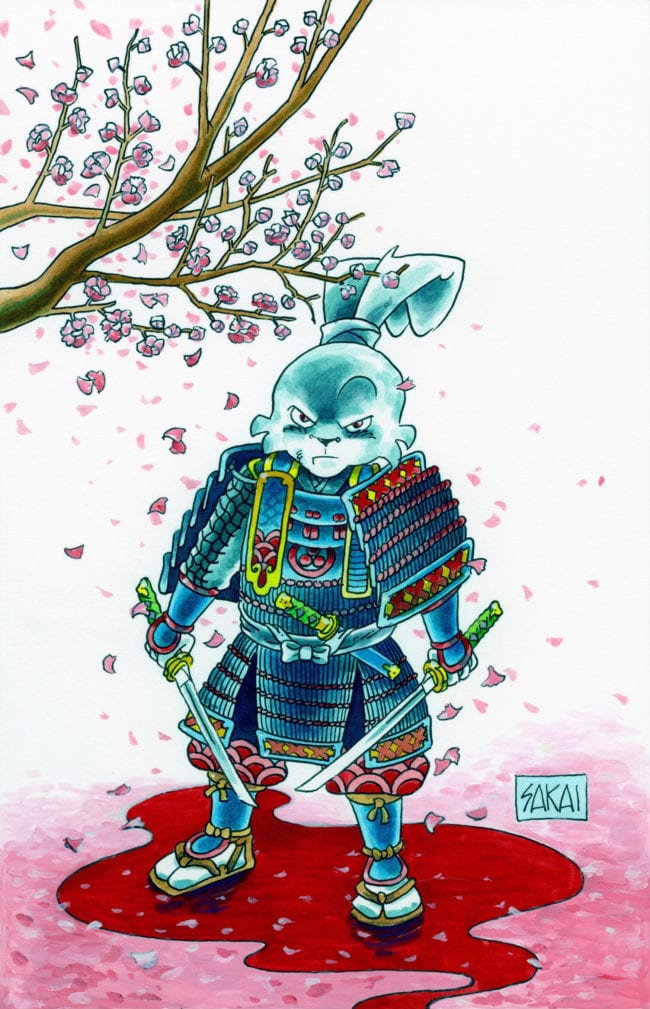
While we usually leave the product announcements up to those sites who enjoy trawling through those emails, you'd be hardpressed to find a more welcome home than TCJ to the news that IDW is going to be A) releasing some kind of Clue mini-series written and drawn by Dash Shaw and B) graced with the presence of Stan Sakai, whose Usagi Yojimbo comics is the only living competition John Wagner has in the what-a-hell-of-a-run department. 

Over at Women Write About Comics, Brandi Estey-Britt drills down into Monstress, one of the more well-regarded Image Comics of the last few years, to look into one of the comic's major point of focus, female pain, and how rare it is to find that topic dealt with as intelligently as the Monstress team has.

I try to steer clear of Scott McCloud related topics, as criticizing that guy on a random podcast back when he was a New York Times Bestseller ended up causing me no end of annoying professional conversations with people who should come up with real things to be scared of, like bears, or typhus, but I made an exception for this piece at Lithub. It's good!

There's one article I look forward to every year, an article that signals, for me, the conclusion of the previous: and that's Shannon O'Leary's survey of comics retail, which popped up at Publishers Weekly last week. (I had been wondering where it was, and now I know: it was already here!) While portions of the article can always be pulled to prove whatever point someone wants to make at the time, it's best read in its totality

Over at Popula, Nate Powell has released a weird, poorly structured, rambling piece of random, almost trivia-focused scholarship, that functions as op-ed, autobiography, and call to arms. It's excellent. I think something like this--had it been more focused, and less of an anything-goes piece by somebody who is as scared by recent developments as any sane observer would be--is a perfect argument for a part of politicized webcomics that has always been promised but rarely delivered. It's too long for print, where it probably would've ended up being edited down into a more specific, trackable argument (something with two, obvious sides), nor does it read with the type of here's-what-just-happened quality that alt weekly comics used to traffic in. It doesn't play like the type of thing you'd find at a site like The Nib, a site whose brevity often turns their comics into Rorschach tests for pre-existing arguments. No, this piece is long enough, and so all over the place, that it can't help but become the best kind of non-fiction comic--one that exists purely as the exercise of one artistic mind cruising around an argumentative prism created by its cartoonist. Unlike the ugly, dogmatic op-eds currently churned out by newspapers in search of the clicks that the internet will ultimately deny them, Powell's comic is resolutely his, one stuck in an argument that's quite clearly consumed him. Following him around, being forced to interpret how a bit of learned history leads to his personal truths, filtering into observations backed by emotion, and then concluding with a pleading, sincere concern--it's a tremendously unique experience unvarnished by any attempt to score points or short circuit a criticism. I'm down for more.


Get a Clue

Today on the site, our European correspondent Matthias Wivel returns after a too-long absence with a look at James Pisket's Dansker.

Dansker (‘Dane’) is the story of a broken man, trapped in the shadow of the Armenian genocide and by the trauma of his youth. James Pisket was born in 1953 and grew up in the borderlands between Armenia and Turkey. We follow him as he deserts the Turkish army and emigrates to Denmark, where he struggles with a death wish as he embarks upon a life of crime. Key to his survival is the relationship to his neglected children, one of whom, Halfdan (born 1985), is the work’s author.

Dansker is part of a trilogy originally published in Denmark: Desertør (‘Deserter’, 2014), Kakerlak (‘Cockroach’, 2015) and Dansker (2016) and since collected as Dansker-trilogien (‘The Dane Trilogy)’. The first volume won the Danish Ping Award for Danish Comic of the Year in 201, and the French edition of volume three was just bestowed the so-called Series Award at the international comics festival in Angoulême, France—a major recognition. Sadly, we are still waiting for an English-language publisher to sign on.

Educated at the Danish Royal Academy of Arts, Pisket spent his youth making noise as part of the musical activist group Albertslund Terrorkorps, as part of which he developed his expressive graphic symbolism, partly through poster art and other paper ephemera, partly through a number of early and ambitious but also overly earnest comics. The Dansker trilogy, however, saw him mature quickly. The rich, lived experience it transcribed was an obvious catalyst. You can see him developing by the page, from an already strong start few readers familiar with his previous work would have expected.

These comics are the result of conversations between father and son. They are characterized by fragmentary, at times almost dream-like narration, is if distilled from deeper, partly suppressed memory. Pisket himself has emphasized that it is a fictional condensation of his father’s experiences, simplified, dramatized, and clarified to ring closer to the truth.

We also have a new contributor to our Cartoonist's Diary feature, Glynnis Fawkes. Here's Day One.

Meanwhile, elsewhere:

—Tom Spurgeon interviews Aron Nels Steinke.

SPURGEON: What caused you to move from the teacher-centric material to engage first and foremost with the kids?

STEINKE: I wanted this project to be sustainable. Writing for kids is a bigger market and it was also the audience I was directly relating to day after day as an elementary school teacher. When I was making the Mr. Wolf comic strips about things that happened in the classroom I had to share them with my students. I couldn't not share them. I'd print copies of the comic strips without the text for students to fill in the speech balloons, captions, and thought bubbles. It was fun to see if they knew which moment or event I was depicting or what their interpretation was. Kids became the audience.

—For the New York Times, Ed Park reviews new political-ish books by James Sturm and Elly Lonon & Joan Reilly.

Mark, the narrator of James Sturm’s “Off Season,” wouldn’t classify himself as elite, liberal or otherwise. He’s a builder in Vermont, going through a personal crisis just as the presidential campaign enters the home stretch. “It’s hard to believe it was only three months ago that Lisa and I were together and both for Bernie,” he notes in the first chapter, which originally appeared on Slate in September 2016, with Election Day on the horizon. Separation from his wife means getting his own apartment, which means selling his truck, which means working for contractors like Mick, perpetually late with the check and with a Bernie Sanders bumper sticker on his BMW station wagon.

The class conflict is palpable. With Sanders out of the running, Mark isn’t sure whom to support. His wife knocks on doors for Clinton, but their marital split (she’s “got the house, the rich parents, and plenty of time”) sours his view of the candidate. (Hillary’s campaign slogan, “Stronger Together,” gives the chapter its ironic title.) “Not that I’d vote for Trump,” he tells himself. “But at least he’s his own man.” When their young daughter, Suzie, tells him he has to choose, he just says: “I did pick someone.” End of conversation.

Also for the Times, Maria Russo writes an appreciation of Tomi Ungerer.

A good children’s book will clearly be on the side of the child, and yet what’s striking about Ungerer’s picture books is that they so often take that side while putting adults in the central roles. Adults, after all, dominate the lives of children, for better and — too often — worse. Ungerer knew that what children wish for most of all is to get the grown-ups to see things their way.

Some of his early books have no child characters at all, including two of my favorites, “Crictor,” from 1958, and “Rufus: The Bat Who Loved Colors,” from 1961. Both are sweet through and through, yet full of alarming imagery and sudden dreadful turns.

The adults, often benighted souls, are made to look comically knobby and misshapen. The real beauties are the friendly creatures from unjustly reviled species. Crictor, a sinuous boa constrictor, is the beloved pet of Madame Bodot, sent to her by her son, who is “in Africa studying reptiles.” Horrified at first, she comes to love the snake, even, in one of Ungerer’s fantastically shocking images, “feeding it bottles of milk” as it is curled in her lap like a baby.

—RIP Stanley Donen.

Cruise Vader

Today at The Comics Journal, we're launching a new column--but unlike our other columns, this one will not have a fixed writer or topic. Instead, it'll be an old school op-ed column, publishing submissions from comics critics, creators and the like. (We're calling it "Listen To Me".) This installment of the column could also be considered a bit of an expose. At this weekend's ComicsPRO trade show, an anonymous pamphlet is currently making its way around the show. That pamphlet's author has supplied us with a full version of the pamphlet's essay, and has agreed to be publicly identified--it's Menachem Luchins, the owner/operator of comic book store Escape Pod Comics. He's got some stuff to say. While it should go without saying, i'm going to say it anyway: Menachem's point of view is 100% his own, and does not reflect that of TCJ or its editors. 

To explain, you first have to accept a hard truth, one that I have come to grips with over the course of many years: Comic Retailers are the WORST PEOPLE to help save the direct market. Bold statement right? I mean… I just said I didn’t do research, so what can I use to back it up? How could all these people with so much to lose not be perfect to help fix it, to set it on the right course? The answer is easy, really; THE DIRECT MARKET IS ALREADY DEAD AND THE RETAILERS ARE THE ONES WHO KILLED IT. Comic retailers are moaning over the corpse of their beloved while gripping the bloody knife in their hands! 

Speaking of ComicsPRO, the coverage of the show has been scattered and unusual, with sites like Bleeding Cool publishing bold, dramatic stories regarding DC's plans (including an extremely unusual claim that Dan Didio asked retailers  "not to share their complaints about DC Comics – or others – with their customers"), only to see these articles dismissed out of hand by writers at other comics news sites, amongst more alleged criticisms that Didio reportedly was angry at Bleeding Cool's articles. It's all very dramatic--the sort of drama many of those retailers probably wish could be found in a DC comic book, as it seems to be very compelling.

A personal note: I could not be more pleased to have seen multiple outlets share the news that Michel Fiffe's Copra and Chuck Forsman's Revenger comics will soon be available via new publishers (which also means they will be available in a much more accessible fashion). Along with Tom Adams, I have been printing and selling collections of Copra for over seven years and Revenger for almost as long, via Bergen Street Press. It is has been a life-changing experience to watch these stories develop, but more so to have a front row seat to watch these artists grow into the successes they are today.

It would be impossible and inappropriate to use this space to describe the personal and emotional involvement that Tom and I have had in Copra and Revenger. But I will say this: I love those comics, and the fact that I got to be at the beginning of these two people's glorious and exciting careers is an experience that I will cherish for the rest of my life. To Tom, Chuck and Michel: thank you. It has been an honor.

Smak

Today on the site, we present the final installment of R.C. Harvey's epic chronicle of the legendary feud between Al Capp and Ham Fisher. Now that the story's been told, Harvey reflects on what it was all ultimately about.

No one decided to deny Ham Fisher a place in the history of cartooning. The profession’s odd silence on the subject is not the result of deliberation and design. It is instead an accident, an unforeseen constellation of circumstances, a happenstance of personality and event, which, invested with pride and ego and jealousy and vaulting aspiration, turned ugly. The tragic end of the Fisher-Capp feud could well promote vague feelings of shame and guilt among those who stood by, feelings that were suppressed by keeping silent. Fisher’s suicide was a blot on the escutcheon of the National Cartoonists Society. And it is therefore understandable if many cartoonists fell into the habit of not mentioning it. And by avoiding the subject of Fisher’s death, the subject of his attainments is likewise shunted out of view.

While I’m delving into unconscious motivations, let me toy with one more fanciful speculation. This time, on the matter of Fisher’s motives.

Fisher’s behavior strikes me as more than a little extreme. Capp’s appropriation of hillbilly characters for a comic strip doesn’t seem to me sufficient provocation for Fisher’s subsequent actions — the tirades, the smear campaign. Psychologically speaking, when someone’s behavior is excessive for the provocation, it suggests that the presumed motivation is not, in fact, the real reason for the reaction we see. And when this happens, it’s because the real reason must not be consciously acknowledged.

Meanwhile, elsewhere:

—News. The finalists for the L.A. Times Book Prize have been announced, including five in the graphic novel category.

—Reviews & Commentary. The New Yorker has published an essay by Jennifer Finney Boylan, about how Peanuts taught her about queer identity and self-acceptance.

It was in reading “Peanuts,” lying on the floor beneath the piano in our suburban home, that I first grasped the terrible truth: my parents resided in a cartoon universe. It was Charlie Brown and his friends—children who lived in a world defined by unrequited love—who resided in the real one. I could imagine Charlie asking, with his usual anguish, “Isn’t there anyone who can tell me what love is all about?”

As it turns out, there was one person who could: Pigpen. Of all the characters in “Peanuts,” Pigpen seems most at peace with the life he has been given. Sure, he’s immersed in filth—he can “raise a cloud of dust in a snowstorm,” as Charlie Brown puts it—and Patty and Violet seek constantly to humiliate him. But Pigpen will have none of it. “Aren’t you ashamed?” Violet says to him, after making him look in the mirror. “On the contrary,” he replies. “I didn’t think I looked this good.” In a strip from September, 1954, Patty marches along with a bucket, determined to “personally give Pigpen a good scrubbing.” But when she finds him—sitting, as usual, in a sandbox—he looks clean and shiny. As she departs (“I guess there’s some hope for him, after all”) you see that only half of Pigpen is clean. The side facing away from Patty is still covered with grime.

Charles Schulz was said to have grown tired of the character in later years, in part because it was hard to write material for him outside of the one basic joke. But it’s not hard to understand his enduring appeal. He’s the closest thing the strip has to the spirit of total Zen. It would be nice, I thought, lying there beneath the piano, to live one’s life like this. It gave me “Peanuts” envy. I wondered: Did Pigpen never feel the yearning to be clean? Or had he accepted that purity was not in the cards? Was the secret of his grace that he lived in a world without desire?

—Interviews & Profiles. Vulture has a profile of Eli Valley.

There was a time, not so long ago, when Valley was an unknown and profoundly uncontroversial figure who barely engaged in the debates that he so energetically dives into today. Sitting in his cramped, comic-book-brimmed studio apartment in downtown Manhattan, I ask him about a curious professional irony that demonstrates just how much his life has changed in recent years. In 1999, Valley was living in Prague, giving tours of Jewish historical sites in Eastern Europe, and he published his first book: a hefty prose tome entitled The Great Jewish Cities of Central and Eastern Europe: A Travel Guide and Resource Book to Prague, Warsaw, Cracow, and Budapest. It proudly wore a blurb from none other than Nobel–winning writer, Holocaust survivor, and Israel advocate Elie Wiesel: “This beautiful and melancholy book is more than a guide to great Jewish cities: it is a book of tales.”

But flash forward to August 2014 and you’ll find Valley publishing a comic called “Wiesel, Weaponized” in +972 Magazine, a left-leaning outlet that covers the Israeli–Palestinian conflict. At the time, Wiesel was emphatically advocating for the Israeli side in that summer’s war in the Palestinian territory known as the Gaza Strip. In the comic, sinister Israeli scientists affix Wiesel’s head and brain to the front of a bomb-dropping drone vehicle and use it to annihilate Arabs in Gaza while spouting platitudes like, “This is a battle between those who celebrate life and those who champion death!” At the end, the Wiesel drone flies off into the sunset, muttering fragments of pro-Israeli talking points: “Conscience of humanity … Civilization versus barbarism … Arabs … Death cult … Fires of Moloch … Israel chooses life …”

The most recent guest on Inkstuds is Karl Stevens.

Max Court

Today at TCJ, we're sharing a look at one of Nobrow's most recent stabs at giving you feelings. It's called Through A Life, and it's by Tom Haugomat. They had this to say about it:

This powerfully silent graphic novel follows the saga of a boy who grows up to be an astronaut, just like he always wanted, until a fatal space shuttle crash upends his life, and he begins to find solace in beauty here on earth.

Today's review comes to us from Noah Berlatsky, but we were able to convince him not to write about Wonder Woman. This time around, he's preaching the gospel of a webcomic called Sea In You-specifically, the ability they have to manipulate the pace of which one reads a story.

Jessi Sheron's The Sea in You doesn't look like a radical formal experiment at first glance. It's a gentle webcomic about a young student named Corinth who strikes up a friendship (and possibly more) with a mermaid. Sheron began the comic in 2015; she updates it every week or two. As of this writing there are over 60 episodes.

The Sea in You has been running, then, for around four years. Reading it all at once, it's difficult to believe how slowly the plot has developed over that time. Corinth is established as a somewhat lonely, insecure kid, whose boyfriend Seth is low-key manipulative, controlling, and insulting. When Corinth is cleaning trash from the beach alone one day, she's drawn into the waves by the siren sound of a mermaid, who almost eats her, then decides not to. Corinth comes back to the beach to try to see the mermaid again, and over a number of meetings the two flirt, exchange gifts, and teach each other about their different worlds.

This is my kind of dumb shit. I'm totally here for it. What problem could this group of people possibly be the solution for? I mean, I have questions of course--when did Conan the Barbarian become an Avenger? Why did the Punisher become an Avenger? If this comic is really successful, can they please make a movie out of it? Is Gerry Duggan a good writer? Why is it that I can't get a simple art request for a positive review of a DC Comic fulfilled, but Marvel is all about hooking me up with advance information all the time? I don't care about the answers to these questions. I know this comic can't possibly live up to the radicalness that lives inside my head of what it could be, but I also know that I'm pretty down for it just on the principal that I want to know who the deadliest foes still are of these people above. The Punisher gets to kill all his foes except for Jigsaw, so does that mean that Conan The Barbarian is gonna fight Jigsaw? I feel like Conan is the real wild card here, which is a problem for me, because I personally think that there's never been a good story where Wolverine is the sane one who keeps people in line. Maybe that one where Cyclops gets super drunk trying to keep up with Wolverine, but that's not a story involving hardcore violence. Either way: I am grateful to Marvel Comics for sending press releases to The Comics Journal, because I would not have found out about this comic otherwise. 'nuff said, excelsior, so on.

The Duke of Oil

Today on the site, Marc Sobel returns with the second installment of his Strip Mine column, in which he takes $20 to a comics shop, then writes about what he's able to buy with it.

It wasn’t the best selection and the condition of most of the books was somewhere between “Very Sad” and “Near Ruined,” but what could I do? I had to look! It’s an obsession, I know, but fortunately I have a very understanding partner. Anyway, an hour later, here’s what I walked out with:

ADVENTURES OF THE OUTSIDERS #44 (April 1987)

I’m sure you’re thinking, why on Earth would I grab this random issue of a D-list super-team? Well, it certainly wasn’t for the cover by Joe Brozowski and Danny Bulandi. 

Let’s take a closer look. Geo Force, whose costume looks like it was designed by an 8-year-old, has a right arm protruding from his neck and a dislocated left shoulder, probably caused by his exploding forearm. Then there’s the awkwardly posed damsel, Dr. Jace, who can’t decide if she’s falling down or not. Maybe she’s just disoriented by the complete lack of any background? It looks like a bluescreen scene that never made it to the effects department. And, of course, there’s the groan-inducing villain, the Duke of Oil (whose real name is Earl J. Dukeston, get it?). 

To be honest, I never read an issue of The Outsiders before.[2] I couldn’t even name the characters (what happened to Ponyboy?). All I knew was that they inexplicably liked to team up with Batman, so obviously the story made little sense. There’s a bunch of soap opera plotlines and the whole thing ends with the old beaker-of-acid-to-the-face-reveals-the-villain-is-really-a-robot twist. If I had a nickel…

So why did I buy this book?

We also have Chris Mautner's review of Rina Ayuyang's Blame This On the Boogie.

What a warm and wonderful book this is, bursting with color and life, wise about the ways of the world and its ugliness, but steadfastly refusing to succumb to despair. I did not realize how much I needed to read a comic like this until I had it in my hands.

Ostensibly a memoir, the first half of the book (and, I suspect, most recent material) recounts Ayuyang’s youth, growing up as a Filipina-American in 1970s-era Pittsburgh. The youngest of four, she chronicles with a keen eye for detail (who here actually remembers the decorations hanging in their seventh grade classroom?) a mostly happy childhood filled with music, noise and love.

But it’s not as through bad times don’t exist, and Ayuyang does not shy away from depicting the struggles of being a first-generation American, trapped between your family’s culture and the one that surrounds you, not to mention having to deal with bullies, racism, bad teachers, and having to give a big presentation to the seventh grade class. Yet young Rina brushes them off like the proverbial dirt off her shoulder, perpetually enthralled by pop music, TV sitcoms and old movie musicals.

Meanwhile, elsewhere:

—News. Ivy Noelle Weir and Christina “Steenz” Stewart's Archival has won the fifth annual Dwayne McDuffie Award for Diversity in Comics.

—Reviews & Commentary. Liza Donnelly writes about the cartoons of Barbara Shermund.

Shermund’s early sales to The New Yorker were paintings for covers, but she was a prolific artist, and soon began contributing cartoons. As far as we know, she wrote her own captions (which is not always the case with a cartoon; sometimes a gag writer comes up with the captions). She kept a pad and pencil under her pillow at night in case an idea struck. Throughout the Roaring Twenties, her cartoons reflected what it was like to be a flapper, a “new woman” navigating Manhattan. Her work represented what Ross was looking for: sophisticated humor that spoke to the urban demimonde of the day. Shermund’s women seemed to be in charge of their lives and talked about their dreams and ideas. Her women did not seem to need men, and some of her captions hinted at homosexuality. Her women were confused, too, because the roles for women were changing, often not fast enough.

John Holbo writes about Wally Wood and Witzend.

Wally Wood drawing chicks and sort of noodling around with half-digested notions of Freud, plus second-hand Tolkien high fantasy tropes is just not great comics. It lacks vision and direction.

I feel that the same is true for a lot of the stuff in witzend. When they were let loose … they didn’t have a lot to say. Graphically, a lot of it is really beautiful, but no one involved seems to be fired with any brilliant idea about what new worlds comics should conquer now. Some of it is very retro. Edgar Rice Burroughs sword&sandals&sorcery stuff. Some of it is random hippie. Some of it is pretty sour in the toxic masculinity department – but not much. Mostly it just kind of drifts.

It’s like Wood and co. got to pretend they were they pent-up geniuses, when the squares at Marvel and DC made ‘em obey the Comics Code. But it turns out that they did better work pent-up. It’s like the final episode of LOST. Wood was so much more magic when you could imagine all the wonderful stuff he could have done if they’d let him.

It’s true that witzend paved the way for RAW and other comix and underground stuff. There’s other stuff coming, and Wood is rightly remembered as godfather to that. I get why everyone involved wanted freedom. But it feels … exhausted.

—RIP. Ken Nordine.

Unlucky

Today on the site, we have an obituary for Tomi Ungerer, written by Gary Groth, who interviewed the late artist at length for the most recent print issue of TCJ.

Ungerer famously arrived in New York in 1956 with sixty dollars in his pocket and two trunks of drawings and manuscripts that he intended to show to publishers. What finally spurred him to move to New York, he has said, was jazz: “I was a big jazz fan, I thought I would be able to see some jazz.” He was disappointed in the jazz scene he found there, but he nonetheless took  to Manhattan, and for the next fifteen years wrote and illustrated children’s books and drew countless images for posters, magazines, advertising, and satirical books. According to Ungerer, he showed his portfolio to the pioneering editor Ursula Nordstrom, who told him to come up with a children’s story. He did, and the result was The Mellops Go Flying, quickly followed by The Mellops Go Diving for Treasure, both published in 1957, both enormously successful. Between 1957 and 1973, he wrote and drew twenty-two children’s books, as well as illustrated numerous children’s books he didn’t write. Ungerer shared his contemporary Maurice Sendak’s belief that stories for children should not be sugarcoated, that, in fact, children should have to wrestle with the reality that awaits them, which will include fear and loneliness and pain. “Why am I the pedagogues’ nightmare?” he once asked. “They think I traumatize children. They think children should be loved and protected. But if you do only that, they’re not ready for life.”

Meanwhile, elsewhere:

—Maria Russo has an appreciation for Gary's last big interview subject, Maurice Sendak, in the New York Times.

The third book in the trilogy, “Outside Over There,” published in 1981, covers its darkness of theme with ravishingly beautiful, painterly art. In this book, Sendak is inviting us to grapple with adolescence and its definitive break with the securities of childhood. Hence the more grown-up aesthetic: The archaic cadences of the words and the ornate, cascading illustrations evoke German Romanticism, and also the music of Mozart, which Sendak adored. So long, streetwise 1970s urban vernacular. We’re in the Reagan era now, where leftward-leaning free spirits must find solace in their living rooms, immersed in a PBS-style classicism. Yet the book is not offering some idealized vision of safe, genteel life — far from it. The protagonist, Ida, has a green-eyed prettiness, her hair soft, straight, long and honey-colored, her dress ruffled and draped just so, but her bare feet are enormous and wide, like someone who digs up potatoes in a shtetl.