What Happened?

Well I'm back. I think I missed a lot. There were raging debates about Tucker Stone, MoCCA, Green Lantern, and so many other pressing topics. I missed all of them. Such is life.

So, on we go. Today on the site:

Cartoonist Ryan Cecil Smith, whose work you may have seen via the Closed Caption Comics crew,  joins us as our diarist for the week. And yesterday brought the fourth installment of Frank Santoro's excellent "New Talent Showcase" series. This one opens with a statement on the form.

And elsewhere online:

The New York Times mysteriously turned into a comic book magazine over the weekend, complete with a lengthy article on the brouhaha at Archie, a book review round-up from Douglas Wolk, and a piece on Robert Crumb's latest museum exhibition, which includes the priceless exchange:

Early in the news conference, Mr. Crumb took the lead in questioning, turning to Fabrice Hergott, the museum’s director, to ask how the show came about: “Was there an argument? Was there resistance?”

“It was not so easy,” Mr. Hergott confessed. “The team of curators was not so sure that you were an artist for this museum, that you belonged to the classical world of art.”

Mr. Crumb did not seem distressed. After all, he admitted, he is not a museumgoer. “I went to the Louvre once,” he said. “I don’t really like museums. You get too close to the art, and the guard is going to yell at you.”

Yesterday Tom Spurgeon posted a great work-based interview with Brandon Graham.

And here's a nice look at an exhibition entitled 77 Years of Romanian Comics.

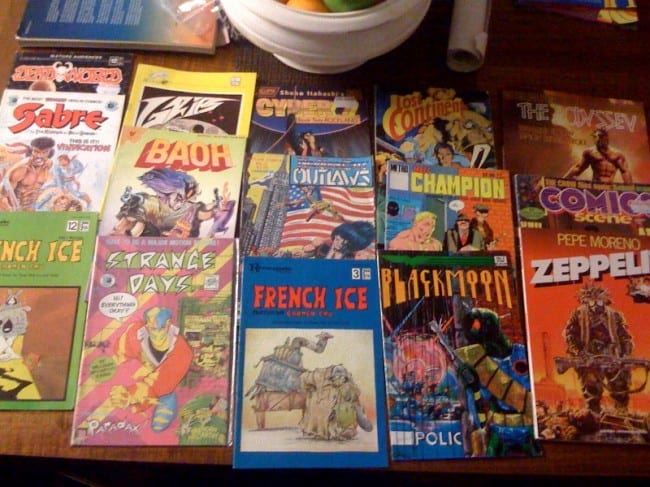
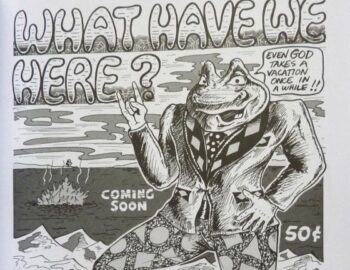
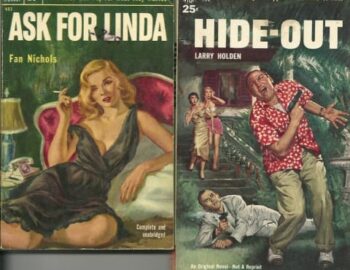
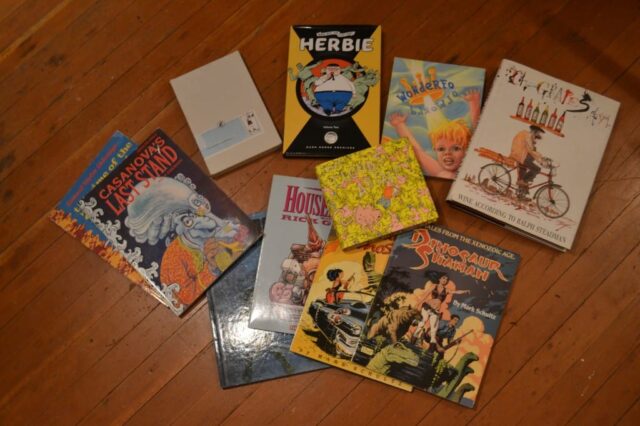
Finally, cartoonist and Kramers Ergot editor Sammy Harkham reports in from Sydney, Australia, where he found all of the comic books pictured below in a 50 cent bin at his favorite comic book store. Ah! Life!

Making a Stand

Today Tucker Stone is back with another look at the best/worst/most otherwise notable genre comics of (his) reading week, and this time he wonders when superhero comics starting revolving so much around emotional breakdowns?

Off-site you can find:

—A double-dose of Eddie Campbell, both in an interview about his upcoming Lovely Horrible Stuff, and in Bob Heer's review of the recently released iPad app version of Campbell's Dapper John.

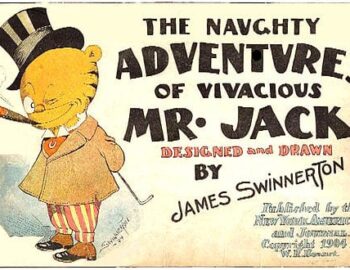
—A recently discovered 1963 audio interview of the then-88-years-old Jimmy Swinnerton!:

(Thanks, Jeet!)

—Joe Sutliff Sanders wondering about the prevalence of lowbrow allusions in comic books.

—Tom Hart, the beloved Hutch Owen cartoonist and SAW co-founder, has revealed that he is the mystery man behind the recent Shit My New Yorker Cartoons Tumblr, and he explains his motivation here.

—Finally, the cartoonist Dustin Harbin has reposted the Doug Wright Awards comic diaries he did for this site last year, along with an enormously long manifesto about the changes he would like to make to the Eisner Awards. If you are the type who likes to argue about award nominating processes, this will provide a motherlode of things to agree and/or argue about.

Out of a Catalog

Today on the site, Rob Clough weighs in on Tom Neely's self-published art-book/graphic-novel hybrid, The Wolf.

Today off the site, you can read the following:

—For the Financial Times, D'arcy Doran profiles Drawn & Quarterly, with an emphasis on the renaissance it's gone through over the last four years.

—Chris Arrant catches the very welcome news that industry mainstay Bud Plant is back in business. Readers under thirty or so will never understand what the Bud Plant catalog used to mean.

—Another day, another Dan Clowes interview. Luckily, they're almost always entertaining, even when they go over familiar ground. This time, Casey Burchby talks with Clowes about his new art book, his first museum exhibition, and current projects.

—Howard Chaykin gave a refreshingly blunt short interview to Comics Anonymous, saying things like the following: "Since [my '80s/'90s peak] I’ve done nothing that I’m ashamed of. I did plenty of work I’m ashamed of before that but nothing since. I did some shit stuff because I didn’t know what the fuck I was doing. Inadequacy is often its own reward. I did the Star Wars comic in the '70s and if I’d have know It was going to be as big a hit I would have done a better job.”

—Today is interview day, I guess. Daniel Best has republished a super-entertaining 1975 talk with Jack Kirby. Sample quote: "World War II lent itself to good dramas. The whole thing could have been written by some hack out at Warner Brothers. It was a black and white issue with a villain who was so completely evil that it was just made to order. Anything you did in World War II was an act of nobility. If you hung Hitler or killed hundreds of Germans, you were on the side of the Angels. I once got a letter from a Nazi who told me to pick out any lamppost I wanted on Times Square because, when Hitler arrived, they'd hang me from it. It was typical of a genre of fans who have long since died out."

—The latest Alan Moore interview for British television that's been going around is now on YouTube.

http://www.youtube.com/watch?v=OAfXSgRxQEc&feature=relmfu

http://www.youtube.com/watch?v=tn95a3gGaW0&feature=relmfu

—And finally, Colin Smith puts a lot of thought into the best ways to hook the unconverted into superhero comics, and all I can wonder is why would you want to do that to people?

Loaded

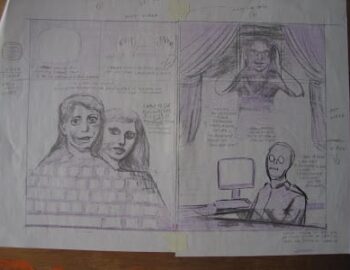
One of the last true gag cartoonists standing, Magic Whistle's Sam Henderson, walks us through his process, which involves a lot more preparation and revisions than many might expect.

And Kent Worcester reviews a cultural history of British comics written by James Chapman. An excerpt:

The best-selling comics magazine Viz, launched in 1979 (and reaching sales of 1.2 million in the 1990s), is very much in the juvenile-yet-class-conscious tradition of The Beano, even if its scatological joke-telling goes way beyond anything that would be allowed in titles published by either D.C. Thomson or the Amalgamated Press, the “big two” oligarchs of British cartooning. The names of Viz’s most popular characters – Johnny Fartpants, Buster Gonad, Billy Bottom, and Sid the Sexist – probably convey better than anything else the magazine’s distinctive brand of humor. In discussing Viz’s meteoric rise, Chapman usefully quotes from George Orwell’s famous essay on seaside postcards: “it will not do to condemn them on the ground that they are vulgar and ugly. That is exactly what they are meant to be. Their whole meaning and virtue is in their unredeemed lowness, not only in the sense of obscenity, but lowness of outlook in every direction whatever.”

Over the barricades—

—Neal Kirby remembers growing up with Jack for the Los Angeles Times:

There were a lot of cigar-chomping characters in Marvel Comics and Dad was one of them — he and other writers and artists popped up in stories in a quirky trademark of the “House of Ideas,” as it was called in the 1960s. Personal parts of his life often crept into his work too. When recounting the creation of the Fantastic Four, for instance, he laughingly confessed that Sue Storm was named for my sister, Susan, and the “Storm” could be considered a bit of personality commentary. When he saw the expression on my face he appropriately apologized for the fact that he never got around to making Neal the name of the Human Torch, an Inhuman or even some low-ranking Skrull.

This is a good one. Don't miss it if you like Kirby.

—Charles Forsman has created a new website called Muster List, intended as a comprehensive directory for finding mini-comics and sending visitors to the best online sources for purchasing them. (via)

—Illogical Volume at the Mindless Ones takes a thorough look at the reprinting controversy du jour, the recoloring of Flex Mentallo.

—And finally, Daniel Clowes interviewed by Mark Frauenfelder at Meltdown (via everybody):

Village of the Damned

R.C. Harvey stops by this morning with one of his inimitable forays into comic-strip history. This time, he writes about Ernie Bushmiller's Nancy, and the semi-secret cult still surrounding it. An excerpt:

Bushmiller worked nights mostly. He began about two o’clock in the afternoon and sat at his drawing board into the wee hours and often into the morning of the next day. “I work on a schedule that produces six daily Nancy and Sluggo strips between Sunday and Tuesday evenings,” he wrote in a autobiographical article in Collier’s (September 18, 1948). “The Sunday page evolves after I’ve taken Wednesday and Thursday off. If this sounds confusing, then you have a fairly accurate picture of a newspaper cartoonist’s life. Unlike other strip cartoonists, I draw the last picture first and work back to toward the beginning, which is exactly the opposite of the way you read it (I hope). I know a guy who draws his cartoons upside down, so I don’t worry much about drawing backwards.”

In conjuring up jokes, Bushmiller came to rely to a great extent upon props, and in so doing, he gave the strip its unique flavor. Describing his method, Bushmiller said: “I jot down items such as toaster, leaky roof, folding chair, mail box, windy day—anything that comes to mind. Looking at the advertising in a magazine also helps, or a Sears Roebuck catalog. When I find an item that seems likely, I start to kick it around in my mind to see if I can work out a funny situation. Let’s say I see an ironing board. I start to think about what can be done with an ironing board, and I pretty soon get an idea.”

Joe McCulloch is around again, too, with his weekly look at the most interesting new comics in stores—plus an online bargain you might be interested to see.

Elsewhere, Journal contributor Nicole Rudick has a review of Kramers Ergot 8 at Hyperallergic.

Darwyn Cooke talked to Rolling Stone about his participation in Before Watchmen, which has predictably led to a lot of online derision. I do think it's kind of interesting that he shrugs off the immorality of working on this particular title by pointing to the larger ambiguous morality of working on non-creator-owned comic books in general. That's not the hill I'd choose to die on but he has a point. (Also, it's funny that he describes himself as being "dragged kicking and screaming" into the project, but then admits that some time after he first declined to participate, he called Dan DiDio up and and said he hoped there was still room for him to join in. A strange form of kicking and screaming, that.)

Via Mark Evanier's blog comes this video of a 1983 visit to the Mad magazine offices:

As you've probably read in one of the five hundred comic sites that have run with it so far, artist/conman Thomas Kinkade has passed away, and the animator Ralph Bakshi (who gave Kinkade his start) has released a statement about it. Here's a brief excerpt:

As far as the art world, the CRITICAL ones shrugging Tom off, as they sell a shark in oil, and polka dots in 12 -- count them, 12 -- galleries at once in one opening, and all the other mindless hype...

They miss the true brilliance that is Kinkade.

Kinkade painted the brilliant landscapes of the religious right, the Tea Party and all the other Rush Limbaughs in America. He's selling back what Americans want. This is the most homespun vision of the distorted right and nostalgia-looking Americans reaching for purity without knowing what it really is -- all through his landscapes.

IT'S BRILLIANT, and goes by every art critic and major museum in the world. I love it. And it's just that that [which] I made my movies about -- the blind, pretentious and ugly.

Heidi MacDonald called this a "touching tribute," which isn't exactly the phrase I'd use... I suppose it is a bit more nuanced than the take on Kinkade Bakshi gave to Vulture in 2008:

He's a good painter, and he did a spiel. He made all these deals. How he went out and did what he did is beyond my understanding now. He's very, very talented, and he’s very, very much of a hustler. Those two things are in conflict. Is he talented? Oh yeah. Will he paint anything to make money? Oh yeah. Does he have any sort of moralistic view? No. He doesn't care about anything. He's as cheesy as they come.

I Can’t Post, I’ll Post

As longtime readers know, Frank Santoro's Riff Raff column has taken many forms over the last year (if you started following this site more recently, it's worth going back to the beginning), and now he continues its latest incarnation: the "New Talent Showcase". This week, he covers Noel Freibert, Zak Sally, and Olivier Schrauwen.

Also, noted Game of Thrones enthusiast Sean T. Collins contributes a review of the new graphic novel adaptation of the George R. R. Martin novel. Excerpt:

“Catelyn! What are you doing?” Lord Eddard Stark asks his wife. “Lighting a fire,” she replies on the other side of the panel. In that panel she is putting on a robe.

Nothing I could come up with on my own would better communicate the clumsiness of this well-intentioned but nevertheless egregious misfire of a comic.

Unforeseen circumstances have detained Dan's return to the site, so I will be your solo host/guide a while longer. My apologies for not having many links this morning.

The aforementioned Zak Sally was interviewed by Chris Mautner over at Robot 6.

And Paul Gravett has a nice, long rambler of an interview with Robert Crumb.

A Day Like No Other

It is with red and brimming eyes that we must say goodbye to Dylan Horrocks today, who has turned in his fifth Cartoonist's Diary entry for us.

Tucker Stone seems a little out of sorts himself this morning, though for his own reasons (read: he spends too much time thinking about superhero comics). Experience his crackup in real time in the latest installment of Comics of the Weak.

And Matthew Thurber and Rebecca Bird team up to join our stable of reviewers, with a jointly written appraisal of Bill Griffith's mammoth retrospective, Lost and Found.

Elsewhere, new dad Dan Nadel has an article on David Shrigley for the Brooklyn Rail.

BK Munn entertainingly argues with the cover feature from the latest issue of Broken Pencil, which itself is an attempted take-down of "high-art" zines from the likes of people like Marc Bell and Amy Lockhart.

Brandon Graham always gives good interview.

Finally, and not really comics, the online reaction (shock, outrage, supreme umbrage) to this fan- and critic-baiting New York Times interview with The Wire creator David Simon reminds me more than a little of whining and hurt feelings that appear whenever Alan Moore gives a cranky interview dismissing dumb comic books. I don't think I will ever understand why people take these kinds of comments from artists personally. Simon got up peoples' noses by saying that it is impossible to accurately judge a television show's success until the whole thing can be seen. This is true. Critics get mad because what are they supposed to do? Wait five years before reviewing a series? What they are supposed to do is not care what David Simon thinks about them. You aren't writing for the artists, you're writing for yourself and your readers. And that goes double if you aren't even a critic. The only reason to care if Alan Moore thinks you're too dumb to read his comic is if you have a sneaking suspicion he may be right. In which case, go hit the library or take a class or something. Jeez.

Happy Pesach and/or Easter, et cetera.

Polder

Today, we bring you the long-awaited return of Jeet Heer! (May it be a harbinger of things to come.) Yes, our Canadian friend is back with a thorough and revealing look at the newly re-published and expanded edition of the first volume of The Complete Crumb Comics. Here's an excerpt:

The Complete Crumb Comics Volume One: The Early Years of Bitter Struggle, a 1987 book now republished in an expanded edition, gathers together the earliest surviving examples of the great cartoonist’s juvenilia taking him from age 14 or 15 to 18 years old. The high school scribbler that we meet in these pages is a very callow Crumb indeed: Crumb before he had sex, Crumb before he dropped acid, Crumb before he was adopted as a hero of the counterculture, Crumb before he honed his satirical stance on modern life, Crumb before he became the most radical, polarizing and influential cartoonist of the late 20th century. Yet in the lanky and awkward body of the teenage Crumb we can see the outlines of the substantial artist he would become.

Dylan Horrocks, the man from New Zealand, is back again, too, of course, with another day of a week in his life. This time around, he struggles with writing a book review. I wish he would stay and keep doing these diaries forever.

Over the barricades, life is stirring. First, the Eisner award nominations were announced yesterday. You can see the list here. Based on a fairly casual appraisal, it seems to be a relatively solid list as these things go, aside from a few exceedingly odd titles and names conspicuous by their absence (cough cough Love and Rockets). In any case, congratulations to all the nominees.

Terry Gilliam gave an interview to Vulture about a new Monty Python app (or something) and spent a surprising amount of its time talking about comics, from his problems with England ("The first thing that bothered me was that the English didn’t have a tradition of comic books here.") to superhero movies ("Irony comes to play here: I’m stuck in England while Hollywood is doing what I wanted to do 30 years ago. [...] But they’re becoming repetitive for me. I’m getting bored with them, frankly. I just want to see something different. What I loved about comic books is that comic books were outsider art, and so they could say and do things that were much more punchy. But that’s not what Marvel is up to at the moment.") to Moebius ("Extraordinary stuff! Beautiful looking, funny, sharp, sci-fi on a level that you really want to work at."), among other things.

In McSweeney's, Robb Fritz has a long essay about the meaning of Snoopy. (via)

Journal columnists news update: Tucker Stone reviewed Derf's My Friend Dahmer for Comixology, and Frank Santoro is selling pages from Kramers Ergot 8.

Robin (Inkstuds) McConnell has an Emerald City Comicon photo-report up if you didn't get enough from Tom Spurgeon's earlier this week.

And finally (and only tangentially comics-related): Chip Kidd talks book design at TED:

(via)

Slow Day

Dylan Horrocks is here with day three of Cartoonist's Diary. Today, he teaches a class, and ponders how many cartoonists there are whose work he's never read.

And Sean T. Collins reviews the most recent Jaime Hernandez Love & Rockets digest, Esperanza. An excerpt:

The central storyline of Esperanza's first half isn’t Izzy’s downfall at all, but Maggie’s struggle to account for the discrepancy between the woman she is now — a responsible professional with professional responsibilities, who likes to stay out of trouble, who maybe wants more out of her best-friend-with-benefits Hopey than the friendship and the benefits, and who can’t tell if that relationship is the exception or the rule with regards to her sexuality — and the girl she was when she first came to define herself as a person — a carefree hellion whose folie à deux with Hopey was, as best she could tell, the center of everyone’s universe.

Outside our compound walls: I don't know how I missed this earlier, but Journal columnist Craig Fischer recently started a blog, Fischer on Comix, which seems to be both a repository for older work needing a home and a few new posts as well. His recent essay on Taniguchi is a highlight.

It's also been a while since we've linked to Journal columnist Rob Clough's personal site. If you like the comics he reviews here, you really should bookmark or subscribe to Clough, because he's one of the few reviewers out there really devoted to consistently covering these small-run, obscure, and usually deserving works. He's been in a posting frenzy over the last few weeks, so there's lots there to read if you haven't visited in a while.

Finally, David Brothers has the visual proof of Marvel's priorities in terms of creator credit.

Ding Dong Daddy

Dylan Horrocks continues his week of Diaries for us. Today, he includes everything he drew during a single day, and dreams.

Joe McCulloch has the word on this week's comic books, plus a short look at David Hine and Shaky Kane.

And Rob Clough reviews the latest issue of the surprisingly under-discussed Mineshaft, still possibly the best-kept secret in comics.

Elsewhere, I'm a big fan of most everything Tom Spurgeon writes, but even if all he ever did was put together his signature, unending bullet-pointed convention reports, like the one he just made for the Emerald City Comicon, I'd be happy.

Finally, over at the Hooded Utilitarian, Ng Suat Tong is taking nominations for the best online comics criticism of the year so far, and also explains that last year's survey didn't happen mostly because of a lack of energy among the participants. (I was wondering what happened.) I served as a judge in Suat's survey for 2010, and although I wasn't completely enamored with all the winners, I found it to be an overall enjoyable experience. It makes sense to open nominations to everyone—if I recall correctly, that seemed to be the weakest link in the survey the year I participated: most of the judges' choices were obvious last-minute picks, often not-so-coincidentally published a few days before our nominations were due (and thus, easier to remember). Anyway, Suat runs a good survey, so if you enjoy this kind of thing, I recommend it.

Suat also offers a typically bleak (though not necessarily wrong) assessment of online comics criticism today, along with mostly kind words about this site. As Suat isn't one to mince words, the compliments are appreciated. He also worries that perhaps the online comics commentariat has grown too monolithic. I suppose he has a point. But six years ago, Dan, Frank, and I felt the same way, and started Comics Comics to do something about it. There's nothing stopping anyone else from doing the same thing now. It isn't exactly expensive to run a blog. And there are ten thousand people just waiting to link to or read something, anything intelligent about comics.

Shuffle Feet, Shuffle

First of all, congratulations are in order. Dan is now a new father, and the TCJ.com curse of fecundity continues. Welcome to the world, Henry!

And now, your daily comics reading: In his most recent column, Frank reviews new books from wunderkinds Michael DeForge, Jesse McManus, and Charles Forsman.

The great Dylan Horrocks has accepted our invitation to join our pantheon of contributors to A Cartoonist's Diary. His first entry is online today.

There's a really nice, substantial profile of Dan Clowes in the New York Times, coinciding with his first museum exhibition at the Oakland Museum.

And here's video footage of a recent interview Clowes gave at Kadist in San Francisco:

Slate has excerpted Art Spiegelman's introduction to a new book on the Garbage Pail Kids, in which he relates part of the story of their creation.

And here's Charles Burns talking for an hour-plus! (I haven't been able to watch this yet, but it's first on my to do list when I get some spare time.)

(via)

Our own Chris Mautner has a "Comics College" entry on Scott McCloud.

The graduating students at my alma mater (and Dan's, come to think of it) are underwhelmed to learn that a cartoonist has been chosen to be their commencement speaker. Normally, I'd consider that to be amusing news only to me and a very small group of others, but since Alan Gardner's writing about it, I guess the universe does revolve around me and my interests.

Per Mark Bode, thirty-five years after raising eyebrows with Wizards, a movie with a style and characters that seemed to closely ape Vaughn Bode's, Ralph Bakshi has called up and apologized.

Alan Moore's Neonomicon is the first graphic novel ever to be given a Bram Stoker Award. In his acceptance speech, he notes, rather interestingly for those who have read the book: "As is often the case when one’s work crosses personal boundaries, I spent a long time in fretful deliberation over Neonomicon and six months after finishing the work was still uncertain as to whether it was good or even publishable."

And finally, Andrei Molotiu takes (or follows) Jack Kirby to the art museum.

Sputtering

Hopefully, you've all gotten a chance to read Michael Dean's assessment of the Museum of Comic and Cartoon Art's accomplishments yesterday. Today, we have the promised supplementary feature: Dean's interview with Lawrence Klein, MoCCA's founder. Here's an excerpt:

DEAN: Do you ever feel frustrated with some decisions being made? Like, “Why is this thing being done that way?” or “Why didn’t they consult me about this?”

KLEIN: I don’t look at it like that, because I don’t want them consulting me! I don’t want to be bothered! [Laughs.] No, I want to give it a chance to grow and be what it is. Sure, there’s a time or two where I’ll say, “Huh, interesting decision. I’m not sure why they did it, but they must have felt that it was the right thing to do.” I haven’t seen anything outrageously crazy that would make me say, “I’ve got to step in and end this, or I’ve got to step in and take over.” But one of the things I tried to do with MoCCA was, in essence, to be a benevolent dictator. Listen to everybody and get everybody involved, but make the final decisions. To do what we did, at the time we did it, you needed focus. A strong focus. There were so many things that everybody wanted to do, but we couldn’t do everything. We wanted focus, and we wanted me to lead based on that focus. And that needed to happen.

And then, of course, we have the latest installment of Tucker Stone's Comics of the Weak column. Can you believe it was only three weeks ago he started doing this? I can. I'm still not used to getting up this early in the morning to edit.

Elsewhere, John Hilgart of 4CP fame has inaugurated a new column of his own over at HiLobrow, revealing the mysterious sources for his previous work.

Robert Boyd reviews Kramers Ergot 8.

Robert Birnbaum has a great, lengthy, meaty interview with Ben Katchor up at the Morning News.

David Chelsea has posted a part two for his post on perspective and Ivan Brunetti from last week.

And the Wright Awards nominations have been announced.

It’s Happening

Today on the site:

Michael Dean has written an extensive article on the history and current state of New York's MoCCA. Here's a taste:

The MoCCA festival has flourished and a series of varied educational programs sponsored by the museum continues to thrive. As for the museum itself, well, at least it’s still here, and that’s more than some comic-art museums can say. It hasn’t gone virtual the way Kevin Eastman’s Words and Pictures Museum did in 1999. And it hasn’t been absorbed by a university like Mort Walker’s Museum of Cartoon Art, now a resident of the Ohio State campus. But if MoCCA is a success story, it’s also a story of compromises and struggle. It’s a story that may have much to tell about the place of comics in the East Coast art world. Because, for better or worse, MoCCA is the high-water mark for the level of respectability that comic art has been able to carve out for itself in its home town.

On Friday we'll have a separate interview with the museum's founder, Lawrence Klein. Also up today is Austin English's review of the comic book Raw Power.

Elsewhere:

-Bart Beatty on the late comics-focused librarian and organizer Kristiina Kolehmainen.

-Paul Karasik has a report straight outta Dekalb, where his "Graphic Novel -Realism" exhibition is on display.

-There's a whole bundle of posts over at Blown Covers about the great Miguel Covarrubius, all drawn from The New Yorker archives.

-I always enjoy the work of J.H. Williams, and here he is breaking down his process for a Batwoman cover.

-Hey, Johnny Ryan has a new zine out. That can't be bad.

-And here's a preview of the forthcoming Dan Zettwoch book, Birdseye Bristoe. One can never have too much Zettwoch. I'm looking forward to this one.

Mo’ Art, Mo’ Problems

It's a great day for podcast fans, with Mike Dawson talking to Craig Thompson for the latest episode of TCJ Talkies. When his Habibi was released last fall, Thompson seemed to appear on every podcast produced, even those devoted to things other than comics, like fishing and plumbing, and so we decided to hold off until a bit later and see if it wouldn't make for a slightly fresher interview. Now we find out if that strategy worked.

Also, continuing the sex-in-webcomics theme started by Shaenon Garrity earlier this week, Sean T. Collins contributes a review of the anonymously produced q v i e t.

Elsewhere, Mahendra Singh has started his series of posts on the work of Moebius with a very technique-heavy look at Airtight Garage, which he provocatively links to the Goldberg Variations.

Graeme McMillan doesn't like the term "artcomix." What he may not realize is that no one likes the term artcomix. And that's true whether it's spelled as one word or two, with an x or an s. But the alternatives (such as "alternative comics") are pretty bad, too. And a shorthand way of differentiating between stuff created by artists who are trying and those who are merely fulfilling a commercial formula is often very helpful, at least for those of us who regularly write about comics, so this dilemma isn't going away very soon.

The anonymous fellow or lady behind that New Yorker cartoon critique Tumbler from a couple weeks ago explains the philosophy behind the site more here and here.

Chris Stigliano reviews the new Nancy collection.

Finally, I don't believe we've mentioned yet that Sparkplug Comic Books is holding a fundraiser to publish several new books. I know I just wrote last week that I tried not to link to these kinds of things, but this too seemed worth an exception.

This Glittery One is Done

On the site: Jog brings us the Week. I wish Jog did this for all my weekly intake: Food, entertainment, humans. Etc. And we're pleased to re-present Bob Levin's 2008 interview with S. Clay Wilson. A real TCJ highlight from the last handful of years. Also, Bob added the following note, which we should all pay attention to:

A few months after this interview took place, Wilson sustained disabling brain injuries requiring special care. Contributions maybe sent to Wilson’s Special Needs Trust, PO Box 14854, San Francisco, CA 94114.

[UPDATE FROM TIM: Here's a link to the online home of the trust.]

Elsewhere:

Drawn & Quarterly's Tom Devlin, Pascal Girard, Matt Forsythe visited a school in Montreal and Tom wrote up a typically entertaining report.

Hey, Kate Beaton has a great new comic up that is far into new territory.

Frank Young reports news about his David Lasky-drawn graphic novel that many of us will be excited about: "I just turned in the last color pages for our long-in-progress graphic novel Carter Family Comics: Don't Forget This Song!"

Shit My New Yorker Cartoons Says continues apace, with a read through of this week's issue.

-More of my deranged interest in E.R. Burroughs: A John Carter story maybe drawn by his son, John Coleman Burroughs.

-Apparently before it was scuttled the Akira movie produced some decent looking storyboards.

-I've never seen this very nice Howard Chaykin story from the 1970s...


Early Rising

In his column yesterday, Frank Santoro reviewed a selection of new comics, both with staples and without, from Julie Delporte, Dane Martin, Jack Hayden, Aidan Koch, and Mardou.

Dan Nadel enthuses about the latest Wally Wood "Artist's Edition" from IDW:

It is easily one of the best books of comic art ever produced. It’s like the first Little Nemo book that Pete Maresca produced: An entirely new way to look at a comic art great; it’s also one of the finest books of drawings I’ve ever seen.

And Shaenon Garrity returns with another webcomics column, this time focusing in on the world of online smut:

We may be seeing a renaissance of high-end webcomic raunch, comparable to the era in print comics when titles like Omaha the Cat Dancer, ambitious indie comics that just happened to feature a lot of sex and nudity, were taken as seriously as Cerebus. (In retrospect, Omaha is starting to look like the better comic.) The new indie smut is witty, cheerfully explicit, gorgeously drawn, and takes advantage of the ever-widening audience on the Web.

In other news, Justin Green reports some sad news regarding underground legend S. Clay Wilson's health, and explains how interested parties can help.

[UPDATE: Here's a link to the online home of the S. Clay Wilson trust.]

In two new posts, the R. Crumb website has posted several more of the artist's short and sometimes surprising takes on various figures, ranging from George Herriman ("I admire Herriman’s stuff, but you know I’m not as crazy about him as some people. You know, that kind of funny, little esoteric thing he does in Krazy Kat, it doesn’t grab me that deeply.") and the Beatles ("Some of the last stuff they did, you know, it kind of gets dark, and that’s more interesting to me, the last stuff they did before they broke up.") to Jim Morrison ("He just seemed like a kind of puffy-looking, overweight guy who was burned-out from too many drugs. He just sat in the corner kind of mumbling.") and Garry Trudeau ("I could never read one of his strips to the end. Those sleepy-eyed characters, I just found the drawing style so annoying I couldn’t even read it.").

David Chelsea analyzes the use of perspective in Ivan Brunetti's recent New Yorker cover.

Gliberzarian

Today on the site we mark the one week anniversary of Tucker Stone's column. Tucker, your bonus is coming via carrier pigeon direct to your rooftop cage.

Elsewhere online we have all sorts of things. Here's James Romberger on Jaime Hernandez. And, why, here is a lengthy timeline of the Neil Gaiman-Todd McFarlane lawsuits. In other British news, here's a preview of artwork from a new Brendan McCarthy-drawn 2000 AD serial. I enjoyed this collection of fanzine work from the late writer Bill Dubay. Other enjoyments came by way of this brief article about an apparently baffling New Yorker cartoon and this Justin Green 2-pager. And finally, Tom Spurgeon has an obituary of comic strip artist Fran Matera.

Truth, Justice, and the Comic Book Way

Today we have a really substantial column from R.C. Harvey on Johnny Hart, B.C., and religion in the comic strips. Here's an excerpt:

Berke Breathed gave Hart’s slam a creditable value. “The good news about Hart’s Islam-is-poo strip,” Breathed said, “is that at least you know a real human has shown up for work with his strip. The paper is littered with cartoonists too—well, deceased—to actually participate in their own strip. It’s a pity because there’s a rather agitated bunch of very alive cartoonists that are waiting for their space to show us what a little passionate cartooning can be. The other side of the Affaire Hart is his disowning of his gag. This is the part where he insults his audience, which he might want to avoid. I’m all for bigotry in the public square [but] for people to respond accordingly, they need to own it. Either Johnny is fibbing or he needs to get back in touch with his inner Id. ..."

[...]

Every time B.C. was dropped by newspaper editors hesitant of offending one religion or another, the issue of freedom of expression was conjured up again. If Garry Trudeau is permitted to exercise his religion—“the secular religion of politics” as one wag put it—why can’t Hart do the same with his religion? By way of edging up to an answer, the Washington Post’s Gene Weingarten took some B.C. strips around for Trudeau to look at. Trudeau looked at them and laughed.

“Please tell me this is not controversial,” Trudeau said. “What’s the problem—that, God forbid, Hart still believes in God? These are good,” he continued. “What’s important is that he still honors his first obligation, which is to entertain. If he wants to stimulate people into thinking about the nature of faith, more power to him.” Agreeing with the wag quoted above, Trudeau concluded: “Hart is writing about his values as much as I am writing about mine.”

We also have Sean T. Collins reviewing Jillian Tamaki's webcomic, SuperMutant Magic Academy.

We rarely mention specific ongoing Kickstarters on this blog, at least for comic-book fundraising, mostly because once you've opened those doors, it's hard to establish a consistent and fair policy about who gets the nod and who doesn't. But I was sorely tempted to break my self-assigned rule when I heard about Ted May's upcoming Injury 4—luckily for my integrity, before I decided to post it, May made his goal, and now it's just happy publishing news. (Another interesting sounding project: Dylan Horrocks and Karl Stevens collaborating on The American Dream.)

Also worth a look: Dean Haspiel on coming to terms with his place in the comics industry, and ultimately being happier outside it; Robin McConnell's road trip to Portland with Brandon Graham, with cameos from such as Zack Soto, Mike Allred, and Craig Thompson; Gary Panter on painter Yayoi Kusama; and Matt Seneca writing about an early, expressive Chris Ware page.

Finally, it's always a good idea to take newspaper articles regarding science with enormous quantities of salt, but this New York Times article suggesting that the brain treats experiences read about in books in the same way as experiences actually lived couldn't help but make me wonder how that would shape a person with a really restricted literary diet: someone who reads nothing but superhero comics, say. (It probably helps that I'm re-reading Don Quixote right now.) People often express wonder about the propensity for superhero fans to ignore the ethics of supporting companies against creators' rights, based on the comic books' repeated references to responsibility and doing the right thing, but when you think about it, there's very little actual ethical content in most superhero comics: the good guys are the good guys and the bad guys are the bad guys, and very little short of the willingness to commit straight-up murder separates the two in terms of behavior. They both generally live outside the law and destroy a lot of public property, you know?

Rainy Day

Today on the site we have a special treat: An interview with Bill Griffith by Gary Panter; topics include: love, footwear, and scariness. Goodness ensues. If you stop and think about Griffith's influence on Panter's work, a bunch of things about the way the latter artist deals with dialogue and observation snap into place.

Elsewhere on the wild internet:

-Bryan Lee O'Malley has a thoughtful and empathetic post up in response to the perennial "how do I break into the biz" question. One interesting thing about for me is that how it's such a different narrative than that of cartoonists a generation older, i.e. the Web, manga, etc.

-Our own Frank Santoro is posting some very nice drawings of his home environment.

-You had me at "George Cruikshank had a nephew, Percy Cruikshank, son of Robert Cruikshank, who signed himself 'George Cruikshank Junior.'"

-Cartoonist and TCJ-contributor Jim Rugg has a nifty looking artshow opening in a week.

-I'm also an easy mark for all things Mort Walker. Here's a scan of an early profile of the cartoonist. Should you ever wonder what to get me for my birthday, always think "Mort".

-And finally, in the ongoing "How'd that Corto Maltese book get so fucked up?" saga, let me trace a few threads for you:

1) The fine people at Big Planet Comics explain, with visual aids, what they saw as wrong with the book as published by Rizzoli (and apparently in a few countries). I agree!

2) Then the designer of the book, Chris McDonnell, in a post that defended his own design and typography but not the actual book production, notes "I asked for the original format pages and better quality line art files but the files that we ultimately used were the only option for files provided by the licensor or the estate (I don’t know who) for this project." Well, that explains something. The files as-supplied weren't very good. Why? Well, Rizzoli released a statement :

Corto Maltese: The Ballad of the Salt Sea was originally printed in the Italian comics magazine Sgt. Kirk, in 1967, and later in the French magazine Pif gadget in the early 1970s. Hugo Pratt collected the strips, had them colored, and published them in an oversized volume in 1978. In 1985, the colors were revamped in collaboration with Patrizia Zanotti.  In 1994, Hugo Pratt reworked the size of the strip to three rows of panels per page.  This new, smaller, more manageable graphic novel format was done to appeal to new Corto fans in the Italian market.

Universe/Rizzoli took the changes that Pratt himself made in the 1994 edition and reprinted this reworked format. We made no changes to Hugo Pratt’s 1994 version.

There have been other English editions of Corto Maltese: The Ballad of the Salt Sea, but the Pratt estate wanted a fresh translation from Pratt’s original Italian text. Harvill Press published an edition of Ballad of the Salt Sea in the oversized format and in the original black and white. The translation for that edition was made from a French translation of the original Italian text. The NBM edition of Ballad of the Salt Sea also contained a translation twice removed from the original Italian.

We worked directly with Patrizia Zanotti and the Hugo Pratt estate on this project, they were fully involved, and we had their support and approval during every step of the process: from the much-improved direct translation from the original Italian; to using art that came from the Hugo Pratt estate via their European publisher; to reviewing multiple rounds of color proofs.

So what's the lesson here? Dunno. Estates don't always know best? Usually the original way something is drawn is best? Don't go to press with lo-res files even if someone says it's OK? The point is that it's a badly done book, which is a shame. Not much more to be done, as the estate clearly doesn't know or care about proper digital production. So, it is what it is, maaaan.

Now and Forever

Joe McCulloch really been on a roll lately, and continues it this morning with a column about Chantal Montellier, and the English-language translation of her adaptation of Kafka's The Trial. Her collaborator on the project was none other than David Zane Mairowitz, who many of you probably know previously wrote the text for Robert Crumb's Kafka book. So there's plenty of low-hanging fruit to work with, which Joe picks easily before moving to the higher branches where he likes to climb and forage. He also brings news of what comic books will be coming out this week.

Elsewhere on the interweb, Greg Hunter at Big Other reviews Kramers Ergot 8, and Richard Baez reviews Olivier Schrauwen's The Man Who Grew His Beard. (That second book is one of the titles that got away from us last year, assigned for a review that never got written -- that's the way it goes sometimes, but this is a great book so it's more regrettable than usual.)

Also, Mahendra Singh announces a series of posts on Moebius's pen technique that I really hope he produces, Alan Gardern notes a new way to read cartoons from the great B. Kliban, and an anonymous critic has started a Tumblr devoted to criticizing the cartoons in The New Yorker. I don't find all of his (her?) criticisms very convincing -- especially many of the suggestions about what would make the cartoons funnier -- but a lot of the insights are spot-on, and it's a brilliant idea for a site overall, one I'm surprised hasn't been done before. Unless it has. Send in the link(s) if so, please.

Country Fried

Today on the site we have a little round-up of recent books I've read. And Rob Clough reviews Kmart Shoes.

And elsewhere: Tom Spurgeon has a fine interview with cartoonist Ruben Bolling; Inkstuds goes on tour and reports back with pix. David Apatoff remembers illustrator-reporter Franklin McMahon; TCJ contributors Chris Mautner and Joe McCulloch list six English-language Moebius books to start with; Tom Conroy, avid commenter on Roger Brand, has a nice reminiscence of artist Doug Wildey; Matt Seneca interviews Michael DeForge about his latest comic.

Your old comic of the day: A good episode of Man 'O Metal by H.G. Peter. I featured this strip in Art in Time but I think I remain its only fan. H.G. Peter was great and (still) under-appreciated, perhaps because he was overshadowed by Wonder Woman, which he drew for nearly two decades.

Suicide is Painless

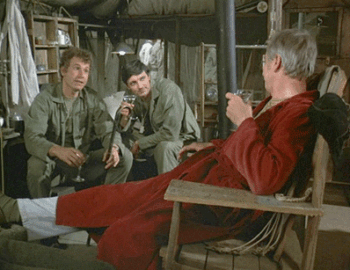
You've probably heard tell of how doctors in war zones typically resort to gallows humor, madcap pranks, and hand-built gin stills to cope with the squalor and waste they encounter each day in their jobs. Well, that goes double for those who live and work in today's comic shop, and Tucker Stone, the Trapper John of the Wednesday crowd, brings his column to the Journal to help our readers make the pain go away. And don't worry, detractors, if Tucker gets out of line, we'll replace him with a gentler B.J. Hunnicut type. (To answer the unspoken question: Fiore's Hawkeye, obviously. Major Burns I will leave to the readers' imaginations.)

I can't think of a M*A*S*H character to assign to Charles Hatfield, so I'll drop this painfully strained metaphor now, before things go too far. In any case, he has written a great and thorough review of the first two issues of Prophet, the new Brandon Graham/Simon Roy sf comic that's been getting so much acclaim lately.

Elsewhere, Ben Katchor has a new strip up at Metropolis Magazine. I don't like to link to webcomics too often (where would I stop?) but I'll make an exception in Katchor's case.

Garry Trudeau talks to Double X about the recent controversy revolving around Doonesbury's abortion-related strips.

The CBLDF has announced the withdrawal of all criminal charges against Ryan Matheson in the Canadian manga case that began in 2010.

Daniel Best brings an update on Brett Ewins's health and legal situation, and how any concerned may be able to help.

Tom Spurgeon wants nominations of people in the comics world who deserve more recognition.

And not-exactly-comics: Filmmaker Ralph Bakshi gets interviewed for the 35th anniversary of Wizards.

Bluzzard

On the site today:

Sean T. Collins interviews cartoonist Jonny Negron (conflict alert: I'm publishing his book in September), who says of the influence of manga on his work:

It wasn’t until I was a teenager that it became much more popular. Part of the fascination for me in seeing that stuff was that it was really not like anything I’d seen before, especially in comics. Everyone’s androgynous-looking, it’s a lot more sexual, there was nudity. Everything was more adult-like, even the kids’ stuff.

Elsewhere:

-Top o' the heap goes to Brian Chippendale who has posted a mammoth essay on Marvel, royalties, rights, and titles. He pretty much covers all the bases here.

-Former TCJ-editor Milo George on a fill-in issue of Daredevil.

-I've been seeing bits of this Kevin Nowlan Man-Thing graphic novel for a long time now and now it seems to have a publication date. Good news. Nowlan's a perpetually underrated cartoonist and his process-oriented blog is a treat.

-Brandon Graham draws a tribute to Moebius.

-Oh a post of Dan Adkins SF covers and illustrations. Very nice. Always liked his work with and without Wally Wood. It's a smoothly generic style.

-Pal Paul Karasik has an exhibition coming up called Graphic Novel Realism at The Northern Illinois Unversity Art Museum in DeKalb, IL.

-I just recently read the first two issues of The Bulletproof Coffin: Disinterred. Here's writer David Hine on some musical influences.

It Lives

We've got two new posts on the site this morning: Katie Haegele interviewing illustrator/cartoonist Eliza Frye, and the latest episode of TCJ Talkies, in which Mike Dawson talks to Renée French about everything from changing community standards in the comics community to her pseudonymous second career in children's books.

Elsewhere on the internet, tributes to Moebius continue to appear. There's no way we will be able to link to all of them, but frequent Journal contributor Matthias Wivel has written a great one focusing in on the artist's late works. Charles Hatfield is also worth reading, I believe we forgot to link to Matt Seneca's reaction from the weekend.

Seneca has also just posted a short interview with the jaw-droppingly prolific Michael DeForge.

In the wake of John Carter box-office reports, Evan Dorkin turns his mind to comics, and wonders what the biggest money-losing bomb in this medium has been? Most of the speculation so far has revolved around series, but my guess is that it's more likely one of the books signed to big contracts in the brief recent period in which big publishers decided to make a big push into graphic novels.

Gary Panter have a talk to MOCAD last week, and video is now online.

Tom Spurgeon has a nice solid interview with IDW's Scott Dunbier about their seemingly quite successful Artist's Edition series, and their decision to reprint the Wally Wood volume.

And somehow on Monday I neglected to link to Sarah Glidden's translation of Lewis Trondheim proposal for changes to the Angoulême festival.

As always, it seems, the biggest story working the comics internet right now is a new interview with Alan Moore, this time conducted by Kurt Amacker for Seraphemera Books. It's a typically sprawling thing, most of which covers ground that will be very familiar to regular Moore interview-dissectors, though it's also probably the most comprehensive source for his thoughts on Watchmen and DC's interactions with him that has appeared in years. Robot 6, which is generally a quite good comic news blog that I would recommend to anyone interested in the more "mainstreamy" side of alternative comics, has an annoying habit of trolling its dimmer readers by pulling out the most pointed and insulting excerpts from Moore interviews. This time may be their trolliest post yet, and their commenters don't disappoint, if you're into savoring reading-comprehension problems. It looks to me like most of these commenters prove Moore's point quite well, and he's right that he's better off without them reading his work.

There are a few more interesting parts of the interview worth pulling out, though. Here he is on one of the key reasons he thinks Before Watchmen is a stupid idea:

You see, part of the problem with all this--and the reason why Watchmen was such an extraordinary book during its time--was that it was constructed upon literary lines. It had a beginning, it had a middle, and it had an end. It wasn't constructed as an endless soap opera that would run until everybody ran out of interest in it. It was deliberately meant to show what comics could do if you applied some of those quite ordinary literary values to them. Like I've said, this was the one book that elevated the comics medium, the comics industry, above the point where it had previously been languishing. And where, when I had entered the American industry in the early '80s, it was close to death. They were going down the tubes, and they desperately needed the shot in the arm that all of the hype surrounding Watchmen provided for them.

What the comics industry has effectively said is, "Yes, this was the only book that made us briefly special and that was because it wasn't like all the other books." It was something that stood on its own and it had the integrity of a literary work. What they've decided now is, "So, let's change it to a regular comic that can run indefinitely and have spin-offs." and "Let's make it as unexceptional as possible."

And here's part of his defense against the accusation that he has used many other artist' characters in his own books:

Other people's characters, right. Yeah, I've heard that. Now, what needs explaining is that you're talking about two or three different things, there. With The League of Extraordinary Gentleman, you're talking about a literary phenomenon that has nothing to do with comics. I can get to that in a moment. But, in terms of comics, when I entered the comics industry, I was given characters that the company owned, which were on their last legs--ones which were so lame that they were practically on the verge of cancellation.

Swamp Thing had been, I suppose, created by Len Wein (although in retrospect it really wasn't much more than a regurgitation of Hillman Comics' The Heap with a bit of Rod Serling purple prose wrapped around it). When I took over that character at Len Wein's suggestion, I did my best to make it an original character that didn't owe a huge debt to previously existing swamp monsters. And when I finished doing that book, yes, of course I understood that other people were going to take it over. That went for characters that I had created, like John Constantine. I understood that when I had finished with that character that it would just be absorbed into the general DC stockpile and I believe that I've expressed my admiration. I think that Brian Azzarello's editor had heard that I quite liked the job that he did with Richard Corben on Hellblazer and he phoned up asking me for a quote. I don't know if they ever used it, but I gave them a fulsome one.

This is because those were characters the company owned and I understood that. And I understood that whether I had created the characters like John Constantine, or whether I'd simply recreated them beyond all recognition like Swamp Thing, that these would just go into the general comic company's stockpiles. I've never objected to that. I mean, I don't think it is necessarily the fairest thing, but I've not objected to that.

And how he feels about creator's rights:

My position on all of this has hardened over the years. And, to say this is just what happens in comics--that this is just the tradition in comics--characters get passed from one creator to another and that's just how it is--why is it like that? And, where did these characters come from in the first place? Did they all spring from the brow of Zeus, fully-formed? Or, was there somebody who created them at some point? Was there a sort of Jerry Robinson or Bill Finger? Or, was there a Siegel and Schuster? Or a Martin Nodell or a Gardener Fox [sic] who got robbed? And then, of course the attitude--and I probably shared in this when I first started working for American comics--the attitude now is that it's just toys in the toy box, isn't it? You get to play with your favorite toys from the DC or Marvel toy box. Yeah, I don't want to do that anymore. Those toys were pried out of the fingers of dead men, and were pried from their families and their children. That's just wrong.