What a Crowd

On the site: It's Tuesday so that means you get a dose of schooling from Joe McCulloch. Chris Mautner reviews Tezuka's Princess Knight. And we also continue to update the tributes to Moebius post.

Elsewhere:

-There is a whole raft of Moebius links out there, but my favorite is this blog post of photos of the artist with other artists over the course of his career. A close second is this fine appreciation of his influence on popular culture over at Tor.com.

-Ivan Brunetti has a New Yorker cover on the stands and a few words about it, too.

-Proof Instagram is useful: A shot of Jaime Hernandez at work on a new Love and Rockets page.

-The strange story of someone selling a fake Ernie Bushmiller drawing. If I was going to fake an artist I'd stay away from someone as clean-lined and precise as Bushmiller.

An Era Ends

The legendary French cartoonist Jean "Moebius" Giraud passed away Saturday. Kim Thompson has written our obituary for him:

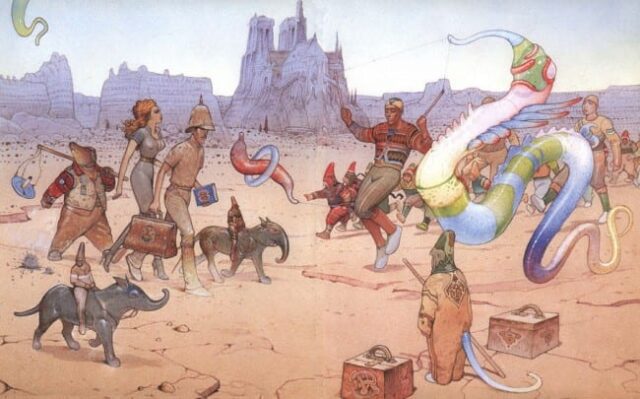
Like his namesake single-surfaced geometric figure, Giraud enjoyed two distinct careers that could be considered opposite sides of a coin, or a continuation of one another: As “Gir,” he co-created, illustrated, and eventually wrote the Western series Lt. Blueberry for over four decades, while as “Moebius,” he drew and often wrote some of the most revolutionary and dazzling science fiction comics ever created — as well as providing costume and set designs for such visually groundbreaking movies as Alien, TRON, and The Fifth Element.

Either career would have placed him at the forefront of his chosen trade; braided together into one astonishing life, the two made him indisputably one of the greatest cartoonists of the second half of the 20th century.

Thompson interviewed Giraud for this magazine in 1987, and over the weekend we reposted that talk. As Thompson wrote in the introduction, "It has become difficult, if not impossible, to understand the shattering impact [Moebius's best pieces] had as they appeared throughout the '70s. Like all revolutions, they need a context to be fully appreciated." The wide-ranging interview was designed to provide that context, and is still well worth reading for that purpose today.

We also have gathered a collection of tributes to the great artist from such figures as Mike Allred, Anders Nilsen, Zak Sally, and John Workman. We plan to keep adding remembrances to that post as more come in.

Of course, many tributes to Moebius have already appeared online, from creators like Neil Gaiman and Jason (Robot 6 gathers more industry reaction here), and from writers such as Tom Spurgeon, Paul Gravett, Heidi MacDonald, and Bryan Munn.

Rodrigo Baeza has posted scans of a late-1970s interview with Moebius, and the aforementioned Spurgeon has gathered a collection of videos featuring him. The Forbidden Planet blog links to an hour-long BBC documentary.

Much more has been written and will continue to be written honoring Moebius over the next few days and weeks—and decades.

Yesterday, we published a new column by Frank Santoro, featuring an interview with the cartoonist Zack Soto about his new webcomics venture, Study Group Comics.

And sadly, we must also report the untimely death of Don Markstein, Comics Revue editor and founder of the Toonopedia.

No, Just Asking

Today on the site:

Matt Seneca on the great Joost Swarte's Is That All There Is?.

Elsewhere:

That awesome all-nude John Carter of Mars comic is still going. Perfectly applicable to Tim's comment on Ken Parille's essay. Via. In other looking-at-nude-stuff news, here are pictures of the very first Sub-Mariner story, which is surprisingly lush and deliberate. Also, spend some time looking at this Tumblr and really get inside the mind of comics fan Tom Devlin.

In cartoonist news, Jim Woodring is in Alaska and he is drawing; and this Gabrielle Bell new book announcement is fun in and of itself.


Let’s Go

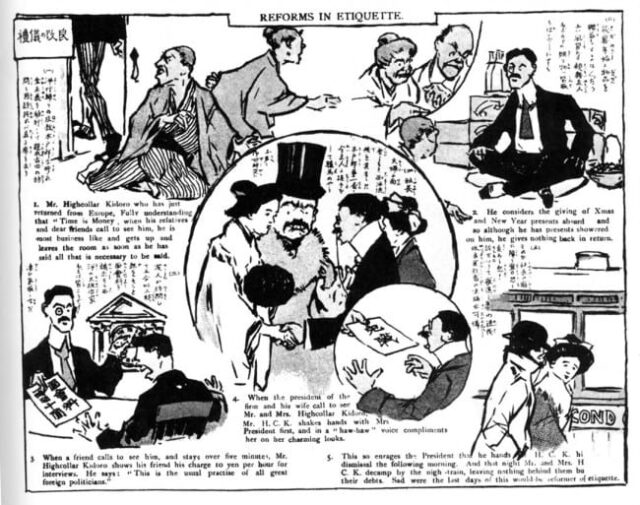
Ryan Holmberg continues his essential column on the history of alternative manga today with an introduction to the concept of batakusai (which means "butter-stinking," or in other words, overly Westernized) and its usage within the context of manga.

This term supposedly dates back to the Edo period, when visiting English and Portuguese traders were derided for their strong body odors thought to be caused by a fat and butter-rich diet. Most Japanese did not eat “four-legged creatures” until the latter nineteenth century, due to a combination of religious prohibitions and prejudices. Milk and milk-skin products had been consumed by royalty and aristocrats since the seventh century, but dairy was still regarded an oddity by Japanese in contact with foreigners during the Edo period. “Cheese” had been reported in Japanese markets by Jesuit missionaries as far back as the sixteenth century. But since there was no cheese in Japan at the time, they were probably misidentifying blocks of tofu.

A collection of early comics drawn by the late Ronald Searle during his time in a Japanese POW camp (see Warren Bernard's bio of Searle for more details) has just been discovered.

Here's a short article on Foo, the fanzine of Robert and Charles Crumb, once again coming to the conclusion that at least in their childhoods, Charles was the better artist. By the way, early Crumb fanatics may not have heard that the upcoming new edition of volume one of the Complete Crumb will include a newly discovered complete 1962 issue of Arcade. We'll have an expanded look at the new material on the site soon.

Bart Beaty wrote an interesting short take on the Katz/Maus controversy yesterday. For inexplicable reasons, this somehow spilled over into the comments section of this site, and Dan gave more of his views here. I haven't seen the Katz book myself (for those of you too lazy to click on the links above, it's a repurposed version of Maus, in which the contents of the book are apparently unchanged, except that the heads of all characters within it have been turned feline), but it sounds like I'd agree with both Beaty and Dan, contradictory as that might initially seem. I have no thoughts on the legality of the situation, not knowing a single thing about French or Belgian copyright law.

Robert Boyd remembers Dale Yarger, a former designer of The Comics Journal, among many other Fantagraphics projects.

Steven Brower discusses the covers of recent Jack Kirby books, and the trend of using artists other than Kirby for them. (Basically, he's against it.)

I Got A…

Today on the site we have: Steve Ringgenberg's obituary of Sheldon Moldoff; And Ken Parille, who swears he's not writing a superhero column, turned in a piece about superhero bodies and costumes. Ken is the co-editor of the forthcoming (and excellent, but more on that in another post) book The Art of Daniel Clowes: Modern Cartoonist. That same book holds a very funny and insightful essay by Chris Ware, whose home is examined in photographs over at Trip City. Yesterday, in a link to Joe McCulloch's incredible post, Tom Spurgeon mentioned a possible shift in how comics history is being built these days. I think he's right. Part of the impetus for ye ol' Comics Comics six years ago was to reshape the way we thought about the cartooning lineage, and I think it's gone even further than we ever imagined. The surge in interest in things like Heavy Metal, and the corresponding HM-link comics being published now is a real generational shift. How it plays out is anyone's guess, but if I was still in the writing-books-about-comics-history biz I'd be looking over my shoulder. Speaking of which, here's Michel Fiffe on the mostly forgotten series Wasteland. For some "trad" comics history here's a mysterious Joe Simon publishing discovery.

And, hey, Kevin Huizenga finished a new book. This is good news.

Finally, since we all love videos, it's TCJ-fave Tom De Haven talking about comics in the curriculum.

http://vimeo.com/37927842


Emergency Room Pallor

An unplanned and prolonged visit to the ER on a neighbor's behalf (nothing serious) means that there's a pretty good chance I missed something this morning. So please forgive me that.

This morning, we are reposting the 1999 Comics Journal interview with the late Sheldon Moldoff (most well-known for his work on Batman) conducted by Steve Ringgenberg. Here's an excerpt:

No, I never had any story credit or anything on it. Everything is Bob Kane. And I say it would have been nice, if at some point, he would have said, "Shelly, I'm really famous now and it's time to say thanks to a couple of people." Jerry Robinson, other people, give us a word of thanks. It would have made him a bigger person. It wouldn't have hurt him any to say, "These people helped me."

Also, this morning, it looks like Joe McCulloch has finally gone insane, using his weekly guide to new comics to write a nearly book-length treatise on a 1980 issue of Métal Hurlant. It's a good kind of insane, though, featuring his thoughts on Pratt, Chaland, and Druillet, among others.

And Jesse Pearson reviews Kingdom Come, J.G. Ballard's final novel, just published for the first time in the United States.

Elsewhere, my confrère Dan Nadel finally broke down and started a Tumblr. If you like a good rant, ask Ray Sohn his thoughts on Tumblr some time.

As has been noted many places, a new small batch of Penguin Graphic Classics covers has been released. Mike Mignola's cover for Heart of Darkness is getting the most attention. It's a striking image, and Mignola is a master, but something about it sits wrong to me—it's too cartoonish an image of evil when compared to the horrors of the novella. It may work better in person, though. Ross MacDonald's cover for Robert Graves's Greek Myths (a truly great book) is amusing, but bugs me if only because it furthers the idiotic notion that superheroes are our modern mythology. I know, I know, it's a joke.

I'm not familiar with Hannah Eaton's work, but this preview/interview over at Forbidden Planet blog looks promising.

David Mazzucchelli Disavows Forthcoming Batman Reprint

I recently asked artist David Mazzucchelli about the forthcoming reprint of Batman: Year One, set for release March 14 from DC. David told me the following:

DC just sent me this book last week, and I really hope people don’t buy it. I didn’t even know they were making it, and I don’t understand why they thought it was necessary —  several years ago, DC asked me if I’d help put together a deluxe edition ofBatman: Year One, and Dale Crain and I worked for months to try to make a definitive version. Now whoever’s in charge has thrown all that work in the garbage. First, they redesigned the cover, and recolored my artwork — probably to look more like their little DVD that came out last year; second, they printed the book on shiny paper, which was never a part of the original design, all the way back to the first hardcover in 1988; third — and worst — they printed the color from corrupted, out-of-focus digital files, completely obscuring all of Richmond’s hand-painted work. Anybody who’s already paid for this should send it back to DC and demand a refund.

I asked if he'd contacted DC, and David explained that he "wrote letters and sent emails to the president, both publishers, and the editor in charge of special editions. No response." I asked about his forthcoming Artist's Edition of his Daredevil work, and he replied, "Scott Dunbier has been in touch with me from the beginning; I supplied all the scans of the artwork."

This seems like a ridiculous and avoidable mistake by DC since, indeed, they had a willing collaborator in David, but somehow it's not terribly surprising.

Maybe Ask First

Today on the site: Tom Spurgeon in conversation with Brian Ralph and C.F. at the 2011 Brooklyn Comics and Graphics Festival. And Frank Santoro gives us a peek at his comic book haul.

In other news:

Comic book veteran and the last surviving artist to have been published in Action Comics #1, Sheldon Moldoff, has passed away. We'll have his TCJ interview and an obituary online later this week.

Tom Spurgeon (him again!) has a great interview with Charles Hatfield about his book Hand of Fire: The Comics Art of Jack Kirby. TCJ is working on a roundtable discussion of Hatfield's excellent work.

And finally, a handful of mid-1980s video interviews with comic book artists have popped up on YouTube, courtesy of an organization called Big City D2D. Particularly noteworthy is the Marie Severin piece in which she talks about creating characters and is extremely funny, to boot.

Marie Severin

http://www.youtube.com/watch?v=_PG_L_TnvWU&feature=related

Howard Chaykin

Will Eisner

Gold.

The Politics of Inexperience

Say a fond farewell to Emily Flake, whose final diary entry is up today. Thanks, Emily.

And now to links, almost all of which turn out to revolve around political questions, coincidentally enough.

First, Brandon Graham gives good interview. In this one, he speaks (as a sometime comics porn creator himself) about what comic books get wrong about sex.

Speaking of what comic books get wrong about sex, Tom Spurgeon pulled out a recent Newsarama interview with Catwoman writer Judd Winick in which the former Real World star pulled a Nigel Tufnel and acted as if the reason people were up in arms about his run on the title is because it was too "sexy." Well, maybe he was acting—Tom expresses justifiable amazement at Winick's ability to remove the nuance of this discussion. Based solely upon the utter insipidity of all the Winick work I've read, I'd say it's an open question whether he's cynically and intentionally pretending not to understand the underlying issues, or that he's just actually not smart enough to get it. Of course, I guess it could be a combination of the two.

This is old (in internet time) but still relevant.

Matt Seneca has an essay on Crepax's Valentina, possibly his favorite comic of all time. (Incidentally, for at least the first hour of that Inkstuds roundtable I linked to the other day, the main subject Matt, Joe McCulloch, and Tucker Stone discuss is European erotic comics and the portrayal of rape therein. That kind of work is not my bag, but it's an interesting if uncomfortable talk nonetheless.)

James Romberger writes about the male perspective, too, in a roundup of brief reviews of comics by Alex Toth, Adrian Tomine, Joost Swarte, and Jim Steranko, among others. He also slams Chester Brown's Paying for It hard, ultimately finding the whole thing "fucking depressing." I don't dispute many of James's points, but Brown's book has only grown in my estimation over the past year— it truly supports multiple valid perspectives on what it's up to in a way that only the best art does. Try finding a non-risible interpretation of the Catwoman comic mentioned earlier.

And then of course there's the way comics portray race. The Forbidden Planet blog alerts us to an impassioned take on the recent Tintin in the Congo written by the novelist China Miéville, arguing on the side of Bienvenue Mbutu Mondondo instead of Hergé's publishers. It's worth reading, if for no other reason then that intelligent arguments from Mondondo's point of view have gotten precious little attention. (Incidentally, in the course of his essay, Miéville links to a lengthy series of blog posts denouncing Alan Moore and Kevin O'Neill's use of the "golliwog" character in League of Extraordinary Gentlemen.)

And there's lots of video for you to watch on a lazy Friday afternoon:

Robert Crumb talking to Gary Groth in India (via)

Jules Feiffer (via)

And Jerry Moriarty's new YouTube channel (via)

Met-Hal UrLahnt

Today on the site: Emily Flake's Thursday involves whiskey and cigarettes, as any good Thursday should. And Rob Clough reviews African American Classics.

Elsewhere:

This may or may not be news: The 1987 documentary The Masters of Comic Book Art is now on YouTube in its entirety. I suggest skipping to the 20 minute mark to listen to Steve Ditko explain Mr. A. I forgot about this section, and I really enjoyed listening to his voice. Moebius is at the 38 minute mark. This is just a pretty fine glimpse at these artists in the flesh. It's also so very funny to think how different the canon was.

http://www.youtube.com/watch?v=L3ckwlLsW78&feature=player_embedded

-Hey, I missed this Best of 2011 international, multi-contributor list hosted by Paul Gravett.

-Oh look, it's Hal Foster Tarzan dailies.

-This is just.... wow. Passion. I wish I had it.

-And Eddie Campbell catches a couple of swipes. Good ones, too.

Stumble Year

Mike Dawson's got a new episode of TCJ Talkies up, this time interviewing the cartoonist Box Brown about starting up his own publishing venture, Retrofit.

And Emily Flake is in day three of her Cartoonist's Diary week. Now it's exercise time.

Three of our regular contributors—Joe McCulloch, Matt Seneca, and Tucker Stone—have appeared on the Inkstuds radio show to talk about comics for three hours. I haven't been able to listen to this yet, but with that lineup I'm sure it's fantastic.

Speaking of podcasts, I don't think we've mentioned yet that Comix Claptrap is back, and has a good interview with Tom Hart about starting up SAW in Gainesville.

Bill Kartalopoulos reviewed the latest Kramers Ergot anthology over at Print, and Brad Mackay reviewed Someday Funnies over at the Globe and Mail.

Fan blogger Colin Smith has an interesting post about reading Seth's It's a Good Life If You Don't Weaken and realizing that at lot of the biases and prejudices he'd always attributed to Seth weren't actually in evidence.

Via Frank Santoro, here's Rob Liefeld.

Okay, I guess this is settled then. Things like that make me depressed about comics' position in the world. Then I remember that every other art form tends to get the same belittling treatment (Arthur beats Macbeth as our greatest literary king!), and the depression becomes more general.

It’s a Discovery

Today on the site: Emily Flake's week-long diary continues as cartoon-submission time rolls around at The New Yorker. And the irrepressible Joe McCulloch brings us his week in comics.

Elsewhere... Jan Berenstain, of The Berenstain Bears, passed away. The Forbidden Planet blog pays tribute to Brett Ewins. And two from Comics Alliance: Douglas Wolk on the great Gilbert Hernandez book, Birdland and a round-up of last weekend's announcements from Image Comics, which is becoming a  go-to place for well-done and creative (and creator-owned) genre material. I don't think many people would have predicted Black Kiss 2 back in 1994. Huh.

Up the Hill Again

Eric Buckler interviewed Wilfred Santiago, of 21 and Pop Life. Here's an excerpt:

I have worked in the industry non-stop since the 1990s, to varying degrees of failure. It went from “no way do I want to write” to “let’s give it a shot” to actually doing it. Unlike working with someone else’s script, there’s no linear method when I work on my own. That is to say I write while I ‘toon, and I ‘toon while I write. So the most important step is editing–what’s left on the page before going to the printer and into the sweaty hands of readers. I do believe writing has improved my cartooning. I don’t think it’s an accident that some of the best cartoonists are writers. I’m not putting myself in that group but I strive for it.

Brandon Soderberg reviews the first issue of the new Bulletproof Coffin mini-series.

Emily Flake reports for duty on her first day as our latest cartoonist diarist. Things start well, with a trip to the dentist.

And yesterday, in his latest column, Frank explained how he got home after his lengthy west coast tour.

Elsewhere, John Porcellino names some of his favorite comics of 2011. I always like it when people save these lists for late winter/early spring (see Rob Clough's on this site from the other week).

The Guardian has a nice profile of Tomi Ungerer, and gallery of some of his art. I'm hoping this is a sign that, as with Maurice Sendak over the past year, we are suddenly due for a million interviews with him.

And Françoise Mouly has a Tumblr.

Photo Finish

Today on the site Kristian Williams reviews The Complete Alan Moore Future Shocks:

Future Shocks collects some of Moore’s earliest humor work from 2000 A.D. (the magazine, not the year). Most of the stories are short, just a couple of pages, but some combine to make up a longer, ludicrous arc. Though they date from the early eighties, they feel like they belong to an earlier era: the humor is a little like the early Mad — oddball and mocking — often mixed with the morbid twist-ending of old E.C. comics.

And elsewhere on internet... Tom Spurgeon offers a modest proposal that we writers-about-comics link creator's names to their creations when writing about whatever the latest iteration of those properties. It's a good idea, and one that can build the idea of those linkages to, one hopes, will highlight the debt we owe to those artists.

No transitions here: This is a Hodler link special: Plastic Man in Pynchon's Gravity's Rainbow; TCJ contributors Joe McCulloch and Tucker Stone write about some recent movies. J. Caleb Mozzocco on the book Jackie Ormes: The First African American Woman Cartoonist

A final reminder: Your applications for the Santoro Correspondence Course are due today! Frank also has some comic-making format options up here.

Last but not least, fave local comic shop and culture producer Desert Island is celebrating its 4th anniversary tonight with a blowout party from 7 to 9 pm. On the docket: Beer and 20% of everything. 540 Metropolitan Ave, Brooklyn NY 11211.

Distortion Field

It is such a pleasure when a new R.C. Harvey column comes in. Today, we bring you his thoughts on the primary artists behind Barney Google: Billy DeBeck, Fred Lasswell, and John Rose. A short sample:

Barney’s eyes stayed the same size for as long as he appeared in the strip, but the rest of him didn’t. When the strip started, he was as tall as his wife, but he shortly started losing altitude, and by 1921, Barney was a gnomish wart, a scrunched-down jot of his former tittle, a pipsqueak mote of a homunculus—a perfect comic runt of a character who looked as outlandishly funny as his obsessions were fanatical.

And there are way too many things worth linking to recently for some reason. I'm not going to get to them all, but here goes.

On Tuesday I mentioned going to the Met to examine portraits of George Washington. I also went to visit the "Infinite Jest" exhibit of caricatures there, which I recommend to anyone in the New York area over the next week. David Bromwich has a well-considered review in the New York Review of Books, and my wife stole a blog post idea from me about it here.

In a recently posted letter to his employer, Al Hirschfeld, one of the few 20th century caricaturists in the show (and Bromwich is right when he says the selection gets pretty shaky post-1800), demonstrates how to ask for a raise.

Devlin Thompson finds a Chris Ware anecdote regarding Battlestar Galactica glasses that is too strange not to be true.

Michael Dooley posts some great Alan Takemoto images from the forgotten Japanese American underground Gidra.

Rob Clough takes mild issue with Sean T. Collins's review on this website of Ryan Standfest's Black Eye.

Matt Seneca likes it when Roy Crane draws women getting spanked and men getting punched.

Kate Beaton's Tumblr post q&a of advice to aspiring cartoonists has been deservedly getting a lot of link attention elsewhere, but on the off chance you haven't read it yet, you should.

Via Forbidden Planet, here are video interviews of Joe Sacco and Craig Thompson being interviewed at Angoulême.

For Hero Complex, Neal Adams pays tribute to Kirby, Lee, and Ditko.

Maira Kalman fills out a questionnaire.

And finally, video from Richard Thompson's appearance at last fall's National Book Festival.

Interest in Context

Today on the site: Shaenon Garrity on Jenn Manley Lee’s Dicebox, color and web comics in print.

Elsewhere it's a mixed assortment of linkage:

Chris Oliveros went to New Dehli for India Comic-Con. Zander and Kevin Cannon, David Burnett and Oleg Terenchuk have started Crowded Comics, a new web site with which readers can supply the captions for editorial cartoons. Other readers have supplied 1.2 million dollars for a reprint program for the web comic Order of the Stick. That's a lot of dollars. The Beat breaks it down. Younger readers (or rather, their parents) will want to check out Johanna Draper Carlson's preview of forthcoming releases from Toon Books. And readers of all kinds, of my kind, even, should know of the graphic novel finalists for the LA Times Book Prize.

“I Will Bite You! And Other Stories” by Joseph Lambert (Secret Acres)
“Celluloid” by Dave McKean (Fantagraphics)
“Finder: Voice” by Carla Speed McNeil (Dark Horse)
“Congress of the Animals” by Jim Woodring (Fantagraphics)
“Garden” by Yuichi Yokoyama (PictureBox)

Ross Campbell has been making interesting comics for a while and now he's part of the Liefeld-verse revival. Here's an interview. In old comics news, here are a couple of excellent stories by Dick Ayers at his goriest.

And finally, hey, don't forget to sign up for Frank's correspondence course. Enrollment ends this week. That means you. And you. And you, too.

Holiday’s Over

Those of you who aren't American may not know that the United States has a day set aside every year for its citizens to celebrate "the Presidents." That national holiday was yesterday, and Dan and I spent it in the approved fashion. (I visited the portraits gallery in the new American wing of the Metropolitan Museum of Art and inspected the Gilbert Stuarts, and Dan set out his collection of memorial plates from the Franklin Mint.) This is why there was no new content up. But everything is back on track now.

Today, as every Tuesday, Joe McCulloch shares his thoughts on the most interesting-sounding new comics of the week.

Frank Santoro has the final installment of his West Coast tour diary—this time hitting Fantagraphics home territory and including cameos from many Journal fan favorites, as well as a stop in Vancouver to visit Brandon Graham and Inkstuds host Robin McConnell. By the way, this is the final week to sign up for Frank's upcoming cartoonists' correspondence course—head this way if you're interested.

Speaking of Journal contributors, Sean T. Collins has recent reviews of Optic Nerve 12 and Onward to Our Noble Deaths. And Tucker Stone has his usual round-up of comics reviews. I like how he's been including more older titles in his column recently—this time, he features Plastic Man and Lone Wolf & Cub.

Eddie Campbell was interviewed on video at Angoulême, and, later on his blog, discovered a couple secret "drawing references" used by Sheldon Modoff for his Batman comics.

Tom Spurgeon worries about the long-term (and short-term) financial health of the comics field and its participants, and Bryan Munn ponders previous attempts at unionization within comics, and the possibility of starting a new union now. (Those are the two must-read non-TCJ posts of today, I'd say, if you're going to pick and choose.)

At the fairly new website Weird Fiction Review, Edward Gauvin compares David B.'s Littlest Pirate King with the prose story that inspired it, Pierre Mac Orlan’s “Roi Rose”.

Finally, Robert Crumb is in India, and Rodrigo Baeza has gathered links to local news coverage worth reading.

You’re the Best Around

As is his wont (and his annual duty), Rob Clough has chosen the thirty best minicomics of 2011.

And now we say goodbye to Tom Scioli, whose final Cartoonist's Diary entry is up today.

Elsewhere, the Frank Santoro/Brandon Graham Inkstuds interview that Dan mentioned yesterday is now online, and you can listen to it here. And speaking of Frank, did we ever link to this video of his recent Mission appearance?

excerpts from frank santoro’s comic book layout workshop from chris anthony diaz on Vimeo.

Following up on another lead from Dan's post: One of our greatest comics-scan bloggers, Pappy, brings us a Joe Maneely classic this morning.

Alan Bisbort has a truly must-read interview with Bill Griffith.

I don't want to link to any more Before Watchmen commentary if I can help it, but the artist James Romberger maybe gets an exception. Or at least he asked me nicely enough. He writes about the project, and the original's controversial rape scene, here.

David Brothers tries to figure out whether some scanned & pirated comics may have come from someone at Marvel itself.

Finally, Tom Spurgeon gathers up the most recent developments regarding the Marvel/Ghost Rider/Gary Friedrich situation, and makes some very cogent remarks about it. The whole thing seems more confusing to me each day, and definitely bears continued attention. [Let me clarify that a bit—I am confused about exactly what Marvel hoped to accomplish with the $17,000 counter-suit, whether Marvel is actually expecting to get it, whether it's meant to be a shot across the bow, or has just been misunderstood -- or both. On the larger questions of whether or not Marvel has been behaving properly towards Friedrich, I have no doubt: they haven't been.]

Blursday

Today on the site:

Brandon Soderberg joins TCJ with a review of the great Canadian graphic novella Streakers. I learned about this one last year at TCAF -- a real treat. And Tom Scioli brings the Barbarian with Day 4 of his diary.

Frank Santoro Alert: Our man will be live on Inkstuds This thursday at 3pm PST, 6pm EST. You can listen live at www.citr.ca. Robin McConnell is encouraging call-in questions: 604-822-2487!

And elsewhere online...

Swiped from Kate Beaton's Twitter feed -- a generous blog from Eleanor Davis. On other blogs, Ryan Cecil Smith has a great bit on Charles Addams and here's five fine Victorian comic strips. Not comics, but relevant, writer Steven Johnson on e-books and reading onscreen. Here's a prime Western comic book featuring work by the late John Severin (and the always underrated Joe Maneely), via Tom Spurgeon. More olden comics comes from Matt Seneca on Joe Kubert's Hawkman.

And finally, a very funny review of the movie The Vow from Lisa Hanawalt. I never thought Rachel McAdams could top that time travel romance, but now...

And Other Stories

News of the death of legendary cartoonist John Severin spread yesterday. Steve Ringgenberg wrote a fine obituary of Severin for us, and we have also re-published Gary Groth's exhaustive two-part 1999 interview with the artist from The Comics Journal 215 and 216. It is sad to realize how few of the great cartoonists of that era are still with us.

Tom Scioli continues his Cartoonist's Diary for us, with day three of his trip to Angoulême.

Mike Dawson has returned to the podcasting "booth" and has a new episode of TCJ Talkies out this morning, this time an interview with Hicksville creator Dylan Horrocks, with whom he discusses various comics-world news items of recent days, including the Before Watchmen announcement, and the Marvel/Gary Friedrich case.

Speaking of Gary Friedrich, Stephen Bissette has posted the following message on Facebook, asking for it to be passed along by others:

ALERT, ALL COMICS CREATORS [Reposting, for a necessary (requested) edit; reposting all comments, too, after this main post. Apologies.]: With permission, I'm quoting key points my dear friend and own legal advisor/contract consultant (since 1992) Jean-Marc Lofficier raised on his posts to a Yahoo forum discussing Ty Templeton's cartoon concerning the Gary Friedrich v Marvel judgment. Jean-Marc succinctly notes WHY this judgment has changed EVERYTHING for anyone who has worked for Marvel, or what this judgment changes (probably irrevocably) about the landscape for all concerned:

"...with all due respect to Ty, he's talking (drawing?) out of his ass.

So to clarify again, here is what I thought is important to remember here:

1) This is the first time Marvel is using convention sales of copyrighted Marvel characters as a "weapon". They are of course perfectly entitled to do so, legally speaking. But it does mean that, from now on, all of you here who draw sketches of Marvel characters for money at conventions or sell sketchbooks containing pictures of Marvel characters are on notice that you might be sued (usually for triple the amount you made) should Marvel decide to go after you.

My legal advice to you guys is simple: STOP and destroy all sketchbooks for sale with copyrighted materials in it. I'm serious. You've just been put on notice by this case.

[Note: In a followup comment to a question on the matter of selling sketches/sketchbooks at conventions featuring Marvel characters, Jean-Marc added:]

If Disney and/or Marvel have a policy to deal with that sort of business, I would encourage anyone planning to sell sketches, etc. to contact them and obtain a waiver or a permission of some kind under that program.

--- [name withdrawn] is incorrect about one thing: Disney, if not Marvel, does have a full office staffed with para legals of young lawyers whose only job is to look for copyright/tm infringements and send C&D (cease & desist) letters. I have seen them. They don't do it for the money or to be a pain the the ass, they do it based on the legal theory that if you don't actively protect your (c)/tm, you run the risk of it being used against you as an affirmative defense in an infringement case.

Based on the GHOST RIDER case, it is, in my opinion, only a matter of time until Disney, now aware of the issue, sends one of their young attorneys with a stash of blank C&D letters at conventions and start handing them out to everyone selling Marvel sketches without authorization.

Receiving that letter will oblige you to hire a lawyer and even if Disney lets you off the hook (which they probably will), you might be out of a couple of grands by the time the process is over -- or you run the risk of being stuck with a $15K bill if you fight them.

Again, I emphasize: this is sound business practice for Disney; NOT doing it entails risks far greater than doing it. They have gone after children's nurseries before which had Mickey painted on their walls for the same exact legal reason. And that was far more time consuming and bad PR-wise that going after some comic book guys at artist's alleys.

It is only a matter of time.

So if they have a waiver/permission program as Ivan says, join it; if not, stop.

[Back to Jean-Marc's original, full post:]

2) Although there never was any serious dispute that Marvel owned whatever share of GR Gary Friedrich was claiming (personally, I'm not a mind reader but I think Friedrich was hoping for some kind of settlement), there remains two legal issues that Ty obviously didn't grasp:

2.1) When Moebius drew his SILVER SURFER with Stan Lee, he got royalties and he was still getting them when Starwatcher split in 2000. You will note that modern-day WFH agreements spell out that the money you're getting will be the sole compensation you will ever receive and you're not entitled to anything else. It is spelled out because if it is not, courts are at liberty to interpret the contract and decide whether or not you should be gettong something extra.

The back-of-the-check contract signed by Gary did transfer ownership of GR to Marvel, and the amount of that check was the consideration for publishing rights, but nowhere did it actually state (as it does today) that it was the ONLY consideration to which Gary might be entitled in the event of a film or a TV series. The Court could have easily decided that on the absence of that clause, Gary was owed something.

2.2.) There is a famous case about singer Peggy Lee who won her suit against Disney for their reuse of her songs in LADY & THE TRAMP on video, because that medium didn't exist when she signed her original agreement with the Mouse, and contracts at that time didn't specify the now standard "and other media to be invented in the future". The Court chose to interpret that lack of specificity in favor of Peggy Lee. When Marvel sold the rights to GR to the studio which produced it, they likely sold the video, DVD and game rights. These media did not exist when Friedrich signed his back of the check contract which did not list any and all future media. Therefore, based on the Peggy Lee case, the Court could have found that Marvel didn't own those rights, and therefore couldn't resell them, or, as in the Peggy Lee case, simply that they owe the plaintiff some kind of percentage, that's all.

So it remains my contention that Marvel owes "something" to Friedrich (and Ploog as well) based not on the publishing, but purely on the disposition of the multimedia rights to GR. That the Judge decided otherwise is a tough break for creators, and unjust.

3) Which brings me to my next point, which is that documentary standards are being unfairly applied throughout the judicial system, and somehow mistakes always seem to favor the corporations, not the small guy. The enforceability of a contract depends on accurate documentation which must be produced in Court. If you have a mortgage, but the bank cannot produce your properly signed promissory note, then the court has the possibility of nullifying your mortgage. It's happened in a few rare cases, but more often than not, people have been thrown out of their homes despite banks being unable to produce a properly signed note.

In this case, has any of you seen the back of the check signed by Friedrich?
Was that check properly endorsed? Was there anything crossed out? Why should mistakes in documentation automatically benefit the corporations, and the little guy should be held to standards of evidence that the companies themselves don't respect? Why did the Judge assume that the paperwork was in order & automatically benefited Marvel? What I'm saying is, if people can lose their homes despite proper paperwork, well, then, Marvel could lose GR despite its paperwork. It's up to the Court.

So whether or not you feel any sympathy for Gary and his cause, this is another loss for the Little Guy which, in the greater scheme of things, impacts all of us."

SPREAD THE WORD. SPREAD THIS LINK.

And QUIT doing, creating, selling ANY sketches or sketchbooks or prints featuring Marvel/Disney characters, IMMEDIATELY. And let fans know WHY you are no longer doing them, and/or CANNOT do them ever again.


This Fast Company story about Before Watchmen has Alan Moore revealing some new information about his original contract with DC. The article also has new preview art from the project, which is kind of weird, considering the overall scathing nature of the piece.

Speaking of Before Watchmen (and I really hope not to do so too many more times!), Eddie Campbell pulled out a particularly mind-boggling quote on the project from Brian Azzarello.

The Journal's own Bob Levin wrote a story for the Broad Street Review about surviving a second heart attack.

The Journal's own Kristy Valenti wrote a Valentine's Day tribute to Frank Miller's Ronin.

The Journal's own Chris Mautner picks six comic strips that ended too soon.

The Journal's own Dan Nadel messed up his planned promotional efforts and has outsourced the announcement of Brian Chippendale's resumed Puke Force to me. Luckily I like the strip a lot—otherwise I'd feel a little like I'd completely lost my dignity...

Finally, Peter Bagge talks to Stüssy.

Anything But the Comics

Slow news day here...

On the site today: Joe McCulloch's Week in Comics and Day 2 of Tom Scioli's Diary, going ever deeper into Angouleme.

Elsewhere, Michael Kupperman will be on The Best Show today on WFMU (via). And we missed this earlier, but Kim Deitch wrote a fine tribute to his first publisher, Joel Fabrikant. Over at 4th Letter! David Brothers has a discussion on comics piracy with an active comments section. And congrats to Dave Kiersh on getting his graphic novel funded.


Lighting Out

Dan Nadel talks to the artist Jim Shaw about his most recent book, comics, and their relationship to his own work. A brief excerpt:

After seeing the Sistine Chapel and thinking how radical a piece of art it was and so wanting to work in the figurative, I realized that comics are one of the only art forms where the figure has any legitimate use, so I’m glad to be working in it.

The artist behind American Barbarian and Godland Tom Scioli begins his week writing our Cartoonist's Diary. It takes place in France.

Frank Santoro continues his West Coast tour, and writes about ice skating with Snoopy.

And Kristian Williams reviews Grant Morrison and Cameron Stewart's Batman vs. Robin.

Whew, lots of stuff today. Okay, and elsewhere, Journal columnist Rob Clough picks his top fifteen books of 2011, Alan Moore writes a column for the BBC on Occupy Wall Street and V for Vendetta, and Greg Hunter at Big Other writes about how recent Marvel-related events have colored the way he reads Michael Chabon's new short story. (Jeet Heer had similar misgivings in the comments section of this blog.) Finally, Tom Spurgeon delivers twenty-one thoughts on the Before Watchmen announcement.

Two Fridays

Today on the site: Eddie Campbell reviews Young Romance: The Best of Simon and Kirby's Romance Comics and highlights the themes and art styles embedded in these oft-overlooked comics.

And elsewhere, yesterday's interview subject, Matthew Thurber, turned in a culture diary for The Paris Review. And of interest to comics readers, HiLobrow has opened a publishing imprint specializing in "Radium Age" science fiction. It looks good. Details here. In other publishing news comes the announcement that Seth will be illustrating Lemony Snicket's upcoming series of autobiographical novels.

And finaly, the deluge of sad news for comic book creator ownership continues. CBR has the story, sourced from Daniel Best, of Gary Friedrich's shameful treatment by Marvel in regards to his creation of the contemporary Ghost Rider character. And via Tom Spurgeon there's news of a lawsuit involving payment for the original artist of the hugely successful Walking Dead comic book and TV series.

The Arcana of It All

Today, we are proud to present Rob Clough's exhaustive interview with Matthew Thurber, the artist behind 1-800-MICE, What Kind of Magic Spell to Use?, and Ambergris. Here's an excerpt from when Rob asked him about his recent collaboration with Benjamin Marra for the Smoke Signal anthology:

That pairing was actually Gabe Fowler’s idea. He matched us up together [and] he proposed the idea and he proposed the movie. I was like, “Oh no, I can’t–I’m gonna hate Transformers. Maybe I can do it on something else.” So I went and saw Super 8 and I was like, “Oh that was pretty good, but it wasn’t so stupid that you could really satirize it.” Then I finally saw Transformers, and I was like, “Holy shit!”

And later, discussing the themes behind 1-800-MICE:

We’re all part of the ecosystem with all the animals and plants and all the man-made stuff. If you try to think of the big picture, it’s overwhelming and scary. I guess that’s why my book is ultimately—underneath all the funny stuff— about being non-didactic, that we’re all part of the ecosystems. Different characters in the book are aware of different aspects of it. Even the people who are trying to control it think they’re doing the right thing. Aunty Lakeford really believes that if she proves that the banjo’s origins are in Africa, then that will help, that’s gonna help.

And elsewhere on the great internet:

Edward Sorel is profiled by local news channel NY1. Sorel: "They wanted me to do a cover about how the press was treating Nixon unfairly. I said that's too much. I’ll sell out, but there are limits." (via)

Our columnist Jared Gardner has a new book just out called Projections: Comics and the History of Twenty-First Century Storytelling. Henry Jenkins has just posted the first installment of a multi-part interview with Gardner here. Another excerpt:

I don't think this book would have made any sense to write had it not been for what we affectionately call the golden age of comics reprints, a period of publishing that has seen long-lost newspaper comics and comic books returned to print. I am fortunate to have daily access to the Billy Ireland Cartoon Library & Museum here at Ohio State, but until recently without such privileged access extensive reading in historical comics was virtually impossible. Of the comics I focus on extensively in the early chapters in the book--Happy Hooligan, Mutt & Jeff, Krazy Kat, Superman, Spider-Man, R. Crumb's underground comix, etc.--almost all are now available in accessible reprint editions. The big exceptions here were Sidney Smith's The Gumps and Ed Wheelan's Minute Movies, pioneering serial strips from the 1920s, but I am now working with the Library of American Comics to get one and possibly both into an affordable reprint edition in the near future.

Art Spiegelman appeared on BBC Radio 4 earlier this week.

Someone calling himself Mr. Media has interviewed Bill Griffith. (I know I've mentioned Lost & Found several times here already, but it's good--you should read it!)

And apparently, like so many other literary luminaries, Douglas Adams first saw his words in print after writing a letter to the editor about comics.