
25-Hour Energy Drink

Birthday parties for three-year-olds are exhausting. So is moderating certain comment threads. So it's nice to get a chance to sit back and read Joe McCulloch's always entertaining, always informative field-report on the Week in Comics. (In this edition, Joe smuggles in a review of the new Judge Dredd adaptation, which I meant to bring up at some point in the blog myself, since I felt a little bad for mocking it briefly a few weeks back, before I watched it and discovered that it was actually a pretty solid little action movie.)

We also have the second installment of Mark Siegel's Cartoonist's Diary. In this one, he takes us through a day at First Second, with a few special guests.

Elsewhere on this great internet:

—First, there are two new Chris Ware interviews in anticipation of his new Building Stories, one from Calvin Reid at Publishers Weekly, and one from Teddy Jamieson at the Herald Scotland. (I get the feeling we're going to be reading a lot of "...in a box" puns over the next few weeks.)

—Tom Spurgeon has a good long interview up with Adrian Tomine, for his new book, New York Drawings. Here he talks about the movie-review illustrations he drew for The New Yorker:

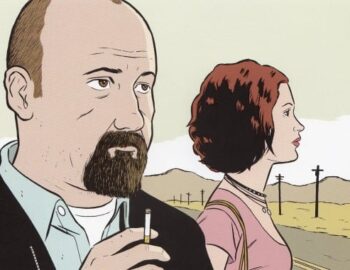
Most of those movie things I was working from very limited reference material. Most of those were done pretty much before the Internet had entered into my life in an everyday capacity. I didn't get to see the movies. A lot of the time they would send me a Fed Ex package with a few stills from the movie. On some of them the deadline was so tight they even faxed over [laughs] photos, and I had to decipher the image on this crinkly fax paper. [Spurgeon laughs] I think if I were working that assignment now it would be a little easier, because you could type in "James Gandolfini" and find every type of image and photo of his face. The hardest ones of those when they were having me draw those were the good-looking but sort of hard to distinguish celebrities. The last one that I did was supposed to be the actor Ryan Phillippe, who I just couldn't make look both handsome and recognizable as him. It was like I could do a caricature, but it won't look good, or I could draw a handsome blond-haired, blue-eyed guy, but it won't be... it was difficult. They eventually came to their senses and moved me on to other kinds of assignments. [laughs]

—Paul Gravett has reposted an article he wrote in 1998 about the history of the Comics Code.

—Illogical Volume at the Mindless Ones has a very Mindless Ones-like review of Grant Morrison's Action Comics (and Obama) up.

—And there are a couple of Sean Howe interviews up promoting his almost-out Marvel Comics: The Untold Story, one at the Brooklyn Daily and one at Entertainment Weekly.

Neck in Neck

Today on the site Ryan Holmberg explores the source behind a legendary Osamu Tezuka manga.

New Treasure Island is one of those books that everyone has heard of but few have actually read. Until a facsimile edition published in 2009, the legendary manga was largely inaccessible even in Japan, general readers having to settle for (and many critics often unwisely relying upon) a top-to-bottom rewrite from 1984. Furthermore, so much attention has been paid to its opening sequence, showing its little boy hero Pete racing in his roadster to the wharf, that most of the rest of the book has been ignored. In a future article, I will offer my own reading of those famous first pages, which are based on a second Disney comic book. In this post, I want to look instead at how New Treasure Island was, as its title advertises, a rendition of “Treasure Island.”

And we welcome TCJ-diarist and FirstSecond Editorial Director Mark Siegel.

Elsewhere:

TCJ-contributor Chris Mautner takes us to Comics College. His subject: David B.

-This is a nice blog post about the great British artist Michael "Mick" McMahon, who is perennially under-appreciated.

And Bob Heer tells us that a new Steve Ditko title is on its way.


The Masters

It's Friday, which means it's Tucker Stone day. This week, Abhay Khosla takes on Grant Morrison, Tucker Stone takes on Grant Morrison (and David Hine taking on Morrison), and Michel Fiffe takes on the portrayal of Cubans in Garth Ennis's Nick Fury series.

—Video of the panels from this year's SPX are already showing up on YouTube. So far we've got the Frank Santoro-moderated Jaime Hernandez panel:

And the Dan Clowes panel, featuring Ken Parille and Alvin Buenaventura:

—Various artists, including Clowes and Adrian Tomine, discuss what inspires them with the New York Times. (And surprise—in both cases, it's neither Hemingway nor even Fitzgerald!)

—Speaking of inspiration, Gilbert and Jaime Hernandez appeared on NPR's Alt.Latino and talked at length about their favorite music.

—Drew Friedman draws and discusses Bernie Krigstein.

—Paul Constant interviews Ellen Forney on the occasion of her winning the Seattle Stranger's "Genius" award.

—Joe McCulloch has some words for Milo Manara.

—As part of Boing Boing's series on "great graphic novels", Douglas Wolk talks up Lynd Ward's God's Man, and Jim Woodring touts Steve Lafler.

—Old Marvel coloring lore.

Get the look. (Sammy Harkham.)

Here They Are.

Here on the site...

The esteemed Richard Gehr takes a break from his Know Your New Yorker Cartoonist duties to turn a review of The Carter Family, Frank Young and David Lasky's eagerly awaited graphic biography.

Thoroughly researched enough to belie its “graphic novel” self-descriptor, The Carter Family is also an ill-fated love story set mostly in the southern United States during the years leading up to and following the Great Depression. Its subtitle – Don’t Forget This Song – bears witness to the rich, ever-changing river of folk culture in which its principals – not to mention its creators themselves – flourished.

Top of the internet today is TCJ's own Sean T. Collins' excellent Rolling Stone roundtable with Gilbert Hernandez, Jaime Hernandez, Dan Clowes and Chris Ware. Sean really coaxed an excellent exchange out of this lot, including this:

There's been a revival among alternative-comics circles toward a new pantheon of sci-fi/fantasy stuff, like old Heavy Metal comics.

Ware: I was not aware of this.

Gilbert: I have to toot our horn again: They don't have any personality! You're not really talking about anything but escapism. That's fine, I'm all for escapism, but the reason we do alternative comics is because it's all totally from our personality.

Clowes: I have to say I have a recently rediscovered fondness for Heavy Metal. That was a big deal when it came out: "Wow, you can draw robots with tits!" It has a certain charm to it, especially the really weird, unpleasant stuff in it. All that Richard Corben stuff was so disturbing.

Gilbert: You can tell the difference between artists: Who's the madman, and who's the guy just doin' it? That's why guys like [Joe] Kubert and [John] Buscema and John Romita, who were really amazingly skilled artists, there's just nothing there other than they're just really skilled artists. Then you see Crumb, who was just a complete nut.

Clowes: Or [Jack] Kirby, who was the opposite.

Gilbert: Or [Steve] Ditko. They're crazy men. "Who let them do this?" [Laughter]

Ware: When you talk about a pantheon . . . When I went to art school and I went to the art history classes, we were taught this very specific progression of where art came from and where it supposedly was going. It was almost like these pills you had to swallow that had been established by art critics and art writers. One of the things that appealed to me most about comics was that you can pick the ones you like and build your own personal pantheon. I've never met these younger kids who are more interested in – I just said "younger kids." I can't believe that. [Laughter] Younger artists are interested in Heavy Metal – that's great. That's something else completely to start from.

Gilbert: That's what was missing from alternative comics after us: The art got less and less good.

Also chatting is Art Spiegelman in Germany.

Jim Rugg has an excellent report on his most recent zine, which is more like an elaborate comic book history project. Best seen to be believed. One of Jim's favorite comics, Real Deal, gets profiled over at the Stussy site -- artist Lawrence Hubbard collaborated with the brand.

And finally, apropos of our ongoing role of negotiations-host for Dave Sim and Fantagraphics, Bill Kartalopolous reminded me that he posted a great piece about Cerebus by Adam White on Indy Magazine back in 2004.

Oh! Oh!

Good morning. Today we have a biographical essay on the pre-Barnaby Crockett Johnson, excerpted and adapted by Philip Nel from his new book, Crockett Johnson and Ruth Krauss: How an Unlikely Couple Found Love, Dodged the FBI, and Transformed Children’s Literature. This section focuses particularly on Johnson's early politics. Here's an excerpt:

He began to contribute to the Communist weekly New Masses. His first cartoon, published 17 April 1934, mocks self-professed experts on communists. In a cartoon published three months later, he goes after not only the rich in general, but President Roosevelt in particular. Billionaire industrialist J. P. Morgan reclines on a luxury liner’s deck chair. “CORSAIR” on the life preserver links Morgan to piracy, likening the captain of industry to the captain of a pirate ship. A young man delivers a message: “Radiogram, Mr. Morgan. The White House wants to know are you better off than you were last year?” Johnson suggests that President Roosevelt is more concerned with the wealthy than the needy, implying that, yes, the rich are doing fine, but how about everyone else?

In 1932 and 1933, 24 percent of Americans were unemployed, up from 3.2 percent in 1929. Though the unemployment rate would drop to 21 percent in 1934, the nascent New Deal had yet to produce major results. It was a time when people went on hunger marches, when police shot strikers, and when general work stoppages shut down major U.S. cities. As Michael Denning writes, “The year of the general strikes—1934—was also the year young poets and writers proclaimed themselves ‘proletarians’ and ‘revolutionaries.’” In his cartoons, Johnson announced his sympathy with proletarians and revolutionaries.

He signed his first cartoons simply “Johnson.” By August 1934, he began signing them “C. Johnson,” sometimes reverting to “Johnson” and once to “C. J. Johnson.” Whatever name appeared on the image itself, New Masses nearly always printed his byline as “Crockett Johnson,” the public debut of his pseudonym. The first cartoon to bear that name was published on 7 August 1934 and showed a wealthy capitalist wife complaining, “Just because your greedy workmen decide to go on strike I can’t have a new Mercedes. Somehow it doesn’t seem fair.” Thoughtful, soft-spoken art editor Dave Leisk had become radical cartoonist Crockett Johnson.

Elsewhere on the site, the ongoing Dave Sim/Kim Thompson negotiations have made a lot of progress, but also reached an apparent possible impasse, revolving around the best place to start the potential reprints. Sim's latest response, as of around noon yesterday, can be read here, and Kim's can be found here. Many, many people have stopped by to add their two cents, including but not limited to Ed Brubaker, R. Fiore, Gary Groth, Jeet Heer, Eddie Campbell, Sammy Harkham, Brian Hibbs, Eric Hoffman, Chris Duffy, and Leigh Walton. Tom Spurgeon has some commentary on the apparent bottleneck on his own site. Graeme McMillan of Robot 6 has used the occasion to reflect on reprints and comic-book history in general.

Elsewhere:

—It's Winsor McCay's 143rd birthday, and the Billy Ireland Library is celebrating.

—Charles Hatfield read a lot of comic books this summer, and has thoughts about them.

—Warren Ellis looks at Darwyn Cooke's use of infographics in his Richard Stark/Parker adaptations.

—The Robert Kirkman/Tony Moore lawsuit over The Walking Dead has ended in a settlement.

—And finally, a Not Comics item, prompted by all the Ernest Hemingway talk hereabouts lately:

http://youtu.be/eEknTQkV-Zk

(via)

Monkish

Ok, it's Tuesday and so you know Joe McCulloch has new comics on the brain as well as some 90s goodies for you Seattle-philes.

And elsewhere:

Drawn & Quarterly goes to New York. Blogging ensues.

This is something: Jim Rugg, Ed Piskor, Tom Scioli and Jasen Lex back issue-diving in a giant comic book warehouse basement about an hour from Pittsburgh

http://www.youtube.com/watch?v=P46fxBUQjEI

-I have love for early Dave Berg.

-That Walking Dead lawsuit is now settled.

-Comic book writer Greg Rucka has left DC Entertainment and has some choice words on the matter. All these public splits -- it's like the 1970s over there.


Big Things

Today we publish one of the pieces I have been most excited about since Dan and I began editing this website, the return of the great Carter Scholz. Longtime readers of this magazine will know that name well, but for those who don't, Scholz was one of the great Comics Journal writers, and to my mind one of the greatest science fiction critics in any publication. Perhaps his most famous essay for TCJ was his "Seduction of the Ignorant", in issue 80, but he wrote a lot more than that. If you're a subscriber, and don't know his work, head to the archives immediately. In more recent years, he is better known as a fiction writer, and his novel Radiance is strongly recommended. Now Scholz is back, with a review of Gary Panter's long-awaited Dal Tokyo collection. Here's an excerpt:

...[Think] of it as a comic strip, a periodic commitment. A blog before and after its time, a day book spanning three pitiless decades. Each strip of the first series is time-stamped, by hand, to the minute, testimony to Panter’s living and working and recording in the here-and-now of it.

Not that there is ever (but once) anything like direct comment on our own here-and-now; Dal Tokyo is set on “Mars.” From Panter’s preface: “Jimbo and my other cartoon characters live on Mars in a well-established planet-wide sprawl of a city that was founded by Japanese and Texans.” The first four pages of the “story” are a beautiful set of overlay maps with these titles: Tokyo rail system 1930; Upper Triassic; Texas highways; Lowell Observatory 1896 (a map of Percival Lowell’s fancied “canals” of Mars).

So yes, we could pretend that Dal Tokyo is “science fiction” set on a terraformed Mars settled by Japanese and Texans, with some dinosaurs (they did roam in Texas) thrown in — and I’d vote for it in an instant in the Hugo or Nebula awards — but it’s more fundamentally a construct in the surreal obsessive-compulsive imagination of Gary Panter, a longtime occupant, a lifer, on our own Planet Xtinction, as astute and ornery and doomed as William Burroughs before him — another refugee from the flat middle of the country where you can see what’s coming for you a long way off — with a febrile subconscious informed by the relentless boombox of American empire, corruption, hypocrisy, media, and the manifold collisions that ensue.

Elsewhere on the internet, there is plenty to read, but very little as fine as that. Let's do the roll call all the same:

—This weekend saw the publication of the final syndicated Cul de Sac strip from Richard Thompson. Michael Cavna at the Washington Post has gathered comments on the strip's end from cartoonists ranging from Bill Watterson to Lynn Johnston.

The Guardian has the first formal review of Chris Ware's awe-inspiring Building Stories I've seen. I'm about halfway through the book myself, and it's already clearly an astounding achievement, and a certain landmark for what can be accomplished in comics for decades if not longer.

—Darryl Ayo shares some misgivings about Benjamin Marra's comics prompted by our recent interview with the artist.

—Big Other has an interview with Gabrielle Bell.

—Alan Moore made his first convention appearance in a very long time at an event called N.I.C.E. Bleeding Cool reports on his Q&A session, in which he apparently made some intemperate remarks about Stan Lee. [UPDATE: Stereoket has audio of the whole thing.] Coincidentally (probably), Sean Howe republished the first part of a long essay Moore wrote about Stan Lee in 1983.

—There are still a few straggling SPX reports worth reading coming in from such as Dustin Harbin, Rob Clough, and (again) Tom Spurgeon.

—Finally, Jim Rugg demonstrates how to make a zine.

Walking Talking

On the site today:

Tucker Stone returns with some Daredevil, some Love and Rockets, some Abhay and some new comics, too.

And in case you haven't been following along, yesterday Dave Sim responded to Kim Thompson's thoughts over in our comments section. There will be more.

Elsewhere:

Tom Spurgeon brings us a definitive SPX recap.

And... links are dull today. Let me instead recommend a comic to you: Leslie Stein's epic story "Jonathan Part 1". Briefly, a single mother and her two children visit a friend and her child at the beach. The children play. The mother meets a man, Jonathan, and becomes involved. It's a seemingly casual tour of a very rocky emotional landscape (childhood, parents and parental figures, illness), drawn with a care and devotion I hardly ever see anymore. Leslie's pointillist panels reveal a ton but never impede the story -- and instead kind of float along as the weight of the characters accumulates. That's kind of what I mean by "epic" -- this comic brings you through multiple stations of life in just 17 pages, compressing tumultuous child and adult needs and emotions into a handful of events. Anyhow, there's your weekend reading.


Moving Fast

Today, we have Rob Clough's review of this year's big Joe Sacco collection, Journalism.

Most of Sacco's stories are bleak, but there's often a small kernel of hope. Things might get better for the downtrodden, war might end, tyrants might fall, freedoms might increase. This doesn't usually happen or guarantee happiness, but sometimes a new steady state emerges that doesn't always produce misery. In Sacco's last story in the book, "Kushinagar", there is no hope, in part because the steady state is so thoroughly entrenched. Sacco visits a number of small villages in the titular region of India and spends time with Musahars, the lowest of the low in India's caste system. While there is misery and squalor depicted in each of Sacco's stories, this one details actual starvation and true deprivation. The Musahars cannot find employment in an increasingly mechanized system of agriculture. They cannot usually raise crops on their tiny plots of land, especially since they have to sell that land to pay off debts to banks they had to take out to pay off loan sharks to buy food on credit. The many government subsidy programs are hopelessly corrupt, with money and supplies going to village chiefs and siphoned off for the profit of higher caste members. Some Musahars described digging around in rat holes to get the grain that they steal in order to survive.

Elsewhere:

—Three publishers known for their excellent post-con blog reports have posted post-SPX blog reports: AdHouse, Fantagraphics, and Secret Acres. Especially that last one. Usually the royal we gives me hives, but somehow they always pull it off.

—The L.A. Review of Books' coverage of comics has slowed down, but it's not gone completely. This week, they published F.X. Feeney on Walt Kelly's Pogo.

—Marc Sobel, whose upcoming Love & Rockets book I'm greatly looking forward to, has penned two pieces for Comics Forum on lesser-known Alan Moore stories.

—I don't know what to think about this study claiming that fat guys who dig Batman have better self-images than fat guys who don't (besides the obvious fact that just one study like this basically proves nothing), but there you go.

—Junot Diaz, whose love of comics is obvious from his own fiction, took Vol. 1 Brooklyn to St. Mark's Comics to talk about his favorite titles.

—A couple of TCJ.com columnists have joined the Hooded Utilitarian hatefest: Shaenon Garrity on assorted titles, and Craig Fischer on David Small's Stitches.

—And Stephen Bissette's ongoing, enjoyable series on Steve Ditko moves on to tackle how Ditko is portrayed in Sean Howe's new Marvel history.

Angles

Today on the site:

Matt Seneca sits down for an in-depth interview with the cartoonist (Night Business, Gangsta Rap Posse) and publisher Benjamin Marra, who has carved out a fascinating body of work with deep roots in genre comics and an articulate, idiosyncratic worldview. I'm glad Matt asked him about some of his more controversial material. Here's a bit:

SENECA: I remember when people saw Night Business, everyone was saying that this was the fucking Paul Gulacy comic. How conscious were you of that influence?

MARRA: I mean, Gulacy was influential in a similar way to Laming and Stokes. It wasn’t as direct, but one thing I loved about Gulacy was just the attitude that he brought to drawing figures, it was just so intense, the way that he drew. Some of those Master of Kung-Fu issues, it’s the most intense comic book art I’ve ever seen. There’s one of them specifically, number 40, that blows my mind every single time I look at it. It’s the best comic book ever illustrated, in my opinion. I mean, as far as a total body of work goes, Kirby is the best. But this one issue, the emotional intensity that he had when he was drawing, it overrides any mistakes or lack of drawing ability. It’s sort of like Giotto in a way; the emotional intensity he brought to the images is so powerful it makes up for any drawbacks or flaws he might have as an image maker. Gulacy’s stuff is a little off, but it doesn’t matter because he’s just so committed to it. That’s what I wanted Night Business to feel like, one of the Master of Kung-Fu issues that Gulacy drew. It’s stuff he drew when he was probably like 19 or 20, so it kinda has that teenage mentality to it, you can tell it means so much to him even though it’s just this Bruce Lee knockoff comic, you know? It’s just capitalizing on this craze from that time! It doesn’t matter! But to him, it’s everything. And that’s what I wanted. It’s just so intense that you could feel it by looking at it.

Elsewhere:

-Eric Reynolds has an SPX photo round-up.

-Molly Crabapple tweeted about her arrest during an OWS protest on Monday.

-A Bernie Fuchs sketchbook.

-Ohhh, William Overgard.

-And finally, an interview with Adam Kubert in which he addresses the future of his father's school.

Pun TK

It's Tuesday, which means it's Joe McCulloch on the Week in Comics day. This time, his normal painstaking previews of the best-sounding comics of the week are being supplemented with a painstaking report on most everything he bought at last weekend's SPX.

Like Dan, I felt that this was one of the best SPX's I've attended. The guest list and panel programming was incredibly strong, the attendance seemed never to wane (but it never felt overcrowded), and a lot of people who don't normally come out came out. Tom Spurgeon was there, and has his traditional post-con report up here. If I remember correctly, he said he hadn't been to SPX in over a decade. This was a good year to come back.

Heidi MacDonald has a more business-oriented report up at Publishers Weekly. Special guest/Crockett Johnson biographer Philip Nel talks about his experience on a Barnaby panel here. And many more SPX reports are sure to come. If you want the full package, I'd keep checking in on the SPX Tumblr page, which shows no signs of slowing down yet. Probably the only part of the whole weekend that didn't quite work came in the form of super-corny presentation banter during the Ignatz award ceremony, but that's maybe unavoidable. All in all, a great time.

Elsewhere on the internet:

—Paul Gravett explores the comics connections of the great filmmaker Federico Fellini, with a particular emphasis on his collaborations with Milo Manara.
Fel
—The New Statesman runs a long interview with Grant Morrison on his apparent departure from superhero comics, in which Morrison explains why he doesn't actually think Batman's gay, and how he's not a sellout for being honored by the queen, along with an assist from reporter Laura Sneddon, who helpfully explains for him why people are wrong not only to judge Morrison for his association with DC's business practices (probably fair), but also for Morrison's own "pragmatic" statements on DC's treatment of Siegel & Shuster. That part I'm not really following. (There also seems to be a buried reference to a semi-regular TCJ.com contributor, but I'll let you find that for yourself.)

—Allan Holtz profiles pioneering female cartoonist Ethel Hays.

—Humor in America has a solid review of Gabrielle Bell's new collection, The Voyeurs.

—Bobsy Mindless has all the Avengers vs X-Men analysis you need.

—And Forbidden Planet has videos displaying the jazz side of Harvey Pekar.

Those Long Days

Well it was quite a weekend. I'm still swimming in it.

On the site today: Dave Sim's response to the publishing offers from Fantagraphics, one of which was made on this very site (scroll down for more). As you may know, Dave Sim and The Comics Journal have a long and contentious history. Here's an excerpt from today's piece:

Let’s assume we could “do a deal” and let’s assume further that we could have the deal done by this time next year. Even releasing one book a year — with the kind of contextualizing that you’re talking about — which would be extremely optimistic, I think… and I’d imagine with your long experience in publishing you would agree… at best we would be talking about a contract through to 2029. Given how quickly everything is changing in terms of technology and publishing — practically on a daily basis — that would be really foolish on my part.

SPX 2012 was easily the best in the festival's history, and one of the best comics events I've ever been to. Warren Bernard and co., along with a ton of able and cheerful volunteers achieved a great balance between commerce, art, scholarship and... carousing. And for me that means incredibly strong sales, interesting conversations and off-color stories about forgotten cartoonists and comic book store owners of the 1980s. I have no perspective on the actual books at the show because I was selling PictureBox books all weekend. I heard from both panelists and attendees that the programming was especially strong this year and it seemed like the layout of the show easy to navigate and low-stress. I also remain impressed with the partnership between SPX and the Library of Congress -- both the collecting aspect of it and the institution's willingness to host cartoonists in its stacks.

I'm sure there'll be plenty of other round-up posts in the coming days. For now, here are your Ignatz winners.

A Few Innocuously Drawn Charred Limbs

The megacorporate gods are displeased, and have silenced Tucker Stone's home internet capabilities once again, so unfortunately his "Comics of the Weak" column will not be appearing at its normal time. With any luck, Tucker will be able to get something in later today tonight, so stay tuned...

On the other hand, we have the final triumphant day of John Porcellino's five-day diary of his time in Gainesville, Florida, teaching a seminar at SAW. Thanks, John!

Elsewhere:

—The Hooded Utilitarian has republished some vintage Comics Journal invective in the form of Ng Suat Tong's infamous 2003 takedown, "EC Comics and the Chimera of Memory", as well as the critical back-and-forth between Ng and Blood & Thunder veteran R. Fiore that later ensued.

I think there's more to EC's admittedly uneven science fiction, crime, and horror comics than Ng does, and believe that the MAD and Kurtzman war material fully deserve their canonical status, but Ng's essay (especially when paired with its epistolary aftermath) is in its own way a weird kind of classic, vividly memorable nearly a decade later, and still capable of provoking fruitful argument. It's also wrongheaded and tendentious, which doesn't at all mean he doesn't land a few successful body blows on the indisputably flawed corpus behind the EC legend. But not only does he repeatedly ignore historical context and make several more-than-dubious assertions (such as his claim that Bernie Krigstein "had neither the desire nor capabilities to develop"), he also avoids almost all discussion of formal concerns, a pretty grievous flaw in this particular argument. I don't agree with everything in Fiore's response either, but I think he largely has Ng's number. The tell is Ng's clearly rattled response, full of bluster and unconvincing accusations (I'm sure an older, wiser Ng could do much better now) -- my favorite moment comes when he tries to downplay Fiore's point about the realism of Kurtzman's war comics by saying that the aftermath of a napalm attack in Frontline Combat is only shown by "no more than a few innocuously drawn charred limbs." Yeah, geez, charred limbs, big deal—what a cop out.

Ng doesn't mention it, but there's also an American soldier in that panel, standing over the carnage and exclaiming, "What a mess!" Which is more or less what I affectionately say now about this whole kerfuffle, which I would have happily published again today if it had been submitted (albeit with a bit of editorial back-and-forth first to fill in logical holes and sharpen the points); whatever merits there may be to particular arguments expressed here, it raises important questions worth tackling.

—SAW has announced their micro-grant winners.

—Joe Sacco is interviewed at the popular literary weblog, The Millions.

—Douglas Wolk reviews Gabrielle Bell's The Voyeurs for Print.

—Tom Spurgeon interviews SPX executive director Warren Bernard, who has perhaps the greatest comics collection I've ever seen -- and I've seen a lot of impressive comics collections.

—I don't think Spurgeon is wrong to be dismayed by the comments thread in the Sandra Fluke cartoon he discusses here, but I do think it's always a mistake to make any generalizations about the wider state of things or the effectiveness of arguments based only on the narrow, self-selecting band of humanity driven to fight it out in comments threads. But I make that same mistake all the time, so I sympathize.

The Onion has a story about a religious cartoon sure to please many.

—Nicholson Baker is a big Tintin fan.

—When Jack Kirby was 14, he wanted to draw cartoons for The New Yorker. Here's one of his rejected submissions.

—This review of the new Judge Dredd movie is only 35 words and one comics panel long, but it makes me feel like I've seen the film already. Though to be fair I felt like that before I read the review, too.

—In further not-exactly-comics news, they're making Fun Home into a musical.

Croissants

Good morning. Today on the site we have R.C. Harvey's account of Chic Young and Blondie, the classic (and still-running) comic strip, which includes this choice bit:

Before Blondie debuted, it enjoyed a legendary promotional campaign that began (as Walker tells us) when newspaper editors around the country were sent an announcement of the engagement of Dagwood Bumstead to Blondie Boopadoop. This was followed by a letter from the Bumstead attorney, who alleged the engagement announcement was “a pure fabrication of fancy, if not a malicious attempt on the part of this Miss Blondie Boopadoop.” After which came a handwritten note from Blondie herself, protesting her innocence and saying she’d soon arrive to explain “in person.” She also said she was sending her luggage on ahead: “When you get it, hold it for me and don’t peek inside.”

A few days later, a cardboard suitcase was delivered to editors’ offices, with a note from Blondie, admonishing: “Don’t peek into it.” It being a blatant promotion, everyone peeked. The suitcase contained women’s clothing—for a paper doll. Next, as promised, Blondie herself arrived—a cut-out paper doll in her lingerie. With a note: “Here I am, just like I told you I’d be. Only, please, Mr. Editor, put some clothes on me quick. I sent them on ahead, you remember my pink bag. I’m so embarrassed! Blondie.”

And John Porcellino rolls on with Day 4 of his diary.

Elsewhere in the world it's video time:

Big congrats to artists and TCJ-contributors Dash Shaw and Frank Santoro on this gorgeous and moving music video or Sigur Ros.

And check out this new ongoing web series, featuring some serious Ron Rege visuals: We Can Do It!

Oh, it's the unlikely but heartwarming Dennis Fujitake week over at Michel Fiffe's place.

And lastly, remember the time Jim Starlin took acid and road an elevator? No? Luckily Sean Howe does.

The Build Up

Today is day three of the great John Porcellino's Cartoonist's Diary. This time, he goes looking for gators.

Also, Rob Clough reviews the first issue of an all-woman British anthology, The Strumpet.

Elsewhere:

—In the Gary Panter department, James Romberger conducts a really nice, sharp interview with him for Publishers Weekly, and Jason Sack has a much shorter, but also nice interview with him at Comics Bulletin. On top of all that, Matthias Wivel, once (and future?) European correspondent here at the Journal, and supreme ruler of the Metabunker, translates and republishes a 2005 review of Jimbo's Purgatory as the first an installment of his "Comics of the Decade."

—If you want to ask Dave Sim questions (and considering all the recent events surrounding him, who wouldn't?), don't forget to take the opportunity we presented to you a few weeks ago, and leave a question in the comments here.

—In very welcome news, the Billy Ireland Cartoon Library & Museum has announced a new Dylan Williams Collection of small press and self-published comics.

—Top Shelf just launched their annual $3 sale. I don't generally like linking to those kinds of things, but there are so many potential good deals at that it seems a shame to let self-imposed, inconsistent principles get in the way.

—I missed this Alison Bechdel interview on getting old published at Jezebel last week. It doesn't look like the Bechdel interview onslaught that began this spring is slowing down much at all. So it's nice that she's such a good talker.

—The Rumpus interviews former Get Your War On cartoonist David Rees, one of the iconic webcartoonists.

—For Cul de Sac's fifth anniversary, Richard Thompson published a few early strips from before he figured things out.

—It's a fast-moving story, but apparently the sedition charges against Aseem Trivedi will be dropped. He is out on bail already.

—Nick Gazin talks to Johnny Ryan about his attempt to pitch an animated series with Dave Cooper.

—Robert Boyd reminds us all that Lynda Barry is currently selling original art real cheap on Etsy.

—This post on the New Yorker/Facebook "Nipplegate" incident is being linked to everywhere else on the internet, so I guess I should too. I'm doing it out of a sense of duty, not enthusiasm, though. (I do like Karen Sneider's cartoon.)

—Stephen Bissette teases some very interesting sounding Steve Ditko/Eric Stanton revelations in his review of the new Craig Yoe Ditko collection.

For Shame

It's Tuesday so your uncle Joe has some words for you. And John Porcellino rolls into Day 2 of his Diary.

Elsewhere in the world:

-TCJ-contributor Nicole Rudick on the artist Jess over at The Paris Review.

-The international cartoon news is the story of political cartoonist Aseem Trivedi in India.

-A comparison between two versions of The Little Engine That Could.

-Tim's old Comic Books Changed Their Lives is back, here, with this story about Metallica guitarist Kirk Hammett.

-The great John Pham opened a show, with Rob Sato, at Giant Robot 2 in Los Angeles. Nicholas Gazin has the report.

-And finally, Renee French has started a weekly comic strip over at Study Group.


Oh Boy

Today's a doozy, starting with the great Joshua Glenn (forever beloved for the late, lamented Hermenaut) on the long-awaited arrival of Gary Panter's Dal Tokyo collection. Here's an excerpt:

The weekly strip first appeared in the L.A. Reader back in the liminal year 1983—the final year, that is to say, of the Seventies, which began in 1974. The postindustrial era had arrived, and Panter gave us a future scenario in which nothing is created except graffiti, and everyone is in search of spare parts: mechanical and bodily. Like the abandoned highways and buildings of Dal Tokyo, the strip’s four-panel format is a hollowed-out shell—to be repurposed, misused, and abused however the squatter-artist sees fit. Some weeks, Panter uses his four panels to tell a serialized, Flash Gordon-type adventure; other weeks, he spreads a single scene or image or explosion across the entire frame; and in recent years, the chaotic action of the strip has subverted the very idea of a linear, delimited format. There is a desultory plot to Dal Tokyo: one as meandering and bemused, and as liable to follow a minor character right out of the scene for a long spell, as a Richard Linklater movie. “I’ve just got way too many leads to follow up,” Panter has explained, “and I’m happily chasing them in all directions.”

We also have the debut of a new artist in our Cartoonist's Diary feature, the legendary John Porcellino! Day one chronicles a road trip from the top of Illinois to Gainesville, Florida. What would he be doing there?

And finally, as the more diligent Comics Journal readers already discovered this weekend, Frank Santoro published another installment of his "New Talent Showcase", this time reviewing comics by Derik Badman, Clara Bessijelle, and A. Degen.

Elsewhere:

—The most obvious big news this weekend was the announcement of this year's Harvey Award recipients. Kate Beaton and Daredevil cleaned up their respective categories. Congratulations to the winners.

—Ken Quattro has unearthed a lengthy 1953 conversation between Joe Kubert, William Gaines, and Al Feldstein regarding the creation of 3D comics.

—Least predictable development yet? Today marks the online debut of new installments of Wendy & Richard Pini's Elfquest, at one of the world's most popular sites, Boing Boing. (As mentioned before on this site, the entire print run of previous Elfquest comics is available for free.)

—Frank Young continues to do valuable work, digging up the rarest John Stanley comics in existence. This time, it's possibly his strangest, Linda Lark, Registered Nurse.

—Douglas Wolk discusses Judge Dredd with superhero academic Ben Saunders.

—Rob Clough previews seven publishers you might want to seek out at this year's SPX, which takes place this weekend in Bethesda. As previously noted, this year's panels and guest slate look pretty amazing.

You Needa

It's the end of the another week. We made it! Tucker Stone and co. want to sing you into the weekend.

Elsewhere:

Tucker and fellow TCJ galley workers Joe McCulloch, Matt Seneca and Chris Mautner talk about comics even MORE with their voices! I have yet to listen to this installment (I like to wait until I have a long car ride or need to pass the time while I'm trying to read comics) but apparently it covers my favorite mini comics in a while, End of the Fucking World. That's a fine comic. I like Forsman's lean and elegant style, and reading it in little chunks has been satisfying. It's not easy making the couple-on-the-run plot interesting, but Forsman omits a lot, which lets readers fill in the gaps and engage with the implied ambiguities. Annnyyyhooo...

Elsewhere, I have some Dapper Dan Super Movie news! This is a trailer for a Metal Hurlant series that never happened. I know one man in Brooklyn who shed a little tear when he saw this. And, yes! A Wonder Woman series. I want to be able to turn on my TV and only see superheroes. Then we will gradually turn this site into an episode recap orgy. Elsewhere in the mountaintops of entertainment, here are some "poorly translated" James Bond comics. Fine likeness, though.

Finally: I love Tomi Ungerer's work. What a genius. Here's a profile. This weekend he'll be in Toronto at Little Island Comics.


Need More

Today, Rob Clough reviews Dan Zettwoch's long-awaited Birdseye Bristoe (which we previewed back in May). Here's an excerpt:

It’s telling that Dan Zettwoch’s full-length solo debut, Birdseye Bristoe, is touted on the cover as “An Inventions and How-To Book.” He’s never been an artist whose stories are driven by narrative. Instead, he likes to show his audience schematics, maps, instruction sheets, and cut-away drawings that nonetheless reveal something about the people who are building them. What’s odd about this book is that there is a narrative, but it’s almost entirely buried in an avalanche of diagrams that doubles as a tour of the non-town in which the story is set. If a reader is careful, he is provided with every clue as to what is happening and why, but Zettwoch gives nothing away for free, so to speak. As a result, it took me a couple of reads to figure out what was going on, beyond a simple collection of the usual clever Zettwoch drawings.

Elsewhere:

—Tom Spurgeon alerted the internet yesterday to Dylan Williams's recently posted Comics Art interview with Fred Guardineer (which includes excerpts from Guardineer's diary comics). I am grateful not only for seeing this material again, but also for being reminded of that Williams tribute site in general, which I had somehow lost track of, but is packed with excellent stuff, and well worth exploring.

—A lawyer named Bob Kohn opposed to the proposed Apple/e-books anti-trust settlement has recently filed an amicus brief explaining why, and done so in the form of a five-page comic. You can read that brief, and Kohn's story, here. I'm not sure I buy Kohn's reasons for doing this in comics form. He says he was asked to boil down a twenty-five-page prose argument to five pages, and couldn't see a way to get enough information in to five pages, but comics form helped, because pictures "tell a thousand words." Of course, nearly every one of the pictures he actually used is just one person sitting next to another, talking, so I'm not sure what information was being added visually here. But considering that the New York Times and Bloomberg have already reported on this, passed along his argument, and made his story go semi-viral, Kohn may have a larger point on comics' effectiveness. I doubt as many people would have read a more conventional brief.

—Danny Best has exhumed John Byrne's infamous courtroom testimony in the late-'90s Marvel vs. Marv Wolfman suit over Blade.

Doctor’s Orders

Hi there, today on the site we welcome new contributor Kim O'Connor, who writes about Gabrielle Bell's new book, The Voyeurs:

In Bell’s hands, comics are poetry’s cool little cousin, all slippery meanings, feats of peculiar punctuation, and the unfortunate tendency to namedrop the likes of Bertolt Brecht. She avoids the threat of pretension that’s implicit in all of those things with well-timed flashes of humor and a vague distaste for anything she can’t do on the Internet.

Elsewhere online...

-It's a Chris Ware-palooza this weekend, and just the start of the season of Building Stories.

-Heidi MacDonald covers a long and appalling instance of trolling.

-Kevin Huizenga makes a few notes about an architecture comic.

-Seneca and Witzke continue to discuss the DC series Solo, this time covering Damion Scott's installment.

-Here's a very fine Michael Kaluta / Carson of Venus narrative from 1974.

-Finally, from 2010 one of the last substantive Ray Bradbury interviews.


Welcome Back

We hope our North American readers enjoyed Labor Day, and that those of you overseas didn't mind too much the day off from comics reportage and criticism. We're back with Joe McCulloch and his weekly column—this time shining a spotlight on the immortal (so I'm told) Jack T. Chick.

Elsewhere on the internet:

—As Heidi MacDonald caught, WNYC has been posting audio from the 1954 Senate hearings on comic books and their purported links to juvenile delinquency. It's in two parts.

—Continuations & Conclusions. The second part of the Brandon Graham interview Dan linked to last week is now up, as our parts two and three of John Porcellino's materials & process posts.

Journal columnist Jared Gardner has reviewed Joe Sacco's Journalism, and (via Tom Spurgeon) the secret origin of another Journal columnist, Charles Hatfield, was recently revealed by his brother Scott, in two blog posts.

—Matthias Wivel writes on recent David B.

The Guardian has the first review of Charles Burns's The Hive I've seen in the wild.

—Gabrielle Bell appeared on a comedy podcast.

—Andrew Rilstone overthinks Superman as only he can.

—The Sean Howe Marvel Tumblr is the gift that keeps on giving.

A Case of the Labor Daze

Tucker Stone is back from vacation, but has been having some problems getting his internet connection to work, so his column will be in a little later than usual this morning. [UPDATE: It's here.]

In the meantime, MariNaomi has the last day of her Cartoonist's Diary, continuing her tour of the Galapagos Islands. Thanks, MariNaomi!

And Rob Clough has some very strong praise for a new anthology, Trubble Club #5, going so far as to dub it "the Sistine Chapel of jam comics."

Elsewhere:

—The great John Porcellino takes to his blog to share his materials and process, with a promise of more to come.

—Kevin Melrose at Robot 6 caught Dave Gibbons talking smack about the widely reviled font Comics Sans. Gibbons gets a pass on this, since apparently the font was at least partially based on Gibbons's lettering work on Watchmen, but generally, making jokes about Comics Sans is like mocking ... how do I put this without getting into trouble? It's way too easy, and very unnecessary, let's just say that.

—The Westfield Comics Blog interviews Crockett Johnson biographer Philip Nel and former Journal news-gatherer Eric Reynolds about the upcoming reprints of Johnson's Barnaby strip.

—Vice magazine has a profile of Real Deal Comics.

—And our own columnist Ryan Holmberg unearths an unpublished review of Andrei Molotiu's Abstract Comics he originally wrote for Art in America.

Like, Sick Sick Sick?

On the site:

The very funny cartoonist Sam Henderson drops in with the news that Comics Aren't Just For Eyes Anymore.

The one common ground all cartoonists have is a self-deprecating narcissism. We all take turns talking each other off building ledges. At the same time there’s a desire to be seen and liked by everyone. That’s why I’ve decided the best venue for my own work is through performed readings, with my comics projected on slides. However, I don’t have the same charisma a stand-up comic would. I don’t aspire to be on Saturday Night Live or in movies. At 43, I feel I’m too old to be “paying my dues.” I’m nervous talking to people one-on-one, but I don’t have the same fear getting up and talking in front of an audience. I could even be naked if I had to. (I have no idea what circumstances would require that, though.)

And MariNaomi continues her travels in Day 4 of her diary.

Elsewhere:

-Here's a preview of the great Seymour Chwast's adaptation of The Odyssey.

-Some beautiful Alberto Breccia work here.

-A solid Brandon Graham interview in which he ruminates a bit.

-Our own Sean T. Collins wrote a comic about cocaine psychosis and David Bowie. Check it out.

-Drawn & Quarterly loves Anders Nilsen, who boldly submitted his high school art for examination.

-Finally, I'm incredibly excited about this new Ron Rege Jr. book, Cartoon Utopia. Ron is one of our very best cartoonists and it's been too long since we've had new material from him.


Peacemaker

If there's one complaint we here at TCJ.com hear more than any other, it's what happened to Dapper Dan's Super-Movies reviews? The answer, of course, is that Dan had a kid, which means he didn't spend a whole lot of the summer in theaters. But never fear, because the great R. Fiore has you covered, and uses his new Funnybook Roulette to pin down The Dark Knight Rises:

In thinking over my dissatisfaction with this particular moviegoing experience I am of two minds. On the one hand the leaden seriousness these superhero movies (and this “franchise” in particular) coat themselves in detracts from their enjoyability. On the other hand I can’t say for sure that their makers’ belief that this factor is a key element in their success with people other than me is wrong. I feel my position is further eroded by the fact that they did get me into the theater. As I am one of those people who will go to some of the superhero movies but not all of them, a key demographic for the success of one of these movies, it is difficult for me to argue that the strategy didn’t “work.”

MariNaomi continues her week in residence here as our Cartoon Diarist. Today: Cat scratch fever!

Elsewhere:

—Our own Chris Mautner takes to the pixels of Robot 6 to list and describe his six favorite Cul de Sac characters. If you know Chris, you know he does this with anything (six favorite Portuguese cartoonists, six favorite TCJ.com commenters, six favorite clerks at Pathmark, etc.), but usually he keeps his findings to himself, so this public disclosure is a rare privilege for you and me.

—I don't believe we've previously mentioned the fact that our own Sean T. Collins has ventured into the world of genuinely viral internet stardom for his recent comic-strip collaboration with Andrew White, but you can see in the Huffington Post that it's true.

—Pappy, one of the best internet excavators of old comics around, brings out an old Spirit story skewering Al Capp, Chester Gould, and Harold Gray, and speculates a bit about the motivation for its creation.

—James Romberger reviews a new book about the under-appreciated Marie Severin.

—It looks like the A.V. Club is taking their patented TV-recapping strategy and applying it to comic-book series, starting with The Walking Dead. I am still processing this.

—Graeme McMillan ponders what it means that Image is looked on as a great place for up-and-coming cartoonists to make their name, and as a great place for cartoonists to publish their creater-owned series after having made it, and wonders why anyone is going to DC and Marvel for work at all. Obviously the situation is more complicated than that (and less -- one obvious factor not mentioned in his piece: money), which McMillan acknowledges, but I do think he may be pointing to a real upcoming problems for the Big Two. If the Direct Market falters, what will DC and Marvel be able to offer their creators that the other smaller publishers won't?

—Finally, there are only a few days left for Floating World to raise the necessary funds for their planned experimental arts and comics festival in Portland, The Projects. Yay, Kickstarter! (I'm the nice one.)