Four More

I imagine that comics won't be foremost in most people's lives today, but that won't stop us. The invaluable R.C. Harvey is back with a column on H.T. Webster, once known as "the Mark Twain of the drawing board." Here's a snippet:

Webster participated enthusiastically in the social life of his professional milieu, joining other cartoonists (including [Clare] Briggs, once the latter arrived in the city) and writers, actors, and illustrators in the after-hours convivialities that commenced near the offices of the New York World and continued at the Players or Dutch Treat clubhouses. He went angling whenever he could get away and never passed up an annual invitation to join a banker friend fly fishing in his private Canadian stream. And on weekends, he regularly convened with friends in a hotel room at the old Waldorf-Astoria for a ferociously dedicated poker game that began on Friday evening and didn’t end until Sunday morning. The concentration at these contests was so intense that on one occasion when Webster chomped on broken glass in the lettuce on the food tray that had been sent up, he spit out the shards without comment rather than disrupt the game.

Elsewhere, there are a few comics-related things you might want to distract yourself with, including:

Chris Ware, with a lengthy audio interview conducted by Ed Champion at the Bat Segundo Show.

—Did Dan link to this piece by Adrian Tomine on creating his first New Yorker cover last week? Either way, it's worth drawing attention to again.

—Mark Dery reviews a few new(ish) Edward Gorey publications.

—Political reporter Dave Weigel reviews the Sean Howe Marvel book.

—Philip Nel writes about a stage adaptation of Barnaby.

—The Art of Reading has a nice short post on queer theory and Bechdel's Fun Home.

—Christopher Stigliano previews the upcoming Al Capp biography. (Stigliano shares Capp's politics more or less, so it's an interesting perspective.)

—And Pappy shares a couple of very late ACG stories most likely written by one of my top five favorite commercial-comics writers, Richard E. Hughes.

Something to Do Today

Well, there's one large thing occupying a lot of attention today and tomorrow, and I hope it's not comics. But who knows, maybe there'll be a good Garfield comic strip about it. If you're stateside, please go vote and then come back and read Joe McCulloch's opinions on comics. Think of it as a palette cleanser.

Or perhaps you need a few more distractions from issues of all kinds. Here are some:

Adrian Tomine talks about his new (and great) New Yorker cover. I really enjoyed his handsome recent book, New York Drawings, which showcased his nuanced observations of the emotional life of the city.

Congrats to my BCGF co-organizer Bill Kartalopolous on the first book from his Rebus Press, debuting this weekend in Brooklyn.

Happy 25th anniversary The Beguiling, the best comic store in North America.

Tim O'Shea checks in with Renee French about her ongoing project, Bjornstrand, a chunk of which PictureBox published in September.

Finally, hey, it's an E.P. Jacobs graphic biography!


Long Time Coming

Hey folks -- glad to be back after a week and counting of superstorm Sandy. Compared to what happened to many others, things weren't too bad for us: power, phone service, and heat have finally been restored, and other than a bunch of spoiled food, some apparently minor roof damage, and a newly stressful commute, we're more or less in the clear. That isn't true for a lot of other people of course, and I won't go on about it very long because most of you who have had the internet and television over the past week are probably sick of it, but consider helping out if you can manage it. There are many places to donate your much needed time, food, clothing, or money.

But back to comics. Today, we have Ken Parille's latest column, this time featuring a close reading of Steve Ditko, and his use of abstraction, text, and motion. Here's an excerpt:

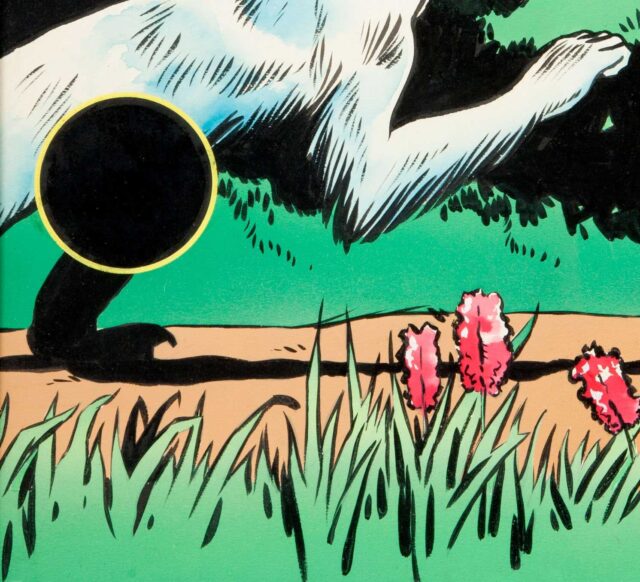
In The World of Steve Ditko, author Blake Bell recounts a story about the publication of Ditko’s Static, a superhero tale serialized in the first three issues of Eclipse Monthly in 1983. Eclipse Editor Dean Mullaney initially altered Ditko’s script for the episode in #2 because it was “too wordy, and visually unappealing.” Bell agrees with Mullaney’s assessment, noting that Ditko’s debt to Ayn Rand “continued to have an impact on the quality of the storytelling” (145). Ditko, however, rejected the changes, and the story ran as he originally intended.

Mullany’s criticism reflects a widespread belief about comics storytelling: comics is primary a visual medium and so the text must always be dramatically subordinated (at least in terms of the space it occupies) to the images. But I think the intensity of Ditko’s sequence visually depends upon the fact that, as we move through the first three panels, words take up an increasing amount of space while the image decreases (with the fourth panel echoing the first):

We also have something I haven't read yet, but am super-excited about: a review of Charles Burns's The Hive written by The Orange Eats Creeps author Grace Krilanovich. Here's a brief clip:

The cast of characters found in Nitnit land includes mutant, decrepit or aged quasi-ethnic shopkeepers and loiterers, or otherwise quasi-human piglet men and humanoid lizard drones. The creases, scars and raw wounds on their hyper-specific faces contrasts sharply with Nitnit’s smooth (Caucasian) mask face, fixed in an expression of frazzled dismay.

The Hive references the pre-PC ethnic caricatures of Tintin comics and presents an Orientalist fantasy realm that is confusing and disorienting on purpose. In Nitnit, words, faces, roles and customs are indecipherable. Our comfort in recognition is partially dismantled. It looks almost like a place we could inhabit, and yet that only makes it more troubling as we strain to find a way to make sense of the gaps, where it betrays us. Johnny 23’s confusion is ours. Aggro lizard dudes berating you at every turn certainly don’t help.

And finally, we are also republishing a 2006 interview with Joost Swarte conducted by David Peniston and Kim Thompson. Here's an excerpt from that:

PENISTON: Can you name a few of your favorite artists or designers that you admire or who have had an influence on your artwork?

SWARTE: Well, when I was still studying industrial design, I learned about artists that worked for the De Stijl movement and the Bauhaus movement.

PENISTON: Like Gerrit Rietveld?

SWARTE: Yes, exactly. And I was very much interested in it because they seemed to work in the artistic field without making a choice on a medium. Rietveld started out as a furniture designer, as a carpenter, and he developed his interest in this field and just enlarged his disciplines. Besides him, there was the Dutch artist Theo Van Doesburg, the leader of the De Stijl movement, and he started within the funny borders of the Dada movement, which had an idealistic side. That is to say that Dada was a reaction to what happened in the First World War and they were artists that didn’t understand that culture, although everybody was always proud of European culture. But even within this culture it was still possible to have a disastrous war like the First World War and they reacted with their Dada movement. Now, I don’t know exactly if the war was the main goal, the impetus for it, or maybe the culture was already ready for a movement like Dada, but they made fun of whatever they liked to make fun of so it was sort of a ‘nothing is sacred’ movement.

PENISTON: Anti-Art.

SWARTE: Yes.

PENISTON: Anti-everything.

SWARTE: Not necessarily “anti-everything” because they had their own things they liked and wanted to do but nothing was sacred, which means also that they almost worshiped individuality so they gave freedom to the artists to do whatever they liked. Now if you at that period had said, “I like to make beautiful paintings,” that wouldn’t be considered as very Dada. But the reaction of the whole European culture, well, it was fun in a way and it made me also think. What made a great impression on me as a youth was the Provo movement in Amsterdam. That was young anarchists that made fun of the police, etc., and I thought it was very funny.

And links to comics pieces elsewhere are going to be relatively light, as I'm about a week out of date right now. (I'll try to go back and repost anything big that got missed as time goes on.)

—Occasional TCJ contributor Michel Fiffe has some thoughts on Ditko of his own, including his own interactions with the artist.

—Tom Spurgon interviews Gabe Fowler, proprietor of Brooklyn's Desert Island, editor of Smoke Signal, and co-founder of the Brooklyn Comics & Graphics Festival, which I can't believe is this weekend.

—At Comics Alliance, J. Caleb Mozzocco interviews Steven Weissman about his new comic-strip collection, Barack Hussein Obama, one of the weirdest books of the year. Still haven't wrapped my head around it, though I am enjoying the attempt.

—The aforementioned Joost Swarte has a video interview up right now (via):

—And finally, in the Not Comics category: Alan Moore has released a single:



Vin Doozel

I can't believe this week is STILL happening. I hope everyone out there is doing OK. Things are a little strange around here (Brooklyn) and a number of my gallerist and artist friends have been badly hit, particularly in Chelsea.

Anyhow, here what we have:

Tucker Stone brings us what we need to know about the recent George Lucas news. Which is... not much! And Peter Sattler closes out our Building Stories essay series in a fitting style.

One volume relates the heart-rending tale of a funeral and the protagonist’s participation therein, while a separate volume, closing with the death of Miss Kitty, casts doubt on whether that earlier story exited anywhere other than in the narrator’s pained imagination. (“Earlier,” of course, comes preloaded with scare-quotes, given Ware’s refusal to provide readers with a pre-set reading order.) At times, it seems that each page is an interaction of conflicting registers of memory. Images are overlaid with texts from different times, played at different speeds. Character’s visions are framed by their revisionary thoughts, often asking, “Why did I do that? Why did I think that?” Moments like these indicate how thoroughly, in Ware’s world, one’s life if open to revision – how memory, itself, is an act of “building” stories.

Elsewhere:

-Ben Jones of Problem Solverz, Paper Rad, etc., is opening a solo exhibition at at the Museum of Contemporary Art, Los Angeles, tonight. Large-scale video paintings and installations are in the offing. Should be great. Congratulations to my pal.

-A preview of the promising forthcoming graphic novel by Miriam Katin.

-Those Secret Acres boys blab about their goings-ons.

-TCJ-contributor Craig Fischer writes about Justin Green.

-And Ed Brubaker talks about leaving Captain America.

Take care everyone.

A Little Dazed

Well, I have power but Tim over in New Jersey doesn't. We're gonna run this site a little half-speed because things are just a little chaotic anyway. A little... strange.

Anyhow, today we have Isaac Cates' installment in the Ware/Building Stories essay series.

I finished reading Building Stories about an hour ago, and I’m already late on my deadline. Building Stories is big. It takes time to absorb. Even unpacking all the materials from the box requires time and space that I should have been giving to other things. (I have fantasies of building the paper model of the building that Drawn & Quarterly was selling at SPX, but those are mostly fantasies about having enough uncommitted time to assemble a huge, delicate, detailed model.)

-Elsewhere the big news is that Disney bought Lucasfilm. Lots of excitement in the world of merch!

-Here are some really fine drawings by Kevin Huizenga. I involuntarily smiled looking at these.

-The Paris Review interviews Adrian Tomine.

-And finally, you might wonder why I do this. Why persist? Why exist and care about comics? Well, here's your answer, starring cartoonists Frank Thorne and Wendy Pini:


Hatches

Assuming the internet hasn't been wasted out to sea today we have our latest Building Stories essay. Jacob Brogan writes about the role of memory in the narrative.

But if Building Stories calls paradoxical attention to necessary acts of amnesia, it also celebrates the awkward art of remembering, reveling in the way fragments of recollection constantly shape and reshape us. Ware organizes many of the book’s most formally compelling spreads around particular images, images that his individual panels circle like spokes on a wheel. These organizing emblems seem to be nothing so much as occasions for memory, sites around which otherwise distinct reflections cohere. Ordinarily, one strives to connect the diverse panels that make up a comics page by working through their temporal relationships to one another. By contrast, Building Stories often forces us to instead consider the thematic relations between the various sequences that make up each of these spreads, as well as their mutual bond to the central image that holds them together.

Elsewhere!

-Gee, I wish David Lasky would prepare New York like this.

-Joe Simon's collection is being auctioned off at Heritage. The artist certainly had some wonderful stuff. Here's a link to his own and Simon & Kirby studio work, but deeper searching reveals some gems from Jack Davis, Boody Rogers and others. I could look at those Boys' Ranch pages pretty much forever. Here's a bit more from the Simon archives. I'm always fascinated by what emerges from archives -- the things that were buried (I mean, a Boody Rogers page?), then things that must have been valued, etc. It provides a random, disjunctive snapshot of an artist's (mostly unconscious) sensibility.

-Speaking of sensibility...In the 1980s all teenage suburban comic fans aspired to this.

And two from the Times... artist Fiona Staples talks about the ongoing series Saga, and comics-inflected artist Trenton Doyle Hancock opens a show this week.


Pencil Box

Shawn Gilmore joins our Building Stories quasi-symposium with a piece on "formal disruption and narrative progress" in the book. Here's an excerpt:

There are complex patterns and resonant thematic connections here, but they operate in a slightly different mode than in Ware’s previous works. Building Stories is less maudlin than many of his previous works, instead presenting a more nuanced portrait of the long arc of a character’s life, with all of its psychological drama, conflicting emotions, and shifting commitments. In Jimmy Corrigan, Ware treated the epic saga of a particular family, spanning a century or so, and while we have some historical notes in Building Stories—for example, at one point, the landlady works in the old Carson, Pirie, Scott and Company Building during her youth in the mid-twentieth century—the focus is quite different.

This is a story of our moment, filled with iPads and cellphones, with the hectic day-to-day push and pull of life and the commitments of memory and old relationships. There are some of Ware’s tropes throughout—visual repetition and the importance of key locations in Chicago, the desire to affect change and the inability to do so, the rigorous attention to composition and uncluttered storytelling. But in Building Stories, these tropes are undercut by the lack of a master narrative that establishes and fixes the pieces together. Instead each book carves out a piece of the overall narrative, often leaving the rest to the side, offering only glimpses of the wider world in which the scene is set.

Tucker Stone is back again, as is his wont on Fridays, with a stripped-down column reviewing Julia Wertz and Tezuka on one hand, and old Punisher comics and unsatisfying superhero crossovers on the other.

Elsewhere:

—I'm sure some people are starting to get a little burnt out on Building Stories coverage, but The Los Angeles Review of Books has a couple more items for you to check out before you're done: the novelist Rick Moody reviewing the box set, and Casey Burchby with a top-drawer brief interview with Ware.

—The Independent has a good short profile/check-in with Syrian cartoonist Ali Ferzat.

—David Smay at HiLobrow makes a persuasive case for forgotten Surrealist "Claude Cahun" (Lucy Schwob) being a secret influence on V For Vendetta.

—And via D&Q, video of Brecht Evens making a mural:

Late-ish

Today on the site we take a break from the hustle and bustle of new comics, new interviews and Building Stories to look at the great illustrator Ed Sorel. The equally esteemed illustrator and writer R.O. Blechman wrote this profile of his friend and colleague. I have great affection for both artists -- they brilliantly capture the times they pass through, and do so with wit and humanity. Along with Milton Glaser, Seymour Chwast, Paul Davis, James McMullan and a couple others, they're kind of the last of the illustrator-humanists that briefly ruled the roost.

From the profile:

The special quality of Sorel is that he captures our zeitgeist as few artists have, and fells his victims with the rapier of irony rather than the blunderbuss of satire. In his first cover for The New Yorker, which happened to be Tina Brown’s inaugural issue, Sorel pictures a barechested, pink “Mohawked rocker arrogantly draping himself on the seat of a horse” drawn carriage. Sorel even gets the rocker’s shoes right. They are pointed like daggers at the back of the hapless driver. Traveling through the gorgeous autumn scenery of Central Park, our passenger might as well be Yeats’s rough beast “slouching towards Bethlehem.”

Elsewhere:

-Less genteel but quite articulate: the latest Comic Books Are Burning in Hell.

-This possibly upcoming new magazine about actual design processes looks interesting. The editor has a good track record. Steve Heller asks some good questions.

-Image Comics artists talk about drawing.

-More on genre at The New Yorker. I would need Tim's brain to properly discuss this.

-And congrats to TCJ-contributor and pal Dash Shaw on this announcement of new comics on the way. I've seen material from both projects -- incredibly exciting stuff.


Bodies of Work

Today on the site, we have Chris Mautner's interview with Glyn Dillon, creator of the new graphic novel, The Nao of Brown. Here's a brief exchange:

MAUTNER: You were talking about your brother’s influence on you in making comics. Do you feel competitive with him?

DILLON: When I was young and just boldly, precociously going to editors and showing them my work, I think they didn’t turn me away because they knew I was Steve’s brother. If I wasn’t his brother, they might have said, “Come back when you’re a bit better.” But they’d always be kind enough to entertain me when I went into their offices and bugged them. But my brother was always very conscious of not wanting there to be any nepotism, so he never helped out. I never did any work for Deadline until he stopped editing it. It was the next phase of the editors that came in that invited me to do some work. So I didn’t feel competitive, no. Not with him. In the early days of the Internet when Google was brand-new I’d Google my name and there was some quote that said, “Glyn Dillon, Steve Dillon’s less talented brother.”

MAUTNER: Ouch.

DILLON: I suppose that spurs me on a little bit, but I don’t feel direct competition with him. He’s lovely. We get on really well.

We also continue our coverage of Chris Ware's Building Stories with Joanna Davis-McElligatt's "Body Schemas", which examines the way Ware handles human physicality:

If Jimmy Corrigan is a comic about men and representations of race, then Building Stories is about women and representations of sex and gender. As such, Ware’s attention to the principles of physiognomy have turned corporeal, centered almost compulsively on the female body. His protagonist is singularly obsessed with her body’s shape and size, an attention that is often expressed as self-loathing. Women’s bodies are everywhere in Building Stories: the protagonist’s childhood, young adult, pregnant, post-baby, and middle-aged bodies; her landlord’s youthful and elderly bodies; the bodies of the protagonist’s friends, including her best friend, Stephanie, who is recurrently mocked for being “fat”; the body of her downstairs neighbor, who in middle age has developed “child-bearing hips … without bearing any child”; and the infant body of the protagonist’s daughter, Lucy, blown up to an enormous size in the middle of a page.

Elsewhere on the internet:

—The Phoenix New Times interviews Carol Tyler in advance of the final installment of You'll Never Know.

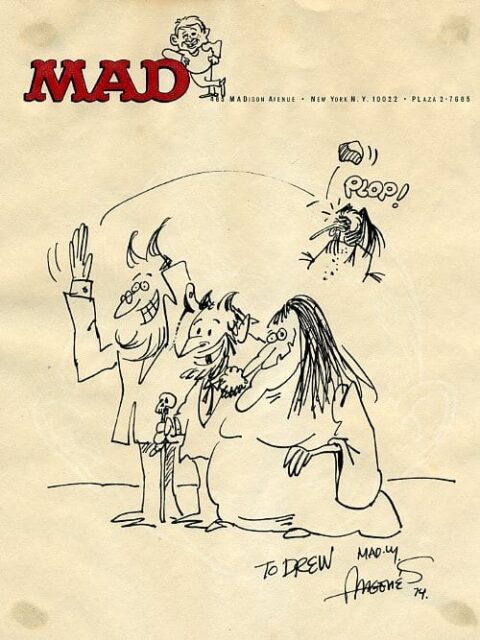
—Drew Friedman shares several personalized drawings he's received from Mad artists.

—Sean T. Collins reads and critiques 67 different comic-book issues at once.

—Matthias Wivel republishes his 2004 interview with Gary Panter.

—At the Hooded Utilitarian, Noah Berlatsky takes note of Joe Sacco, and Jacob Canfield worries about Johnny Ryan and Benjamin Marra.

—Apparently Clark Kent quit his job or something? I'm not going to link to them (such behavior should not be rewarded), but newspapers are actually reporting on this comic-book plot point as if it is news. This continual urge on the part of the media to treat fictional events as newsworthy developments is the one thing comics as an art form has going for it that no other American art form seems to, but boy does it seem dumb.

Liking Comics

Today on the site we have Joe McCulloch giving us the latest in funny book releases.

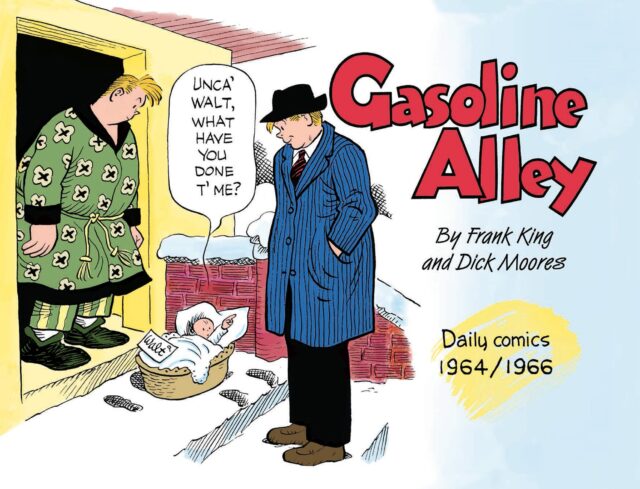
My own recent reading reading has included the new IDW/Library of American Comics-published Gasoline Alley. It's 1964-1966 by Dick Moores, who was Frank King's assistant and then successor.

I don't often use my kid-self as a gauge for comics, but I have to say, this strip, which I read five days a week throughout the 1980s, more or less signals "comics" to me. Just the lines and shapes alone remind me of straightforward enjoyment not just of the strip itself but of "comics", a category that might also include Far SideSteve Roper and Mike Nomad and Spider-Man.

Seeing this artist's work for the first time in 25 or so years has been delightful. Moores' Gasoline Alley is not King's. Moores is not graceful like King was, but instead brings mid-century solidity to the people and places. He was an exacting craftsman seemingly utterly at home in his pictorial world. This sequence, below, is crisp and clear cartooning, full of personality but all in service to the moment it depicts which, in purely formal terms, is kind of challenging. A handful of moving parts, and Moores brings the reader right in and manages wonderful extraneous details (the truck driver's face, the planks of the bridge, the mallet) as well. Like King, Moore had real graphic flair.

There's pleasure to be taken in being led through such a complete-drawn world by such a steady guide. Moores' lines are thick and resolute, his pace and attitude free of anxiety. There is no strangeness in his work. Rather, there are on-model characters that work through various situations that resolve nicely and without ambiguity. In other words, it's the fantasy America that, every now and then, I like to drop into. But better still, it's really fine and classic cartooning, and that craft, in service to a sense of decency that King established almost a century ago, makes for heartening reading.

Still elsewhere -- old comics only:

-Some early Katy Keene ovah heah!

-Some seriously incredible details in this Simon and Kirby spread.

-Abe Lincoln: always good for comics.

Nudder Time

Another week begins, and the Chris Ware/Building Stories mini-symposium isn't over yet. Today we have Georgiana Banta's essay on the book, focusing in on Ware's use of silence. An excerpt:

In a separate series of snow-suffused panels, the monologue of the heartbroken protagonist juxtaposes the silence of despair with the soothing quiet of expected, even longed-for extinction. She looks through the film of falling snow to imagine her death, and the relief that death would bring her, and to remember the sense-enhancing silence of childhood, of long Saturdays spent drawing. In the longer flipbook the snow burial appears in a different, more emollient light. In the diaper-change scene our gaze wanders to the snow-coated windows behind the doting mother. We realize the snow doesn’t layer any higher from one panel to the next, which tells us how much time has passed in between panels. It’s a matter of minutes, which fall here as slowly and lackadaisically as snowflakes. The wordless flipbook suggests a dilated, endlessly elastic sense of time by monitoring the almost imperceptibly shifting curlings of a cat asleep on the bed. In moments such as these the silence is situational rather than imposed, and the quiet lull of the panels emerges from the unnaturally prolonged focus on naturally quiet phases of life.

We also have Rob Clough's review of Circles Cycles Circuits, by Dunja Jankovic.

Elsewhwere:

—Rachel Cooke reviews Building Stories at The Guardian. The one thing that has surprised me most so far about the reception to this book is how many people have been disappointed that Ware has given no set reading order—it's as if the very idea of making sense of the book independently of the author makes them anxious.

—Big Interviews, Dept.: Gilbert and Jaime Hernandez talk entertainingly and at length with the A.V. Club, and Julia Wertz talks to Tom Spurgeon.

—Gary Panter has a short tribute to mangaka/tv hero Yoshikazu Ebisu.

—Philip Nel has written up a NYC Crockett Johnson-based walking tour.

—And for a certain segment of the comics world, Caleb Mozzocco is sadly right.

Paper Compulsions

Ok then. Here we are.

We have the sixth in our series of essays on Building Stories, this one by Margaret Fink, focusing on the central character's disability.

What we have among these papers is the funny high-low meeting of major human questions of how we make meaning, how we know things, and how to act (hermeneutic, epistemological, and ethical concerns) with the ordinariness of tourist traffic, toast, fellatio, and Facebook.  So many of the novel’s reviewers explicate beautifully how Ware is asking us to think about how meaning is made, and how the odd format unsettles routine reading practices, but as far as the ways in which gender, race, and ability inflect the protagonist’s experience, there’s been an eerie silence.  The critical—and potentially political—clout that Building Stories wields risks going unnoticed, perhaps, because of its subtlety and its embeddedness in the mundane. Oppressive, and unfortunately still normative, interpretations of disability see it as a life-wrecking condition, a subhuman existence; if a way of seeing or representing starts from these assumptions, disability as a characteristic of a human being metastatizes, becoming the only salient feature. If the New York Times run I analyzed in TCCW managed to represent disability as something quotidian by mostly eliding it in the verbal register, this novel form of Building Stories has managed to represent disability as having a real weight in the unfolding of a life without making it exert the kind of overwhelming gravitational pull that ableist interpretations of disability have to assume.

And Tucker Stone and co. bring what they need to bring to those that need to need it.

Because the combination is irresistible, here's Tucker, Joe McCulloch, Matt Seneca and Chris Mautner talking about Building Stories.

More Building Stories, this time by Douglas Wolk in the NY Times Book Review.

Other topics and other places:

Tom Spurgeon has the most cogent analysis of this week's Shuster/Superman decision.

Here's an interview with Sammy Harkham, whose Everything Together I published.

This is a funny and fairly true post about trying to get published over at First Second. I'm not quite so gung-ho on collaboration or super duper niceness, per se, but a sense of being human beings in it together is important, that's for sure. That sense is indeed pretty rare.

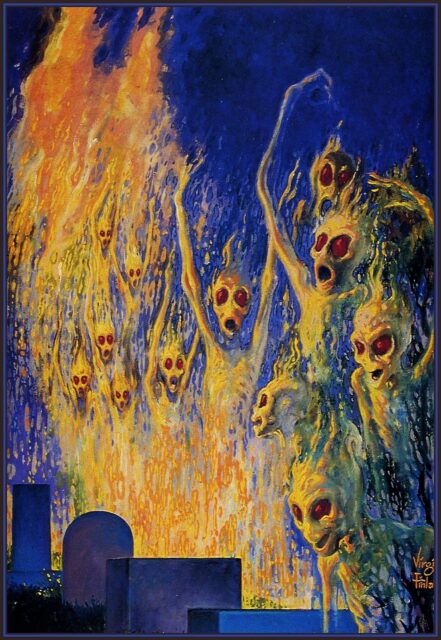
Hey, it's Virgil Finlay, who looks better and better with every passing year. I like a fantasy artist not afraid to be out and out weird.

Here's a piece of a debate about the fuuuuttttturrrre of books.


Bubbling Up

And today we take a brief break from our ongoing Building Stories fest to offer something a little different, Brandon Soderberg's interview with Josh Simmons, creator of one of 2012's most underappreciated books, The Furry Trap, who's now also a filmmaker. Here's one exchange:

SODERBERG: Let's talk about sequencing the stories in The Furry Trap. It seems like the main stories are organized so that each one is darker than the previous one. It says a lot that "In A Land Of Magic" – which depicts a wizard neck-fucked by a rage-filled knight – is the most humorous, but I do feel like each story moves readers into a harsher world.

SIMMONS: Overall, the stories do get less funny, and less fantasy-based. The most obvious way to see this is to compare the first story to the last. "Magic" is the most cartoonishly drawn, it's brightly colored, and obviously fantastic in its subject matter. With "Demonwood", I tried to do a naturalistic strip in terms of the drawing, the characters, the coloring, and even, the supernatural elements. At the same time however, the stories also generally, become less graphic. The idea of leaving the worst of it up to the reader's imagination works not just in individual stories, but in the final story in relation to the rest of the book. "Demonwood" shows no sex or violence at all. Yet, what is going to happen is described very clearly, and it is maybe the harshest story of all.

Elsewhere on the internet:

Fast Company talks to Scott McCloud about how the ideas he laid out in Understanding Comics relate to, uh, business leadership. I am allergic to this kind of talk, and am thus unable to tell you anything useful about it except that it exists.

—The cartoonist and publisher Tom Kaczynski is profiled by the Minneapolis Star-Tribune. Uncivilized Books is one of the most intriguing small and relatively new companies out there.

—According to the Hollywood Reporter, Warner Bros. has just won a major ruling in the ongoing Superman rights case. This will likely head to appeal.

—Missed this Editor & Publisher interview with Richard Thompson earlier this week about the end of Cul de Sac.

—If I lived in Cleveland, I'd get this new library card.

—WFMU's Benjamen Walker paid Gary Panter a studio visit.

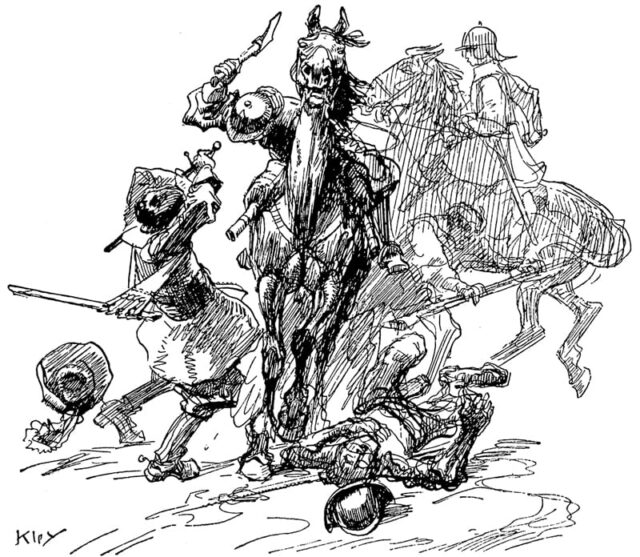
—Finally, Joe Procopio sent me an e-mail about a guest post at Today's Inspiration he wrote about "the lost art" of Heinrich Kley, and I'm glad he did.

Beach Bully

Well now here's some more Chris Ware for you. The latest in our series, this one by Matt Godbey covering the implications for urban life in Building Stories.

Today, more than ever, cities are defined by a near constant sense flux which has the effect of leaving us feeling disoriented and overcome by a flood nostalgic memories, both real and imagined, for cities as they used to exist and the lives we lived in those past iterations. In the face of the provisional nature of the urban experience, buildings offer at least the possibility of order and structure, no matter how messy the lives of the inhabitants they contain.

Ware assembles Building Stories as the literal embodiment of this messiness, self-consciously subverting linear narrative conventions in the box’s structure in order to reflect and shape the stories told inside. Throughout the strips, time constantly shifts and circles back on itself, which parallels the circuitous nature of time in our daily lives.

And TCJ-columnist Craig Fischer spoke to the artist himself and comes to us with a report on that encounter and how it affected his perception of the publication.

Building Stories taxes our abilities to build a tight story out of its discourse fragments. If you begin the book by reading one of the “Branford Bee” pamphlets, for instance, and then read the volume designed as a children’s Little Golden Book, you’ll be hard-pressed to see connections between the two. You’ll have to wait until you stumble across the panel in yet another piece of Building Stories that indicates that “Branford Bee” is a bedtime story that the central protagonist sometimes reads to her daughter. Yet even though this information places “Branford Bee” in the same world as the human characters, it doesn’t tell us the order in which we should read “Bee” in relation to the main narrative. I suspect that no matter how much I analyze Building Stories, some challenges and ambiguities will remain.

Elsewhere (old comics and no comics):

D&Q goes Rookie in NYC. I missed these parties and now I have to live with my regrets.

-Oh that Turok!

-Some nice and weird early Jack Cole comics here.

-Jog has a great story about Jesus. Of course.

Waaaay off topic, let's take a moment and look at some moments in this Bob Montana 1963 Archie Sunday.

Look at Veronica's swim cap. What a wonderful rubber pattern. Check out the porcupine-like hair on the bully. And then look at how the bottom tier builds to a (classic) crowd scene and the comes down with a gag. Woof. Great workman-like cartooning.

The Linchpin

As on every Tuesday, Joe McCulloch has This Week in Comics!, your annotated list of the most interesting new comics being released this week.

Elsewhere on the internet:

—The Building Stories juggernaut is rolling along. Here's Paul Gravett's review, here's a critical back-and-forth at A.V. Club between Noel Murray and Tasha Robinson, and here's a short Q&A Chris Ware gave to the Guardian. (I have a feeling they were more careful with editing Ware after what happened to Dan Clowes.)

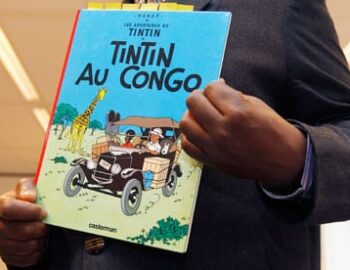
—The Guardian also has an interesting interview with Nathan Hamelberg of The Betweenship Group, regarding Sweden's controversial recent decision to reshelve some Tintin books due to racist elements.

—The great manga blog Same Hat is back after a way-too-long absence, with scanned images from a 1971 issue of Concerned Theatre Journal, packed with underground Japanese comics, and arguably the first manga translated into English. It includes the legendary Yoshiharu Tsuge story that would later be retitled "Screw-Style." Same Hat also thoughtfully provides a complete pdf of the issue for free download!

Cul de Sac creator Richard Thompson underwent brain surgery over the weekend, and convinced his doctor to let him draw during the procedure. Thompson explains over here.

—Laura Siegel Larson, daughter of Superman co-creator Jerry Siegel, has released an open letter regarding her family's longtime battle with Warner Bros./DC over the rights and profits due from Superman, and talks specifically about allegations made against attorney Marc Toberoff.

—Sean Howe, occasional TCJ contributor and author of Marvel Comics: The Untold Story, is interviewed about his book by Salon.

—Drew Friedman is selling prints of Al Jaffee.

—And finally, another of the SPX panel videos has been released. This time, it's Sammy Harkham, interviewed by your co-editor, Dan.

Moat

Today on the site we have the next Building Stories essay, this time by series editor David Ball:

How does this concentrated exploration of failure shape our understanding of these artists’ accomplishments, as well as their relationship to their own work? What Ware holds in common with these and other literary antecedents is the conviction that failure is a creative and generative force in artistic production, that it allows us a lens through which to discover human narratives that resist our peculiarly American insistence on success at all costs (viz. Ware’s rejected Fortune cover, one of the most pointed critiques of the global financial mess we continue to inhabit). Before him, Melville famously wrote that “failure is the true test of greatness,” and Faulkner claimed that he would be judged ultimately on “his splendid failure to do the impossible.” Ware’s rhetoric of failure, I argued in 2010, was an explicit look backward to these earlier, literary claims of productive failure; indeed, he cited the essay from which Melville talked about failure as the true test of greatness when composing his thumbnail history of literature for the cover of a VQR special issue titled “Writers on Writers.” Such failures might be more profitably read as the laments of literary experimentalists straining to break with artistic convention, the protests of those not inured to the ethical disorientation of America’s economic determinists and free-market fundamentalists, or the chronicles of a human condition straining against the inevitable cliff’s edge of mortality. Failure, these artists remind us, is what drives our stories, defines our ambitions, makes us most keenly human.

And elsewhere it's an orgy of interviews. We have your "Quotable Chris Ware" at The New Yorker and your "Rock Star" cartoonist Adrian Tomine at the LAist.

Jim Rugg brings us Matt Furie via Jim's podcast, while Tom Spurgeon does one of his nifty page-by-page interviews with The Carter Family's David Lasky and Frank M. Young. And finally, here's a good interview with longtime Marvel man Chris Claremont.

Suggested Reading Order

Our Building Stories celebration continues with another contribution from our David Ball-organized team of authors. Today's essay comes from Daniel Worden. Here's an excerpt:

Building Stories finds a curious paradox embedded within loss. In one large, newspaper-sized component of the text, "loss" describes both the death of a close friend, and the triumph of shedding a few pounds; one of these losses is tragic, the other desired. This duality gives Building Stories a complexity that is rare and profound. Loss in Building Stories is a condition of life, yet it is never complete. That is, no matter who dies or what is removed, every loss leaves behind a remainder in Ware’s world. This is perhaps most visible in Building Stories’ female protagonist, who loses the lower half of her leg as a child in a boating accident. While the leg is gone, it remains as an absence on the three inter-related large drawings of the protagonist’s body in a hardback book within Building Stories. The reader cannot help but notice the leg as absence, and the absence registers, itself, as a presence, a marker of individuality. What is lost, remains.

Rob Clough's High-Low column is back, too, with an enormous spotlight on several relatively new (or recently revived) small press publishers, including Koyama Press, Hic & Hoc, Conundrum Press, 2D Cloud, and Alternative Comics.

Tucker Stone had to call in sick with his column this morning, unfortunately, but if it's Tucker you want, you can always check in with the weekly podcast he does with fellow Journal regulars Chris Mautner, Joe McCulloch, and Matt Seneca. Last week, they devoted most of an episode to Love & Rockets, and Tucker made a point about Jaime Hernandez's comics in particular that is often obscured: it doesn't really matter what order you read them in. Partly this is due to the way the stories skip back and forth in time, but primarily it's because of the way Jaime tells his stories: even if you read every comic and story he's written in order of its publication, you're still going to feel like you're missing some of the backstory, because a lot of it still has never been revealed. Even when he introduces brand new characters, such as Tonta in the latest issue, he usually starts in media res, and it can feel as if you've joined the story after a long series of chapters have already been missed. Strangely, this replication of the effect you can get from reading old contextless comic books is also one of the most "realistic" aspects of Jaime's comics.

It's not that far off from what Ware's doing with Building Stories, actually, and speaking of correct "reading orders," Joe McCulloch has decided to suggest his own for that book. I haven't gone through his suggestion carefully to see how it works, so I'm probably wrong, but I'd suggest reading it in any order you want, then going back and doing it Joe's way the second time around. Part of the fun of Building Stories is knowing that your own experience with the book, right down to the order in which you read it, is likely to be unique.

—Ng Suat Tong has just announced nominations for the third quarter of his 2012 best online comics criticism search, and is looking for more. He's got a pretty good list going there now.

—Jessica Abel and Matt Madden have moved with their family to Angoulême, and Abel's published an enormous post about the move well worth reading.

—More podcast news: Gilbert and Jaime Hernandez are guests on the Bat Segundo Show, and Adrian Tomine and Joshua Glenn co-hosted an episode of Boing Boing's Gweek.

—Tom Hart has released an online comic about his late daughter, Rosalie Lightning. Be warned, it's genuinely heart-breaking.

Metal Burger

Today we have the first installment of Matthias Wivel's new column, Common Currency, which will focus on European comics. Matthias looks at the latest volume of Fabrice Neaud's diary comics, which uses American superheroes in an unusual fashion:

What we have here, then, is something almost unthinkable in American comics, at least until recently: an artist working at the most personal level, taking reality-based comics as far as anyone, and in doing so invoking the power of Galactus. And not the palatable original version from the work of the character’s creators, Jack Kirby and Stan Lee, but rather the one made by Byrne, an artist almost uniformly (if unfairly) reviled in American alternative comics. (Neaud also brings in Jim Starlin’s ’90s work, which is held in even lower esteem.) “Denis” goes on to tease out the meaning of the blank, white panel backgrounds used as often by Byrne as almost to constitute an auteurial signature. He describes this “plane of manifestations,” in which the celestial entities of the Marvel Universe occasionally appear, as a space “before creation”—a potent metaphor for pre-conceptual reality that Neaud, as explained, attempts subtly to harness in how he writes his life in comics.

And elsewhere:

Congrats to Lowlife cartoonist Ed Brubaker on selling a couple of TV pilots. Kidding aside, I really enjoy his comics writing and it'll be nice to see his sensibility in a different medium.

Monster Rally!

And odd news: Stan Lee Media, which the man himself is no longer involved with, is suing Marvel for ownership of various characters. Good times, everyone!

Here are some beautiful costume and period studies by classic illustrator E.F. Ward.

Steve Bissette shows us what's been on his drawing board.

And it's old pal Jon Vermilyea showing his stuff on the Juxtapoz site.

Rabbit Holes Everywhere

Chris Ware week continues, and so far it's much more pleasant to moderate than the unexpected Dave Sim month we just had ... go figure. This morning brings another installment of our David Ball-organized multi-author symposium, this time by Katherine Roeder. An excerpt from her essay:

I previously wrote about Ware’s facility with art historical conventions, which are once again on display here. The Renaissance system of linear perspective, use of symmetry, repetition of geometric forms and motifs, along with a resounding clarity of both color and line brings unity to the disparate pieces. This visual precision and orderliness sharply contrasts with the inherent messiness of his characters’ emotional lives. His main character is a woman who perceives herself as a failed artist; her tender drawings forming a counterpoint to the stark linearity of Ware’s compositions. In the smaller of the two included bound books, his cutaway views of her apartment building recall the tradition in seventeenth century Dutch genre scenes that depicted domestic interiors from the perspective of an unseen observer.

We also have an interview with Ware conducted by Chris Mautner. Here's a bit from that:

Having a family answered pretty much every question and problem I ever thought I had in life; it’s made me a much better person, I think, or at least I hope it has. Though it can’t solve one’s problems if one isn’t already somewhat stable, it can be the final catalyst towards the necessary firming up, or maturation, of the spirit (though America keeps assuring one that this is completely avoidable, if one prefers). I cringe with embarrassment when I think of my pioneer great-great-grandmother Clara F. Abbott and the privation and grimness she endured on the 1850s Nebraska prairie so I could … what? Draw comic books?

Elsewhere on the internet:

—There's plenty more Ware, including another interview conducted by the New Statesman, a registration-required selection of six favorite comics at the London Times, and a collection of interesting posters celebrating local Chicago history.

—But let's go back to Dave Sim for a moment. As many of you probably heard, over the weekend, IDW announced a deal to publish a collection of Sim covers. (This soon turned out to mean not just one volume but "three or four"; Sim-related ventures tend to get complicated.) Yesterday, IDW made another announcement, that they had signed a $30,000 deal to publish something called the High Society Audio Digital Comic Store Collected Edition. (This all happens, of course, in the context of the recent public negotiations with Fantagraphics.) This second deal I find much harder to understand, but presumably what exactly that euphonious title means will be made clear in time. In fact, I think it is likely that Robin McConnell of Inkstuds fame asked about it during his interview with Dave Sim last night. I haven't had a chance to listen to it yet, but it's one of the first things I plan on doing today.

—A couple of Daniel Clowes links. First, a pretty fun Tumblr devoted to Clowes fan art, and second, his official website has launched a new "oddities" section, starting with a pair of Ditko and Kirby pages inked by a young Dan Clowes.

—Over at Slate, James Sturm writes a brief tribute to Matt Groening, and provides examples of cartoons from a poster his CCS just gave Groening in honor of Life in Hell's end. (The artists include Alison Bechdel, Sammy Harkham, and Tom Tomorrow, among others.)

—I feel like a jerk linking to Sean Howe's Marvel Tumblr all the time, but he keeps posting incredible things, so I can't help it. Today, he's got a pretty amazing 1971 debate in which Stan Lee bitterly criticizes the comics industry's treatment of creators, and says, “I would tell any cartoonist who has an idea, think twice before you give it to a publisher.”

—Paul Gravett writes about Asterix in Great Britain.

—Glyn Dillon gave a really good interview to Mark Kardwell for Robot 6.

—Stephan Pastis of Pearls Before Swine has garnered a fair amount of attention for his recent statements on the future of newspaper strips—and the difficulty in making money cartooning online. Everyone who talks about online publishing makes sense to me, whether they're totally for it or totally against it.

—Matt Madden and Jessica Abel have announced the complete list of "Notable Comics" from this year's Best American Comics collection. They are also hosting a giveaway.

Tappy Toes

Today on the site:

We have an excerpt from TCJ-contributor Sean Howe's Marvel Comics: The Untold Story, which is out today. I recommend the book very highly -- it's deeply researched and vividly written. Sean successfully weaves together a fascinating and detailed history of the company with evocative portraits of the people who drove it. The hippy 1970s and flat-out bizarre '80s, are particularly well done. Basically it's the book I always wanted to read about Marvel. Anyhow, we pick up the story in the '90s.

And Joe McCulloch is here with thoughts on Ware, Chaland and the best photo of Building Stories yet published.

Elsewhere:

Speaking of Joe, he and Tucker Stone must be happy about the news of a Garth Ennis crime comic. Ennis is like a one-man pulp line.

Here's an interview (on his own site) with Allan Holtz, longtime historian and author of the recent American Newspaper Comics: An Encyclopedic Reference Guide.

I haven't seen this before, though it's a few weeks old: An oral history of SpongeBob SquarePants by Tom Heintjes.

Not comics, but close enough: A series of stunning Seymour Chwast-designed advertisements.


Bitterblogz

Today we are bringing you the first installment of a multi-author feature. To mark the release of Chris Ware’s decade-in-the-making Building Stories, we are featuring a series of essays from the contributors to the 2010 volume The Comics of Chris Ware: Drawing is a Way of Thinking. Each contributor is revisiting the argument they made in that edited collection two years ago in light of the newly released work, speaking to the ways in which Ware’s comics have either transformed in that time or are returning to the themes of his earlier publications. First up is Martha Kuhlman, with "The God of Small Things". We will continue with other installments over the next few weeks.

The Journal's own Jeet Heer has already weighed in on Building Stories for the Globe and Mail.

—I don't think it's talking out of school to say that Jeet has been really excited about some of the recent Judge Dredd discussions that have been going on on the site. One thing I meant to link to but neglected to was that longtime 2000AD writer/editor Pat Mills has recently started a blog, and is recounting the story behind the character's origins.

—Another Jeet favorite, Seth, recently spoke to the Moscow Times about his work on a new edition of Chekhov. (The paper also spoke to Maurice Vellekoop about what Seth was like in the early years.)

—Slate has announced a new annual Cartoonist Studio Prize, presented in conjunction with the Center for Cartoon Studies.

—Xavier Guilbert at du9 interviewed Anton Kannemeyer of Bittercomix, and very pleasantly for American monolinguists, the conversation has been translated into English.

—Two more interviews: Dane Martin at Murdering the Magic, and Tom Spurgeon at Virtual Memories.

—Another SPX panel has been posted on YouTube. This time, it's Gilbert Hernandez, interviewed by our own Sean T. Collins:

Happier Times

Good morning. Tucker and Abhay and Joe McCulloch are here to discuss Marvel, old comics, at least one web comic, and something about Daredevil. Here's a bit on Tezuka:

Do people who make contemporary comics read this guy? (This has nothing to do with that “make Morrison read Powr Mastrs” meme from a few irritating interviews back.) Or is Tezuka like Fugazi sort of became, an example that people are more comfortable envying than imitating. It’s not that Message to Adolf is some mind-blistering perfect thing–although it is very, very good in parts–but that it, like so many other Tezukian examples, does so much. There are so many different sorts of things covered within, not just the long string of genre mash-ups and contemporary movie references that predate today’s culture, but visual weirdness, moments where the guy fills the page with intricate, breath-caught-in-chest cartooning, drunken pages full of detail and line, pages where you start to wonder if he had something to prove or just plenty of extra time or maybe, and this is my preference, he just got lost in the build phase and woke up hours into going too far.

Mark Siegel closes out his diary. Thank you, Mark.

And, well, we closed down the Dave Sim/Fantagraphics thread, but Dave was still writing, so here's his latest response.

Elsewhere online:

-H.M. Bateman was really a wonderfully genteel and skilled cartoonist. Funny, too.

-Hey, Gabrielle Bell is on tour.

-Sean Howe has a Dave Sim response of his own.

-Brecht Evens designed a mural-comic in Antwerp.

Have a good weekend.


Archival Edition

Today, we have the fourth installment of Mark Siegel's tenure at A Cartoonist's Diary. Anxious Paul Pope fans will want to check this one out.

Dan's pal and fan-favorite Nick Gazin is back at the site after a long absence, with a photo report on last week's New York Art Book Fair, which has a stronger comics presence than you might expect.

Finally, Rob Clough has reviewed Glyn Dillon's first full-length graphic novel, The Nao of Brown.

Elsewhere on the site are a lot of headaches, but moving to other parts of the internet:

—Grantland has a lengthy excerpt from Sean Howe's must-read Marvel Comics: The Untold Story.

—Gary Panter has some drawing tips. (Via everyone.)

—And Matthias Wivel has a lengthy rant against what he considers to be the mediocrity of New Yorker cartoons. Although some of his complaints are valid (especially about the recent years), I rarely find myself disagreeing with one of Wivel's pieces as often as I did on this one. Anyway, Wivel's always worth reading. All the same, I recommend Richard Gehr's column for this site as an antidote when you're done.

Beach Sculpture

Today on the site:

Well, you could help us determine if we've set some kind of commenting (or really any kind of) record for the ongoing group therapy session once called a "negotiation". Or you could better spend your time reading about Percy Crosby and the great comic strip "Skippy." Here's an excerpt from the excerpt:

 He learned something else from his keen observations of his parents in the present as well, something that makes its way only quietly around the edges of Skippy. In many ways Skippy Skinner was, as almost every profile of Crosby would insist, a semi-autobiographical portrait of the artist as a young rapscallion. His boss at Life magazine, the legendary artist and editor Charles Dana Gibson, would routinely refer to Crosby as “Skippy himself.” But in some important ways this was not quite the case. Skippy Skinner was the child of a physician, his mother a stylish hostess and socialite. Skippy was raised comfortably in the Protestant Church and his “Americanness” was never in question. Percy Crosby’s childhood was necessarily a more complex story. While Crosby would be largely raised Protestant under his mother’s guidance, Catholicism remained a vital part of the family’s spiritual fabric—not least in the form of the family whose visits so ruffled his mother’s feathers. And of course Percy did not grow up the son of a successful town doctor, but the son of an art supply dealer, one whose economic fortunes were far from stable.

And Mark Siegel takes us through Day 3 of his diary.

Elsewhere:

This is a hilarious account of MorrisonCon (yes, that's a real thing) last weekend, including crying and evaluations of DC Entertainment staff members circa 1977 1982  2012.

Sean Howe would like to correct some misconceptions about his upcoming (excellent) book Marvel Comics: The Untold Story.

Are you a fan of The Master? Dapper Dan is. If so, you may well appreciate a Richard Corben (You're welcome, Jeet!) image here.