Twelve Twelve

On the site today:

I'm pleased to welcome writer Rudy Rucker to the site. His most recent novel is Turing & Burroughs. (Described as: "What if Alan Turing, founder of the modern computer age, escaped assassination by the secret service to become the lover of Beat author William Burroughs? What if they mutated into giant shapeshifting slugs, fled the FBI, raised Burroughs's wife from the dead, and tweaked the H-bombs of Los Alamos?"). So who better to review the two new Burroughs-centered releases, Observed While Falling: Bill Burroughs, Ah Pook, and Me and The Lost Art of Ah Pook: Images from the Graphic Novel. And so:

The results are staggering—the best pictures of dicks that I’ve ever seen.  I think in particular of an image in The Lost Art of Ah Pook Is Here, showing a Mayan musician with an epic hard-on that reaches up to the strings of his electric guitar. A little insect-man with a curled proboscis and a dangling ball-sack stands on the neck of the guitar.  Wonderfully jagged fields of force trail from the guitar to the musician’s hand.  This design was made for a 1978 Burroughs-inspired “Cumhu T-shirt.” Cumhu is a Mayan character in Ah Pook.  If and where this T-shirt was ever marketed isn’t explained.  In any case, McNeill and Fantagraphics should consider reissuing reissue this transgressive T.

Elsewhere:

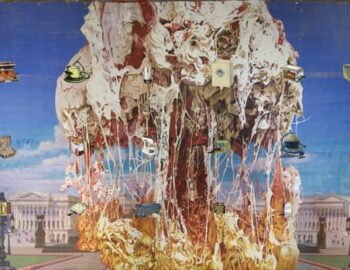
Some videos now (thanks GB): Here's comics-relevant artist Jim Shaw on the occasion of his retrospective at BALTIC Centre for Contemporary Art.

http://vimeo.com/51432225

And here's Justin Green in Portugal.

Holiday shopping alert: Noel Freibert posters. I love the wonky geometry of these designs.

Hey it's Brother Voodoo.

And Robin McConnell talks to Ruppert and Mulot.

Large Print

It's Tuesday, which means it's Joe McCulloch talking about the new comics day. This week, he's also takes a long look at the latest comic book from Stammerin' Steve Ditko:

Tucked away in the midst of all this meaningful mayhem is a six-page chiller that could have come straight out of The Many Ghosts of Dr. Graves, had that august forum abandoned the supernatural entirely for a hardcore focus on psychological distress. Nobody in American comics has ever mastered the art of people freaking the fuck out like Steve Ditko, and that's what we get in this Poe-like flyover of a thief who can't stop believing that all eyes are upon his guilty brow.

I tend to find these kinds of stories the most humanizing of Ditko's works; for all his invocation of the excellent potential of the human mind, the visceral kick of his art comes from his profound sensitivity to anxiety, obsession, self-loathing: the mess of human living in a damned fallen world. Looks at that guy's head *splitting in half* in panel 4 - is that a photocopier effect? Definitely it seems like a foreign technological incursion; all those broken sentences read otherwise like the collapse of language in the face of unutterable realizations, words transformed into marks in perfect parity with the lines that compose the bodies of every Ditko hero and villains. These are stories where everybody says what they mean, and... what they mean... is...

Well, you can read it, right? Can't you see? With your own eyes?

And again, we've added another round of tributes to the Spain Rodriguez post. If you haven't checked it out for a while, it's worth doing so. New contributors include Sharon Rudahl, Craig Fischer, Charles Dallas, and M.K. Brown.

Also, Fantagraphics has a post giving us all a sneak peek at the upcoming print issue of The Comics Journal, and it looks pretty amazing.

Elsewhere on the internet:

—Speaking of Steve Ditko, he's still corresponding with fans.

—Chris Ware is here to help you with your holiday shopping, both with a long list of his favorite gift books, and a blog post about the books he most enjoyed reading this year.

—Steven Weissman goes comics shopping with Mario Hernandez.

—And I haven't had a chance to listen to this yet, but it's got to be good on some level: Josh Simmons interviewed by Dean Haspiel.

Underdone

Dan is unavailable to blog right now, so I'll be your replacement host this morning. Today on the site, our columnist Shaenon Garrity makes a long-awaited return with a new piece on three genres of webcomics that are surprisingly underproduced.

Around the time my webcomics reading list included one comic about two married female itinerant laborers in space, one about eighteenth-century Bavarian religious politics, one that was at the time devoted to drawing gag strips based on Nancy Drew book covers, and one with a holiday installment entitled “The Year Kenny Loggins Ruined Christmas”, I started to suspect that Rule 34 had officially extended from pornography to webcomics, and there was now a webcomic on literally every subject conceivable to the human mind. That was two whole years ago.

And yet, despite all the thousands of comics knocking around in the tubes, some genres remain surprisingly underrepresented.

We have also continued to add new additions to our Spain Rodriguez tributes post, including a contribution from Kim Deitch.

Elsewhere on the internet:

Wired has a lengthy excerpt from Alan Moore's introductory essay for the Occupy Comics project.

—Sean Kleefeld has pulled out a bit from Sean Howe's Marvel Comics history worth remembering whenever the Pearl Harbor anniversary comes around.

—And I missed this earlier this year, and can't remember where I finally learned about it, but someone at Drawger has posted the entire contents of Frank Tashlin's How to Create Cartoons.

Express Train

A faulty alarm clock means this post is getting written fast, faster than any post has been written before. Expect cleanup soon, after I take a break to ride a train for a while...

Today on the site, Tucker Stone and Abhay Khosla take on the comics and news of the day in their usual over-the-top fashion.

—I guess some extramarital love letters of Charles Schulz are going on auction. I feel gross just reporting that, but I guess it's newsworthy on some level.

—How about something a bit less vampirish? Rob Clough draws attention to a new proposed project by comics journalist Dan Archer.

—Bob Heer reports that Steve Ditko has written an essay addressing the claims that Jack Kirby had a hand in creating Spider-Man.

—The Boston Phoenix has a long interview with Sean Howe about his Marvel Comics history.

—Kailyn Kent writes about "art vs. comics" anxiety she has found in recent discussions of Saul Steinberg.

—I haven't had a chance to read this yet, but am curious about any kind of academic article comparing an old Captain Marvel story to The Master.

—This video about selling all of your old comics & just getting it over with? Maybe, today this is sounding good.

Money in the Pocket

Well, so far here in Miami Art is winning against Comics. Last night I saw some fine Copleys and the best Picabia painting David Salle never painted. But not a back issue in sight. Where's a Frank Santoro when you need him? This is, in fact, seven years to the week that Frank and I flew on down to Miami and heard the alarming news that one artist friend had a stash of weed strapped to his scrotum. Alarming, but somehow not discouraging. Yes, in those halcyon days one could glimpse a Paper Rad skate ramp made from cardboard amidst the Miami glitterati. Also: People now dead that were then alive. Anyhow! I finished my installation this evening and I'm all set. So, on to the internets.

Today on the site we have a profile of John T. McCutcheon by R.C. Harvey. Harv! Tell us what you know:

Newspaper artists furnished all the illustrative material for the papers of the day. The halftone engraving process for reproducing photographs had been perfected in 1886, but it was not adapted successfully to the big rotary presses until the New York Tribune did it in 1897.  Until the turn of the century, newspaper sketch artists were graphic reporters, covering all the events that photographers were to cover later. McCutcheon drew pictures of everything. He illustrated major news events, often working from sketches made on-the-spot. A typical day might include a trial in the morning, a sporting event or crime scene or a local catastrophe in the afternoon, and an art show opening or a flood or fire in the evening. When not dashing from event to event with a pad of paper under his arm, he worked in the office, doing portraits of politicians and dignitaries, and decorations for a variety of columns and stories. At the beginning, he was more illustrator than cartoonist, and he also wrote occasional feature pieces and newsstories.

What else is happening? I don't really know, but here goes:

Sean Howe keeps delivering the goods. Here he is on Ms. Marvel.

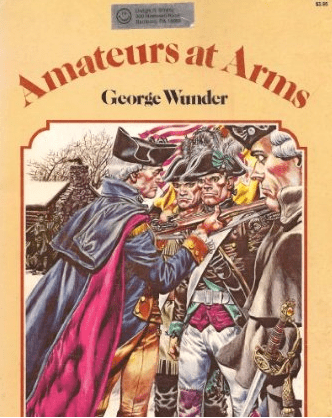
I'm one of the only people I know who likes George Wunder. So I guess this is made for me. Wunder drew the oddest faces this side of Boody Rogers and did paintings of early American history for a book in the 1970s. Those are weird weird weird. I love them.

Slow links day? Maybe. I'm on the run, though, so I ask you to ponder George Wunder until the next one of these rolls around.


Eyes on the Back of Your Head

Today we have Rob Clough's review of Julia Wertz's latest book, The Infinite Wait, a very funny book which probably hasn't received enough attention. Here's how he opens it:

In a sense, the heart of each of the three short stories in Julia Wertz's memoir The Infinite Wait is the impact that discovering comics has had on her life. Ostensibly, the book is broken up into "Industry", a chronological account of her life as seen through her job history; "The Infinite Wait", her account of learning that she suffered from chronic systemic lupus; and "A Strange and Curious Place", a love letter to the first public library she haunted as a child. While each story can be read as discrete narratives, the truth is that this book is a sort of recapitulation and revisitation of the themes and events she explored in her first three books (The Fart Party Volumes 1 & 2; Drinking At The Movies). There's a deeper level of narrative, thematic and emotional complexity that becomes more apparent as one reads the book for a second time. Wertz doesn't exactly disown her earlier works in this book, but she goes into detail as to why each of them makes her uncomfortable from her current perspective.

We are still continuing to add new contributions to our page of Spain Rodriguez tributes. Since Monday, Art Spiegelman, Gary Groth, Noah Van Sciver, and Sam Henderson have joined the ranks. We are still waiting on a few more, so don't forget to check back in every now and again. We are also posting another short interview with Spain conducted by Gary in 2001, and regarding his then-unusual foray into the world of online comics.

Elsewhere:

—Speaking of comics that deserve more attention, Boing Boing has gathered a bunch of comics figures' recommendations for best-of-the-year lists. I don't agree with all of the choices, and think there are many titles that belong on those lists that didn't make it, but still ... there are a lot of decent or better comics coming out these days.

—Which leads us nicely to Ng Suat Tong's review of Mattotti and Zentner's Crackle of the Frost.

—Words Without Borders has a new webcomic from David B. and Hervé Tanquerelle.

—ICv2 has a two-part interview with the perennially underrated Aline Kominsky-Crumb.

—Finally, here's a new (to me) Tumblr devoted to terrible editorial cartoons. (via)

Gourmet Burger

I'm in Miami this week for the art fairs and, in particular, the NADA Art Fair, which is suddenly a family affair. If you're in Miami, come on by. Alas, I will not be trying to sell Real Deal back issues to contemporary art collectors, but I'll be hungry for some good comics talk. I can see you a Boody Rogers if you'll raise me a Dori Seda. Or you can always place your ace in the hole: Dick Ayers. Bring on the comic book gabbing. Maybe I'll finally get to the bottom of that comics vs. are conflict I hear so much about. I'll take a survey. Maybe I'll solve it while balancing 3 mojitos on my nose. Who knows.

Well anyway, all of this is to say two things:

1) If you know of some awesome back-issue joint in Miami Beach, let me know.

2) My blogging this week will be ever even worse than usual.

Ok, it's today:

In addition to the usual comic book opining, Joe McCulloch has some thoughts on Alan Moore's foray into short filmmaking.

Elsewhere:

The big news is that Karen Berger is resigning from her position as Executive Editor & Senior Vice President at DC's Vertigo imprint. She's made quite a legacy there. More details as they're available.

Here's CNN on manga artist Takehiko Inoue of Slam Dunk notoriety.

This looks interesting -- an iPad and/or PDF periodical of journalism in comics form called Symbolia. 

Steve Heller highlights a kind of hilariously modernist (thought though beautiful) design by the great Bradbury Thompson for the Famous Artists Schools 1963 annual report.

And best of all, here's Seth on the demise of Bazooka Joe.

Hi Rez Lo Rez

Today, Craig Fischer turns in an essay, "The Lives of Insects", reflecting on photography, comics, and Eddie Campbell. Here's an excerpt:

In many of his recent books, Campbell combines changes to his visual style with stories about the satisfactions and challenges of being an artist. Fate of the Artist is all about Campbell losing himself as a cartoonist, father and man; on the first full story page of the book, Campbell declares (in third person) that “the artist has come to despise his art, his self and his readers.” “You can all go to fuck,” he says to us while in bed, exhausted, lying in a pose that echoes Henry Wallis’ famous painting The Death of Chatterton (1856) and the rest of Fate is an assemblage of vignettes and narrative games that display the symptoms of Campbell’s mid-life crisis, including hypochondria and writer’s block. Fate ends with Campbell’s adaptation of an O. Henry short story, “The Confessions of a Humorist” (1903), where a successful humor writer, a twin for Campbell himself, grimly strip-mines his family and friends for ideas (“I became a harpy, a moloch, a vampire”). The humorist only finds peace when he quits writing and takes a new job as an accountant for a mortician, and it’s clear that Campbell wants a new job too: he’s tired of exploiting his family for material, tired of being a comic book auteur, tired of being.

The tributes to Spain Rodriguez continue to pour in. Some of the new contributors include Trina Robbins, Carol Tyler, Glenn Bray, Joe Sacco, Mary Fleener, Justin Green, R. Crumb, and Lorraine Chamberlain. More are still on the way, so stay tuned. We have also posted a Spain sketchbook selection originally published in The Comics Journal in 1992.

There are many, many links to get to, so here goes:

—First, two more sad deaths to report: Jeff Millar, the 70-year-old writer of Tank McNamara (and popular movie reviewer), and Josh Medors, who passed away from spinal cancer at the age of 36.

—Good interviews with interesting comics-related people include: Chris Ware at Rookie, Julia Wertz at the L.A. Times, David Hine at the Graphic Novel Reporter, and Paul Krassner at Print.

—Apparently, there will be no more Bazooka Joe comics.

—A former cartoonist turned neuroscientist is studying the effects of reading comics on the brain, and his work has been profiled in Discover.

—Jeff Trexler speculates about the possibility of Alan Moore and Dave Gibbons regaining the copyright of Watchmen as early as next year.

—Printer problems led to the loss of many of Colleen Doran's negatives, and she is looking for help in restoring A Distant Soil.

—Sean Howe catches a nice bit of red-pencil work in Stan Lee's introduction to Origins of Marvel Comics.

—Laura Sneddon reports and adds her own thoughts to a discussion about gender-balance issues at this year's first installment of the British Comic Awards.

—At a formal event in Montreal, Alejandro Jodorowsky was given the title of "Grand Rectum."

Wired has an unsummarizable story up about Portland cartoonist Chad Essley and his relationship to the fugitive software mogul John McAfee, currently "sought for questioning in a Belizean murder case."

—Our own Joe McCulloch writes about the late director Tony Scott at film site Mubi, which naturally leads to a lot of Jack Kirby discussion.


Prime

Today on the site:

We will continue to post tributes to the late Spain Rodriguez as they come in. And Tucker, Abhay and Nate bring an extra-long version of the column. Tucker has many comics reviews and Abhay explains Grant Morrison for the un- (or just under-) initiated.

My favorite part of the “Grant Morrison Vs. The Word Aspiring” section was Morrison declaring, “I was even a guest on panels at comics conventions”, referring to a UK comic convention that took place somewhere between 1979 and 1982. We’ve all lived long enough where admitting you attended a comic convention in the UK between 1979 and 1982 is a strategy for winning an argument, and not character evidence being used against someone accused of interfering with preschoolers. Bam Pow.

See? You have your Friday all set now. Elsewhere:

-The Washington Post on Spain.

-Chris Ware gets the lengthy New York Review of Books treatment. Plus bonus Gore Vidal quote.

-The late 19th/early 20th century German magazine Jugend held many comic and illustration treasures. Here are some.

-Dan Zettwoch on holiday time.

-The latest episode of Comic Books Are Burning in Hell is up. Good news: Punisher is discussed.

-To play you into your weekend: It's The Hulk on drums.

Trashman Lives

You all know by now the sad news: underground comics legend Spain Rodriguez died yesterday at the age of 72. Patrick Rosenkranz has written our obituary for the artist, a Buffalo native and member of the Zap Comix Collective. Here's an excerpt:

He was born and raised in Buffalo, a blue-collar city in upstate New York, where his colorful and formative upbringing provided a wealth of anecdotes and legends for his later comic stories. He picked up the nickname Spain at around 12 years old, when he heard some kids in the neighborhood bragging about their Irish ancestry. He defiantly claimed Spain was just as good as Ireland, so they began calling him that. It stuck.

[...]

The usual suspects often criticized him for his depiction of violence and sexual activity, but he didn’t really care. “I’m just a crude dude in a lewd mood,” he would reply. Comics were his chosen medium of expression and he wielded his pen and brush with impunity.

“It seems to refer to the core of the American vision or the democratic vision, that there’s an aspect of yourself that you owe to your society in terms of omission and commission, but there’s an aspect of your life that you don’t owe to anybody. This is something that there’s a constant fight over. In terms of underground comix they certainly broke through that fifties fantasy that conservatives are so dedicated to maintaining, despite that fact that it was a fantasy in the fifties, and now it’s an absurd charade. Comic books are really something that are part of some core of this country. And that’s the struggle. Liberty and justice for all should mean you can say what you want. Unless you can show some tangible harm I’m doing to somebody, fuck off. That’s the battle line I want to be on. I intend to remain here until they carry me away on my back. If it doesn’t sound too grandiose, I think the undergrounds were really a continuation of the American Revolution. Hell, it sounds too grandiose, but so what?”

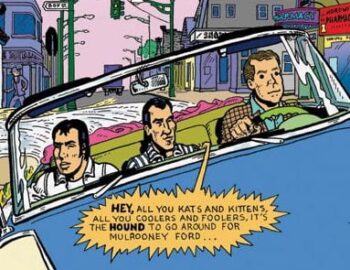
Rosenkranz visited and profiled Spain this spring, in conjunction with his most recent book, Cruisin' with the Hound (which was reviewed by Jeet Heer for this site in June). In honor of Spain's legacy, we have reposted Rosenkranz's article, as well as a two-part interview conducted by Gary Groth in 1998. We will also be publishing a collection of tributes to the man, starting with a beautiful comic strip from Bill Griffith, along with remembrances from Gary Panter and Mario Hernandez. We plan to add to that post throughout the following days, as more come in.

Also worth a look is the short documentary, Trashman: The Art of Spain Rodriguez, directed by the late artist's wife, Susan Stern:

Spain Rodriguez 1940-2012

Very sad news today: Manuel "Spain" Rodriguez passed away at 7:00 this morning from cancer-related causes. He was 72 years old.

Spain was one of our all-time great cartoonists, and one who was still making first-rate work. Earlier this year he was the subject of a retrospective exhibition  at the Burchfield Penney Art Center in his hometown of Buffalo. His most recent book, Cruisin' with the Hound, contained some of his very best work and was released just 7 months ago and reviewed on this site by Jeet Heer.

We will have ongoing coverage of Spain's work, but in the meantime here's his two-part interview with Gary Groth, and here's Patrick Rosenkranz's affectionate profile from earlier this year.

He'll be sorely missed. Our condolences to his friends and family.

Taking Requests

Today on the site Rob Clough reviews Swell/Invisible Forces by the artist and performer Julliacks.

It can be a bit daunting to engage with these sorts of comics; they demand that you accept them on their own terms or not at all. They can be difficult to adjust to as a reader. But once a reader has locked into this style, the stories become impossible to put down. It doesn’t hurt that Juliacks has excellent compositional chops as a cartoonist, seamlessly assembling a number of complicated images on each page. Her figure drawing is simple and usually displays a somewhat primitivist technique, but it’s not unusual to see her go a bit more abstract in her character representations.

The Boston Phoenix has cancelled Karl Stevens' comic strip, Failure, after an installment insulted the paper's advertisers. Stevens announced it, and then told some more, on his Facebook page.

Comic book writer and editor Bob Greenberger discusses Marvel Comics: The Untold Story, and while I don't agree with his take, I do like that he shells out some more minutia, because, hey, I re-read old TCJ Newswatch columns for fun.

Brandon Graham's second issue of Multiple Warheads is previewed at Comics Alliance.

It's animated Kirby machinery. Two-second diversion alert.


Back on the Street

You know what Tuesday means: Joe McCulloch is here to tell us all about the newest and most interesting looking comics being sold in stores. He is also very likely appending a fascinating and thought-provoking little mini-essay about some strange or overlooked or otherwise forgotten old comic that he bought at a flea market or maybe obtained via Cyber Monday or something.

Elsewhere, there are other things to read and ponder online, including:

Gabrielle Bell talking to Bill Baker at the Morton Report.

Chris Ware talking to Touré on MSNBC!

—An interview with the Belgian composer Walter Hus, who has adapted Ware's Lint into an "opera."

—Two graphic novels (Joff Winterhart's Days of the Bagnold Summer, and Bryan & Mary Talbot's Dotter of Her Father's Eyes) have been nominated for the Costa award, a fairly prestigious literary award previously given only to books without so many drawings.

—Paul Gravett has written a mini-profile of Jodi Bernet.

—Jason writes about Wally Wood's EC work ("Let the page breathe a bit").

—R. Sikoryak appears on Gil Roth's Virtual Memories podcast.

—I probably don't link to Inkstuds as often as I should, because I assume most everyone reading this who's in the market for comics-related podcasts already keeps tabs on it, but the show has recently posted its annual year's end critics' roundtable, which this year features two Journal columnists, Jeet Heer and Joe McCulloch, and a former editor of the magazine, Tom Spurgeon. (Also, I really enjoyed some of the photos in Robin McConnell's just-posted BCGF report.)

—The CBLDF blog is another place I probably should link to more often, and their recent roundup of posts on historical examples of comics censorship is a good excuse.

—At the New York Times Book Review, Deborah Solomon reviews Deirdre Bair's new massive doorstopper biography of cartooning great Saul Steinberg.

—And finally, Quentin Blake talks to the Tate (via):

Washing News

On the site today:

Ken Parille returns with an excellent multi-level historical reading of the first two panels from Charles Burns' excellent new book The Hive. Ken's essay nicely exposes the multi-layered nature of the book, which Grace Krilanovich nicely sussed out on this site. Here's Ken:

In a graphic novel, each panel participates in a complex dialogue with other panels. It’s also part of a larger historical conversation involving hundreds of similar panels from earlier comics. These contexts — the comic itself and the comic-in-history — lend each image interpretive resonance and possibility.

And elsewhere:

The internet was ablaze over the weekend with Grant Morrison's point-by-point commentary on an article that mentions how he and Alan Moore don't like each other. Or something like that. If you're still reading this blurb then you probably already know if you want to click through, in which case, hey, you'll soon know more than I do about the whole thing. It made for entertaining reading in the sense that I find relationships played out at comic book conventions and in letter columns pretty entertaining! In fact, I sort of wish more cartoonists would settle personal relationships in public. It used to be commonplace at ol' TCJ, but now we have to rely entirely on the over-50 crowd (like our man Dave Sim) to re-up on the personal public drama. Ah well. A boy can dream.

Still further into the internet we find an interview with BCGF partner and now new publisher Bill Kartalopolous.

In other publishing news, as you probably know, Arthur Magazine is coming back, and now the web site is back online.

There are not enough comics equivalents to the kind of books mentioned in this essay about "supplemental work", and I love them all. Off the top of my head I can pine for books collecting essays and miscellany by Patrick Rosenkranz, R. Fiore, Carter Scholz and so many others. Basically TCJ functions as one giant supplemental work which we can never seem to mine enough.

Finally, I like the frequency with which I see new material from Simon Hanselman. It means not all of it has to be great and I can just enjoy the ongoing process in real time. Very satisfying.


A Continent to Despoil and Poison

If you're American, as Dan and I are, as well as most of the Journal's staff and readership, today is not a day for digging into comic-book news; it's a day to travel vast distances and prepare your appetite for an over-large Thanksgiving dinner. Maybe there will be a bit of drinking for some folks to help them cope with unpleasant relatives; maybe there will be tears. Good times are in store for many, too. Strong, loving families seen too rarely. In any case, there is no place for comics gossip today or tomorrow or the next day. So we will save our links 'til Monday. (I apologize to our non-American readers for the interruption.)

But if you absolutely need some kind of comics-related material to make it through, perhaps to read on a plane or train, or simply to keep you occupied, we have decided to reprint Gary Groth's 1994 interview with Jeff Smith, the incredibly successful self-publisher and creator of Bone and (later) RASL. Here's an exchange from relatively early in the interview:

GROTH: So what year did you finally get to Ohio State?

SMITH: 1982. I said to myself, “OK, am I really going to work in factories for the rest of my life? No, I think I’ll go back to college.” So I enrolled at OSU, and one of the reasons I went was because sometime in there I got really hooked on Doonesbury. I had decided I wanted to take a shot at newspaper strips. I carried around these three giant treasury-size editions, almost like Bibles. I thought they were the next evolution after Walt Kelly, for me. That was the most popular strip on campus at the time too. So I picked OSU mostly because they had the Lantern, which was a daily newspaper. It had a circulation of 50,000. In my mind, that was exactly the tool I needed to practice my vocation. I had come to the realization that I wasn’t going o be able to go to school to get taught how to do this, so the only thing I could do was find somewhere I could practice. So I took one journalism class in order to be on the paper and I enrolled as a fine arts student, then submitted some Thorn strips to the Lantern and they accepted them, and off I went.

GROTH: So you actually enrolled with the explicit thought of having a strip in the paper.

SMITH: Yes, absolutely. In art school, they explained to me that cartooning was just a complete bastard child of the arts and wasn’t real. That was kind of shocking to an 18-year-old. “Oh my God! You mean I’m not allowed to be a cartoonist? Is that what you’re trying to say to me?” So immediately I began looking for ways to use this system that didn’t accept me in ways I could at least use it. I went to 3-D concept classes, then went home at night and would start my comic strip about 9 o’clock at night, finish by 2 at the latest, and I did that every day for four years.

GROTH: So you’re an incredibly disciplined individual.

SMITH: It sounds that way when you say it … [Laughs.]

GROTH: But in reality you’re lazy!

SMITH: Yeah!

Okay, everybody, have a good Thanksgiving!

Funny Like That

Hey guess what: It's a holiday week. So we're going to bring you Jog (or rather, we'll ride on his endless coattails) today, and then tomorrow we'll toss an archival interview at you, and then, fair warning, we're gonna take Thursday and Friday off. Let's all take this opportunity to read back issues and catch up on Floyd Gottfredson archive books. Just stick to comics.

Elsewhere:

Well, this sure seems like a lot of dough to spend on Calvin and Hobbes. Watterson held onto his originals, so there aren't many of these on the market. Combine that with a generation regarding the strip as iconic, and that generation now in a position to act on that regard and... well... it's still a ton of money. More than a McCay or a Herriman, but less than a McFarlane. What a world.


Tangentially comics-related (she was instrumental in Maus being published by Pantheon): Graphic designer Louise Fili has a new monograph out.

Another early 20th century humorist to think about.

-The Peacemaker!

-I am thankful for Gene Ahern, above many, but not all things. Gene Ahern. Would've liked to have asked him some questions, mostly about beards and pot.

Turkey Shoot

A short American holiday week begins with Rob Clough and his review of Noah Van Sciver's The Hypo, the story of a relatively undersung portion of Abraham Lincoln's young life, and a book that I think rightly made a lot of people reevaluate Van Sciver. Good stuff. Here's a bit of Rob's review:

Van Sciver's greatest achievement in this book is his storytelling restraint. He lets his cross-hatching gets across the grime of a Springfield that wasn't as civilized as its inhabitants might have thought. He wants to show the reader a different side of the Lincoln we grew up reading about in the history books, but also wants the reader to connect this younger man to the future president. More than anything, he wants to show Lincoln as in some ways a very typical young man: he makes stupid decisions, is fickle in his attentions (Lincoln falls for Todd's younger sister), and has no idea what to do with his life (while knowing he wants to do something great), and even engages in cruel humor at someone else's expense.

Elsewhere, there are lots of things to read.

—Tom Spurgeon interviews the great Howard Cruse.

—Robert Crumb and Aline Kominsky-Crumb (and scholar Roger Sabin) are interviewed for a comics-related podcast at The Guardian.

—Chris Ware is interviewed in a shortish, written-through piece by Mike Doherty at the National Post.

Publishers Weekly has a starred review of the newly released new edition of Jon Lewis's True Swamp. I don't normally flag PW reviews like that, but this is an interesting book to get this treatment in the sense that it's a reprint from a time in comics that's gone relatively underappreciated, and is maybe due for a revival.

—I've been seeing this photo passed along as depicting Picasso dressed up as Popeye. (The page itself says as much.) But that can't be right—Popeye doesn't have a beard! Isn't he really supposed to be dressed as Captain Haddock? Of course, neither Popeye nor Haddock wore glasses that I can recall...

—I always enjoy the guided tours Chris Mautner leads through publishers' catalogs. Here's his spring 2013 D&Q.

—Patrick Dean has a photo-filled post regarding the opening of the Jack Davis exhibit he curated at the Georgia Museum of Art. (via)

—Somehow I missed this: Marvel and DC are no longer delaying the release of their digital comics until after the print versions have been released in stores. This is not an unexpected development, but it is possibly a consequential one.

—I guess reviews-in-the-form-of-comics are a genuine Thing now. Vera Brosgol reviews David Nytra in the New York Times. (via)

—Sam Gaskin and Simon Hanselmann had a discussion on Facebook, which later moved to Tumblr.

—Pádraig Ó Méalóid finishes up an in-depth three-part exploration of the alleged influence of Robert Mayer's mostly forgotten 1970s novel Superfolks on the writing of Alan Moore, with an epilogue devoted to Moore's relationship with Grant Morrison. One, two, three.

—Only sorta comics: Robert Boyd writes about the comics-influenced work of artist Trenton Doyle Hancock.

Lasagna

Good morning to you and to Tucker Stone and friends. It's been a very busy week in comics and I'm looking forward to a detailed report on BCGF fashion and personalities.

What else is online?

The historian and publisher Ray Zone has passed away. He was known to comics readers for the numerous 3-D comics he produced, particularly in the 1980s, but he also published some great 2-D comics, including the excellent mini comic series (and later collection) Zomoid Illustories. Mark Evanier has a remembrance. And here is Ray Zone's web site and wikipedia entry.

Artist (and occasionally comics maker) Jim Drain has our best perspective on the philosophy of Garfield. He also has a beautiful show up in Los Angeles.

Jonathon Keats writes about Art Spiegelman's eclecticism for Forbes.

Alan Moore will soon release a short film. Here's a preview.

Jim Rugg has posted a time-lapse video of one of his astonishing ballpoint pen drawings.

Here's an overview of Shakespeare adaptions in comics from American Theatre.

I plunged into this array of adapted Shakespeare as a fan of the plays but no expert, and as a novice in the world of comics and graphic novels. My interest emerged from my own experience, at age eight or nine, during Nixon’s first term, of reading The Iliad and A Tale of Two Cities, not in their original versions, but via the series of comic books called Classics Illustrated. Although they ceased publication in 1962, my brother and I scavenged barely vintage copies from paper drives and tag sales and secured them in a tin breadbox (also found curbside); we would withdraw them from their cask on a narrow loft in our garage to read about Sydney Carton and Helen of Troy. Why we required an aerie for this I don’t know—our schoolteacher mother wasn’t likely to have objected. As a result, I am no snob when it comes to this form, but rather a childhood fan looking to see how it has developed.

Speaking of accessibility issues, here's comics writer Kelly Sue DeConnick on the gender gap in comic books.

And here's an audio recording of a panel discussion this year's CAKE about women and graphic autobiography with Rina Ayuyang, Julia Wertz, Leslie Stein, Marian Runk, Keiler Roberts and Lucy Knisley.


Toss ‘n’ Turn

Today we have Sean Michael Robinson's lengthy interview with David Lasky, the veteran alternative comics artist who just put out his debut graphic novel, The Carter Family (which he created in collaboration with Frank Young). Lasky discusses many things, from his plans to write comics about bread delivery to his multiple attempts to do justice to James Joyce in comics form. He also talks a little about why it took him so long to put out a full-length book:

When it’s a minicomic you can take certain risks and there’s no danger. It’s a low-budget operation. But when it becomes a book some publisher is putting up a lot of money and then it’s out there in bookstores and libraries and it’s representing alternative comics to the world. And if it’s not a very good book, I cringe. “Oh, why did they put that out?” I’m not saying that my peers put out a lot of bad books. I think there’s a lot of great books. But if I put out a book I want it to be my best thing possible. So I have had publishers express interest, but ... partly I wasn’t ready, partly I felt they were maybe just overeager, or maybe were gonna put out something that wasn’t my best material.

Elsewhere:

—Adrian Tomine's been on a roll lately, media-wise (and here on the blog), but it's all good stuff. He talked again to The New Yorker about how he creates cover images for the magazine, and I missed earlier this great episode of Too Much Information, which features a very good audio interview with Tomine about surviving superstorms. (It also features another guest telling an incredible (in both senses of the word) story about the teenaged Mitt Romney meeting Guy Debord in Paris, 1968.)

—I said I was done reading BCGF reports, and that's mostly true, but I'd be remiss not to mention at least two more, from Robert Boyd and Rina Ayuyang, two supersmart comics people who had very different experiences.

—I am also going to steal Tom Spurgeon's link to a story I unfortunately missed myself last week, to Tablet's article about Paul Reinman. Read it.

—Finally, is it necessary for someone here at TCJ.com to address the recent cosplay "controversy?" I hope not, because it's really obvious who the cretins are in that back-and-forth, and I don't feel like dealing with it. You don't see a lot of cosplay related to the kinds of comics we mostly cover, anyway, though the way things to go with The Young People™, I'm sure that will change sooner than I expect. There will probably be a lot of "sexy" Tux Dog outfits at the BCGF of 2020.

The Well

Today we have R. Fiore on Sean Howe's book, Marvel Comics: The Untold Story. Fiore lived through a chunk of this story as a critic for TCJ. Here he is:

Howe’s story has four phases: (1) The Golden Eggs Are Laid, and Now They Belong to the Farmer; (2) Stan’s Not Here; (3) It’s Jim Shooter’s Universe, We Just Live in It; and (4) Strip Mining. Though the first phase is the most creative period in the history of Marvel Comics, it’s actually the least interesting part of Marvel Comics. This is in the first place because it is not Untold but told many times, and in the second place because there was actually very little human interaction. After the purge the Goodman comics operation was reduced to little more than Stan Lee in a bleak corner of the office, far from the window and close to the draft. The comics were produced by a handful of stalwart, high output freelancers led by Jack Kirby and Steve Ditko, who might come into the office once a week to discuss new assignments. In shifting their focus from monsters to men of steel they were, in true Magazine Management fashion, imitating a DC’s semi-successful initiative of reviving costumed characters.

Elsewhere:

Here's a fine interview with Jim Woodring on the subject of visions.

Timothy Callahan writes about 11 comics he brought back from BCGF.

Wow, this is really gorgeous skeleton-inflected Milton Glaser work.

A very unusual story involving the cartoonist Paul Reinman. Via.

Not comics: This is a good Philip Roth fantasy.

Don’t Want to Talk About It

It's Tuesday, which means it's Joe McCulloch day, and this week his column's a doozy, featuring copious images from and commentary on three untranslated manga magazines Joe bought while in New York recently.

I love Big Comic. Established in 1968, it's among the oldest seinen manga anthologies still going today, 300+ pages for ¥300, delivered every two weeks to a particularized audience of guys facing, experiencing, or at least contemplating middle age. "Comics for Men" means 'old souls only,' and that credo often seems to extend to the contributors, many of whom have known many decades of service to Japan's storied comics industry. This aspect helps me maintain perspective as a non-Japanese reader; half the fun of 'reading' untranslated manga for me is pouring over the internet for elusive bits of information on semi-familiar titles, validating that yes - that's the guy I thought it was, the mangaka everybody used to talk about in North America, who seemed to drop off the face of the Earth. He's still working, still knowing a circulation of maybe half a million... but foreign appeal is a capricious thing.

He also previews the week's new releases, of course.

The reason Joe was in NYC isn't hard to guess: he was here for the BCGF. Unexpected family obligations meant I couldn't go this year, but from all accounts, it went pretty great. Fantagraphics has a photo report here, and Tom Spurgeon turns in his traditional recap here. I'm sure many other reports are on their way, but honestly, I don't want to read anything about the show, which you can safely put down to sour grapes.

In the course of his column, Joe also discusses the horror manga artists Junjo Ito, who is also the focus of a recent post by Noah Berlatsky.

And Jeet Heer writes a really nice tribute to the beloved Toronto comic store The Beguiling for the National Post on the occasion of the store's 25th anniversary.

Okay, and otherwise, it's interview city lately. Here are a bunch of cartoonists worth listening to:

Quentin Blake at Metro.

Gabrielle Bell at the Paris Review.

Ethan Rilly at Robot 6.

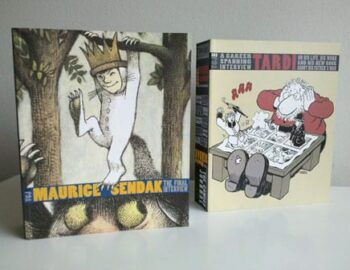
Maurice Sendak at The Believer. (missed this one.)

—Adrian Tomine for the Los Angeles Review of Books:

Substitute Pepperoni

It's been a weekend all right. BCGF 2012 went off without a hitch and now it's all over but the blogging.

Today on the site:

Cartoonist, writer and educator Paul Karasik pens a 14-part review of Chris Ware's Building Stories. I loved publishing Paul on TCJ. He is the very first cartoonist I ever interviewed, way back in The Ganzfeld 1. Here's a sample thought from the review:

Real Estate ad:

This 14-story charmer is built to exacting standards. Solidly constructed by master craftsman yet luxurious and appealing. Many distinctive features. Easy access to visual cortex. Some TLC needed. Must be seen to be believed.

Patrick Rosenkranz, the foremost chronicler of underground comics, recently visited S. Clay Wilson and has a report on the artist's condition, as well as some thoughts on Wilson's art and context.

Wilson’s favorite word is still “No!” He used to be a motor mouth but now he’s mostly monosyllabic. After a long life dedicated to being the baddest boy in comix, he’s become a grand old man, but he’s no longer in his right mind. He used to be able to out-talk, out-booze, out-cuss, out-draw, and outrage almost anyone but he doesn’t drink, smoke, snort or draw dirty pictures any more. He doesn’t walk much either and seldom leaves the house, and only in a wheelchair. He used to start each day answering a stack of correspondence with a variety of pens, rubber stamps and assorted collage materials, and then spend each day listening to talk radio while diligently drawing comics and commissions in his small home studio. Now he watches movies on TV while lying on the couch or in his hospital bed.

And in comic book link news...

An essay by Emily Cooke about writers she calls "The semiautobiographers", including Alison Bechdel. (via KH)

All of these writers — the new semiautobiographers, you might call them —  reject privacy and propriety for openness and provocation. In their novels-from-life they aim for a synthesis of the personal and the intellectual on the one hand, and the fictional and the nonfictional on the other.

In related news, the complete Shazam live action series is on DVD and here's a substitute for ever having to watch it (or an enticement to watch it, depending...)

 More artwork from the Joe Simon estate, including a really beautiful Mort Meskin page.

And finally, here's preview for the English language release of Joann Sfar's The Rabbi's Cat animated film.

http://vimeo.com/52961473

Hangover

Good morning, friends. Tucker Stone got too toasted during all the NYC-based comics parties revolving around BCGF to write his column this week. But Rob Clough steps up to the plate with a review of the intriguing Solipsistic Pop #4. Here's a clip:

Editor and artist Tom Humberstone has made each new volume of his anthology Solipsistic Pop ever more complex, beautiful, and formally interesting. It is a formalist's funhouse in the vein of a Chris Ware, Jordan Crane, or Richard McGuire. To be sure, there's plenty of narrative and emotional content to be found here as well (as there also is in the work of Ware, Crane, and McGuire, of course), but the artists in this anthology run with this issue's theme ("Maps") and take it all the way. Funded by an Indiegogo campaign, Humberstone spared no expense in making the whole package look just right.

I say "package" quite literally, because there are any number of intricate parts that make up this anthology. SP4 comes in a blue folder with comics on the front, back, and inside, depicting the prologue, key, and epilogue to John Miers' story, "It Is Always Too Late To Save Krypton".

Elsewhere:

—Over at CBR, our own Chris Mautner talks to Sammy Harkham about his recent collection, Everything Together.

—Paging Matthias Wivel: New Yorker cartoonist Bruce Edward Kaplan talks to Fast Company about how he got started at the magazine and how he makes the actual cartoons.

—Michael Silverblatt at KCRW's Bookworm is an excellent interviewer, so his discussion with Chris Ware is probably worth listening to even if you have overdosed on Building Stories hype.

—Jon Lewis, whose hardcover collection of True Swamp is debuting this weekend, just reposted an interview with him from last year that ran in Decibel magazine.

—Paul Gravett writes about the German cartoonist Line Hoven, who Blank Slate will be bringing out in English translation soon.

Snowy

Well, on we march. Today Michael Dean breaks the story of Al Feldstein and the Harvey Kurtzman estates taking actions to reclaim the copyrights to some of their work:

The Journal has learned that legendary EC writer/editor Al Feldstein and the estate of Mad editor/cartoonist Harvey Kurtzman have filed notices to reclaim the copyrights on their work. Feldstein confirmed the filing and told the Journal he has already reached a settlement with the William M. Gaines Agency, which owns all the EC horror, science-fiction and crime properties that Feldstein worked on as editor and writer in the early 1950s. Those titles include the classic Crypt of Terror, Vault of Horror, Tales from the Crypt, Haunt of Fear, Weird Fantasy and Weird Science. Gaines agency administrator Dorothy Crouch confirmed the agency has reached an agreement with Feldstein, but declined to comment further.

And Katie Haegele reviews Ron Regé Jr.'s highly anticipated new book, The Cartoon Utopia. I've been waiting for this one for years and I'm thrilled to see one of our very best cartoonists in peak form.

The comics in his new, almost literally dizzying book, The Cartoon Utopia, are packed with visual detail and collect his thoughts on magic in some of its many incarnations: astrology, the occult, sex magic, the “alchemy” of love relationships and other hermetic principles, and communion with animals. It opens with a short introduction by Maja D’Aoust, the self-described White Witch of L.A. who had Regé as a student in her “Magic School” lectures. In it, she describes the otherworldly sense of coincidence that swirled around the group of artists and musicians that took her class during this time.

Elsewhere:

Frieze on recent exhibitions of comics, including the Daniel Clowes retrospective.

Picture story maker and designer Bruno Munari as an art director.

A vintage Mort Weisinger article on Superman.

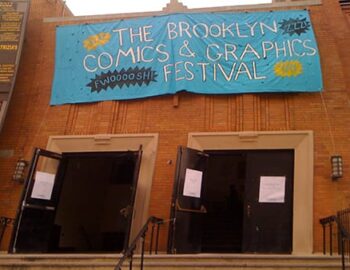
And The Brooklyn Comics and Graphics Festival, which I co-organize, really picks up steam today with, among other events, a couple exhibition openings, a film screening and a conversation about French comics.