Carmine Infantino, May 24, 1925 – April 4, 2013

Comic book artist, writer, art director and publisher Carmine Infantino has passed away at the age of 87. The introduction to Gary Groth's definitive interview with Infantino best sums up the man's achievements:

Like several others in his generation, Infantino began his career by doing a number of different jobs — writing, pencils, inks, even some support work — for a variety of publishers and titles. His strongest work during this period was for Shelly Mayer at National, where Infantino worked on popular second-tier superhero titles like Flash and Green Lantern.

Infantino produced his most fondly remembered and important comics art for DC in the “Silver Age” of the 1950s and 1960s. He was the artist on the title which marked the beginning of this period, the revamped Flash, from its launching in 1956 into the mid-’60s. His art on Adam Strange, with its elaborate cityscapes and elegant line-work, remains for many the quintessential American science-fiction comic. In 1964, his work on what was called the “new look” Batman saved that title from cancellation and pointed the way to several refashionings of the character of the next 25 years.

A popular artist and extremely effective cover designer, Infantino scaled back his artistic output at the height of his powers to become DC’s artistic director. He eventually became publisher in 1971 and then president of DC. In all of these positions, Infantino presided over a number of experimental titles and laudatory publishing efforts: comic-book version of pulp characters like The Shadow and Tarzan, the fan favorite Green Lantern-Green Arrow series, the Fourth World saga of Jack Kirby, and the revival of C.C. Beck’s Captain Marvel among the high-profile efforts; the luscious Sergio Aragones/Nick Cardy Bat Lash and the active recruitment of Filipino artists among his most important, lesser-known efforts.

We'll have further coverage next week.

Infantino was not the industry's only death this week. New Yorker cartoonist Ed Fisher passed away, and longtime Archie writer George Gladir also died.

On the site today:

Tucker Stone and co. with the wrap-up. And Lucy Knisley finishes out her week-long residence on the site.

Elsewhere:

Interview with Gilbert Hernandez are always a treat. Here's one.

Bil Keane will have a statue built in his honor.

I never ran across this group of images by Spain on his Facebook page.

Finally, here's something on self-publishing with a you-guess-it comics connection.


Multitudes

Today, Rob Clough reviews Miriam Katin's Letting Go:

The entire book is drawn in colored pencil. This adds a vibrancy and immediacy to the comic that makes it look like it was ripped right out of Katin's sketchbook. It also allows her to shift from naturalism to a cartoonier style with little effort. Katin's own self-caricature is one of the best I've ever seen from an autobiographical cartoonist. The scribbly lines of her hair, the slightly pointy nose, the tiny but wriggly eyebrows that express so much emotion and the way her posture alternates between slumped shoulders and excitedly active tell the story of a woman who is so often bursting with energy. In real life, Katin is poised, stylish, and charismatic, so it is funny to see her depict herself as slightly disheveled and neurotic in the pages of her book.

And Lucy Knisley is on day four of her Cartoonist's Diary.

Elsewhere:

—Speaking of Katin, she drew a fun short comic about the NYC launch of her new book tour.

—Another sad comics death this week, with the passing of European cartoonist Fred.

—In a smart get, Tom Spurgeon interviews the Society of Illustrators' Anelle Miller about this year's MoCCA festival. It will be interesting to see how things go there this weekend. People seem enthusiastic about the show in a way I haven't noticed in years.

—The CBLDF has posted a story and short documentary about Ryan Matheson, the young man arrested while crossing the border into Canada a few years ago, because of various manga images customs found on his laptop:

—The Toronto Globe and Mail profiles Shary Boyle in advance of the Venice Biennale, Paul Di Filippo reviews Ben Katchor's Hand-Drying in America, Discaholic Corner interviews R. Crumb about his record collection, and Paul Gravett turns in a late Angoulême report.

—It's been too long since we had a good debate about how much work Stan Lee did versus how much Jack Kirby and the other Marvel artists did, so I'm sad Stephen Bissette posted this old "Bullpen Bulletin" that I'm sure will put the matter to rest forever...

—Serge Gainsbourg loved to laugh.

—Sean Kleefeld finds the missing link in the Prince Valiant/Jack Kirby Demon story... And an unexplained something that had been nagging at my subconscious for years is suddenly free and clear.

—Abhay Khosla unearths a 1997-era art tutorial from Mike Mignola, and Spitzenprodukte does the same for a 1980s UK feminist propaganda comic featuring Tintin.

—Fiona Deans Halloran, author of the new Thomas Nast biography, appeared on C-SPAN2's Book TV.

Cat, Bag

Today on the site, Sean Rogers has a lengthy review of Ben Katchor's latest book, Hand-Drying in America and Other Stories, which collects over a decade's worth of color strips from Metropolis magazine.

Few books are as communal, as catch-all: every page a new hero, a new tale, a new voice. Or, rather, the same voice, a collective voice: Katchor yanks at his sentences with his characteristic taffy-pull between narration and dialogue, so that each merges into and props up the other, so that each person talks like the rest, and everyone contributes to the same conversation. A strip that begins with a narrator pondering the “velvet rope and stanchion” as “that most pernicious symbol of corporate greed,” accompanied by a management figure extolling the system’s virtues, soon opens its ranks to welcome in people off the street—“middle-aged men with hernias, unwed teenage mothers and tattooed first offenders”—who stage small, symbolic acts of rebellion, ducking under the ropes, violating the inflexible rules of the queue. “The physical expression of our free will,” they say, as Katchor draws them teetering, acrobatically off-kilter but assured in their acts of defiance. The effect is bathetic, of course—a bold “act of transgression” turned quixotic, the body awkwardly contorted to ridiculous effect and little gain—and yet Katchor, and the people who populate his America, will find their triumphs where they can.

And Lucy Knisley continues her week here with day three.

Elsewhere.... it's kind of a slow new day, aside from various PR blasts. So, really you oughta just read Sean's piece, above, but if you must leave this site, well here you go: The Decadence crew from the UK is discussed in this podcast. Hey, it's Billy Possum! This is a classic "Oooooh Comics" story. And the great Dylan Horrocks is having an art sale with amazingly affordable prices.

We’re Sunk

As on every Tuesday, today is the day that Joe McCulloch gives you his rundown of interesting-looking comics new in stores.

And it's also day two of Lucy Knisley's week as our cartoon diarist.

Elsewhere:

Bob Clarke, RIP. Tom Richmond and Mark Evanier have reminiscences. I'm sure more are to come. Clarke was one of the great finds of the Feldstein era of MAD, with a gift for pastiche that helped him create many memorable covers and parody ads into the '90s.

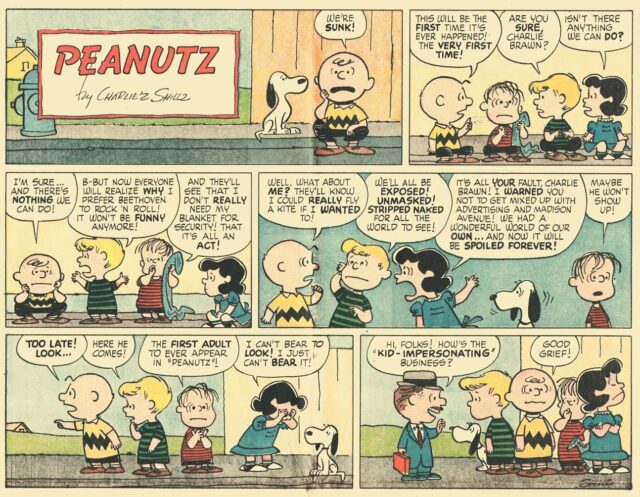
Here's a Peanuts parody by Clarke from around 1961 (found here):

—Another sad death: Paul Williams. He has no direct connection to comics that I am aware of, but as the founder of Crawdaddy (the first serious magazine of rock criticism) and as a promoter of (and later literary executor for) Philip K. Dick's writing, his cultural impact looms large. (Here's his 1975 Rolling Stone article on Dick that really got the ball rolling.)

—Stefan Kanfer writes about George Herriman and Krazy Kat for City Journal, and Robert Boyd reviews six semi-recent comics on his art blog.

—Sean Kleefeld posts an old Life magazine story explaining why Al Capp finally decided to let Lil' Abner get married.

—If you frequent more superhero-centric parts of the comics internet, you may have heard that Valiant is planning to relaunch the old Quantum & Woody series, without the original creators' involvement. Prompted by this, V.R. Gallagher reposted some old thoughts of Q&W writer Christopher Priest, and offered some of her own on working in superhero comics as a minority.

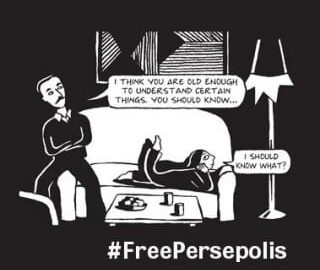
—Chip Kidd has created some images to use as memes in support of Marjane Satrapi's Persepolis in the ongoing Chicago schools case.

Tapestry Marple

Well it's a new day here, but hey, let's take a walk around memory lake with R. Fiore, who does not have fond memories of his decades-past debate with Harvey Pekar, which we recently posted.

I committed myself to several positions that I realized were ill-advised, but rather than pulling back on them I doubled down. On top of that I was in a savage mood generally, for reasons that had nothing to do with Harvey Pekar or his ideas. It had to do with a premature return to the world of dreary but remunerative work after a couple of years of working at a fun job with Fantagraphics, due to some very poor decisions I had made. In retrospect my performance in this conflict reminds me of nothing so much as that fight where Mike Tyson got frustrated and bit a piece of his opponent’s ear off.

And cartoonist Lucy Knisley, author of Relish, begins her week-long Cartoonist's Diary.

And elsewhere around the web:

Let's pop around and look at some comic book conventions. Here's a super-depressing panel at WonderCon: The Creator's Role in the Future of Comic Publishing. More and more comics is just a buncha different worlds, with no shared knowledge and zero historical awareness. Its like the '80s never happened.

If there was historical awareness you might find the idea that Ben Jones was on a WonderCon panel about Axe Cop pretty funny. There's a victory there of some kind. Times sure have changed. I wish there some more Bobby London in this Quick Draw post, but I'll take what I can get. And Ann Nocenti was in the spotlight at the big Con. She remains a nostalgic favorite for Daredevil. On the other coast, Gil Roth goes to the Asbury Park Comic Con.

There's something about The Phantom. Just like Tarzan, but that purple and weird colonialism. I always want to read it but am mostly content remembering it projecting onto it.

Oh, and here's a two-part video interview with Alan Moore.

And finally, it was just that kinda night (nsfw)

Only One You Get

First off, after a month or so off not sleeping and cleaning up strange liquids all over his home, Tucker Stone has finally returned. And he's brought his old pal Abhay Khosla with him. This column, it's all catch-up reading, and Gaiman vs. McFarlane.

Elsewhere, the news is a little light this morning:

Hogan's Alley interviews Michael Schumacher and Denis Kitchen about their new Al Capp biography, and CBR interviews Jim Rugg.

—Jason Lutes and several CCS students have an interesting looking Kickstarter project.

—Stephen Bissette has started a series of posts chronicling the history of the 1980s activist "prozine" WaP!

—The Beat as a group is spotlighting various artists for 24 Hours of Women Cartoonists.

Crushed V-8

R.C. Harvey returns today with a look at the great Virgil Partch.

The extravagance of his graphic inventions inspired similar excess among those who attempted to describe what they saw going on in front of them. In Newsweek: “The line drawings of Partch’s angular and rectangular characters have something in common with the tragic figures of Picasso’s Spanish War ‘Guernica’ … But Partch’s men, with their bushy or bald heads, pop eyes, bird-beak noses and cavernous mouths have their own particular brand of frenzied insanity, which makes them funny in almost any situation.”

Partch’s cartoons, said Goldstein, “made a style of drawing and thinking, with roots in cubism, surrealism and dada, part of America’s daily life.”

And Collier’s movie scribe Kyle Crichton thought Partch’s work “revealed plain signs of a pathological condition.”

The anonymous author of the Partch entry in Current Biography (1946) noted that “a Vip character sometimes wears an expression of dazed or wondering imbecility, but more often is glaring at some person or thing with fanatic intensity. … One Partch admirer has said, ‘the cartoons are funny if you enjoy remembering your nightmares.’” But it is not recommended, according to another critic, that Partch’s cartoons “be probed and examined for deep hidden meanings.”

And around the web:

Joanna Draper Carlson writes about her approach to crowd-funding comics.

Over at the CBLDF site: A capsule history of obscenity rulings.

The mighty SPX is expanding due to exhibitor demand.

Apropos of nothing, Jay Babcock's uncut first five years of the band Black Flag.

And this is a fine looking poster.


“Ah. Me.”

We've got a double shot of bande dessinée for you this morning, with two reviews of Humanoids releases. First, Joe McCulloch on the wandering American Terry Dodson's Muse:

Reverie is critical to Muse -- originally titled Songes, or “Dreams” -- a new collection of bandes dessinées drawn by Terry Dodson, a prolific 20-year veteran of the American superhero scene. It is fruitless to summarize such a long career in just a few sentences, but I think it’s fair to suppose that an artist who’s titled his homepage “The Bombshellter” is best known for his drawings of women, specifically the kind of top-heavy heroines who all but erupt, at times, from their tight ensembles, bounding into action with a twinkle and grin. But unlike the similarly-interested examples of Guillem March (who faced a terrific blowback over a Catwoman cover last year) or Adam Hughes (widely admired yet also prominently criticized), Dodson has evaded any wide denunciation for sins of depiction. He is one of "the good ones" - the girlie artists whose commitment to high-quality drawing supersedes more fundamental qualms over their aesthetics.

And then newcomer to TCJ.com Daniel Kalder on District 14:

Picking up District 14, I was mildly concerned. The first couple of pages show an elephant disembarking at Ellis Island, taking a shower, and then getting ripped off by corrupt officials who want to seize his mysterious seeds. The elephant makes a break for it, fleeing directly into a crime scene where a stag-headed mobster is delivering a suitcase with a severed chicken’s head in it to a man in a black suit. Shots are fired; the elephant meets a plucky news photographer with a beaver’s head; hi-jinks ensue.

Shite, I thought. Is this going to be completely trite Euronoir like Blacksad, a pile of clichés enlivened only by the gimmick of giving stock characters animal heads?

Elsewhere:

—LitReactor has a brand-new interview with Phoebe Gloeckner; Chris Mautner has an interview with a top recent contender for the title of most likeable person in comics, Rina Ayuyang; Mark Kardwell at Robot 6 talks to 2000 AD "reprographics droid" Kathryn Symes; and Nick Gazin drops in super-short interviews with Ben Jones and my colleague Dan Nadel in the middle of his latest Vice column.

—If you prefer your interviews multimedia, then Inkstuds talks to the cult-artist Sadler brothers here, and Jared Gardner talks to Ed Piskor there:

—The Reuben Awards announced the rest of this year's nominees.

Ben Katchor's latest is reviewed in the L.A. Times.

—Jeet Heer drew my attention to the following George Herriman panels from the March 25, 1931 Krazy Kat daily strip, which seem relevant to the case currently being argued before the U.S. Supreme Court.

Jeet came across the image at Michael Tisserand's Facebook page, who suggested their relevance. Jeet wrote about another possible connection between Krazy Kat and gay culture in a blog post about a DC-area Krazy Kat nightclub.

Levitating

It's Jog-day today, as he brings us his week in comics.

Elsewhere:

It's an interview with Katie Skelly over at Tell Me Something I Don't Know.

An interview with the organizer of the Asbury Park Comicon.

Christoph Niemann made an app and then made a great visual narrative about making the app.

These Ron Rege Jr. illustrations are pretty divine.

This is an aptly named article about DC Entertainment. I'm interested in how far a major publishing company can take its "we're a buncha dicks" image. Pretty wild.


Bang

Good morning. Today we bring you Zachary Sachs's report from the recent Robert Weaver celebration at The New School in New York City, featuring Ben Katchor among others. Here's an excerpt:

In 1972 Weaver commissioned four artists associated with the Terry Ditenfass Gallery to make comics for an issue of Graphis magazine focusing on comics (he is nicely bracketed by contributions from Alain Resnais and Milton Glaser). In his accompanying essay, "Experiments in Time-Art", Weaver dilates on the power of the strip to transform visual art: "The artist working in the narrative strip medium can extend the single instant backward or forward in time. Not only can he move slowly or suddenly or not at all, change his mind, hold his audience in suspense, sustain a mood, surprise or destroy; he can virtually wire his pictures for sound."

We also have Sean T. Collins's review of Michael DeForge's online Ant Comic:

Ant Comic, Michael DeForge's magnum opus (so far; give him time), tackles the big issues—sex, war, parenthood, family, labor, love, the Other, death—with such brio and ease that it's more like a shopper methodically checking items off his grocery list in a supermarket he knows like the back of his hand than an artist grappling with the stickiest issues imaginable. That's because, in this story about a handful of insects living in a black ant colony that makes a disastrous decision to go to war with the red ants who live nearby, he's found the perfect vessel for all his preexisting preoccupations as a cartoonist.

Elsewhere:

—Department of Interviews: The Beat talks to Bob Fingerman, The AV Club talks to Douglas Rushkoff (who talks comics, among other things), Mono.Kultur talks to Chris Ware, and Gainesville Today talks to Tom Hart (about SAW).

—Department of Criticism: The Village Voice talks about Michael Kupperman and the new Al Capp bio, Illogical Volume of the Mindless Ones talks about Grant Morrison's Action Comics run, and John Adcock talks comics criticism in general (and recent events in particular). (I'm not touching that last one; there is plenty to correct or dispute, but personally, I'm done swimming in that particular tar pit.)

—Department of News Updates: The Jerry Siegel court case appears to be close to the end, and the Chicago Persepolis controversy lingers.

—Department of Random Items: The Doug Wright Awards blog has posted Seth's inaugural speech from 2005, Neil Cohn talks the science of reading comics, and Dash Shaw shares his e-mail inbox.

Dahling

Today we bring you a classic: The Fiore/Pekar Blood and Thunder letter exchange of 1989 and 1990. Publishing this chestnut feels like watching Scrooged on Christmas. Kristy Valenti gives us some context:

The grand tradition of the flame war as a snapshot of the pressing issues of the day and as a catalyst for criticism that has its own literary worth is not new. (For the 1730s version, check out Jonathan Swift’s “The Lady’s Dressing Room” and Lady Mary Wortley Montagu’s “The Reasons that Induced Dr S to write a Poem call’d the Lady’s Dressing room.”) At its best, before the Internet was widespread, The Comics Journal letter pages, dubbed “Blood and Thunder,” served essentially as a message board for the comics community. It was a forum where cartoonists, fans, critics and professionals debated and dissected every development — aesthetic and commercial — in the medium at the time, whether it was the formation of the Direct Market, Creators’ Rights, “writing for the trade,” or “craft is the enemy of art” (or simply trolled each other: The insults in the great R. Fiore/Kenneth Smith showdown got positively Shakespearean).

Elsewhere:

I have a softspot for 1987's Return of  the Skyman, drawn by Steve Ditko. This issue contains Ron Frantz's account of searching for Skyman-creator Ogden Whitney. Most of what Ron found remains all we know of Whitney. Ogden Whitney and Steve Ditko: The only cartoonists I'd like to have met.  Anyhow, Bob Heer kinda likes it, too.

It's cartoonist and TCJ-contributor Eddie Campbell talking over at The Beat.

And to send you merry into the weekend, "The Perils of Pauline," Renata Adler's 1980 take-down of Pauline Kael. I'm not sure if this piece has just been posted online to coincide with the reissue of her novels, or if it's been up awhile. Whatever. She has so much to say about critical writing, all of it worth considering.


Bratatatatat!

Today marks the return of Sean T. Collins with a review of Julia Gfrörer's popular webcomic, Black Is the Color. Here's Sean:

As befits a comic that mostly takes place in a rowboat going nowhere in the middle of the ocean, Black Is the Color frequently collapses time and space into one another. Often its two-panel rows, or indeed entire pages, will depict a contiguous space split between the panels, the passage of time conveyed by the movement of your eye from one panel to the next within that space. Clouds drift and morph; a lonely cabin looks out over the sea; a storm descends over multiple pages, dwarfing a lone doomed ship; merfolk make idle chatter while watching men burn and drown; a mermaid descends through fronds of seaweed after leaving her dying lover to the daylight.

Elsewhere:

—The same Sean, inspired by the recent Diary of a Teenage Girl film teaser, resurrects his 2003 interview with Phoebe Gloeckner. Among her other accomplishments, you can definitely list memorable conversationalist.

—Grant Morrison always gives good interviews, too, though I have to say that the example he uses here to argue for how comics alone can accomplish things impossible in other media (having Superman break the fourth wall to talk to the reader about the devil) is rather depressingly unambitious — not to mention not hard at all to imagine being done in other media.

—Chris Randle's interview with Geneviève Castrée at Hazlitt about her debut graphic novel ends our comics discussion trio nicely.

—Paul Gravett writes a long essay on Roy Lichtenstein, his recent show at the Tate, and his legacy as it relates to comics. (Dave Gibbons makes a guest appearance.)

—Michael DeForge's Lose #4 is reviewed by Ale Hern at The New Statesman.

—I don't know Dorothy's last name, but I really enjoy her series of super-short Nancy appreciations at Comics Workbook, and am glad she put up a new one this week.

—Via reader e-mail comes this article I missed on Josefina Larragoiti’s Editorial Resistencia, a publisher trying to establish a market for serious comics in Mexico.

—Has any other publication boasted a dream team of cartoonists to beat the old Chicago Tribune? Not many... (via)

Robustly Simple

Today on the site... well, I wrote about an unusual comic/narrative/art project called The Magician.

Byrne’s succinct description of The Magician (published in an edition of 20 by Marquand Books) is: It’s set in a public bathroom. The Magician is this character that goes through and reconciles opposites. Every misunderstanding I have about the universe is documented in these objects. And creation myths, too. But it’s all tongue-in-cheek.” The Magician takes different forms. He is a sleeping figure. He is a hand. He is sperm. He is a cape.

Elsewhere:

Truman Capote and New Yorker cartoons.

Al Jaffee, Arnold Roth and Drew Friedman discuss Harvey Kurtzman on the Leonard Lopate Show.

This article on the publishing biz and technology was zooming around the web yesterday.

From R. Fiore comes Petra Haden singing the Superman theme.

And here's one I knew nothing about: A teaser for a film version of Phoebe Gloeckner's The Diary of a Teenage Girl.

How Do You Like This?

Today Joe "Jog" McCulloch is here again with another column on the Week in Comics, to which he has attached an essay on the great and mysterious Gerald Jablonski. I'll leave it to Joe to explain Jablonski, other than to say that reading his work will cure the attentive reader of any certainty she might possess about "rules" that must be followed when creating comics. And also that there are very few times I have laughed as hard as I have when reading Cryptic Wit #2 out loud.

Elsewhere:

—As you no doubt have heard, last week a dispute erupted over whether or not the Chicago public school system would be pulling Persepolis out of 7th grade classrooms. Here is an article at the Chicago Tribune, and here is a recent roundup of reaction at Robot 6. Search around if you want more -- there's plenty of commentary out there, though it's pretty repetitive. Usually in these cases I can sort of understand the rationale for censorship, even while almost always disagreeing with it, but this time around, I'm at a total loss.

—In the department of reaction to The Comics Journal: Glen Weldon raves at The New Republic over issue 302's Maurice Sendak interview, and a reviewer at the A.V. Club uses the occasion of a Fantagraphics-published book on popular music to flail at a tiny straw statue of Gary Groth he'd apparently built for himself in the early '90s.

—Stephen Bissette and Richard Gagnon are trying to use media coverage of the next Spider-Man movie to draw attention to Marvel's treatment of co-creator Steve Ditko.

—Lisa Hanawalt racks up an unusual accomplishment for a cartoonist: being nominated for a James Beard Award.

—Gil Roth interviews Pulitzer-winning political cartoonist Matt Wuerker.

—Chuck Austen tells his fellow Tokyopop creators to "move on."

—Finally, via the entire internet, a short PBS video on webcomics:

What Color Is It?

Today brings us the return of Jeet Heer to this site. We have missed you, Jeet. Here he interviews Walter Biggins, who is leaving University Press of Mississippi after 14 years, where he published some of most significant prose books on comics. Some of my favorites are: Hand of Fire: The Comics Art of Jack KirbyThe Comics of Chris Ware: Drawing Is a Way of ThinkingDrawn and Dangerous: Italian Comics of the 1970s and 1980s, and Howard Chaykin: Conversations.

Elsewhere:

Here's a beautiful Connor Willumsen comic originally worked on for our own Frank Santoro's correspondence course.

A Xerox bought on eBay from TCJ-contributor Ron Goulart leads to some thoughts from Paul Tumey on Cole's early technique.

David Lasky interviewed.

Tom Spurgeon picks up and comments on the recent internet meme going around: working for free.

More online comics: Thomas Herpich at VICE.

Finally, I know I'm showing my age here, but when I was an 11 year-old comic book fanatic, this comic somehow seemed old, hard to find, and mind-blowing. All those heroes in one place? Unthinkable.


201 Minutes of Space Idiocy

We started our week with a question from Ryan Holmberg, and we end it with a full-blown column. This time in What Was Alternative Manga?, Holmberg looks at a Japanese-language comic from the Philippines, involving mad scientists and cloned women, and wonders about its origins:

Hypothesis: it was designed for sale to Japanese male businessmen and sex tourists, who were sometimes one and the same. This makes sense not only time-wise, but also content-wise.

Tourism exploded amongst the Japanese in the 1970s. Thanks to increasing affluence and a strong yen, more Japanese had the ability to travel both domestically and overseas. In Japanese studies, one often reads about the “Discover Japan” campaigns initiated in 1970, targeted primarily at young women, urging them to find themselves through trips to exotic corners of their country. This is also the period that young artists and middle-class Japanese began flying to the centers of European civilization, or hopping across America from San Francisco to the Grand Canyon and over to the Big Apple. In the pages of Tezuka Osamu’s COM circa 1970, there are a couple of articles about its artists visiting the States, Nagashima Shinji in New York, Fujiko Fujio meeting Roy Thomas. Meanwhile in Garo, Tsuge Yoshiharu was becoming famous with literary versions of his solitary sojourns to fishing holes and hot springs in the Japanese countryside – not organized tourism, obviously, but a sign that the romance of travel was beginning to grow in various corners of Japanese culture.

Elsewhere:

—The digital manga service JManga announced that it is shutting down at the end of May. Johanna Draper Carlson has commentary.

—The Harvey Awards are now accepting nominations.

Dylan Horrocks draws Jack Kirby, and explains the provenance of that famous "Comics will break your heart" quote.

—Interviews. Jaime Hernandez talks to Hazlitt, James Vance talks to CBR, and Julia Grörer talks to Inkstuds.

—Lea Hernandez remembers Toren Smith.

—Drawn & Quarterly has announced their fall list.

—Kickstarter kontroversy kontinues.

—The Robot 6 team talks about reading digital Marvel comics on the new app.

—Grady Hendrix at Film Comment writes a short history of Mad magazine's movie parodies.

The Popcorn

Today on the site R.C. Harvey reviews Michael Schumacher and Denis Kitchen's Al Capp: A Life to the Contrary. The Harv has written not only a thorough examination of the book, but also added some of his own memories of the man. So check it out.

The chief occurrences of Capp’s life are treated in great detail: the loss of his left leg at the age of nine and the probable psychological consequences; his education at a succession of art schools he was too poor to pay tuition to; his apprenticeship to Ham Fisher and the dispute about who created the hillbilly Big Leviticus in Joe Palooka; the resulting feud, its nastiness, and Fisher’s attempt to smear Capp’s reputation; Capp’s emergence as a pop culture celebrity; his shrill attacks on the New Student Left on college campuses; his notorious visit to John Lennon and Yoko Ono; the subliminal eroticism in Li’l Abner; Capp’s extracurricular sex life, preying upon show girls and college co-eds, and his fall from grace as a result. In every instance, the book offers insights into these events that are new to me (and I’ve researched Capp’s life for my book, at least as much as publicly available documents permit).

Elsewhere:

TCJ-contributor Sean T. Collins writes about the web comic Haunter.

Cartoonists on rabbits.

Publishers Weekly reports on SXSW and SelfMadeHero.

Richard Brody on Pixar's storytelling.

A Kirby "rant" from Rob Steibel centered around the Captain America #200 letters column.

What’s the Good of Anything?—Nothing!

Today, Rob Clough reviews the Runner Runner anthology. Here's some of what he had to say:

Greg Means is well known for his "Clutch McBastard" zine alter ego as well as for editing the exquisitely designed Papercutter anthology. Runner Runner was his contribution to Free Comic Book Day 2012 as well as a staple at his convention tables. Far from a throwaway freebie, this lean minicomic has a killer lineup of excellent work. It seems like Means will be concentrating on Runner Runner as far as his anthologies go, as he's discontinued Papercutter and Nate Powell has announced he is doing a comic with Al Burian for this year's Runner Runner. The anthology is mostly comprised of West Coast cartoonists, including a number from Means' home base of Portland, Oregon. As such, it's an excellent sampler of the most experienced cartoonists from that scene (as well as a smattering of other good cartoonists) who are mostly known for their minicomics.

Elsewhere:

—Avi Steinberg has a great short review of Maurice Sendak's last book on The New Yorker website, linking it to Sendak's first unpublished book, which he created as a child.

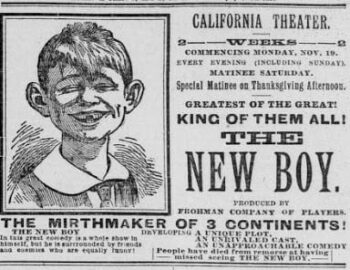
New progress seems to have been made in the age-old quest to find the secret origins of MAD magazine's Alfred E. Neuman. (John Adcock has more.)

The New York Times profiled a day in the life of comiXology CEO David Steinberger, written just before the Marvel promotion that knocked out the site's servers for two days.

—Michael Barrier has a short essay on Walt Kelly, illustrated and explained through publicity photos taken for a Chuck Jones-directed Pogo animation special.

—Paul Di Filippo reviews Lynda Barry's Freddie Stories, Glen Weldon reviews Ben Katchor's Hand-Drying in America, and Craig Fischer reviews Bernie Krigstein's Messages in a Bottle.

—Maren Williams at the CBLDF blog writes a short history of the end of Australian comic-book censorship.

—Via Twitter, Erik Larsen argues, "If you need to include an arrow to tell readers which panel to read next your page is a failure. It should be obvious." Which seems more or less like a comics equivalent to "invisible style." And like invisible style in film, its use-value depends on what kind of comic you are making.

—For his day job, Chris Mautner profiles a local comic-book collector.

—Not Comics: What a great photograph. I know it's hipper these days to dig Keaton and disparage Chaplin, but I don't care what you say. City Lights, man.

—Also Not Comics, But Closer: Here's the trailer for a new documentary about a group of artists not so dissimilar from cartoonists, sign painters:

(via)

Brittle Bones

It's Tuesday and that means while you were sleeping Joe McCulloch was writing about the week in comics.

Elsewhere:

TCJ-contributor Nicole Rudick interviews 7 Miles a Second artists James Romberger and Marguerite Van Cook for Artforum.

There is a new Seth book on the horizon and it sounds excellent.

George Lucas has a proposal for a "Cultural Arts" museum with a heavy illustration and cartooning emphasis, which could be interesting. Lucas once was a backer of a comic art gallery in NYC some 30 or more years ago. Aside from his Rockwell collection he's known to have one of the largest George Herriman collections. Who knows what else is in there...

This the first review I've seen of Renee French's TOON book, Barry's Best Buddy. I'm looking forward to that book.

Click here for fear.

Attention Chester Brown: Louis Riel photos found in Australia. That's a commute.

It's pix from the Society of Illustrator's Harvey Kurtzman opening.

I've lately been amazed at how corporate hacks and apologists have reinvented themselves as "historians" but that's showbiz, folks. In any case, I'll let you guess which of the panelists at this talk have anything relevant to say about the topic.

Digitalis

Ryan Holmberg has some questions for you.

And today we republish Gary Groth's 1996 interview with Barry Windsor-Smith, from TCJ 190. Here's a sample:

GROTH: I don’t read mainstream comics much but we get piles of them in the office and I look at them once in a while. And because I read them as a kid and I can go back to that Kirby and Ditko and Stan Lee stuff and so on, I have this morbid curiosity about why they look like such unadulterated shit these days. I read interviews with contemporary creators who write and draw them and they seem to be very excited about what they’re doing. And I wonder about why the stuff is so wretched. I wonder if it’s just the Zeitgeist or if it’s just the creators themselves or if it’s me.

WINDSOR-SMITH: I know exactly what you’re saying. I have the very same wonders myself. You and I can just sit around and scratch our heads over the phone, because I don’t have any answer either. Yeah: is it the Zeitgeist? Are we missing something? Is it the same now as it was then but we just didn’t know because we were in a different position then? This sort of questioning comes to us all. It has been the standard cliché for decades now, from the ’60s with rock ’n’ roll, or at least the British invasion style rock ’n’ roll, where people would say, ‘They can’t play, they’re only playing banjo chords. Whatever happened to Ella Fitzgerald and Satchmo and hey, Frank Sinatra — now there’s a voice!” And all this sort of shit that I went through when I was a teenager, absolutely adoring everything I was hearing, from the Beatles to the Stones... Well, actually I was extremely judgmental even then: I fuckin’ hated the Dave Clark Five because I could see them for the no-talent copyists that they were! But I loved anything that I thought was quality, and I certainly thought Lennon and McCartney were.

I actually have this strong memory of an uncle of mine whom I greatly admired. He was a musician, played jazz. I was over at his house one day, I was only about 15 or 16, the Beatles had been around for about a year or so — at least in Britain; they hadn’t hit America yet — and he was sitting there just trashing them. Saying, “They can’t play any notes. You call that singing?” And I really disliked my uncle from that moment onward. I’ve never liked him since. Because he seemed to totally sell out himself as a musician. In other words, he wasn’t broad-minded enough to see that there is always new music. And he insulted one of my favorite things. So I’m dreadfully afraid that I’m doing exactly the same thing now!

GROTH: [Laughs.] You’re turning into your uncle.

WINDSOR-SMITH: Yeah, I’m turning into an old complaining fart. There are so many people, I hear it all the time: “Oh my God, I’m beginning to sound like my dad!” It’s a standard routine for stand-up comedians nowadays.

GROTH: But seriously, there is a maturing process, and some people go through it and some people don’t. And I think in some ways you do start sounding if not like your dad, at least like people you remember as having antiquated attitudes.

WINDSOR-SMITH: Somebody you don’t like. I can remember a long time ago, you did a major interview with Jim Steranko.

GROTH: Whew—you’re talking 25 years ago.

WINDSOR-SMITH: Yeah. And you seemed absolutely in awe of Jim at the time.

GROTH: I was.

WINDSOR-SMITH: And you were young. And Jim was lapping it up because we know what an egoist he is. But in recent times, or at least within the last eight or five years, I can remember when you totally trashed him in print for some reason. It wasn’t out of hand, there was some purpose behind it; I forget what it was. I was thinking, “Gee, what happened to Gary in the meantime?” Yeah, we’ve all changed our taste — I guess. And now, Steranko was pretty damn good at what he did. We know it was derivative to a degree, but some of it wasn’t. So for the people who were working at that time in that heyday of Marvel comics, Steranko certainly gave far more energy to his books than your average guy. Certainly he was no genius on the level of Jack Kirby, but who the hell was? So Jim’s material was innovative to a degree, exciting to a degree, good for what it was. So why do you not see Jim’s work in that perspective? Or do you?

GROTH: Looking at his Marvel work, I can’t help but see it as thin and anemic. Whereas Kirby was genuinely original, and Ditko was too, Steranko was a compendium of graphic tricks and gimmicks picked up from various sources inside and outside of comics. So I don’t think he’s... If you look at it closely it tends to fall apart. It doesn’t hold up to very close scrutiny.

WINDSOR-SMITH: I agree with you. I was thinking that way back when.

GROTH: Yeah. Well you were probably ahead of me because as you say, I was in —

WINDSOR-SMITH: I was right in the thick of it and I was functioning in the same capacity as a storyteller. So I could certainly see through Steranko.

Elsewhere:

—The much-missed-around-these-parts Jeet Heer wrote a review of Ben Katchor's new Hand-Drying in America for the Globe & Mail.

—Jonathan Clements has a tribute to his friend, Toren Smith.

—William Blake scholar Mark Crosby has a great post analyzing Maurice Sendak's use of Blake imagery in his last book.

—CBR talks to Ann Nocenti and Louise Simonson about writing for Marvel.

—Domingos Isabelinho writes about OuBaPo founding member Jochen Gerner.

ARTnews has a piece on a 1950s mural Saul Steinberg made for the World's Fair.

—That B. Kliban guy was funny.

Investigated Something

Ron Goulart returns to the site today with a remembrance of Fred Ray.

Although Fred Ray is best remembered for the two decades he devoted to drawing DC’s Tomahawk, he had already been in comics for several years before he took over the buckskin-clad hero and, in the early ‘40s, he did some of the best straight adventure stuff in the comic books of the time, as well of some memorable Golden Age covers.

Frederic E. Ray, who usually signed himself Fray, was born in Pennsylvania in 1922. He always had an interest in history as well as in comics, and his major influences growing up were illustrators Howard Pyle, N.C. Wyeth and Frederic Remington, as well as cartoonists Hal Foster and, most important, Noel Sickles. He was impressed, too, by a nonfiction newspaper strip called Highlights of History by an artist named J. Carroll Mansfield.

Elsewhere:

A Kickstarter campaign for the book Sullivan's Sluggers gets ugly and then gets uglier.

Thomas Nasts's traveling murals.

A tribute to Al Capp's various activities.

More on Jerry Ordway and thoughts on "ageism" in comics.

Cartoonist (conflict of interest alert) and author of Men's Group: The Video, Ben Jones, gets a preview here.

An essay on Tumblr and photography, some of which could be applied to comic book pages as well.

And finally, enjoy the weekend with the old National Lampoon and this great bit about John Lennon  from its 1972 Radio Dinner LP.


Wishing and Hoping

Before getting to the regular body of this blog post, please allow me to reproduce the following statement from Kim Thompson (introduced by Gary Groth) in full:

Kim Thompson has been my partner at Fantagraphics Books for 35 years. He's contributed vastly and selflessly to this company and to the comics medium and worked closely with countless fine artists over that time. This is a tough announcement to make, but everyone who knows Kim knows he's a fighter and we remain optimistic that he'll get through this and report back to report to work, where he belongs, doing what he loves.

– Gary Groth

I'm sure that by now a number of people in the comics field who deal with me on a regular or semi-regular basis have noticed that I've been responding more spottily. This is because of ongoing health issues for the past month, which earlier this week resolved themselves in a diagnosis of lung cancer.

This is still very early in the diagnosis, so I have no way of knowing the severity of my condition. I'm relatively young and (otherwise) in good health, and my hospital is top-flight, so I'm hopeful and confident that we will soon have the specifics narrowed down, set me up with a course of treatment, proceed, and lick this thing.

It is quite possible that as treatment gets underway I'll be able to come back in and pick up some aspects of my job, maybe even quite soon. However, in the interests of keeping things rolling as smoothly as I can, I've transferred all my ongoing projects onto other members of the Fantagraphics team. So if you're expecting something from me, contact Gary Groth, Eric Reyolds, or Jason Miles and they can hook you up with whoever you need. If there are things that only I know and can deal with, lay it out for them and they'll contact me.

On behalf of Kim, we would like to encourage anyone who would like to reach out to him to feel free to send mail to him c/o Fantagraphics Books, 7563 Lake City Way NE, Seattle, WA 98115, or email.

As an editor, publisher, translator, and writer, Kim's importance to North American comics (not to mention this magazine) would be difficult to overstate. He is not just a personally inspiring figure, but is also an extremely friendly, helpful, & enormously fun person to work with. We wish him a full and speedy recovery, and can't wait for him to be back.

————

On the main body of this site, we have another installment of Richard Gehr's excellent and too-infrequent "Know Your New Yorker Cartoonists" column. Today his subject is Charles Barsotti. Here's a brief excerpt:

GEHR: How did you end up at Hallmark in Kansas City?

BARSOTTI: I answered this ad in Advertising Age and got a call from this guy in Chicago. Hallmark then sent me a psychological test but I just set it aside. Then they shot Kennedy, and the atmosphere I ran into the next day in San Marcos was a little too much. I figured, "It’s time to buckle down, take the psychological test, and get serious about this." Anyway, Holly [William Hollingworth] Whyte wrote a book called The Organization Man, and he had things to keep in mind when you’re taking a psychological test for a big organization. I remembered to say things like, "I love my father and my mother both, but I love my father a little bit more." That kind of thing.

GEHR: Was Hallmark your first real art job?

BARSOTTI: It was really writing, at first. I was in the editorial department and then switched to contemporary cards.

GEHR: Was that where you began cartooning seriously?

BARSOTTI: Rapidographs had just come out and I splurged and bought myself a set. I was doing some sketches, and a friend of mine in a different department of Hallmark asked me if I would use that style to illustrate a little pamphlet of Ogden Nash poems. So I did it on my own time, and it got me in trouble in my department. That’s the way Hallmark's bureaucracy worked. That sort of set me off, and I sent some drawings to Mike Mooney at The Saturday Evening Post — and didn’t hear anything. The next weekend, I sat down and did another big batch of these things. I sent it in and thought, "Oh, this is it. This isn’t working." But! I got a call from Mooney at work. I thought it was a joke, but he said he had turned the big hallway at The Saturday Evening Post into a gallery. "I’ve got your cartoons up and down it," he said. He was a very ebullient fellow. Then I went there and met the editor, Bill Emerson.

Elsewhere:

—Steven Heller writes about an interesting Thomas Nast project I don't recall ever hearing about before: a traveling series of murals used in performances to tell the story of the American Civil War.

—Carol Tilley takes to Boing Boing to explain her recent Fredric Wertham research.

—Colleen Doran has given a two-part interview to SciFi Pulse, in which she discusses her recent experiences publishing comics online.

—Ben Katchor has a new strip online.

—Paradise Valley, Arizona is trying to raise funds to build a bronze monument to Bil Keane.

—The Belgian cartoonist Didier Comès and Studio Proteus founder Toren Smith have both reportedly passed away.

—Via Drawn, here's a short clip from the upcoming Stripped documentary, dealing with how webcartoonists make money:


Subtlety

Today on the site:

Rob Clough reviews Ellen Forney's Marbles.

A lot of “graphic novels” coming out from major publishers these days really seem to be variations on the graphic memoir. A cynic might say that many of them derive their hook from being about death, illness, abuse, tragedy, etc. An alarming number of them have come from first-time long-form cartoonists and are aimed squarely at the sort of mainstream reader who enjoys this sort of confessional, miserabilist but ultimately triumphant story about tragedy and unfortunate circumstances. I’ll rattle off a few titles in this vein: Cancer Vixen,StitchesThe Impostor’s Daughter (perhaps the most egregiously manipulative example of this sub-genre). As someone who has long found autobiographical comics to be rewarding on any number of levels, some of these books feel like a distressingly cynical way to make money on the part of the publishers. Life and death is big business, after all.

That’s why it was so refreshing to read Ellen Forney’s Marbles: Mania, Depression, Michelangelo, & Me. It’s less a story than it is a therapy journal comic, but Forney’s instincts as an entertainer kick in even on the dreariest of pages.

Elsewhere: Good news and bad news.

This piece by freelance writer Nate Thayer about payment is fairly typical, unfortunately. The Atlantic responds.

Related: More from artist Jerry Ordway on his relationship with DC Comic.

Only slightly related by dint of money/ethics. Artist Chris Sprouse has withdrawn from drawing that Orson Scott Card Superman comic.

Speaking of Superman: More developments in the Siegel/Shuster case. I won't even pretend to follow the recent round of developments.

And on an up note, the first round of guests for SPX 2013 has been announced, and our own Frank Santoro is among them.

Keep Your Hands Off My Stack

Today on the site, Joe McCulloch brings you the Week in Comics —and endorses one of last week's.

Elsewhere:

—The often excellent essayist Joseph Epstein writes about Saul Steinberg at The Weekly Standard, and Michael Kammen touches on the same subject in his L.A. Review of Books essay which primarily concerns Thomas Nast, political cartoons, and public art.

—Cartoonists are talking money. First, read veteran artist Jerry Ordway's thoughts on being sidelined at DC. Mark Evanier comments. Then read prominent webcartoonist John Allison's post wherein he writes about feeling like his means of making a living is threatened by the migration to Tumblr. Matt Bors comments on that.

Faith Erin Hicks is interviewed by Jim Rugg, Jason Lex, & Ed Piskor.

—Dave Sim responds to Comics Journal Chester Brown coverage, by way of explaining why he's against prostitution.

—Reviews. Robert Boyd reviews five semi-recent comics; Noah Berlatsky reviews the reissued 7 Miles a Second for Slate; The Advocate reviews Gilbert Hernandez's upcoming Julio's Day.

—Michael Dooley interviews Denis Kitchen about his new Al Capp biography.

—Chris Mautner explains where to start with Winsor McCay. (Personally, I'd give a beginner John Canemaker's biography before expecting them to shell out for the Sunday Press books.)

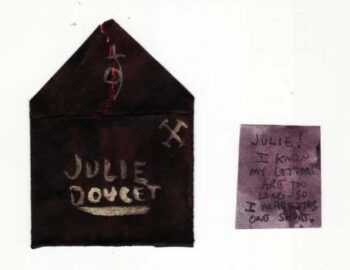
—Julie Doucet and Simon Bossé have started a Tumblr devoted to mail art.

—The Siegel/DC Superman legal battle continues.

—Justin Green's introduction to book-burning.