

Lawyers, Guns, and Money

Welcome back. This blog space has been inactive since last Wednesday, due to the American Thanksgiving holiday, so there's a lot to catch up on.

First, today we bring you an obituary of Al Plastino, one of the iconic Superman artists, written by Bob Hughes.

We also have arranged the publication of two key excerpts from Last Superman Standing: The Al Plastino Story, a forthcoming biography of the artist written by Ed Zeno. Here's a bit from that:

Al Plastino was impressed with Wayne Boring’s art: “They gave me some of his pencils to ink early on. This helped give me a feeling of how Wayne drew Superman.” He occasionally saw the older man (born in 1905) in the art room at DC, though not too often, since most of the guys worked from home. The two artists got along fine. “Wayne had really tight pencils.”

Nevertheless, Plastino had mixed feelings while under his senior’s shadow. When he looked at “The Three Supermen from Krypton!” from Superman #65 (JulyAugust 1950) from today’s perspective, Plastino noted: “That is crap, because I was still influenced by [him]. But at least you can follow the story. My faces were lousy, but they were consistent.” When asked why he broke from following Boring’s lead, Plastino said, “No one said change it. Wayne’s work was really clean cut and professional, though the characters were a little stiff. It almost hurt me to draw like him. I tried to keep the look consistent, but it gradually did change.”

Because Jack Schiff was handling Wayne Boring’s work, he was also Plastino’s first boss at DC Comics. The goal was to maintain Superman’s artistic continuity. “Jack was one of the editors for Superman. He was a mild guy, very shy and gentle, nothing like Mort Weisinger. Jack was not a good idea man, unlike Mort, who was a great idea man. He would just say, ‘Here is the story, Al.’ He wouldn’t give directions, per se. I started working with Mort a little later.”

Last week, we were gone, but our columnists kept going. Frank Santoro turned in a short post on sexism last Thursday, and Tucker Stone and Abhay Khosla turned in a much longer column offering advice to young men aspiring to work in a sexist comics industry. Here's a snippet from that column's legal disclaimer:

LEGAL DISCLAIMER: This week's column is not referring to any specific individual, entity, person, event, or thing that exists or has ever existed or that may exist, that is either living or dead or neither, that is even a thing that has been contemplated as a possibility of a thing living or dead or neither. It refers to nothing. As an example, if this column should refer to the disastrous employment practice reputations of any company in the comics field, any resemblance of the company that is described to any company that actually exists in reality, including but not limited to, as a wholly random example, DC Comics, it is wholly coincidental and unintentional on the part of the authors as well as The Comics Journal -- any comic company described in the column should be understood to have no real-world significance and the column itself should be understood to be at most a shoddy work of fiction or some lesser form of random typing that should be given by this or any other reader even less weight than fiction. Indeed, the fact that the mere letters utilized resemble words that are understood by the reader should be seen by the reader more often than not as an unpleasant coincidence. Nor should the timing of this particular column be understood to be referring to any real world events, including but not limited to any news items that may have appeared either on this site or any other site, anywhere in the known universe, this year or any other year in the past or in the future, in perpetuity. [And so on...]

Elsewhere:

—News. [UPDATED TO ADD: My co-editor Dan Nadel has announced that his company PictureBox will no longer be releasing new titles as of December 31. He gave further details and explained the move to the Comics Reporter.]

The New York Times also published an obituary of Al Plastino. Mark Evanier comments on how unlikely such an article would have been only a few decades ago, and also airs some skepticism regarding the timing of the Superman/JFK story that has been in the news lately due to an ill-fated Heritage auction (detailed in both the Times and the TCJ obituaries).

The political cartoonist Ted Rall claims that he was asked by an administrator of Daily Kos to stop posting cartoons that depict President Obama as "ape-like." Rall (and fellow cartoonist Ruben Bolling) plausibly argue that Rall depicts most of his characters that way. Rall and Bolling describe this as a case of censorship.

Usagi Yojimbo
creator Stan Sakai and his wife Sharon are reportedly facing tremendous financial bills to deal with medical issues. You can learn how to help through the Cartoon Art Professional Society here. Mark Evanier has more details here.

Tom Spurgeon reports from the Billy Ireland opening weekend, and Richard Bruton reports from Thought Bubble 2013.

—Interviews.
Salon talks to Joe Sacco about The Great War. Alex Dueben at CBR talks to Kevin Huizenga and Dan Zettwoch about Leon Beyond. NPR's On Point featured Neil Gaiman. Inkstuds had on Hellen Jo. Comics Bubble talks to Paul Gravett.

—Reviews & Criticism.
Kevin Huizenga likes Jim Woodring's Fran. Whit Taylor writes about Charles Forsman's Teen Creeps. The Chicago Tribune reviews Cole Closser's Little Tommy Lost. Ben Towle takes issue with the coloring in Fantagraphics' recent Harvey Kurtzman EC collection. J. Caleb Mozzocco writes about the Paul Buhle-edited Radical Jesus. Jessica Lee reviews Leah Wishnia's Gut Feelings. Jack Turnbull reviews Simon Hanselmann's Life Zone. Bob Temuka appreciates Larry Gonick. Sarah Horrocks does the same for J.H. Williams III. Rob Kirby picks his top twenty self-published comics of 2013.


Dessert Is Good

Today on the site we have what's called a "Double Mautner". This is a technical term for when we publish not one but two pieces by our friend in Pennsylvania, Mr. Chris Mautner. First up is his interview with Gene Yang.

Tell me about the research you did. Ho much did you have to dive into to learn about this time period?

I definitely still feel like I have a lot to learn about research. I’m not very good at it. This is the first time I’ve done historical fiction and I started by just setting aside a few hours every week, I would go to my local university library for a few hours every Tuesday or Wednesday and just read. I would try to read as much as I could get my hands on about the Boxer Rebellion and also about China during that time. There were a few books that were helpful to me. The one that was especially helpful was called Origins of the Boxer Uprising by a man named Joseph Esherick. I relied heavily on that book, especially for the Boxer side. And then I was able to get other books as well. There’s a book put out by the Catholic church in Taiwan a brief biographies of each of the canonized saints. I was able to go to a Jesuit archive in a French city and there they had these letters and photos sent in by missionaries to China. I wasn’t able to use a lot of the letters because ethey were in French but the visual reference was amazing. I took a whole bunch of photos and brought them home and that served as the basis of my visual refernces for the book.

And here he is on Peter Bagge's Woman Rebel.

Bagge doles out Sanger’s life in short, episodic fashion, with each page or two chronicling a significant episode in her life. It might be a bit too cursory for a reader used to 1,000-page biographies, but the book’s hectic pace effectively mirrors Sanger’s own frantic work ethic (at one point her son compares traveling with her to “chasing a hurricane”). More to the point, Bagge’s book is clearly designed not only to refute some of the nastier claims made about her by pro-life forces (namely that she was a bigot who supported eugenics and the KKK) but to also serve as a re-introduction to Sanger’s life and times (I for one had only the barest knowledge of her significance before reading this book).

Elsewhere on the internets:

Stan Sakai and his wife could use your help.

A couple of pieces on the late Al Plastino. One on his tryout for Peanuts and one from The Beat.

Brian Doherty on a new Siegel and Shuster bio.

The AV Club on a bunch of comics.

Heidi MacDonald on comics criticism.

Do you like to look at other humans at events? Well, here's a photoset from the Art Spiegelman opening, and one from the Billy Ireland opening.

Finally, Mould Map is a really fantastic and, in the present, essential anthology. They're Kickstarting the next edition, which looks great. Oh yes, I know the irony. I'm OK with it. Anyhow, I suggest supporting this worthy effort.

Church

When Tuesday comes around, you know it's time for Joe McCulloch to highlight the most-interesting sounding new releases of the Week in Comics, and this time, he also has a bit to say about a comic that just won a British Comics Award, Garen Ewing's Complete Rainbow Orchid, which he describes as...

a glossy evocation of mid-20th century Belgian bande dessinée, as wedded to the ripping yarns of H. Rider Haggard and the golden age of silent movie comedy. North American iPad owners can purchase the book through the Sequential app, although no such print publisher has picked the material up for distribution; you’ll have to import Egmont UK’s 9″ x 12″ softcover album, or any of the three component albums which the same publisher has been releasing since 2009, though the origins of the work date back to 1997, with magazine serialization, self-publication and webcomic avenues duly explored. To outside observers, it may seem the classic overnight success of 15 years’ making, though I know Ewing had also been active in the UK fanzine and small press scenes for a while.

I first learned about The Rainbow Orchid though Forbidden Planet’s terrifying suite of Best of 2012 lists, though my appetite was really whetted by learning about the artist’s influences; no simple Hergé devotee, Ewing counts Edgar P. Jacobs as a crucial motivator, while also maintaining a keen interest in Yves Chaland, one of my own personal favorites. It was Chaland, in fact, which raised certain expectations about the work – perhaps unfairly, in retrospect.

We also have Robert Kirby's review of Treasury of Mini Comics, the first in a series of anthologies to be edited by Michael Dowers. Here's a sample:

There are some excellent excursions into surrealist realms here from Roberta Gregory, Fiona Smyth, and Max Clotfelter with Marc Palm; a good dose of “Cynicalman” hilarity from mini-comics great Matt Feazell, an amusing tribute to Beatrix Potter from Mark Campos, a nicely-made Mixtape from Nate Beaty, and some charming early work from John Porcellino. The collection would not have felt nearly as complete without the inclusion of these small press mainstays. Within Treasury there is also the joy of discovering (for me) heretofore unfamiliar talents, such as Peter Thompson, with his strikingly presented I’m the Devil, Mark Connery with the awesomely stoopid humor of Rudy (if you like the comics of Liz Hickey you’ll like this), and Karl Wills, whose art puts me in mind of Joost Swarte, in his tale of mean girl vs. mean girl, “Jessica’s Good Deed”. I could read a cart-load more of comics by all three of these creators.

And yesterday, we published a review by Paul Buhle of Dark Horse's Original Daredevil Archives, featuring anti-Hitler comics from the Biro/Wood studio.

Michael T. Gilbert, himself a professional cartoonist of many years standing, has written a very fine, thoughtful introduction—unlike the occasionally mediocre of the introductions to the reprints written on the fly, or without much historical knowledge beyond the names of the artists.

Gilbert does a fine job of leading us through the saga, especially highlighting the weirdos who made the pages sparkle. Take Charles Biro, who would shortly emerge as a major artist for Crime Does Not Pay, the noir classic or exploitation-fest, however one wishes to see the violence of the most popular comic in the postwar 1940s. Gilbert shrewdly notes that when it came to drawing, Biro would never be a master of the field. But when it came to weaving a story, he could hardly be matched. His criminal characters almost invariably proved the most exciting, in the way that the Devil got the best parts in Milton.


Elsewhere:

—News. Mark Evanier reports that Al Plastino has died. We will have more on that later. As alluded to earlier, the British Comics Awards were announced. Here's a solid roundup of the recent Apple/Sex Criminals fracas. Tom Spurgeon has a massive post recapping his experiences at CAB. Jeff Smith's new webcomic has just launched.

—Spending Opportunities. Drawn & Quarterly is having a major holiday sale, with 40% off all everything on their web store. Rina Ayuyang's auction/fundraiser for typhoon relief (which features lots of really impressive art) is in its final stretch this week. You should really check it out.

—Reviews & Commentary. Hillary Brown at Paste looks at Frank Santoro's Pompeii. Emily Thomas takes issue with Glyn Dillon's Nao of Brown. And one more early best-of-the-year list, put together for the Washington Post by Michael Cavna. Bully talks comics numbering.

—Interviews. Alan Moore is in fine form talking to The Guardian, mentioning in passing (again) that he doesn't think much of superhero comics, and in the process angering (again) a bunch of superhero fans on the internet. (This routine has gone on so long that it started out as funny, gradually became less and less funny, and has now gone around to being funny again.) The same paper also talks to Neil Cohn about his upcoming book, The Visual Language of Comics. And there's a really short interview with Tom Gauld at The New Yorker regarding his first cover for the magazine.

Boss

Today on the site:

Alex Dueben interviews Zeina Abirached.

Alex Dueben:  Often when I’ll do an interview I’ll ask the artist to give some background information about the setting of their book, but I know that we could be here for a day or two talking about the origins of the Lebanese civil war. You were born during the war; what is your earliest memory of it?

Zeina Abirached:  I have a very striking memory of the first time I crossed the green line and went to West Beirut (It is not my earliest memory of the war, but it was an experience that helped me to become aware of a lot of things).

It was in the early nineties, at the end of the war, at the time the war was essentially in the eastern part of Beirut where I used to live. I remember we had to leave our flat in a hurry and run away in our car to a more secure place. My parents decided to go to West Beirut for a while to be safe and make plans. I remember that the first things I saw in that part of my town I didn’t know yet–I was ten years old–was people in the streets, lights, animation, and the calm Mediterranean sea.

I felt like I was in a foreign country. I just couldn’t understand I was still in Beirut! I remember the first two days I couldn’t speak Arabic or French–which are my two mother tongues–I could only use the only foreign language I knew at that time: English.

Elsewhere:

Leif Goldberg has released his 2014 calendar. You should really buy it.

A look back at an attempt to make an underground newspaper supplement.

Ken Tucker reviews a bunch of comics at the NY Times.

Lots of End of the Year lists are appearing. Here's Filth and Fabulations. And here's Michael DeForge. Sean Rogers has a good one, too.

Here's our own Jacq Cohen on Tell Me Something I Don't Know.

Oh Frank Robbins, how I love the way you slathered ink all over the page like you owned the joint.

And amazingly enough, all of The Wiggle Much is now online.

Where Does It Hurt?

Hello, friends. Today on the site Dan Nadel writes a review of the Art Spiegelman "Co-Mix" career retrospective being shown at the Jewish Museum in New York.

Having a good pair of eyes sifting through the archive is essential. Just when you think you have Spiegelman nailed down, he kind of slips away again. Oh, there's a Viper page, and there's a Maus print I hadn't seen, and, oh, those Boris Vian covers... And this is thanks largely to the efforts of Rina Zavagli-Mattotti, the owner of Galerie Martel in Paris. Zavagli-Mattotti curated the original exhibition, which opened nearly a year ago in Angouleme. With Spiegelman, she selected the work for that show and each iteration thereafter (it has made stops at the Pompidou in Paris, the Museum Ludwig in Cologne, and the Vancouver Art Gallery). So, yes, the "hits" are all here, but so are lesser known pieces, including the largest showing of underground work yet (certainly more than I've ever seen in an official compilation) and a fascinating set of layout progressions for Spiegelman's Raw #7 cover. Maus is rightly given pride of place, and beautifully installed, with Spiegelman's nearly frantic preliminaries occasionally jutting out from the finished pages like word balloons.

Elsewhere:

—Interviews. Joann Sfar went on Inkstuds. Georgia Webber shares her bookshelf to Hazlitt. Adrian Tomine talks about New York with British GQ. Rian Hughes answers questions from Steven Heller. Alex Schubert talks for two seconds to something called B Rad. Box Brown talks wrestling with Grantland.

—Reviews & Commentary. Tom Murphy at Broken Frontier reviews Gilbert Hernandez's Maria M. Mike Lynch shares strips from Chester Gould's pre-Dick Tracy career. Scottish crime novelist Ian Rankin reviews the new Asterix story set in Scotland. Dylan Williams wrote about Mort Meskin in 2003.

—News. According to Deadline, Warner Brothers has won another (and possibly final) major decision in its legal battle with the estates of Siegel and Shuster. Charles Hatfield reports from the Billy Ireland Cartoon Library opening weekend. Gary Tyrell writes about some pretty sleazy behavior from PC Magazine, regarding a webcomics listicle. Maggie Thompson is selling a big chunk of her comics collection.

Finally, researchers at the University in Calgary are conducting a study of working conditions in comics. If you are involved with comics creation, you may want to participate in this survey.

Heavyweights

On the site today: Frank Santoro talks tour swag. The endless tour swag. Swag!

And Sarah Boxer on Joe Sacco's The Great War: July 1, 1916: The First Day of the Battle of the Somme, an Illustrated Panorama

In the history of comics, Sacco’s Great War lies somewhere between two other near-silent comic-like narratives:  the medieval Bayeux Tapestry, a 230-foot-long piece of embroidery showing the Norman Invasion of England in 1066 (which Sacco cites as an influence), and Building Stories, Chris Ware’s giant box of comic-book-like objects. But for sheer silence these two can’t compete with The Great War. After all, the Bayeux tapestry has embroidered captions that tell you what’s going on, and Chris Ware allows his characters occasional grunts and sniffs. Here Sacco, the cartoonist of human speech and argument, has banned all words.

Elsewhere:

No links today. Instead let me digress for a second.

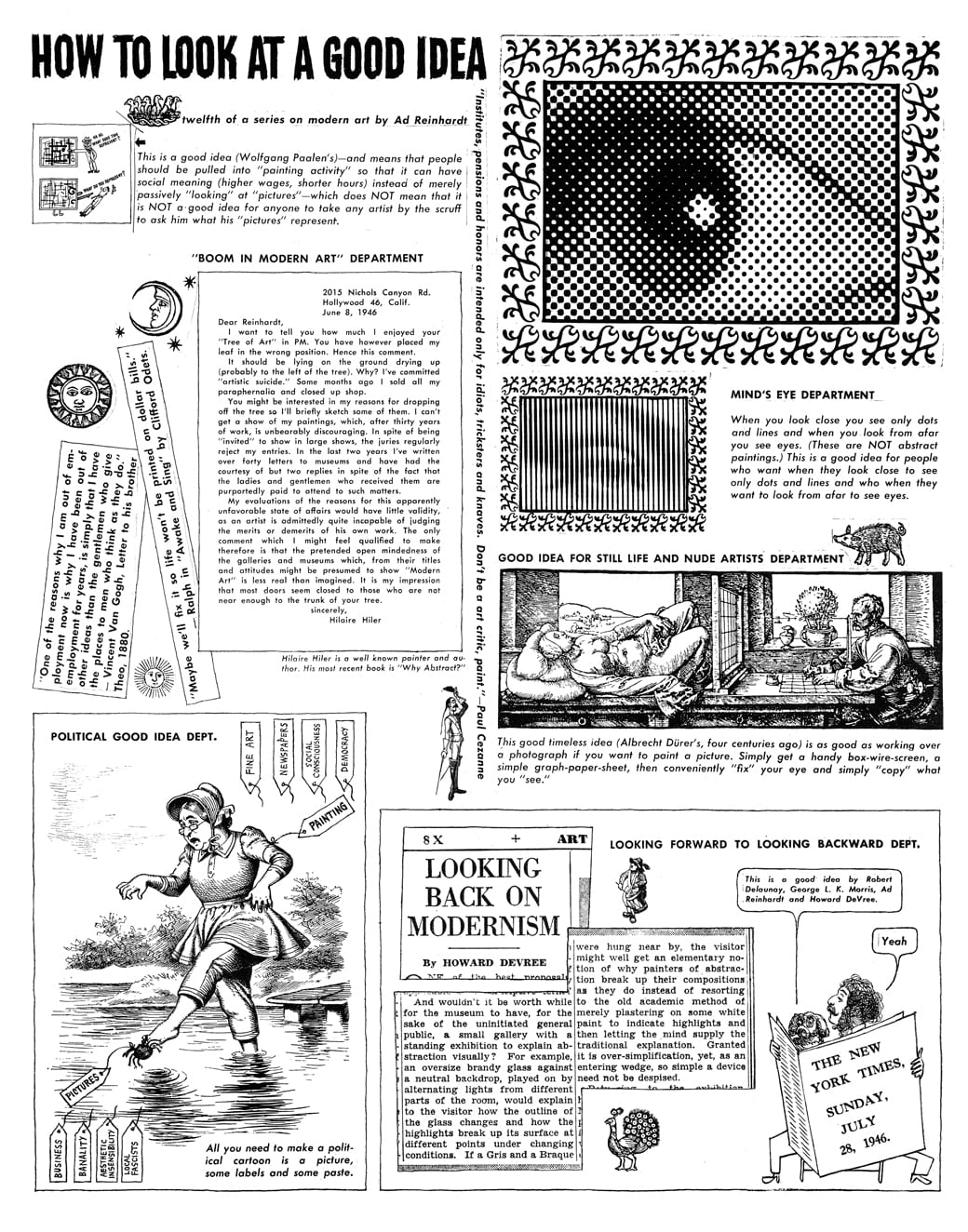
It's been a good autumn in New York for those interested in comics and comics-related art. There were shows by three Chicago masters: Gladys Nilsson, Karl Wirsum and Art Green; a small but potent show of Peter Saul paintings a A fine exhibition by Seth. And there is, of course, the terrific Art Spiegelman retrospective, about which more later. And now there's an Ad Reinhardt show at David Zwirner (home also to R. Crumb and Raymond Pettibon). Yes, Ad Reinhardt, king of the all-black painting. An unlikely man to make comics. And yet there it is. The Reinhardt show is not just any exhibition though: It features a complete run of his comics work for P.M. (for which Crockett Johnson, among others, also drew) and ARTnews in the 1940s and '50s. And to top it off, Zwirner has published an absolutely killer book of these comics: How to Look: Art Comics. Oversized, impeccably designed and printed, it's my favorite surprise of the year. One of those books you dream of but never imagine really happening. It belongs with the recent Jess book, as well as the Joe Brainard Nancy book (both from Siglio Press), to a now-growing shelf of comics that exist outside both the comic and art narratives. An odd shaped history into which you might also throw the 1960s Hairy Who "comic books", various works by Dieter Roth, a ton of books by Dorothy Iannone, and all sorts of other odds and ends. a

How to Look: Art Comics is an oversized hardcover with a superb essay by Robert Storr, none of which would matter if the comics weren't so damn good. These are more like visual essays in the Peter Blegvad-sense than the newspaper comics of the time, but what else could they be, really? Each comics page is a collage of paste-up imagery and often-punning, always cunning, words, commenting on, well, art. From "The Insiders" to "How to Look at Iconography" to "How to Look at a Mural" (Guernica, of course), Reinhardt winkingly guides viewers through art as he knew it. Along the way there are many now-forgotten artists, critics, curators and galleries, and many still known. But trace-the-reference is only part of the fun. The elegance of Reinhardt's compositions, the deftness with which he juxtaposes text and image, and his infrequent, but jarring use of hand-drawn cartooning make each strip a gem. This work should be brought into comics proper, and perhaps viewed as paradigmatic examples of the comic-as-diagram or the comics-as-explanation, much as Scott McCloud and Dan Zettwoch have used it. Anyhow, all of this is to say: Go out and see the show if you're in NYC, and get the book in any case. It's an education in art and cartooning.

a1

a2


No, Seven

Today we should keep you busy. First, Bill Kartalopoulos has a report from the grand opening of the Billy Ireland Cartoon Library & Museum last weekend:

This calendar year has seen no shortage of comics-related events and exhibitions, but the occasion most likely to have a long term impact for comics is the opening of the Billy Ireland Cartoon Library and Museum at Ohio State University this past weekend in Columbus, Ohio. The unveiling of the new dedicated museum and library space is the culmination of founding curator Lucy Shelton Caswell’s thirty-five-year vision and sets a new high water mark for comics-related institution building in North America. The ribbon-cutting of the new facility and the opening of its first exhibits was marked with a two-day academic conference, followed by a weekend of public events featuring artists including Matt Bors, Eddie Campbell, Jaime Hernandez, Gilbert Hernandez, Paul Pope, Jeff Smith, and many more. The event also served as the site of major announcements from the BICLM itself, as well as from other organizations represented there including the Center for Cartoon Studies and the International Comic Arts Forum (ICAF).

And then we have Ken Parille, with the second part of his column exploring the use of dialogue and narration in comics. Here's a sample of that:

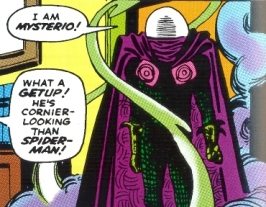
After Byrne’s super-villain introduces himself in 1986’s Superman #1, Lois Lane goes on the attack: “’Metallo’? You have got to be kidding. Where the heck did you pick up a cornball name like that?”

RU1

The trope of a character calling a villain’s shtick “corny” pops up repeatedly in 'Silver Age' comics (c. 1956 -1970), particularly those scripted by Stan Lee, one of Byrne’s major influences:

RU2
The Amazing Spider-Man #13 (1964). Dialogue by Stan Lee; Art/Plot by Steve Ditko.

If you know it’s corny, then why do it? Perhaps Byrne sees no other option: such names are part of the fantasy world he operates in. But admitting to foolishness rather than quietly playing along makes it worse — can you really write something corny and then act like you’re above it? I think "Metallo" is a solid villain name and needs no apology.


Elsewhere:


—Reviews & Commentary.
Timothy Callahan reviews three new comics and one old issue of Lloyd Llewellyn. Chris Mautner lays out six comics he found at Comics Art Brooklyn. Then James Romberger beats them all by reviewing eight comics from CAB. [UPDATE: I stupidly missed this extremely harsh takedown of the Art Spiegelman Co-Mix show written by Jed Perl at The New Republic.]

—Interviews & Profiles. Over at the Los Angeles Review of Books, Sarah Boxer has a great interview with Françoise Mouly. At one of The New Yorker's blogs, Mouly herself presents an interview with Joe Sacco. Paul Gravett profiles Algerian cartoonist Sofiane Belaskri. Neil Gaiman talks about Sandman: Overture.

—News.
I can't imagine people interested in the ongoing Brian Wood/sexism-in-the-comics-industry conversation haven't seen most of these links already, but just in case, a second woman came forward with claims about Brian Wood, and a blogger has made a timeline of the controversy and its coverage.

Reports that filmmaker Hayao Miyazaki plans to make a samurai manga in his retirement have some visual confirmation now.

Finally, cartoonist and Yam Books publisher Rina Ayuyang has started an online art auction and book sale to raise funds for the victims of the Typhoon Yolanda/Haiyan disaster in the Philippines. Participating artists include Kevin Huizenga, Dylan Horrocks, Vanessa Davis, Eleanor Davis, Jaime Hernandez, and more.

It’s a Six

It's Tuesday so that means Joe McCulloch has stayed up late to deliver you the finest new releases of the week.

All around the internet:

A-J Aronstein on Daniel Clowes, with a diversion into comics criticism.

Bob Mankoff at The New Yorker issues a mea culpa and follows a nice history trail.

The great Michael Doret on working on a DC Comics history book logo.

Jonathan Rosenbaum has posted his introduction to the phenomenal new Peanuts Sunday strips collection.

Glen David Gold has posted a mini-essay on a stunning new Jack Kirby art acquisition.

Sit back and enjoy the Shigeru Sugiura mash-up video.

http://www.youtube.com/watch?v=tRWzPEfbksM&feature=youtu.be

And here's another damn video. This one of the new Ruppert and Mulot book, which must be ripped to be read.

Song & Dance

Today, Ryan Holmberg is back with a longer look at the comics rental libraries of Mumbai:

Upon publishing the interview with Leaping Windows Comics Café, I was informed by an elder Indian that rental bookstores – locally called “circulating libraries” – are not uncommon in Mumbai. There used to be more, I was told, but there are still some out in the suburbs, though they deal mainly in books in Hindi and Marathi (the local language) rather than in English.

Online searching turned up more than a dozen scattered across Greater Mumbai, some of which are actually in the heart of the city, near railway stations and major intersections. These latter seem to be mainly older businesses, hanging on since the 1950s and 60s. I am also told that, out in the suburbs, a number of “paper marts” – paper recycling shops – have begun doubling as lending libraries, redirecting not only junk books and magazines that come their way, but also cartons of cheap remainder books. I have heard – though I haven’t seen them – that there are book vans that show up in certain neighborhoods once every three days or so, with blinking LED lights and megaphones tootling jingles.

All of which is to say: borrowing books for a fee, beyond the familiar institutions of private and municipal libraries, is neither a new nor rare thing in Mumbai.


Elsewhere:


—News.
Responding to the recent online controversy Dan linked to last week, Brian Wood has released a statement. His accuser Tess Fowler responded soon after.

The opening of the Billy Ireland Cartoon Library & Museum seems to have been a huge success, at least judging by reports. Sean Kleefeld has a three-part post on it.

Retailer/columnist Brian Hibbs has written an editorial on the disquiet he and many felt upon hearing about the Fantagraphics Kickstarter that quickly gets derailed into a rehearsal of an old Hibbs hobbyhorse regarding serialization vs. books. Matt Wilson at Comics Alliance wonders if the fundraiser was the start of a new trend and wonders if it's workable.

The Autoptic festival in Minneapolis is having a crowdfundraiser of its own.

—Reviews & Criticism.
Robert Boyd reviews Jim Woodring, Gilbert Hernandez, and minicomics. Whit Taylor on Noah Van Sciver's Saint Cole. Bilge Ebiri is disappointed by the new Bill Watterson documentary. Mary Kinney writes about the bewilderingly popular Homestuck. Erik Davis has a short & sharp appreciation of Alan Moore up at Hilobrow. Holland Cotter at the New York Times reviews the Art Spiegelman Co-Mix show at the Jewish Museum and calls for more museum comics exhibitions. (If you're in the New York area, I strongly recommend attending that show.)

—Interviews.
David Samuels has a long, very good interview with Art Spiegelman at Tablet. The Atlantic talks to Alison Bechdel about her reaction to the Fun Home musical. Tom Spurgeon talks to Gene Luen Yang. The Allie Brosh/Hyperbole and a Half media juggernaught makes it The Hairpin

Tons

Today on the site: Shaenon Garrity has written an obituary of Joey Manley.

“He was that rare kind of person that comes along in the comic industry,” says Cat Garza, one of the first artists Manley recruited to Modern Tales and one of many for whom that business relationship developed into a permanent friendship. “The kind that publishes newcomers without thought to whether or not the work is lucrative, the kind that puts people together and builds connections.”

Dirk Tiede, another longtime Modern Tales artist, says, “He gave so many young, talented, yet previously unknown creators a chance and a voice in what has always been a difficult and sometimes hostile industry. He put a professional face on webcomics at a time when they were laughed at by the mainstream comics scene. He stood up for us.”

And we have a review by Daniel Kalder of The Strange World of Your Dreams.

And elsewhere:

Zainab Akhtar reviews a bunch of new comics.

D & Q previews a fetching new comic.

Heidi MacDonald on harassment and the comics industry.

Sheila Keenan and Nathan Fox talk about Dogs of War.

The cover of Mad #21: Dissected.

Oh, and no Tucker this week, but here's a little Comic Books Are Burning in Hell: A special Neil Gaiman episode.

Finally, what I  have long waited for: A Wigglemuch Tumblr.

Don’t Look Now

We've got two columns for you this morning. First, R. Fiore, who contemplates Jeet Heer's Françoise Mouly biography, In Love with Art. Here's a snippet:

At this point is there any more important editor in periodical illustration than Françoise Mouly? With so many erstwhile venues for illustration being driven online, where any illustration is rendered into spot illustration, The New Yorker could be the big time all by itself. Unless Spiegelman comes into the office with her we have to assume this is an adventure without him. The New Yorker cover of the William Shawn era was essentially wallpaper, the perfect decoration for the better kind of dentist's office. (Not least because it didn't matter how old the magazine was.) The New Yorker cover of the Mouly era is not only more topical than it used to be, but is also frequently a one-image narrative. The ultimate Mouly-era narrative cover is Adrian Tomine's November 8, 2004 cover: A young man and woman spot each other reading the same book in subway trains going in opposite directions, and not only have not encountered but will lose each other in a second's time. (Though it would have been a hell of an advertisement for Chance Encounters classifieds if they had them.) The effect is to put the cartoonist at the center of the world of illustration.

And then Frank Santoro stops by to reflect on last weekend's CAB show, and then very briefly interview Alex Schubert, the creator of Blobby Boys:

Frank: How was CAB?

Alex: Man, I was in a bad mood the whole time. I stayed in an Airbnb, and it was the fucking shittiest place I've ever seen. I opened the door, and the doorknob fell off. Broken glass and cigarette ashes everywhere. I'm not joking when I say that I cried a single tear.

Elsewhere:

—CAB Reports. There are too many of these to link to, but three that you might find interesting can be found by Mary Kinney, Andrew White, and Secret Acres (who have cleverly capitalized on their always-popular con report posts by sneaking in ads for their upcoming books). There's also a comics-con exhibitor survey taking place right now at Devastator magazine, for those interested in participating.

—Miscellaneous. CBR interviews Trina Robbins about her latest (and apparently last) history of women in comics, Pretty in Ink. Richard Bruton reviews Oliver East's Swear Down. Bill Everett biographer Blake Bell picks his ten favorite Everett covers. And not-comics but potentially interesting to those readers familiar with modern-day manga, James Polchin reviews an exhibition of Japanese Edo-period erotic art at the British Museum.

Preeeeesenting

Today on the site: Rob Clough reports on the MCAD and the Minneapolis comics scene.

I was excited to attend Autoptic this year in part because it gave me a chance to meet and sample the work of a number of cartoonists in the burgeoning Minneapolis scene. Certainly, I was already well aware of the work of cartoonists like Zak Sally, Anders Nilsen, Rob Kirby, JP Coovert, Max Mose, Tom Kaczynski, and Will Dinski. I’m also quite familiar with small publishers like 2D Cloud (helmed by Raighne Hogan and Justin Skarhus) and Grimalkin Press (run by Jordan Shiveley). It’s not a coincidence that most of these cartoonists were part of the show’s steering committee. I was most curious to delve into the work of lesser-known local artists, particular current and former students from the Minneapolis College of Art and Design (MCAD). Sally and Nilsen both teach at the school, which boasts about fifty students majoring in cartooning out of about seven hundred undergraduates.

And Sean Rogers reviews Rage of Poseiden by Anders Nilsen, also from Minneapolis.

To be curious about human life, but to abjure human actors: Nilsen revisits this technique in his latest book, Rage of Poseidon. Rather than birds, however, this time out the artist uses mythic figures to inquire into the peculiarities of human behavior. Nilsen culls his cast of characters from Greco-Roman and Judeo-Christian traditions, but he endows these deities and patriarchs with all-too-human failings, and thrusts them into the contemporary world. So in these stories, Poseidon rages, God sulks, and Athena goes on a bender, while Jesus drives a pick-up and Bacchus holds court in Vegas. Where Nilsen’s birds were trivial creatures with weighty concerns, his gods are ponderous beings with trifling cares.

Elsewhere online:

The Atlantic talks to Alison Bechdel about the transformation of her book, Fun Home, into a musical.

Robert Boyd on some recent books from Drawn & Quarterly.

Publisher Ryan Sands talks to illustrator Sam Weber.

Here's a nice interview with cartoonist/artist Leif Goldberg.

PW has a photo gallery from last weekend's CAB, weirdly serious picture of me included.

It's Paul Karasik's current comics reading. In Italian.

The great Hayao Miyazaki is apparently drawing a samurai manga.

The Beat reports on the latest comic-related graphics on Uniqlo garments.

And finally, there's another major comics show in Manhattan, this one of cartoons by the artist Ad Reinhardt. Here's a walkthrough with the curator and teacher Robert Storr.


Entomology

Joe McCulloch has the highlights from the Week in Comics for you today, attached to an essay on two comics he picked up in Brooklyn last weekend.

Elsewhere:


—Reviews & Criticism.
Martin Wisse looks at Joe Keatinge & Ross Campbell's Glory. Janean Patience continues his series on Matt Wagner's Grendel. Richard Bruton on Isabel Greenberg's Encyclopedia of Early Earth. Bob Temuka looks at the new Sandman. Wait, what decade is this?! Pádraig Ó Méalóid plumps for Lance Parkin's new biograpy of Alan Moore, Magic Words. Finally, Ng Suat Tong entertainingly comes out against plumping in all forms, making his customary move of preceding one of his own brief reviews with a lengthy list and condemnation of other critical takes on the same subject. This time, it's Michael DeForge. He definitely has a valid point or two: I was just coincidentally thinking myself the other day that there had been much less in-depth criticism of DeForge than you'd expect, given his stature; and the tendency for reviewers of all kinds to use language reminiscent of publicity blurbs has been rightly lamented for a century. That said, it is amusing to note that once again, Suat is undisturbed by imagery that literally every other human commentator finds gross, and then blithely assumes that their disgust must be feigned. Different strokes indeed. Anyway, I always enjoy and learn from Suat in myth-puncturing mode, no matter how clinically, narrowly he practices his iconoclasm.

—Interviews & Profiles.
Matt Bors, the preeminent political cartoonist of his generation (and about whom I expect a consensus-skewering examination from Ng Suat Tong any day now, gets a short tribute at Time magazine. Joseph Glass talks to Paul Pope. The New Yorker blog talks to Gene Luen Yang. Tom Spurgeon talks to Gary Groth about the Fantagraphics Kickstarter.

—Unclassified. On her blog, Alison Bechdel responds to the recent stories about four Swedish movie theaters instituting an official version of the Bechdel test.
—Miscellaneous.

That’s It

Today on the site:

A 2006 interview with the late Joey Manley by Dirk Deppey.

DEPPEY: You started with Modern Tales and you’ve got a core of, I believe, four or five sites, depending on how you want to classify Webcomics Nation, but I’m not really sure how. Is it more of a portal, or is it a service to cartoonists?

MANLEY: Webcomics Nation represents me trying to get out of the middleman business and get into the service-bureau business, because it’s (A) more profitable, (B) less work and (C) more useful to more cartoonists. Modern Tales was constructed along traditional magazine-publishing lines where, you know, there’s an editor who selects content, pulls it together in a meaningful package and then charges customers to read it and takes the money that the customers pay and splits it among the creators. Now, that last part is a little untraditional because a traditional magazine just pays a flat rate for the use of something. But the Modern Tales model is a lot of work, a lot of accounting and managing and picking and poking, especially because the business grew much more quickly than I ever thought it would, and became a much more important part of everybody’s life who is involved with it than I ever expected. The day before we launched, I hoped that maybe we would have 150 subscribers in the first year. We had 700 subscribers at the end of the first week.

DEPPEY: Really?

MANLEY: Yeah. It’s not growing at anything like that pace anymore, for a lot of reasons having to do with the price of bandwidth dropping, and with the explosion of more comics. You know, when I launched Modern Tales, it was still possible to name all the creators who were doing high-quality, interesting work online within a 10-minute period. That’s no longer possible. There’s been this explosion. So the elitism of the Modern Tales brand isn’t really sustainable in the current environment, which is why we’re shaking things up again. The Webcomics Nation model works much better in the new environment — there doesn’t have to be this middleman in there touching everything all the time, cartoonists can just do their thing. Modern Tales couldn’t possibly grow as fast as webcomics is growing. Webcomics Nation can.

And Dominic Umile reviews The Fifth Beatle.

Brian Epstein glides about in artist Andrew C. Robinson’s era-appropriate composite of cinematic framing and psychedelic overtones, clad in conservative blue or brown pinstripe suits. Each panel’s impossible Valley of the Dolls-like gloss — occasionally dressed in an effect that reproduces a color camera filter — owes to Robinson’s paint-first, digital studio-second methodology. He sets Northern England in a striking rain-blanketed swirl of blues, mossy green, and unfriendly damp alleyways, and The Fifth Beatle’s first few pages unfurl near the River Mersey, where an early Beatles gig is cross-cut with a harrowing encounter along the Liverpool South Docks. Epstein approaches a young seaman under the misconception he’d been flirted with and is “beaten…badly,” as recounted in the novel. Robinson’s whirlwind of punches and sharp kicks comes to a head with Epstein limping away, bleeding all over a discarded issue of Mersey Beat.

Elsewhere:

Well, it was a busy CAB weekend and I'm exhausted. I had a good show. It was smooth and sales were solid. There are a couple of brief reports up here and here. And here's Tom Spurgeon on the highlight of the weekend for me: Art Spiegelman's retrospective exhibition.

Self-interest alert: Brian Nicholson on INFOMANIACS.

Philip Nel on the Fantagraphics Kickstarter campaign.

And here's another worthy Kickstarter campaign: Mould Map 3.


Train I Ride

Joe McCulloch is back for another round this week, with a lengthy interview with Jean-Pierre Dionnet, the comics writer and co-founder of Métal Hurlant and Les Humanoïdes Associés. They discuss the gamut of his career. Here, Dionnet discusses the very early days of Métal Hurlant:

So suddenly, everybody in a new generation is connecting. I didn’t know that a new generation was waiting to do the next thing. They came from everywhere. As said the Nietzschean philosopher Bruce Willis, about his movie Die Hard, you only come at the right place, at the right moment, one time. An all-new generation, mostly in science fiction at the beginning, but after, some of them were singers, artists, whatever. Some came with dirty drawings, and I took them the same way I used some sex to sell; then we stopped showing sex, because we knew it was suddenly okay – we were kids. Some were waiting for the flying saucers to come to earth.

Me, I had no point of view. In my head, I was like Elric of [Michael] Moorcock, a servant of the chaos. Some were communists, but they were Stalinians. Some were near the right – I mean the extreme right, but not in what they brought me. It was funny. So my idea was that my taste was not important. What was important was that the stories were well done, that those people were convinced - I would publish them. The tone of the magazine would come from a mix of everything.

And here's where he discusses how US editors adapted Métal Hurlant into Heavy Metal for the American market:

I made a big mistake, because I said I don’t want to colonize America, so let’s say that it would be good if you can put some American stuff in also, maybe 10 or 20 percent. What I didn’t know is that all the editors – Julie Simmons was the daughter of [National Lampoon co-publisher] Matty Simmons, and Ted White – were great with science fiction, but had very bad taste in art, like a lot of science fiction people. They began to have stories by people I don't like. Aside from [Richard] Corben, who I published first. Aside from Kaluta. I was very naïve, I'd say maybe you could give stories to Spiegelman, to Crumb, to Moscoso. And they didn't want to work with those people. Art was starting RAW at the time, and didn't need to, but I think that most of them would have accepted to have, let’s say, a comics section in Metal at the time.

One fun thing to do with this interview is to count the number of actual questions Joe asks. This is great stuff.


Elsewhere:


—Interviews.
The San Francisco Gate talks to Joe Sacco about The Great War. Paul Gravett talks to Hong Kong alternative cartoonist Chihoi. Dan Wagstaff talks to Gene Luen Yung. Mike Lynch interviews Brian Moore. At CBR, Paul Pope talks Battling Boy. Ryan Cecil Smith stops by Inkstuds.


—Reviews.
Sarah Horrocks reviews Kelly Sue DeConnick and Emma Rios's Pretty Deadly. Tom Spurgeon reviews Hellen Jo in Frontier #2. Colin Smith lists 27 comics that fail the Bechdel test.

—News. Tom Spurgeon asks some questions regarding Fantagraphics' first digital-only comics release, Richard Sala's Violenzia. Middle East scholar Juan Cole ponders the possibilities of Marvel's planned reboot of their Ms. Marvel character into a Muslim-American superhero.

[UPDATE: It is being reported that Joey Manley, the founder of Modern Tales, passed away last night. Many people are leaving tributes on his Facebook page. Shaenon Garrity wrote about her own experiences with Modern Tales on this site earlier this year.]

That's it for today. Time for CAB.

Vacation?

Oh my goodness it's a busy day here.

We have Frank Santoro with an abbreviated column. Then on to Shaenon Garrity with a full column of web comic capsule reviews, and then Dominic Umile with a review of Look Straight Ahead:

The Canadian comics writer and artist began putting rough concepts together for a webcomic before she was awarded one of the last self-publishing grants from the Xeric Foundation, which has since shifted from bestowing grants upon the comics community to a strict diet of charity donations. In her now-print story, Will follows seventeen year-old budding artist Jeremy Knowles through the halls of his high school, where he battles a swiftly deepening identity crisis, hallucinations, and the detrimental sense of ignorance of his mental illness that awaits him at every turn. Owing to the struggles that Will has experienced since she was a kid, the wealth of hurt in Look Straight Ahead gathers like a storm in the frames dominated by Knowles’s shouting, frustrated father and in his dealings with typical schoolyard bullies. “It’s bad enough that everyone I go to school with hates me and wants to kill me,” Jeremy explains when finally ushered to a medical facility. His serial defeats, under the great weight of a disorder, are palpable and heartbreaking while Will’s pens dazzle.

Phew. What else is out there?

The Fantagraphics Kickstarter as covered by The New York Times and some commentary on it from Tom Spurgeon.

Sean T. Collins on a page from a comic by Leah Wishnia.

A nice think piece on digital lending and Charles Burns.

Thoughts on Alan Moore from his biographer, Lance Parkin.

Here's a good list for any purpose -- this one for what to look for at the upcoming Short Run Festival in Seattle.

Incidents in the Night reviewed in The Washington Post.

Finally, a bit about The Brownies.


Show & Tell

Today, we have Bill Schelly's obituary for Nick Cardy, the artist perhaps best known for his work on Aquaman and Bat Lash. Here's a sample:

Probably Cardy’s most critically lauded work was for the Bat Lash series from DC, launched in Showcase #76 (August 1968) and Bat Lash #1 (November 1968). The unorthodox Western series was conceived by editorial director Carmine Infantino, editor Joe Orlando, former editor Sheldon Mayer, and cartoonist Sergio Aragonés. The protagonist of the tongue-in-cheek series was a self-professed pacifist, ladies’ man, and gambler, so Cardy adopted a looser visual style to better accommodate the pronounced humorous elements in the book. (Some have compared it to the James Garner episodes of the TV series Maverick.) The stories, dialogued after the first issue by Denny O’Neil, were engaging, and immeasurably enhanced by Cardy’s inventive story-telling techniques (experimenting with the way the pictures flowed from panel to panel) and expressive inking. Produced when Cardy was 48 years old, Bat Lash benefited by work by an artist with decades of experience, who was also able to bring a remarkably youthful spirit to the pages. It represented a creative peak, and cemented Cardy’s position as an important interpreter of the sequential art form.

We also have the most recent column from Rob Steibel (not long after the comments-thread war from his last column finally died). This time, he looks at documents uncovered by Sean Howe, the author of Marvel Comics: The Untold Story.

Throughout the entire letter notice Lee emphasizes the fact that they are all under crushing deadline pressure. I think that’s true and I’m sure it was hard work, but I bet making comics sure beat working in a coal mine. Joe Sinnott was actually a real coal miner at one point in his life.


Elsewhere:

—Kickstarter & Criticsm. Probably the first thing worth noting today is the Kickstarter fund-raising event announced by Fantagraphics in order to support its 2014 spring season. As of this writing, the effort has reached nearly half of its $150,000 goal. Gary Groth explained the decision in more detail to Kiel Phegley at Comic Book Resources.

Since this site is published by Fantagraphics, I don't know that any further comment is appropriate here (other than to say that some of those rewards are pretty amazing), but I have noticed a few commenters here and there online either amusedly or angrily referencing my co-editor Dan's famous blog rant from a year or so back regarding the Retrofit Kickstarter for Secret Prison 7. (Phegley asks Groth about it, too.) I have two things to say about that: 1) It's important to note that there's nothing monolithic about The Comics Journal. Gary is fairly hands-off regarding the day-to-day operations of TCJ.com, and except when we ask for his opinion or advice (or on special occasions such as our tributes to Kim Thompson earlier this year), Gary is rarely directly involved with the articles and reviews we publish on the site. He undoubtedly disagrees with and/or rolls his eyes at multiple things we publish every month. For that matter, I do too. In my mind, TCJ is ideally a place where questions about comics as an art form and a business are debated, not answered definitively. The point is that readers shouldn't assume that any particular point made on the site by one writer is something agreed to by other writers and editors here; it just as likely isn't. 2) People forget that there were multiple angles to Dan's anti-SP7 rant. Some of it was about using Kickstarter, but the more cogent part of his argument (as I wrote at the time) regarded their announcement's slapdash appeal to poorly explained and misunderstood manga history. When the book finally came out, it was clear that Dan had hit the right nerve, because the editors made an obvious effort to strengthen the historical foundations of their argument, which in turn strengthened the book as a whole. The uproar from Dan's post also seemed to lead directly to increased donations to Retrofit's fundraiser. So in the end, the outcome of the exchange was elevated publicity and funding and a more solid final editorial product. Criticism should always be so productive.

This is one reason why I am not too dismayed by the multiple articles and flame wars appearing online this week attacking this site and its writers over Sean T. Collins and Frank Santoro's discussion about comics criticism. (For those curious, two of the most noteworthy come from Ng Suat Tong here and Heidi MacDonald here.) It is important to recognize what we are doing wrong (and hear what readers perceive as us doing wrong) in order for us to improve, and to the extent that the critiques are legitimate they can only guide us in our our attempts to do so. (I do wish that more effort was taken by critics to accurately assign responsibility for arguments and decisions—just as Gary might not agree with any given argument made on TCJ.com, Dan and I have nothing to do with editing the print version of TCJ, and Frank and Sean have even less—but that's a minor issue.)

—News. Diane Nelson takes to the Wall Street Journal to explain the reasoning behind DC's move to California. Publishers Weekly profiles the Comic Book Legal Defense Fund. Bleeding Cool reports on a baffling Apple decision. At Print, Michael Dooley talks to a cartoonist in a trademark dispute with Starbucks. Believed Behavior, an intriguing looking new art-comics subscription service has been launched.

—Interviews. On Too Much Information, Benjamen Walker will get you psyched up for this weekend's CAB show in Brooklyn (the Gabe Fowler-run successor to BCGF), interviewing Fowler, Art Spiegelman, and Peter Bagge. Memoirist and star Twitter-er Rob Delaney explains his admiration for Phoebe Gloeckner. D&Q creative director Tom Devlin shares some of his favorite books. Frank Santoro talks to Chris Mautner at Robot 6. Tell Me Something I Don't Know features Farel Dalrymple as a guest.

—Reviews & Comment. Chip McGrath explains Joe Sacco's The Great War. The New York Times compares online comics reading services. Jared Gardner reviews Dash Shaw's New School. (People coming to New York for CAB might want to visit the show at Adam Baumgold which is featuring Dash Shaw among many other artists, by the way. Art Spiegelman also has an exhibit up at the Jewish Museum, which is previewed here at the Times. And Charles Burns is being shown at Desert Island.) The Guardian reviews Isabel Greenberg's Encyclopedia of Early Earth. Janean Patience revisits Matt Wagner's Grendel. Finally, this Huffington Post best comics of the year list is weeurd.

Take Credit

Hello! Today is the second day of the working week and so we bring you Joe McCulloch for his first of two contributions this week. What's the second one? That's a surprise.

Kristy Valenti brings us a recording of a recent discussion at Geek Girl Con with Donna Almendrala (Bingo Baby), Jen Van Meter (Black CatHopeless Savages), Jen Vaughn (Cartozia TalesAdventure Time) and Karin Weekes (Bioware: Dragon AgeMass Effect)

And Rob Clough reviews Zak Sally's Sammy the Mouse vol. 2.

What all this means for Sally in this volume is the possibility of action and motion. These are all cartoon characters, after all. They’re all living in the same city as every cartoon character ever, and that city is grungy, strange, and not all that friendly. So when Feekes hops from bar stool to bar stool and then “sproings” up to sit next to Sammy, it’s a perfectly natural Looney Tunes sort of moment. That sense that every cartoon character from Dr. Seuss to the present is reinforced when Peter Bagge’s Goon on the Moon pops up at the bar to annoy Sammy and when Kim Deitch’s Waldo is the one who pays Urbanski (a sort of grown-up version of Charlie Brown, down to the zig-zag-striped shirt). The world of Sammy the Mouse is not unlike Tom Stoppard’s Rosencrantz and Guildenstern Are Dead: What are the characters doing when they’re not in adventures? What are they doing on their days off? I imagine for Sally, a former professional touring musician, this had to be a question that constantly dogged him. That’s why this comic feels so personal, even as it’s filtered through an anthropomorphic comics lens that bends reality when the narrative needs it to be bent.

And a load of links to be found around town:

Steve Bissette on an early encounter with Fletcher Hanks.

Kim Deitch interviewed.

DC Entertainment president Diane Nelson on the company's move to Burbank.


The aforementioned Mr. McCulloch, along with TCJ-contributors Tucker Stone, Chris Mautner and Matt Seneca perform the latest Comic Books are Burning in Hell podcast.

Here's a nicely psychedelic Steve Ditko strip.

It continues to warm my heart that Arnold Roth has a blog.

The Huffington Post has a slightly wonky Best of 2013 post up.

The time Little Orphan Annie discussed the comics.

And School Spirits author (ahem, a PictureBox book) Anya Davidson interviewed at CBR.

When the Sea Dies

Hello, friends. Today, Chris Mautner is here, catching up with Bone creator Jeff Smith on the occasion of the final, full-color collection of his sci-fi noir followup, RASL. Here's an exchange:

When you started RASL you had a couple different publishing things going. You had the pamphlet, you had the oversized collections and you had the pocket collections. Why so many different versions? What worked, what didn’t work and what did you take away from that experience?

The reason we did more than one version, quite honestly, is that RASL didn’t get a lot of traction after the initial burst of publicity that “The Bone guy is going to do something new!” It was not really taking, I could tell. So we got the first oversized trade out, that was the size I wanted to do it in, but again, I didn’t really feel like it was getting traction. I didn’t hear it being talked about or hardly even being reviewed.

This is one of the advantages of being a self-publisher: You can move fast on your feet. You don’t have to give up. I don’t have to ask anyone’s permission to fix it. So we thought maybe that first trade has 115 pages in it but it might not be enough of the story. Maybe we should have waited until we had a little more story. So that’s why we did the pocket book version, which was – it wasn’t the size we were interested in. We wanted to get two of the larger books, so we’d have double the story and see if that would catch people’s attention. And that in fact did work. We started seeing reviews and began to get a bit of traction.

And then, o boy, Dan Nadel himself has decided to open his trap and opine on the first issue of Neil Gaiman and J.H. Williams III's The Sandman: Overture. Has his old love stayed true? I don't want to spoil things, so I'll just share his review's first observation: "It's an awfully well-constructed comic book." Later, he says this: "This is pedantic and cloying prose."

Elsewhere:

—First, the sad news: Silver Age artist Nick Cardy passed away last night at the age of 93. Mark Evanier has an early memorial. A lot more are sure to follow, including a full obituary from this site.

—Reviews & Criticism. Adam McGovern reviews Frank Santoro's Pompeii for the Los Angeles Review of Books. Rob Clough is using the month of November to profile a different CCS-affiliated cartoonist every day. Ng Suat Tong reviews a child's comic available on online auction and compares it to later art comics.

—Interviews. Tom Spurgeon has a long interview with Jeet Heer, regarding his recent monograph on François Mouly, and a recent critical anthology he co-edited. On a comedy podcast that I haven't listened to yet, the always-funny Julia Wertz is a guest.

—News. Anyone aspiring cartoonist who hasn't yet read Megan Rosalarian Gedris's explanation of why she's taking down her popular Lesbian Pirates from Outer Space webcomic really ought to. Via Kevin Melrose comes news that a family in Kitchener, Ontario complained to the press after their 3-year-old daughter received Jack T. Chick comics for Halloween.

Scary Stuff

Today on the site, Frank Santoro is pondering the state of comics criticism, and discusses it at length with Sean T. Collins. I think their analysis will provoke some disagreement on a few points, but debate is healthy. Here's a brief exchange:

Frank: It might be hard to phrase this question - but about 2008-09 it seemed like that's when 1000-word reviews were common. And there was a "healthy" comment section in places like Comics Comics, the TCJ board, Study Group, etc. Then I noticed no one commenting anymore. Then I noticed that I wasn't taking the time to read long reviews or blog posts. I'm sure that's partly due to Facebook and Twitter and the conversation getting dispersed around, but it seems to me that there are less "longish" reviews and blog posts about new comics.

Sean: Yeah, I think the rise of social media leveled not just interactions of comparable length in "traditional" outlets like comment threads and message boards, but also larger reviews. It's exceedingly easy to type up your strongest single impression of a new work and post it to Facebook, Twitter, or Tumblr, and receive feedback almost immediately. And since your strongest single impression could be nothing more complex than "This is SO GOOD, you guys," and the feedback can just be a like or a fav or a reblog or a retweet or a share, it's tough to build up a thoroughgoing interrogation of a comic. The energy is diffused.

Elsewhere:

—Bloomberg BusinessWeek has an article on the myth vs. the reality of selling comic-book collections for big money, featuring our own Frank Santoro.

—Charles McGrath at the New York Times previews the new Jewish Museum Art Spiegelman exhibition at length.

—For Entertainment Weekly, Sergio Aragones draws an illustrated tour of Mad magazine history.

—Toyokazu Matsunaga, the creator of Bakune Young, has reportedly been arrested for allegedly making threats against a local politician.

—Can Allie Brosh's work be considered comics? It's certainly popular. Salon interviews her regarding her first Hyperbole and a Half book.

—Milo George looks at an old Al Wiseman Dennis the Menace story for Halloween.

Moving Day

Here on the site we give you a second day of Joe McCulloch. Here is reviewing Jim Woodring's Fran.

The truth is, all you really need to understand the Frank comics — those wordless exploits of a quintessential Funny Animal Character set loose in a “closed system of moral algebra,” per his creator — is to understand virtually anything of our long, shared cultural history of Silly Symphonies and Looney Tunes. And if Frank is not so cuddly as the rest of the menagerie (though still cuddlier than some), it’s because Woodring is less interested in replicating popular cartoon formulae than in distilling the fraught concept of “antics” itself into a sort of linguistics – observing, again, a reality of intuition.

Lately, Woodring has been concerned with what the book dealers call graphic novels, and it was to my delight that these latter works did not come across simply as longer Frank stories between hard covers, but rather as works of mythopoeic sweep, in ready dialogue with one another. In 2010′s Weathercraft, Woodring revised one of his crueler gag shorts (1996′s “Gentlemanhog”) into a study of cyclical mechanisms, in which a corpulent, ignorant humanoid beast becomes an enlightened and empathetic individual, only to find himself reduced again to a bestial state as the story concludes with everything reset for further exploitation later on. Frank is just a supporting character, “adopting the attitude that will bring him the most fun,” and occupying the book’s final panel by sitting down to peruse a magazine, as if eager to get the next story started.

Elsewhere:

Our own Frank Santoro interviewed by James Romberger about Pompeii over at Publishers Weekly.

And the big publishing news of the day is that DC Comics is going to move its editorial offices, and everything else, to Burbank, California.

Sean Howe features some of Jim Lee's early career rejection letters over on his Tumblr.

Josh Neufeld contributes a comic strip reportage piece on the anniversary of Hurricane Sandy.


You Say Potatoe

It's Tuesday, which means Joe McCulloch is on the scene, with recommendations for the Week in Comics.

Elsewhere:

—Interviews. Seth fills out a questionnaire. Al Hirschfeld's last interview was apparently given to a ten-year-old boy. Xavier Guilbert discusses things with Marc Bell. The latest guest on the Virtual Memories podcast is Roger Langridge. Paul Gravett has a short profile of Michael DeForge. Lance Parkin talks a little bit about the behind-the-scenes for his new Alan Moore biography. Keith Knight appeared on Kamau Bell's Totally Biased (via):

http://www.youtube.com/watch?v=FZmGQi5AoOA

—Reviews & Commentary. Over at the L.A. Review of Books, David M. Ball writes on Ivan Brunetti's Aesthetics: A Memoir. Ng Suat Tong excavates The Trigan Empire. Rob Clough looks at the evolution of Jeffrey Brown's autobio comics. Tom Holland reminisces about Asterix.

—News.
Dylan Horrocks appears in this Auckand newspaper story about the banning of Alan Moore & Melinda Gebbie's Lost Girls from area libraries. Brigid Alverson caught a New York Post story I missed, about Al Plastino and his surprise upon discovering that original art he thought had been donated to the JFK Memorial Library was up for auction by another seller.

—Money.
Two fund-raisers you might be interested in: a revival of Neil the Horse and the fourth-year subscription drive for Mothers News.

—Finally, Lou Reed, R.I.P.
There are many strong pieces out about him now, but keeping it at least somewhat comics-related, here's Neil Gaiman's very well done 1992 interview with Reed, plus Robert Guffey's anecdote about meeting Reed in 2005 that also surprisingly involves Gaiman. Gaiman wrote more about Reed for The Guardian yesterday. Sean Howe has proof of Reed's one-time brush with the Marvel universe. And of course there was his collaboration with Mattotti.

Not Again

Today Bob Levin is back with a conversational essay on Black Eye #2. You'll just have to read it, but here's the beginning:

I met Renee Blitz twenty years ago in the hot tub of our health club, where she discussed Kafka while others planned vacations in Tuscany or weekends at Squaw.  Renee is eighty-two and a grandmother. She grew up in the Bronx, the tomboy daughter of Yiddish-speaking Orthodox Jews. She graduated Hunter College and married a stand-up comedian who, after moving them to Berkeley, the laughs not coming, became an ass-chasing social worker.

Renee passed her time hanging at dives with a jazz pianist who’d 4-F’d the army and on-the-roading with a salesman whose best attribute was how much fun he was to get stoned with.  The surrealist poet Nanos Valoritis recruited her into the graduate writing program at San Francisco State after reading her self-described, stream-of-consciousness “typewriter plays.”  (“Get your ass in here,” he said.)  He declared Renee the only of his students destined for a career in the theater.  She thanked him for the flattery but spent her time raising three daughters.

Elsewhere:

The New York Times on the enduring appeal of EC Comics.

A fun interview with Marc Bell.

Cartoonist and essayist Tim Kreider on not working for free in the NY Times.

A brief look at Jack Davis.

Some Superman/JFK art that was supposed to go one place went somewhere else entirely.

The last part of The Beat's Marvelman/Miracleman Alan Moore interview.

Sean Howe shows us some Falcons.

And it's the final week for Jeffrey Brown's show at Scott Eder Gallery.