Joseph Greene, Comics Creator
A profile of an industrious Golden Age comic book writer, a collaborator with Jerry Robinson, Jack Kirby and Mort Meskin – one of the first to see his fortunes flower on television, before politics took its toll.


A profile of an industrious Golden Age comic book writer, a collaborator with Jerry Robinson, Jack Kirby and Mort Meskin – one of the first to see his fortunes flower on television, before politics took its toll.

In this deeply personal reflection from 1997, Natsume Fusanosuke considers the work of the late gekiga artist Miyaya Kazuhiko (1945-2022), and how his early works embodied the aspirations of young Japanese readers in the late 1960s.

Daniel Irizarri talks about his early self-published comics work, coming up via DeviantArt, working with a publisher versus Kickstarting a project, the current political and environmental challenges in his home of Puerto Rico, and how one does all these things while grappling with a hurricane.

The filmmaker Brad Bird remembers Ralph Eggleston, a beloved colleague at Pixar Animation whose work in the animation field spanned over 30 years of theatrical films.

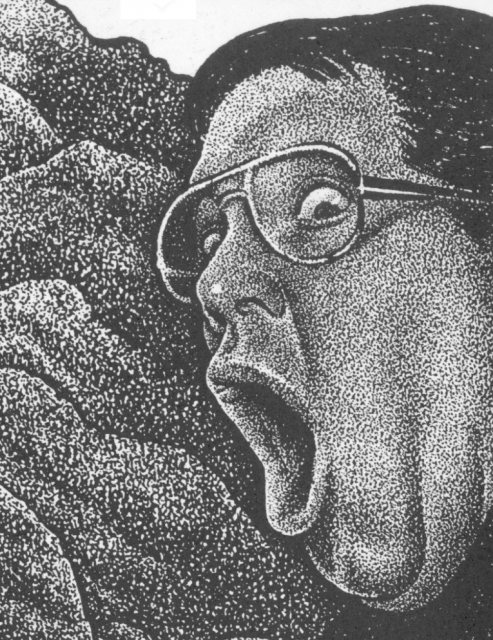
In this 1992 interview, Drew Friedman talks about his family, technique, photorealism, his love of “sub-celebrities” and ugly faces, and more.

Andrew Farago looks back at the life of an artist and comics professional whose life–and deliberate kindness–affected all who worked with him.

Matteo Gaspari returns with another profile of a notable (and under-translated) artist of Italian alternative comics: Vanna Vinci, whose work ranges from supernatural-tinged tales of the everyday to empathetic biographies of notorious women.

In this never before published interview, two highly original and wildly imaginative bookmakers discuss the book as object, “the trouble and magic” of childhood, and the word associations that create the underlying structure of Blexbolex’s stories.

I almost hit another car turning to look at a skeleton in someone’s yard today. And that’s only 1/13th the transfixing power of these creepy and eerie links.

Chris Anthony Diaz hit the streets of San Francisco at the same time as a whole bunch of cartoonists for the Permanent Damage Comix Show, which had made its way over from Michael Mann’s own Los Angeles. Would the Bay Area be able to handle all that Hollywood? Let’s go to the film!

As Lynda Barry’s seminal work returns to print in new, lush editions, Robert Petersen casts a look back at the breadth of her career, and the astonishing potency that remains in the creative pursuit of the image.

TCJ editor Joe McCulloch attended Philadelphia’s premiere small-press comic book show, and we were unable to stop him from filing a report.

In this sprawling conversation, artist Duncan Fegredo describes his early work in British comics, the beginnings of his American career at Vertigo with Peter Milligan, and what it was like to take over the reins of Hellboy.

I phased delicately between the rain to write this description of the news post: drops hovering in the air like glittering gems, like unclicked links.

Bob Levin takes on one of the most absorbing and perplexing books of recent years: The Strange Death of Alex Raymond, an impossible, unfinished inquiry into “comic-art metaphysics” by Dave Sim & Carson Grubaugh.

John Kelly talks to one of the greatest American cartoonists, Jim Woodring, about the process, the meaning, and the animating spirit behind his massive new book One Beautiful Spring Day.

I tried to do automatic writing and all I got was “The dog ate my original art from Gasoline Alley.”

Comics! Architecture! It’s not just ACME anymore, as Duncan Steele discerns the presence of comics in architectural drawing and design.

Ryan Carey offers an extensive appreciation of (and a brief interview with) J. Webster Sharp, one of the most striking practitioners of horror comics today.

Owen Kline’s Funny Pages features work from Johnny Ryan, Rick Altergott AND drawings of Shatterstar. What gives? Mark Newgarden has the scoop!

Two or Three Things I Know About News. In Praise of News. Nouvelle nouvelles. Sympathy for the News.

In this 2003 interview with cartoonist and illustrator Raymond Briggs, he and Paul Gravett talk about parents, children’s books, nuclear fallout, Christmas, sad endings, animation, marriage and more.
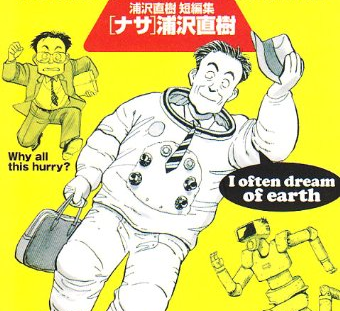
You’ve probably heard about Urasawa Naoki – but not how Natsume Fusanosuke knows him. How did the young Urasawa embrace the lessons of Ōtomo Katsuhiro? Why were these artists ‘adult’ while similarly popular cartoonists were not? This 2004 essay has the answers.