
JACK JACKSON AND LOS TEJANOS
Groth: Jack Jackson was an artist I had liked and admired; I’d read his Comanche Moon and his more satirical underground comics, and I was fond of both.
Jack Jackson, cartoonist: Seems like Gary was trying to expand his publication line and get books by underground artists. But neither Comanche Moon nor Los Tejanos was usual underground fare, so maybe they reminded him of the history/war titles EC had earlier done.
Groth: I thought his Comanche Moon did what Kurtzman did in his war books, only better. And it was a graphic novel before graphic novels. Somehow we got in touch; Bill Sherman did an interview with him in The Comics Journal. That might have been the connection.
Jackson: In The Comics Journal Winter 1981 Special — issue #61 — there appeared a “Tejano Cartoonist” interview with me by Bill Sherman focused on Comanche Moon and the two regular Seguin comics Recuerden el Alamo and Tejano Exile. There is no mention of me doing a larger volume with Fanta.
Thompson: Especially in the early days, a lot of the contacts we made for better or for worse were through people we interviewed. They’d say, “Hey, I have a project I want to do.”
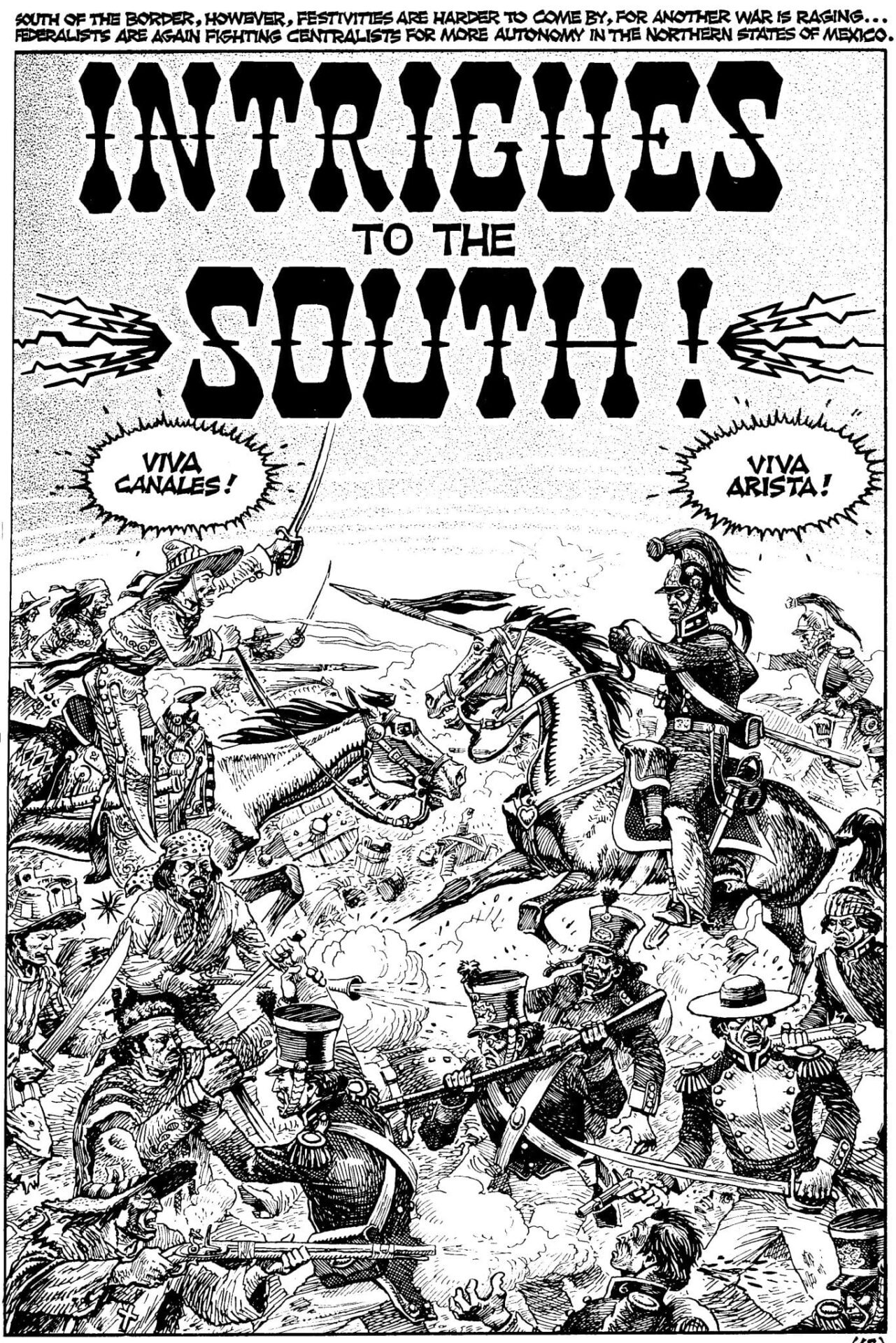
Jackson: My reasons for going with Fantagraphics were simple. They had a nationally circulated Journal with a vested interest in plugging their own books and could run ads for them and interviews such as that in issue #61. They asked intelligent questions and covered the comics medium better than anyone else around. It seemed like a logical way for me to break out of the UG treadmill and get my work exposed to a national audience.
By this time I had moved back to Texas, and I must say that I had burned out on the underground scene. My comics had drifted away from the dope/sex stuff that most underground publishers were interested in — even the company I had helped start, Rip Off Press. Ron Turner of Last Gasp is the Mr. Nice Guy of this story. He had boxes of the three books that became Comanche Moon, yet said OK when Rip Off surprised me by wanting to expand them into Comanche Moon. Thus Last Gasp and Rip Off did a co-publishing deal.
Same with Los Tejanos. Ron had boxes of the slow-selling Alamo and Exile books but gave permission for Fanta to publish an expanded version. Not sure if he and Gary cut a distribution deal, but without Ron’s permission, Los Tejanos couldn’t have happened. I consider the art in this book to be my best ever, but that doesn’t translate into sales. Anyway, I was happy with Fantagraphics’ production job and I think a second printing of the guts had to be made because art was too close to the fold and the book was trimmed smaller than it should have been. Fanta did this without blinking an eye and the “2nd edition” came out right. Pay? I’m sure their rate was in line with the undergrounds, which means that, after the advance, you don’t see very many royalties.
Thompson: If you were given a row of Fantagraphics titles, and in some Who Wants to Be a Millionaire? fashion were asked to put them in the order they came out, you wouldn’t necessarily put the Jackson book that early. It has the ambition of a graphic novel of the kind that came later. We just had the graphic-novel instinct at this point.
Groth: Comanche Moon had been published as a graphic novel. So I was probably following that particular model. And A Contract with God had come out a few years earlier, in ’78.
Jackson: I suppose both books came out before the term “graphic novel” was coined or came into general use. I never liked the term, because it doesn’t describe what I do. My books are “illustrated history,” not novels, i.e. fiction. But if calling my books graphic novels will help them sell, why not?
Plant: I carried Los Tejanos. I was carrying everything they published for the first 10 years or so.
Thompson: We also came within a couple of weeks of publishing Elfquest. They did that first issue of Elfquest with a guy that ripped them off. They were sort of in despair about what to do next. Gary and I were ambivalent about Elfquest for the obvious reasons. It was work that didn’t really speak to us. But on the other hand, it had been successful, and we respected the craft of it and we liked the Pinis. As I recall, we basically approached them and said, “You know, we can publish this.” And they had decided a couple of weeks earlier to do it themselves. And the rest is history.
Certainly, if we had started doing Elfquest, that would have been our defining comics title. We were lucky. The defining Fantagraphics title became Love and Rockets.
LOVE AND ROCKETS, FANTAGRAPHICS’ FLAGSHIP COMIC
Gilbert Hernandez, cartoonist: We were like a lot of people who stumbled onto The Comics Journal. “This guy is vicious. What’s his problem? He’s writing about comics.” Part of me was agreeing with him, though. I was sick of the post-’70s Marvel domination, too. I thought [Gary] was pretty nasty most of the time, but there were a lot of things I agreed with.
Groth: They sent their comic in to The Comics Journal for review and I reviewed it. I was probably more taken by Jaime’s work than Gilbert’s in that first self-published issue, although I liked them both and how they played off each other.
Jaime’s work was unlike anything I had seen in comics up to that point. It wasn’t like underground comix. Very rarely did underground comix deal in ordinary people and quiet human relationships. That’s what impressed me about Jaime’s work. Even then, even with the science-fiction trappings, it was about the relationships, which were so naturalistic. If you look back on it, there really was nothing like it that had been done in comics. Jaime knocked me flat. The sexual openness without being sensationalized or making a didactic point the way most undergrounds did.
Thompson: Gary gets sole credit for our publishing Love and Rockets. That little 32-page, digest-size, black-and-white comic came in. Gary showed it to me, and said, “This is really great. We should publish this.” I read it and I was like, “Well, I guess.” In retrospect, I sort of feel like an idiot.
Groth: They were very amenable to having us publish it.
Gilbert Hernandez: Our original plan had been to continue to publish our version of Love and Rockets as long as we could. I had a very vague — forget vague, say delusion — it would lead to something. Even if we had stayed on the same track. In those days I didn’t really look at the future as anything other than a void. It’s good to be naive sometimes.
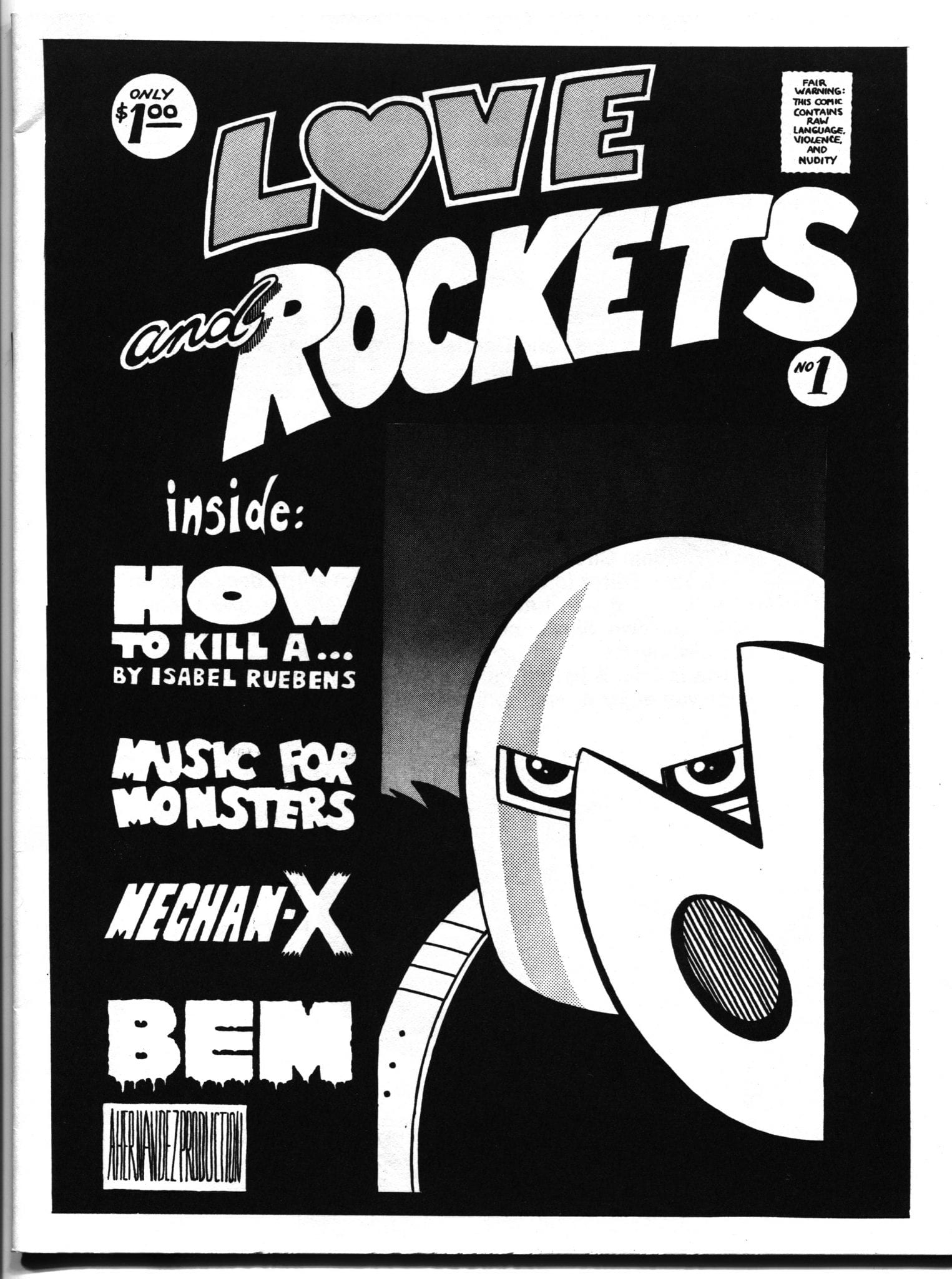
It was my brilliant idea to have them do 64-page issues rather than 32-page issues. I wanted something really, really meaty. I thought it would be more impressive if there were more of it. And I was frankly trying to get away from the 32-page Marvel, DC format, which represented everything that was anathema to us. I wanted Love and Rockets to be distinguished from the standard comic format, which is why I also suggested the eight and a half by eleven magazine format. Anything to make it look and feel different than a Marvel or DC comic. Our nemeses.
Jaime Hernandez, cartoonist: I knew that they were kind of still on the fanzine level of things. They weren’t a big company or anything. I don’t know. Everybody in comics looks the same to me. I didn’t think anything, I just knew he was more of a kid than a grown-up.
Groth: We promoted the living hell out of it. We used Jaime’s cover for the first issue, which was so striking and very iconic. We knew the value of what we had. The first and second issues were a one-two punch. In the first issue you had Jaime knocking it out of the park. The second one, Gilbert started his “Heartbreak Soup” series, which was a total revelation.
Thompson: I remember how Gilbert described “Heartbreak Soup” to us before we saw it: “It’s gonna be a bunch of people standing around talking. Don’t worry, it won’t be like Dreadstar or anything.” I guess this was the period when Jim Starlin’s work consisted of super-powered people standing around having philosophical arguments.
Jaime Hernandez: I knew they were excited about it. I didn’t know any of the details. I remember when it first appeared in San Diego, there were a lot of pros and friends of Gary’s coming up and congratulating him. Saying, “It looks really good.” And Gary would say, “Do you have your copy?” He would send off Chris Claremont with his. This was all mainstream people. There was no alternative world.
Gilbert Hernandez: I was surprised by how eager they were to promote it and put themselves on the line like that. Considering that Jaime and I weren’t professionals. What you saw in the first Love and Rockets was the first thing we’d done. We felt a little intimidated that people would be scrutinizing whatever Gary Groth was putting out at the time. Gary can be pretty intense and in those days he was a little more wild about it. On the one hand we were like, “What are they doing?” On the other hand, we rolled up our sleeves. “Time to get to work, then.”
Groth: We just absolutely believed in it. They’re two of the most talented guys I’ve ever known. We truly believed this was the future of comics … as an art form.
I was friends with a lot of mainstream people, and I remember Dick Giordano walking up to me at a convention before the first issue was printed but during the time we’d been promoting it for a couple months, and he said, “Boy, this thing better be good. If the insides are as good as the cover, you got a winner.” I saw him at a convention later and he walked up and said he got a copy of the comic, and he just shook his head. He evidently didn’t think it was as good as the cover.
Jaime Hernandez: We didn’t care. We had punk egos. “The comics world is ours for the taking.” “There’s nobody here to be afraid of.” That kind of thing.
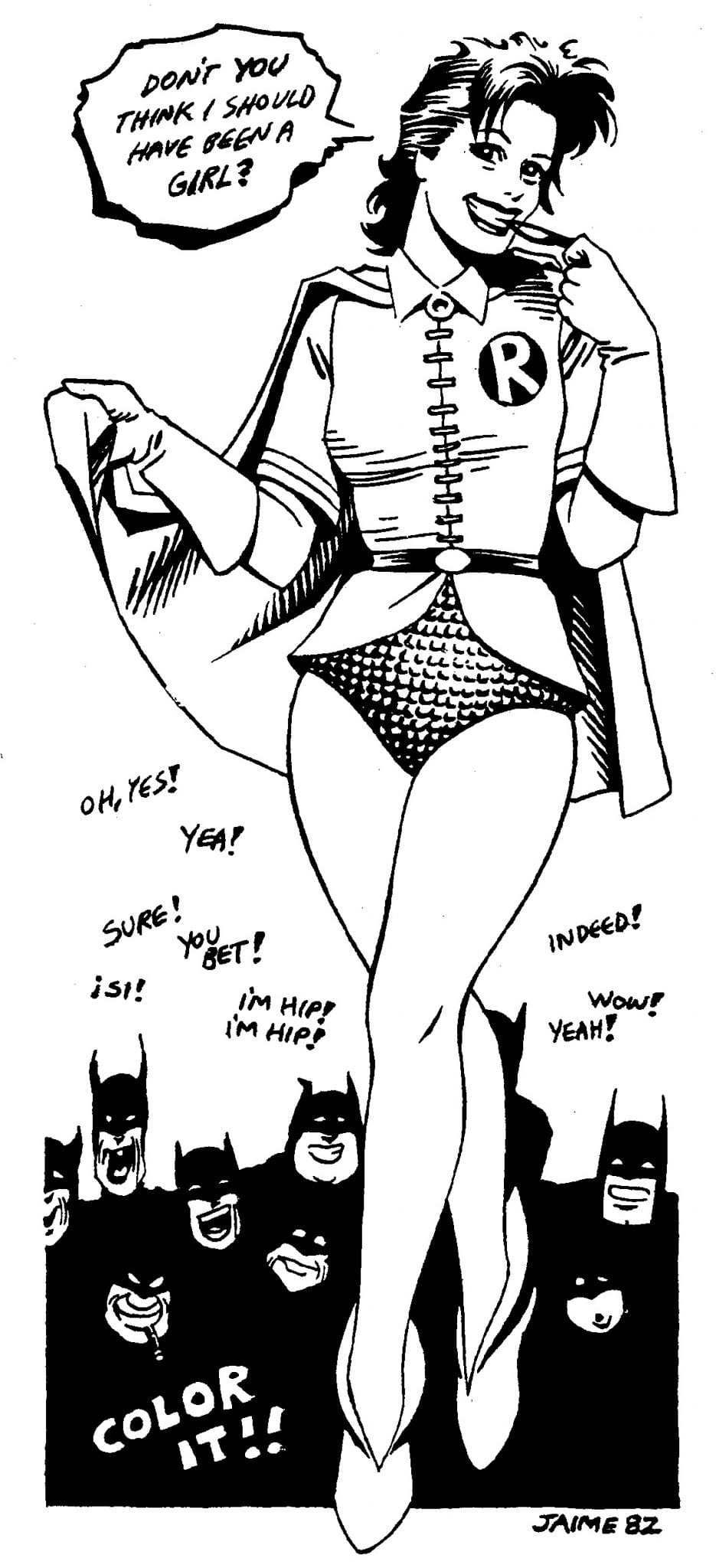
Thompson: Sales started out very low, but gradually built.
Gilbert Hernandez: We simply had a 64-page comic book to fill. We pulled out everything we had since we were kids, you know? We basically learned to do comics as we were doing those first issues of Love and Rockets. We did OK with the first issues, but when it came to doing Love and Rockets and having strangers look at the work, it became disciplined in that way. Not as far as getting the work out on time, but disciplined in what we wanted to do in the story, and what we could do from other things that were out at the time.
Groth: Ultimately, we couldn’t buck the standardized racking system in the comic shops. As more and more independent comics started publishing comic-book-sized books, the magazine format became more and more marginalized. Love and Rockets became the big hold-out and because it became established and one of the best-selling independent comics being published, it hung on for 50 issues as a magazine-sized, black-and-white comic.
Gilbert Hernandez: I thought it was a good idea to have it stand out and have it be away from the mainstream comics. When I was a kid I read Savage Sword of Conan, and I liked the old Warren books. I liked the maverick companies that were away from the mainstream. I had a great affection for them as a kid.
Thompson: You could see most cartoonists pull away from the magazine format relatively rapidly. It took about five years. You could see a trend where we’d publish every cartoonist at magazine size, and then at some juncture if we started a new series or re-started it, they’d say, “No, I want to be comic-book-sized.” You can see that with Milton Knight, you can see it with Dan Clowes, you can see it with Peter Bagge. You can even see it with the Hernandez Brothers, eventually. It took them a bit longer.
Audiences didn’t really reject the magazine-sized comic. They rejected the European comics format. The album. For a time the magazine format was a good format because it indicated to people this was alternative work. There was no attempt to blend in. Certainly, Raw was the extreme end of that. You’ll note that Raw at the end shrank down as well. Art was even more ahead of the curve, because Maus was mini-sized within Raw.
Jaime Hernandez: I think about young people who start their comics with no problem. They got this whole world to fall back on. If they fall, they fall on this cushion of alternative comics. For us, we were too naive to know how to fail. I think about that; sometimes people are shocked to find out we had nobody to look to when we started the thing. There were a lot of people doing their own thing at the same time, but nobody was visible until it started going.
Groth: It was such an exciting project. More than any comics we’d done before, and there weren’t many, obviously, but it was Love and Rockets that that gave us the juice to publish more comics and find new cartoonists.
DON ROSA’S COMICS EXPERIMENT
Rosa: I don’t recall what brought about Fantagraphics’ publishing Don Rosa’s Comics and Stories. That magazine reprinted “Pertwillaby Papers” strips that I had written and drawn for serialization in RBCC, presenting the two serials intact in single editions of Comics and Stories. Gary and Kim apparently wanted to expand and form another publishing branch called “CX” for “Comics eXperimental.” The first two titles to appear simultaneously were Don Rosa’s Comics and Stories and another magazine titled Love and Rockets. The former lasted two issues, the latter proved a tad more successful and lasted somewhat longer, I believe. No kidding.
I grew up loving the Carl Barks style comedy/adventure. And I don’t mean “funny animal” comedy/adventure, since I saw Barks’ characters as humans. Bugs Bunny and Daffy Duck acted like animals. Barks’ “Ducks” were obviously human to my young mind. I loved all sorts of comedy/adventure, Barks comics, old movies, TV, etcetera. What I did not know then, and what I only learned in the past 18 years of doing Duck comics for Europe, was that I had a very “European” preference of comics, but I never knew such comics existed beyond Barks. In Europe, they have had Tintin, Asterix and hundreds of other action/comedy/adventure comics featuring “real” people. We have never had anything in America like that, except Barks’ “human” Ducks. My “Pertwillaby Papers” was that sort of thing, and American readers didn’t understand what I was doing. If it’s a comedy, where were the talking rabbits or friendly ghosts or love-sick teenagers or little kids with cute dogs? Funny comics about adult humans having complex adventures with real danger and murder? What’s that all about?
How were they as publishers? I never thought about such things. This was just fanzine work for me. It wasn’t a career. I’d liked what I’d been buying from Gary since the ’60s, and his stuff was getting exponentially better as time passed and Kim had joined forces with him. I was sure these guys knew what they were doing, and it was an honor to know they were willing to try a magazine devoted to stuff I might churn out. We had no special agreements ... I would just send the stuff in and write some texts, and they took care of everything quite well. Beautiful jobs! The only thing lacking was buyers.
Even though Gary told me that sales on Comics and Stories were “dismal,” he was willing to keep publishing it! What a nice lad! The first two issues used up the backlog of “Pertwillaby Papers,” so I needed to produce new material for a third issue. I actually tried ... spent a month or two trying to complete a new chapter of “Pertwillaby.” I used to love doing fanzine work in the late ’60s to late ’70s, but this was now 1982, by which time I’d gotten married and I had a house and a wife and a yard and dogs and was now helping to run the family construction company, so there was simply no time in my life for free fanzine work any longer. The decision to give it up was mine, and give up writing/drawing altogether, and I packed up all my drawing equipment and stored it away in the basement, intending to never draw again.
And I didn’t until I did what I planned to be a single “Uncle Scrooge” story for Gladstone Comics about four years later.
PUBLISHING HUGO
Groth: Another of our earliest comics was Hugo. Milton Knight was clearly a maladjusted oddball, but it was precisely because of that that I liked him.
Thompson: Milton was this wildly talented funny-animal cartoonist, with a pretty dark, bleak and frankly misogynistic view of life. He poured this stuff into a funny-animal comic. It was quite fascinating. He found us. I don’t think we would have known to seek him out. He was local — from New York. It may have been a mutual friend that introduced us.
Milton Knight, Jr., cartoonist and animator: An acquaintance who was familiar with Hugo — Mike Harris — thought it would be a good match and drove me to their office/house to introduce us.
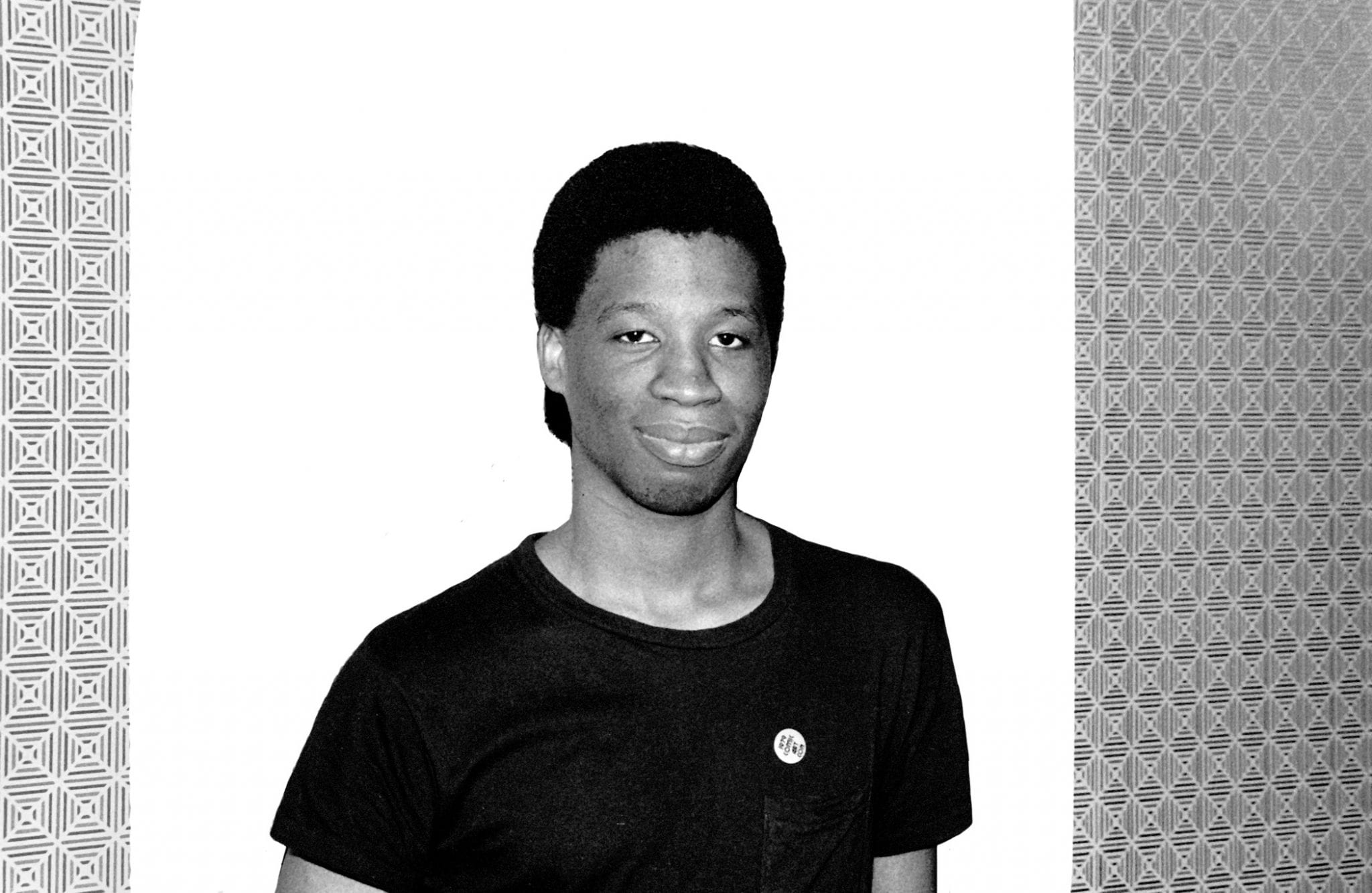
Thompson: Milton is and was a brilliant cartoonist. There’s a real conviction behind Hugo. An almost scary conviction.
Knight: Gary and Kim felt what I was doing was suitable, and presented a contract for the first book a few weeks later.
Thompson: I think we did one or two magazine-sized issues, and maybe three comic-sized issues.
Groth: I thought he was troubled. You can see it in the comics. But he was a masterful stylist, extraordinarily skillful.
Knight: Mike Harris drove me over occasionally to conduct business; we’d end up hanging out for the next few hours. We were never friends.
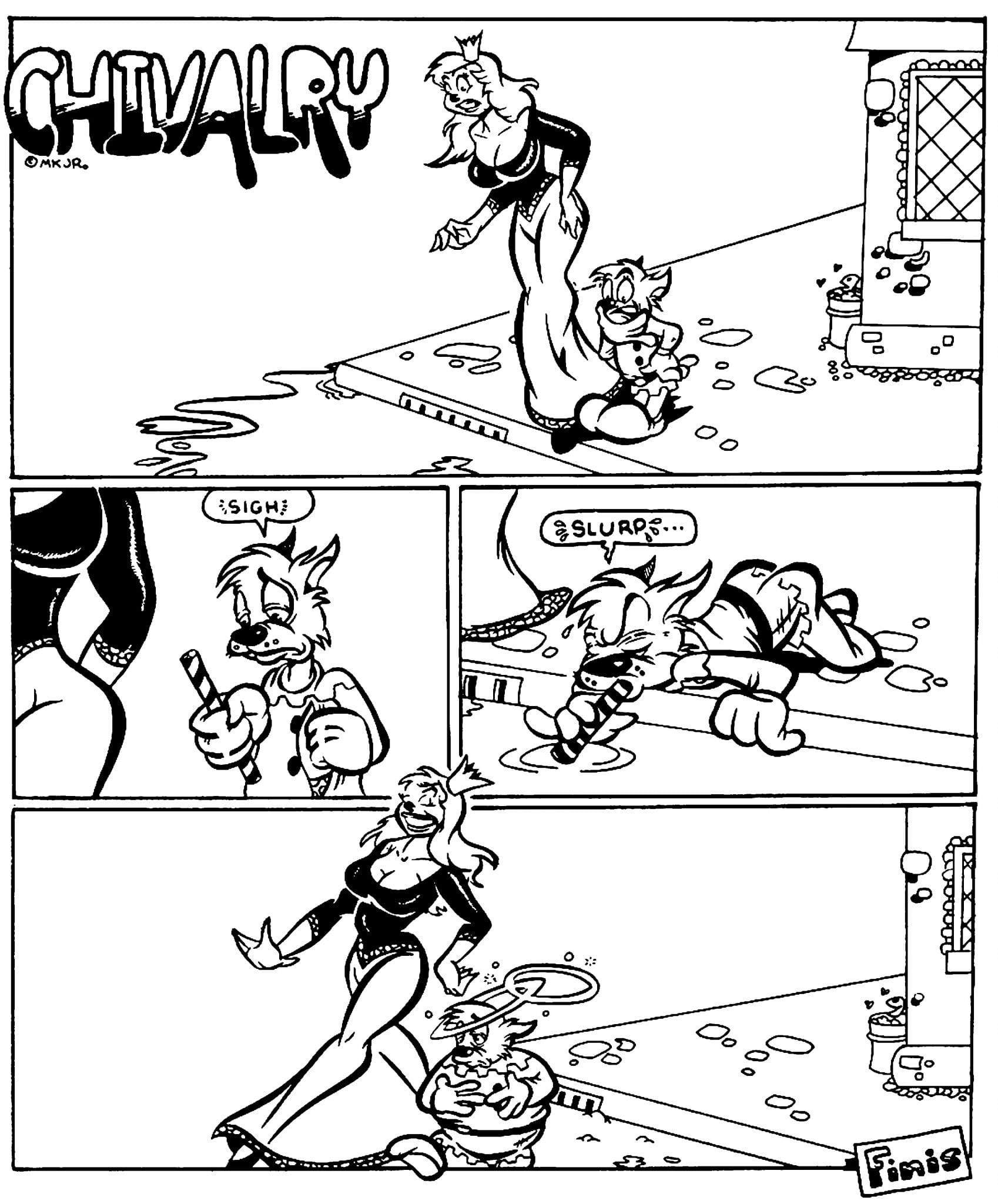
Thompson: As I remember, Bob Fiore had his top 10 comics list of the year, and he rated Hugo #1 and Love and Rockets #2. I think Fiore is kind of mortified about this, but Hugo was a pretty great title.
Knight: The publishers’ efforts to promote Hugo were perfunctory, even grudging. Opportunities were missed. Out-and-out humor comics did not fit the developing Fantagraphics agenda, and the favoritism lavished upon Love and Rockets was hurtful and obvious, though always denied by the publishers.
Groth: I liked Milton’s work. There was a dark undercurrent to Hugo, so even though it was a funny-animal comic, it wasn’t just a bunch of Fox and Crow hijinks, there was some serious shit going on beneath the surface, which is what I liked about it. Milton was difficult to work with, though.
Thompson: Milton was a bit of a loose cannon. We had words, and it ended. He was among the first of a long line of Fantagraphics cartoonists to feel that we were paying too much attention to our big books of the moment and not enough to him. He went elsewhere.
Knight: Publishers and creator were unhappy with each other. Groth pressured me into agreeing to drop the book. I knew I could do better elsewhere ... and did so.
(continued on next page)