God Rest Ye Merrie: The Letters of Walt Kelly and Young Peter Brown
Here’s a true story for the holiday season about a famous 45-year-old cartoonist and an eleven-year-old boy.


Here’s a true story for the holiday season about a famous 45-year-old cartoonist and an eleven-year-old boy.

If you’ve followed Art Spiegelman at all in the last 20 years, you’ve seen his lectures, filled with insight, wit, and lots of visuals projected onto screens. This has all been pretty swell — but predictable — stuff. But when have we ever seen Spiegelman take the stage to talk about comics with a giant movie screen and a six-piece jazz combo?

It was the Dr. Who of the 1940s, a comic strip that traveled though history with verve and panache — not to mention lots of wisecracks. Only, instead of charming, eccentrically dressed Englishmen wielding sonic screwdrivers, there was a practically naked caveman with a stone ax.

In many ways, 1939 and 1940 were pivotal years in Jack Cole’s life and work. These are the years he stretched from humorous short subjects to longer, more serious crime and superhero stories.

Seattle has a new underground comics scene. One is tempted to say “again,” recalling the boom of the 1990s with Peter Bagge, Jim Woodring, and the like. More accurately, the scene has endured.


Further into the career of the great unheralded cartoonist.
Digging up George Carlson and his extremely busy career.

1938 was the year that Superman appeared. It was also the year that Jack Cole became a comic book artist. Welcome to part two of my continuing survey of the lesser known (and, in some cases, virtually unknown) comics of Jack Cole. For part one of this series, see this earlier Framed! column, here. This… Read more »
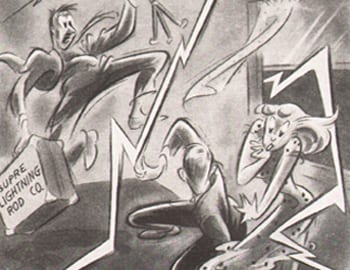
A study of Cole’s lesser-known comics and cartoons sheds light on his greatest work, and reshapes our current narrow understanding of this secretive, influential 20th century pop artist.