
I first talked with Nancy Burton – aka Panzika, aka Nancy Kalish, aka Hurricane Nancy – years ago when I was assembling An Oral History of Wimmen's Comix and we stayed in loose contact afterwards. During the process of talking to people, I was inevitably asked who else I had interviewed and heard repeatedly, “You talked to Hurricane Nancy? What’s she like?” Though at the time, we had only had a single phone call and hadn’t gotten to know each other especially well.
By her own account Nancy never socialized with other cartoonists, and the only one she knew at all was the late Trina Robbins, who reached out to Nancy at the end of her art career asking her to contribute to It Ain’t Me, Babe. Nancy stopped cartooning and making art altogether in 1970 and just why that happened is one of the things we talk about in the long conversation that’s included in the new book, Hurricane Nancy.
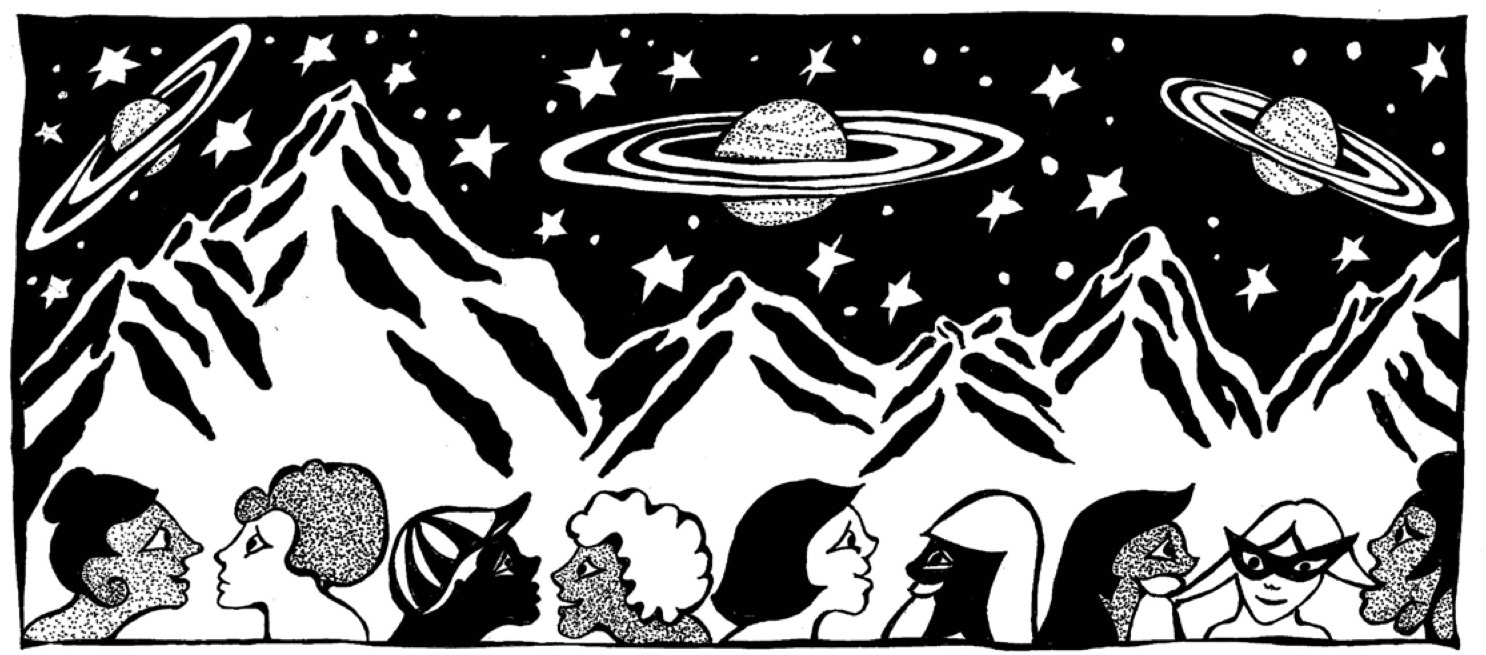
In organizing and editing the book, I kept thinking about how much of Nancy’s personality comes through in her artwork. She has a playful, bemused sensibility about life that’s in all her work, from her earliest comics to her most recent pieces. Nancy donated her original artwork to the Billy Ireland Cartoon Library and Museum a few years ago and now with the book out, people will be able to see her work and hopefully get a glimpse of who she is and where her art stands in the history and evolution of underground comix.
As the book began with an interview here at The Comics Journal, the editors asked for a short piece about Nancy’s influences, which are eclectic and not obvious, but I think they make perfect sense. What follows is an edited version of our recent conversation.
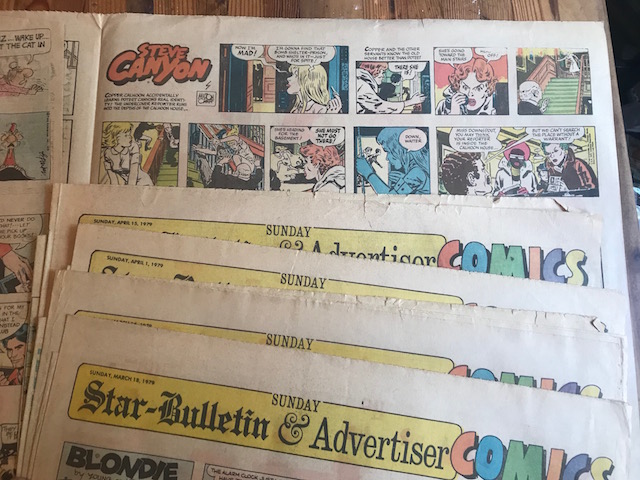
Advertiser.
The Sunday Comics
I used to go to my friend Angela’s house. In my house we only read the New York Times, which didn’t have comics. Plus her mother was a wonderful cook. I would read the Sunday papers. I don’t even remember what they were. They were funnies. A little sarcastic. A little satiric. It influenced me just because here were people working every week to put out a strip of pictures in sequence that told a little story and was funny about human nature. It was the experience and the feeling of it. It was an art form. Even as a child I went to art museums in New York and stuff like that. I was exposed to the culture of the city. To me, it was like discovering rock and roll. Here is something that tries to communicate something to you. Something funny. Some observation of wisdom. Some character that’s silly. And then great pasta. Because of my friend Angela and her wonderful parents. I understood that looking at something funny was invigorating. Underlying everything else, they were cheerful about silly things. I can’t remember the specifics of it. It was the overall feel.
The Northwest Coast Hall at the American Museum of Natural History
That hall at the Museum of Natural History is filled with such beautiful totem poles. One line and one design that follows through a whole structure. They’re frightening, strong, etc, but they’re funny. Not smiling funny, but the waves and the lines of those works of art are wonderful. They had a fantastic selection stolen from Native Americans. I was fortunate to see them. It creates something that you just don’t see in everyday life. It’s as simple as that. That depth of communication. That really again just hit me. And I was a kid. In the museum there are all these things showing stuffed animals and real animals in settings that they wanted to show, but this was art. True art. It was as good as the first time I saw Chuck Berry at the Alan Freed concert in Brooklyn.

Nancy
Nancy and Sluggo! I loved it. Somehow it got my kind of mind.
That was my favorite comic book. They were not verboten at my house. I just picture sitting on my bed with a pile of those comics. I wouldn’t call myself a cerebral person, but as an artist and somebody who deals with a lot of people, part of what I learned about my ability to handle and deal with people I got from observing what they actually do. And I got that from comic books like Nancy, which were unpredictable. Which I find most people are when being themselves. Now because I have friends in all social whatever, having a beautiful home and lots of money is not a crime, as I thought it was. But you know me, I’m the annoying person on the plane who talks to you. [laughs] I’m the person behind you in line who’s talking. It was only when I was a heavy, heavy druggie that I was less interested in life and people.
Clyfford Still and the Western New York Art Movement
There was a wonderful museum, the Albright-Knox Museum, in Buffalo, New York. I went to school at Buffalo State Teachers College, which is now part of the State University. Many of the teachers in the art department when I was studying to be a teacher were actual painters. They were real artists in the area producing work and they were a tremendous influence. Because they were producing artists. They’re a breed unto themselves.
Seeing Clifford Styll’s paintings there. The guy was a master of color, space, and size. He had his own universe. There are people who don’t like abstract expressionists, but to go into a room filled with that was walking into a different universe. I was very influenced that somebody could do that and get away with it. And make such an impact on me. “Get away with it.” What an experience. I like abstract expressionism. It’s not something that’s on the walls of my house, but that’s because I can’t afford it. [laughs] Clyfford Still. If you look at my work, it has nothing to do with his, but it was influenced by it. The freedom to do something like that. The freedom to say, I can do that. I can make the biggest painting with the craziest colors and weirdest shapes and it’s wonderful.
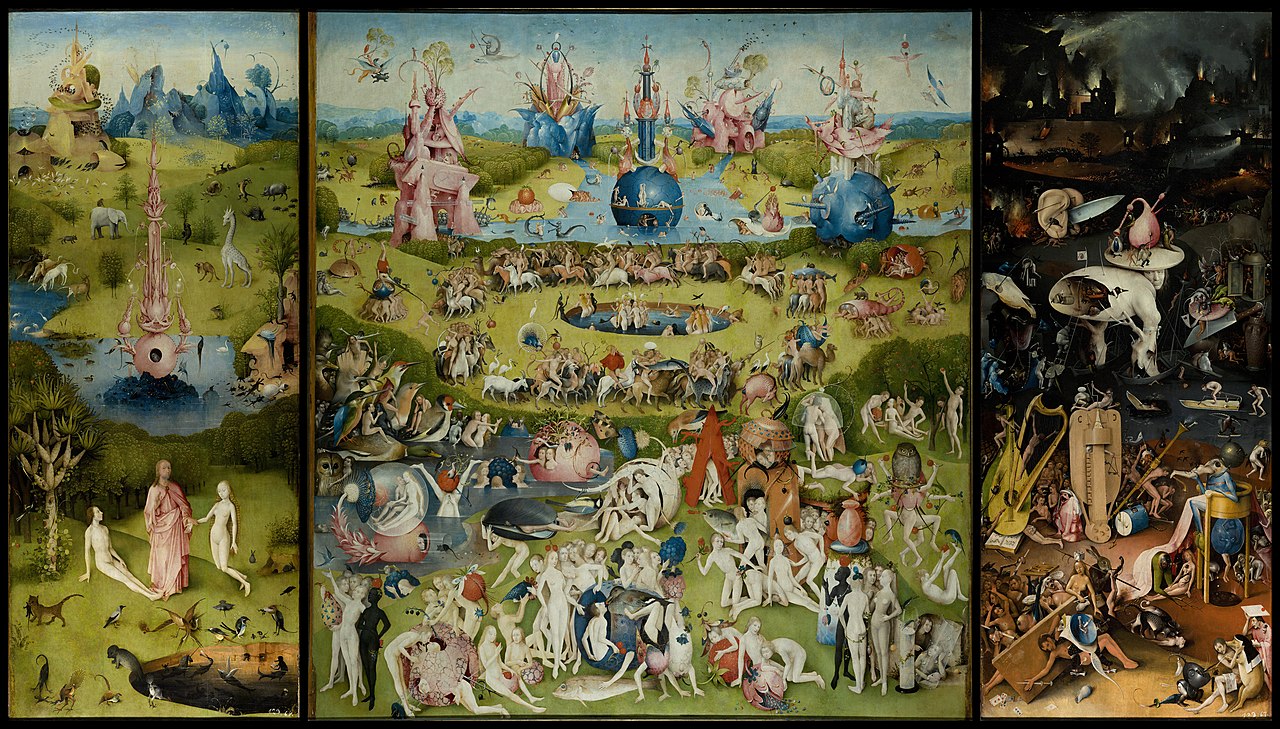
Hieronymous Bosch’s Garden of Earthly Delights
It’s heaven, purgatory and hell and it's brilliant. His technique. I’m not into the technical side of it. If you actually look at the pictures, they’re supposed to be scaring you, but they’re funny. They’re so wacko. So wacko! They express emotional and physical trauma and terrible things – but it’s funny! I don’t know much about him personally, but it’s much better than a Christ on a cross. This was like, give it to me, man! This stuff is just wonderful.
That’s what I like to put in my pictures. A little twist or satire or something that really doesn’t belong. Animals with hands. I don’t do cunts and pricks right now as I did in the sixties. I had much more of a little fixation then. I still think cunts and pricks are really gorgeous, but I think I did enough of that. The details that this man put in those pictures is extraordinary. And he was a master craftsman. It’s the hell one, of course. That’s the one we all move towards. That was a very big influence. I had traveled earlier and seen other museums in Belgium which had pictures from that period. I had seen other Bosch and Bosch-like paintings. Getting to the Prado and seeing this was just an extraordinary experience for me as a thinking human being.