
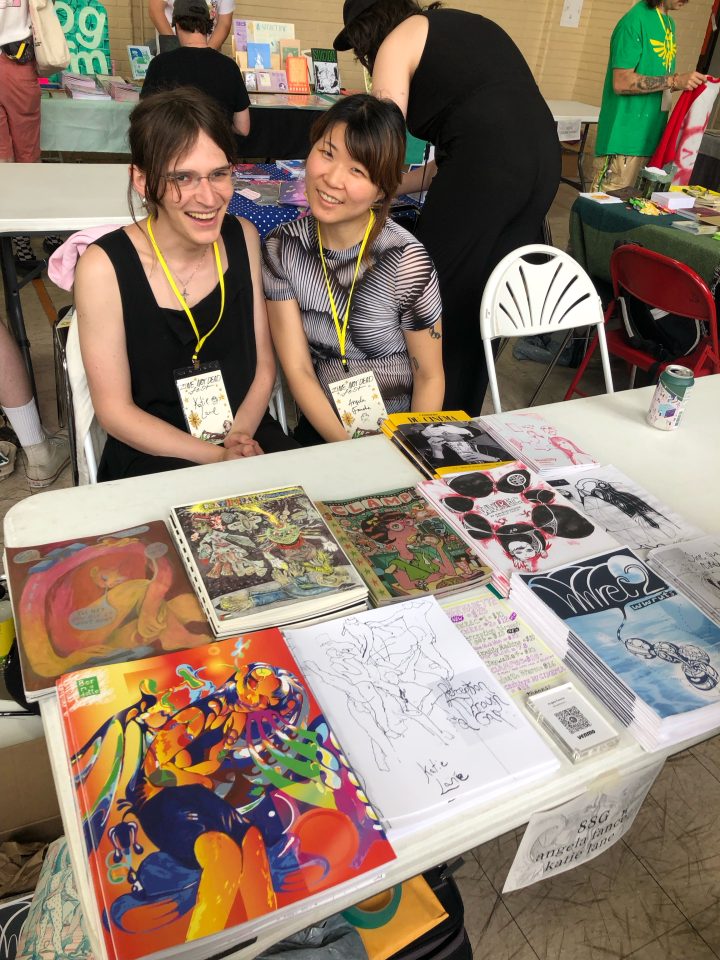
Embarking on a collaboration with a friend is confirming in advance that you will get into a disagreement with someone you love. How pleasing to see that Angela Fanche and Katie Lane, two cartoonists with more than enough to do regarding their own art, have chosen to focus their energy on spotlighting the work of others with the 27+ artists featured in the generous (10" x 13") first issue of Bernadette magazine. It’s admirable to see their enthusiasm for delivering this anthology, to add a little more richness to the world through promoting this collection. They remain close friends.
Fanche’s ambrosial linework reveals like a beautiful improvisation, opening up a shimmering creative nonfiction. Reading her stories is not like listening to a retelling of a dream so much as slipping into the dream yourself. Her work suits glamorous poster and cover art as well as diary comics, her autobio strips gleam with the allure of always revealing something below the surface of activity, the biggest Raisinet in the box.
Lane’s celestial interpretation of conversation, trembling illustrations accompanied by text that reads like a transcript of whatever the figures in Bosch paintings are saying to each other when the museum is closed. Lane’s work has evolved visually over the last couple of years to such a drastic extent, I can’t say I’ve ever seen anything like it- going from a screamingly digital style of collage with her strip Single Camera Sitcom (serialized on Instagram from 2019-2022) to scrawling inky panels, as homemade as your Halloween costume, but with the same absurd tone she’s been recognized for over the years.
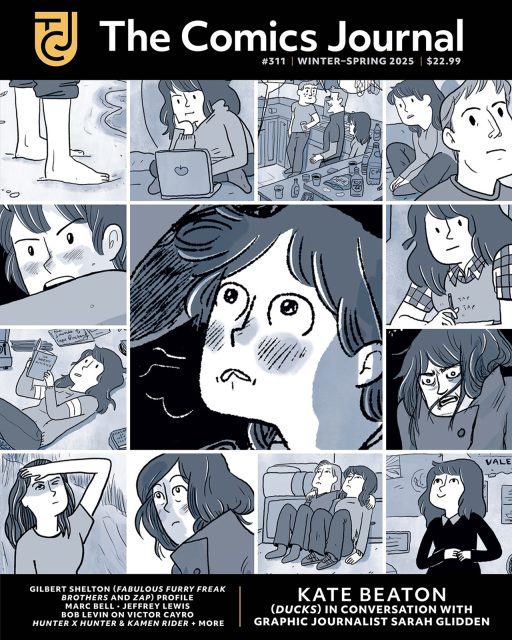
Fanche and Lane joined me for a phone interview from Lane’s New York City home in August of this year for this article. Once we got going, I found the charm of these colleagues flowed so instinctively, I chose to trim myself out of the transcript entirely. That’s more than enough from me, please enjoy this conversation with the editors of Bernadette (a review by Helen Chazan is waiting for you here), Angela Fanche and Katie Lane.
-Sally Madden
KATIE LANE: Why is it so big?
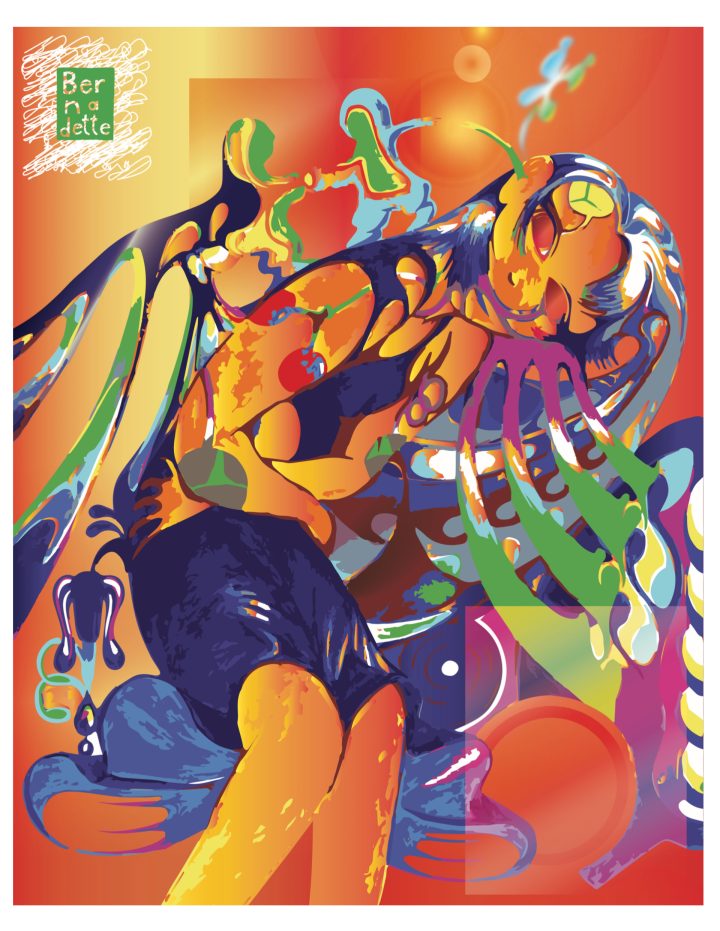
ANGELA FANCHE: Well, I wanted it to be big because most comics are usually in standard size, 8.5 by 11, correct? A larger size gives more opportunities for artists to showcase their work in a very different format. Take this page by Sam Szabo. It's cool to see it big, honestly. Some of these comics might be printed in a smaller size. It's just more immersive. Even yours, Katie, I feel it just dictates the reader to really pay attention, “You can't skip this!” A lot of the artists we asked to submit a piece in this magazine deserve that.
There was that big Junction Box anthology that came out that James Tonra screen printed.
Yeah, so we're not the only.
It was kind of the same dimensions, a little bit larger than this, actually. I think that came out in the winter. I remember talking to you, Angela, and you saying, “we should do a big one kind of like that”
Yeah, If we are to come together and make a publication, we can join that sort of wave. We're not in any competitive way. And I mean, the Raw magazines from the 80’s- they're way bigger than this.
We wanted it to be taller and they told us that we couldn't print it that big.
We would have had to sell it for, like, $50. Even if it's an expensive book to make, it has to be reasonable.
I think we always knew that we weren't going to have a lot of copies such that we could give, say, 20 contributor copies or something like that. If your primary reward for a project is showcasing work in something with other people, it’s nicer when it's a high fidelity production.
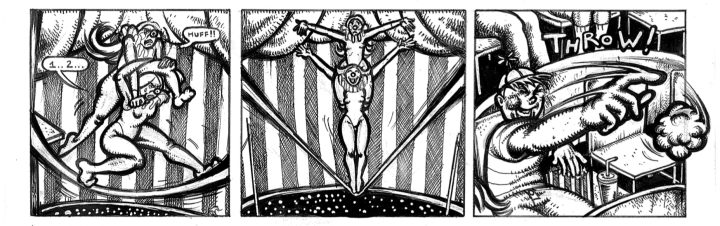
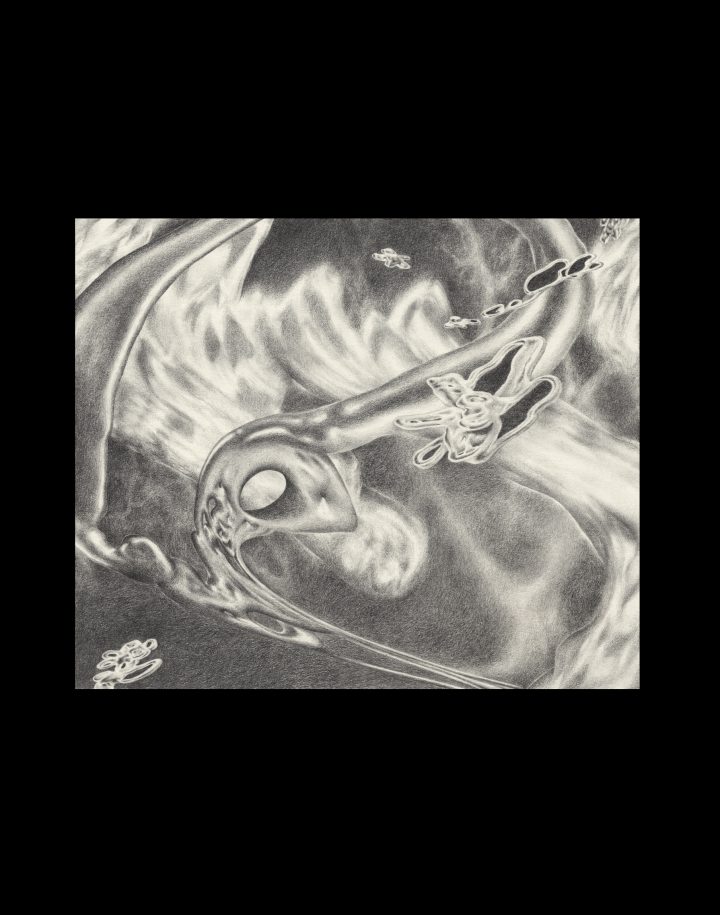
It's also nice to see that you know some of these artists, we’re familiar with their work. We normally see them at 8.5x11, and it's just so nice to see, for example, Molly Dwyer's comic. You can actually see every single detail. There's a lot of stippling in here. And the effect it has when it's a fuller size, rather than when all the shading is… what is it…
Compressed.
Yeah, compressed. So that it's cleaner- and it's still clean, but you just can see every single detail.
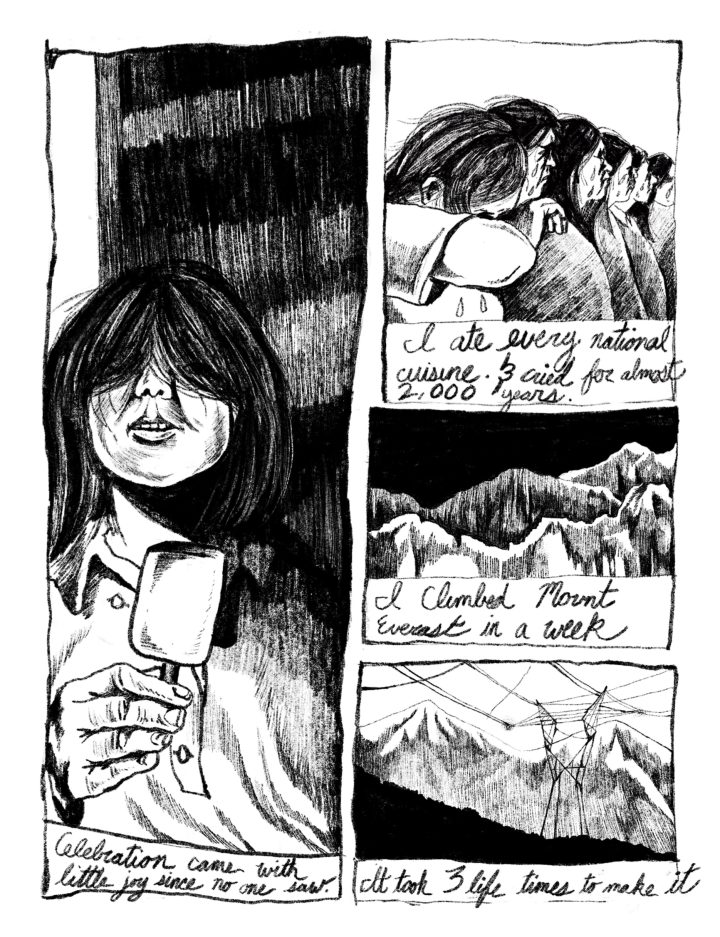
An image can have a look to it that is enthralling, and a specific kind of line making changes the way a page will operate. A lot of the artists in the anthology have a distinct ability to render black- there’s a lot of darkness on the pages but none of it is uniform. I don't want to be out and out, “digital lines are annoying” or whatever, but they can lean towards being more indistinguishable, and a distinct way of making marks on the page is powerful, like the work itself.
Usually when I'm reading an anthology I'm looking for a scene, an offering made by a group of people that are, in some sort of way, linked to each other. Raw magazine- that's all a scene. Or Zero Zero is all Seattle in the 90s, stuff like that. They're very space and place oriented to me. Or that's how I think about them.
I remember I was freaking out when I discovered Raw, that was a huge game changer in my mind. I discovered them in college and they were just so tightly curated and just really inconceivable or unfathomable, it's a production that could really only happen that time.
I remember hearing that Françoise Mouly would actually use a letterpress and just hand-make all on her own, because letterpress was still a thing back then, it's not a thing anymore. I mean, Bernadette is printed digitally. But I mean, there's ripples of it happening now.
Yeah. And Mikael Choukroun is doing Badda Bing, which is also screen printed, which James printed the screens, too.
I appreciate it. And I just like anthologies, especially when I was first introduced to comics, just slowly discovering more and more. I’d read an anthology because I knew it had one of my favorite artists, but then discover other artists through this same anthology. It's almost like a compilation, like a music compilation.
That’s definitely how I got into Gabrielle Bell, from Kramer's Ergot. All of the autobio cartoonists, like Julie Doucet, I got into through anthologies. I remember The Ganzfelds in the 2000s. I feel like they were also doing something a little different by incorporating design and comics.
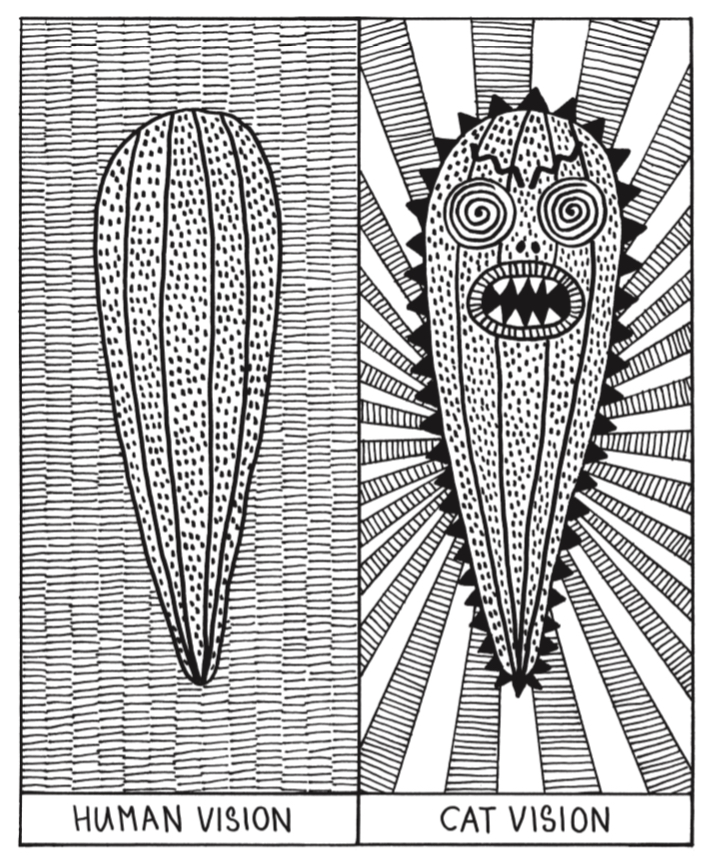
I mean, the first time I ever read a Bill Griffith comic was in an issue of Arcade.
Oh, yeah there’s also all the Zap Comix, and issues of Wimmen’s Comix-
Even now, I’m finding new artists from anthologies, like Cowlick Comics. One of the cool things about Cowlick is that it's not all comics people, it's people who make something that resembles comics sometimes, or their work makes sense alongside comics, but don't really think of themselves primarily as cartoonists, and that produces nice work sometimes.
It's also highly unpretentious.
Anyone can do it, almost, which I think the opposite kind of effect happens when cartooning people read Cowlick and Jaywalk and like things like that. They'll be like, “well, this is pretentious art comics” but I think it actually has the opposite effect and appeal to people who don’t make comics.
Cowlick has that kind of concept of all art being affordable. And I know that comics are primarily supposed to be an affordable art, sometimes people attach comics to a low-brow versus high-brow sort of conversation, when it’s really a moot point.
Those two things exist, obviously, within the realm of reality, but it's not the point to categorize between this binary. All art should be accessible and afforded to everyone, it just so happens that mass produced versus the art market that's arbitrarily imposed onto us makes it so that “good” art isn't accessible, and cheap art has this association with “bad”, just because it's just so tied to the market that creates this weird dynamic. Cowlick successfully is able to supersede that so seamlessly. I think that’s where the confusion comes from, what you was mentioning, about how people might be- within comics especially- might be kind of, is dissuaded, put off. It's just familiarity with what we're used to, with our attachments to different art forms.
An interesting thing about comics is that they're reproducible images, right? For a lot of people, the accessibility of comics is commuted with making commercially viable art, art that has an immediacy of legibility.
And I think some people get frustrated when they are confronted with a lack of legibility, but ultimately the path to being a cartoonist that makes very commercially viable, readable, legible, clear art is very long and likevery long, and then the accessibility is likeon a different foot. You know what I mean? In order to be a “successful” cartoonist, you need to be able to very seamlessly and quickly draw 15 pages a week: clear, legible, always the same style. That's not very accessible, actually, maybe just as difficult as being a good painter, and neither of which are gonna make you any money. It's a confusing expectation.
You're right. You could apply that same logic to painting too, especially today. There's this way of painting that you train for. You go to grad school and then you really figure out what kind of painting style you have to hone in on. And then this is regardless of all the social networking aspects of painting.
It's more restrictive. In a way, I think cartooning is incredibly restrictive. The difference is that cartooning has this kind of pretension of ignorance. You're pretending you're stupid when you have very specific expectations about what you want, and you're angry when you don't get them. It's a weird way to comfort yourself as an artist.
We share basically the same beliefs and we just get along, the stars align for us, in a way, I think.
We're both born on the seventh of the month.
We were both very stressed out about our lives when we met, we bonded a lot that way.
I feel very open when I talk to you. I feel like whether you judge me or not, I feel like I'm free. Even if you did, which you don’t! But even if you did, I feel open to discuss the matter of comics. And that's important because if we want to make a magazine together, it's highly involved. I knew publishing would be a very involved task, but I really didn't know how involved it would be. And I'm actually very grateful that it's you and me working together. Aside from business, I feel like we agree on aesthetic choices. At the time it was me, you, Clair Gunther and Juliette Collet, who co-edited the first issue, just laid out all the pages that we had for submissions, rearranged them all together so that it could look good together, and be more cohesive. It was a mess.
They were printed out at size, and we just physically laid it out. And we'd be like, OK, well, this needs to go here. This needs to go here. Like , “where do you guys want to put this?” It was fun.
Juliet was still studying at Cooper Union at the time, so we could print everything to size on the school computer. Having a good in in a facility, like a university, is very important [laughs]
In a more general sense it's actually really hard to find people who like to listen to you talk about comics. It is hard actually. It can be very hard to find someone who’s into the same comics you like and wants to talk about it a lot.
We also have a similar conversation style. That's also important too. Because even when I talk to some people, I get really shy so easily, not being able to articulate what I'm trying to say. And I feel like we have such a strong dialogue between us as friends and as colleagues…? or peers? contemporaries?
No, “colleagues” is just such a fun one.
I love the word colleagues. It's just a good word. It's like “collie”
Like border collie?
[laughs]
We're just really good friends. I don't know, you're, my best friend. I talk to you every day and at a certain point, we're kind of in a rough spot where we always talk about business now, which kind of sucks. We need to make a separate chat for business or something like that, you know?
You should make a signal, specifically for business. I feel like we don't really want to stop with just a magazine, right? We were talking about doing readings. It just so happens that Bernadette issue #1, happens to have no cis male artists, it just so happens to be that way. And then I feel like one thing publishing a small press is able to do is provide a platform, a setting for artists. If we also do readings in the future, which we don't know how that might happen, but it could happen, I don't think it is unfeasible.
There’s a camaraderie between people in such a space, even if they don’t talk all the time. You’ve done posters for these sessions. My partner, Lydia, and our friend May, do these live drawing events every other week. They're inbetween spaces right now, but it's called Draw Me, Draw You. Everyone who's drawing also models. So there's a model sign-up sheet and then there's a theme every week. Between that and then the Bernadette Presents, a reading last year, to raise money for the publication-
It was actually this year. It feels like last year.
[laughs] This year?!
Yeah, even the release at Partners and Son, it's just so reassuring, “oh there's someone in this world who gets this, or even gets me”. Even artists who are in it can see that there's interest in not only this publication but in their work, too because they’re part of this publication.
It's also rewarding in a way, because by making comics, there's a sense that what you're doing can feel like it's only for you. And by making something like this it feels more like it's not just for you. It's like a nice feeling. You know what I mean? That feeling of selfishness when it comes to making stuff.
The selfishness that you inherently feel when you're making your work and you realize, “oh, I'm making this only for me, who's going to look at this? Who's going to care about this?” But then when you have a publication and it's filled with people who are making similar work it's reassuring to know, “oh, there's actually more than just me who was interested in something like this” There's a whole untapped scene of people, like a whole untapped community, who just aren't talking to each other.
I also feel that sentiment in the transition from making my personal work, to making something larger. When I’m making my comics I don't really like thinking about anyone reading them. I find something valuable about not making concessions for an audience perspective, not sacrificing yourself for clarity or legibility.I don't really like editing myself. I try very hard to operate impulsively and not make a lot of concessions about that. The consequence is that a lot of people don't read your comics!
…but you’d be surprised!
But when someone does read your work, you're kind of surprised! It’s like, “oh shit, really? like that's crazy, man. You really like that shit?” That makes me feel really nice.
By not planning to have someone read it and then by someone reading it constantly, it's like, “Oh, my brain is not the only one who's thinking these thoughts”, people who aren’t able to relate to my specific experience can still engage with it on some level.
The anthology is different, though, because I want people to understand it. I want people to get it. When I'm editing, I'm thinking to myself, “how are they best going to understand this idea that we're having together?”, curation needs to be understandable. When making my own personal work, I value the kind of spontaneity. I don't pre-write my comics, I don't thumbnail. I kind of just go with the flow. I've had a lot of people say, “no one reads all the texts in your comics!” and I don't care. I’m forced with the desire to make new work, when say, something like SPX is coming up and I have to have new work done!
I think it’s like, you have to do physical exercise sometimes, but unless you're a little bit of a nut for exercise, you have to force yourself to get started. I never feel like“oh I'm ready to exercise right now! I'm ready! Let's do this!”
I mean, I feel vague, lingerings of desire, where I really want to have a book done, like that would make me feel really nice.
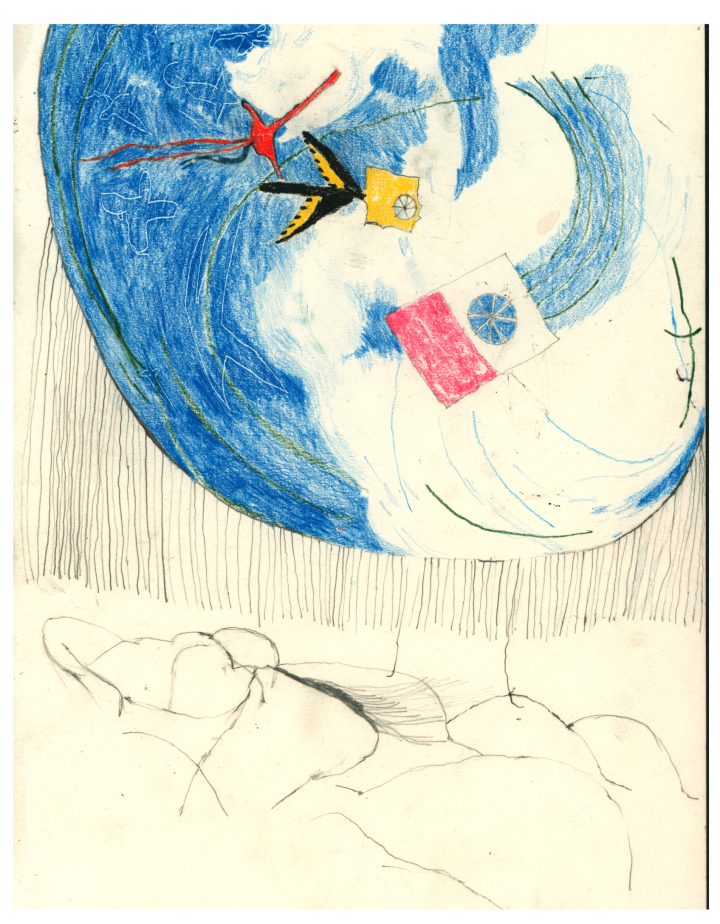
If I could live in one of the comics from the anthology, it would be Ollie's. This world doesn't have rent! This comic is so special to me. It's such an imaginative way of drawing-
And yet it's to the point.
It's very direct. There's not a lot of froufrou to it, it's not frivolous, but it's also so innovative. I think that their work and their process- I feel like they have a vision of something.
It's like, outside of words, what's the best way to communicate a feeling? Or communicate outside of what we're used to?
They have the luxury of not needing to overwrite the fuck out of everything that they make.
No, there's no fluff. There's nothing extra.
I really envy, there's a kind of emotional primacy to the work that I don't think happens in my life or something like that, or just a better emotional texture.
The way the text and the images come together- it's just pure comics, really.
It's a bit Little Nemo-ish almost but it's also so free form, it’s not constrained. Artistically, I need panels, but they don't need panels. As a reader, I don't need panels. I just mean as an artist, I genuinely don't know how to operate without them- I've tried!
Panels just do work for you, there's something immediate about it, you don't have to think, it thinks for you, and then you can think in other ways. I don't really like it, necessarily. I don't think it's my favorite thing about my work. I'm really always stuck in “I need to do this thing” mode. It's really hard for me to be satisfied about things that I do, not to be a bummer.
When I started making comics, I was on the internet a lot. Julia Gfrörer famously was really on the idea of “just make something, just make something you can finish”. And so I was making things I could finish, and or making things that I couldn't fail at. Basically rewriting the rules so failure doesn't exist, where you're like, “I don't need this to be a certain way, it just is”, that was useful. There's a good John Barth essay about, instead of editing, just rewriting things over and over again. Just writing the same thing over and over again until it's the one he wants instead of writing it once and editing it.
It actually takes more time to edit.
Yeah. And then you can fuck yourself over. You can really take something out that you really needed by accident. Like, you don't know what's good about your work. You actually don't know what's good about your work! I think that's another thing I really, truly believe in. I don't think anyone knows what's good about their work.
I mean, it's almost like Buddha.
In the best world you're zen, you know? In the best world the only thing holding you back from the drawing board is your fear, you know? You just conquer your fear and your desire and you can operate with absolute detachment and then you're just going to be a fucking machine. You're going to make so many comics.
It's not full of attachment- letting go of all your desire and your aspirations of making the perfect piece. I have a full-time job and haven't drawn as much lately as I'd like to. And just from falling out of practice with drawing, the fear of being perfect and the anxiety of “how is this going to come out” is stronger on me than if I had a daily or more regular practice. I'm really experiencing what you're describing, that other side of things where I’m wanting to edit or the desire for something to come out as best as possible. But, because it didn't, I’m almost rewriting history instead of just being like, “okay it's fine that it's not the best I'm just gonna do another drawing”. I have, especially right now, this expectation of how my drawing wants to come out, but because my body, my actual hand, is like, “I actually have no idea, you can't really depend on me right now. I'm a little clumsy”.
It's that the relationship between mind and physical is shaky. The mind is like, “I know everything!” and the hand is like, “I don't know anything!” and they're in conflict. I feel like the editing part comes from that conflict, that disagreement.
Do you feel it's right? Can I ask you this? Do you feel like you're usually in control of what you're drawing?
I have expectations.
Can you take an image from your mind and then draw the image in your mind?
No, but the conversation is played out, but I have an expectation.
I have a hard time being like, “I want these images in this sequence in this comic for this reason”. I don't know how to really write that. So, in my head, it's mostly a conversation that two people are having, and this is where they are and this is their affect toward each other. And then I'm kind of drawing how that would play out, and then there's three or four settings in the course of the argument or conversation that they're having. And I need to know what those settings are. And that's all I can really, think about and then because I have a hard time sometimes I'll be like, “fuck, what do I draw while they're saying that?” Or I’ll just be drawing her hands or a shampoo bottle, because it’s easier to draw a shampoo bottle than a face or something like that, you know?
You’re really good at drawing shampoo bottles. I feel like you're really good at putting in personal affect.
Oh, thank you. I mean, it depends what kind of faces are really interesting to draw. I mean, I think I draw mostly faces. Faces can be really precarious.
I get lost in the practice of my own process- t's just more what I'm able to, what I feel looks more interesting or produces a better image, which is obviously informed by my tastes. I grew up reading a lot of manga. They put a lot of emphasis on hair, so now that interest in hair comes out in my work from reading a lot of manga as a kid. First and foremost I was into Clamp, but xxxHolic, Tsubasa, Cardcaptor Sakura, there’s a huge emphasis on hair in those comics… sometimes you're just subject to what you are familiar with. You might not even know that that’s what you think is a good image, but the idea has been formed so early on, impressed into you. But there's also a lot of visual research, too, that's involved- just going down rabbit holes of images or even topics, keeping yourself interested. It could also just be music, too. I'm sure you do the same thing. I feel you're a fiend for stuff, you know everything.
I think the research thing is important, I agree with you. There's that really famous Tezuka panel, where he's talking to his assistants, and they're saying,”oh, I've been reading this manga, and I've been reading this manga”. And he very wisely says, “you can't just read manga to make manga. The world has to be your classroom”. You have to go to the movies, and read books, there's nothing interesting about someone who just reads comic books. You know what I mean? In order to have stories, or have things in your life, you need other media. When I was a kid, reading a lot helped me be alone and happy, to make sense of my world.
So my tendency is kind of more towards filtering, because I feel visual research, or any type of research is important. I think just also being in New York, there's just so much going on all the time. I have to filter, really, cause if I just allow myself to take in anything and everything that's just available to me, I'm just run over. Because if I let myself, I will just be a full-blown consumer. I'm very susceptible to ads. I have a cat, and they're always trying to sell me cat toys and cat stuff. And I buy them and then I return and I refund. I cancel the order immediately. It's so bad. I'm so susceptible.
But anyways, I have to balance that all out with my research, I guess, that's what you can call it. It feels reassuring to know there's more than just what's in front of you or that's what's available to you. And usually what's available to you is an advertisement at this point.
Do you keep comics around when you're drawing comics?
I have a specific references, comics, even just images I like. Like vessels.
Vessels? Vessels, like vases and shit?
Yeah, yeah, I like the idea, “oh they're empty… but it could be full!”
So true.
Historically, they could be so many different things.
Historically, they’re not full.
Not necessarily! They were utilized! They like to make them in all different ways, a different shape, or a clam. “oh, this one's an animal, but it's still a vessel!”, familiar and unexpected. When I’m looking for comics, I want something to catch me off guard. Something outside of familiar. Something not dictated by the market. To go back to commercials, advertisements.
Freshness is always nice. The best thing in the world is when you're at a comic book fair and you kind of think you know everything there and then you come across someone's table and they just happen to be sweetly sick with an amazing comic. I guess what I want is things I don't know about.
I want to feel dumb.
Yeah. I want to be like, “Oh my God, are you serious?” Looking at some comic book you can't make sense of that is somehow six issues deep. The internet is so hard though. It ruins everything. Comic book fairs must've been so dope before you could just know everything that was there before you went.
It’s not even just Instagram, The internet just gives you that weird feeling of like, “oh everything is available” but that's actually not true.
To go back to earlier, to Cowlick and that stuff, so many people in that magazine do not have Instagram accounts and that was just really great, I feel when you are on a certain part of the comics internet for a period of time it's just a rotating cast. It gets really enclosed. It becomes very small. And you're like, oh, I know I know where the boundary lines of this thing are and aren't. And it's nice to be reminded that those are not real, that those categories you made up in your head are fake. That's always an excellent feeling to me.
We had a mystical experience at Desert Island recently.
Oh yeah!
Gabe [Fowler] had these- Alive and on Tiptoe by Vicky Grube. This really blew both of us away.
It’s so small! It's all handmade too- it's literally bound with a rubber band. We were going to Desert Island to drop off some Bernadette copies and Gabe had just received this package of zines from Vicky Grube. She basically sent all these small ones but also these larger-than-newspaper size, almost poster-sized pages.
They were like the floor. They were this tall (raises hand above head), folded out.
Like the wingspan of an eagle. I have never seen anything like it. But the storytelling was also impactful too. We were just so caught off guard, we were just so caught off guard. It was a dream. I felt dumb, but in a good way, like what you mentioned earlier.
It just came out of nowhere, you know?
It just captured something, it was capturing a nightmare but not in a scary way.
it was kind of funny-happy, but they're kind of scary almost.
Yeah, but I wasn't scared. When you watch a David Lynch film it's, “oh yeah that's a nightmare and I'm scared” And but then there are Gruber’s comics, it is supposed to be happy-zany and funny but primarily scary, but and tapping into that fear factor, these were almost of a similar kind of affect but I wasn't scared. I felt more seen, I felt more understood, it just had this incredible effort.
There's a lot of good things coming out- She's to be in Bernadette #2. I mean, we sent the email out. We vaguely know who's going to be in it.
I guess she might not.
She will.
I think she will. And she said yes.
Mm-hmm.
Yes, But life happens, life happens.
We've got people that we want to do it, we more or less have verbal confirmation from everyone, we're just waiting for submissions back. I curated this one more than the last one, because you curated the first one more than I did.
Well, first we have to like their work, right?
Yeah, I mean, a lot of it was friends.
But also, because it's the first issue, like, “who are we?”
Exactly.
And so it was also determined how willingly they were going to say yes.
Mmhmm.
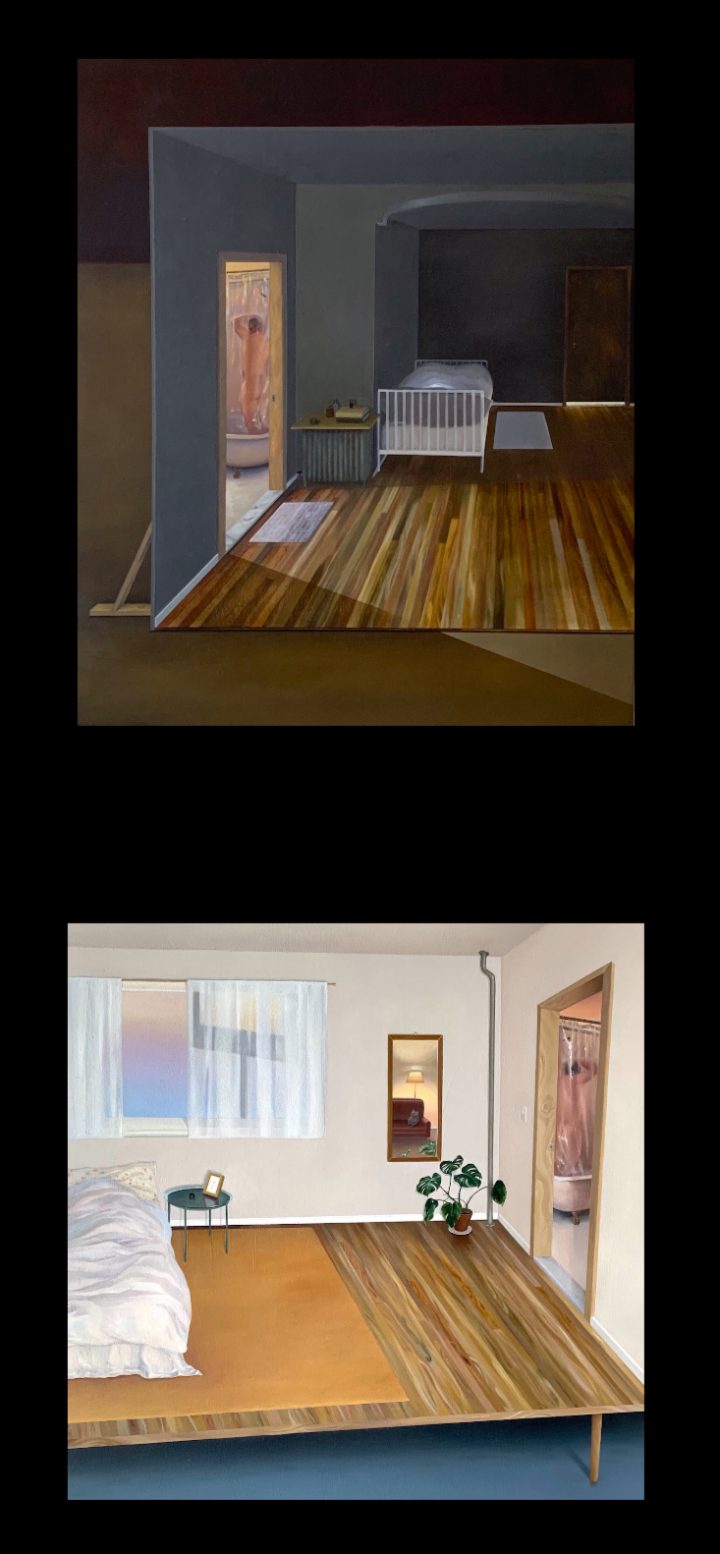
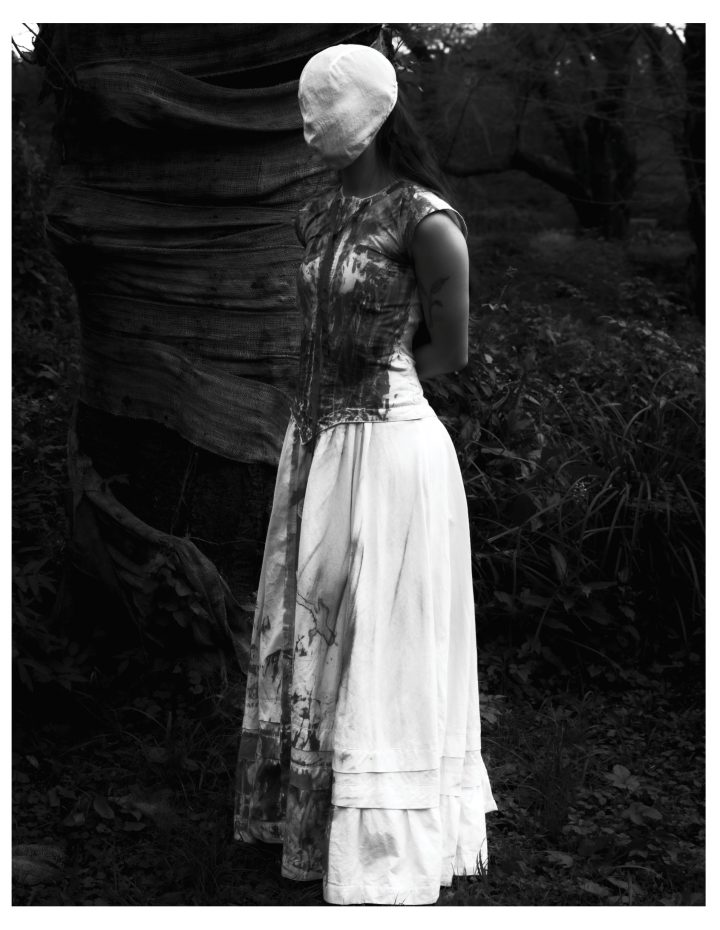
That wasn't the only factor, obviously. But how familiar we are with the work, at least for me, especially with some non-comics work. There's some painters and there's some photography.
Yeah, I mean, it works, doesn't it?
For the record, big shout out to Ash Fritzsche. I really wouldn't be here without her. She's an amazing person, but also an amazing artist and just loves art so much.
She’s one of the most open people I've ever met. We stayed at her house for PCX last year and I'd never met her before. And it was like I was her sister, very inviting. A great person, a great presence.
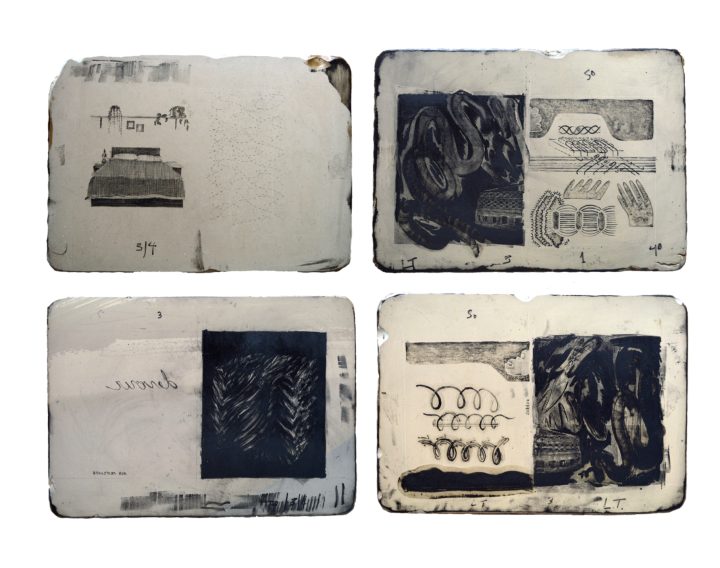
And she's also in the magazine- it’s a lot of people we know. About incorporating non-comics work in the anthology- it might not be common. It’s an easy idea to wrap your head around, but it doesn't happen, like Medicare for All.
[laughs] That's very true.
Why does each art form have to live only in its own realm? It doesn't only have to exist within its own.
Yeah.
From a curatorial standpoint, you're just picking shit you like, know what I mean? not to oversimplify it or anything-
And it also has to work together too.
It has to work together, but ultimately at the end of the day, your aesthetic compulsion is the thread tying together these disparate mediums, it will have cohesion, in my opinion. The second issue is going to have like poetry and like a short story.
We also have another anthology… anthology is a misleading word-
A publication.
We're doing a publication that's just the both of us. We're both trying to serialize a long story, 24 pages, 12 me 12 you. It'll have two covers and it'll be like a split album.
Mine might not be a long story, might just be pages.
It doesn't even have to be 12, as long as you want! The point is that it will be done by PCX.
It's gonna be a little mini Christmas Day, Merry Christmas!