
 all photographs herein are by the author
Living in Toronto is like hugging a cactus. The tighter you hold on, the more it hurts. Places in the city feel ghostly and ephemeral, where by the time you glance back at your beloved third place, it has likely become a dispensary. The snow on the morning of Zine Dump glistened against grey skies veiled over an even greyer city as locales came to melt away with the passing of the season.
2025 had been an especially difficult year so far for many Torontonians, with the closure of the historic Velvet Underground and Imperial Pub, prized among Toronto Metropolitan University students for its proximity to campus and among older patrons for the memories it held. Toronto's comic scene, in particular, was dealt a critical blow with the end of Canzine and Broken Pencil Magazine following controversies surrounding their founders' pro-Israel social media posts. For a time there was fear among comic creators and zine enthusiasts about what this meant for the broader Canadian comic scene, now without these vital nexus points where creatives could come together en masse to showcase their work from across the provinces and territories.
For this reason, the news of a new zine fair graced the city like the north star against the inky curtain of night, a guiding light amid a miasma of melancholy. The morning of the event was like any other day in Toronto: cold, with track work halting subway services. Stations between St Andrew and St George were closed on Line 1, forcing Zine Dump attendees to trek through the biting cold to the Cecil Community Centre, as any Torontonian worth his salt knows it is always faster to walk rather than chance it on the streetcars. Yet, despite the forces of nature and poor city planning conspiring against the Zine Dump's turnout, the fair was a success.
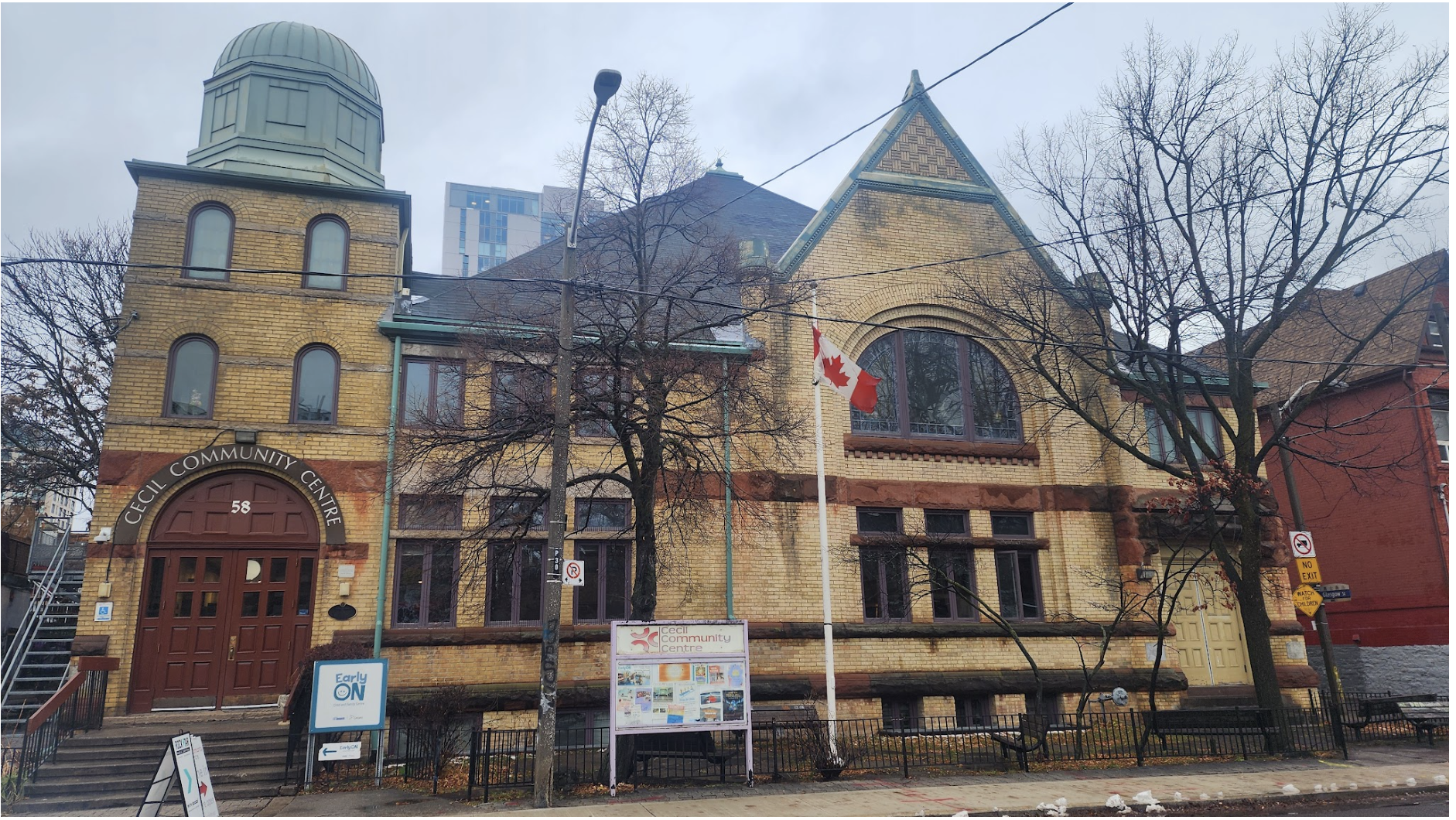
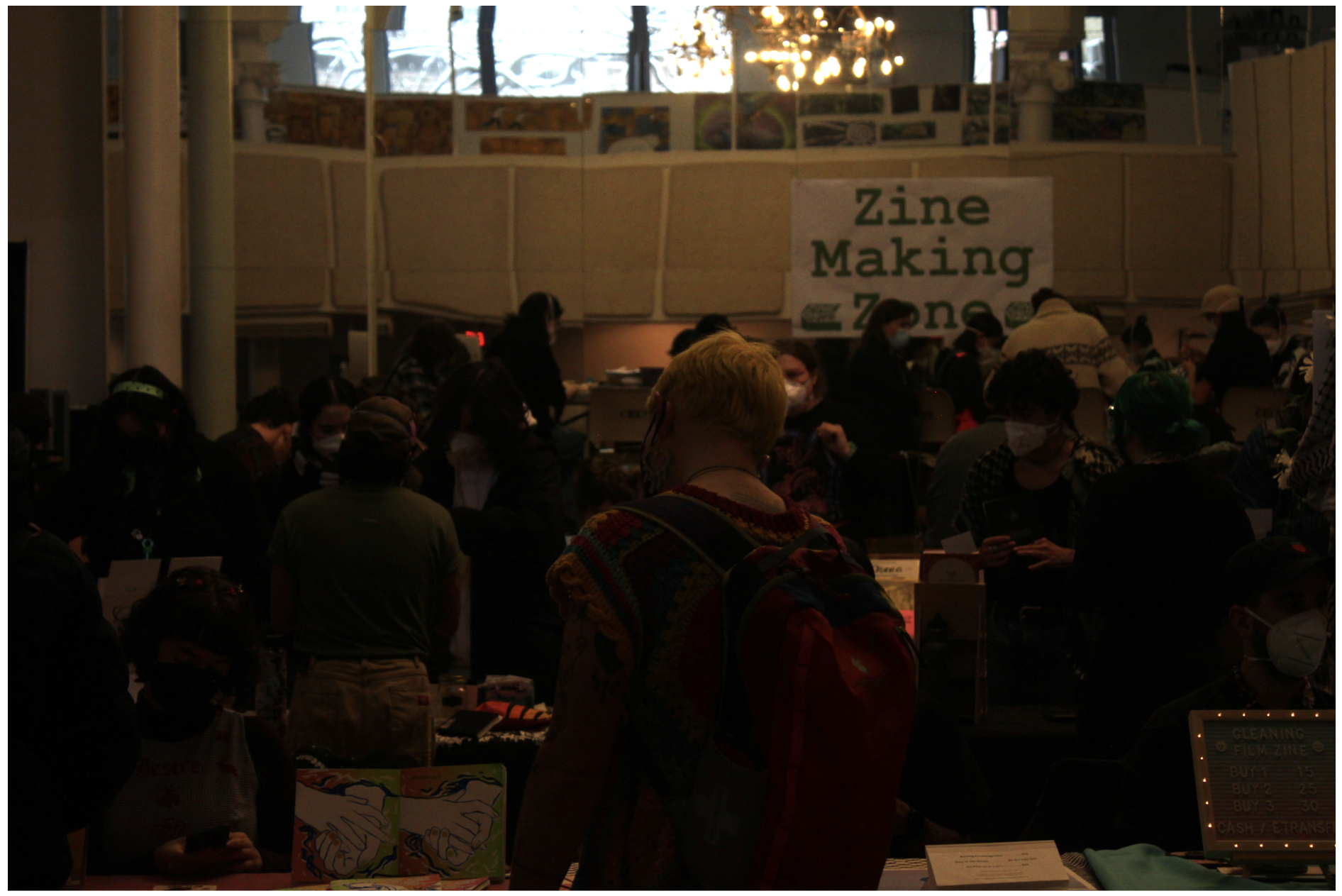
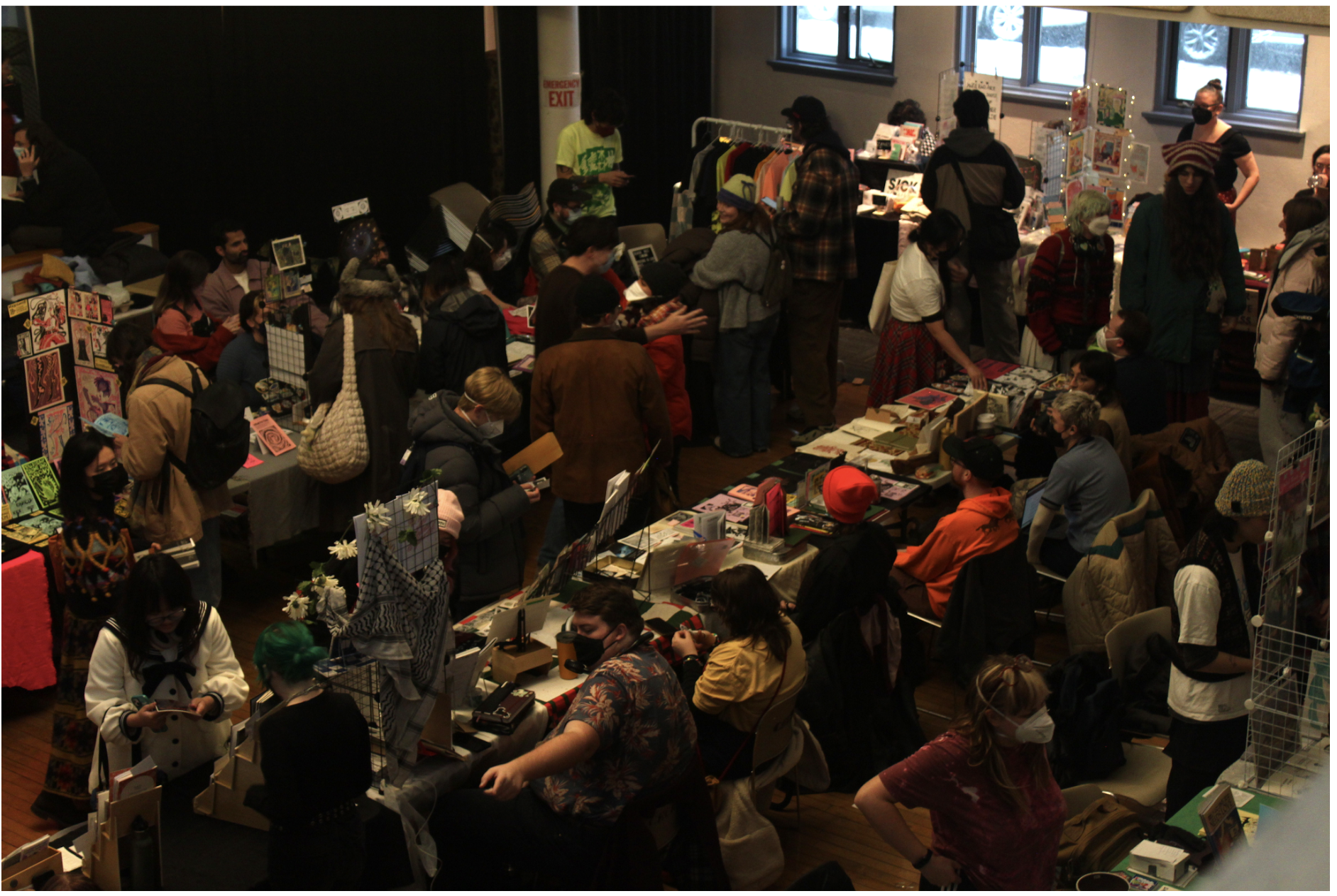
An energy resonated from the community centre, palpable even at the end of its icy road. Smokers corralled the building — a good omen for the liveliness of an event — ripping drags that lingered in the cold air, masking their faces in a fog of hot breath and nicotine clouds. As the outside indicated, the community centre was packed and bursting with colours unseen in the rest of the city. People streamed in and out of the venue doors, and the passages between booths flowed with bodies huddling from vendor to vendor in tight clots.
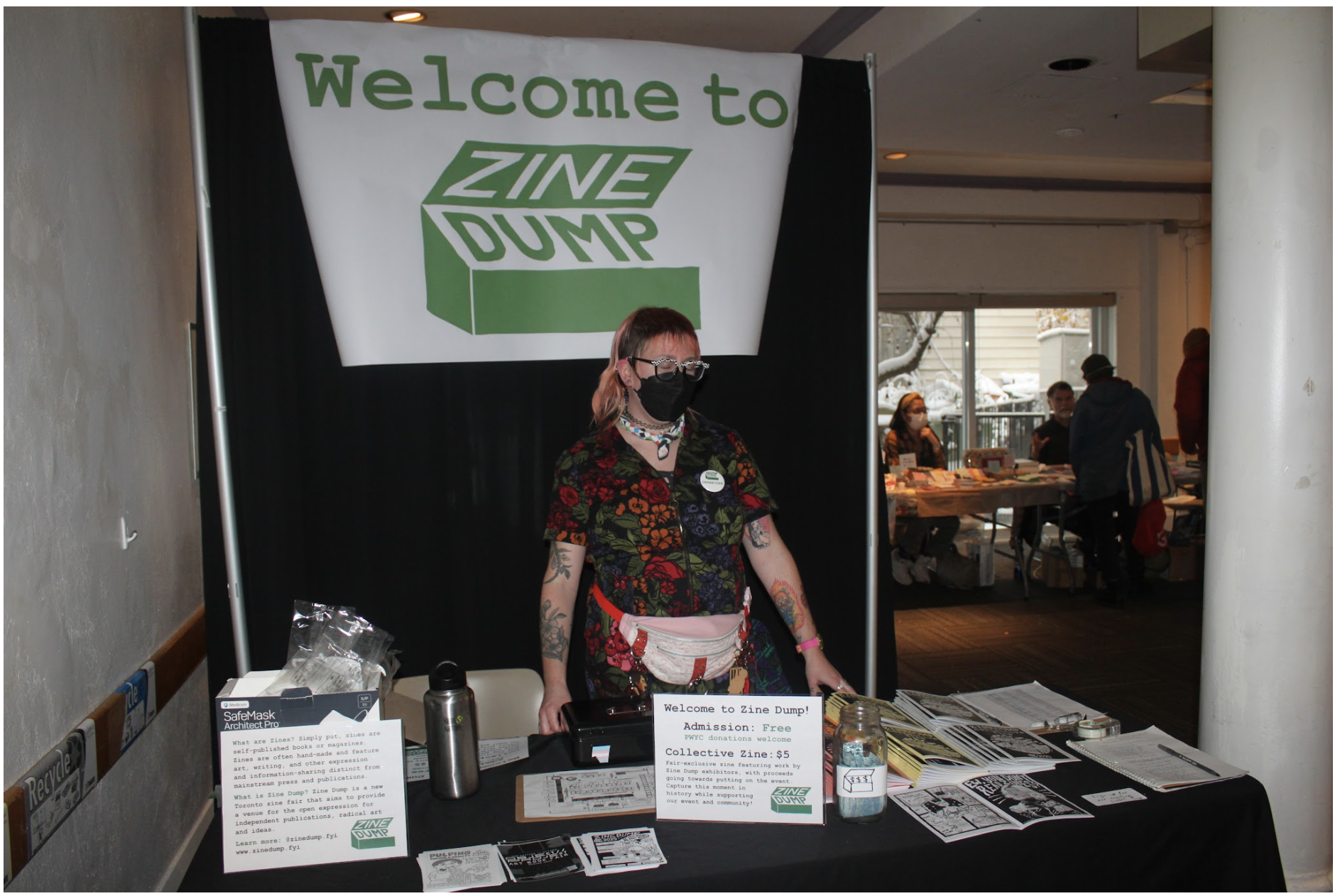
The entrance presented attendees with a table covered with the Zine Dump's collective zine, featuring artwork by Jenn Woodall and Paterson Hodgson on the cover. Woodall and Hodgson organized the event along with five others (Jonathan Rotsztain, Christopher Hubbarde, Eden Martin, Alexander Arvelo McQuaig and François Villeneuve) on top of their busy work schedules.
"It's always hard to know how a first-year event is going to go, and obviously, we had the TTC closure, and it's snowing, but it's been really great. You know, everyone's really happy to be here. We've had a lot of nice compliments from the community already, so it's been a great experience so far," said Woodall.
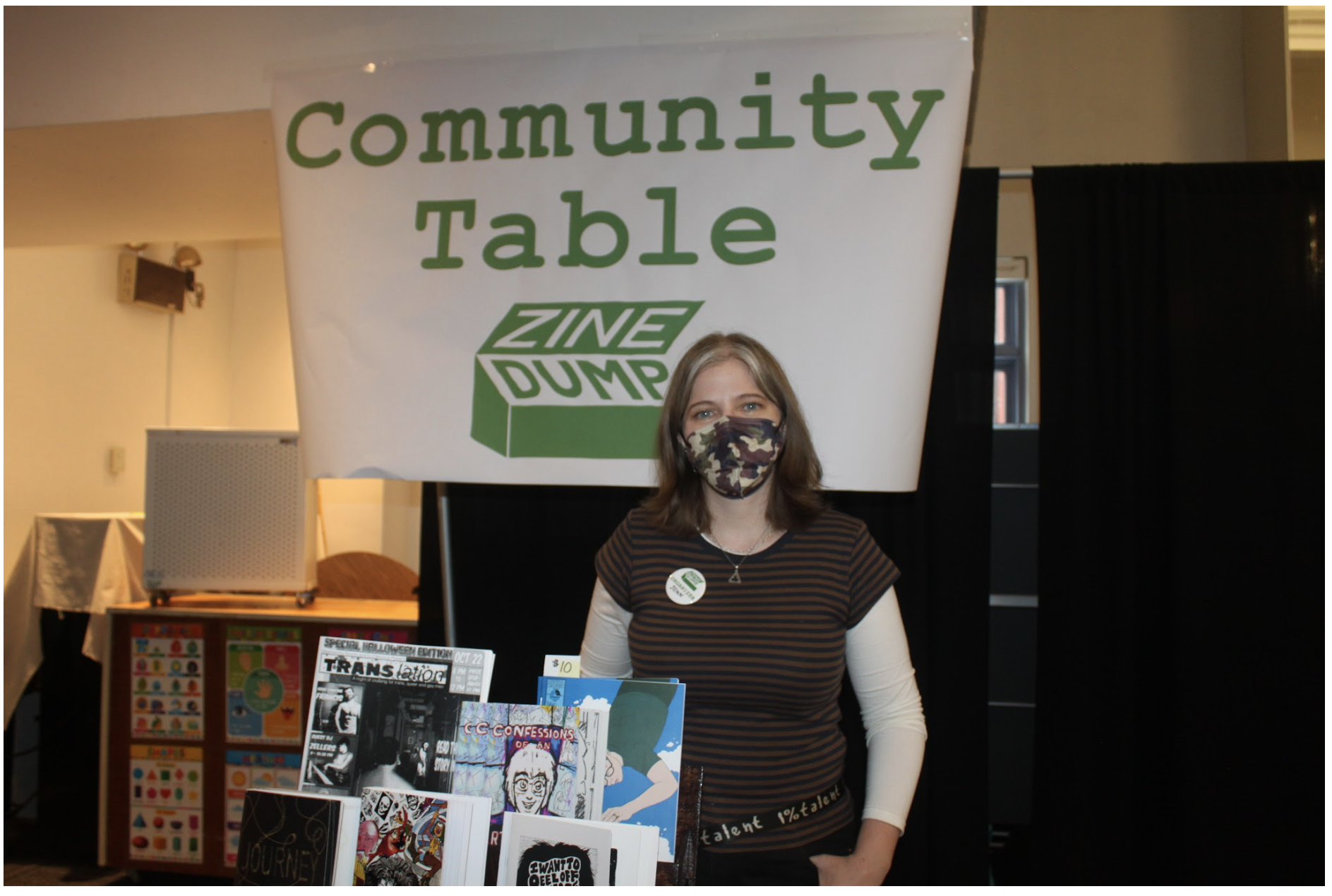
As I spoke with Woodall, Hodgson sat nearby at her own booth, where she presented the first and most recent issues of the Pulping anthology comic series she worked on. In our conversation, she discussed how it's difficult to know the current state of the Toronto zine scene until you actually attend one of the fairs.
"I'm surprised [by the high turnout], because we've never done it before. It's our first time, and I've never put on a zine fair, like a big one in Toronto. But the team is really good, and a lot of us are pretty experienced, and we had so many applications and vendors that we knew the word was out there," said Hodgson. "I think there is that void, there's that lack of third-places to see zines and meet people who are making independent media and art, so I think people are craving that. And it's exciting that people really came out."
Toronto feels vast due to the distance between its cultural pockets. It is this sense of separation that makes the city's denizens feel as though there is a lack of a tight social fabric connecting subcultures and cliques. Yet, Zine Dump's organizing group managed to bring an event to fruition that brought together many of these groups scattered across the city. Woodall explained that the curatorial process involved organizing members' votes on applicants to determine who would be featured and to weed out any nepotism that might influence the guest pool. According to Hodgson, they received over 200 applicants for the fair, many of whom she hopes to feature in a future zine fair.
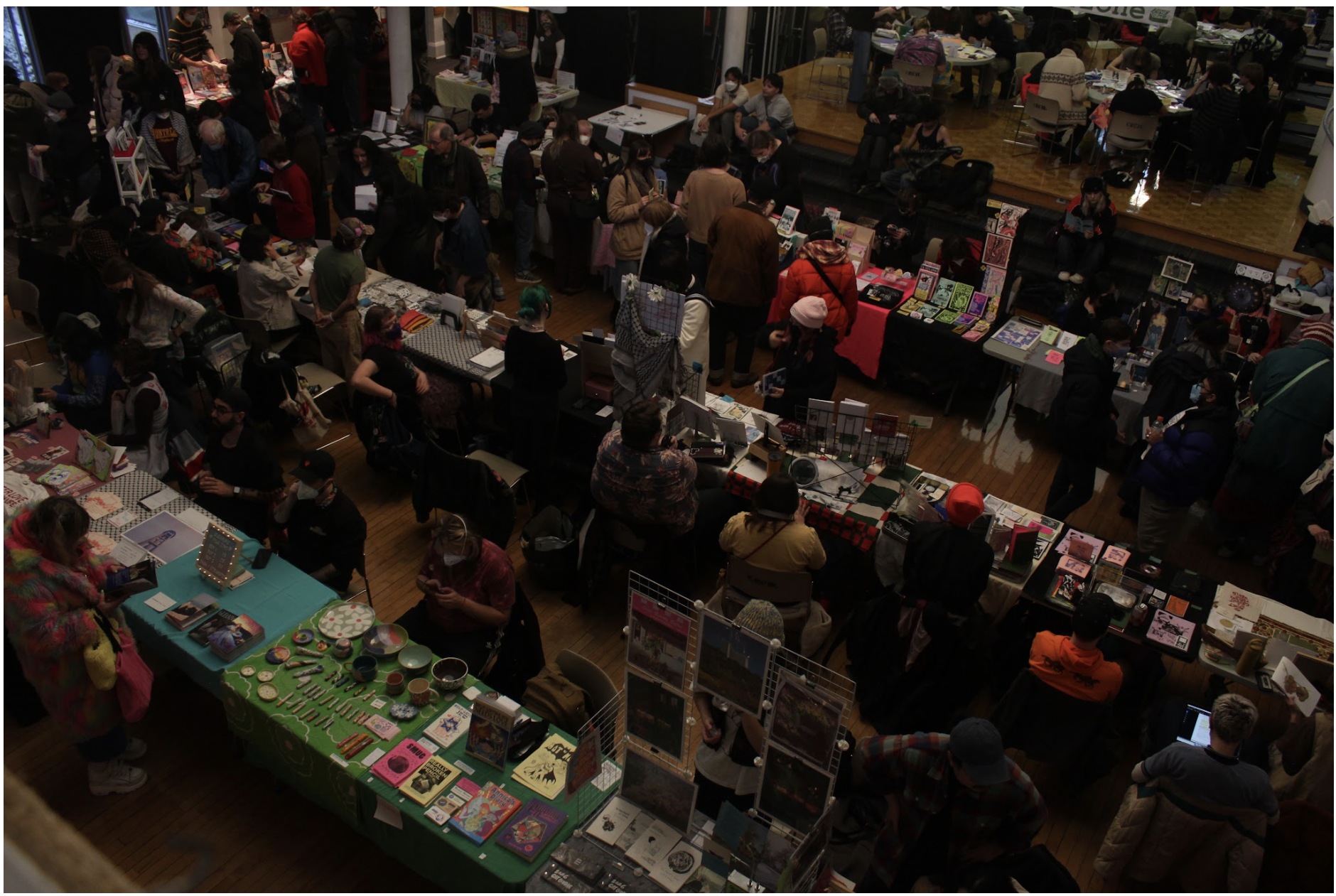
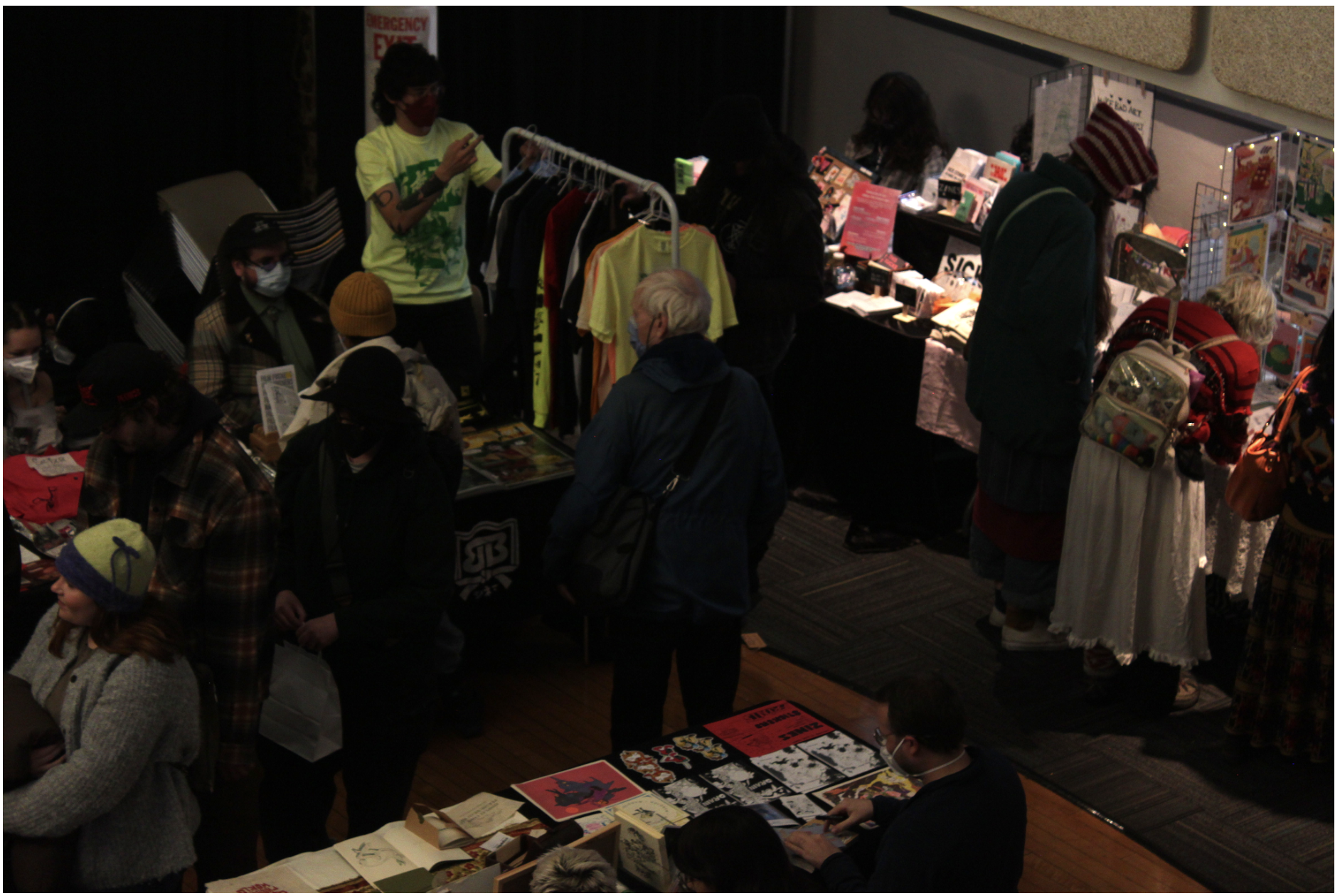
Viewed from above, the community centre was a quilt stitched together with an array of colours bursting from every booth. Present at the event were metalheads, impassioned essayists, pigeon enthusiasts, and electronic artists. Much like Hodgson's Pulping — with its first issue featuring artists living and working in and around Toronto — many zines featured collaborative projects involving enthusiastic community members all working to produce a project that shone a light on their niche. Declan Fowler, a contributor to the Cotton Mouth zine, explained that this was one of his first major projects as a graphic designer, in which he collaborated with a journalist friend to feature local bands and artists.
"The point of our zine is basically to push any kind of artists out there that we can," said Fowler. "Anyone who wants to show their art will find a way to get it in the zine and show it to anyone."
One of the great joys of the event was the wide variety of zines, where anyone and everyone could find their particular niche at the fair. The most unique find I picked up was Patrick Larkin's noise project, Faces of Life.
"I was inspired by some other noise artists who release their music in experimental or interesting packaging. I wanted to do the same because it's 2025, and it's hard to sell a CD. It's a way to make the physical medium more of an art object," said Larkin. "It's so encouraging, and it makes me feel really optimistic that there is a place for this here. And even more so, because 15 years ago, we had all these DIY venues where you could find great fringe stuff, Double Double Land and places like that that have all closed down. Nevertheless, there's a thriving scene for completely out there performances. So people are making it happen, which is a really optimistic thing."
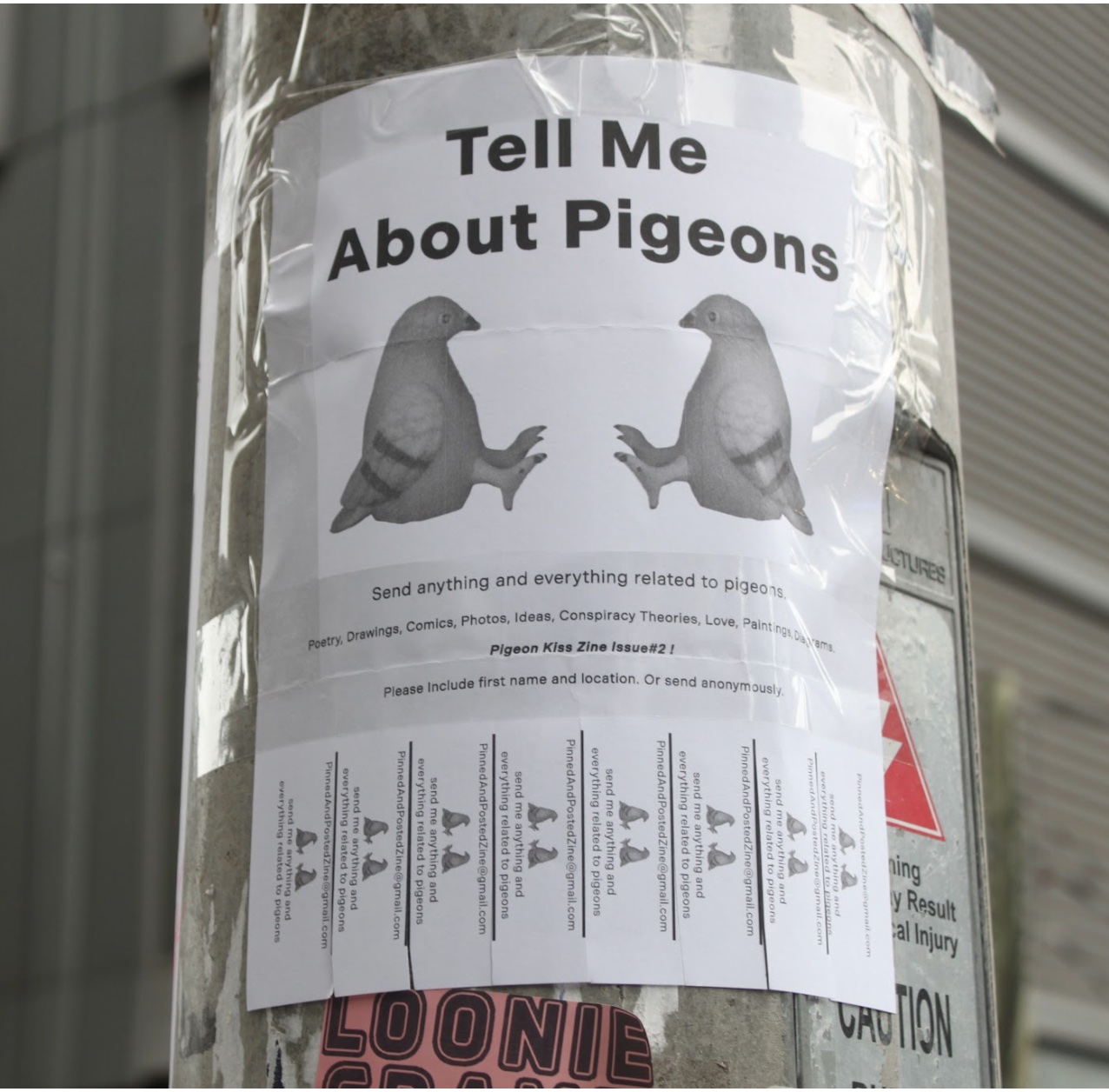
Among the variety of zines at the fair, many found common ground in their connection to the Greater Toronto Area and its adjoining cities — like Hamilton's Comics Anthology, Bonk'd, represented by Sunny Singh. Sarah Gifford, creator of the Pigeon Kiss zine, was asked by many patrons about the reasoning behind making such a Toronto-centric zine. According to Gifford, it came about when they decided to produce a zine about pigeons, which they say are inherently city-centric and the common thread tying people to their metropolitan setting.
Other artists at the event had less of a tie to the city and the zine scene as a whole, with a handful of first-time zinemakers showcasing their debut projects to the public. Suchita Chadha, for instance, discussed not only that they knew very little about Toronto but also that they were new to zines in general before working on their project, When Told to Remember.
"I'm a writer. Honestly, language is the only thing that I know, even if I'm really bad at it when I'm speaking. I feel like I was a poet, or mostly I'm still a poet, but I wanted more space," said Chadha. "I also wanted more control of being able to publish my own work, and not have to go through corporate spaces for publishing, and I think zines are just a great hub for that."
Like the majority of zine makers and attendees, Chadha donned a mask during the Zine Dump. The event had a mandatory masking policy for the first hour, but even after it passed, attendees remained masked, demonstrating a heightened level of care for their fellows. Gifford commented on how the Zine Dump organizers demonstrated a great example of community organizing by listening to the concerns of artists attending events like these, by bringing air purifiers and partnering with Mask Bloc Toronto — an autonomous collective led by a group of disabled individuals, organized to provide masks and resources.
In another act of community resiliency, organizers and attendees alike upheld an anti-Zionist stance, with Hodgson noting they made sure to create space for zinesters without conservative or Zionist leanings. A handful of booths dedicated a portion of their revenue to supporting people in Gaza, and others offered zines solely dedicated to celebrating and supporting Palestine. Mitra Fakhrashrafi tabled the Art From Gaza Vol. 2 zine, collecting art from people in Gaza, with all proceeds returning to them to support their families amidst the ongoing genocide.
"A huge part of our work is connecting artists with the information they need to be able to confront Zionism and imperialist funders in the industry. So we're just excited to be here to talk to other artists about war profiteering," said Fakhrashrafi. "I think a lot of us come out of industries that are oftentimes heavily funded by Zionists that use the arts and culture industry as a battleground for censorship, for whitewashing apartheid and genocide. So the indie scene really exists to combat that."
Many vendors echoed sentiments about participating in the zine scene to escape corporatized, capitalized spaces. Physical media itself offers an escape from the internet and its constant stream of media and advertising. Another zine newcomer, Winter Wei, explained that she turned to publishing her comics in zine form rather than online out of a love for having something physical to touch, much like the comic books she commented on growing up with. Other zinesters had their work standing in total opposition to the online world and the traditional publishing spaces, like Kate Fane's Enjoy the Silence zine. Fane’s project centres on the theme of "anti-communication," which she describes as her grappling with professional burnout in communications and the frustration that comes with a dead internet.
"Every time I come to a zine fair, I feel my heart swell over having a space for creative free expression, where people are really just trying to share their ideas and to learn from one another. It's a really creatively rejuvenating environment," said Fane.
With one successful Zine Dump under their belt, Toronto's zine community hopes to see this organizing team bring them future days full of zine trades and a space away from the cold winds of November. I, too, hope to see more days like these, when the city can come together over a shared love for its creative passions.