
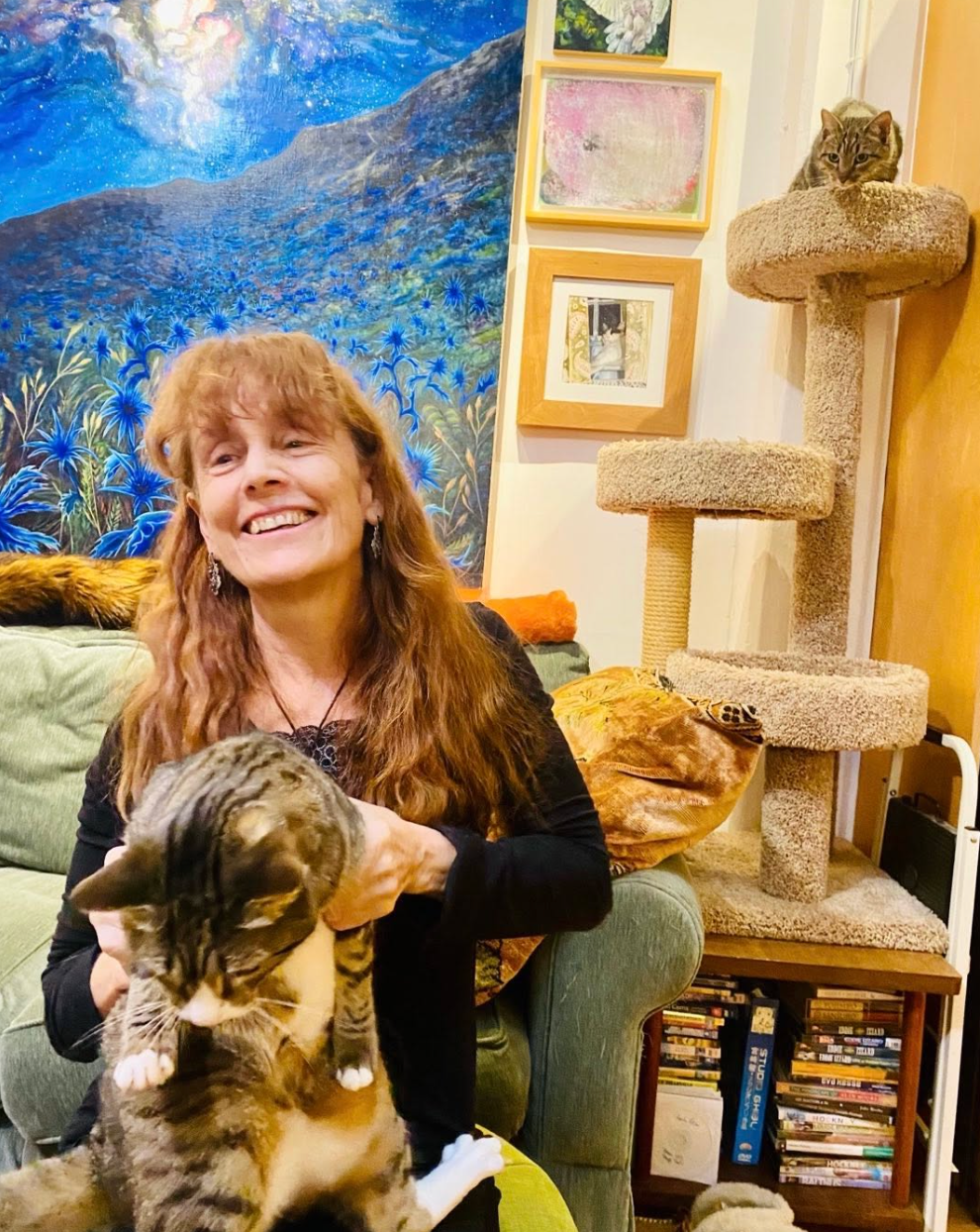
Mia Wolff grew up drawing, reading, and climbing trees before arriving at Pratt Institute in Brooklyn, New York, to study painting. From there she joined the Big Apple Circus, subsequently going on the road with a three ring show as the catcher in a double trapeze act. Returning to New York City, she went back to painting (wolffland.com) and making books, graphic novels, and zines. Her 2024 book, The Empty Lot (Fantagraphics Underground, 2024), is a long “narrative monograph”/graphic novel that is akin to an operatic roller coaster in paint and ink.
Bread & Wine: An Erotic Tale of New York CIty was Mia’s 1999 collaboration with science fiction grandmaster Samuel R. Delany and his longtime partner, Dennis. This landmark LGBTQ graphic memoir has an introduction from Alan Moore where he praises her as “an artist of startling versatility,” creating a book where “Delany’s unaffected prose encounters its perfect pictorial match.” The 2025 reprinting from Fantagraphics includes an additional introduction from Junot Diaz.
Mia graciously allowed her painting of Samuel Delany to be used on the cover of a scholarly book on his works that I co-wrote (Samuel R. Delany: A Reference Guide to His Life and Works, Rowman & Littlefield, 2025).
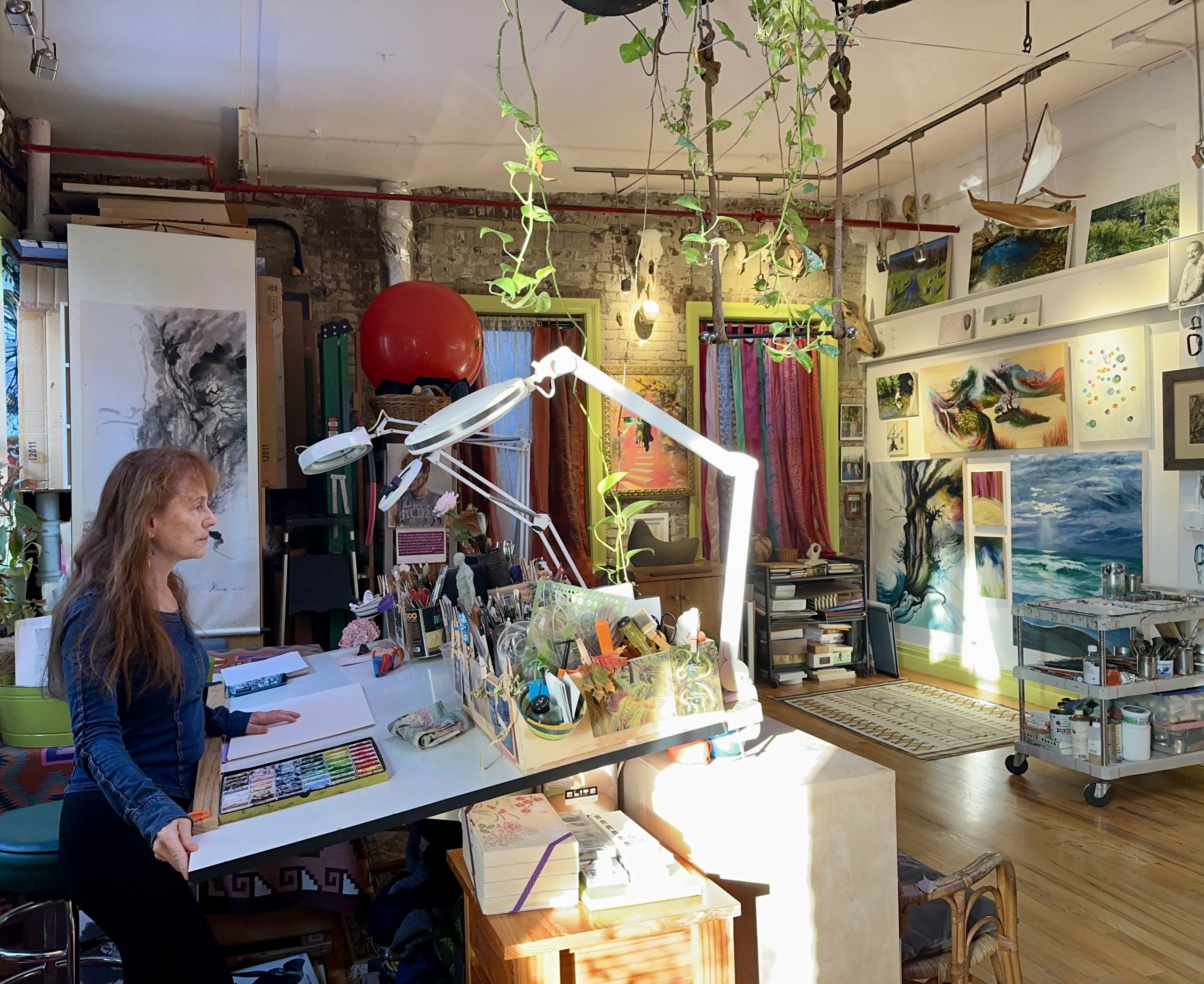
In this interview, Mia and I talk about her prolific career, friendships with comic book friends like Robert Morales, and how the “art elves” ensure that the flow of ideas never ceases. We talk in her magical studio/loft in Brooklyn, surrounded by plants and occasionally interrupted by the cats, Ghost and Jade. The colorful story of how she negotiated displacement from her original New York City apartment with an unusually reasonable landlord is told in the 2016 documentary short called Wolffland, directed by Academy Award winning filmmaker Laura Checkoway.
ANN MATSUUCHI: I like your idea of trying to keep this conversation not boring.
MIA WOLFF: I'm all for not boring. I've been very fascinated with the process of what happens in your brain that culminates in a creative result - the whole journey. I’ve started watching my brain, and what I see there, I call the “art elves.” They’re in the back of my brain throwing ideas out.
After a while, there's too many of them, and this pressure builds up. It's like an art migraine, except it doesn't hurt, but it's pushy. They insist I do something about it.
So I make something, although truthfully, there's a lot of things I don't ever do, because I have too many ideas. But I've been watching that process recently. There’s a consistent flow between interior imaging and actualization. Sometimes, I just wing it. That’s often the most fun.
Now, if I collaborate with people, like with Chip [Samuel R. Delany], on Bread and Wine and Pam Noles on 2 Dead Girls, I do preparatory drawings. I send them to be checked before inking. I plan and map it all out.
But when I'm working by myself, it's much more organic. I have a few scribbles, kind of laid out. But then I add pages. I switch. Suddenly the page that comes out to be the finished object is not anything like the little scribble, although sometimes the scribbles literally are scribbles. But that voyage from the brain to the object has suddenly become very interesting to me. So I think about that a lot.
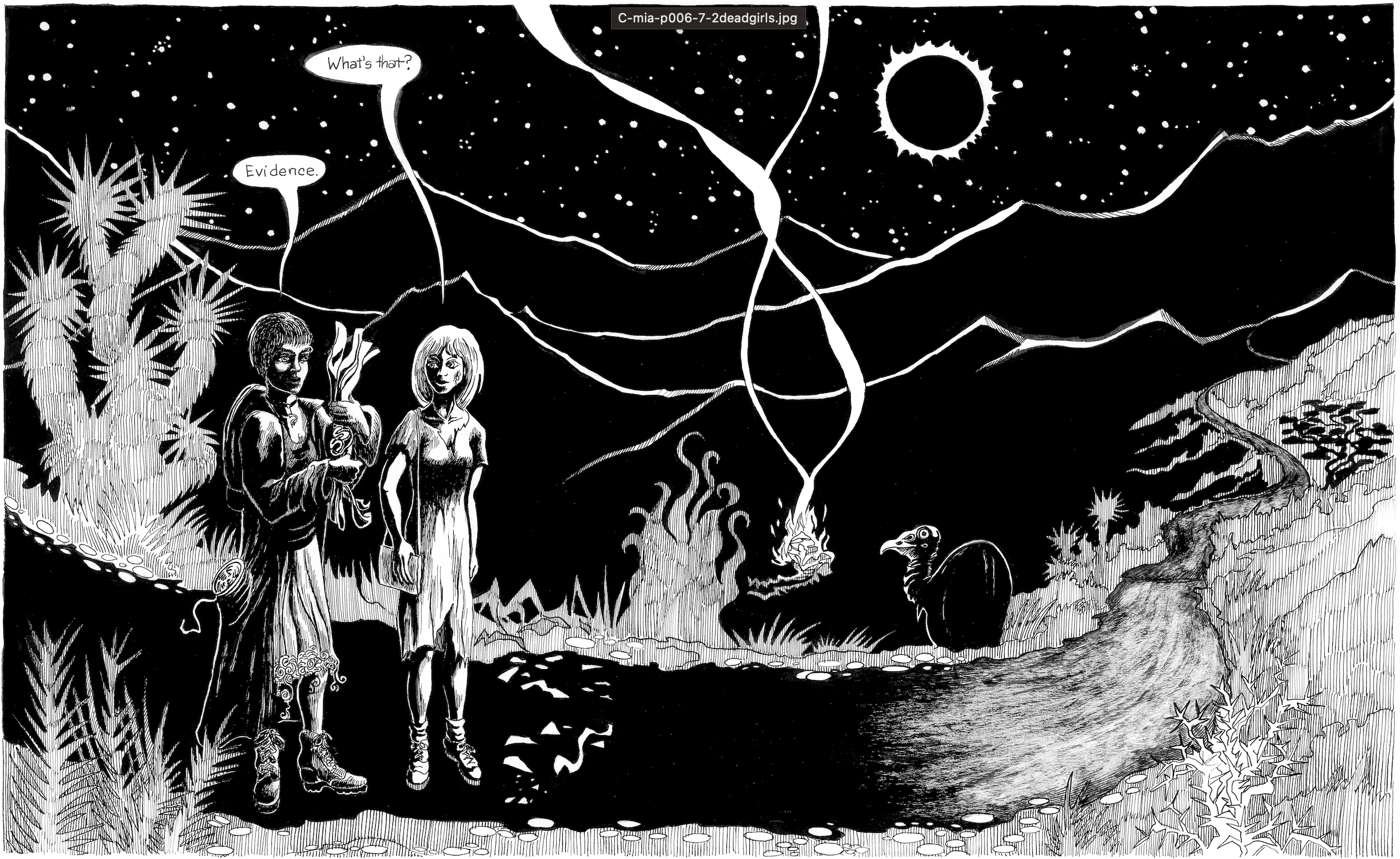
You mentioned 2 Dead Girls. I love that book so much. I really hope that people will get a chance to check it out.
I'm glad you like it, because I have a great affection for it. But I do know that some people had trouble with the narrative. I think this may be because they didn't really look at the drawings, and a lot of the information is in the drawings, not in the spoken parts - in the background, things are going on.
I sold a few copies, and I gave away a few copies, and I asked everybody for their reaction. But I think, especially if they're not comic book educated, in terms of how to read, a lot of the information is in the visuals, and there's not so many arrows saying, “look, there they are on the strip in Las Vegas”, and “look, something happened next to them or behind them.” Then at one point, they're in the little diner inside [the hotel] Circus Circus, and there's three booths, and three different things are happening at the booths lined up, and this isn't really explained. It's shown, and then there's conversations at some of the booths, it's part of the humor that there's this, multiple narrative intertwining in the same place, but they don't all know about each other. That's what makes it funny for me.
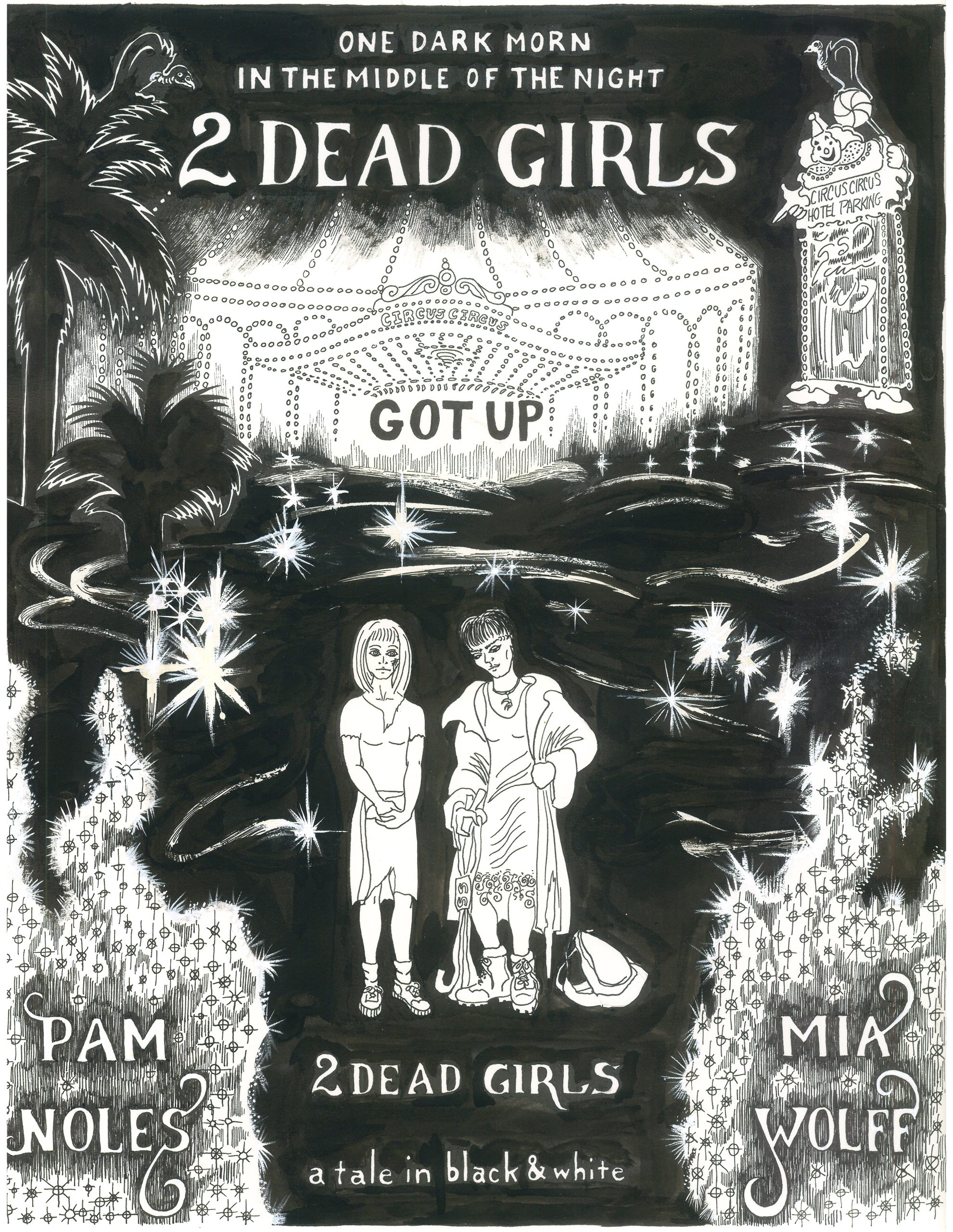
I got to invent what the characters looked like. Pam [Noles] described them, but I got to visualize them, so I feel like they're my children. Then they went off and had this adventure - while they were dead - which is something I would never write. My brain doesn't think like that, but I like to read things like that. I like to read narratives that tie everything up, or at least try to tie everything up, so I was hoping everybody else would react that way. But there were a few people that really loved it, like you and Holly [Wilson, an academic librarian] over at Pratt. She really loved it, and she reads comics all the time. But other people, I think they struggle with the narrative.
I know what you mean about how people need to have some experience looking and reading comics in order to understand comics. You can't just come to it from nowhere.
It's like when I work with students in college classes where comics are assigned readings. There are always a few students who are looking at comic books for the first time. One cannot assume that they're going to just immediately get excited and be able to jump into it.
They're not all comic literate. It takes some early exposure to it and some practice and being able to absorb what’s presented to you, to be able to catch all the details. You would think we would have had this already, because as children, we read picture books. We start with the pictures, and then they're read to us, and then eventually we read and look at the pictures, and then you end up with books that have almost no pictures at a certain point. Except now there's lots of graphic novels and comics, so you would think there would be a sort of built-in learning process with that. I've sent some of my books to people, friends, and while they love my paintings and they love some of my stuff, sometimes they have trouble following a visual/verbal narrative. Somehow it doesn't have any velcro for them. They have no way to hang on to it, so it doesn't penetrate and it doesn't hit the pleasure button.
I see that as being a consistent element in all your work. There's so much pleasure in it.
Well, I'm interested in that, especially now. When I was younger, I did darker paintings. I did a lot of war paintings, and I wasn't doing too many books then, except the Eye Feeds, the zines [made when I was raising my son upstate in the 1990s], but in the last 10 or 15 years, I've consciously been interested in pure beauty, which is pleasurable, but also work that's “levitatory.” I could do a dark creepy weird thing, I know exactly how, at least in a painting with visuals, but I'm not so interested in that. I mean, I read some stuff like that, and I have friends that do that, and that's fine. I have nothing against it, but the other, I think, is harder, more challenging.
You have to deviate away from the schmaltzy or the Hallmark Card-y, but you're always a little close to that. It's hard not to be sometimes. I have a friend (he was talking about his paintings, but he's a cartoonist also), who said he wanted his images to be burned into people's retinas, so when they went to sleep and shut their eyes, there would be the image. I’m with him on that but also would like the pleasure/beauty of it to resonate. And if it's burned in your retina, well, that's good, too. But it's like the excitement I have, especially this new painting, for example, or the book I'm working on, I get really ramped up about it, and if even a percentage of that could be passed on to the reader/viewer, that would be great. But how to do it? It's experimental. As I said, the art elves come up with ideas, and I just follow them, and I put it together, and there's a book. Some people really like it, and some people are kind of, huh? Okay, there's Mia doing a weird thing again, and now here's Ghost [the cat].
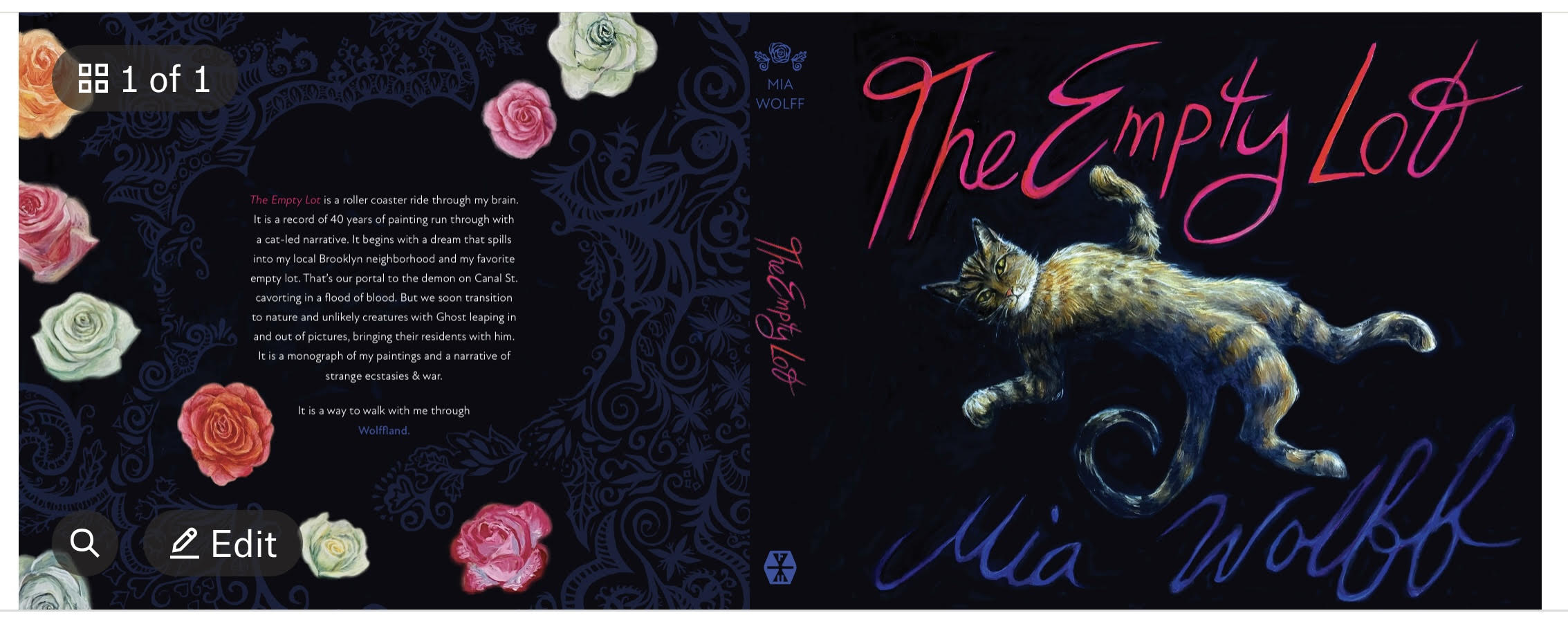
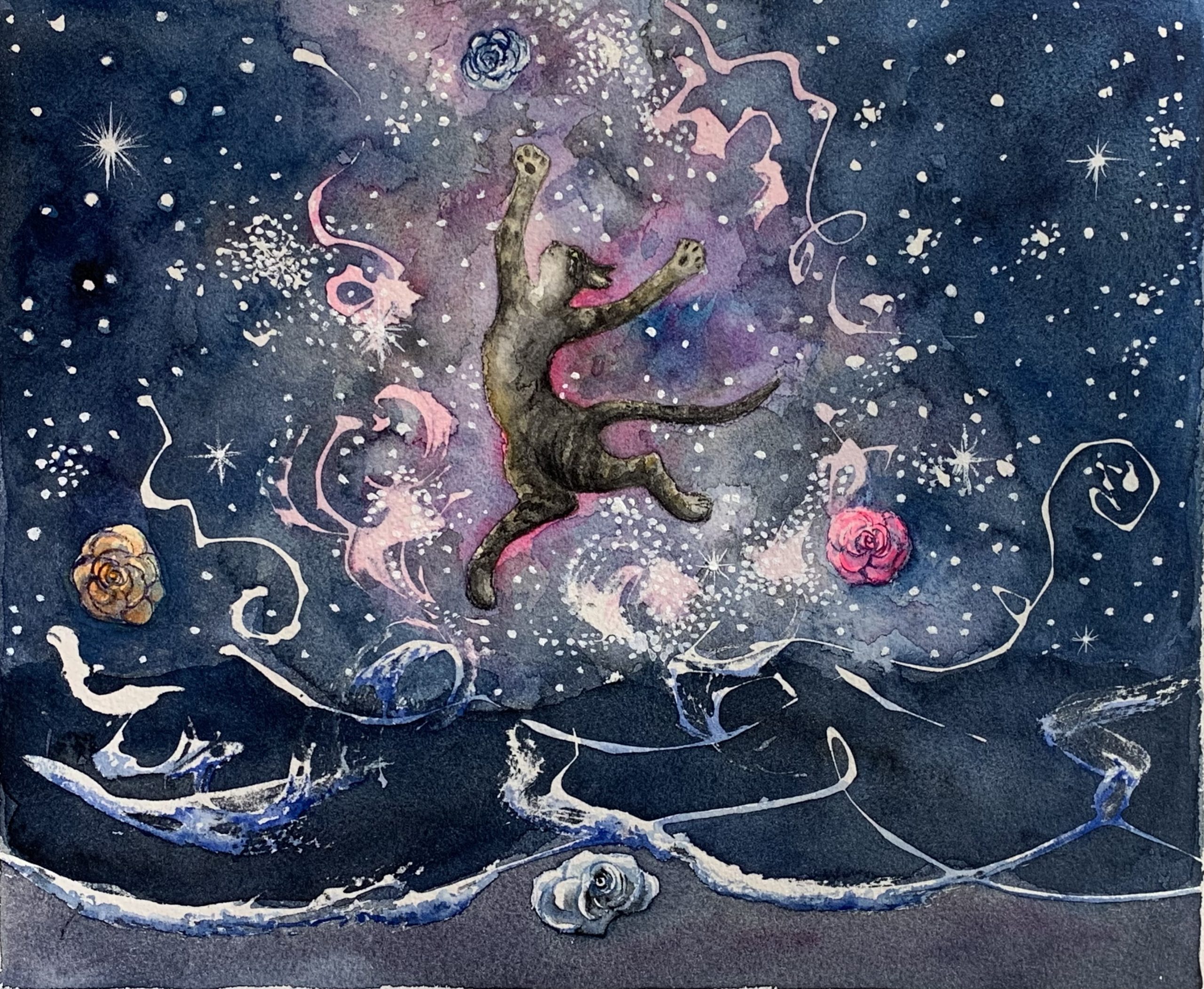
And Ghost is a character that appears a lot in your work, and recently in The Empty Lot.
Well, he's in The Empty Lot. He's in Lost and Found, and in the new story I'm working on, he also shows up with the character that is sort of me, sort of isn't me, the wordless story with the ghost spirit. She's a painter, she's a coroner, and she also has a cat. So yeah, he's there a lot.
He's in Still Beating, too, which hasn't been published yet.
You've been so amazingly productive these recent, these post-pandemic years, right?
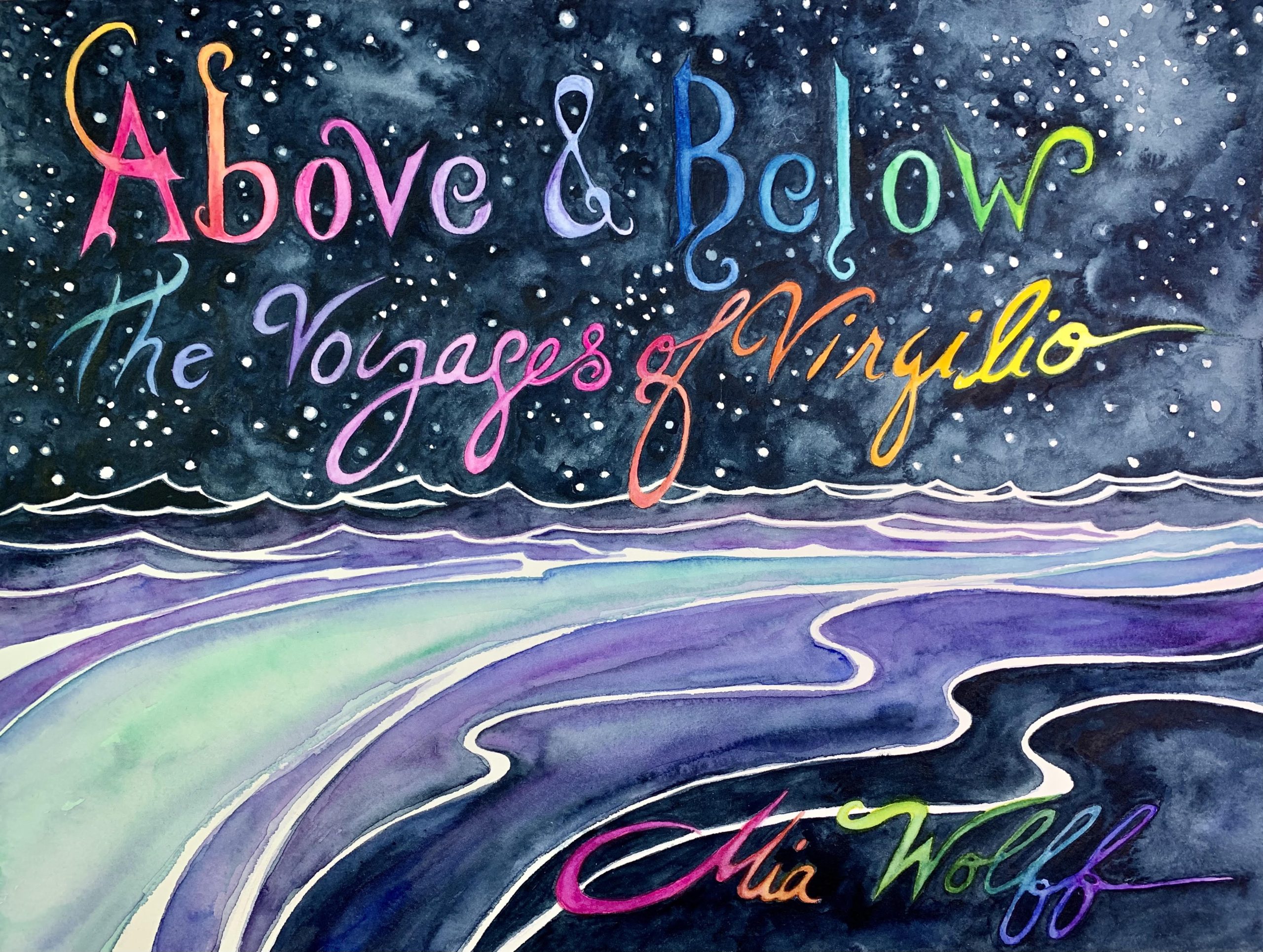
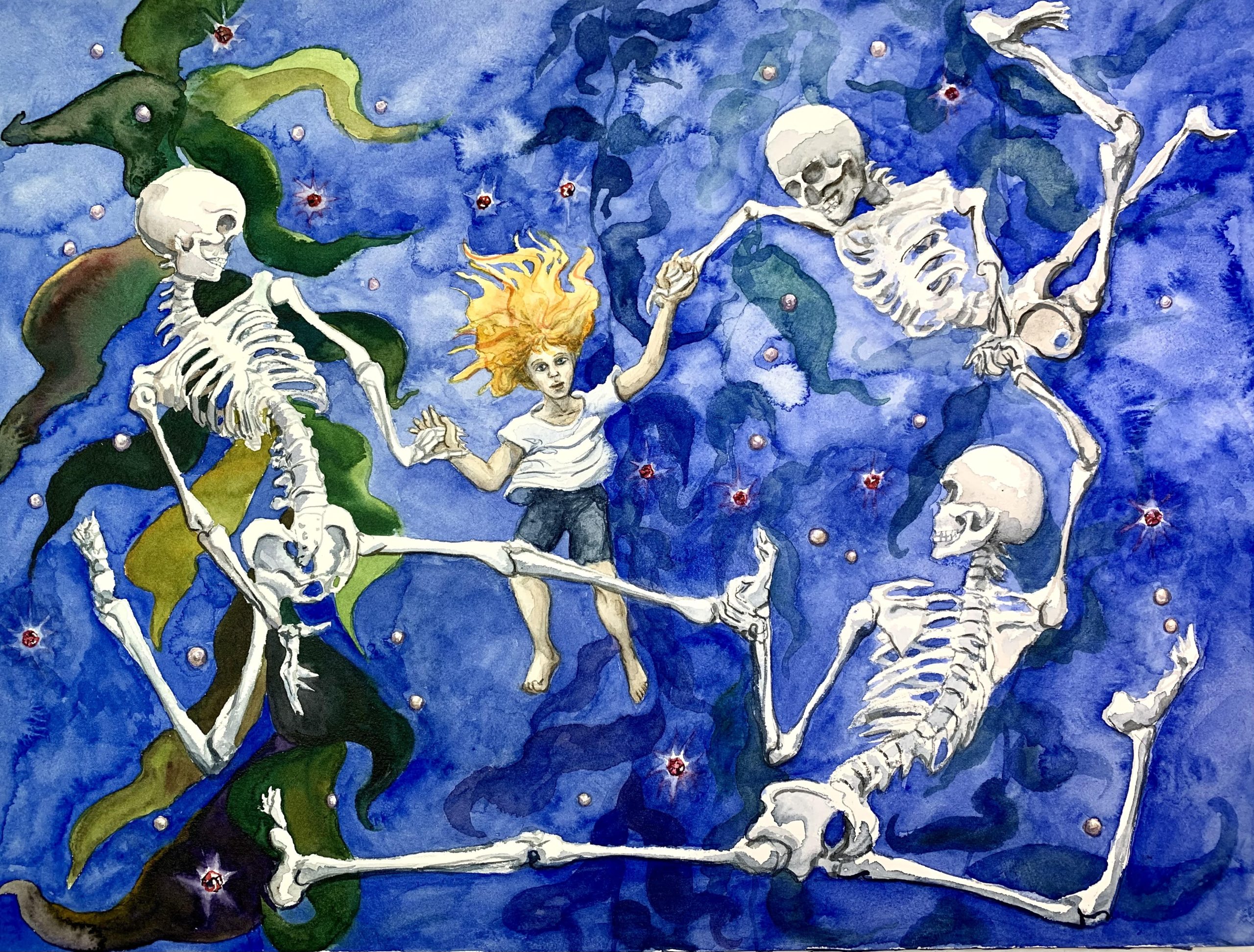
Well, also during COVID, that's when I did Above and Below: The Voyages of Virgilio, and I hadn't done a book since 2 Dead Girls. There'd been Catcher, Bread and Wine, 2 Dead Girls, and then there was this long period where I didn't make any books. I just painted. But I had written some other kids' books. I mean, Above and Below started as a kids' book idea, and I pulled it out during COVID, and I thought--I still really like this–I’m going to finish it.
I thought this is good, and it doesn't necessarily have to be a children's book, it's a fable for anyone. It's COVID, you're inside, and you're away from people, you have a lot of time, or at least I did, and so I did it. And then I convinced Gary [Groth] to publish it. And then that aspect of my brain, where all those particular art elves were, it was like, suddenly you’ve knocked the dam down, and all these ideas just started pouring out. I went from that to The Empty Lot which was a lot of work.
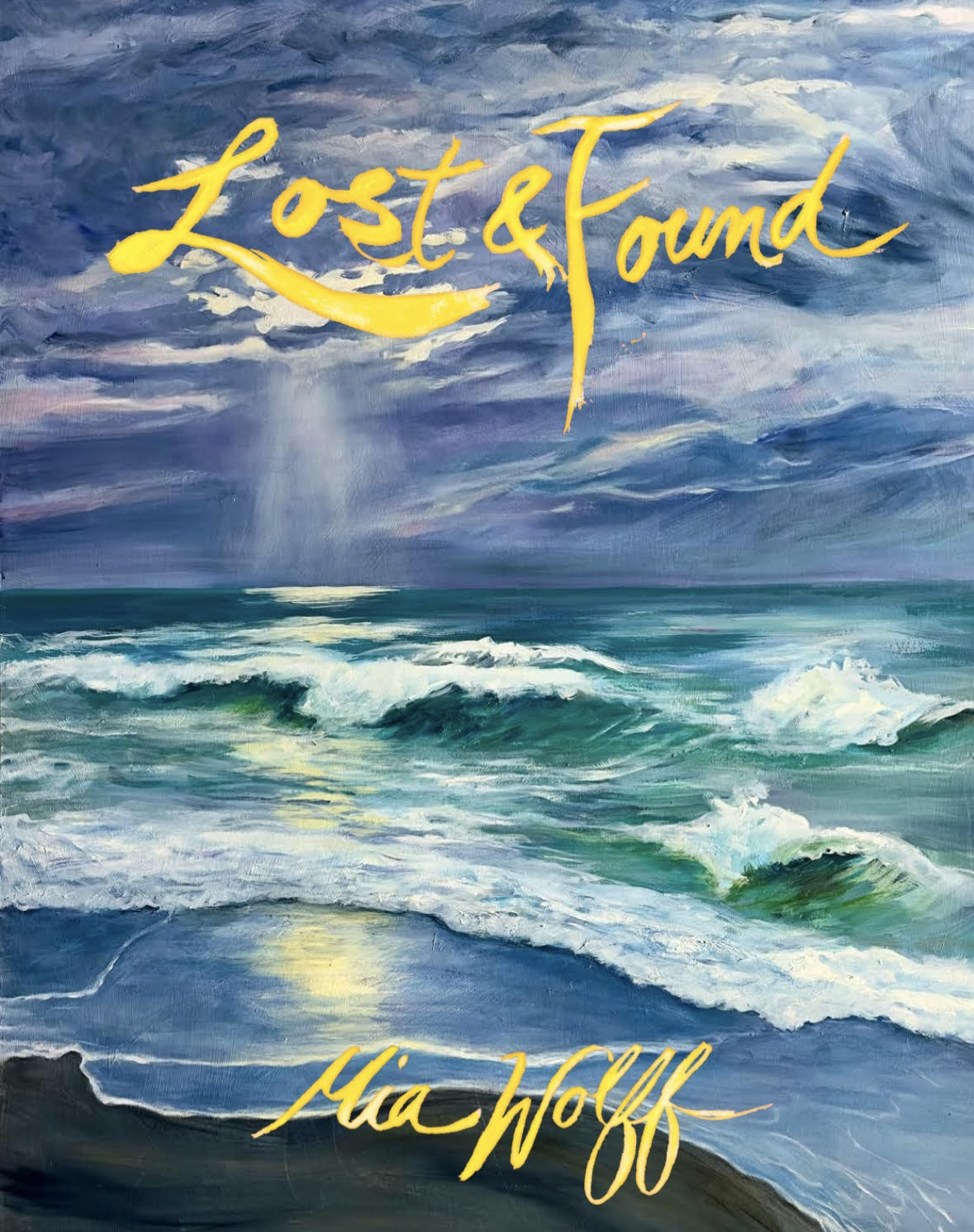
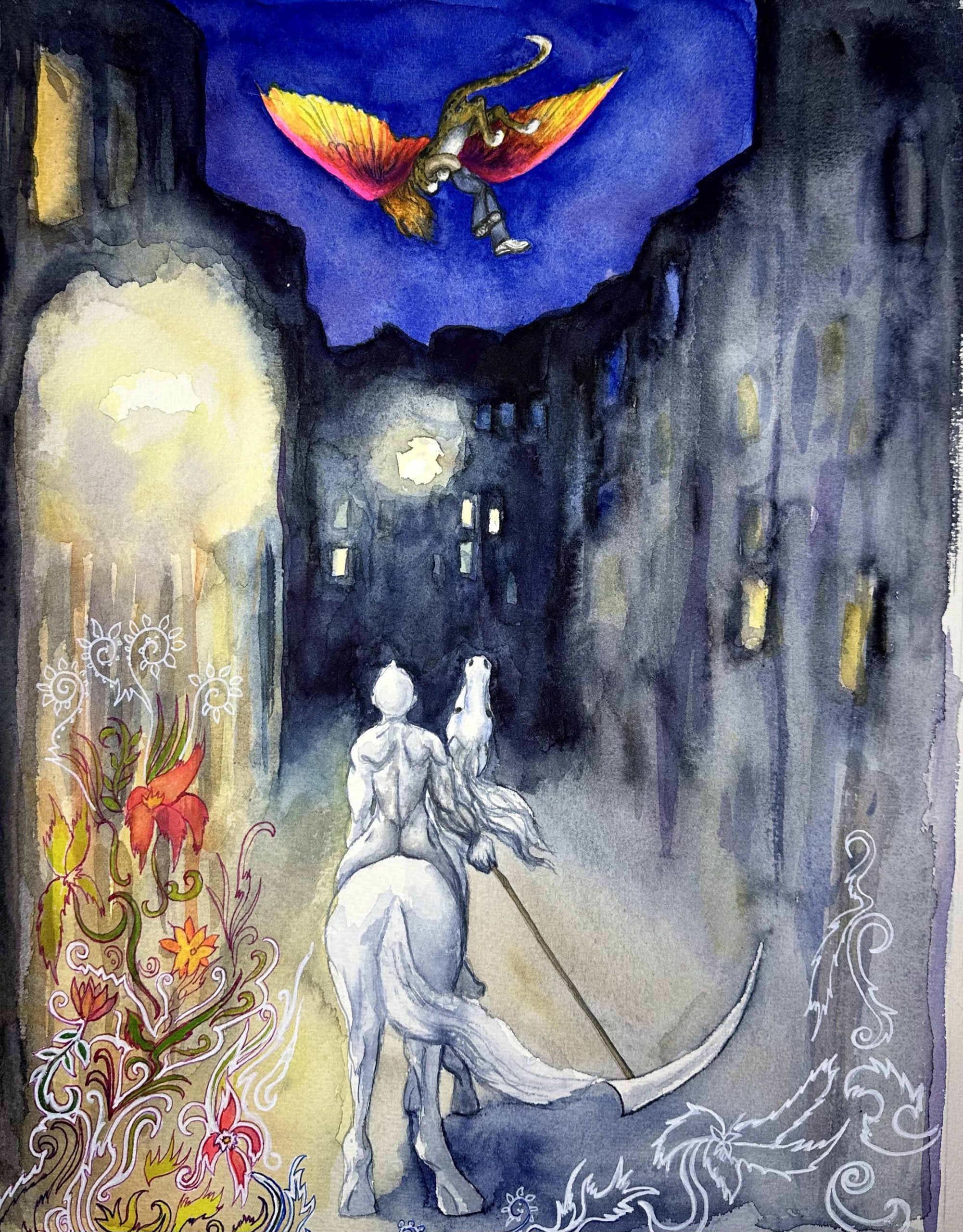
I had to gather a hundred paintings, and make a hundred illustrations to link them with Ghost as the connecting avatar. After that, I thought, I'm done. And then I did a painting of Ghost down in the subway at one of the G train stops, with really funky, water dribbling down between the tracks and frayed stuff hanging from the ceiling and I said, oh no, the book's still going. And then I started Lost and Found, and that painting actually didn't make it into Lost and Found, but somehow that was the springboard to the next book, and then they just kept going. I don't know, it was like crazyville. But it just seems normal to me. I've always been working, working, working. And since I got old and less physical because of all the body issues, I've gotten much more refined in how I work, so now I'm faster.
I don't even know if there's that much more time put into it, but I'm much more efficient. Things just go really smoothly, and I'm always surprised. I'll start a painting, and I think, oh, this is going to take me months, and then six weeks later, it's done! And I'm like, wait, that was supposed to last me a long time, like a big fat novel that you can't finish, and then staying up all night. So I decided I think I just got more efficient. I think this probably happens with most artists, I'm assuming? I don't know. That's the process question.
I think a lot of artists and writers sometimes experience blocks, but you haven't had that experience.
I've never had a block in my life. I've had lots of weird issues in my life where the brain sort of falls over, but not that one. When I wasn't working on anything big, like a book or painting, or I couldn't get to the painting for physical reasons or whatever reasons, I have sketchbooks. You take out your sketchbook, you draw the cats, you draw the people in front of you, you draw the little tchotchkes you have lined up on a shelf. There's never a dearth of subjects, ever.
You could draw your hand, you could draw your glasses on the table. It's all a project. Crumb used to do that. I'm reading his biography. He drew everything around him. He drew from photos, so he could get all the telephone wires and stuff, those things you don't think about. See all those books on the shelf over there? That's just the last bunch of sketchbooks. I have boxes of them over in the storage unit. Then there's more over there, and they're just drawings of everything, and also I like to draw musicians, as you know. So if I have live musicians in front of men I'll draw them. So I don't really understand how you can be blocked, but I'm not saying it's not true. I know it seems to happen a lot with the writers.
I don't know if it happens the same with visual people, because there's all sorts of exercises you can do in terms of small things, that aren't big giant projects. But my brain doesn't work that way. The art elves never shut up, so there you go. There's always a subject.
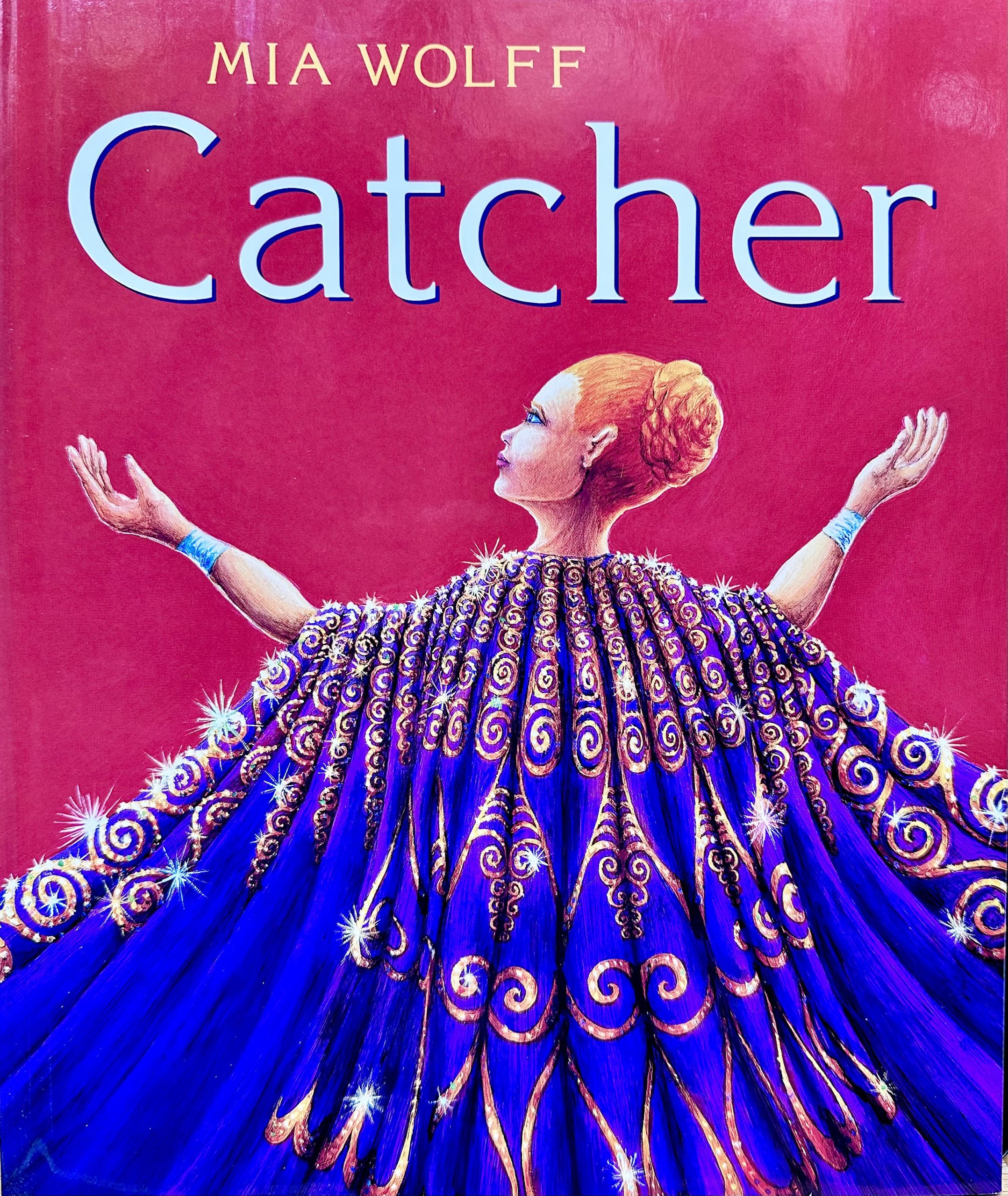
Your first book, Catcher, was a children’s picture book about the circus. You were one of the founders of The Big Apple Circus, right?
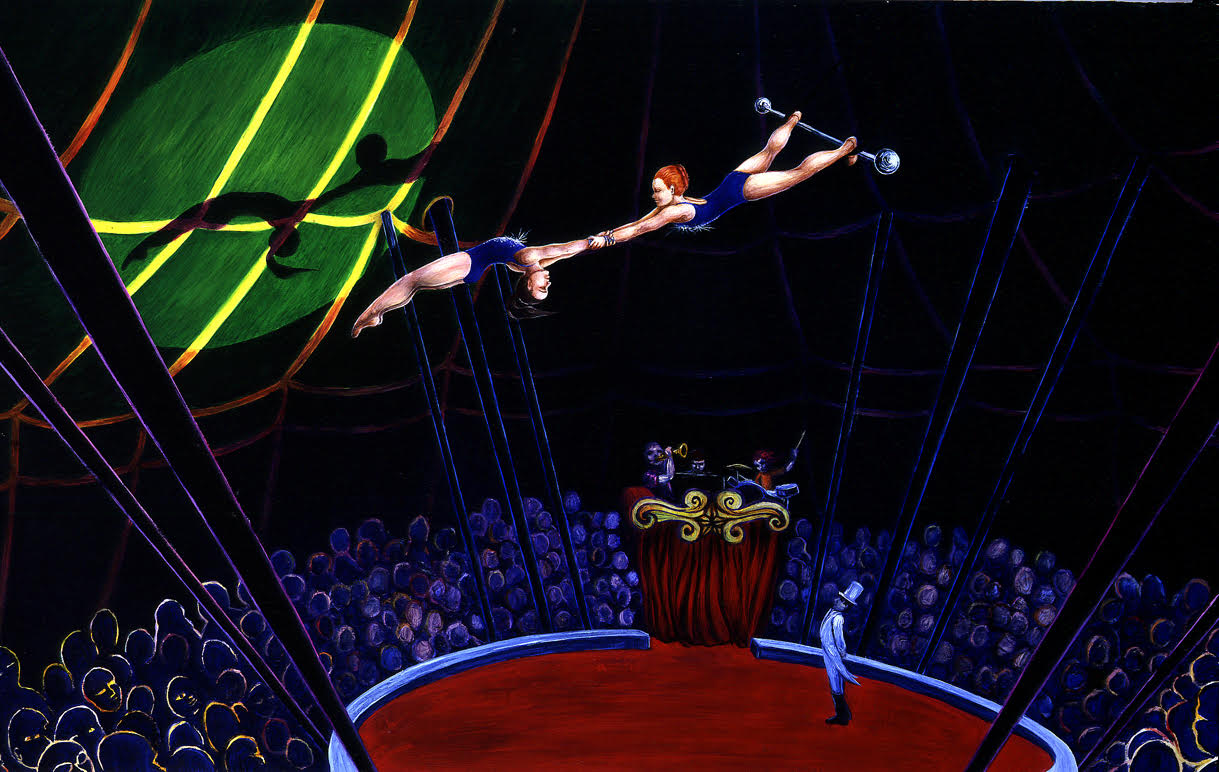
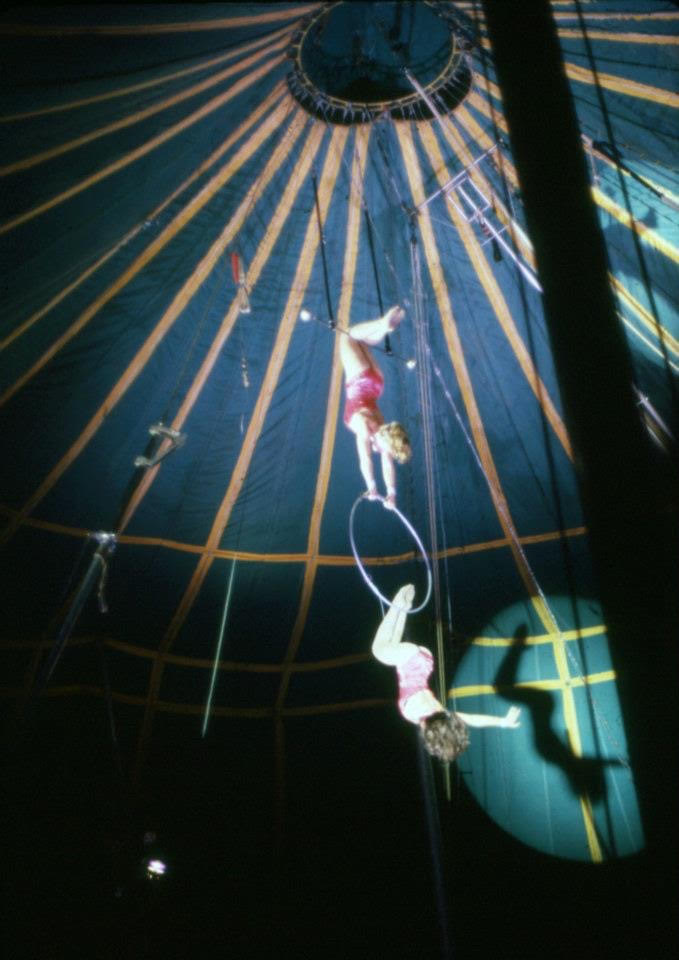
Yes, I was one of the founding members when I started training with the circus. One of my roommates from Pratt, Karen Gersch, was into clowning. She met two circus performers from the Moscow State Circus who had immigrated here and they wanted to train people. So she hooked them up with people. When we initially started training, it was in an old high school in the Bronx, no running water, no heat, in the middle of the winter, we're down in the basement. We're fucking freezing, and these two stars of the Moscow Circus took us and they just trained us. Then they hooked up with the Big Apple people and we were the first group. So the first two years I was with them and then eventually I was doing what's called a double trapeze act which is - you can look in the book - I hung by my knees and my partner hung from me and then various things happened up in the air. Lots of tricks.
It’s very interesting because you go up there and when you're up there - if you're not working outdoors because sometimes we worked outdoors - it's sky. But sometimes if you're in an arena with a spotlight, you can't see anything and it's like you're in outer space. You can hear the music, but it's just you and your partner, 25 feet above whatever. Your body and your partner's body - you're catching and you're uncatching and you're recatching. It was one of the best things I ever did. I really really loved it. It was very intense but it was like my childhood dream of doing something physically amazing. That's how I used to think about it.
This is why you see those crazy Olympic people doing stuff or why people put on toe shoes and attempt things that make me cringe to think about. But when people look at what I did, like they might think, “what are you, nuts?" You're performing a couple times a day. You don't almost die, but you try to circumvent that and people applaud and then you're floating. It's very intense. It's a lot of adrenaline and it's also very nothing-else-matters. Time is gone. It's just you doing this amazing thing up in the air and you're like a superhero for a short period of your life. I miss it. You're very strong. Trapeze takes a lot of muscle just to do the very basic things. So at a certain point, you have an interesting physical setup to inhabit.
This actually turned into a book called Catcher. It's a children's book, it's out there. That was a fluke.
I was looking at Above and Below as a children’s book for adults.
Kind of, and it could be read to children. Well, when Catcher happened – I actually signed the contract with Farrar, Straus and Giroux a week before Virgil [Mia’s son] was born, in 1990.
My parents…my mother, in particular, had a friend who grew up in Vietnam. She is Chinese, but she grew up in Vietnam, and she’s done a lot of children’s books, mainly about Vietnamese/Chinese mythology, where she painted them and wrote. They’re very plain but quite beautiful. I And at some point, she suggested that I go to Farrar Straus and maybe there would be some sort of work. I was envisioning that maybe they’ll let me paint a cover or something. I knew nothing about the business, nothing.
But she made the connection, because she knew the head of the children’s department there, and he said, ok. I said, "what should I bring?" He said, "bring everything". So I brought all these portfolios and slides, and I went in, and it turned out he was the head of the whole children’s department, had the corner office in their building. He was kind of a big deal, but I didn’t know that. I thought, maybe I’ll make a little money doing a book cover and pay the rent. I went in, I showed him everything, and he said, why don’t you write a children’s book about the circus? It wasn’t even my idea. It was his idea.. So I went home, and I made my version of a book dummy, where I did a lot of finished pencil drawings. I think it was the classic thirty-two pages or whatever, and I brought it back to him.
He looked at it, and he said, this could be a book, we just have to completely redo it. He made me take out most of the text, because the idea was to aim it at young children. I was only allowed one complicated word, which was “aerialist.” Basically, it is the story of a kid who gets trained to do double trapeze, which is what I did in the circus. So it’s a stand-in for me, but I’m a child. I wasn’t an adult like I was in real life.
I don’t know why I did this - I did all the illustrations in oil. They’re all oils. They’re about so big, 24 "x 30", horizontal.
They were very detailed paintings, so it took me three years to finish this book. Also, Virgil was born right after I signed the contract, so I had a baby. It took me forever to do it, and I knew that the printing ink wasn’t going to look like the original, because I’m working with oils and glazes, so it glows. I really ramped up the colors, because I knew the printing ink needed a boost.
It came out pretty good. But what happened was Stephen, who was my editor, the head of the children’s department, left the company to go start his own imprint right before the book came out. I was lucky it was even printed, because the next person doesn’t always carry through with it.
He had promised me, over Christmas, I’ll have you in the New York Times. He was always good to his word except he was already gone. It was the only time I ever got an advance that amounted to anything. But I lost my editor.
The book came out, but then nobody pushed it. It’s the kind of book that is sort of a no-brainer. It’s about the circus. I did some publicity on my own. I did some talks. I would go to bookstores when I could.
I got in all the newspapers upstate, which is easy in New Paltz, which is where I was at the time. I had like three or four-pages in newspapers, but that doesn’t mean more than small-town publicity - Kingston, New Paltz, whatever. But I would go, and I would give a talk, I would read the book, and I had my costumes.
It was sort of like, hey, this is like a sho-in, but if you don’t have anybody, one of the big guys behind you…this was before the Internet, in 1993, 1994, you’re on your own. There were computers, but not as a publicity and marketing tool. So the book got made, but then, they just remaindered it. But it ís still a gorgeous book.
Oh, it is! And it also remains a problem of how the task of marketing a book falls on the shoulders of the creator. What you’re pointing out here is a longstanding story.
Well, the comic book people I know…depending on who publishes you, they’ll push some books, not others. They may only push a little bit. If they think you’ll be a big seller, or you already are–Ok, they will, but they’ll do the minimum oftentimes. It’s their business too. It is a lot of work. I know comic book people who do all the comics conventions; they have zines and postcards to sell. But you have to rent the table. You have to get there; you have to get your books there. You have to sleep somewhere; you have to eat somewhere. And then you have to lug it all home again. I think you’re lucky if you break even.
But it does increase people’s awareness of you. More people know about your work. Some people have Patreons, with different levels where you can get handmade postcards or something. Some people teach. But if you’re going to go the route of publicizing your own work, you can try the online thing. But that doesn’t always work. For some people it does, but you have to be relentless. I’m not relentless in that way. I’m relentless about making the art, that I have no problem with, 150% of the time. Even when I’ve done signings, I don’t mind, it’s nice, but unless you’re well known, you’re sitting there on your own. Unless you’re next to someone with a line of 10 people waiting for their book to be signed. Sometimes I would steal people from their line and say, “it’s free to look.” Occasionally people would buy one, and they would look. It’s often a cacophony, these kinds of events. Comic book conventions, even the smaller ones, there’s lots of tables, lots of people, showing their wares. It’s friendly for the most part, but it’s kind of overwhelming. To catch anybody’s interest is tricky, I don’t know what the magic is. Sometimes it works, sometimes it doesn’t.
You went to the San Diego Comic Con with Chip [Samuel R. Delany] in 1999.
Yes, this was right after the first publication of Bread & Wine, he was a guest of honor. He was allowed to bring someone with him, and Dennis, his partner, doesn’t fly. So Chip says, you want to come with me? The trip was paid for, and we were assigned an assistant, and that was Pam [Noles, the co-author of 2 Dead Girls]. That was really interesting. I called up the San Diego con organizers and asked to be on the same floor with Chip, and then I ended up having breakfast with him every morning, which was great. I’d go down the hall and we’d have breakfast, and we’d shoot the shit. I also told them to put me on some panels, and I said I want to do a presentation about my art. Once I have someone I can talk to, I can say, let’s do this, let’s do that. I can push. They gave me a whole room, and Chip introduced me, and people came. That was the first time I really talked to a large audience about my work. It was fun. I really enjoyed it.
Then they put me on a panel about fine arts and comics. There were two other people on it. They give you a room, you have a big table on the stage with water, and microphones. I go there, and the other two people don’t show up. I didn’t prepare anything for this, having assumed it was going to be a conversation between the three of us. These panels are often like this where you don’t need a formal preparation. So there was this roomful of people who did not come for me. Chip and Pam are in the audience, and Chip looks at me like “so, what are you going to do?” He could have come up to help, but I’m glad that he didn’t. I introduced myself, talked about my two books: this is Catcher, blah. blah, blah, and this is Bread & Wine, blah, blah, blah. And there was a period where you are going over the rough ground, and there are mines, and who knows if you’re going to get blown up and killed. The silence of a crowd looking at you, awaiting entertainment is scary.
And then something happened – like popping cork out of the genie bottle. Suddenly, I just started talking, and I don’t even remember all of what I said. But I just started talking about this and that and the other thing. I was going down this side road, and that side road. Then I slowed down and asked if there were any questions. One I remember was from this young woman who raised her hand and said “don’t you think we should be translating more of the European comics? They’re really beautiful.” It’s true, they are really beautiful. I was all revved up, and said “No! You should be making your own comics!” I pointed my finger at her, and gave her this whole speech about how we shouldn’t be translating, we should be creating. [laughter] And then I look at the back of the room and I see the guy miming time is running with his hands. I had managed to do the whole panel on my own. Afterwards, Chip came up to me and said, “boy, I wish I had taped that. That was good.” But the beginning was rough. They just threw me in, and no one tried to save me or anything. I was like, wow, ok.
And then we got to go to the Eisners, because Chip was a guest of honor. [Delany won an Inkpot Award at the 1999 SDCC] Will Eisner was there with his wife. I got to talk to him, and was kind of nervous. I don’t remember who sat at our table, but there were famous people. This was when the event was small enough that there were just tables, and there was a microphone. It wasn’t like where there were displays and lots of filming. That was fun.
The rest of the time, there was a table for us to sign books. There were parties, and you hung out with people. And that it was paid for and we were given a per diem was nice, although that doesn’t cover everything of course. Pam’s assistance was also really impressive; she got us everywhere on time and asked if we needed anything. She’d been doing this kind of thing for years; she may still do it. She was very good at that.
That was fun. I’ve only gone to SPX and MoCCA since then. I haven’t gone to the big giant conventions after that one. Fantagraphics doesn’t do the one in New York, or I would go and sign. They do San Diego, but it seems crazy to fly out just to sign a few times. Unless I was higher up in the world’s view. San Diego has also become huger with all the movie stuff.
I’ve only been to the New York Comic Con, but heard stories about SDCC.
That one’s pretty big too. You’ve got all the cosplay stuff. San Diego you have to book way ahead. I stayed in the actual on-site hotel, but it’s not cheap. I’d gone there once before, before Bread & Wine, I just wanted to go see people. So I got to meet Eddie [Campbell], since we had been penpals, and I met some other people, to just hang out, as an attendee, not a presenter. From that, I sort of got a taste for it. One night, me and Eddie and Neil [Gaiman], we went up to his room and ordered food, and just shot the shit for half the night. It was fun. It was funny. It was when things like that could happen, and you weren’t overrun by fans, or disasters.
Sometimes it’s just hanging with other people in the business.
I didn’t know that this was how you met Pam [Noles].
Yes, she met me at the airport, and we were both wearing rhinestones. We were both into bling. So we had a whole conversation about that, and we hit it off. And then we did a book together.
I like how these friendships emerge unexpectedly, kind of like how you met Robert Morales at a reading from Dhalgren that Chip [Delany] did in a bookshop.
Yeah, that was certainly a meeting of the minds. But I think that these things happen a lot when you read about people. A lot of times before they’re famous they are out there, roommates with each other.
Let’s talk about the underground comic scene. You did this great podcast with Gil Roth recently where you talked about your early comic book reading experience, and friends you made.
Well, I read comics as a little kid. You know, when you would buy them at the drugstore and I would read Superman and Richie Rich and Casper the Ghost. I would draw little weird kid things where the car would go up the hill pulling the trailer and everybody in the trailer would be tumbling backwards. That was my first idea of moving pictures, you know, that sort of thing. I grew up with picture books, with comics, but I don't know if I was a part of it. I guess I was.
But Chip once said something. I was visiting Chip with Robert [Morales], and we were talking about movements like the Bloomsbury Group. He said, "Oh, it's just a bunch of people hanging out together. Then later they give them a name. Like us." Of course, we don't have a name, but I think it's more like that. You're not aware of history forming around you. You're just this crazy isolated person drawing and making books.
And Robert was also a very important friend and part of the history of when the both of you first meet Chip, right?
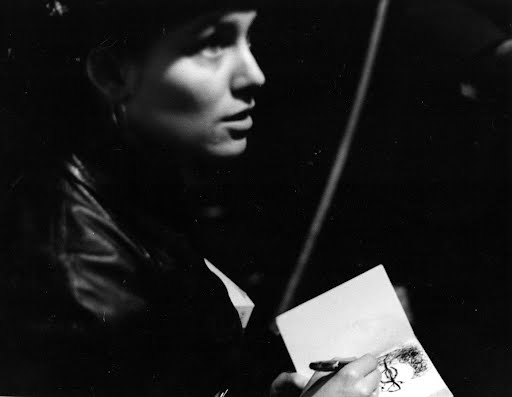
Well, this was when Dhalgren came out. It's one of Chip's most infamous and famous books, which Harlen Ellison completely panned. It was at a science fiction bookshop in the West Village [The Science Fiction Shop on 56 Eighth Avenue]. It was a Hobbit store. It had a round set of doorways, it was all round. It was all science fiction, fantasy books. And Chip was doing a book signing or something. I was a huge fan but I'd never met him. I knew nothing about him except his books. There's only one chair and he's sitting in the chair. So I go and I sit at his feet and this guy comes over, this Puerto Rican kid. He was a teenager, who comes over and sits right next to me at Chip's feet. I do what I do in these situations. I pull out my sketchbook and I start drawing Chip. Robert, who's a writer, starts talking to Chip and saying, "Well, can I interview you? Can I?" Then Robert looks at me and he looks at the drawing and said, "Can I buy that?" I said, "Sure." He said, "How much?" I said, "Whatever you have in your pocket."
So Chip, who's very democratic and open to everything, invited us up to his mother's apartment up in Harlem. His daughter is crawling on the floor. Robert interviews him and I draw him again. This was the beginning of a lifelong friendship with the three of us. Later it became a book. But I went and sat at his feet literally.
And Robert later became Delany’s executor.
Robert got Bread & Wine published. Nobody wanted to publish this crazy ass book about a homeless guy and a famous black author, with blow jobs in the middle. Robert found somebody, not Fantagraphics at first. This was the second edition. The first publisher was called Juno Books. Robert berated and harassed this woman and said, "Publish this book. Publish this book." Finally, she said, "Ok, ok, ok. I'll publish it." That's how it got published. It never would have made it otherwise. He was kind of magic for that.
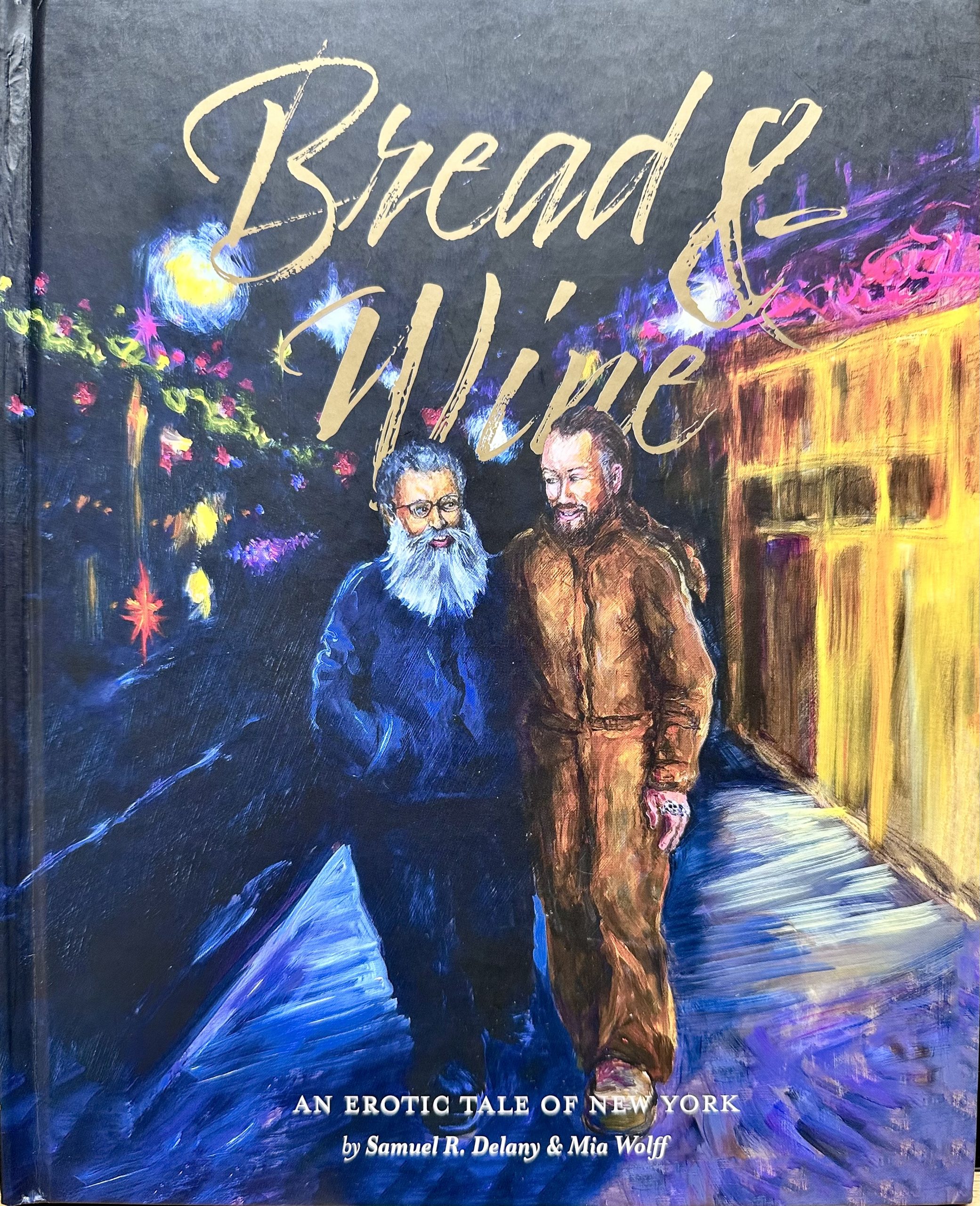
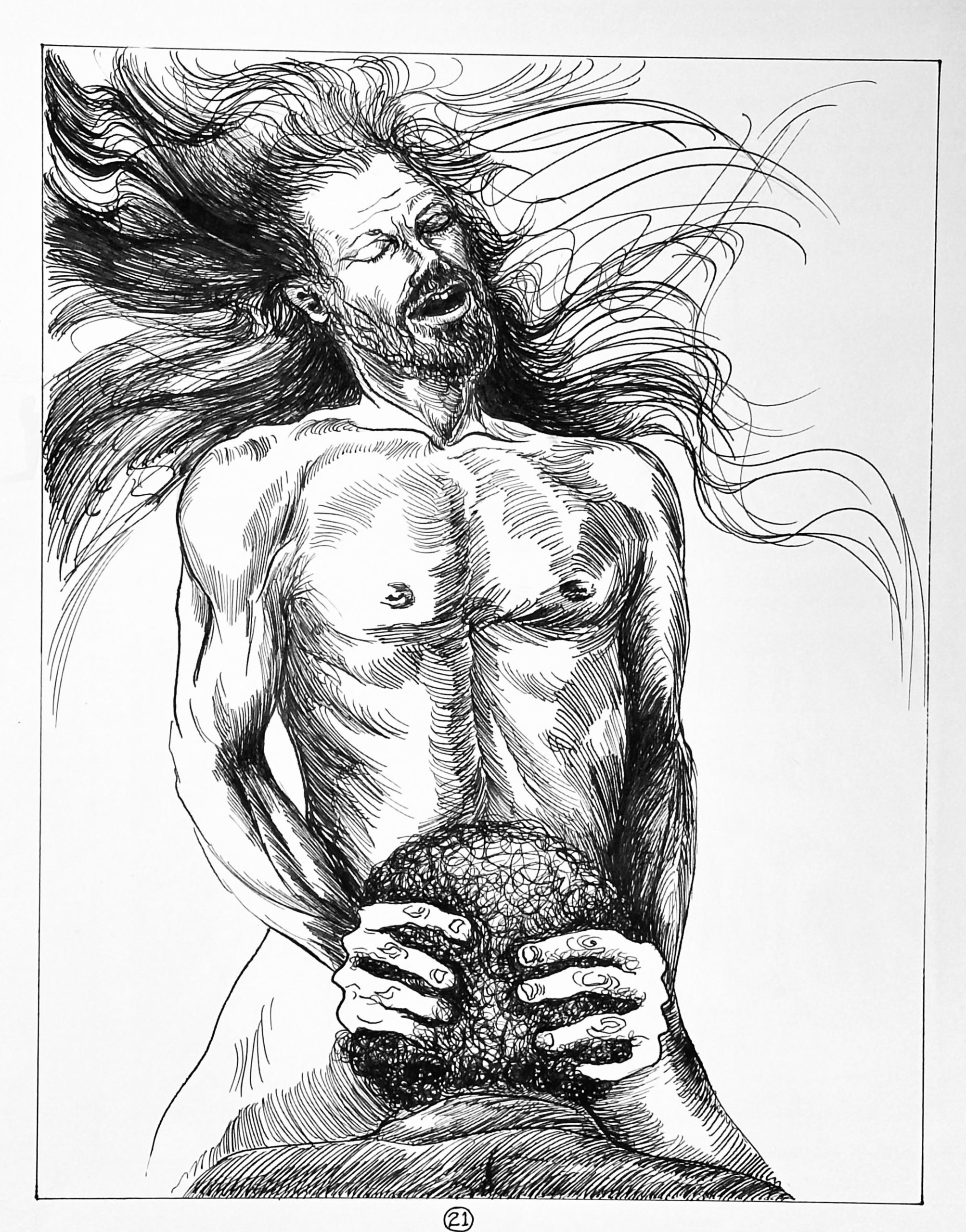
I think I'm not the only one that believes it's one of the most important graphic novels in American history, too. I mean your work was specifically highlighted by bell hooks when she was doing a talk a couple of years ago at the New School: “The amazing thing about Bread & Wine is that it is so tender. And I think that we are still trying to figure out how we can create sexual images, images of the penis that are loving and tender and not about domination.” She praised your depiction of masculinity and how you can depict the penis in a non-dominating way.
Well there are a few pages where it dominates…
That leads me to my question about something you mentioned when you talk about how you use life as the model for your art.
Well you know this was just kind of for fun. Chip says it was my idea. I said it was Chip's idea. It was over the phone. We just said, "Oh, let's do a book." And I'm thinking, "Oh, it's going to be science fiction." I adore science fiction. Then I get this script of how he met the man who he still lives with to this day, 30 odd years later, who was homeless on the street selling books. I said, "Well, ok, whatever." I went and just hung out with them. Dennis at one point took us all around the city showing us everywhere he slept, where he used the bathroom, where he sold his books. He had a cart at one point. Later he dumped that and he just had a backpack. At one point I said to Chip, "Well, we're going to put sex in, right?" Because sex to Chip is very important. He is famously transparent about it in all his books. I said, "I'm coming up to the apartment with my camera and you guys are going to take your clothes off. I need pictures of people undressing because anatomically, you can imagine it, but think about the shapes of the body when you start to remove your clothes, how complicated that is." So, I go, and this is before digital cameras or anything. I took all these photographs of them disrobing.
My favorite is in the book where Chip is taking off his underpants and his foot is stuck in his underpants. Who would think to do that? So I have all these great shots, and the rest I imagined. They didn't enact the sex scenes for me. I imagined those.
I like that comment that Dennis made about the blow job scene. He thought it was too imaginatively drippy. So perhaps there's no fidelity in that particular image.
About wasting the semen? Right, Chip would never waste it like that. Well, there was a reason for that. Here it is. Because there's a page where the semen is clear and then there's the silhouette of two of them…and in my head I wanted to do that because I thought it would make beautiful shapes. But in real life, he would have swallowed it all.
Chip is very transparent about all these details. I'm not giving anything away. It was fun to draw. I got a big kick out of this because I like bodies. The hardest part were the buildings and the cars. I thought, "Oh my god, I have to draw buildings, cars and cabs and buses." But somehow I managed.
And the new edition is coming out?
This year. The new cover is in the case over there on the right. I did a new cover of them walking in the city at night which was fun. So yeah, Fantagraphics picked it up after Juno Books which is nice because they make beautiful books. I was glad for that. Otherwise who is going to publish your crazy shit? Not too many people.
Tell me about The Empty Lot.
I had a friend who suggested I self-publish a monograph of my paintings because it didn't look like anybody else was going to do it. I said, "Well, I don't know. Monographs are like… I mean, I own hundreds of them, but the writing is god awful, most of them. It's dry. It's boring. You have some scholar telling you what you're looking at, like, you have no eyes. I don't want a book like that. I want a book that's fun. I want to have my paintings of the last 40 years in it, but I want it to feel like I feel when I'm painting. I want it to be like a roller coaster ride through my head.
I said, "How am I going to do that?" And then I said, "Oh, I'm going to have my cat be the avatar, and my cat's going to go in and out of all the paintings, and it’s going to be a narrative of my cat going places." So what I did was I took a hundred paintings and then I did a hundred illustrations to go in between, of the cat's adventures going into the paintings but what would happen when the cat would come out of the paintings he would bring the characters out with him. So that sort of snowballed and rolled and I asked my son who also shows up in it because he's in a lot of my paintings what he thought of the book. I had to nudge him a little bit because he's a diplomat so he's got the poker face. I said, "Well, how did the book make you feel?" And he said, "Well, it made me feel the way I do after I've seen a really good comedic movie." And I said, "You mean like lifted or buoyant?" He said, "Yeah." I said, "Yes, that's what I wanted. I wanted people to feel the way I did." You know, when you get excited when you're writing or you're painting and you think, "Oh my god, it's happening. It's going." And there's nothing else like that. And then sometimes, if you're really lucky, the finished piece gives that back to you.
I'm a big fan of my own work, which is kind of nice because I live with it. But if somebody else could feel that with 200 plus images in their lap…..that would be pretty good.
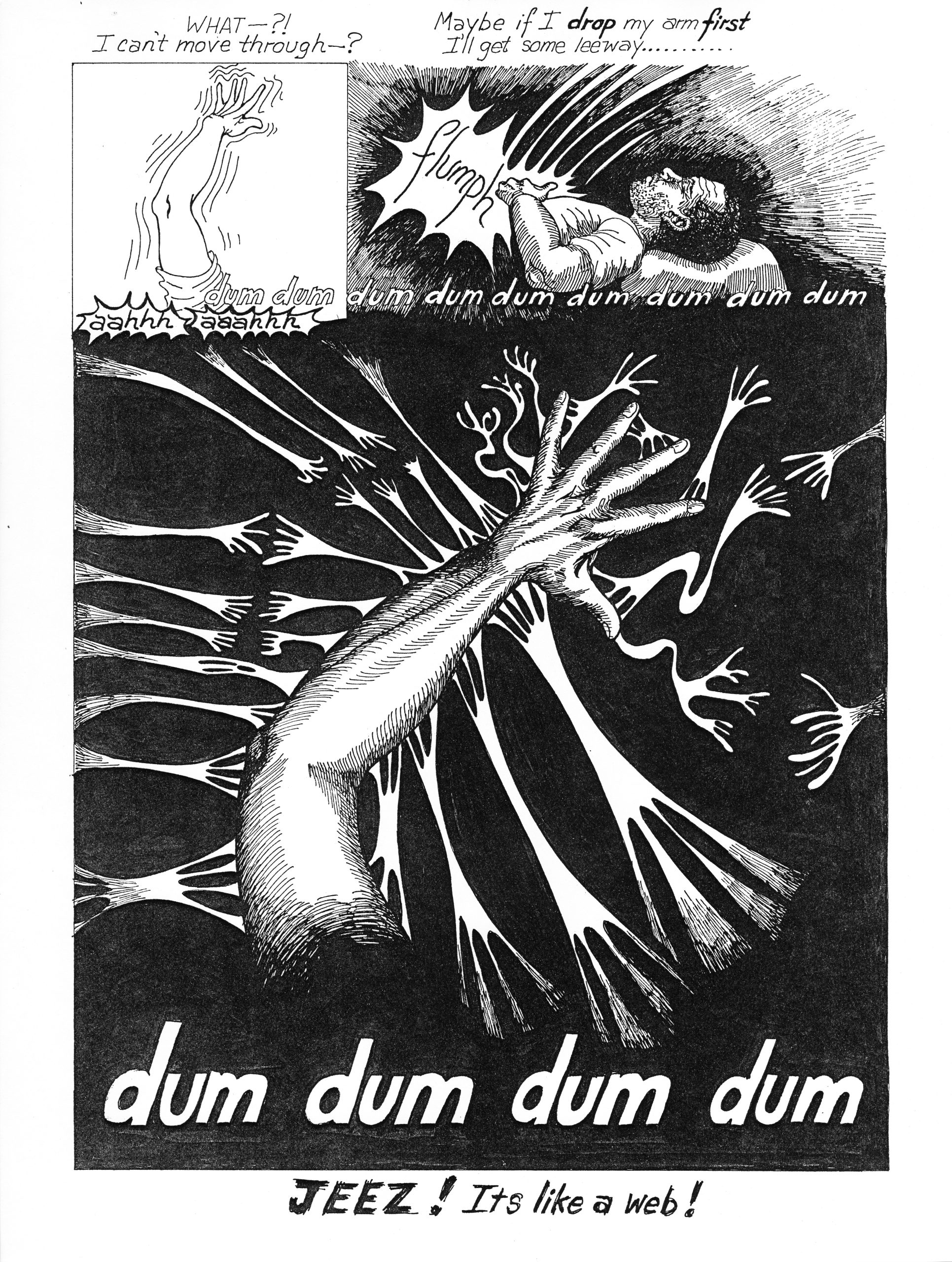
Let’s talk about your work with zines, about Eye Feed, which you started in the 90s?
Well, I did Catcher in the 1990s, and it took me three years to finish it. This overlapped with the zines, since I was upstate, living at my then-husband’s parents’ house. They had a house right on the Hudson River, in a little town right outside of New Paltz [New York]. We were in the downstairs section, which was like a second apartment. It was very beautiful; there was a little beach that you could literally just walk right onto and go swimming. But my husband was going back and forth to the city, and I had Virgil, who was a toddler. I was very isolated. I didn’t know anybody; I tried to meet some people, but when you have a kid, the kid takes most of your energy. He didn’t let me paint. He had to be asleep, so I could only paint after he went to bed. I was working on the paintings for Catcher.
So I did a lot of sketchbook drawings – a lot of them; I was drawing cats, Virgil, the river , the trees, everything. I did some vignettes, short comic stories. I also did a couple with Robert Morales, where he told me the story and I illustrated them. What I started to do – and this is before Photoshop and everybody had computers – I would go into town and I would xerox everything. Then I would knock it down, paste it up, and re-xerox it. I made these things with those cheapo plastic binder sleeves. I started making these books because I was isolated, and I started sending them to people. I just mailed them out. I sent them to friends. I had no idea that this might be a means of meeting other people that were doing it. Mostly these were sketchbook drawings that I rearranged with a few little short stories.
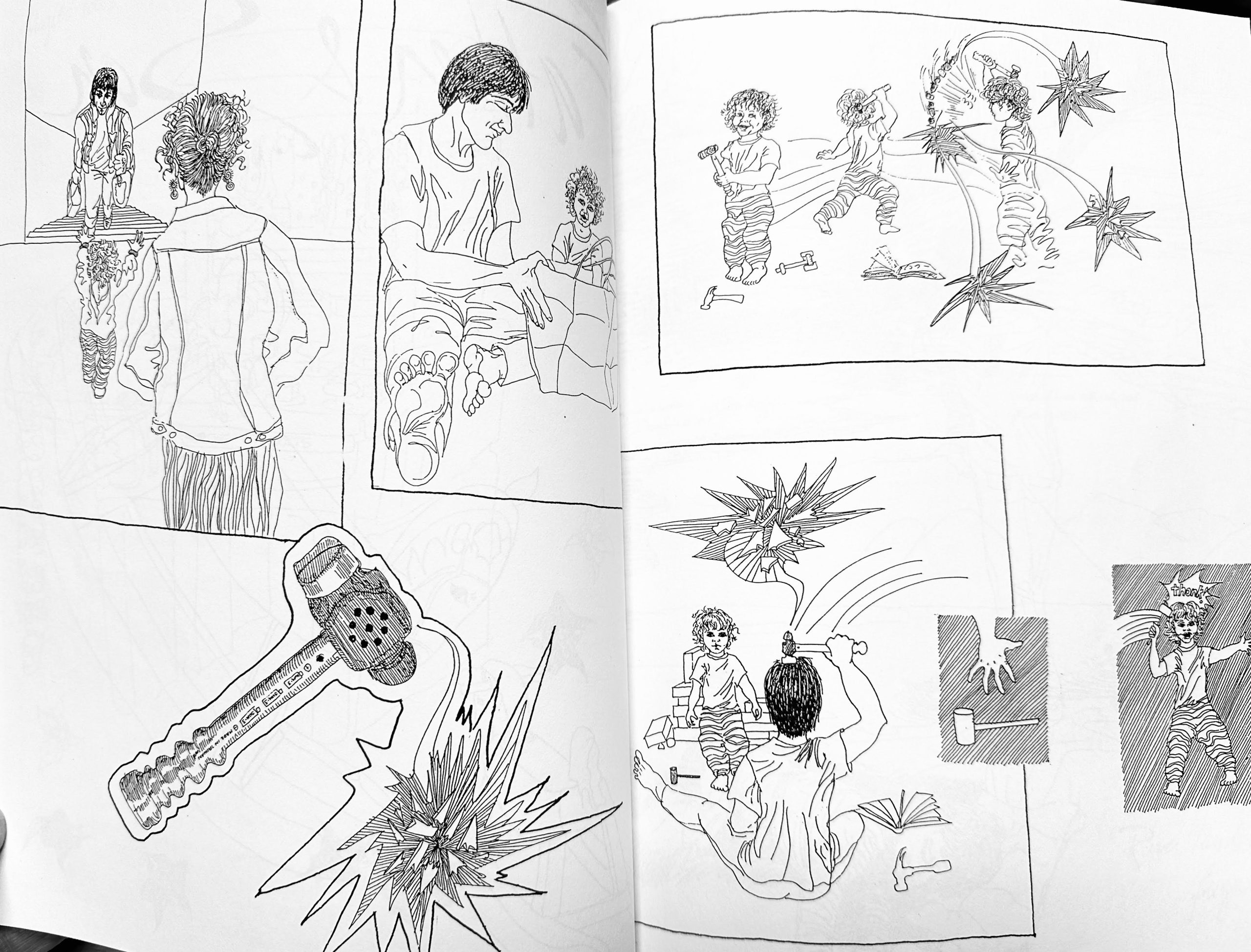
There was one about Virgil and a toy plastic hammer that had a recording in it. It made a sound like breaking glass. His father had bought this for him, and showed him how to play with it, banging his head, with it making sounds. Virgil is a little kid, so he picks up another hammer on the floor, that wasn’t a soft toy, and bangs himself in the head with it, trying to emulate what his father is doing. And then he bursts into tears. I don’t blame him for doing this. I understood the logic. [laughter] I made a little story from this, and then I did the two stories that Robert [Morales] told me. So, in a way, I was doing comic strips that I included in the zines, and I made…there were three Eye Feeds.
Then at a certain point, years later, when my mom died, and my marriage went to hell, I did a memoir/self-published zine. They were all sketchbooks, images, and writing. The writing was taken mainly from emails. I was sending these to a friend who lived in Germany. There was a lot of them back and forth. This was someone who was my first boyfriend when I was fifteen. So we had known each other a long time. I was describing everything in real time, so I just used those, with a tiny bit of editing, to talk about what happened for a year. It was a very difficult year. But there were lots of drawings, and I talk about painting. This was about a hundred pages.
Anyway it had a lot of writing, and there’s images from the studio, of the paintings I’m working on, my cats – this is what I am talking about–drawing what’s in front of you. Here is Virgil in one of his class plays. I made the head piece. There’s an image of me, and it goes on and on and on. There’s all sorts of crazy ass shit in it. There’s some naked images. This is when I still looked good naked. [laughter] It has to do with some of the paintings I was doing.
This is one I love, it shows my trapeze in my studio in New Paltz. I must have set the timer on the camera. I love this one since it was a giant painting, a self-portrait. This was my studio that I designed and had built on the property. So I had this big gorgeous studio.
Then I went to Spain, and I wrote a long letter to Chip which is included. Then there’s Virgil. There’s me at fifty. It tracks the weather and the seasons, because I was upstate and had a big garden. Here’s one of Robert, Chip, and Dennis, down in Tribeca. We all went out and had wine together. I was a little drunk, so the drawings are loosey-goosy. But it looks like all of them. It ends with a poem.
This one was expensive with all those color images, so I actually sold it to people. I sold a few copies. One of which went down with one of the 9/11 planes, believe it or not. This was the copy I sent to Pam [Noles]. It was either the plane that went down in the field, or the one that hit the Pentagon in Washington DC. When you mailed something from New Paltz, everything went to DC first and then went out. So then this copy of the book just vanished we assumed it went down with the plane;they actually paid me for it – the post office – since I had insured it. It cost a hundred bucks to produce it, because of all the colors, and xeroxing page after page. Nowadays, you’d still have to print it, but it would probably be cheaper.
It’s a long memoir about that year. It’s not bad, it’s not too weepy. It’s a day-by-day description about what was going on in my head – what I was painting, or what was out the window.
It has a diary, memoir kind of quality to it.
I actually sent it to Gary, but I don’t know if he read it. I don’t know if it could be published. I would certainly have to edit some of it, and maybe change some of the names. But that’s a long zine. That I did after Bread and Wine, after 2 Dead Girls. Or maybe before 2 Dead Girls.
In the late 90s?
2001. I finished it in July 2001. So it started in summer 2000 when I was in Italy. It goes from May to July the following summer. Before 9-11, I’m sure that would have gone in if not. I never really wrote about that. It’s in my head but I didn’t write about it.
When I did the page for Still Beating, I did a page for all the books I’ve published. I included all the zines. I have to re-do it and put in Lost & Found which was still in process. I put in all the zines including the one I did with Robert [Morales], which is basically about sex and death. The last one in here is the Empty Lot, so I need to add Lost & Found. I said to myself, I am going to make it look impressive. Why not put in all your zines? What the hell.
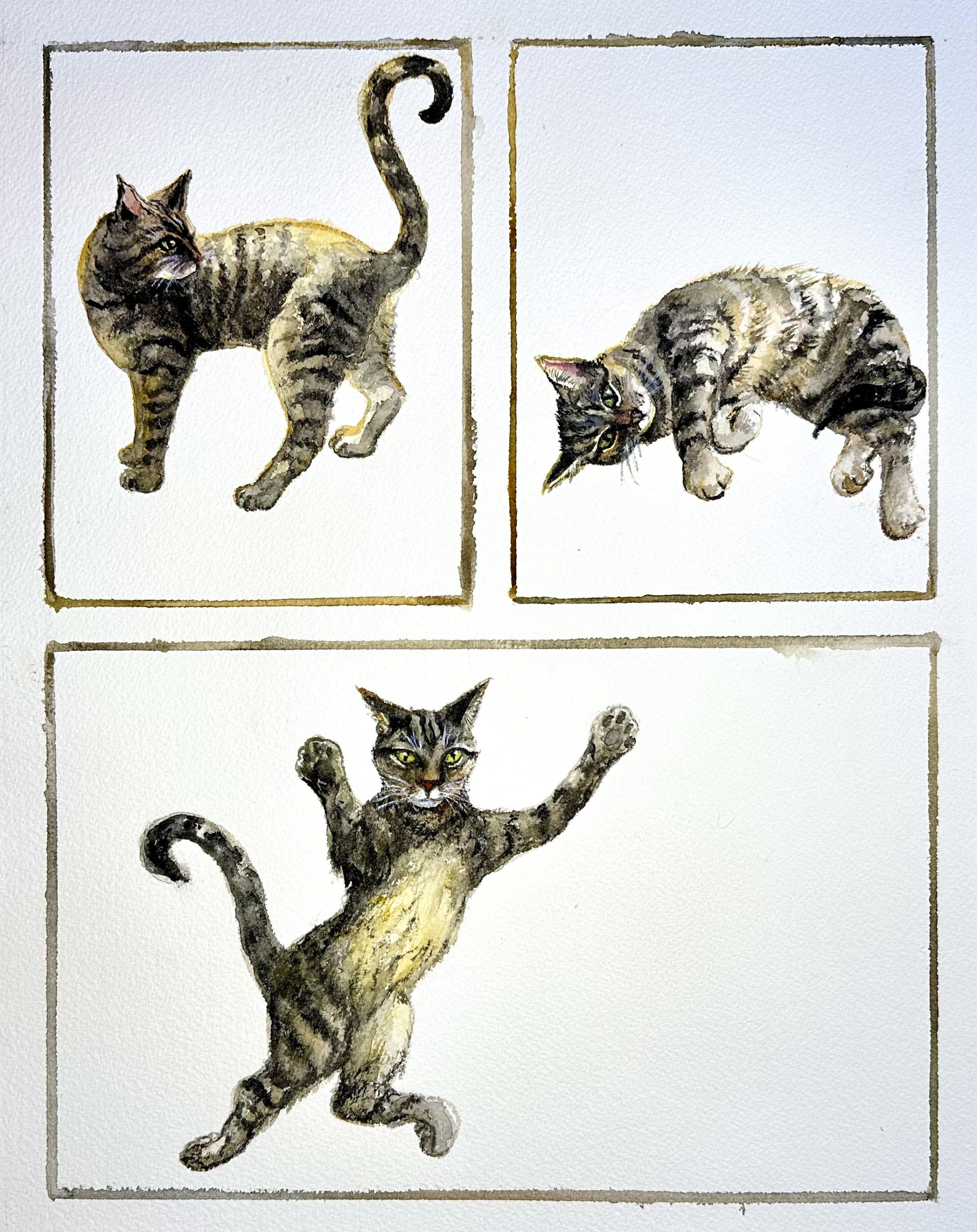
There is such a resurgence of interest in zines nowadays.
It’s all true. So there you have all the dates. So there were Eye Feeds before Catcher was finished in ’94. So ’92…but I’d already signed the contract, so I was working on Catcher. And then the big jump between things getting officially published is between the first Bread & Wine and 2 Dead Girls. Well, I self-published it in 2021, but it was 2000 when I actually drew it. So there is a big gap.
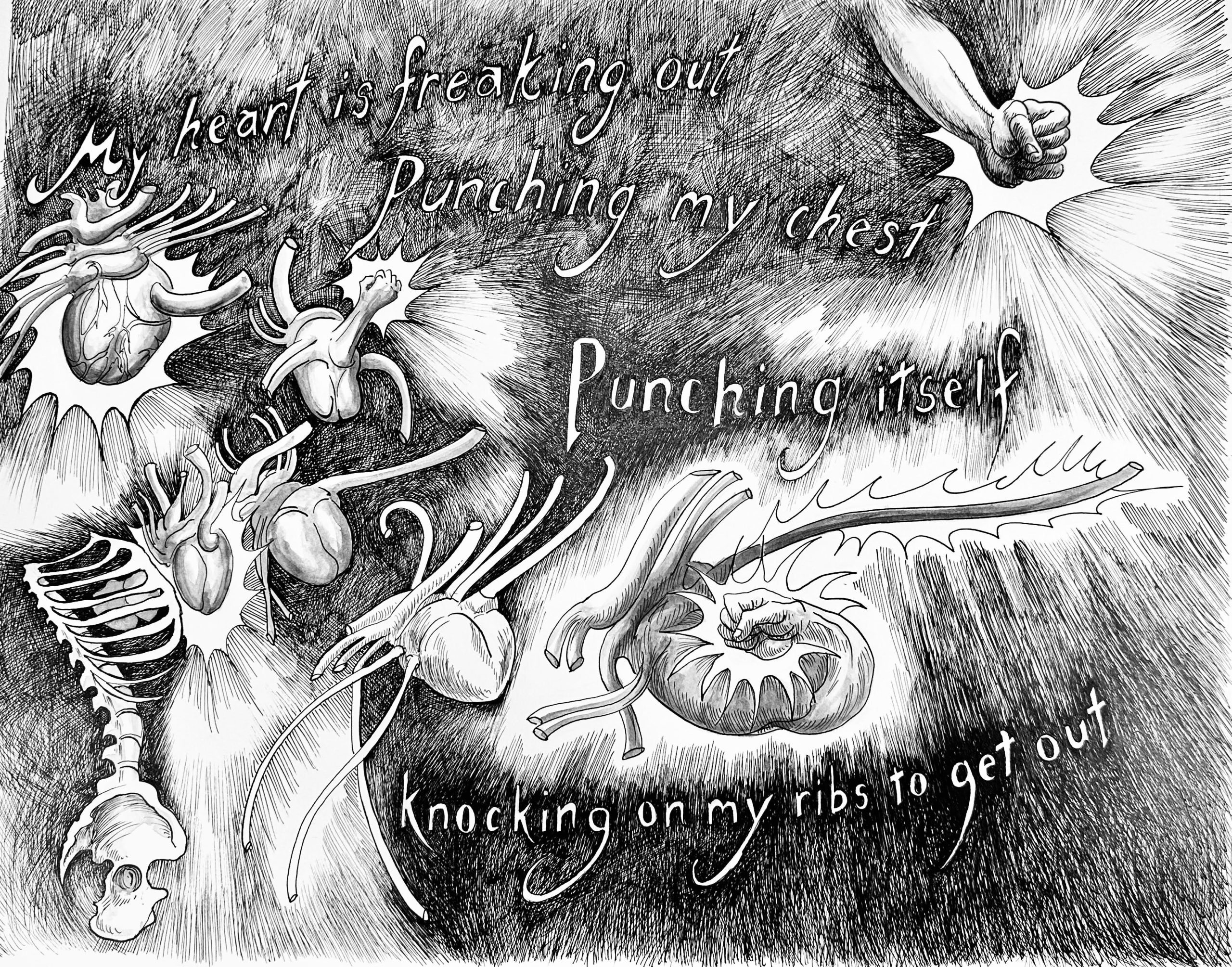
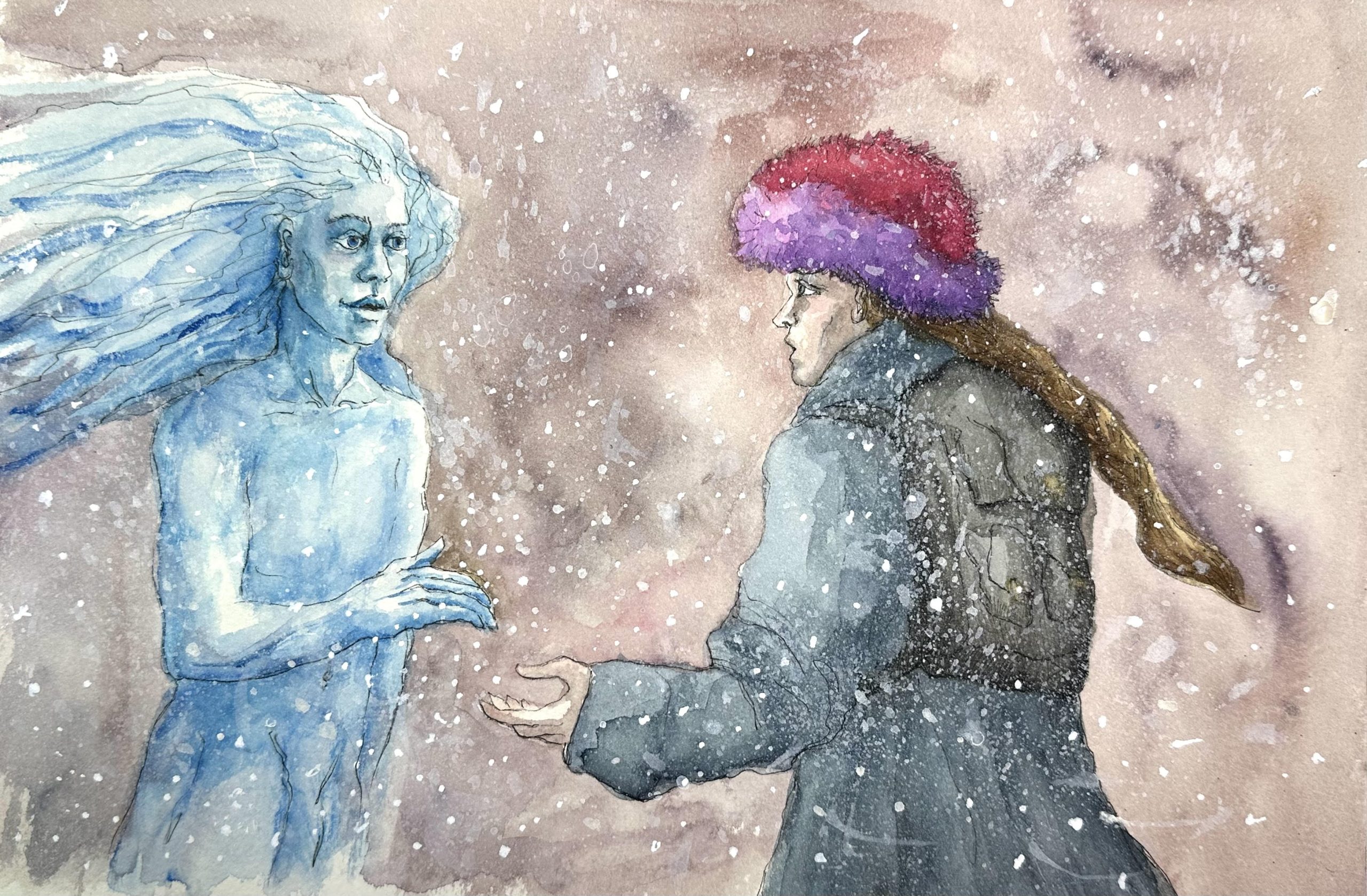
Tell me about the two books you've got in the queue, Still Beating and Blue.
I showed you Still Beating, right, about the heart? Fantagraphics has it in a queue, and it was based on - I got really bad heart palpitations at one point, and my acupuncturist, after I'd seen her, she said, go to the ER. She was worried, because they were pretty extreme, and they hurt.
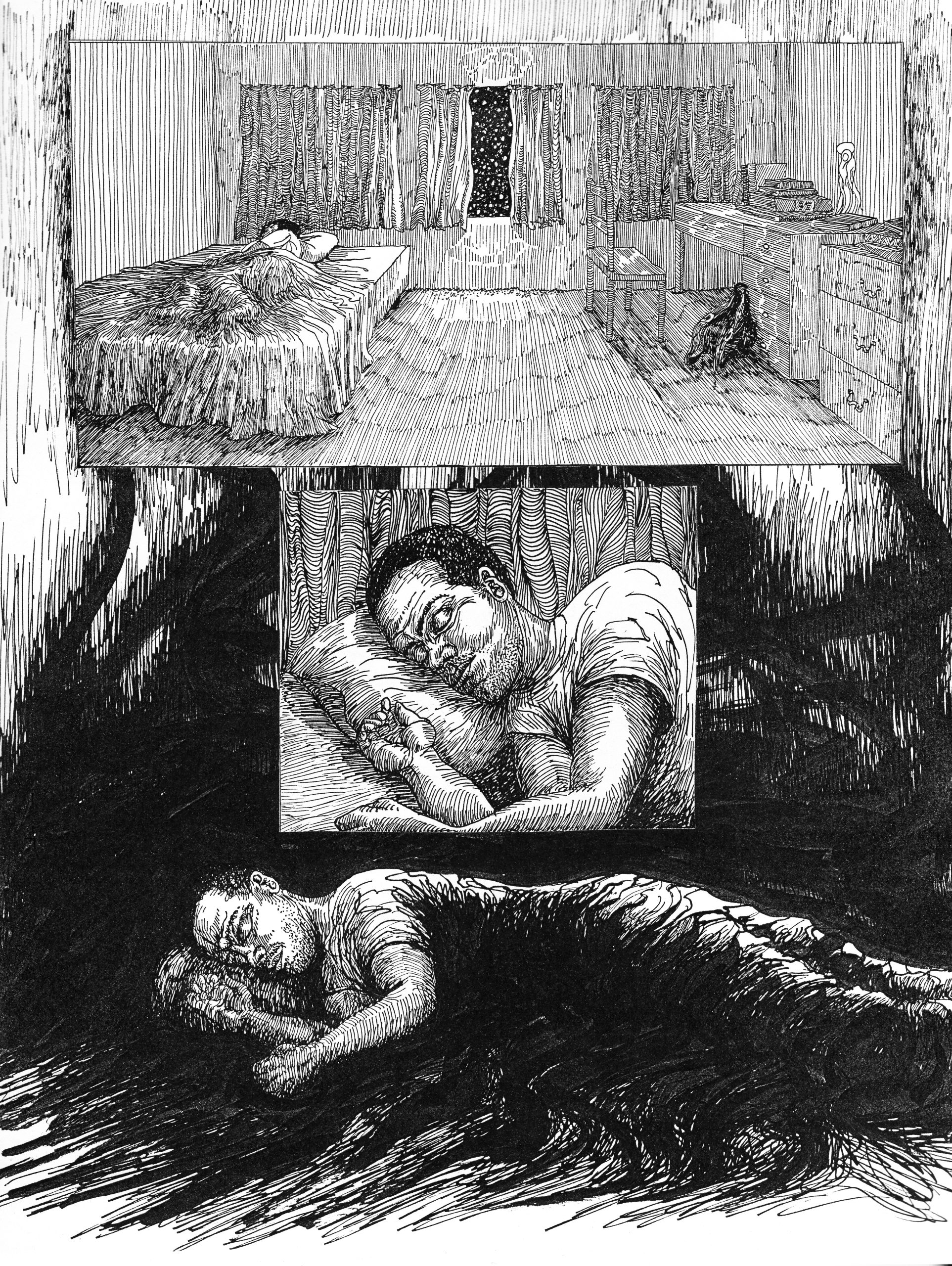
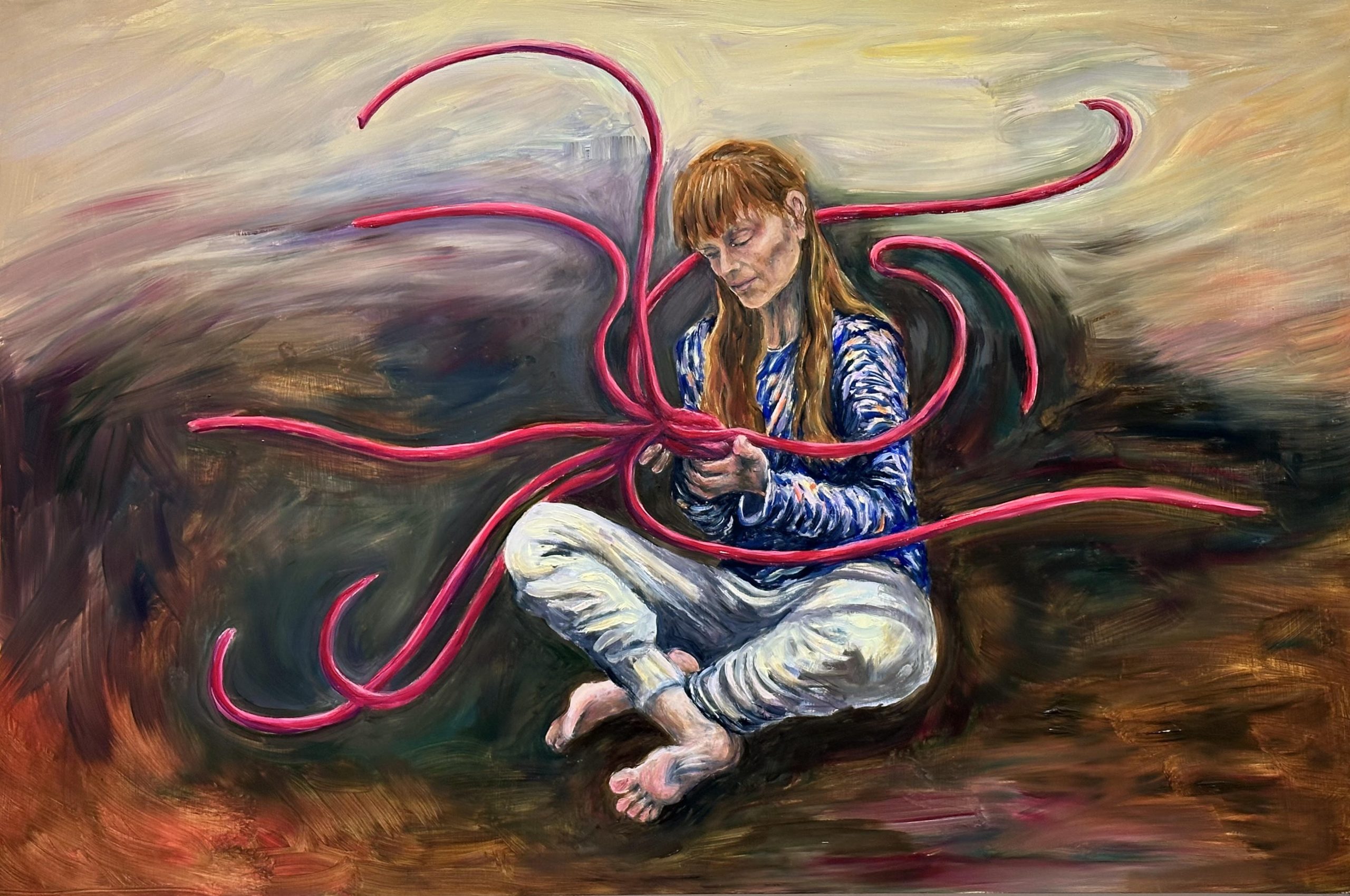
So, in order to get to the hospital that I go to, I took the ferry from Brooklyn to the Upper East Side of Manhattan. I got on the ferry, and there was a cloudy, gorgeous, dramatic sky going across the East River, and I thought wow, universe, thank you for this beautiful sky, and then simultaneously, I'm thinking, do not have a heart attack before you get to the hospital – wait. Which was funny, but it was what I was thinking. So, turned out, I'm fine, my heart is fine, and I thought, that's an opening of a story, that's the beginning of a story. So, it took off from there. The heart becomes a character, and the heart basically takes me back through time to specific memories. This is a book where all the memories are positive ones. There are some not so much, but it's mostly positive. The negative parts are illustrated where me and my heart go through chaotic landscapes, which I don't explain. So, there's that one and Fantagraphics has that one, and I don't know what the timeline is on it, but then I started working on a book, which is wordless, which involves a female character and a ghost/spirit.
He's male, and he's blue, that's why it's called Blue, and it's just about the character’s experience of being haunted by this entity, and there's no explanation of why.
It's a very dreamy kind of narrative, and I finally realized that it should go with Still Beating. It should be like those flip books they used to have with two novels, and one was flipped upside down, so you had two covers, but one was completely the other way around.
One's sort of a memoir led by my heart with just bits and pieces. There's some of the circus trapeze stuff. There's my kid’s Halloween costumes. There's some other things. There's discussions with the heart and what the heart thinks about the universe. Blue is very undescribed. Things happen. It's all visual, and I was showing some of the pages to somebody the other day, and he started asking me all these questions, and I had absolutely no answers for him because I don't know. He would say, well, is this a positive or a negative spirit, and I'm like, I don't know. I don't know.
I just know what happens, but I don't have any answers. It's completely open-ended and yet specifically led through a specific storyline with an odd ending, of course, and I thought, no, no, this is a perfect companion for Still Beating. Still Beating is funny, but it's also about real life stuff, and it starts with me thinking I might be going to have a heart attack, but then it turns out to be kind of funny, which is how life is. And then you have this dreamy, who knows what kind of spirit-longing sort of novella. It's short. I thought they just go together, so I hope that that's what will happen. We'll see.
You know, publishing is a whole other thing. It's not always what your art elves have in mind. It's business.
I love the idea of pairing the two like that.
Well, it makes sense in terms of size. It'll probably run to around 100 pages or a little over rather than, 50, 60-odd pages each or whatever they are. And also I like the idea of the two stories being together, rather than separate.
[Looking at the draft cover of Still Beating] The cover is pretty cool. All you know is that there is a heart, but you don’t know anything else. I should show you Blue.
[Looking at images from Blue on a tablet.] Some of the pages will have one image, but many have more than one.
I thought it would go well with Still Beating, the two would make a nice combination.
The image of the heart connects them.
That overlaps. This one took me forever. At the end it’s just the two of them getting closer. The next couple of pages will have some background. It’ll have more colors. I couldn’t resist. The roses turn blue. Not only in real life, but in the painting. I hope people pick up on that. I’ve read weirder stories, or looked at weirder stories.
I see a Silver Surfer resemblance.
He’s very Silver Surfer-ish. We’ll see. I like it. But I made it…Are you hungry?