
A Friday night in June, on the fringes of the megalopolis…
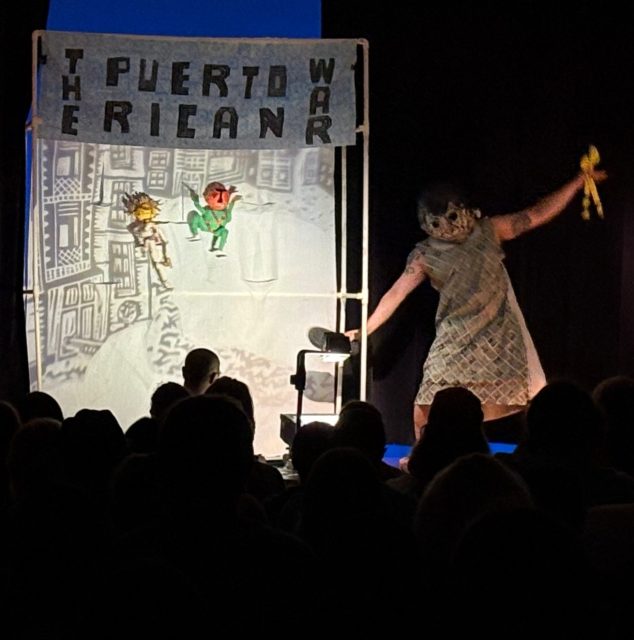
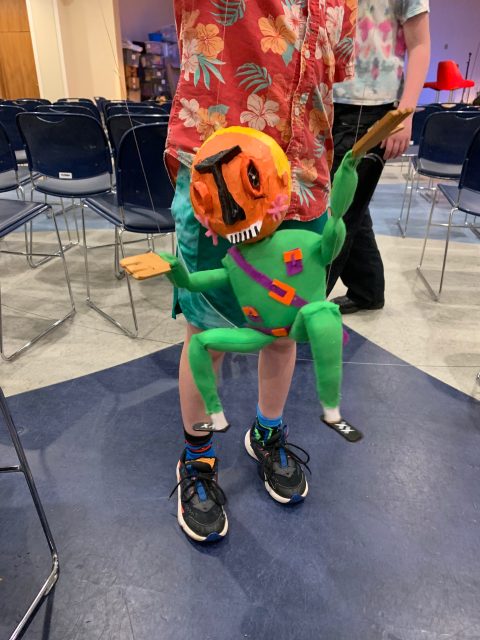
A crowd milling about the opening of Dash Shaw and John Vasquez Mejias’ works on paper, drained into the basement of the Richmond Public Library for Mejias’ itinerant folk performance, The Puerto Rican War. Last I had the chance to see it, I missed it; which I don’t recommend. Formally the show is like a traveling pagan pageant with Noh inspired gestures and DIY resourcefulness; the whole thing is transportable by minivan. The narration, puppetry, live foley, overhead projector, papier mache and cardboard construction orbited together in compliment, no one technique overshadowing another, all under the stylistic glaze of Mejias’ seemingly favoritist thing in the whole wide world: wood cut prints. The moves are deft. It’s just super duper good.
It’s a historical narrative that I won’t summarize here, I’d muck it up and I shouldn’t do that. You can find a copy of Mejias’ book of the same name to get current. For some context though, there are clandestine leaders, a small militia, brute force American militarism, and a trinity of spirits - among whom is Mejias’ own grandmother - who visit two dying pistoled assassins.
The stickiest impression on me is the tone. Maybe it was just this go ’round, but the performance was not loud, everyone had to be quiet to meet it. The scene with the aerial assault was scored by some low profile acoustic thunder box, not even a baking sheet, and the gunshots were dime store snaps not fanatical booms like in The Sopranos or The Wire. The effect was a tighter more mid century television gunshot sound. The music and SFX sat calmly in the mix with the radio newscaster’s staccato of Mejias’ narration.
Afterword, someone asked Mejias to talk about his grandmother, I guess since she appeared in the trinity. Mejias was partly raised by her. She had a comically measured temper; known to raise a chancla, but never bring one down.
Next morning was the big show. The turn out at the Richmond Virginia Public Library’s Main Branch was solid. A mosaic of A4 sheets spelling out BUBBLES CON one character at a time was taped to the window next to the basement stairs. In the basement was free coffee and donuts, a table of free Bubbles Con notebooks, buttons, posters and programs. Attendees added free zines and comics. Then there was the auditorium where everyone was about to spend pretty much the entire day. There were only a few tables with stuff for sale in the back; Bubbles, Comics Blogger, Toybox Coffin, Chris Pitzer (X Adhouse Books) and All the Old Poisons. It was a tightly curated tabling consistent with the Bubbles Con ethos that makes it an enduringly special event; it’s not an expo, you’re here to listen.
I always wanna know what Ryan Holmberg is into. I’m a fan of his fandom. This time he was talking horror. He’s got volumes of 20th and 21st century horror manga stacked in what recently became his basement after the passing of his mother. "Holmberg, a navy brat, spent much of his childhood in Japan watching horror movies that most American children were shielded from before the generational emergence of the internet and chiller parents.
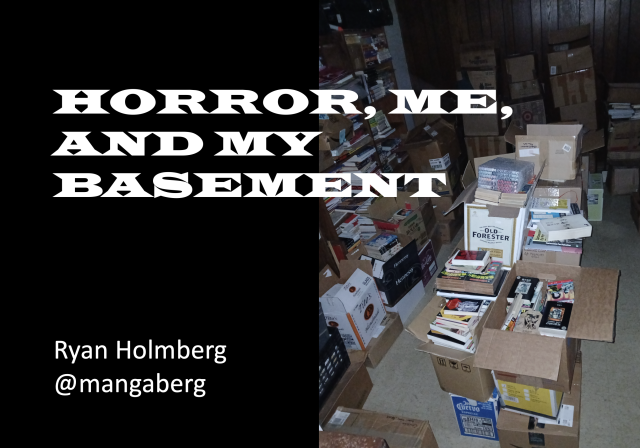
He showed some amazing stuff, I tried to copy the moon in my sketchbook from one of Maruo Suehiro’s Beautiful Monsters’ tamer pages. The work ranged from disposable spooky kid’s comics, to gum shoe stuff to the high-genre for the Ito heads. There’s a pleasure point in gawking at gross and weird stuff but horror is also a culturally load baring genre. People gotta fantasize about what they fear. The horror people enjoy can be a tell. A lot of missing noses and eyes. Forced body horror transformations. Creeps hiding in furniture. I don’t know, horror is like one of those horseshoe graphs with things we fear on one pole and things we like on the other. It wraps around, almost touching.
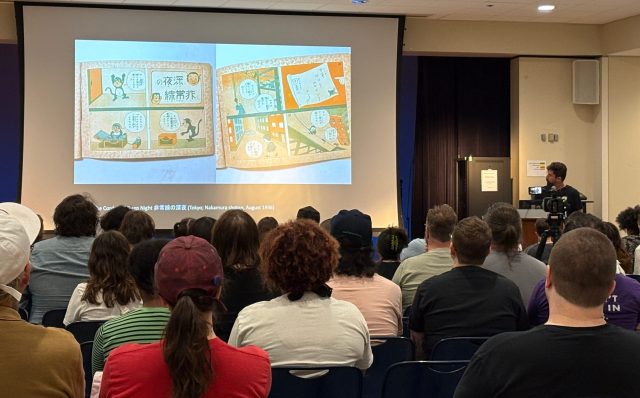
Holmberg summarized one of the heavier plot lines from either Beautiful Monsters or Mansect, I can’t remember, but it involved a cousin’s futon. A mixture of laughter and gasps fumed off the audience.
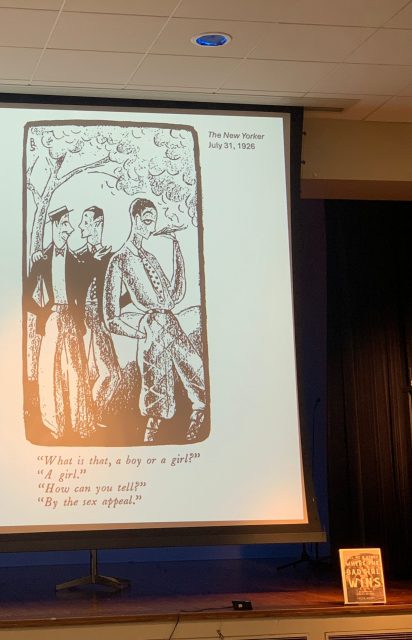
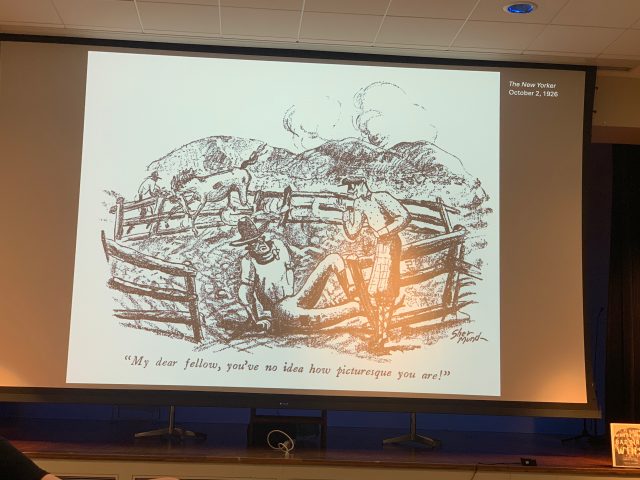
I’m proud to say this was my third time hearing Caitlin McGurk talk about her new book, Tell Me a Story Where the Bad Girl Wins, about the life and work of Barbara Shermund. I’m the same way with Mcgurk as Holmberg; fan of her fandom. I’ve seen the collection of Shermund drawings twice, once in Ohio and once in Pennsylvania. They’re very cool and worth going to see for the margin matter alone. McGurk is, of course, the curator of the Billy Ireland who, back when she started, discovered a few of Shermund’s drawings in the stacks and subsequently very little else. This lead McGurk on a decade and a half long search around the country tracking down art work, personal effects, and surviving kin.
Barbara Shermund was a transatlantic single panel cowgirl. She was an early cartoonist with the New Yorker, drew ads and book covers, and contributed to a young Esquire magazine. She submitted cartoons on scraps of paper from the kitchen tables of her friend’s Parisian residences. McGurk’s book is the much belated inaugural celebration of Shermund’s work as an artist for, two main reasons; sexism and consumerism. On this viewing of the talk, I started considering Shermund’s role as a commercial artist as a kind of liberation. According McGurk’s research and my extrapolation, Shermund got to live a cool life. She made a living wage, lived where she wanted, had the Woodstock, NY experience that everyone currently in Woodstock, NY pretends to be having and all free from the exposure of notoriety. I know I’m looking at her life from 2025, but having demand for your work without sacrificing privacy is kinda the dream, I hope she saw it that way.
The free donuts lasted up until about this point in the day, just before lunch break, when RVA artist and educator, Rae Whitlock interviewed NYC Cartoonist, Juliette Collet. They talked Collet’s new book, Ms. Understood out now on Neoglyphic Media, art student posturing and isolation and her West Coast book tour which, she and Nate Garcia cut short after a box of vintage dresses caught fire in the trunk of the car. I don’t know how the fire started and, for some reason, no one asked.
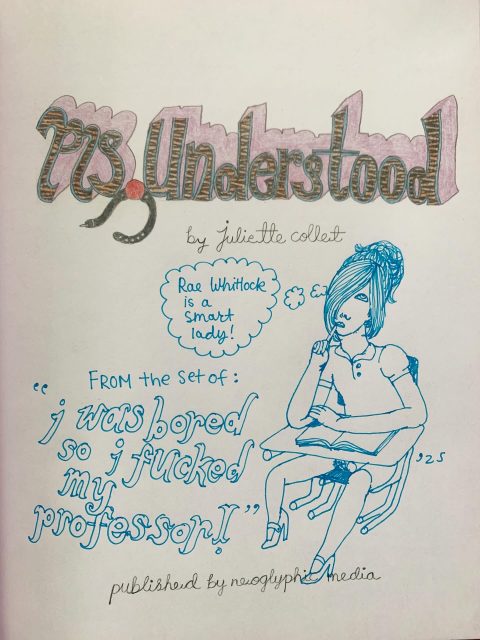
I think it was Cris from Lion’s Tooth who asked Collet a kind of unanswerable question. “How do you plan on making comics sustainable so you don’t end up leaving the subculture for more popular and lucrative disciplines?” Collet answered with a program of merch and books but I don’t think Cris was asking for a strategy, I think she was making a plea.
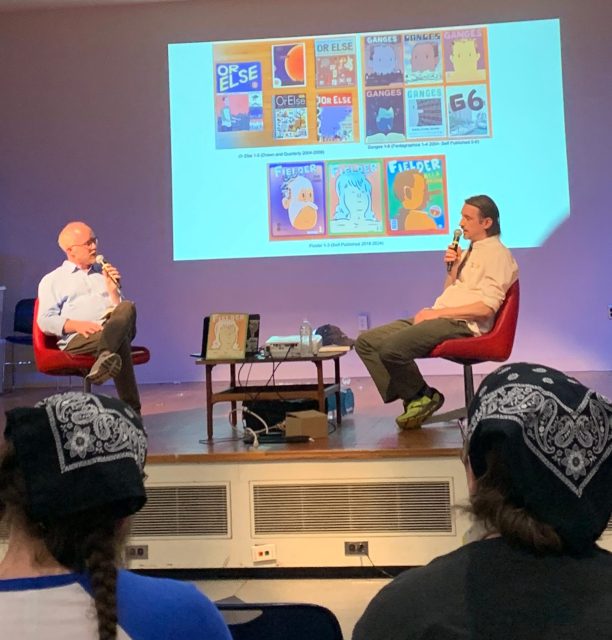
Coming back from lunch, I was about 10 minutes late to Thomas Campbell’s interview with Kevin Huizenga. Huizenga is a generous pontificate on creativity and process and he often talks with his eyes closed which gives him a fun mystique. He was talking about studying the postures of baseball players in order to draw them though he doesn’t like baseball, and admittedly doesn’t like sports at all. I heard him talk at Partners and Son about drawing golfers despite hating golf. Artists who don’t like sports, as common an archetype as they are, are rare where I come from. I taught at an art school during Super Bowl LII; my students were all climbing poles.
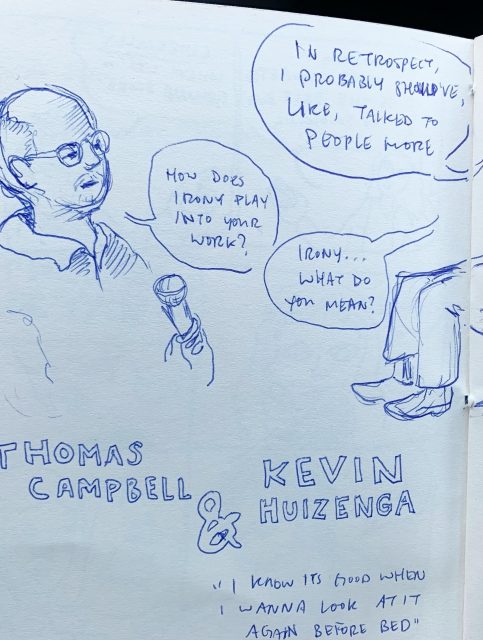
I was thinking, for one to devote - be it to drawing pictures of something one so dislikes - one must still be a devotee. I asked something like, “how many times do you choose to draw something you don’t like before you realize some part of you likes it? Maybe that’s why you’re drawing it? No one is forcing the subject matter on you after all.” Fiction writers often research ancillary topics because they’re narratively germane, but aren’t those surprise lessons among the spoils of the craft? I think it is a joy to allow the scope creep of our research topics guide us into new frontiers of fandom. He said something to the effect of, I guess we’ll see if I start liking sports. I know, I showed up late, asked an annoying question that was really an observation and only half remembered the answer. Don’t worry, my friend made fun of me for it later.
“If I want to go look at it before I go to bed, that’s a good sign” - Kevin Huizenga. I wrote that down while he was talking.
The crowd in the auditorium grew for Brian Baynes’ conversation with Tara Booth. Booth talked about what every artist wants to know about every other artist; money. She told everyone how much she got for her new D&Q book - which I won’t print but also I forgot. She told us what she got for her collaboration with a European fashion designer met by a vacuous silence following sharp inhales taken through the teeth of literally every person in the room. It was low, that’s what I’m saying. She also said the more popular her comics become the less she gets offers to do gig illustrations which she enjoys for the novelty and of course the income. If you’re reading this I think she still wants some work.
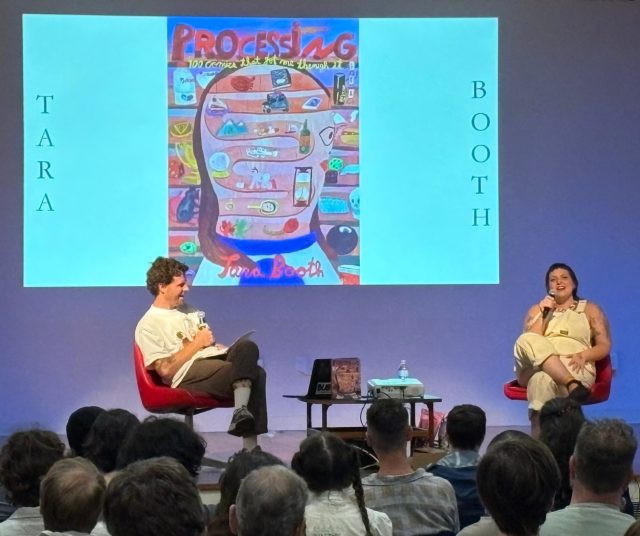
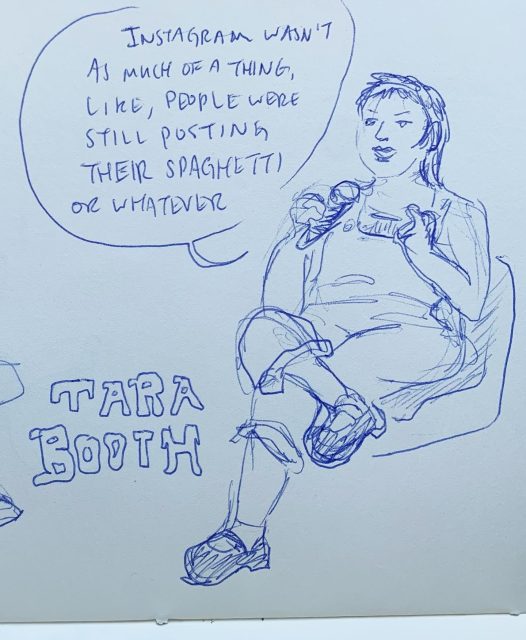
After Processing, D&Q wants a big ol’ graphic novel. Sorry, she didn’t say what it’s gonna be about but I’m hoping for some long form fiction. I wonder about the effects of prolonged auto bio cartooning on the artist as she matures. Fiction can allow an author to be honest and private and choose what characters do rather than pressuring her life to yield plot. I don’t know if Nocturne really happened or was made up, but Booth’s paintings are beautiful, single strokes of clothing never forget the anatomy underneath them. Her relative color, like in the glow of a tv screen or the desaturated bluing of skin underwater, nails both likeness and expression. She knows how to pull insight straight up through the gag and when she tells a story without words it's like a silent film. I’d be excited to see how this all plays out on the long haul with the intentionality of fiction is all.
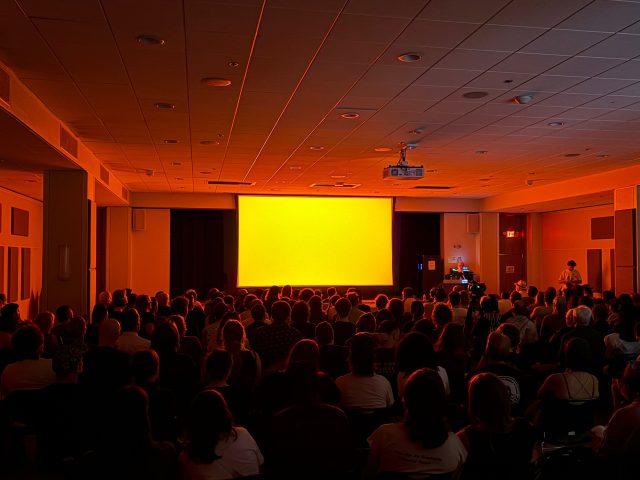
Then the crowd in the basement of the library grew even more for Charles Burns. Duh. I turned in my seat to see the auditorium at full capacity. Obviously these people did not show up for the free donuts. Burns’ set had a couple false starts that weren’t his fault. Dan Nadel was supposed to do the interview but his flight was cancelled, which Brian said was “through no fault of his own” which I would have assumed but for Brian’s need to say it. Anyways, Burns just went through his slides and talked on his own. Last minute changes keep things live. The first resting slide of Burns’ presentation was a bright red color block which saturated the auditorium. It was a cool effect. There were some kind of PA issues and Burns’ voice was too quiet. The audience kept calling “louder”, “more volume”, which reasonably started to get Burns a bit chuffed until someone cut the tension by yelling, “More red!” Everyone laughed, Burns got audible and we were on our way.
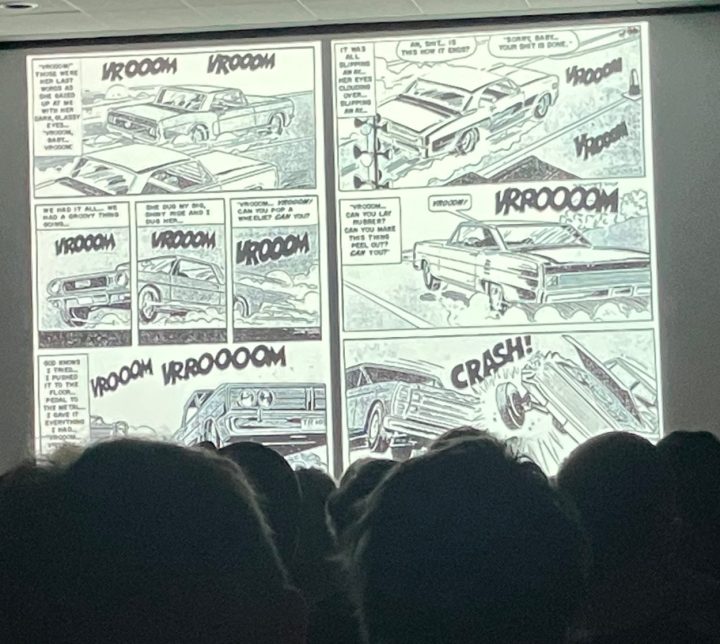
Charles Burns as a performer is kind of a tight shouldered natural; he’s funny and relaxed but doesn’t seem to want to be up there for too long. He read a short zine he made in France when a group of cartoonists challenged each other to draw the most frustrating of subject matter for most cartoonists: cars. The zine was a sexy free associative jumble of alluring car magazine copy with muscle cars flying through frames. I will forever hold the way he read out “vrooooom” as a sound byte in my head the way people save voicemails on their phones just to hear someone’s voice.
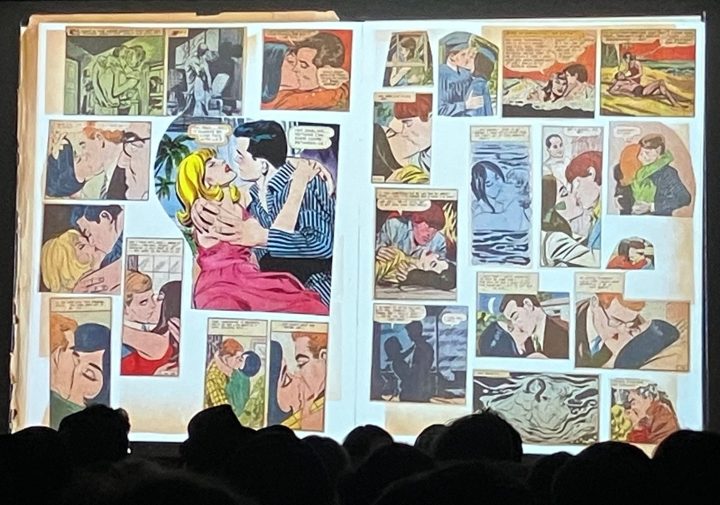
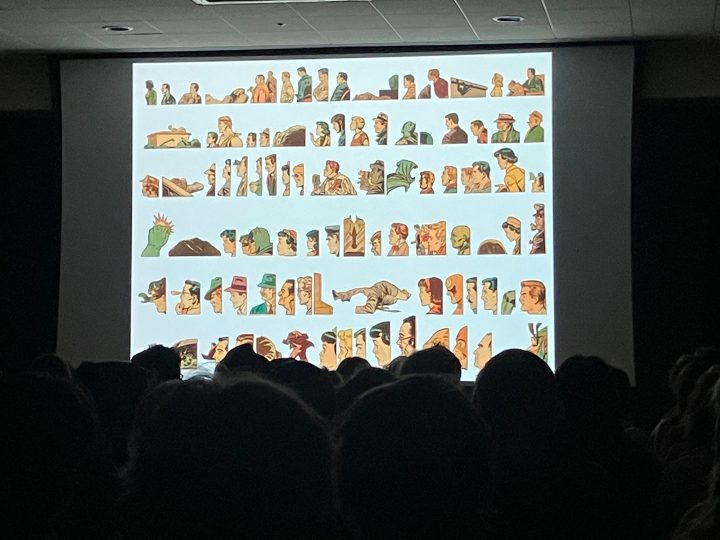
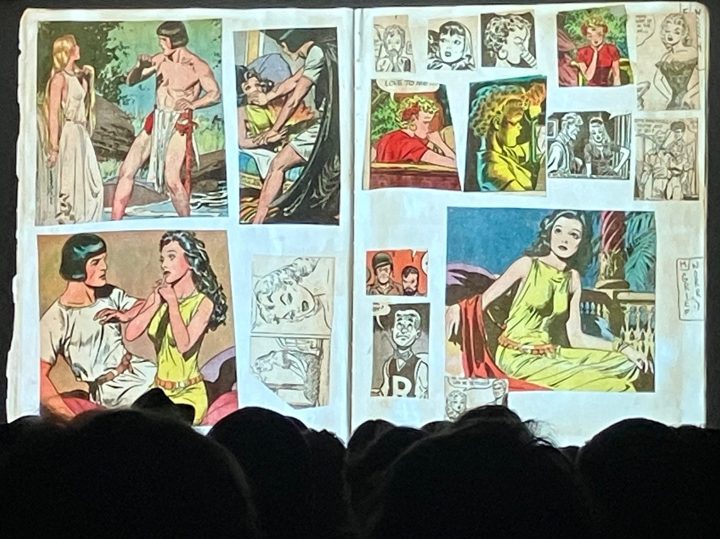
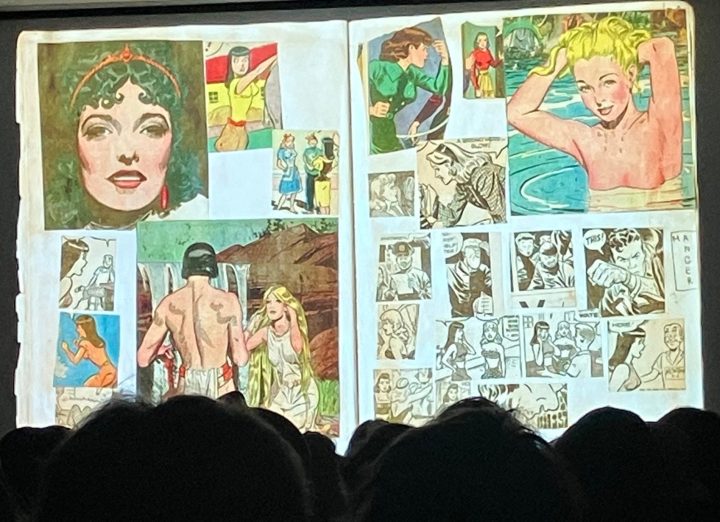
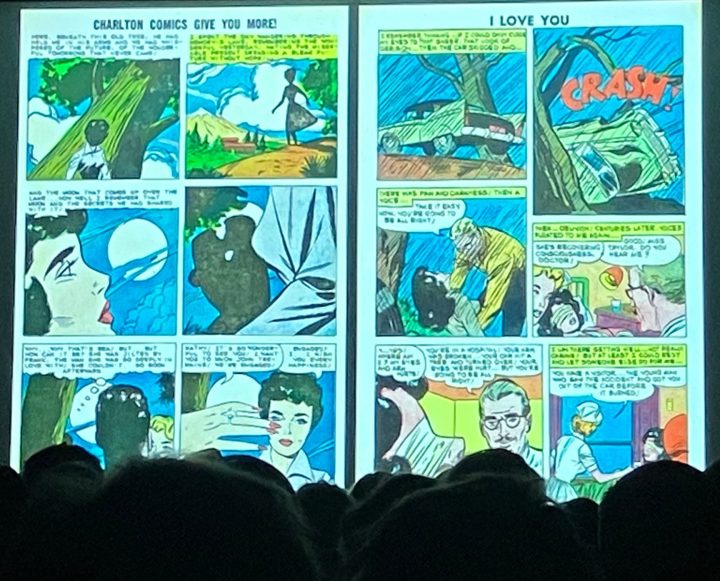
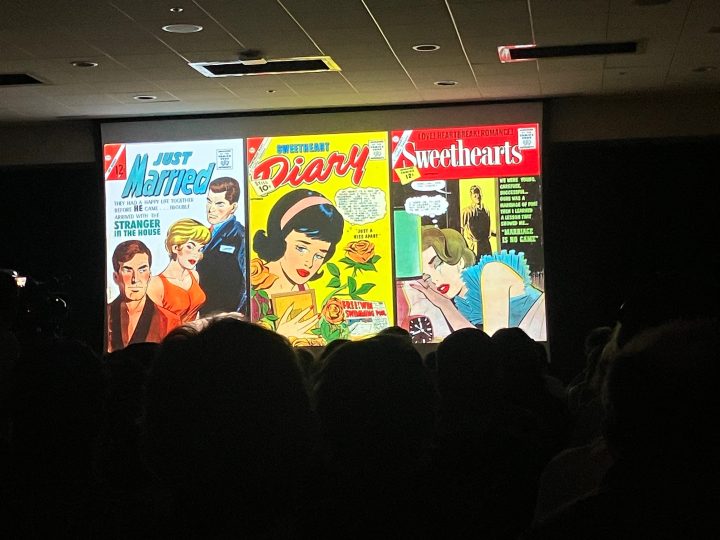
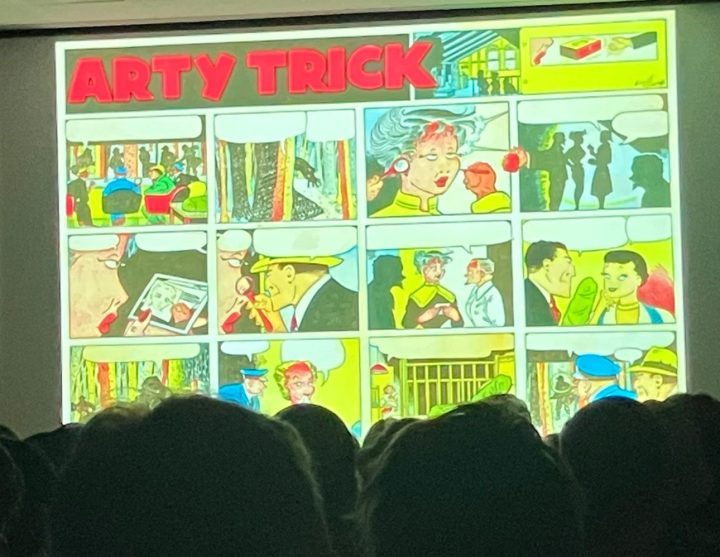
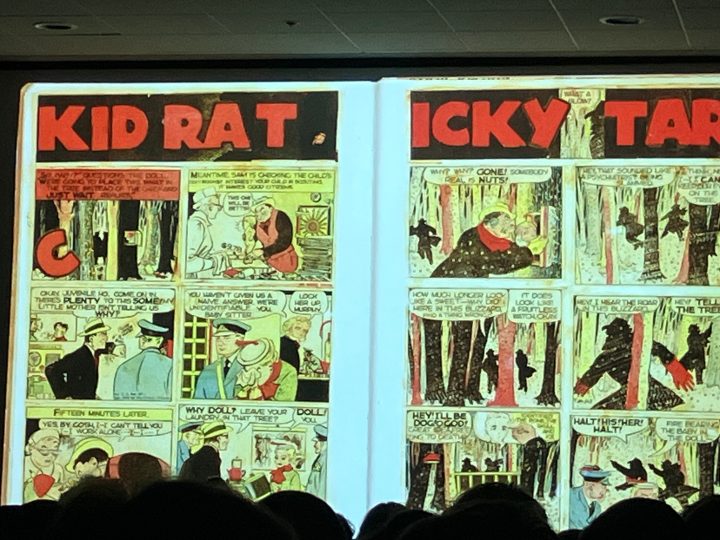
Burns showed his dad’s scrap books. They were full of clippings from newspaper comics. Mostly pretty ladies with some monsters and heroes. I think he said his dad was an engineer who really liked all the tools and techniques of drawing and art but didn’t care much for the creativity part. He did own a lot of cool pens and tools though. Burns’ dad was also a model train enthusiast; had a whole set up in the basement. Someone asked if he got to do fun model train stuff with his dad. Burns chuckled and said, “Oh no, that was a solitary thing for him, it was kinda, he’s happy down there, let him be.”
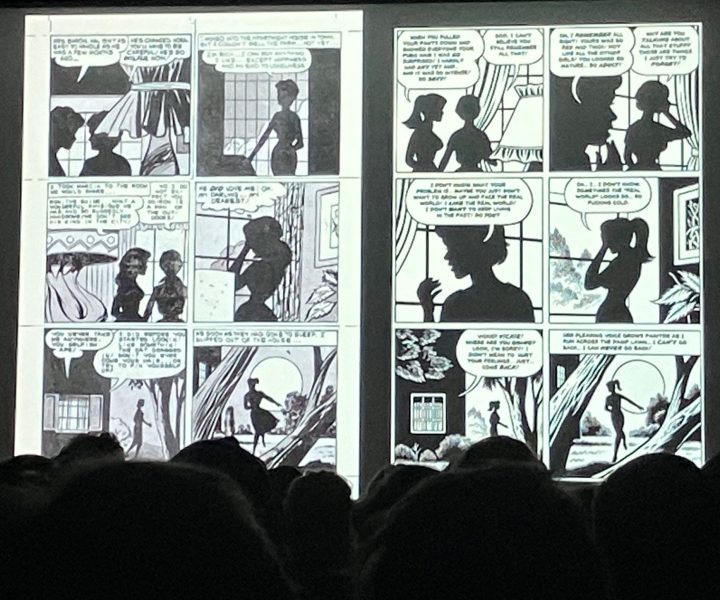
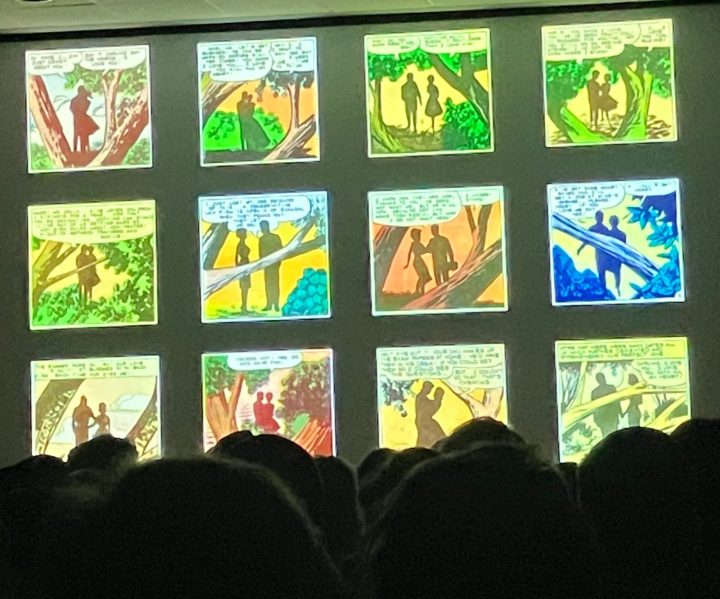
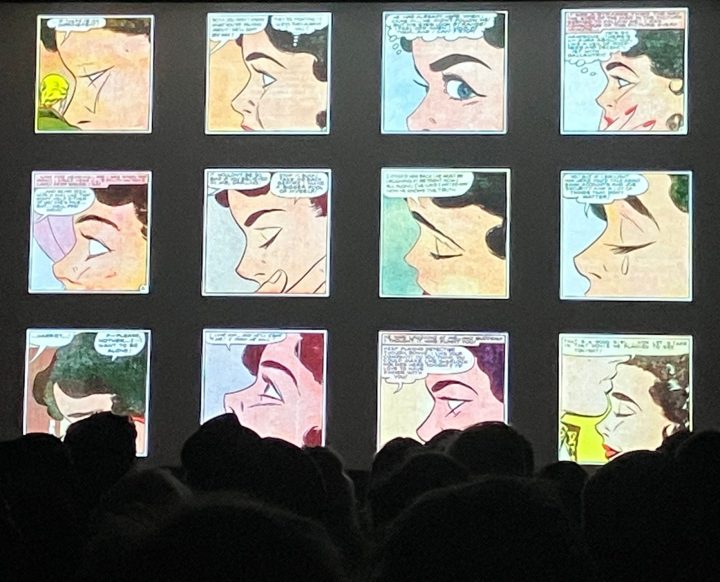
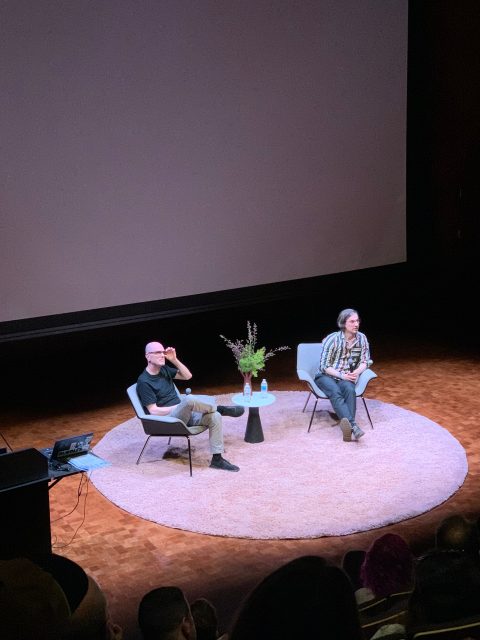
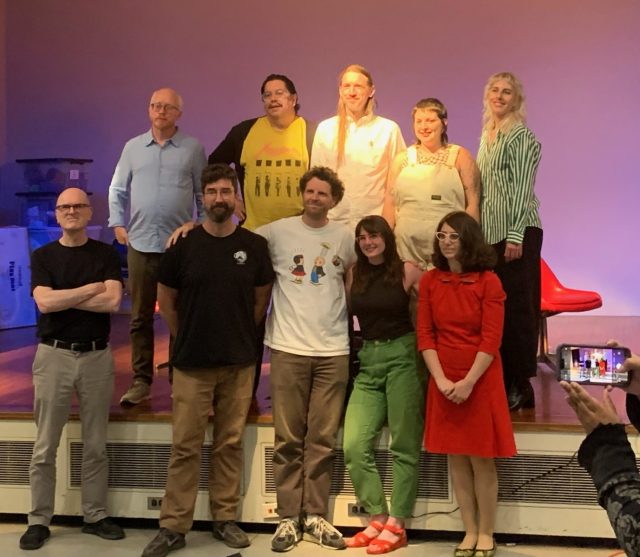
Saturday evening, the Richmond ICA screened two mail order 8mm horror films from Burns’ private collection. There was popcorn in tiny paper bags. Burns reminded us that they’re meant to be viewed in a living room or a backyard probably projected onto a bed sheet but this is an art festival so we had a theater and a Q&A with Dash Shaw. We watched I was a Teenage Werewolf and I was a Teenage Frankenstein. We were warned that the stories would be redundant. Teenage boy is betrayed by mentor and is turned/reanimated into a monster, teenage boy monster kills first teenage girl he finds, teenage boy monster seeks revenge on mentor, is or isn’t successful, is slain by mentor or sheriffs posse. I was surprised to be very frightened by the turn that I was a Teenage Frankenstein took in the end. I don’t care if this spoils it for you, you’ve had something like 50 years to watch this film. At the end of I was a Teenage Frankenstein, when the teenage boy Frankenstein Monster goes to kill his Dr Frankenstein creator for what he’s made him do, his move is instead to destroy himself as revenge. He throws himself against the electrical machinery or whatever sciency looking crap you use to reanimate teenage body parts, and electrocutes himself into un-animation. But then wouldn’t you know, the Dr Frankenstein creator just reanimates him again! Immortality as punishment! Like Cain or Melmoth. I didn’t think I’d be scared, but hey- I was scared. Finally, a near voiceless Brian Baynes thanked everyone and everyone thanked the near voiceless Brian Baynes and that was the end of Bubbles Con 2025. If Brian hasn’t yet learned the true cost of his own generosity and work ethic then there will probably be more Bubbles Cons in the future. I highly recommend you attend. Also Richmond VA has free buses. Like actually.