
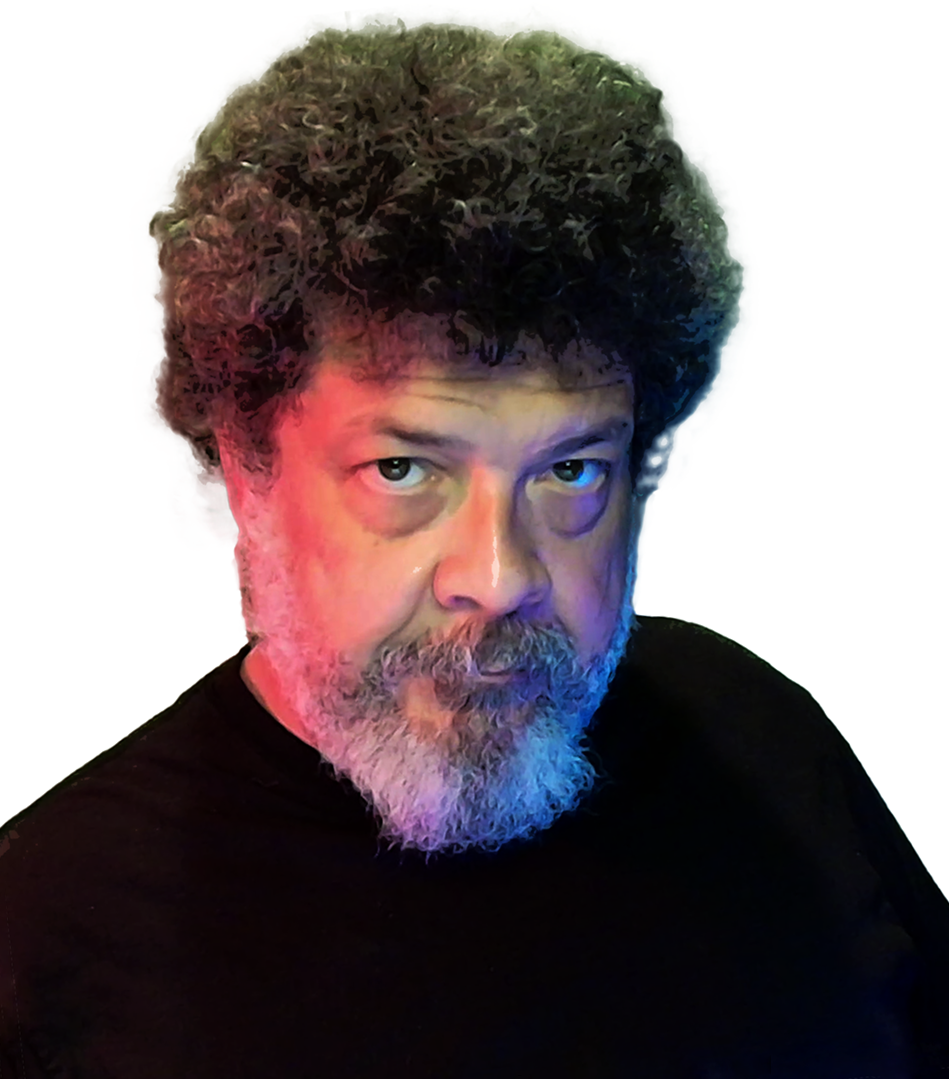
Even among multi-hyphenates, Kyle Baker stands apart. After earning his stripes at Marvel Comics in the early ‘80s, he moved on to writing and drawing graphic novels, earning acclaim for his early works The Cowboy Wally Show (Doubleday, 1988) and Why I Hate Saturn (Piranha Press, 1990). But that was just the start of an exceptional career. Never one to be pigeonholed, Baker has, over the past four decades, done pretty much everything. That’s not hyperbole. He self-published his own books while simultaneously working for mainstream comics publishers. He’s done illustration and fine art work. He’s been a professor and lecturer. He’s contracted for Hollywood studios and television networks. Baker has done pretty much anything an artist can earn money from, and most likely won an award or two in the process.
There simply isn’t enough space on the Internet to talk through the entirety of Baker’s career, but I spoke with him over Zoom about a small piece of what he’s been up to in the 25 years since his last TCJ interview, along with his feelings about the changing comics industry, his lack of fear of AI, how his future might lie in greeting cards, and much, much more. — Jason Bergman
JASON BERGMAN: It's really hard to know where to start. You've done so much work, and your last interview with The Comics Journal was 25 years ago!
KYLE BAKER: Yeah, yeah.
When I was doing my background research for this interview I put together a timeline of all your various jobs, and I'm pretty sure that if there is a way for an artist to make a living you have done it.
[Laughs] Yeah, that’s about right.
So it's been 25 years, and I'd like to try and connect the dots since then, but before we even get to that, how much of your work these days is comics?
Well it depends. I mean, there’s the stuff I do for me. I guess the paying work if that's what you're asking, that would be non-comics. Like I do comics, but they're mine. I do Marvel, or DC, or I don’t know, Archie, like once in a million years. I'm thinking about doing Flash Gordon, but you know, I'm moving on that about as swiftly as I did on this interview.1 [Laughs]. Not that it isn’t where my head is at, because I actually do spend most of my time doing comics, but they're my comics. So I get paid when I get paid or whatever if I’m late. It’s a different thing.
Do you still do illustration work?
I do, I do. And that's the thing. I try to get one book done a year, and that's because once or twice a year somebody will call offering me money. I have to actually take it, you know, because I got a family, and college is coming up. If somebody calls me up and says, “You want to do the Black Panther?” Well, I guess I should do the Black Panther, but I'd rather not. I mean I'm not gonna say no. I recently did a job for Court TV, because the art director was a guy who used to work for me. He was my assistant animator like 20, 25, 30 years ago and he called me up, he was in a crunch on this Court TV show, and he was like, “Hey I need somebody.” So because we had a relationship and also I really am enjoying motion graphics lately for some bizarre reason.
I believe I've seen that clip.
Oh you might have, yeah.
You did the reenactment on one of those Court TV murder shows?
Yeah, yeah, because they don't have any footage of this stuff. So yeah I had them interrogating the kids because I guess it's illegal to photograph kids being interrogated.
So did you like, get reference? Or did you just—
Yeah, we had photos of the people, they just couldn't be in the interrogation room. But we had pictures of the kids. They were like at Christmas parties and stuff with big smiles on their faces, you know what I'm saying. Then I had pictures of the cops and I had to sort of assemble it. But anyway, that one I did just because we had a relationship. I like the guy and it was fun to do. I find this amusing — I don't know why, but when I do a TV show, nobody in my family cares. That thing was on TV. I told everybody, all of my friends and family. I got a thing coming on TV! And I ended up watching it literally in a closet all alone by myself. No one cares! [Laughs].
I don't know why. It was a pretty sad story, by the way, I mean, the guy got away with murder.
Sure, sure. None of those stories have happy endings.
Yeah, so I get why nobody in my family wanted to watch it. My mother finally saw it months later because I forced her to. But anyway, the other job I did that I liked was for a documentary about the Underground Railroad. I took the job specifically because I wanted to learn how to do 3D animated water, but stylized to look like a drawing. The assignment was a boat on the ocean, and again, motion graphics! One thing I like about motion graphics is that they don't have a lot of animation. With real animation sometimes you'll just do the same shot like a thousand times because people notice if it jiggles or if it wiggles. But when you're doing a motion graphic, nobody's expecting realistic movement. You're just kind of sliding the images. You know what I mean? So it's a little more relaxing. It's more like a still image with just a little bit of movement added. Years ago I used to like storyboards because you didn't have to finish them. You don't have to have finished inks, you don’t have to worry about how many hairs are on the guy when you're doing the finishes. The licensing guys, they'll sit down and count the hairs on the head and they're like, “Archie has three freckles, not four freckles.” You know all that stuff that'll drive you crazy. But if you're doing a storyboard, you just kind of rough it out and send it. So that's a fun job. But this is similar to that, in that with motion graphics, they just shoot the painting and do a little bit of animation. So it's not like anybody's really screwing around with it. I like it, it's relaxing.
So that other one was, like I said, a boat, because it was a slavery thing. This guy had escaped to Canada I think? I can’t remember now. But there was another shot inside the slave ship, panning through, seeing all the people chained up inside the boat. Sometimes I'll take a job just because I really would like to try and figure out how to do that. So that one was a challenge. I had already done a similar thing in Nat Turner with the slave ship, so that’s obviously how I got the job. But the slave ship in Nat Turner, the same problem, is that there's no lights in the hold of the ship and it's black people sitting in the dark [laughs]. And then they’re naked, so you're panning, but you got to keep your eyes open to make sure that nothing sneaks in that you don't want to see. You can't be accidentally looking up somebody's crotch or something. [Laughs]. It’s a technical thing. But I enjoyed doing it and I wasn't in the room much because the boat was 3D. So there's a boat, like a model boat, which I downloaded off the internet, and then like I said, I figured out how to do 3D water. And then you set up the first pose, the first position of the boat and the last position of the boat, the first position of the camera and the last position of the camera. They had asked for like two seconds and well, I set the computer for 20 seconds, and then I just walked out. It probably took like 10 hours to render the thing, but I wasn't there. So my total contribution to the thing is like 15 minutes.
Hopefully that doesn't get back to them.
No, no. No, here's why I do it that way. It's the same thing with Court TV. Those kinds of jobs, they nitpick you to death. Change this, change that, and if you're doing it by hand then you have to sit there and if they're like, “I don't like his shoes,” then I got to go in and hand draw some guy’s shoes 2,000 times. Whereas if it's the computer … like it was raining. I put in rain and they didn't like the rain. I said no problem, I push a button, the rain's gone. They're like, “Add his daughter,” and I put the daughter in there, and they're like, “I don't like the daughter.” They would keep changing stuff, moving stuff, because that's how they are in TV. They don't care that there's a lot of work involved. So I like it when you can just push a button and change the entire thing. But again with the computer, I generated 20 seconds, they only wanted two. So there's a lot of weird stuff. It's just like with AI where you'll see a lot of weird stuff going on. But all you got to do is find like two seconds out of that 20 seconds. Does that make sense? Like I had heard about this – it was a terrible commercial – this AI Santa Claus commercial that Coca-Cola did, and they were saying they had to render out hours and hours of footage to get 20 seconds of terrible stuff. And that's kind of how I work [laughs]. So I totally get that! Because you don't have to be in the room.
That idea of just being able to generate tons and tons and tons and tons of stuff and then get it down to … like, I write — and this isn't AI or anything — but I write probably twice as much as I actually publish.
You’ve published a lot!
No, no, I'm saying if the book is a hundred pages. I write 200 pages and then cut out the 100 worst pages. And that way you got something that really moves, you know. That’s got no fat in it.
When did you learn that skill?
Hollywood, probably. I mean I got into Hollywood pretty young. I think that was the first time. I still do everything that way. I think that's the same with the comics. I draw the pictures out of order. I draw one picture at a time, on separate pieces of paper. And I move them around because that's how we do storyboards and how we make movies. You're always just chopping stuff up and moving it around.
Your last interview with the Journal was in 2000-ish which was just after your Hollywood years, right?
Yeah, I still jump in and out. I mean I still do it, but I don't live there.
But that’s when you were living there and had the office in which you did nothing.2 The books that came out of that, your Vertigo era. Were all those influenced by your Hollywood years?
Yeah, I mean the whole point of most of that stuff, when you're working on Warner Brothers, you're working on DC, that you're generating stuff for Warner Brothers. I mean, it shouldn't come as a shock, but there's no money in comics. I'm saying nobody reads Aquaman. Nobody ever read Aquaman. They keep Aquaman around because they come up with great ideas for movies and toys, and you know that your job is they don't give a shit about the comic books.
Even at Vertigo?
Yeah, I mean, well, I wasn't Vertigo. They had to put me somewhere. My deal was different.
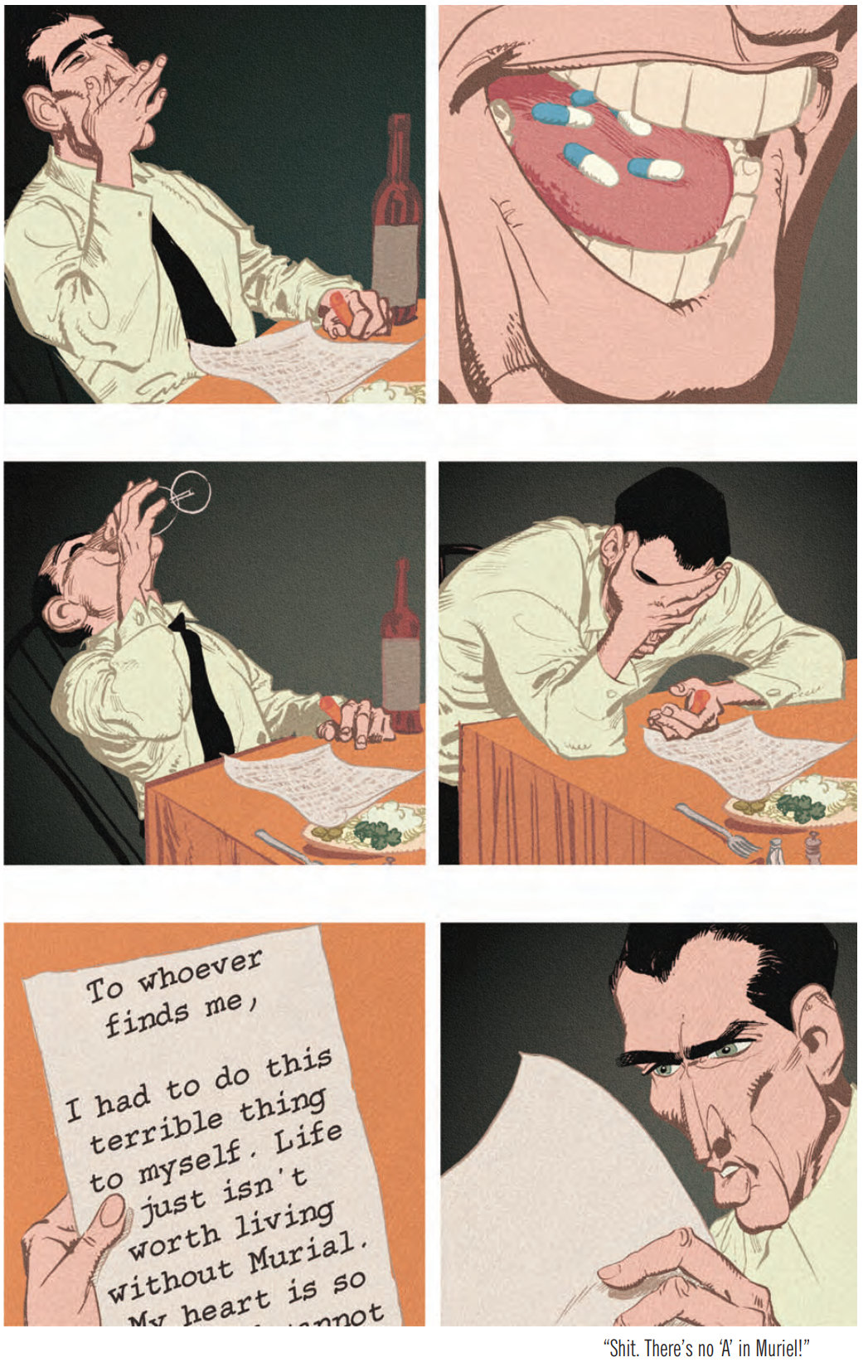
It did always seem a little unusual for you to have been part of Vertigo. That label started as the British invasion of American comics and then you come along with You Are Here, I think was the first one?
What had happened was that the first book I did was at Doubleday and then DC. When I started at Marvel, I wanted to be funny. I just always wanted to be funny and then in the ‘80s and before that, the rich cartoonists were in the newspaper, or in the magazines like Charles Addams, you know, kind of classy. So that was what you were looking at if you wanted to make it. And the guys at Marvel were the guys who couldn't sell a newspaper strip, basically. [Laughs] I'm serious! Not me, but slightly after me, I would say, are the first generation of guys that wanted to be in the comic book business. Everybody I met were guys that couldn't make it anywhere else. Even somebody like me, or Bill Sienkiewicz, Bernie Wrightson. All of us were trying to get out.
Nobody stayed in comics. And it was just because comics are known to be a big ripoff. Cartooning is the only business I know of where the winners all starve. So you're not like, “Yay, I'm gonna I'm gonna be like Jack Kirby! I'm gonna die broke!” Nobody is looking at comics that way ever.
Which guys were telling it to you straight in those days?
I'm just saying you knew. You knew. My dad was in advertising. So that's why I knew this world, you know, fifth avenue, publishing. My first thing I did, I illustrated one of his ads. It was in Parade magazine, that kind of world. And Sunday papers and things like that. Print was a way to make a living back then, so my dad was doing that. So when I was like, “Yeah, I’m thinking of doing comic books.” He was like, “Oh don't you know? You don't want to do that.” Because you didn't make any money. I was into Disney as a kid and then the more I read, I was like, oh Disney didn't actually draw these things. And the guys who drew them, it didn't work out too good for. Like again, you don't want to be the guy that drew Mickey Mouse. In what business can you say that? The guy that drew Mickey Mouse, the guy that drew Superman? [Laughs] You would think that if anybody was gonna get taken care of it would be those guys. You know going in they didn't pay the guy that drew Mickey Mouse. To this day! You know going in that they didn't pay Scarlett Johansson. They didn't pay the star of the biggest movie of all time. They are not going to pay you. [Laughs] “Oh, we'll make an exception for Kyle.” They fucked Winnie the Pooh!3
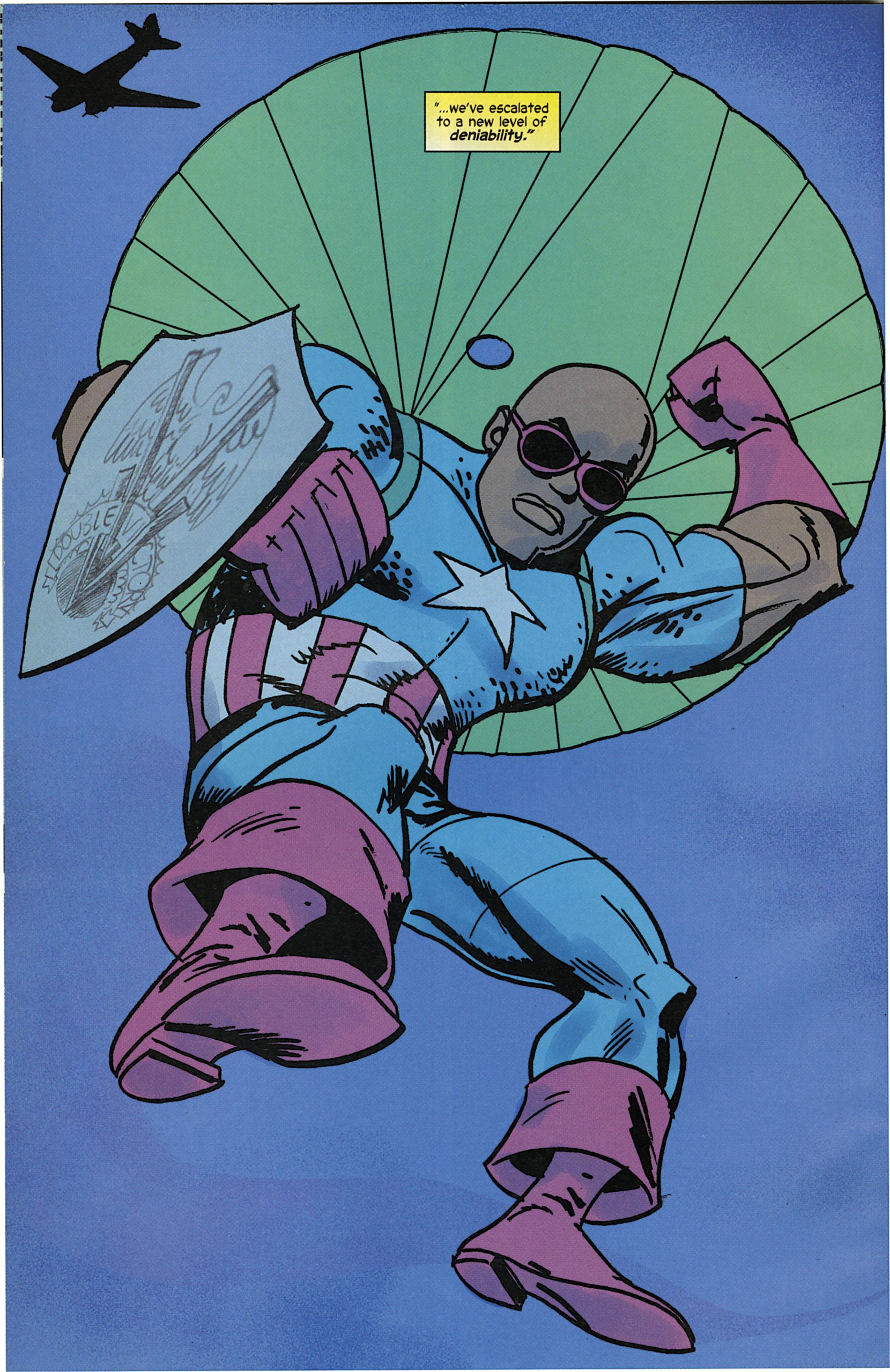
I wasn't going to, but now I guess I have to ask … I saw a trailer for the next Captain America movie and there's a character of yours in that.4
You know, it’s Marvel. No, I don't have anything to do with that. I stay out of it. That book was done as a favor for my friend Bob Morales. Again, there's always some weird reason for me to do these jobs. [Laughs]
Are you going to get an invite to the premiere? Or I guess be listed in the thank you card in the credits?
I don't care. [Laughs] Can you eat a thank-you card? Is my kid gonna pay for college with the thank-you card? Will my doctor take that? “You got a thousand dollars?” “No, I was in the thank-you card!” I don't give a shit! My family was buying crap at the mall that’s got my art on it. I'm like, “Don't!” You're gonna cost me money now on something I don't make money on.
But you do own a lot of your work now.
I own all of my work, except for those stupid characters. Yeah, that's why I don't pay attention to that stuff. Because there's nothing in it for me. That's what I'm saying.
Do you own the Vertigo books that you did?
I own everything. Yeah, yeah. They’re not Vertigo books anymore, they’re my books.
I do want to ask about those Vertigo titles, were those your first steps into doing digital art? That was fairly early for that sort of thing.
I’m trying to remember.
That would be You Are Here, I Die at Midnight, King David …
Yeah. Why I Hate Saturn was the first computer digital lettering. I can't remember what year that was. 1990 or something like that.
The original Why I Hate Saturn release was, like 1990, yeah.
Yeah, so that was digital lettering. Again, at that time I was not that focused on comics. I came out of Milton Glaser Studio. It was my first job coming out of college. He was an instructor at college, at SVA, so I was working there, and like I said, my dad was in advertising. So I'm just used to that world of dealing with type. Back then we used to glue it on boards, you know with the rubber cement and razor blades and all that stuff and overlays. You have what they call Rubylith. I'm not even gonna explain what Rubylith is. Do you know Rubylith?
I have no idea what that is.
Yeah, it's a long story. But yeah things like that and waxers and artographs and all that was the world I was excited by. I can't remember the question now, what was it?
Digital art?
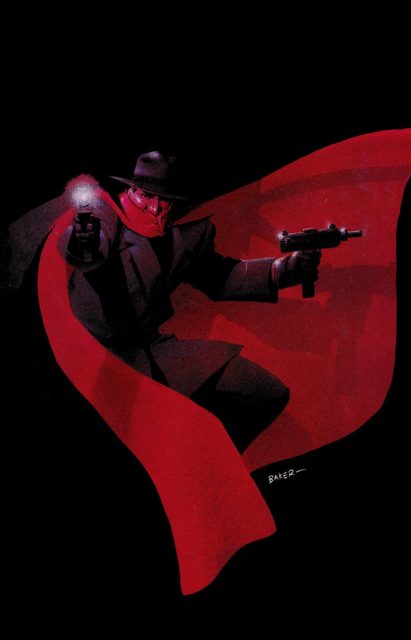
Oh yeah. So again, I was always used to those kinds of processes. Like when I was working on The Shadow and things like that, I used to work with Murphy Anderson who was the color separator at the time. I can't remember the name of the company he was working for, but he would come by and do the color separations for these comics. And I would give them these crazy overlays and we'd sit down and we'd work out these instructions for how we were gonna get these cool airbrush effects or knocking out type. Things that are much easier now. And again, much easier with computers. I'm looking at that poster behind you.5 You had a painting that you had to combine with type which had to combine with this 3D logo. And it was probably some kind of goofy photographic process where guys are printing out photos and cutting them out and putting them onto some kind of board. I used to love that kind of crazy stuff.
We were talking earlier about 3D rendering. You seem to have been very open to new processes, new technologies, in a way I would say many people of your generation of creators were not.
You mean all the people that are complaining now that the computers have put them out of work? Yeah, I see them every day on the internet, bitching and moaning. What am I gonna say? [Laughs]
But you embraced it very early on, is what I'm saying.
I'm a publisher. At the end of the day, I look at it as, I'm the boss. I'm not the employee. This is my company. I live in Queens. We have these you know, small mom-and-pop shops and 20, 30, 40 years ago, you knew it was a mom-and-pop shop and not part of a large chain because the graphics were amateur. They had to get somebody's kid, their neighbor's kid, to do the sign. It was hand-painted, and the menus were typed, and you knew it was a small operation. Now you go into any place and they've got professional signage, they've got a chatbot answering the phone. They got a website. You know what I'm saying? So you can actually compete. I can put out a book that doesn't look much worse than anybody else's book. Like when I make cartoons, when I make animation. I use computer music, because I don't have money to pay a musician. It's never gonna happen. I can't license a Beatles song. It's not gonna happen. You're either gonna get me with no music, me with public domain music, or me with computer generated music. But at least I can still show up, whereas 20, 30 years ago you were just stuck. You couldn't possibly do a book by yourself and get it distributed or market things. Now you can actually have a computer do your marketing or something.
As far as I can tell you started self-publishing in 2003.
Yeah, yeah.
Right after the Vertigo stuff. You went straight into self-publishing.
We were talking about Vertigo! Sorry.
That’s okay!
So what happened at Vertigo. I did a book for Doubleday because there was a gold rush right after Maus. Maus and Dark Knight Returns came out and sold millions of copies, and comics had never sold millions of copies.
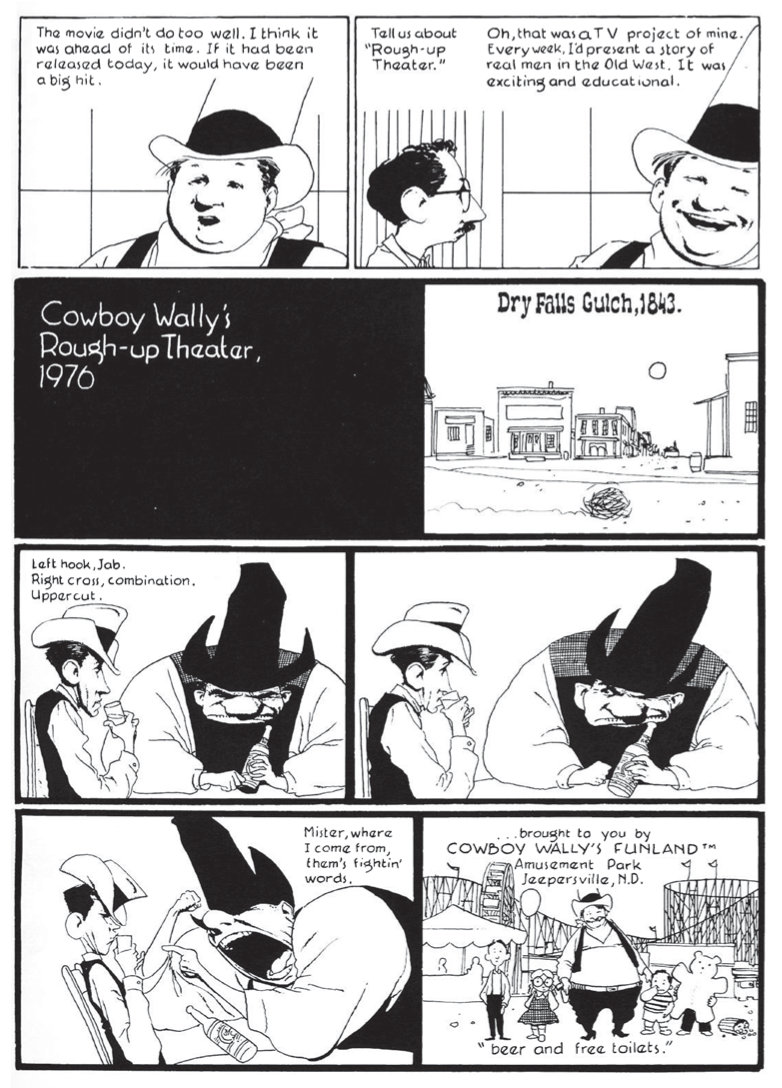
And your response to that was The Cowboy Wally Show?
What happened was everybody was trying to get a comic book published. Doubleday and other companies, Random House and stuff were starting comic book imprints. Doubleday didn't have any kind of money though. I was still trying to break into the funny papers and I had been turned down by all the funny paper syndicates, you know King Features. So I had this book and I was going to publish it myself because I couldn't get it sold, and my friend Ron Fontes who was working in the [Marvel] bullpen at the time was at a party with an editor for Doubleday and they were saying, “We're trying to get into comics but we can't afford any cartoons.” And he said, “There's this kid who's hanging around the bullpen. He can't sell his cartoon. You could probably get him cheap.” And so they did. They got me cheap. And that's how that's how that ended up happening.
You were how old at that point?
20, 21? I was in college, I think.
So you're just this kid. Were you still an intern at Marvel at that point, or were you actually —
No, I was doing Transformers. Spider-Man and Transformers. And I took a pay cut to do this. I was drawing Avengers and stuff. Dick Tracy. Yeah, I was doing stuff.
So you showed The Cowboy Wally Show to Doubleday, who wanted to do comics because of Maus and Dark Knight Returns.
Yeah, it was done and it was available. They were like, “Yeah, okay.” And I mean it wasn't as done as I made it out to be. I had like 20 pages. But you know, they got it. Developing something takes a while. It's a bird in the hand, you know. And they only had five grand. But I did it because I wanted my name above the title. I knew what happened to old Marvel cartoonists. I met them. My first week at Marvel, Wally Wood killed himself. Again, these are the winners. The winners. It's not the guys that didn't make it, these are the top of the heap, and they're blowing their brains out and living in the park and shit like that. I'm not staying. I can't stay.
So you learned publishing? You were prepared to self-publish at that age?
That's what I'm saying! The only guy that gets the money is the publisher. That's who gets paid! I just watched this documentary about Lisa Frank. So I'm into, like, licensing and Sanrio. It comes from being in comics and working for Disney and stuff. So I'm really into that whole licensing thing, Garfield and whatnot. So I'm watching this Lisa Frank show, and it's the same story! She doesn't do the art, she doesn't pay the workers. It's the same every single time. I don't get it. I mean I do get it, but I don't get why people go for it.
The Cowboy Wally Show was picked up by Doubleday, so it took you a little longer, but you eventually went into self-publishing in 2003 and published Nat Turner. Which then got picked up later for wider distribution.
Yeah, well for me what usually happens is if it works, I can't handle the demand. It gets to a point where I'm not doing books anymore. I'm not drawing anything anymore because I'm filling orders or I'm doing something else.
Your work has always been very silly, but then your first self-published work was the polar opposite. What made you decide to go to do that, especially as your first self-published book?
The thing about DC that I like, and same thing with Marvel, is they have deep pockets, and they're not in the book business. So you can try things, you know, you can do really weird stuff like King David or something because they don't care. You're not gonna put them out of business. They're not like, “Hey, everything's riding on this King David book.” So they would just let me try different things. Sometimes they didn't work, sometimes they weren't profitable because I tried things. I did some really expensive color books over there, glossy paper and stuff. I'm still trying to figure out how to put those back in print because I gotta do much crappier paper or something. Or charge way too much for it. I’ll figure it out. But they don't care, so you could just try experimental things. But doing my own book, I said, “Well this thing has to make money.” Because you know, I got nothing else going on. This is my job now. So my sister was a librarian and she said at the time — this is I guess 20, 30 years ago — that comic books had been the most stolen books at her library. And I said, “Well, are they educational comics?” She says, no, no, they're just regular Archie comics, or you know Mickey Mouse or whatever. And I said, “Well, do they have educational comics?” And she said, “Not really, but you know, if somebody did them I would probably go for it. I would buy them.” And I was like, I'll do educational comic books because I felt I wouldn't be competing with anybody. As a small guy, that's important to me. That's why you'll never see me make up a superhero. Like what's the point? They’ll kill me. [Laughs] No, I'm serious! Unless it's super niche or something.
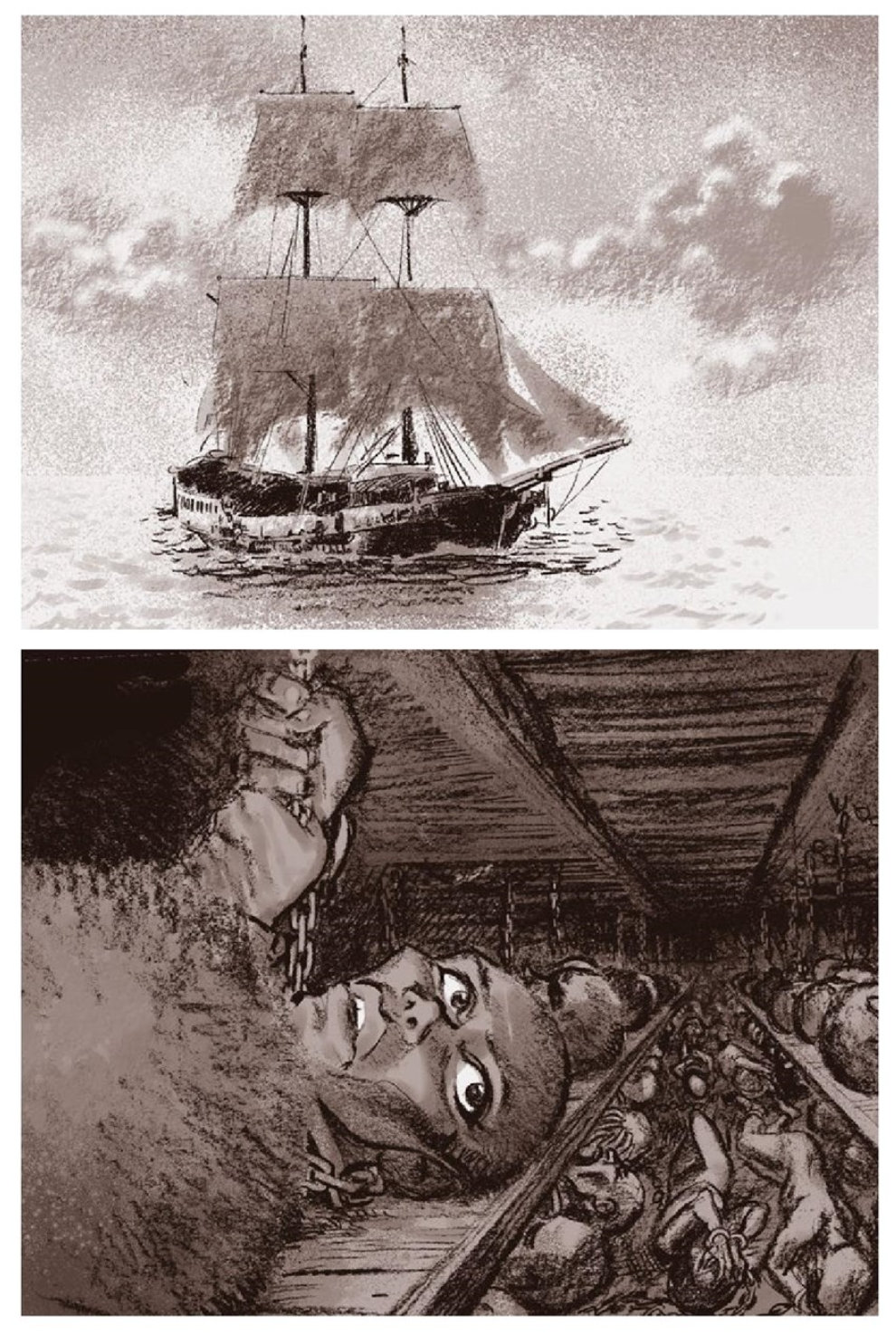
So you did Nat Turner which was wildly successful. And then I guess you had a couple of other similar biographical works that never went anywhere. I found a reference to an Obama biography?
Oh, that, yeah that I did with HarperCollins. That was because of the stock market crash. The entire publishing business died in one day in like, 2008, 2009. Random House and everybody just fired everybody. So yeah, I was doing a book originally, it was gonna be about Toussaint Louverture, because there was a movie being developed by Danny Glover, and he was getting half the money from Venezuela and then the other half from a Hollywood studio. And I guess he was gonna shoot it in Venezuela instead of shooting in Haiti because they don't have infrastructure. But anyway, it was news and so they were gonna try and cash in on that. Because I guess that's how they make books. [They] figure out what's happening in two years and ride on that. So at some point the funding fell apart. So they said, “Stop working on that, now you're doing a book about Obama.” So then I did a book about Obama. And then when everybody got fired, there was a moment where I still had a contract, but I had no editor. There was just a couple of months where nobody knew who I was working for.
Did you complete the book?
I guess there's a book out there, yeah. It just never got published, because then after the book was done, they crunched the numbers, which is something that usually gets done earlier in the process, and they realized, my gosh, there were other people developing Obama comic books that had already come out. Like I said, it was very disorganized at the time because the original editor was gone and they replaced her with somebody else. Then they're like, “Okay, this is your book now and you're gonna do Obama instead.” It was just that thing of too many people were moving around and it just hadn't occurred to anybody that they weren't the first guy to do an Obama comic book. I don't know how they do it, they feel out the stores to figure out how many they can reasonably expect to sell, and then the numbers came back and they were like, “We can't sell any!” So they paid me. I did the book and it never came out. So that was that story. [Laughs]
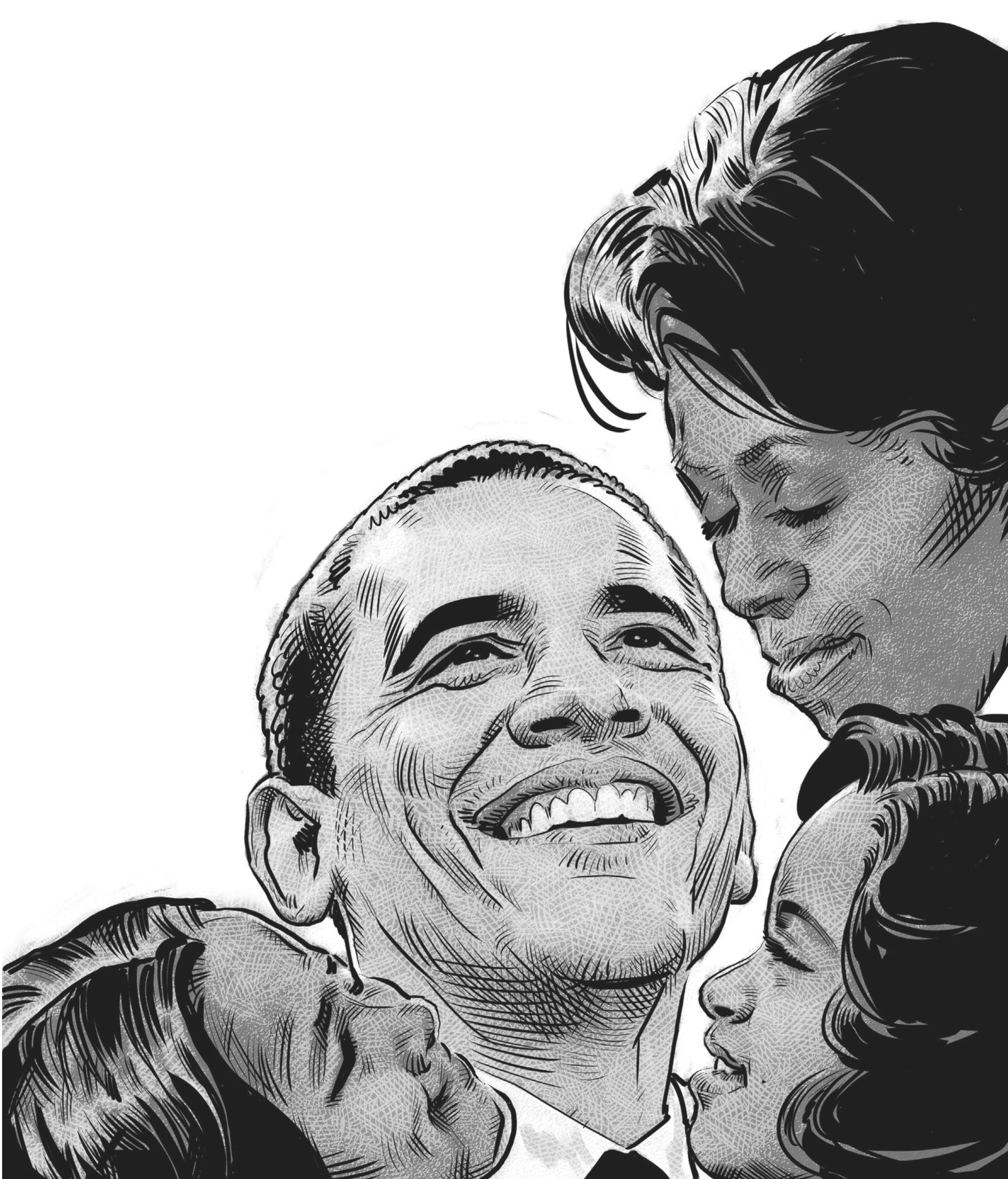
I'm guessing you don't own that one or else we would have seen it by now.
No, no, I own it! It wasn't a very good book. My issue with the book was I based it on his two autobiographies, and the problem with the guy is that he has no conflict. He's just gone from success to success. His father left, but he doesn't seem too busted up about it, so it's not like you can do anything with that. There's no drama. Like Nat Turner, there's a drama. King David, there's a drama. I want to someday do Joan of Arc because there's drama. There's a conflict. He just had success after success. He went to Harvard and he was successful at Harvard and then he was celebrated there and then he goes on to local politics where he becomes celebrated, and then he goes to the Senate and he's celebrated. And then he runs for president, wins the first time out of the gate. Gets a second term. No problems! [Laughs]
At the same time you're doing Nat Turner you're also doing your work for hire for DC in the form of Plastic Man, which is just completely batshit crazy. Where did that even come from?
I had been doing my own stuff and at some point they said, “We should get Kyle to do a DC character.” But the way they do it is, “We should get Kyle do a DC character, but not any of the good ones.” [Laughs] “You can do any character, but not Batman or Superman, or Aquaman, or The Flash, or Wonder Woman.”
I mean, would you have even wanted any of those?
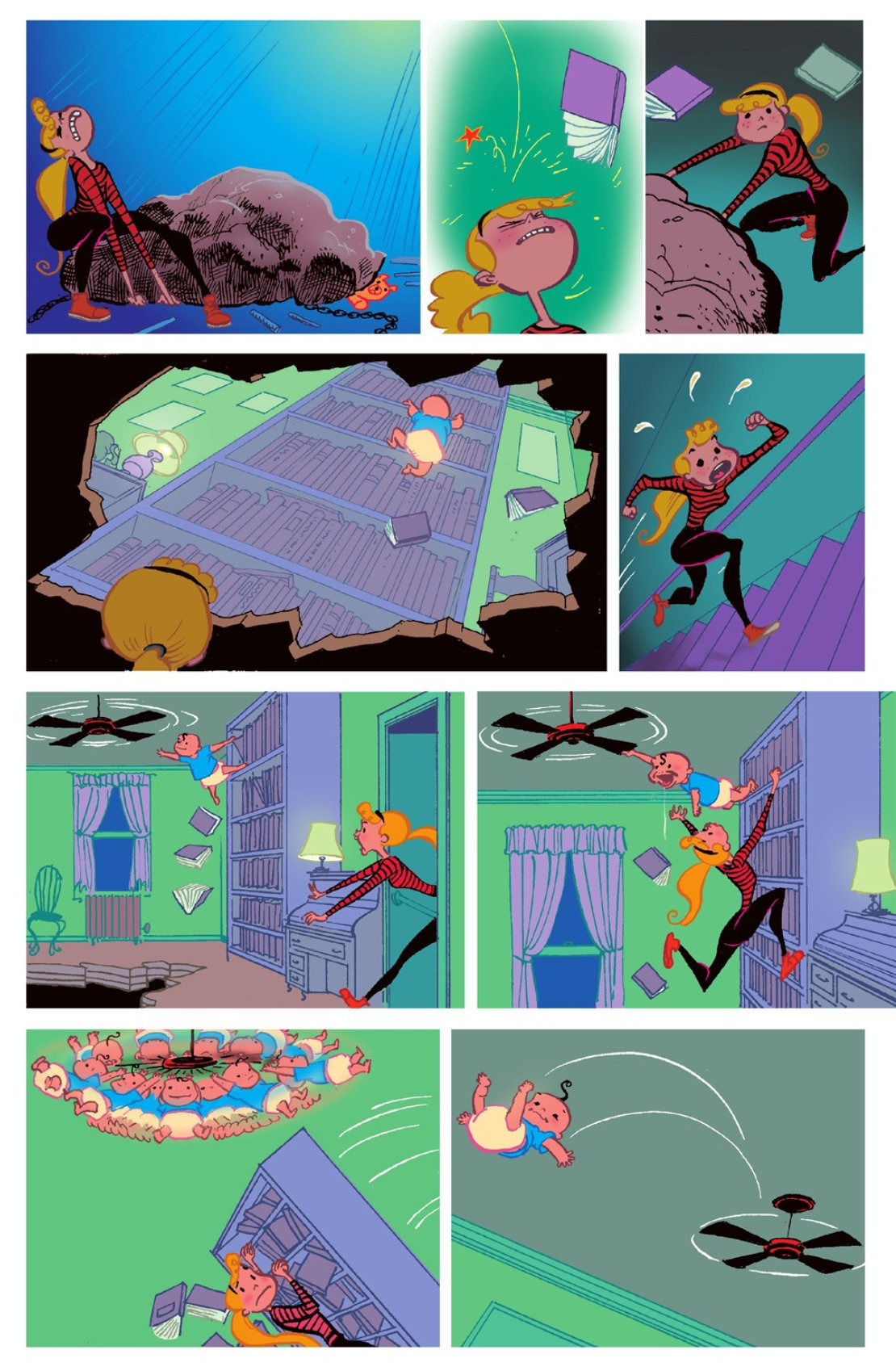
I would have loved to have done Superman!
Well, you did do Superman. You probably did one of the best Superman stories ever written.6
Superbaby, yeah. I wanted to do sequels to that too. That was pitched as a series. They just did not pick it up. The next issue was baby Lex Luthor making things out of Legos [Laughs]. Never happened.
But you did get to do Plastic Man.
So yeah, Plastic Man. I had a brand new kid and I figured it was steady or something. I don't know what I was thinking. They were like, “You should do The Creeper.” I said, “That’s a terrible character.” I've read the comic. They gave it to me, and his power is that his clothes change. I kid you not. Have you ever read The Creeper? Nobody ever read The Creeper! It’s the same thing as Plastic Man. Nobody reads Plastic Man.
I’ve read Jack Cole’s Plastic Man!
Yeah, but that's like saying I read Prince Valiant, you know. Hal Foster. But I don't know what he's up to now. I like Chester Gould’s Dick Tracy, and I don't follow that one either.7
Did you have any oversight whatsoever on Plastic Man, or did you just turn it in complete?
I’d turn it in complete and then they would tell me to get rid of stuff.
Because it reads like you were given carte blanche to do whatever you want. It is a completely unhinged book.
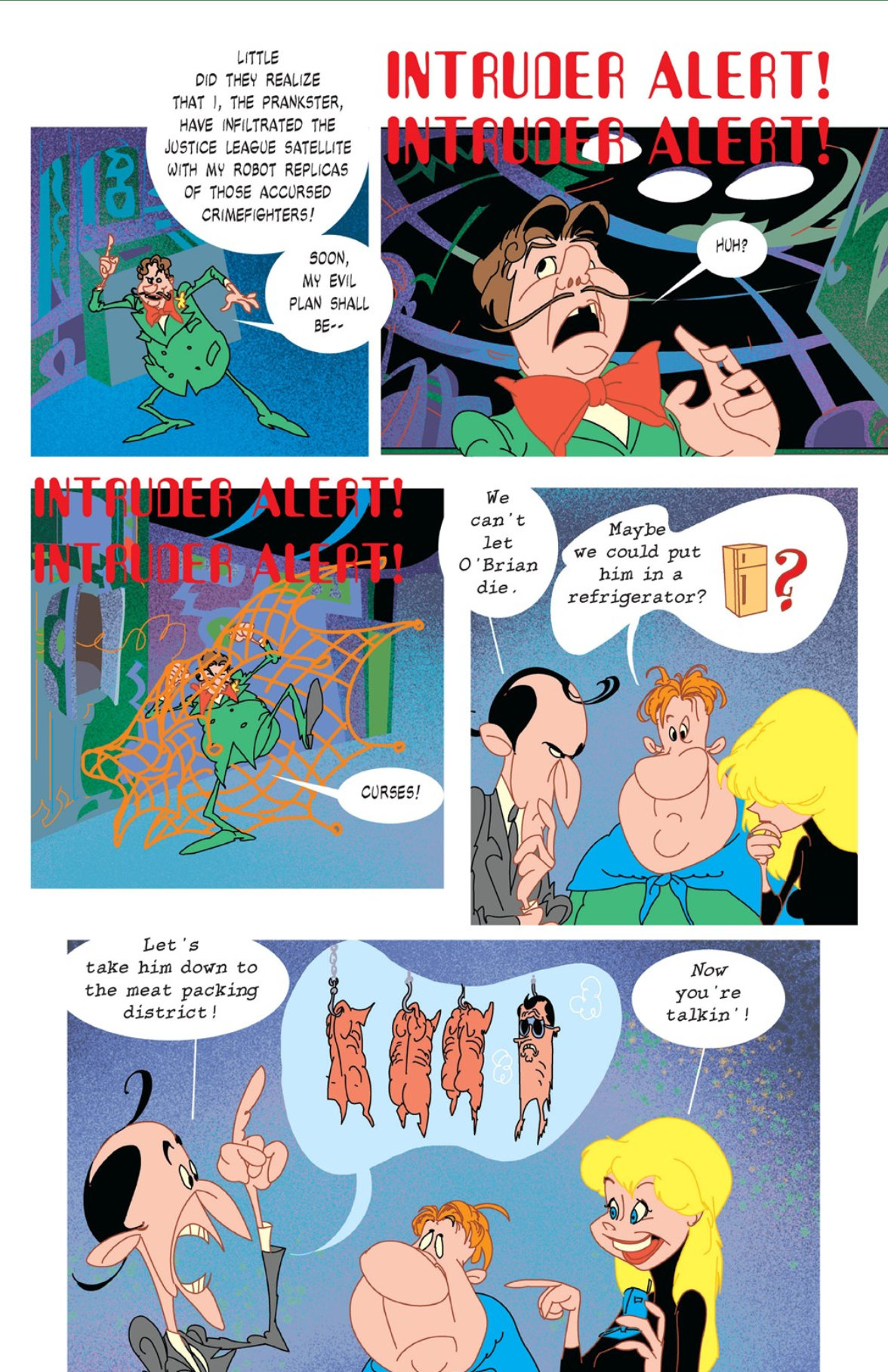
Yeah, but then they would come in with weird little notes. I remember one specifically because it ruined the story. It ruins the story where he meets the Justice League and then for some reason they decided it couldn't really be the Justice League. So I had to say they were The Pranksters’ robots. [Laughs] Except that I'd given these guys all this internal dialogue. Like five pages of them. So I'm like, “Are they robots that don't know they're robots?” But that's the kind of thing they would do, and you don't know why. Because then he met the Justice League a couple issues later and nobody said anything. No one knows why anybody does anything at that place. It's Warner Brothers. Sometimes something will come from upstairs and they get an idea in their head that like, oh we're gonna do Aquaman. I remember Green Lantern. We were living our lives like there was gonna be a Green Lantern 2. I'm serious! I did a lot of merchandise stuff for Green Lantern. I like the licensing stuff.
Ryan Reynolds?
No, I had to draw images for the merch or whatever. I don't remember now. It’s licensing. They were proceeding as if this was gonna be like the Green Lantern-verse and that there were just gonna be thousands of these. That's what we're all about. And then the next week they're like, “No. Don't ever mention Green Lantern. We’re all about this. We're all about Frank Miller. Oh, don't talk about Frank Miller. Now we're all about this.” That's how they are. It really is like they're like a school of guppies, just changing directions. Then somebody will get fired, a new guy will come in. It's Warner Brothers. They've always been like that.
After Plastic Man, according to my timeline, we're into your Image years. You did a book called Special Forces. Where did that one come from?
That was inspired by a true story during the Iraq war. It was towards the end. I'm a little hazy on this because it was what, 20 years ago or something. But there was a point where it was going so poorly that they weren't getting any recruits. So they lowered the recruiting standards. They were like, “Usually we don't let felons or mentally disabled people in but you know what? Nobody wants to go and fight this losing war that’s bankrupting us, so we're gonna let autistic kids in.” And they literally inducted an autistic kid by telling him he was gonna have friends. He was a very lonely kid because he was autistic, but he played Call of Duty and stuff. He doesn't quite get it, so he signed up. He's like, “I'm gonna join the army.” And his parents had to fight tooth and nail and had to go to court and they're like, “No, he can't fight. You don't get it. He's gonna die.” They're like, “Well, he's able-bodied, he passed the written exam.” But he can’t do it. So what I thought was interesting about it, is that my son is autistic, and it occurred to me that except for the fighting, he would be a brilliant soldier. Because they love routine, they do what they're told, they just show up at the same time every day. He likes to do the exact same thing over and over and over the same way.
He would get through basic training with honors.
He would be so good at it except the killing part! They would kill him. It just wouldn't work out. That was the premise of the story. I could really see how this could have gone. They did get the kid out by the way.
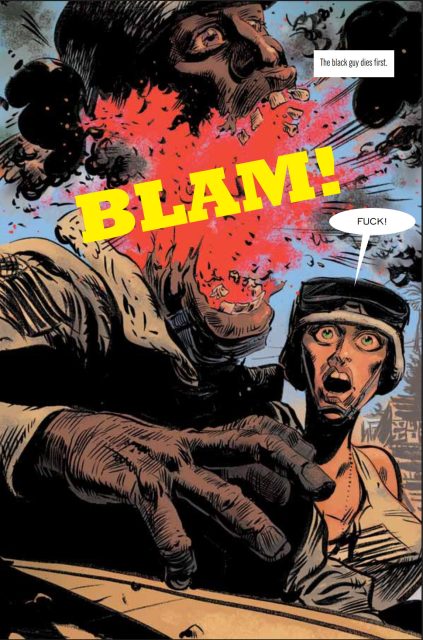
Well, that's good. But in your version you have like, mutant babies, and crazy sci-fi stuff.
That was the thing. So then I went in and I decided to just load it up with like every weird story that I could find in the newspaper about what a disaster this war was. Because again, I'm not even being political! It was a bad war. Colin Powell quit! He was like, “There's no plan here. We’re getting creamed, we're gonna go bankrupt and we're all gonna die.” They were going out with no battle gear, the doors were falling off the Humvees. It was nuts! And like in the story, the mercenaries that are coming are getting treated better than everybody because they're independent contractors. The number one cause of death among the troops was suicide. It was just fucked! So that was the inspiration for the thing, but I wanted to do it like a Michael Bay movie. [Laughs]
But again, it's an Image comic, so that was the other thing. It’s like, okay, it's an Image comic and to me, Image comics is tits. I'm thinking Rob Liefeld, Jim Lee, you know, Mark Silvestri, just the asses hanging out and, you know, girls not wearing anything. So I was like, hey, it's an Image comic! Everybody jumped all over me because I was the first guy to draw an Image comic like an Image comic.
What was the response to the book?
That was the funniest thing! I was trying to be Joseph Heller. That was my goal. Every war has their Catch-22. Every war has their M.A.S.H. I wanted mine. I just tried to offend everybody. We had the, “Don't Ask Don't Tell” thing going on at the time, so I said, I'm gonna throw that in there. There's a fat guy [laughs], because there’s always a fat guy. Like Bill Murray, because it was like trying to be like, what was it Stripes? You remember that movie?
Yep, of course.
It's that kind of thing. So it's like, okay, we get a fat guy, we get a gay guy, the girl with the big boobs, you know, Hot Lips Houlihan. And the villains are the most racist stereotypes, they're just saying completely stereotypical racist shit. Like everything about it is designed to just be offensive. And the only note anybody ever [said] was, “Why is she in a bikini?” That's all anybody cared [about]! I swear to god! Nobody had any problem with it. The funny thing was that actually I'd heard from a couple guys who'd actually fought in the war and they got it. They felt they were being treated very badly.
By the government. Not by you.
By the government! I mean, like I said, they didn't have equipment, they didn't have a plan. They were just throwing meat to the wolves. It was sad.
At the same time you did Special Forces you also did The Bakers, which again has you doing these completely opposite things.
Right, right. I'd always wanted to do a family strip, and there's a window, because every family strip peaks before the kid grows up. You can always tell when the guy’s getting his material from the kid. The first couple of years of Dennis the Menace are brilliant. The first couple of years of Family Circus are brilliant. For Better or Worse is brilliant all the way through, but the kids grow up and move away, I guess she's writing about the grandkids now, you know. But there's always that window where you can tell the kids have moved out, and the guy’s run out of material [laughs]. So I was like, I'm gonna write down all the cute things my kids say and do it while I have the opportunity. Now they're all bigger than me.
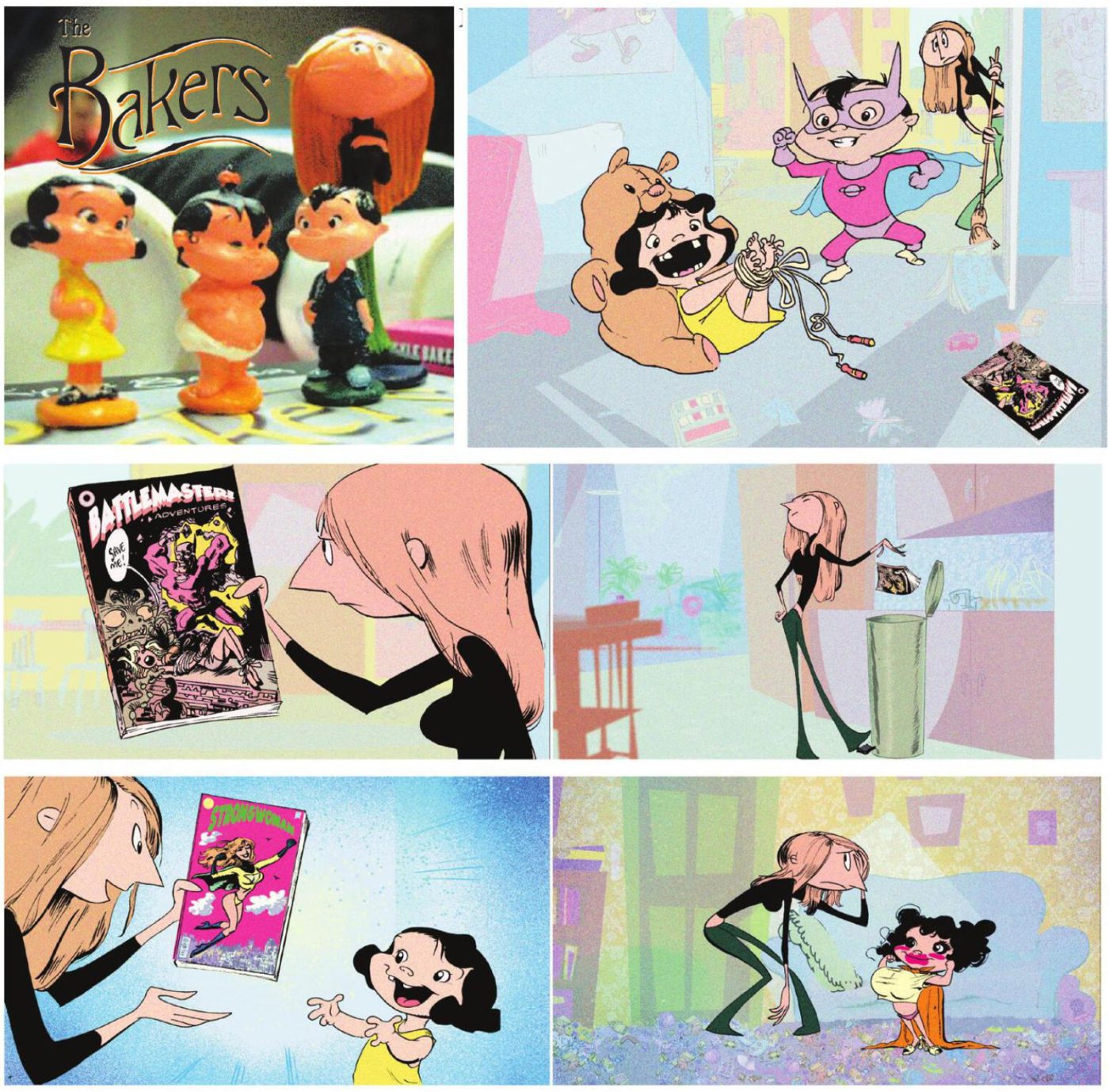
Not getting much material from them at this point?
Actually, they keep wanting me to bring it back! They keep wanting me to bring it back.
Well okay, so by my timeline, so you went back to self-publishing at this point. This is around 2011, with Quality Jollity.
Right.
Just a quick side note, I don't know if you're aware of what that domain is being used for these days.8
I do, I do that's why I gave up on it.
How did that happen?
It expired, I didn't renew it. They figure they'll shame you into renewing it and I was like, well, that trademark had a good 10-year run and it never never went anywhere. So I said screw it. I'm gonna try a different brand.
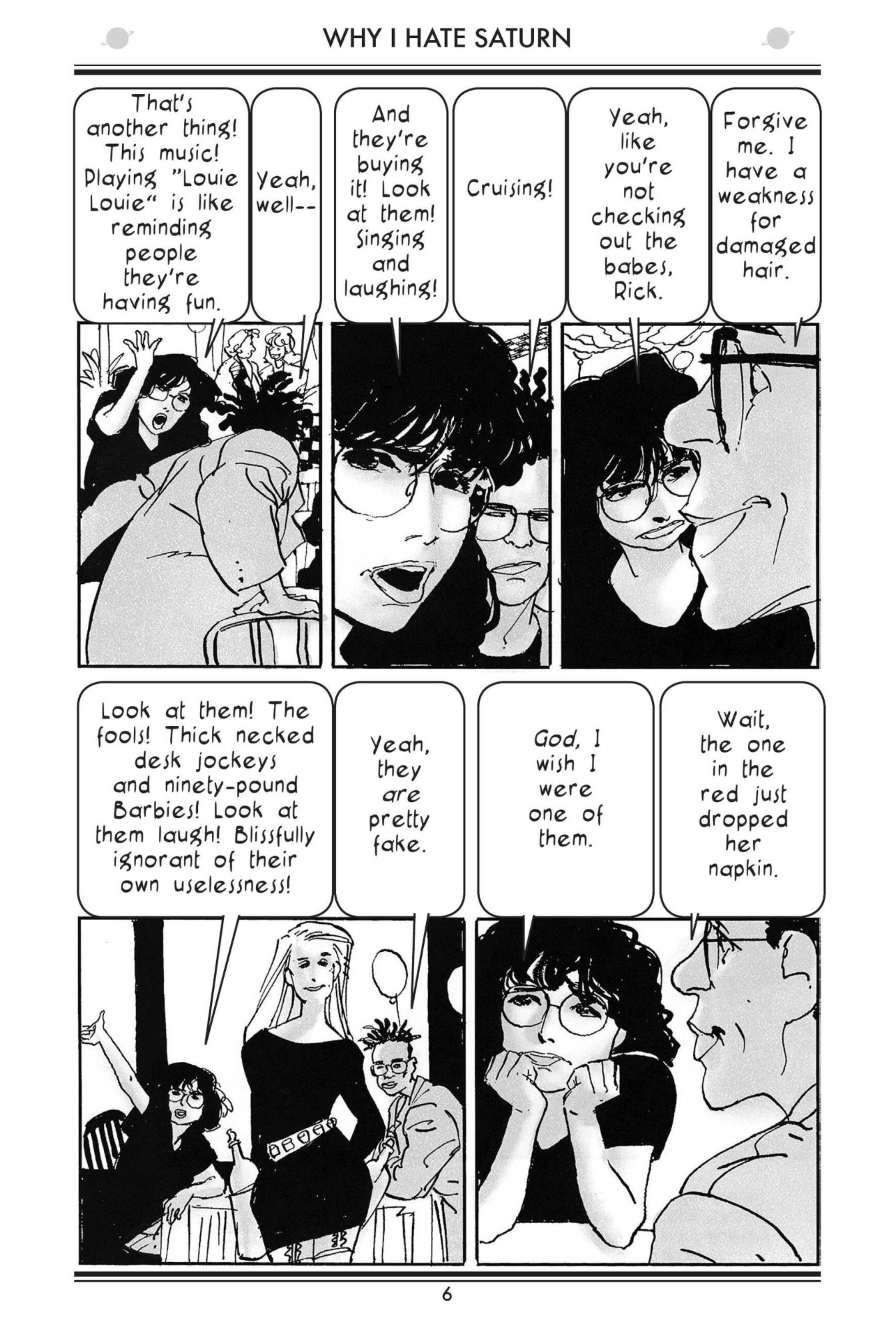
You did all kinds of interesting stuff in those years. You put out a bunch of your older work. And I do have a quick question about the Quality Jollity version of Why I Hate Saturn. You added word balloons to this edition! What was up with that?
Yeah, yeah. Well, because the original books were 8.5x11, right? And the way it was laid out, there's just a lot of air on the top and the bottom. The original idea was to do 6x9 and I no longer think 6x9 is as important as it used to be.
Was that because of the manga boom?
No, no, 6x9 was just average shelf space in Barnes and Noble, or any bookstore. Just any book, like a mainstream book in an airport, is 6x9. So if you wanted to get any kind of distribution in good places like airports or Walmart or something like that you wanted to get on that 6x9 shelf. That's why I reformatted it to 6x9. At the time, again, we're going back 30, 40 years, distributors had criticized the 8.5x11 format of mine when I was doing Why I Hate Saturn and Cowboy Wally and even You Are Here. Yeah, everything up to King David. They were all, “It's just shitty for the shelves. It makes it tough to rack so we don't buy it.” But then the business moved completely to an online model. There are no retail spaces anymore. There's no shelf space, so It really doesn't matter. So now I can move to hardcover 8.5x11 because hardcover at least travels better. It gets a little less dinged up. So now I'm thinking more about mail order and that whole thing.
Are you doing print-on-demand or are you doing print runs?
I'm doing print-on-demand, yeah. I don't do launches or any of that stuff. Right now I'm just trying to get the stories done. I'm at an age where I don't really know how many years I got left. Being like, physically viable. I just want to get the books done that I want to get done before it’s too late. I got my whole life to sell stuff. [Laughs]. Because the thing about books is, I don't know if it's true for anybody else, but everybody's excited about whatever I did 20 years ago. Like when I do a comic event or something right now, all I'm doing is signing Plastic Man. Everybody is, “Can you draw me a picture of Plastic Man?” No Deadpool, because Deadpool's like 10 years later and no Shadow, but when I used to do comic conventions, everybody was like, “Can you do The Shadow? Can you do Transformers?” So it's always whatever was 20 years ago. I used to sign a lot of Dick Tracy. No more Dick Tracys, those fans are all gone.
It seems to me no matter what I do, that things take 20 years to catch on with people. I don't know why that is, Even the thing you were saying about the computer stuff. What's funny is, I'll go to the Spider-Verse movies and I'm looking at it and I'm like, “Wow, this is all the shit I got fired for 20 years ago.” It's clear that they're like looking at Kyle Baker comics and like, “We're gonna do a movie like this.” [Laughs] So that's the thing. The reason I've got into computers is because I felt and still feel that computers are the future, and like video game graphics, you know special effects movies, all this stuff. I love them. I think they look terrific. These Marvel movies, I don't go to, but what was the movie I just saw? Wicked. Wicked was good. Special effects, computer generated. I love all that stuff. That excites me. I'm gonna learn how to do that. I remember the main criticism about, I think it was King David, people were like, “Oh, it looks like a video game.” I was like, “Video games are cool!” I love video games! What the hell is wrong with video games? Now people are going to the Super Mario movie. The Avengers movie looks like a video game. I love video games!
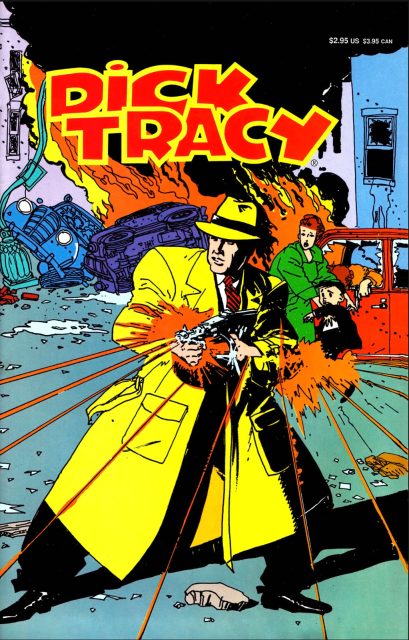
I have to get off on a tangent here, because you mentioned Dick Tracy. But you didn't just do Dick Tracy. You did Warren Beatty’s Dick Tracy. What was that like?
Well, it was Disney. So Disney is Disney and I guess I must have been pretty young. I must have needed the work, and I've done two movie books. That one I did and Howard the Duck. Movie books at the time, I don't know if it's different [now], probably not. Nobody wanted to do the movie books and that's how the new guy ended up getting to do the movie books. Because it's the worst job ever. They are like super top secret. They won't send you the material you need, because when I was at Marvel that was during the Star Wars leak. The Star Wars comic accidentally came out revealing that Darth Vader was Luke Skywalker's father. Do you remember this?
No!
Yeah, what happened was Marvel was publishing The Empire Strikes Back comic, and it comes out a week early. They accidentally released it a week before the movie. So on all the news channels, “Today's top story: next week Darth Vader is Luke Skywalker's father!” Like that big reveal that was gonna be the movie event of the year, Marvel screwed it up. After that you couldn't get anything movie-related out of LucasFilm. They wouldn't give us a script for Howard the Duck. That was their movie. We had to make up an ending. They wouldn't tell us the ending. Howard the Duck! [Laughs] If you read the comic the ending is completely different. I don't even remember, it was a hundred years ago.
But Dick Tracy is the same thing, except that Len Wein was writing the movie version, and then there were two prequels written by John Moore. To set up the characters, their backstories. I took the job because I'm a huge Chester Gould fan, I really am. It's an opportunity to draw like Chester Gould! The first couple of pages I turned in, they looked like the hook-nosed Dick Tracy. And then Warren Beatty decided it should look like him. Which to me is like Robin Williams deciding Popeye should look like Robin Williams. No, you know, we know what Dick Tracy looks like. We know what Popeye looks like. Certain faces are just super famous, you know what I mean? And you know that it's there. You understand it when you're doing a movie after you can't do the nose, you know, it's not Anthony Quinn. But the other thing was, he was very vain about his looks. So I would draw it to look like him, and he's like, “No, I don't look like that, I should be prettier.” And blah blah blah blah blah and it just got worse and worse and worse and then finally I got frustrated and said that they should just use the clip art that they were using for the merchandise because he liked those drawings. I said, “He likes the way that guy draws his face, so just cut those faces off of the clip art and stick them on the comic book.” And so I would just leave the heads empty and we'd glue this other guy's heads on.
The last issue was … well, I had to do a third issue in a week. The first book was so delayed and then the second book didn't get much better. They finally called me up and they were like, “We can't do the third book.” I was like, “You’re kidding me, right?” And they're like no. So I said, “Give me a weekend” and I did enough in a weekend to convince them that I could get the thing done by Friday. Then I did the entire third issue in a week and it was actually a better issue because I had to get to the point.
So that was that, we got everything done, and I just wanted to go home. I wanted to get my money. I just wanted to get out of that thing if the job was over except for the cover. The cover had been sent in, they called me up. They're like, “Warren hates the cover.” I said, “Really? Come on, man. The cover’s the only thing between me and the check. Let me finish this up, put the clip art on there.” And he said, “Now Warren hates the clip art.” Now he hates the clip art? “Yeah, everything except for this one head on page 12.” This one head. Now I’m looking at the head and I'm like, okay, it's a three-quarter view and my drawing is a three-quarter view. Just photostat it down, clip it, glue it on there and we're in good shape. Send me the check. They go, “No, we can't do that because in your drawing, the guy's looking left and in this picture, he's looking right.” And I said, “You're kidding me. You know how to do this. You photostat it, you flip it over.” And they go, “We suggested that to Warren and he said no.” This is a true story. “Because that's my bad side.” That's a true story. [Laughs] We had to flip the entire cover and repaint the stripes on his necktie because the diagonal was going the wrong way. [Laughter]
Thank you for the tangent. Getting back to the timeline though — in those Quality Jollity years you also did all kinds of interesting multimedia stuff, like Mass Murderer of Steel.
Yeah, that was funny. That was an accident.
You were talking about how you like video games. Where did that come from?
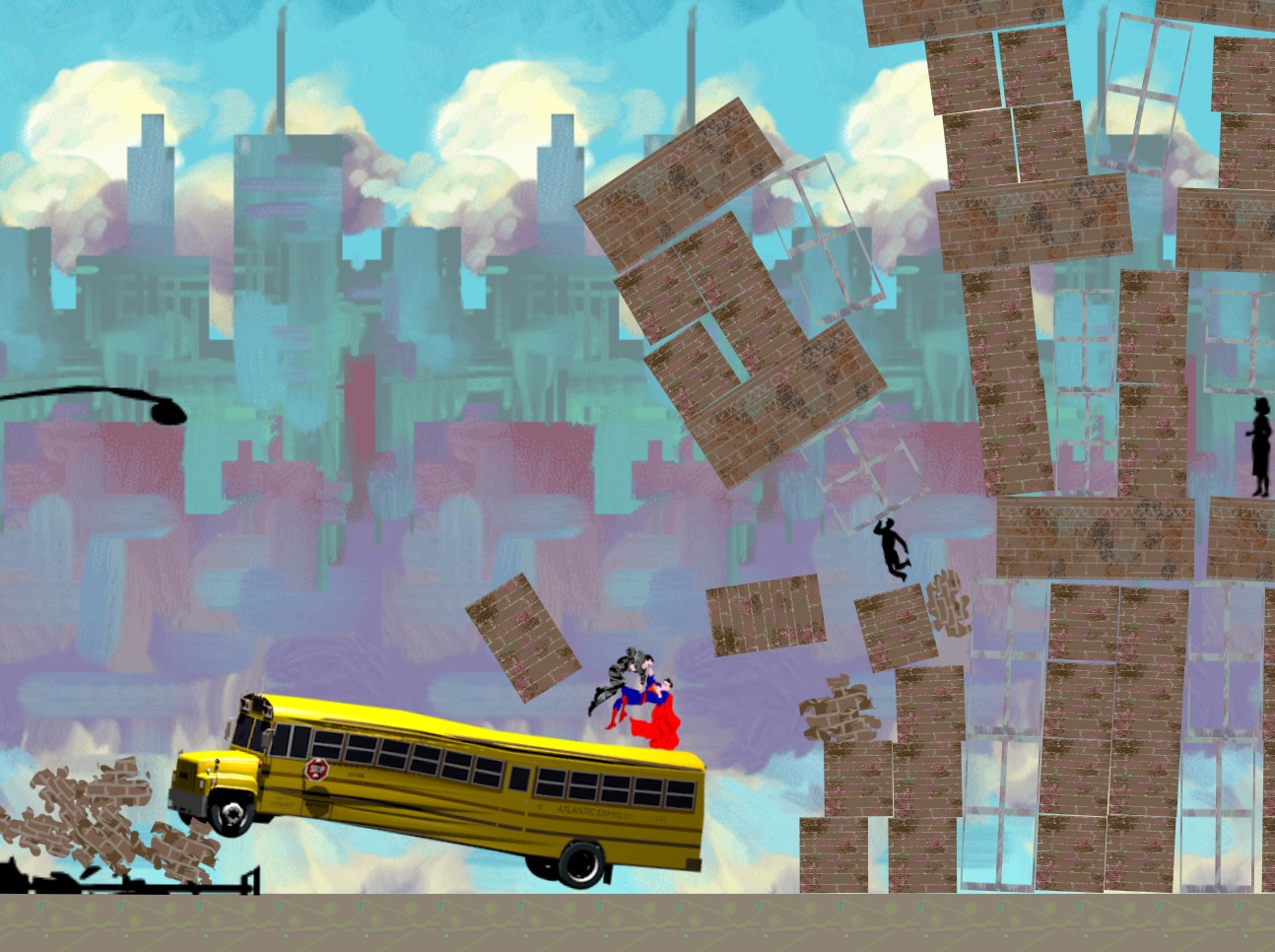
So Mass Murderer of Steel, which is very funny. I was taking a class on how to make a video game. it was something I found online or something, it was run by Microsoft. I showed up and I took the lecture and then it was like this file that you're supposed to do for homework and somehow I screwed up and couldn't get that file that the guy had told me to get for the homework. So I downloaded some other video game engine off the internet so I could do some kind of homework. And Man of Steel had just come out, and here's the funny thing, I had not seen the film. I didn't see the movie for maybe a year. I don't know if I ever did watch the whole thing, but I hadn't seen the film at all. All I had heard was people complaining online, and I had seen enough superhero movies to say I think I get it. [Laughs] They're knocking over a bunch of buildings. So I didn't even have to see the thing. The game engine I downloaded, it was basically an Angry Birds ripoff. If you remember Angry Birds, it's a slingshot. You knock over buildings. So I just redesigned the graphics and put it on my website. That thing was just for the hell of it, and the thing took off. I hadn't thought it through or anything, but it had Google ads on it so I ended up actually making money on the thing. Which deluded me into thinking I had a future in video games. That was a mistake. [Laughs]
Is that still something you still have an interest in?
I love doing video games, yeah. I did a whole virtual world during the lockdown because I couldn't see my kids. So I built the whole virtual world and then made little replicas of them so they could be themselves or animals and stuff. We went around this whole virtual amusement park. And then every week they would request different things for me to add like different cars and somebody wanted graffiti. They wanted to be able to write on the walls. So every week I would add a different feature to this amusement park.
What were you using to build all that?
Most video games are like just skinned versions of some other game, so I bought some kind of first person virtual world. Multiplayer, you know, where you can log on so it was all worked out. It was like a mannequin walking around a bunch of boxes, and so I swapped it all out and put in cool cars and signs. My son's name is Isaac, so I put Isaac's toy barn in the town. And there was a dragon for no reason. Just goofy. So yeah, I do like doing it. It all plays together into the same thing because I'll be using the game engine to do animation sometimes and to do the web pages or sometimes I'll take content from the animation and put it in a book.
Well that more or less brings us to your current work which is under Viverra. That started pre-pandemic, I guess, and has continued since then. And you've done these over-the-top, action movie graphic novels.
Yeah, these are my favorite.
So tell me where Tardigrade came from.
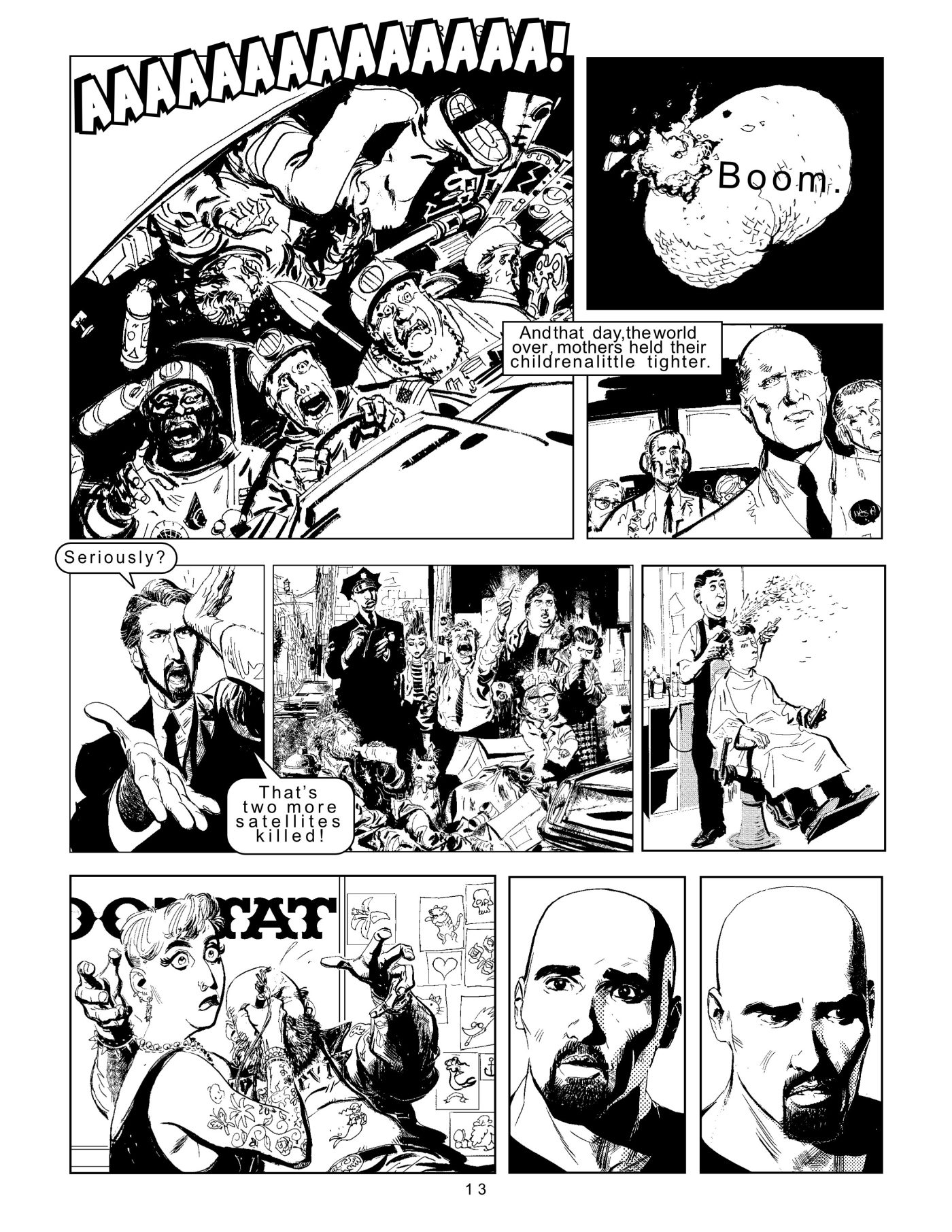
Tardigrade is just something I always wanted to do. I've always liked giant monsters. I'm of a certain age I guess, but I liked any of them. The Beast from 20,000 Fathoms. Them! You know, the giant ants. Anything with giant monsters. Godzilla, King Kong. I love those kinds of things. There's one with The Rock where he's fighting giant monkeys. [Laughs] 9 If it's a giant monster I'll give it a shot. I really will. Even Battleship was pretty cool. So I just wanted to do one of those giant monster things. I thought of a tardigrade because I think the most important thing about monsters is they have to have rules. You know, like a Dracula or werewolf or whatever. This is what hurts them. This is what doesn't hurt them. These are the circumstances under which you will encounter them. Stay out of this place, go towards this place. So it went from there.
And then you threw in every possible action movie cliche into that book.
Well, yeah, beyond that it's every monster cliche. Like monsters should always show up in the middle of the story. I've never seen a good monster movie where the monster shows up in the first scene. [Laughs] I don't know why that is, but that's the way it is. But I also had to have all the romance cliches right? Yeah, you gotta hit all those beats. And then all the villains. Hans Gruber. [Laughs] Yeah, and Harrison Ford was the president and things like that. You always have to have a mysterious island! Like every monster has a mysterious island he comes from.
With worshippers. You got all that stuff in there.
I love that stuff!
And then there's Deathcathlon, which I guess you're working on volume three now?
Yeah, yeah. I think I'm finishing it. It's getting long.
So what made you want to keep working on that one? It’s pretty long compared to a lot of your work.
What happens is you get the idea and you're like, I'm gonna do this book [Deathcathlon]. And then I realized that the story was gonna be longer than I thought because I just kept adding things that got to get wrapped up. All these characters and things like that. So I said, “All right, if it's gonna take that long, I should do a book that wraps up in one issue.” So I did Tardigrade in the middle of it. Also I was getting sick of looking at the characters after two years. So now I'm back. The other thing was, everything I do, I always try to top it. You want to level up in some way. And I felt that if I had done those books closer together that they weren't gonna level up. Chapter two is more exciting than chapter one, so chapter three should just be like through the roof. You want a big feeling at the end. So that's why I did it that way.
One reason I like publishing my own stuff is that the same thing happened with Nat Turner. Sometimes I feel like it's not there yet and it could be. In the case of Tardigrade that came out a couple of months late. I try to get everything done by December. This is my crunch time. But Tardigrade was a 64-page book and I just felt like it could have been better. So I added another 30 pages and that's the kind of thing that'll get you fired! It would have driven everybody crazy, but I was right. It was a lot of things being juggled because again, you had a romance story and you got an action story and you got all these subplots going. You want them to all be satisfying. I hate that when you're wondering “What happened to that guy that was in the first scene and you never saw him again?” And again there's certain feelings that you want to these things, you know, the action movie cliches, the big monster fight at the end. One of those things you have to have is a big monster fight. You want it to have those beats. The first round didn't have those beats. You need that moment where you think that all is ruined, like oh, he's dead. You know, he's not dead, but you know it looks like the villain won and then he didn't win.
So is Deathcathlon 3 gonna pull everything together?
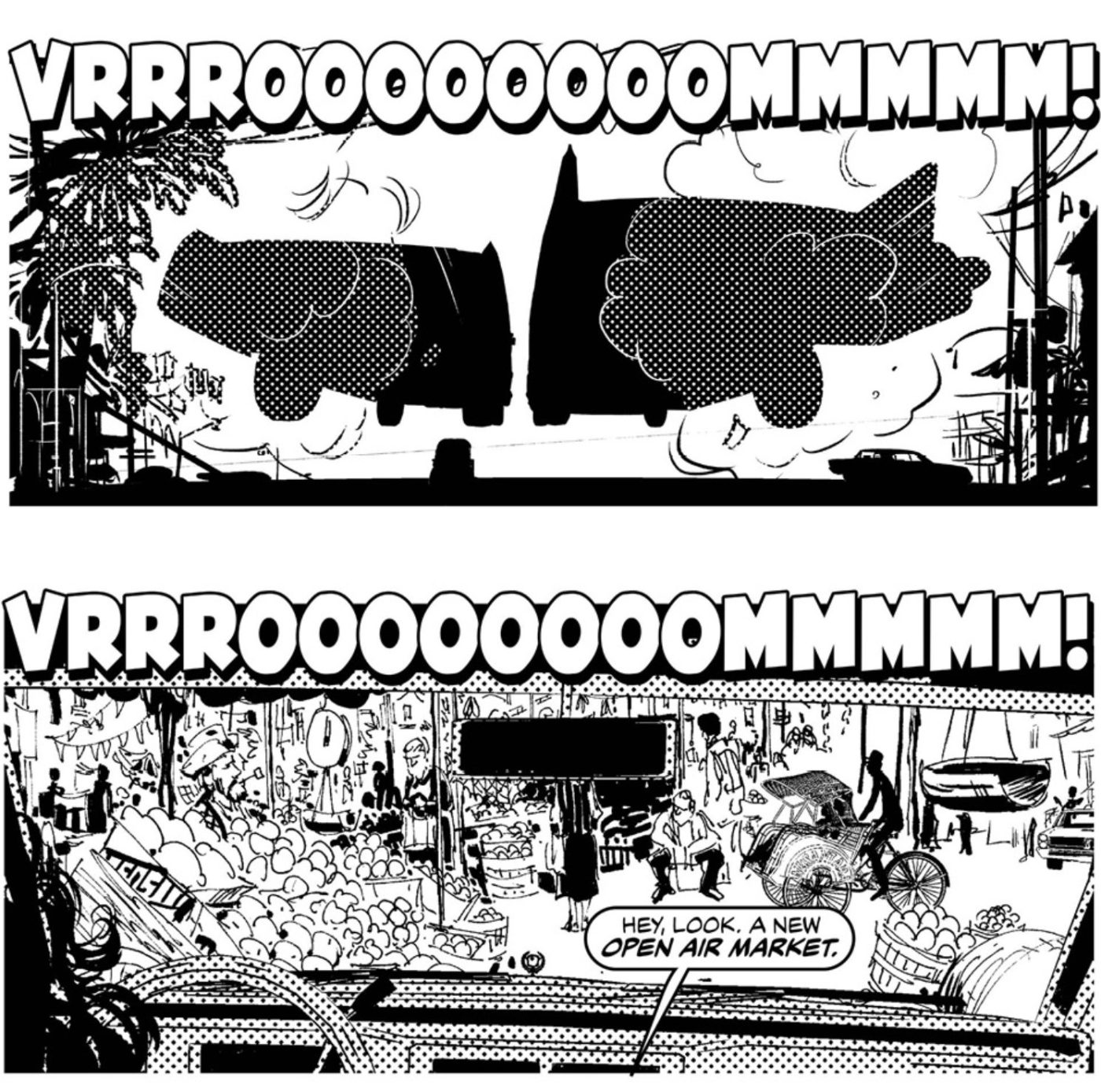
That was the idea. But I have this bad habit of introducing characters because I want to keep it moving. I had the funeral director and he was kind of interesting because I had to make him interesting. You don't want just to have a guy be a plot device so he's got to have a personality. Got to give him a reason to be there. So I give him a personality, he's interesting, but then you're like gee what happens to this guy after this conversation. [Laughs] So then you got to bring him back and you got to develop some kind of story with the guy. And then there was in the first book just as a throwaway gag, the detective chased a bad guy and they fall into a woman's rose bushes and destroy her rose bushes and I just do it as a laugh. But then I was like, “Hey, what happened to that woman?” That's kind of an asshole thing to do, knock over a woman's rose bushes. So then I brought her back. I was like, “Well, the cop should pay for the rose bushes at least.” So I had a scene where she comes and says, ”I'm gonna pay.” By the third one we'll have the old lady kidnapped and held hostage because you gotta escalate.
We were talking about cliches before and I decided — and it's probably a terrible idea — that I was gonna do every sports movie ever. Which is not as bad as it sounds because every sports movie ever is The Bad News Bears. Like, Any Given Sunday is The Bad News Bears. The Mighty Ducks is The Bad News Bears. League of Their Own is The Bad News Bears. Every sports story is the exact same damn story. So I was like, well she needs a trainer because they're going up against these evil athletes. We need a training sequence. So I came up with a funny character for the trainer. Then I came with this whole thing, oh I could do like a team, like an opposing team. So there'd be a team of good players and the team of bad players. It'll be like The Bad News Bears and that they don't get along and they butt heads and stuff and then gradually they'll start winning but then they'd conflict and then they break up again. You know the whole thing. Oh, and they always have to have a drunken coach. There’s always the drunken, washed-up coach every single time. But I also know I'm gonna kill them all because you have to have the hero be the one to face off against the villain. You can't have 200, right? So now I'm like, well, I'm doing this whole sports story. It's kind of cute and everything but then I'm gonna just kill them all and maybe I don't need it, you know.
So I'm at that point where I gotta figure it out in a week because right now the goal is a 64-page book and I'm at 54 pages. I don't know if I told you, but I do everything out of order. I start with the big stuff, the important stuff that I think matters. With Deathcathlon, the action scenes are the most important thing. These crazy stunt sequences, very choreographed. And again, you want to build on each one. You have a rooftop thing and guys fighting on water skis, and you want it to build. I got some good action scenes for the last one, and it has to culminate at the Olympics. And I have enough characters that there's already enough of an ending. So I've got 15 pages that I can fill in and now I'm just trying to figure it out. That sounds like a crazy way to do something I guess. But 15 pages isn't that much. I can do that in a week. So, again, the action is tight, which is all anybody cares about. Nobody remembers a talking scene from James Bond. “Remember that one where he got the mission, he shows him the map! That was so boss!” Nobody remembers that. I can't remember why Halle Berry was in this movie but I remember Halle Berry's in the movie in a bikini and they blow up a boat. I remember that part! So that's the part that's got to be good and now the extra stuff is you want to hit the emotions. So there's that, but then there's loose ends and setting up and stuff. But I have to decide whether it's a 64-page book or a 74-page book basically. I think it might benefit from being tighter.
Given all of your various stuff. Is there anything you haven't done? Anything you've always wanted to do? As I said, I think you've done literally everything.
Yeah, you know I'm always excited about the next thing.
So what's the next thing?
That's what I'm wondering. When I got into comic books it was because there was like a comic book scene that was growing. Comic stores were just starting. There were no comic book stores when I was a kid, and then they just started opening up. And because they were just opening up it was like a free-for-all. It was creative. You had guys doing RAW and doing Cerebus and doing Fantagraphics and Kitchen Sink. It was interesting. And that's gone. Now it’s all Funko Pops. I'm not knocking it. Everything has its moment. No, it's fine. I was on MTV when it was time to be on MTV. Now you tell somebody, “I'm on MTV!” Nobody gives a shit if you're on MTV now. But you know, there was a time when being on MTV was a big deal. There was a time when being at Marvel Comics was a big deal. When I was doing comics, man, you could walk into any newsstand, you could walk in any drugstore and you could pick out your product. That was fun! And again when I was on certain TV shows, it was a time when people were actually watching TV shows.
So what's that next thing?
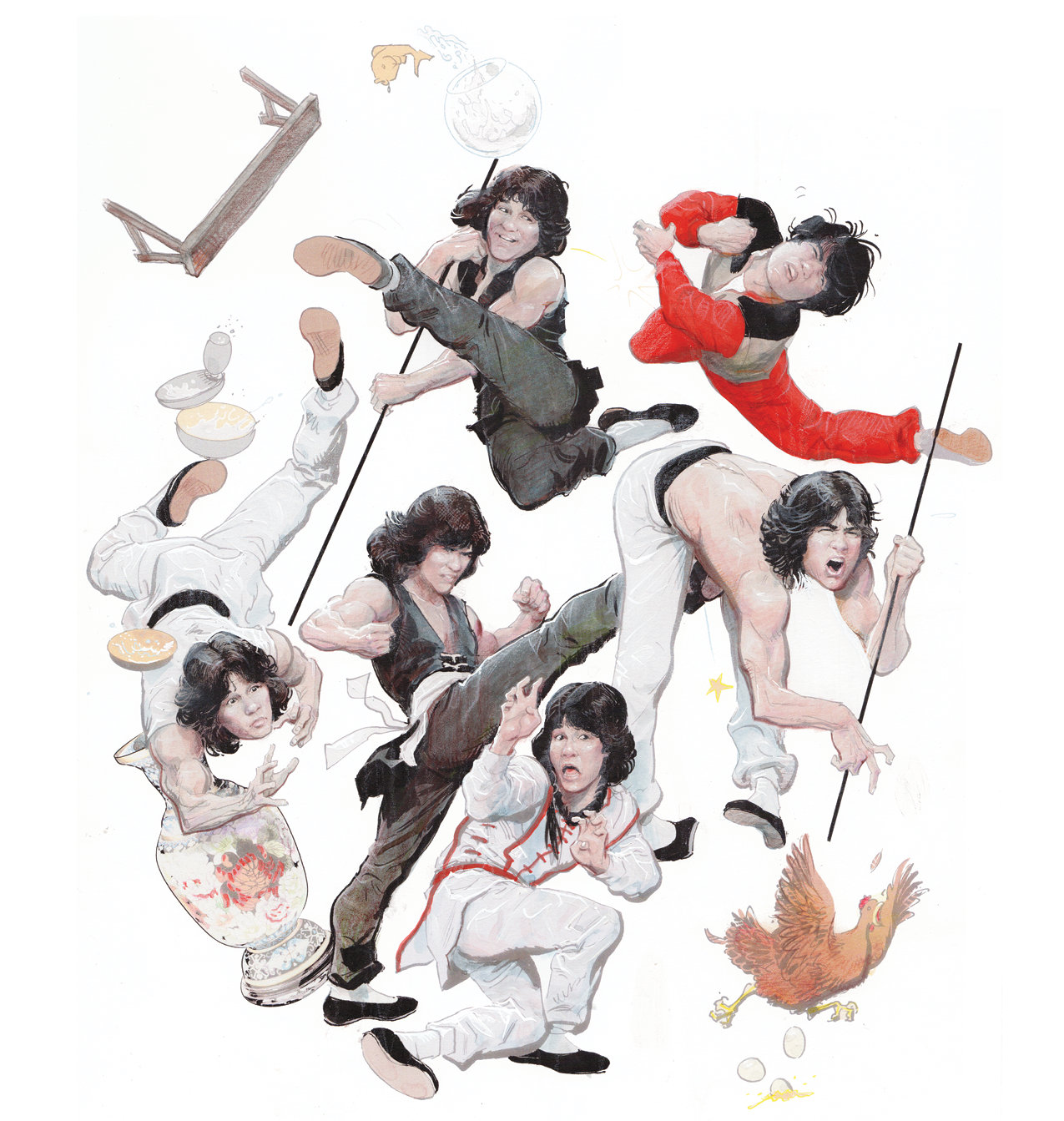
You know, the next thing I'm actually looking at very seriously, in all honesty is gifts. Like, I just want to make gift items.
How do you make a living off that?
You license it. You do like a like a Hello Kitty and you just put it on greeting cards and gifts and crap like that.
Sure.
I mean Hello Kitty does it, or Lisa Frank did it. People like that. Mary Engelbreit I like. One thing that inspired me to do these last couple of books was I want to see more stories about people who aren't the same getting along with each other. And I also want to see stories about men and women solving problems together because that's actually kind of how I live my life. You don't do things by yourself. Your team and you fix stuff, and you're like, well, we don't agree on this but yeah, nobody does that anymore. And so another sentiment that I see underserved is that gift idea. Like, you're my friend, I like you and I just want you to know that you're my friend and I like you. [Laughs] You know what I mean? I like when somebody gives me a card or a candy, just to say I'm thinking about you. You're my friend.
So my takeaway from this is that the future of Kyle Baker is Ziggy.
Well, you know what it is, you start with the idea and then you're trying to figure out where it can go. One of the problems with The Bakers was that the comic book store market at that time was not a family market. And to be honest I did that thing because I was trying to sell it to Fox, which I did.10 And the thing about Fox is that Fox is the only place that will do family shows for adults. So you have to be very specific about what you're doing. Nickelodeon families are always geared towards the kids. The children are the stars. Peanuts is more of a kids show. I have this idea about some animals that are friends and I don't see it having any kind of chance in say, comics, and I don't think it would work on YouTube or TikTok. I see that working as a greeting card or something. It's like stickers, you know what I mean?
So the future of Kyle Baker is greeting cards?
Or something. Or stickers or you know, yes, something friendly, I don't know. Whatever that is. Everybody wants to gripe. Okay, here's one of my pet peeves. I can't stand Facebook anymore because of this. The fact of the matter is, almost everything is better than ever. Right? Science is better, you live longer, you know health is better, everything is honestly better. You know, there's less wars. I mean, nothing's perfect, but if you took a guy from 200 years ago and you dropped him today, he would be, “Oh my gosh. This is heaven! This is paradise. I can't believe this. This is the greatest ever.” And I'm sure great things are ahead of us. But all I hear is people griping. I'm like, “What are you griping about?” And the people griping are not doing that badly that they should be griping. I don't get it. I'm mystified. [Laughs] And things change. It might be that my circles, the people I tend to know are older, and there's a belief that when things change it's bad. Nothing lasts. I used to listen to FM radio. That was a big deal, FM radio. People used to say, “Let's go to Blockbuster,” pick up some videos. Pick up some DVDs at the Redbox. I used to visit my grandparents and they had a huge collection of sheet music that they would play on their piano. Everybody had a piano back then and sheet music was a zillion dollar business because they had no radio. I think it's because people my age at least, their old way of doing things is going away. Like everybody's bitching about AI. Which I get will put people out of work, but I remember when Pixar put all the hand-drawn animators out of work. And that was deliberate. They were paying Glen Keane like a million bucks a year after The Lion King because there was demand for talent. DreamWorks was starting to do hand-drawn animation, Fox was doing animation, there was a demand for animators, hand-drawn. They were getting a million bucks a year literally and Disney said, “We got to put an end to this. Buy Pixar.” But the audience goes with it. That's the other thing. The audience will follow that. It's not like we're all still listening to rock and roll music. There are no rock bands anymore because it's too expensive to make them. But it's not like anybody's like, “Hey check out the last rock album?” No, things just come and go, sorry.
And none of this bothers you?
Yeah.
You're just going with it.
That’s life! I'm saying there's new things that come along. We're not riding horses anymore. I was reading about how when cars came along that the horse business really took a hit and all the people that depended on the horse business, people that sold carriages, people who sold horseshoes, the people sold hay. All that stuff. People who fixed barns, people made hitching posts. Saddle makers. All these people, they lost their livelihood. There were lots of stories in the paper planted by people, always showing stories about people getting hit by cars and children being run over at intersections, and how dangerous cars are. And it was because the horse people were throwing a lot of money at it. Same thing you're seeing now. Most of the people who are complaining about AI [are saying] it's depriving them of their opportunity to go work for Disney and make somebody else rich. What I see when I see AI, is like wow, you mean I don't have to farm this thing out anymore? Maybe I don't have to color my own stuff or maybe I don't have to hire a colorist. Maybe I could skip that, the same way I couldn't afford a letterer. That's why I got started doing lettering. I used to pay Rick Parker 50 bucks a page. I couldn't afford it, so I got the computer. Computers eased up on the drying time. Like waiting for the paint to dry and things like that. I always see these things as this is a way for me to possibly get more money. Say what you like about ChatGPT, but ChatGPT sales copy closes. That's all I know. I just don't have time to write a description of these products. I tell the AI here's the product, describe it, and I cut and paste it and people bought the thing. So that's all it matters. That wasn't the important part. The important part was the book. You know what I mean? I wasn’t gonna take time away from the book to sit there and code a new web page or something, it's stupid. We were talking about motion graphics, a lot of the minimal animation I do now is the kind of thing you can possibly have an AI do. It's really not that hard. I use After Effects. Right now I move this from here to here and the computer does it. But maybe I can just say to the computer, “Move this from here to here” or something. I don't know. But with everything, supply and demand changes. Nobody's reading books. I don't see that ever coming back. I think books are gonna go the way of vinyl recordings or whatever again. I'm sure the next thing will be fine.
And you'll be doing it whatever it is.
Well, maybe if there's money in it. Maybe there's no money in it, if everybody can do it. That's the thing. The reason you pay your doctor a lot of money is because not everybody can do it. But if you could get a computer to do it you'd fire your doctor tomorrow. And then doctors would be working for ten bucks an hour.
- Kyle Baker is a busy man. It took the better part of 2024 to get him to commit to this interview.
- As Baker recounts in that interview, he was given a nice office on the Warner Brothers lot, a decent salary, and was more or less ignored for two years while the studio attempted to adapt Why I Hate Saturn without his input.
- Not the character, of course, or even the creator himself, but the estate of Stephen Slesinger, who acquired the rights to the character from A.A. Milne’s widow. The estate sued Disney, claiming the company short-changed them on royalties. Disney ultimately prevailed. The Milne family itself had its fair share of drama, which there’s no reason to get into here. It is, however, a fascinating story.
- That would be Isaiah Bradley, created for the Baker-illustrated series The Truth: Black, White, and Red in 2003. In the film Captain America: Brave New World the character is portrayed by Carl Lumbly, who previously portrayed the character in the Disney+ series, The Falcon and the Winter Soldier. Since this interview was conducted, the film has been released, and Baker does indeed have a perfunctory thank you in the credits.
- I proudly keep a giant Superman III poster behind me in my office, the one with Christopher Reeve flying a terrified Richard Pryor. It makes for the best Zoom backdrop. And hey, it’s in the Smithsonian collection, so it’s classy.
- "Letitia Lerner, Superman's Babysitter,” a truly brilliant Looney Tunes-esque short story which Baker illustrated, and co-wrote with Elizabeth Glass, was originally published in Elseworlds 80-Page Giant #1. DC president Paul Levitz apparently got spooked by the fact that baby Clark found his way into a microwave, and had all copies recalled and pulped. Levitz later got over those concerns, and the story was republished in Bizarro Comics.
- Prince Valiant is still going strong, thanks to the long-running creative team of Mark Schultz and Thomas Yeates. I spoke with Schultz about this (and many other things) back in 2022. As for Dick Tracy, this author thinks the recent series by Alex Segura, Michael Moreci, and Geraldo Borges is quite good.
- What once was the home of Kyle Baker’s voluminous output now appears to be an AI generated site dedicated to adult intimacy advice, to put it delicately. Visit if you absolutely must.
- That would be Rampage.. I’ll be generous and say it’s loosely based on the 1986 Midway arcade game of the same name.
- In a 2006 interview with Draw magazine, Baker talked about making a pilot for Fox: “It was an animated family show. They’re Fox, they’re always looking for the next Simpsons ... we shot a six-minute pilot, and I did everything, I did all the character designs and storyboards and turnarounds and color guides and everything — the whole package that went to Korea. And I find that kind of stuff frustrating, because when they finally passed on the show, they don’t give it back to you. So I’ve got six minutes of animation that I can’t do anything with.”