
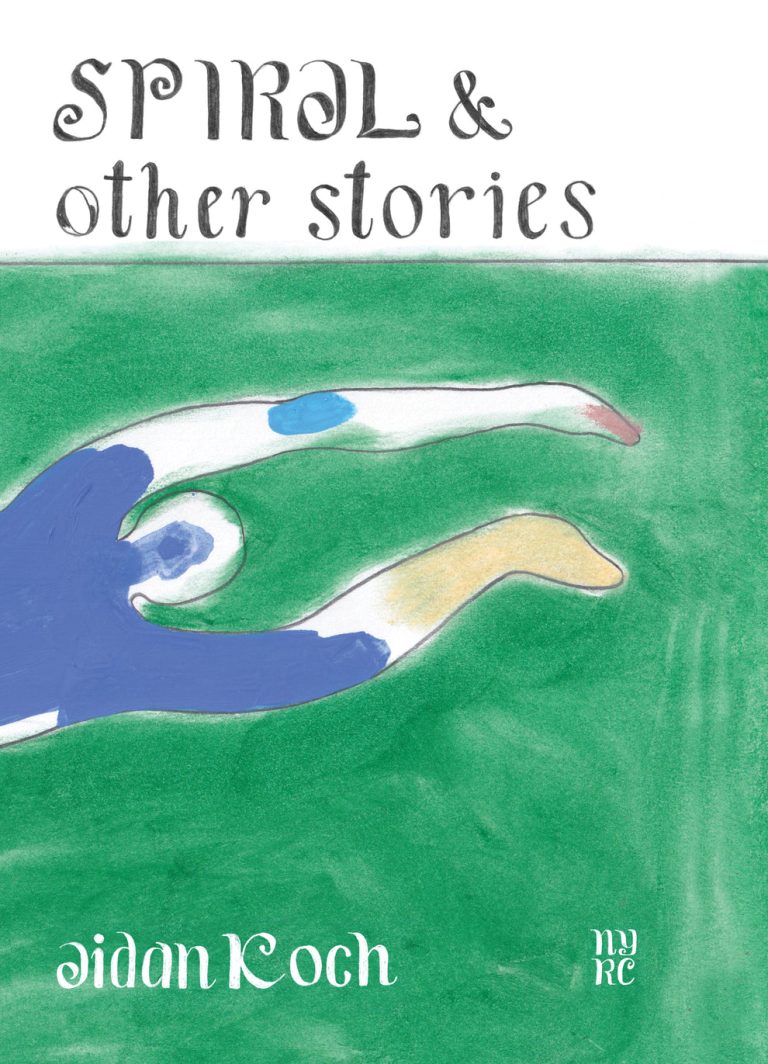
There is a powerful sense of place here, despite the ambiguity and non-specificity of the actual setting. Wandering is an integral part of Aidan Koch’s Spiral and Other Stories, of people trying to exert their worldviews on the places they find themselves, and of the places that, more often than not, do the same to them. This sense of moving through a landscape, of attempting to find a place that reflects one’s inner state while being subtly and not so subtly changed by the place rather than the other way around, is powerful in the stories here, but it is also applicable to Koch herself, who has been producing tantalizing and sophisticated work in the indie scene for several years. This has led her to New York Review Comics, the perfect home for her particular sort of literate, oblique, intelligent creations.
Spiral is broken into four sections, intertwined in ways that are thematic without being specific – but not as obvious at they might seem. The first, “Spiral”, sees a nameless young woman preparing to leave the well-appointed and beautiful home of her friends Yann and Lise, who want her to stay, to spend some time at a stranger’s farm nearby. In “A New Year”, two women share a story about an ancient myth of the local indigenous people, whose locale is now a tourist trap. In “The Forest”, the most abstract of the stories, an internal dialogue is woven out carefully as its author passes the time in anticipation of an uncertain future, and in “Man Made Lake”, a different woman tells her therapist about how, when she was a little girl, she was a fish, a river, and the conversation between the two.
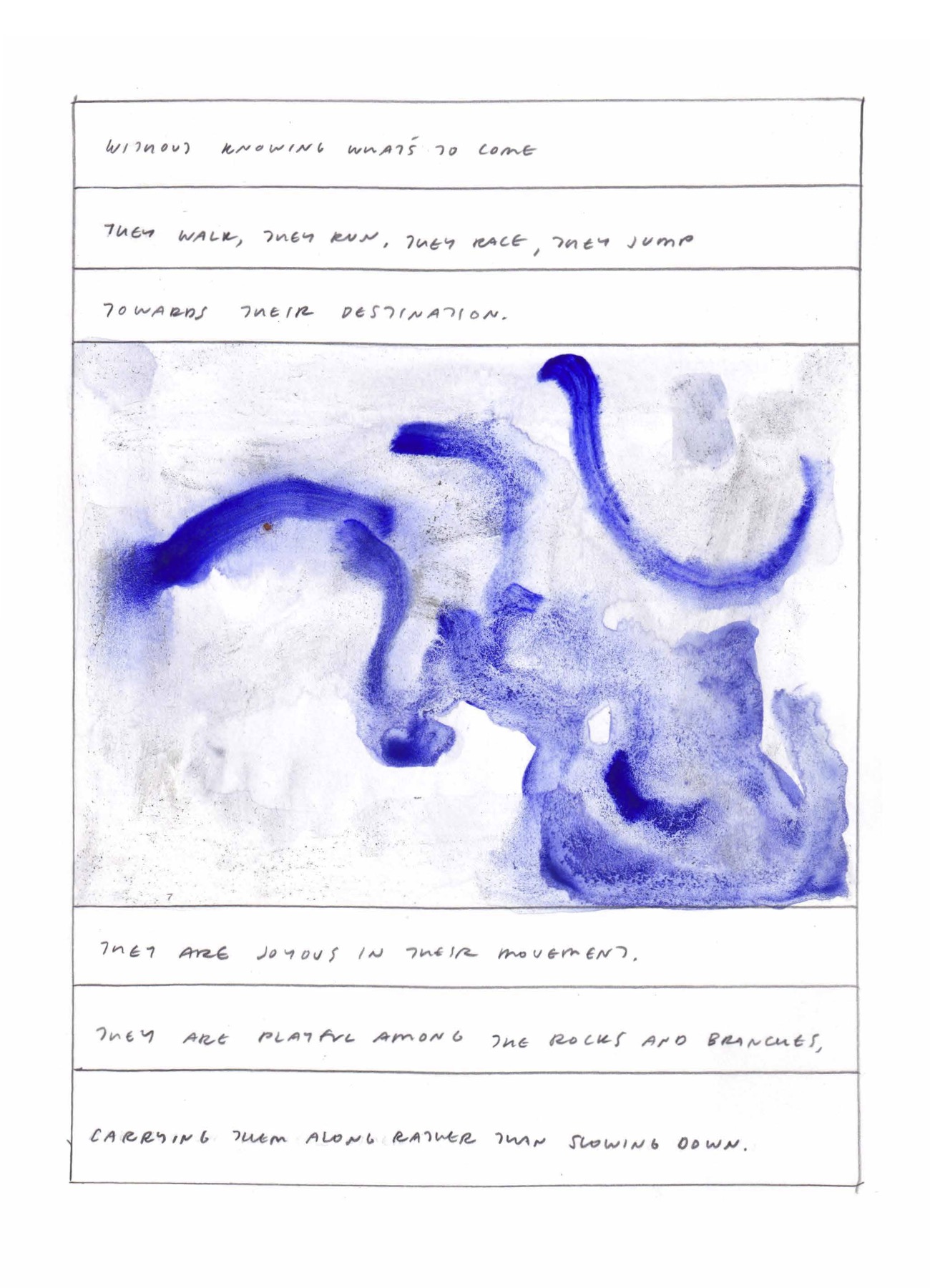
The book has only the barest narrative thread; it has no rising or falling action, and the connections between the characters, as well as who they are, what they are doing, and the interactions they experience, can be difficult to parse. But there is a sense of importance to it all, of people expressing – in ways alternately vague and bare – the powerful urges that motivate them. There is also a connection to the natural world, reflected in Koch’s periodic washes of blue and green, rendered in a lovely mélange of watercolor, pastel, and gouache. Spiral (whose title can be read any number of ways, from the organic patterns of the wild world to the downward trajectory of human emotion) does not, for all its looseness, lack structure. Koch imbues it with a constantly moving framework, providing lines and patterns made of everything from interior narrative dialogue to art on walls to bends in rivers and long wide roads.
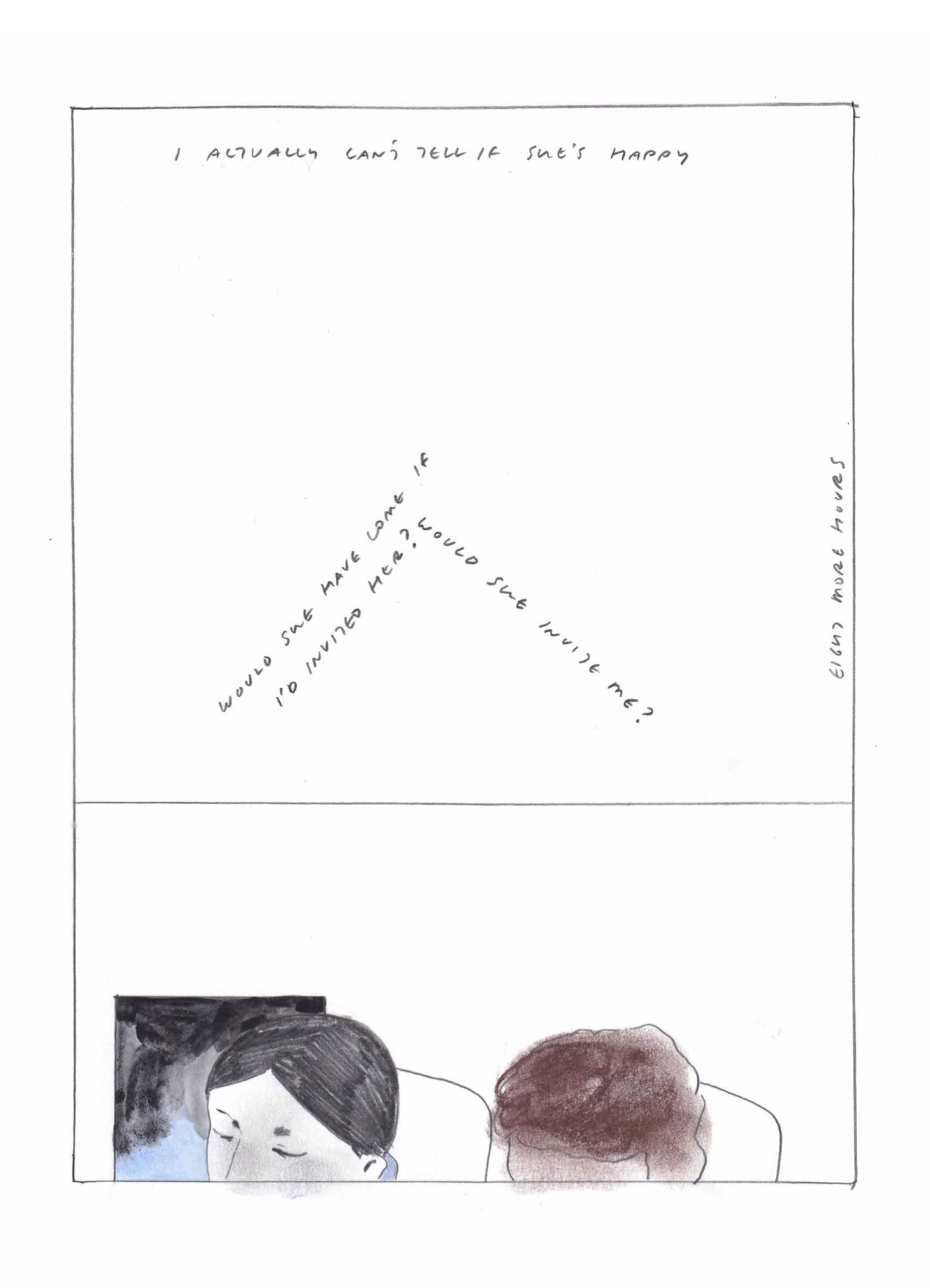
There are aspects of Spiral and Other Stories that can be frustrating. Readers who do not take well to the kinds of thin metaphorical threads that hold the book together will likely not be in the mindset to enjoy the subtle rewards of seeing those threads weave together in a slender but intricate web. While it is both human and fitting to the style of the art, I don’t particularly care for Koch’s lettering, which can be hard to read and tends to deepen the difficulty of following the themes in a book that is already difficult. There is no closure or catharsis in its angular, fleeting storylines. But the rewards that come from sticking with it are far richer and stranger than any minor missteps could deflect away from.
One of the most curious aspects of Spiral is how completely it seems to be a curio of a specific time and place, without ever letting on what that place is, or when its time might have been. Though Koch created the book during an extended stay in Joshua Tree, California (one of the most compelling and eerie parts of the American West, and where I spent my honeymoon), it does not seem to be set there, though certainly its odd, broken symmetries and remoteness inform the setting of the book. There are references, none specific, to the local natives, to ancient formations and to some kind of popular revolution, and to the rhythms and cycles of both the natural world and the imposition of human civilization, but while they burrow their way into the characters’ lives, there is no hint of specificity that could disrupt its special magic.
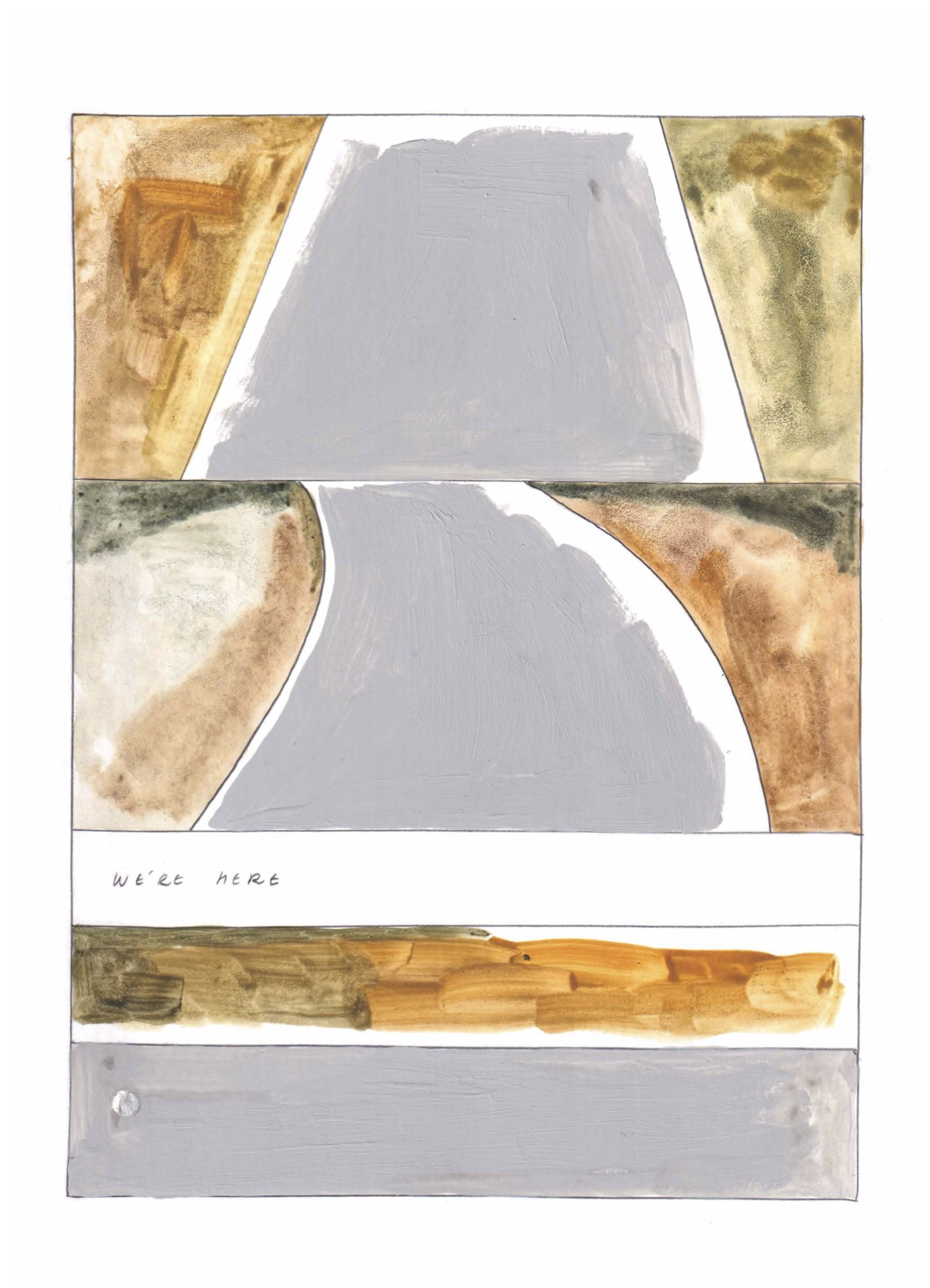
An extended metaphor in the book involves the coming together of human beings and rivers. Where will the encounters between them take them – to the vastness of the sea or to a dry ending somewhere? What were rivers before their waters flowed together, and what were people before they knew one another? In the hands of a less gifted and bright artist, this could easily have become a clunky and forced analogue, but in Koch’s poetic writing and gorgeous art, it fits perfectly into the larger direction of the story. It becomes even more natural over time, with bends and turns in the route of the water transforming seamlessly into hands, bodies, clothing – the very stuff of the humanity that follows its flow.
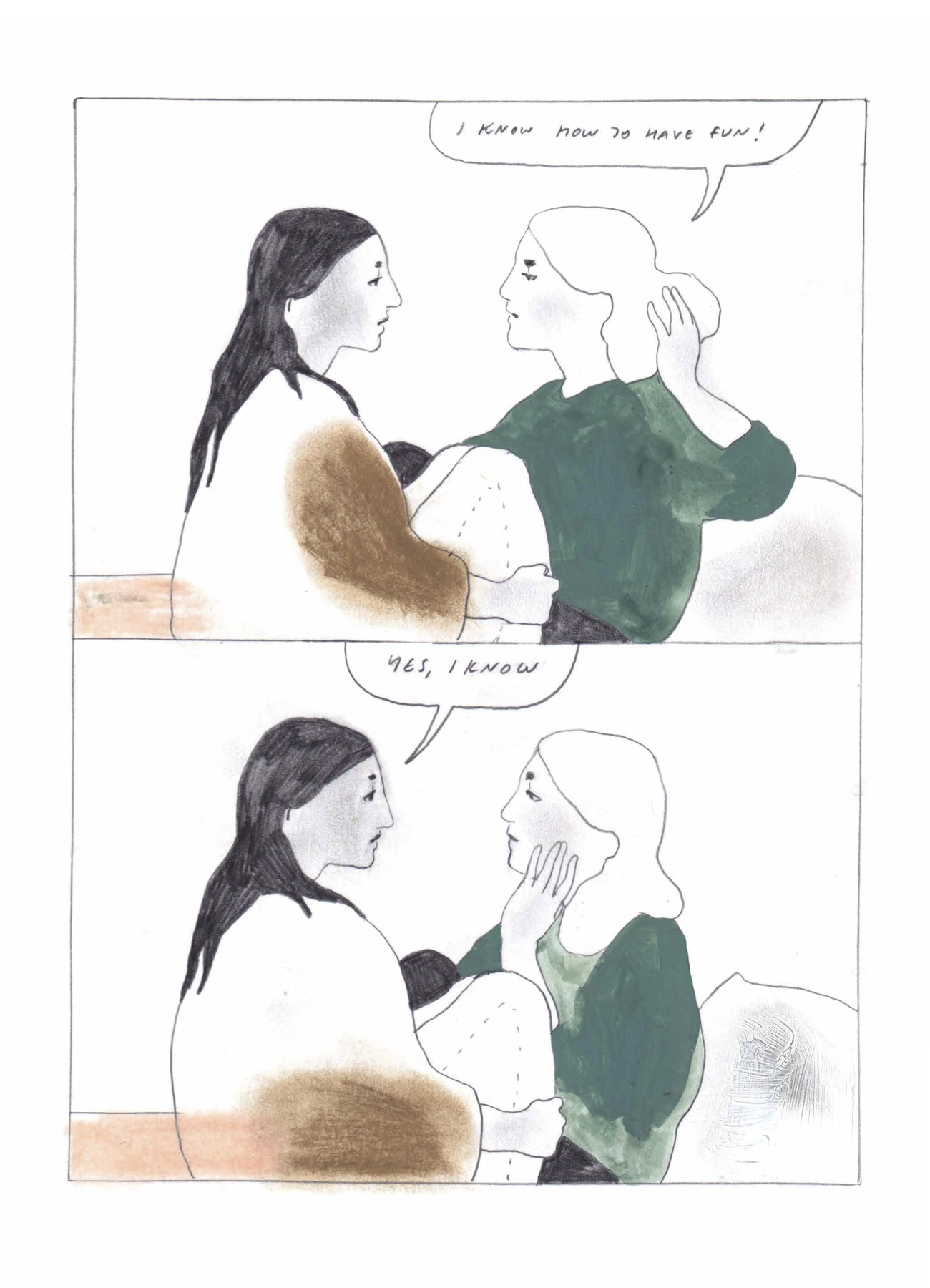
While too much explication can act to dispel the magic of a story like this, critic and essayist (and Comics Journal contributor) Nicole Rudick provides both context and perspective in an excellent essay that acts as the end notes for Spiral. In it, she compares Aidan Koch’s work to that of the novelist Lydia Davis. This is a very right and accurate comparison in my view; Koch shares with Davis a unique approach, informed by the history of the medium and intellectually influenced by some of the great work of the past while remaining sui generis. Like Davis, Koch has an economy of storytelling where there is a purity, an exactitude to each word and image that conjures up a fleeting and often mysterious, but instantly effective, mood and tone, and an overall sense of poetry that has been alchemically transformed into something else. But also like Davis, she can leave the reader to find her own footing in a landscape barely glimpsed, its shape and its residents uncertain and fleeting.
“Spiral” is the longest work in the book, and it anchors everything that comes after, but there is nothing extraneous here. Everything adheres, and nothing is wasted, and if it can be said that it does not tell a story that is easy to perceive from one moment to the next, the same can be said of a river, whose perfection of form and purpose is not in question. Spiral and Other Stories is a piece of comic art that coheres where so many similarly constructed works tend to fall apart.