
The Swedish comics artist, illustrator and filmmaker Joanna Rubin Dranger is back with a critically acclaimed graphic novel about her search for her family's history, a harrowing tale of how the Holocaust continues to affect survivors, generation after generation.
Dranger has been a major force in Swedish comics since her debut graphic novel Fröken Livrädd & Kärleken made a big splash in 1999. The small, square format, the iconic black and white art, the decision to only have one image per page — seemingly making it easily available for readers not used to the traditional, multi-tiered comics pages — and its heartfelt story made it one of the bestselling Swedish graphic novels of its era. A few years later it was released in English by Penguin Books as Miss Scaredy-Cat & Love.
The follow-up book, Fröken märkvärdig och karriären was also a success, and subsequently also released by Penguin as Miss Remarkable and Her Career. After this, Rubin Dranger released a slew of graphic novels, such as What Doesn't Kill You Makes You Stronger (Ram Distribution, 2008), Askungens Syster Och Andra Sedelärande Berättelser [Cinderella's Sister and Other Moral Stories] (2005), and Alltid Redo Att Dö För Mitt Barn [Always Ready To Die For My Child] (2008) — the latter two have yet to be translated into English.
Then, she was appointed art professor at the prestigious University College of Arts, Crafts and Design, i.e. Konstfack in Stockholm, and this seems to have taken all her time, since during her ten-year tenure, no new graphic novels were published. However, after her tenure was over, she returned, with a vengeance. Rubin Dranger’s new book Ihågkom oss till liv [Remember us to Life] was a major success, having been awarded as the best book published in the Nordic countries, the first ever graphic novel to receive this honor.
I meet Rubin Dranger at the exhibition Familjen som försvann [The Family That Disappeared, an exhibition based on Remember us to Life, shown at Forum for Living History in central Stockholm, to which Rubin Dranger invited me for a private viewing.
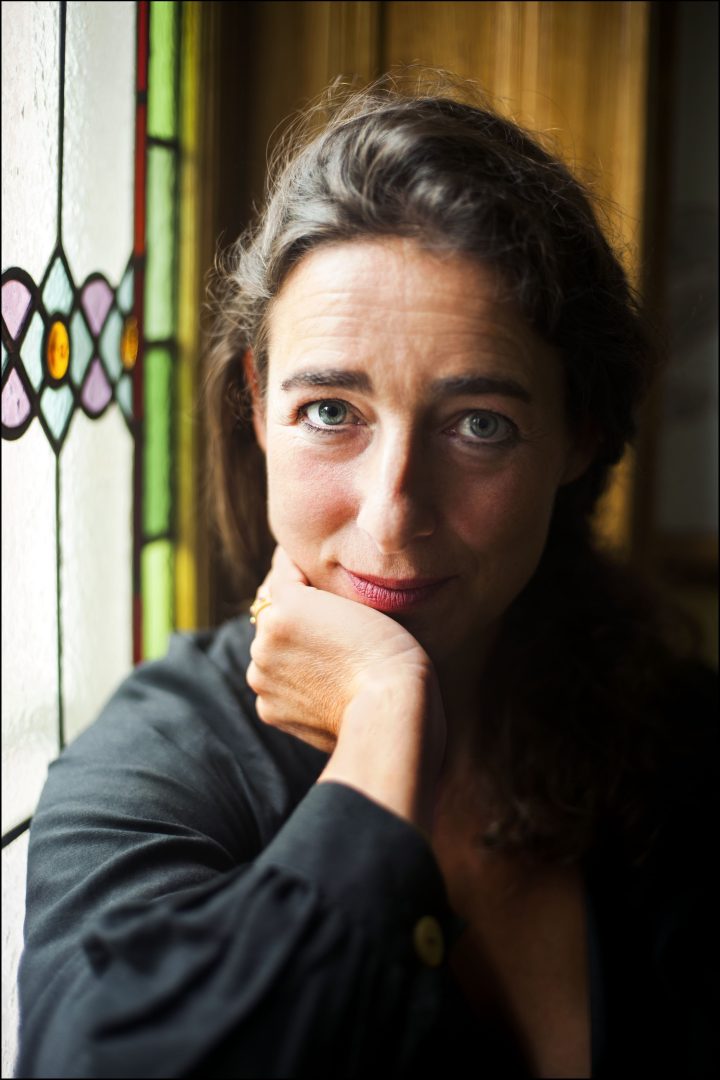
The last time I interviewed you was in 2011. So, what has happened in your life in the last decade or so, besides the new book?
Wow. ... That's a big question. ... In 2011 I had my youngest daughter, Perla. She's 14 now. So, there's a lot to go through. One important thing that happened is that I finished my position at Konstfack in 2017, which meant that I finally had more time ... and freedom. And yes, I had a stroke in between. It was scary. The doctors didn't find any physical reasons for me to have a stroke, so what both they and I thought was the cause was the extreme stress I lived with for many years due to the position at Konstfack and various things that happened in my life.
When I left Konstfack, I felt very strongly that I never wanted to do anything related to any kind of performance again. I felt completely tapped out and just wanted to go for walks, canoeing, skiing or skating. But after a long time with a lot of nature and time and freedom to do "nothing" (comparatively), there was a longing to be deeply involved in something again. And then I became more involved than I could ever have imagined when I started this book, which many years later became Remember Us to Life.
A long road
You describe in detail in the book your struggles to create Remember Us to Life, but can you talk a little about how you concluded that this was something you could tell a story about?
It started with just a thought, really. Which then grew and grew and became something completely different from what I had first envisioned. I had a lot of material and sources about my Jewish family in Sweden that I had returned to sporadically over the years and which I had always found interesting in different ways. So, from the beginning I thought I would make a picture story based on what I knew about the Jewish side of my family in Sweden, which was a lot.
One of the stories I started with was titled It's not dangerous. It starts with a picture of a mirror that I have at home on which I have written it's not dangerous to remind me that I don't always have to be so afraid.
So, the story starts with my own fear but then it's about my grandmother's parents Aron and Rebecka, who leave with their little baby Elias from Bialystok because of violent pogroms and they come to Gothenburg. In Bialystok, Aron had been the manager of a small textile factory, so he had knowledge of textiles, and he started working as an itinerant farm trader.
Soon, Aron ended up in scenic Hindås, three miles outside of Gothenburg, where he quickly made friends with the locals. At that time, Rebecka and Aron had two small children, and the little family moved to the small, Swedish town of Hindås. Despite being Jewish immigrants who didn't speak the language, they got help from the people of Hindås to start the local shop. At this time, Hindås was being transformed into a recreational centre, so lots of well-to-do tourists came to Hindås and the shop did very well. Aron and Rebecka had seven children who attended Tyringe boarding school, one of Sweden's most progressive schools at the time. Tyringe was actually a boarding school for the upper middle class and the upper class, but the children who lived in Hindås could also attend the school.
This is largely a story about love, openness and closeness between people but it is also a love story between the Katz family and Hindås, and by extension with Sweden.
It is a fascinatingly bright story that shows that it was not always “worse in the past”, as it might be easy to believe, but that it was perfectly fine and could also be quite unproblematic to be Jewish and Swedish in the early 20th century. To socialize both with the local population and with the Jewish relatives and friends who had also come to Sweden. The story contradicts the idea of Sweden as being so homogeneous and blond until now. Other lives have been lived here.
What happened during the work process was that once I started comparing different sources and documents I had about my family, I discovered that there were missing pieces of the puzzle, and even people — who no one had reflected on the fact that they were gone. And each question led to new questions. During my research, I started reading different books about Sweden and Europe before and during the Second World War. And for every book I read, there were 5, 6, 7 new books that I felt I needed to read. My material — both the personal and the historical — grew and grew.
The book project felt at times completely overwhelming and huge and impossible, but at the same time always deeply meaningful. I found so much interesting historical material that is connected in so many ways to our own time, to our lives here and now, and I kept feeling that “I need to tell this story."
Perhaps I also need to explain to those who have not read the book that Remembering Us to Life contains six different stories that are all interwoven. The stories in the book are about my relatives, but they also tell a much broader story about the history of Sweden and Europe during 120 years.
I was also very upset by some of what I found, partly what I learned about my own family and relatives, but also everything I had not known about Sweden's role during the war. The picture of Sweden's role during the war that I had before I wrote this book is very different from what I now know. The research and knowledge about what happened during the war, and how to evaluate what you know, looks different now than when I was in high school.
What I learned about my own family and relatives made me wonder how I have not been able to know this before, and why I have not wondered about this before. What I learned also raised questions about how memory works, what you sort out and what you don't, which I portray in different ways in the book.
Throughout the book, readers can follow how upset I feel, and my own deep doubts about what I can and dare write about and not.
In contrast to Maus, which appears in several different ways in my book, and which portrays a survivor's testimony, Remember Us to Life is a story about the lack of testimony, about silence and about memories that have been lost.
Format and content
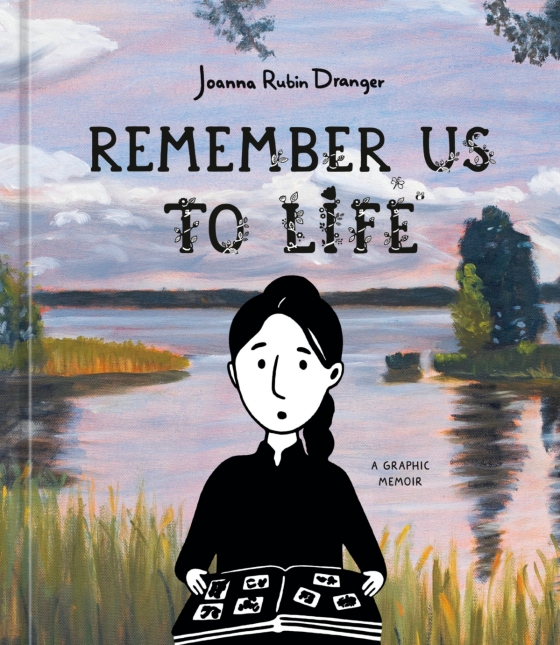 You chose a different format for the new book, larger and often with more information per page compared to your previous books. Where did that come from?
I had originally thought that this book would be similar in scope and size to my previous books, but then the book grew in all directions while I was working on it. My publisher contacted me at some point when I had already been working on the book for a couple of years and wanted a larger format in terms of width and height. When the book finally came off the press, I loved how big and thick and heavy and beautiful it had become. It is printed on a thick quality paper and the whole book is printed in four colors even though many pages and spreads are black and white, which gives it a luxuriously dense black. And here and there are pictures and spreads in color.
You wander back and forth between illustrated prose and comics sequences in your book. What were you thinking when you decided to mix different forms of communication in one book?
Since I was 20 years old and became a practicing illustrator, I've always felt constrained and trapped by notions that as a cartoonist you should have a style, a manner, “a line” or “a visual expression”. And I felt that very strongly with this material. All the things I wanted to talk about, large parts of our 20th -century history, about many different countries, world wars and everything from love to self-doubt to anti-Semitism — I had to allow myself to use all means possible. All kinds of images are mixed in the book, drawings and photos, color and black and white.
Sometimes I am portrayed naively and sometimes realistically, sometimes something is described only in a text, sometimes with a photo, sometimes as a picture book, other times in more traditional comic form. In some places I address the reader directly and comment on something, in one place I almost give a little mini-lecture. I have felt that everything must be allowed to get across what I want to say in the best way I can.
Narrator's voice
You are very much present in the book, not only as a narrator but also as part of the narrative, which adds tension and invites the reader to empathize with your journey. But it varies a lot how much you are involved. How did you think about this?
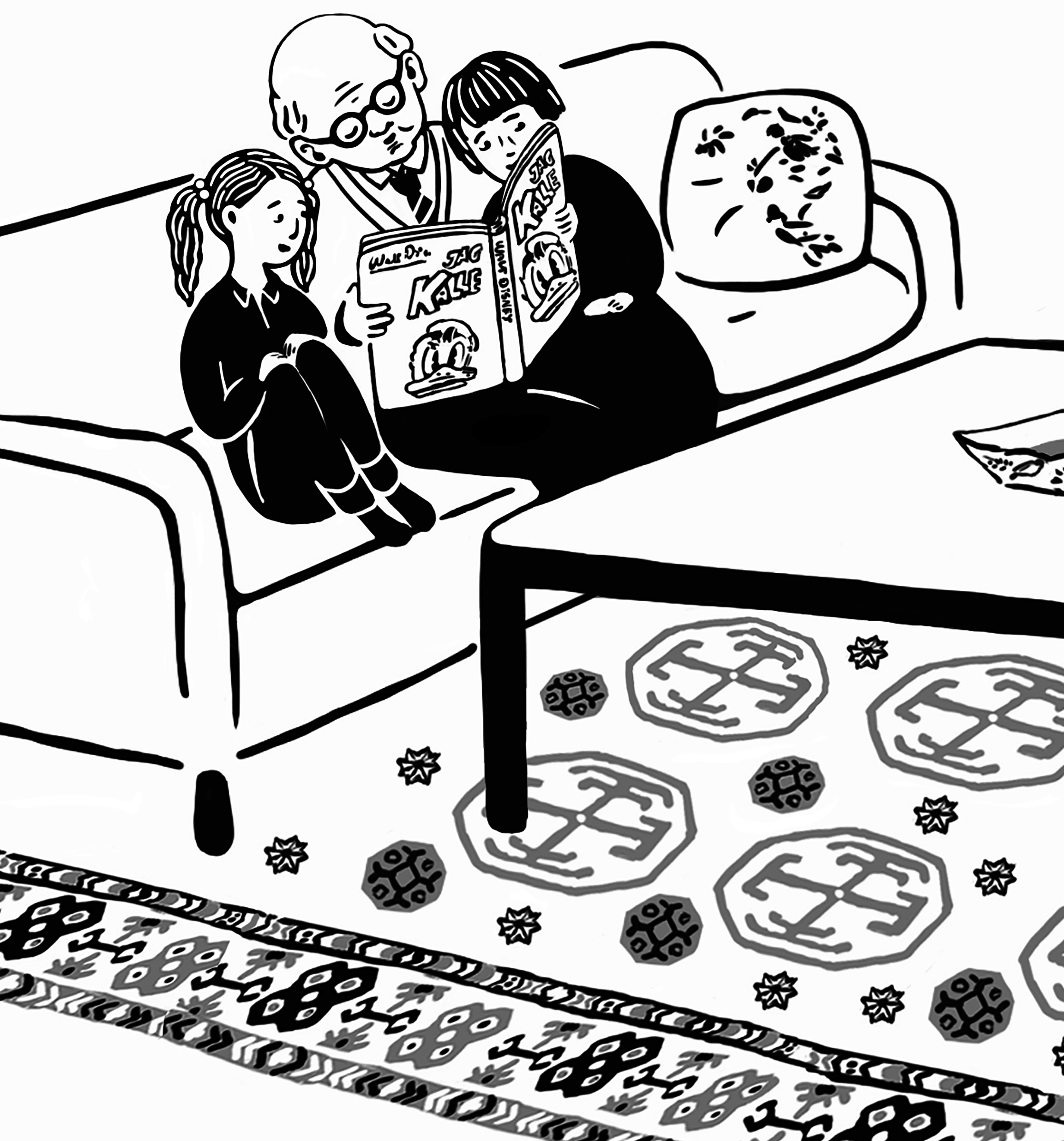
The stories in the book are very different and depict many different events and aspects of our history and our present. My process is that I never write a book or a story from A to Z, so I never know what order the scenes in a story will come in until the very end. With this book, I also didn't know at all which of the stories would be included and fit into the book, or in what order they would come. Between the stories, I then drew “interludes” that tie the different stories together and that often take place in the present, with my husband and children. Those everyday scenes are important because they are also constant reminders of life, everyday life, the life we live and what was stolen from those who were murdered.
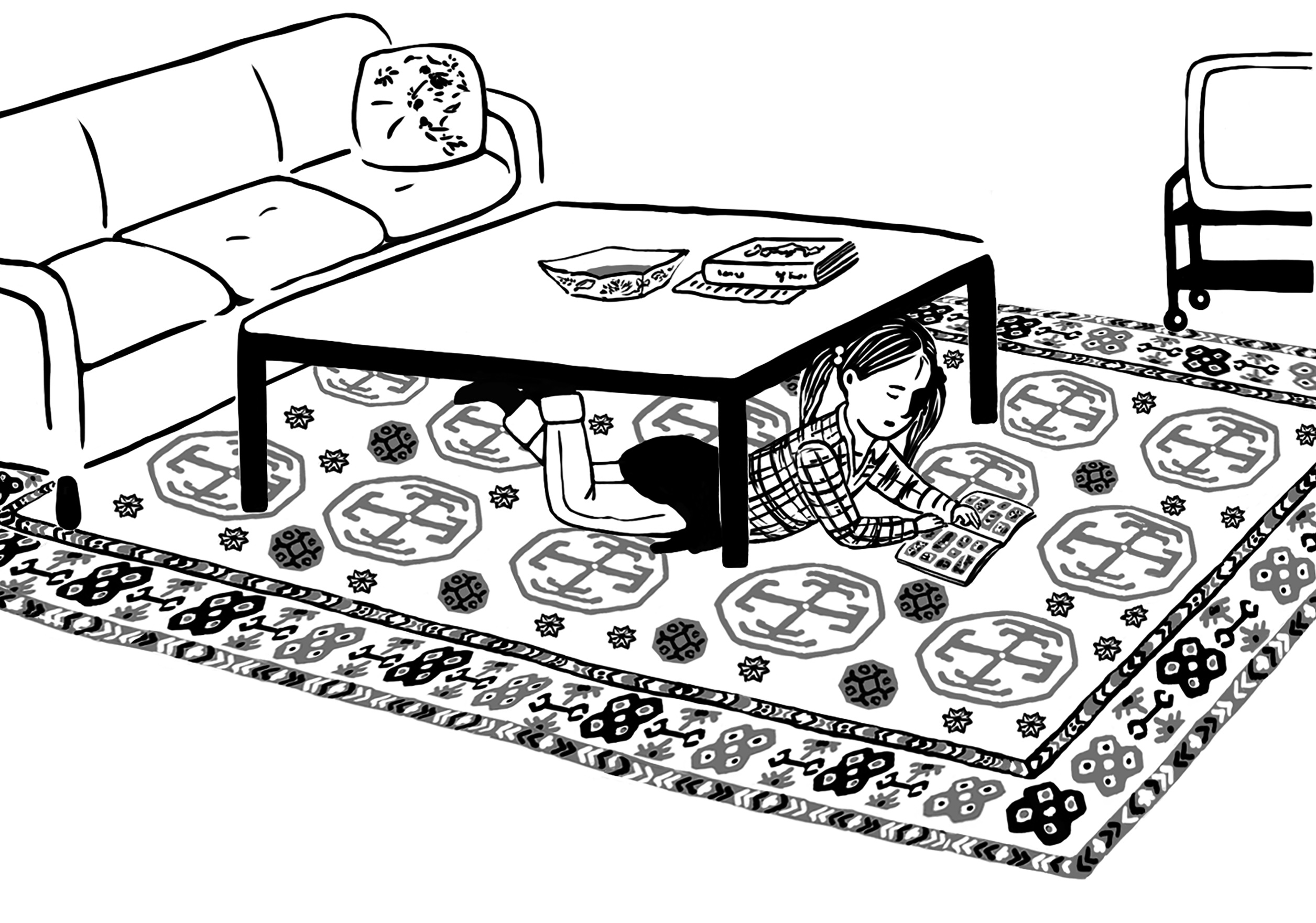
When the book was finally finished and was to be sent to printers, we (my editor Sara Arvidsson and I) discovered that there would be nine blank pages because of how the printing sheets would work. It so happened that I had just met the author Marte Michelet, who had fact-checked the story in the book about the German occupation of Norway. But instead of just reading the story she was reviewing, Marte had read the whole book, and we sat for many hours talking about all sorts of things about the book and about our respective lives. Among other things, I told her about an event from my Christian confirmation as a teenager, and Marte was surprised and wondered why it wasn't in the book. I hadn't thought of that. Shortly afterwards I was told that there were nine pages “left over” and I then suggested to my editor that I should try to draw that in before it went to print. In retrospect, it may almost seem like a necessary scene in the book, but I think that's how the process works, it's winding, dynamic and ongoing.
In time
It feels like your book is part of an international trend now, with graphic novels like Nora Krug's Heimat from Germany, Survilo by Olga Lavrentieva from Russia, and Your Grandfather Vasha by Anna Rakhmanko and Mikkel Sommer from Denmark, all of which are dedicated to digging into their respective families' pasts. You touch on that a little bit in the book, but can you elaborate on why you think this is happening right now?
I haven't heard of all the titles you mention, but I will look them up! I've read Nora Krug's Heimat, which I read after my book came out. I was four years in the making with Remember Us to Life ... during much anguish and postponed publication several times also due to COVID. Along the way, someone mentioned that a book like what I was working on, Heimat, had been published, which made me feel quite nervous. Like, “What happens if someone has just published something similar to what you are still doing?” What do you do then? But when I googled and realized it wasn't about a Jewish family, I breathed a sigh of relief and let go of the whole question. It is so difficult for me, almost impossible, to read other people's books when I am deep in my own process, unless it is books that are included in the research itself, that is something else.
That's why I also read Swedish comics artist Mats Jonsson’s book När vi var samer (When we were Sami, a book about Jonsson’s Sami ancestry) only after my own book was published. I think it's a sign of the times that Mats' book, my book and Lisa Wool-Rim Sjöblom's book Palimpsest came out around the same time. I don't think it would have been possible to make our books as they are, 15 years ago, and I don't think they would have had a readership then.
I think it says something positive about our time that they can be made now and that they find readers now. They all look at Sweden and at Swedish local history through the lens of a minority.
Reactions to the book
What has been the reaction to the book? You write in the book that you were nervous that the content would be too internal and not be of interest to the public. That has not been the case, to put it mildly.
I was really deeply worried about the reception of the book, perhaps especially during the last year when I was working on it, and even worse as the publication date approached. I am very good at imagining the criticisms and objections of different "camps," which is quite painful. For example, I understood that it was crucial that the book should not contain factual errors or have failed to list sources because then it could have been dismissed on that basis. That's why, for example, the book is factchecked by one of Sweden's most prominent historians and experts on the Second World War. When I did the very first interviews, the reviews had not yet come in and I was very worried and confused. On a couple of occasions, I ended up crying in the interviews because I was so grateful and relieved that the journalists, rather than asking critical questions, wanted to express how important and moving they thought the book was. When the reviews came, it was fantastic to be read exactly as I had wished both in Sweden and abroad, that I was not misunderstood.
I feel less afraid now that I know that many others also think the same things are important.
Since the book came out, I have also received such fantastic reader reactions. People write letters, postcards, emails and so on, telling me how and why they were affected, that they think the book is so important and that it should be distributed in secondary schools. Then people have also contacted me and told me that they have Jewish ancestry, but they don't tell anyone, some have never told friends or colleagues. They are afraid of being exposed. I never knew before that so many people with Jewish backgrounds don't dare to say it openly in Sweden.
How has your family received the book? When you showed me the exhibition in Stockholm, I remember that a relative came in to look at it.
Yes, that's right! It was my husband's mother. Everyone in my family has been very positive and happy about the work I — and we together — have done in trying to find out what happened to our family and relatives. I am also very happy to have made close contact with many relatives whom I have not previously known or socialized with, and there are several of us who had not even met before but have now met through the book. No one in the family has expressed opposition to my digging into our history. In the book, I describe how a close relative calls and says that no one else will want to read my book. Those words really stuck with me, because I already doubted whether I would succeed in creating a book that others would find interesting.
The future
Now that you have this major work out of the system, what is the next project? How do you move on artistically after such a big release?
When I had just sent the book to print, a friend told me that I should uncork the champagne and celebrate. What he meant was: now you're done. But I felt then and I still feel that the work on the book is not finished yet. For me, it's such a hugely important part of this book and how it is read in Sweden and in other countries. I'm currently traveling around and having book talks in different contexts in Sweden and abroad, and I'm working on getting it translated into more languages, which I very much hope for.
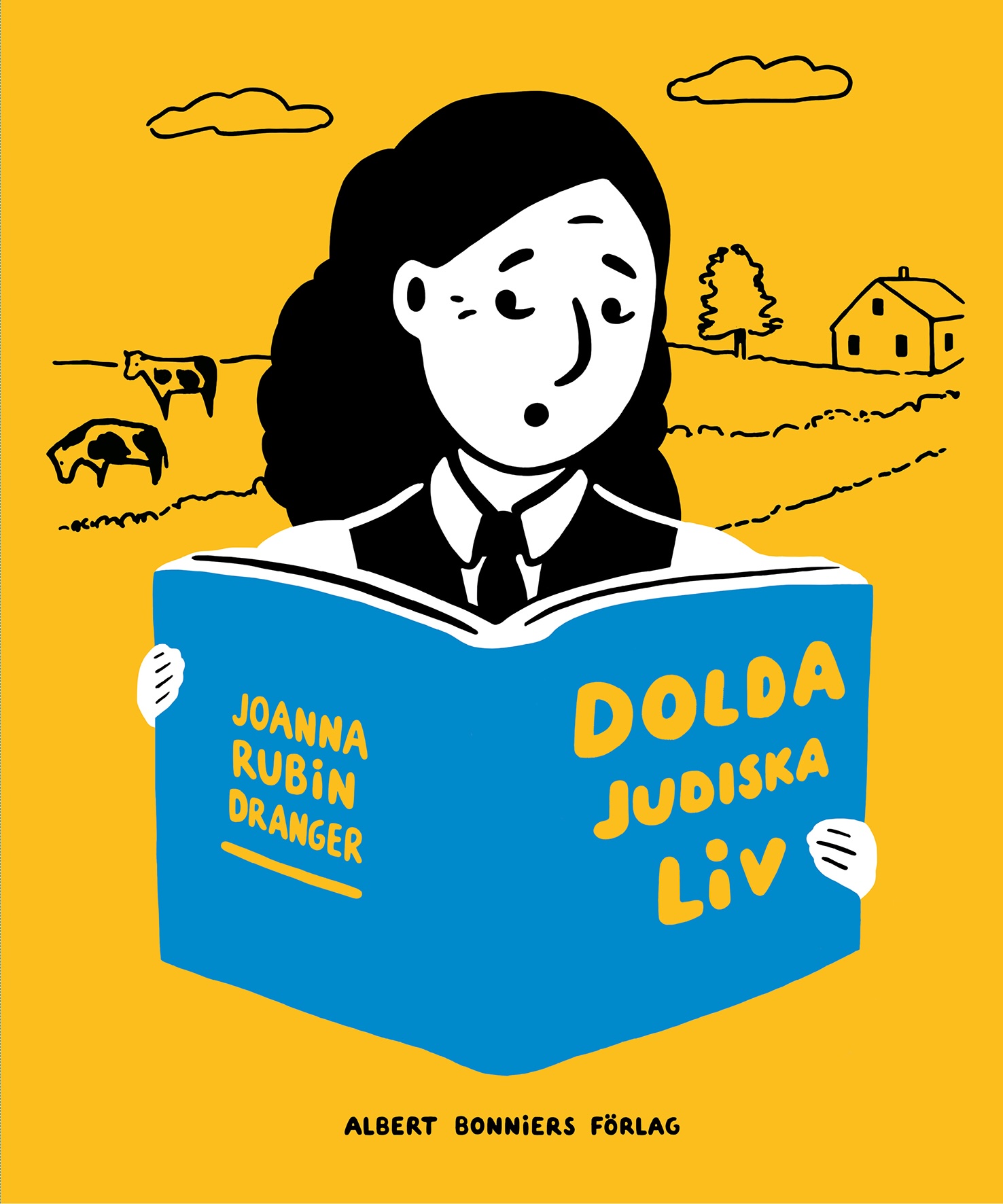
OK, so relatively quickly after Remember Us to Life was published, to great acclaim, you published another book: Dolda judiska liv (Hidden Jewish Lives). How was it that you made another book so quickly?
When Remember Us to Life was first originally published in Sweden in 2022, I received an overwhelming response — countless letters, emails, and messages from readers. Many came from the general Swedish audience, expressing how much the book meant to them, why they thought it was important, and how upset they were to learn about the extent of Sweden’s compliance with Nazi Germany during World War II — and that they hadn’t known about it before.
But there were also a few messages that were deeply personal. They came from Swedish Jews who confided that they had never revealed their Jewish heritage to anyone — some not for three generations. I believe they confided to me because, in Remember Us to Life, I was candid about my own assimilated and secular upbringing, about everything I didn’t know regarding Jewish traditions, and about the fact that I hadn’t even known my own relatives were victims of the Holocaust. These readers recognized themselves in my story.
That connection led me to create Dolda judiska liv, in which I interview and illustrate the stories of 35 Swedes who have kept their Jewish identity hidden.
How did it feel to conduct all these interviews? Was it stressful or liberating to hear about all these experiences, which I assume are partly similar to your own?
It has been amazing to conduct these interviews, as there was such a profound, pent-up need to talk. When I began them in the spring of 2022, I saw that some were beginning to open up about their hidden family histories and identities as a sign that enough time had passed since the Holocaust for a sense of safety to return. I also felt it reflected something important about the time we were living in – that these stories were coming to light because it finally felt possible for them to consider becoming openly Jewish.
But after Oct. 7, 2023, and the wave of antisemitism that followed, the trauma of the Holocaust was once again reawakened, with full force and intensity. It changed both many of the interviewees and my own understanding of the need to conceal one’s Jewish identity. Someone told me, “I just started to talk to you and now this happened. So maybe my father was right, we shouldn't talk about it.”
To me, the most remarkable thing is that the interviewees — some of whom had never spoken to anyone about this before — manage, through the book, to create a language with which to articulate this previously unspoken and untold experience.
But these testimonies are also important because they reveal a previously unexplored — and to many people surprising — aspect of Sweden.
The new book is more of an illustrated textbook compared to Remember Us to Life. Was it the material that guided this choice or was it a matter of you wanting to do it this way.
From the beginning, I thought I would conduct around five to seven interviews, all presented as comics. But as I connected with more people who shared the experience of being hidden – each with their own unique story – I realized it was important to portray both a broad and deep insight into the subject. The book would have become far too long if every interview had been told in the comics form, so it was ultimately a pragmatic decision.
Finally, it is impossible to avoid asking how the war between Israel and Palestine/Hamas has affected your situation as an openly Jewish person in Sweden/Stockholm?
To me, it has been shocking that so many people seem unable to express strong criticism of the Israeli government without crossing into antisemitism — it really isn’t that difficult. What has unfolded since Oct. 8, 2023, could be described as the first global and digital wave of antisemitism. Across Australia, Europe, the U.S., and South America, the level of antisemitism has been unprecedented.