
In my interview with Dan Schkade a few months ago, he made an interesting comment about Bones Malock-
“I figured, why not use this as an opportunity to find range on our new version of the strip by creating an antithesis to the classic, graceful Alex Raymond femme — older, gnarly, with they/them pronouns and a big hooded duster. To be honest, Bones ended up being maybe more of a Star Wars character, but I really dig them and I was pleased to see the audience did too.”
The archetype of the classic, graceful Alex Raymond femme wasn't quite one I understood at the time- although now that I've read Mad Cave's new Alex Raymond Flash Gordon collection, the counterpoint is that much more obvious. But there's another interesting question posted here too. What exactly is the difference between a Flash Gordon character and a Star Wars character?
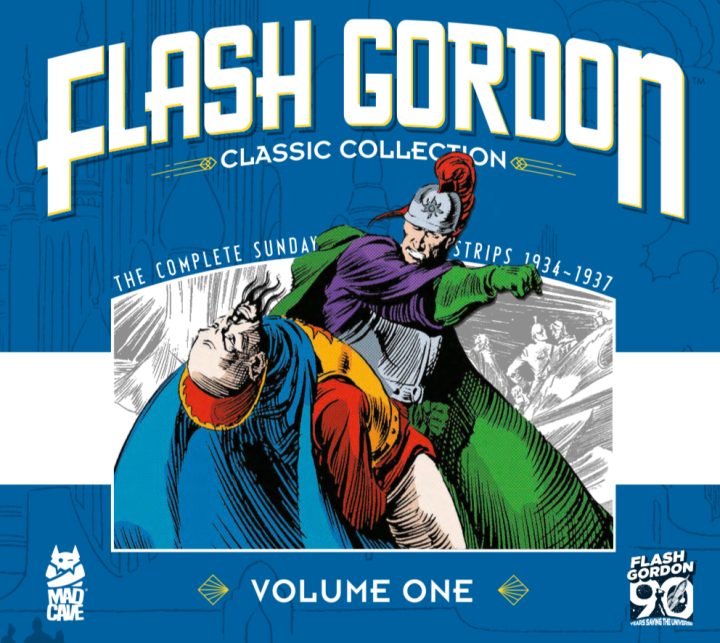
Despite how well-know the name Flash Gordon is, and indeed, the historical importance of the name in comic history, at no point has Flash Gordon ever really been a true pop culture phenomenon except in the Alex Raymond era in the thirties. What was the big deal, anyway? Well, Mad Cave Studios is releasing gorgeous editions of the Alex Raymond Sunday run, so we can finally see for ourselves.
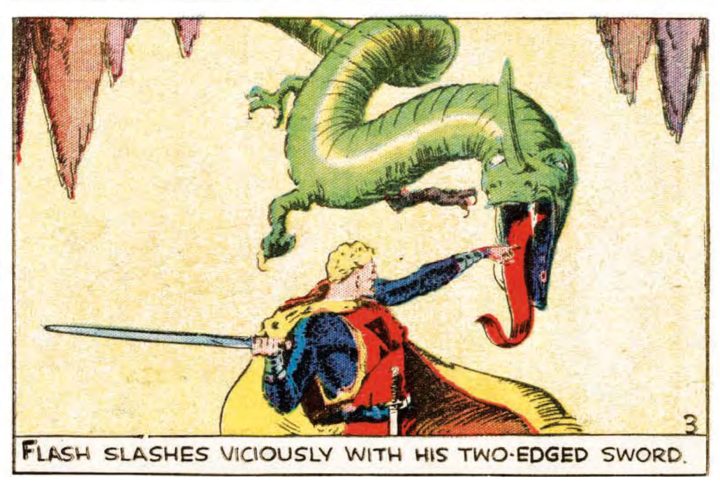
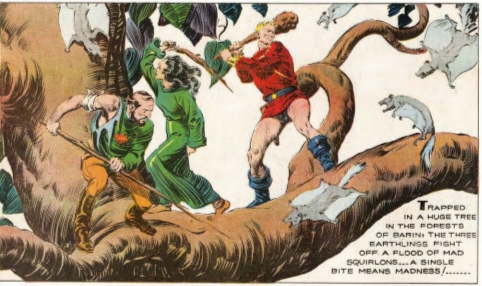
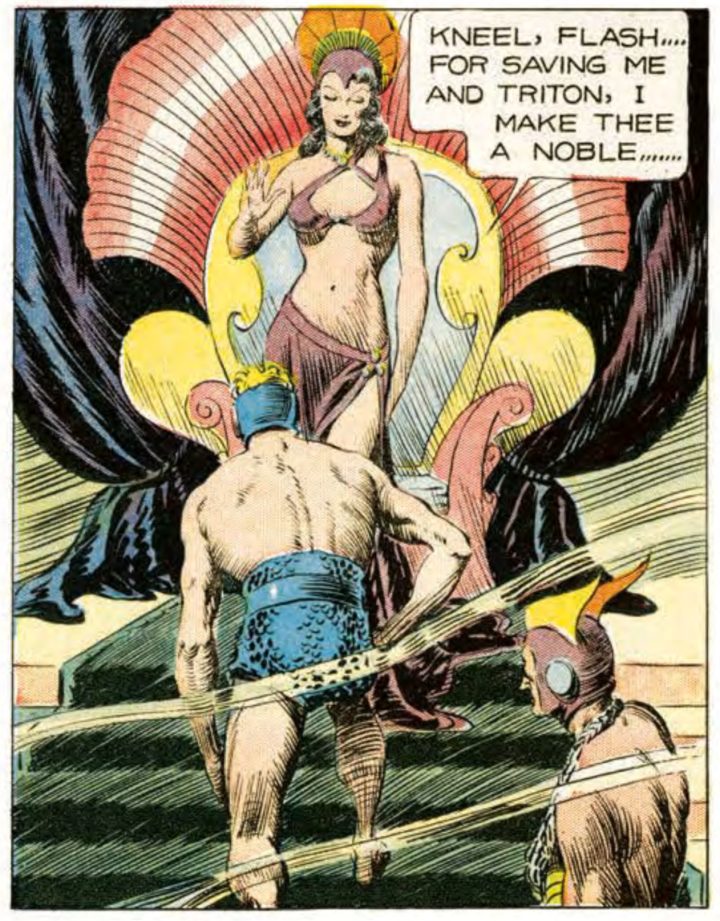
And I do mean gorgeous. The colors are dynamic, even in a relatively simple strip which is just one of those Alex Raymond femmes magnanimously standing between her throne and flash. The action is crisp and tense even when the gang is fighting something as diminutive as ferocious flying squirrels. No matter how many times the main characters cheat death, a new cliffhanger begs the questions of how they'll do it again with the latest grotesque monster or technological trap.
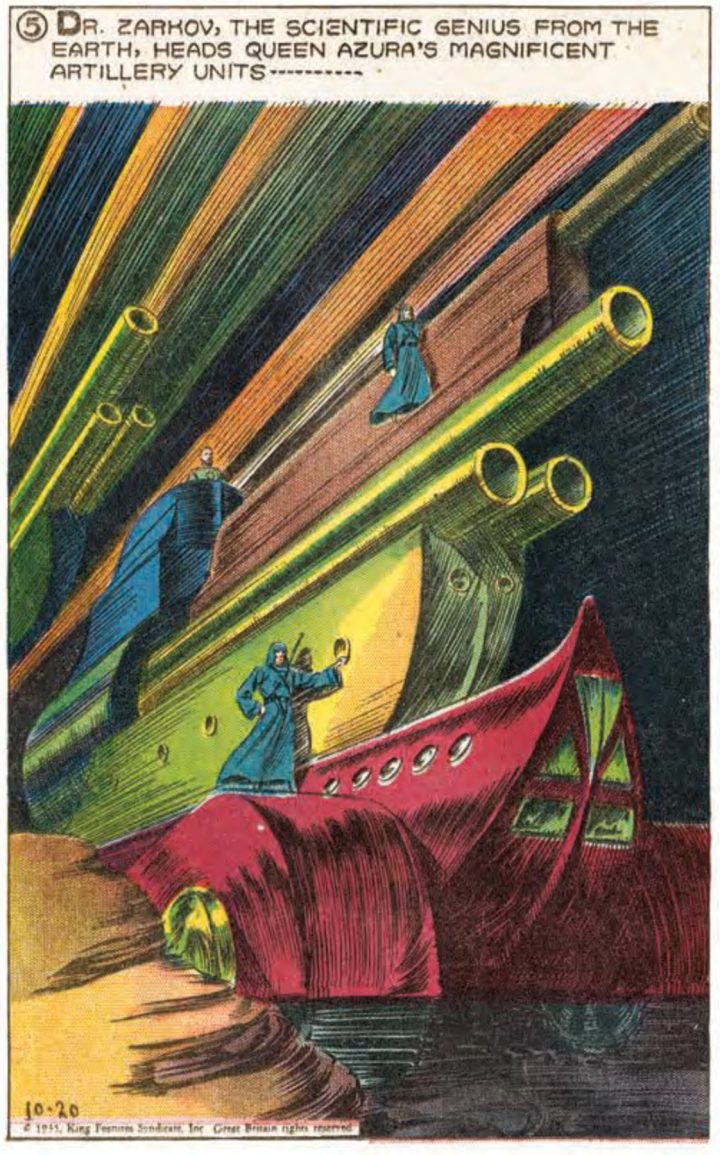
The first volume covers every comic from Jan. 7, 1934, to April 18, 1937, and there's never a real break in the action except for the implied ones for the original readers, as they had to wait a week between strips to figure out what would happen next. The pacing moves fast despite that- in twenty-seven weeks, Flash goes from being the unwilling servant of the Sea Queen to fighting off those killer squirrels in the forest kingdom. A lot happened between those points, including multiple allegiance shifts and even a war, yet the sequence of events remains quite logical in my memory.
Beyond the pacing, there's no question that as a matter of aesthetic and artform, Alex Raymond's draftwork is unimpeachable. An editor's note apologizing for reformatting some strips that were printed at half tabloid size is ironic, as these gigantic sized panels just make the art look that much more impressive. I'd say the timing is appropriate, too, given that the first round of these expanded strips coincides with the climax of The Tournament of Death. But again- Alex Raymond's Flash Gordon never slows down. It's just one crisis after another, as Flash and Dale arrive at a new terrarium with new horrific forms of alien life.
Given the quality of the cartooning, the question is begged, why aren't the original Flash Gordon comics better known? Regrettably, I realized the answer to that question pretty quickly even as I appreciated the technical quality of the art. Flash Gordon is ... problematic, even given the standards of the time. Despite the fact that he's an alien, and not an actual Asian person, Ming the Merciless is portrayed visually with some fairly alarmingly orientalist tropes.
To Raymond's credit, he seems to have realized Ming's appearance was too stereotypical for its own good- his appearance softens considerably during the first large gap of the story where he doesn't appear, as is the case for his yellow-skinned cohorts, using noticeably less extreme versions of the color. In general, Raymond makes use of strong colors to clearly distinguish different races, and this isn't as much of a problem with, say, blue aliens. Even the brown ones typically have enough distinct, sympathetic traits that the art isn't the biggest problem with them.
Larger colonialist themes remain, well ... a bit of an issue. Flash Gordon is so much about the action, the exact nature of the empire Ming the Merciless controls is never completely clear, mainly because it's not important. But it's fairly telling that our title hero has no issue with the idea of Empire- the aforementioned Tournament of Death has as its prize ascension to the echelons of power as one of Ming's colonial administrators. When Flash goes to war with Ming, it's mainly because he disagrees with a specific order he's been given. While most other named characters also have grievances with Ming's tyranny by this point, the feeling is less that they resent Ming's cruelty at large so much as they resent how it's directed.
Gender is another issue that's rather unavoidable when trying to do any sort plot analysis. Flash Gordon and Dale Arden are presented in the first comic as if they don't even know each other. Yet within a few months of comic time, maybe hours of real time, they've rapidly arrived at the point where they're willing to die for each other. Despite neither of them looking all that remarkable, it's a bit remarkable how with nearly every new alien race they meet, either the King or the Queen of that race almost immediately becomes obsessed with marrying Dale or Flash. Even with Ming the Merciless and Princess Aura this felt excessive, such that the sheer repetitive nature of this plot point borders on self-parody.
But then, Flash Gordon isn't really about plot, or politics, or personality. That I framed this piece by discussing Dan Schkade's ongoing reboot is a bit ironic in this context, since it has all three, and is by any reasonable definition a worthy successor to Raymond's work. The core element of Raymond's Flash Gordon run that Schkade has to date successfully emulated is the sense of constant action and pacing. The white supremacist undertones of Flash and Dale getting lost in the jungle and Flash becoming chief of the Tusk Men through a one-on-one duel aren't why Raymond wrote the story like that. He wrote it that way because every comic had to have some sort of brutal action or life-threatening situation – not to mention, lots of stuff that's just really fun to draw and even more fun to look at.
Why was Flash Gordon such a cultural flashpoint? Alex Ross and Doug Murray have some worthwhile theories in their opening essays. Flash Gordon is a genuinely alien action fantasy, its beautiful illustrations largely untethered to the real world and not generally relying on the tropes associated with ostensibly real places like Tarzan's Africa. The thirties were a time of rapid technological change- radios may seem like mundane technology to us, but were relatively newfangled in the thirties, and Alex Raymond built multiple worlds and wars around such wonders.
The setting in Flash Gordon is very functional that way- it's not supposed to be coherent so much as it's supposed to be colorful and intense. This is a comic where Flash and Dale often appear with little in the way of clothing, not for the sake of titillation, but to emphasize that they're in a very dangerous situation which could easily kill them, even if it never actually does. The king of the impossible indeed.