

Thoughts and impressions on a selection of noteworthy comics I've recently read.
* * *
VALERIAN AND LAURELINE: THE CITY OF SHIFTING WATERS (Cinebook, 2010) - Pierre Christin & Jean-Claude Mézières, colored by Évelyne Tran-Lê & Mézières, translated by Jerome Saincantin


Every time I see one of these Valerian books for less than 10 bucks I can’t resist picking it up (this volume is my fourth). The series seems to check all my boxes (all two of them), Spirou-style drawings and science fiction, but those first three volumes left me feeling pretty “meh”. This one did too, though I enjoyed the art more than usual. I’m not sure if it’s actually any different or if it’s my taste that’s changing, but Mézières' black spotting really impressed me this time around. One particular shot where about two-thirds of Laureline’s body is entirely blacked out struck me as really bold - fearless, in a way. In my professional animation work I’m forever cleaving to blueprint levels of informational clarity, and in my personal drawings the details of bodies and clothing are the whole point, so every time I see Mézières obscure a big chunk of landscape, or especially a human body, I get a little micro-thrill at the audacity.
The plot is really straightforward. No twists or metaphors or anything, just a villain who needs to be chased down and defeated. The art and the pretty, post-apocalyptic settings were enough to keep me engaged for the first half, then I ran out of steam. Ironically, yet unsurprisingly, it’s the “action” scenes that really bog things down. Watching cartoon characters wander around a flooded metropolis can be very interesting, but watching cartoon characters shoot at each other is always boring.
* * *
HAROLD HEDD IN HITLER’S COCAINE #1-2 (Kitchen Sink Comix, 1984) - Rand Holmes
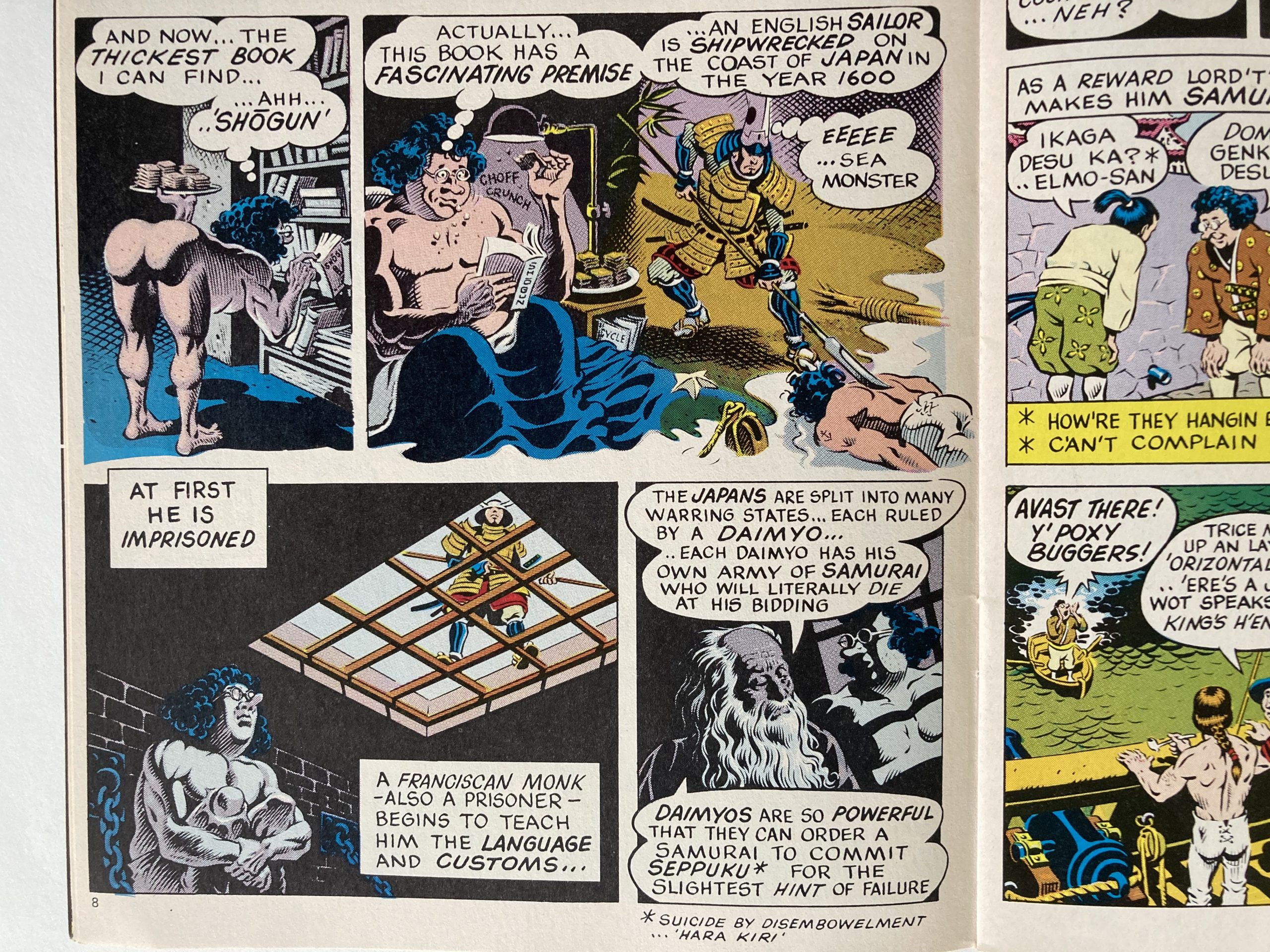
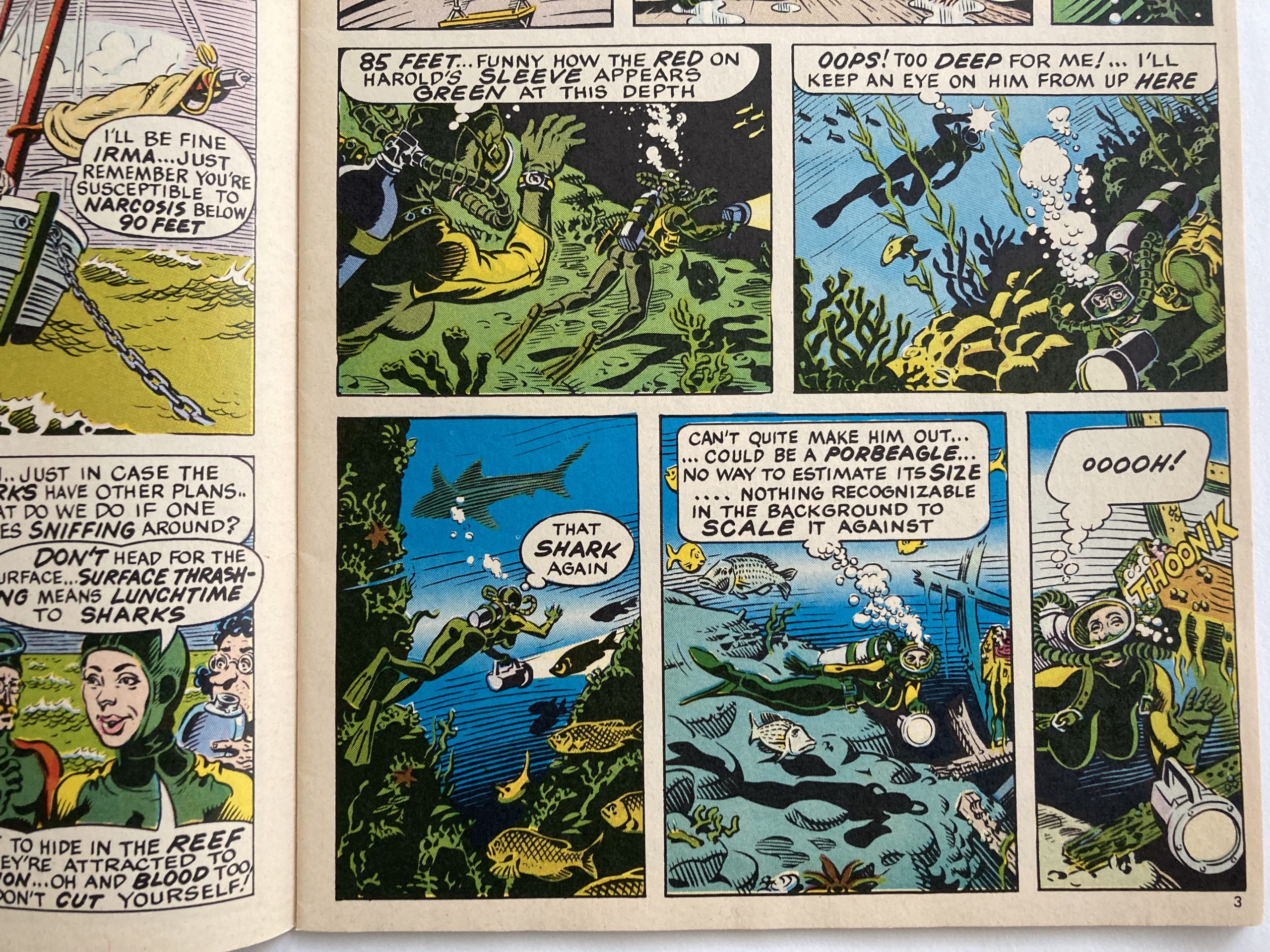
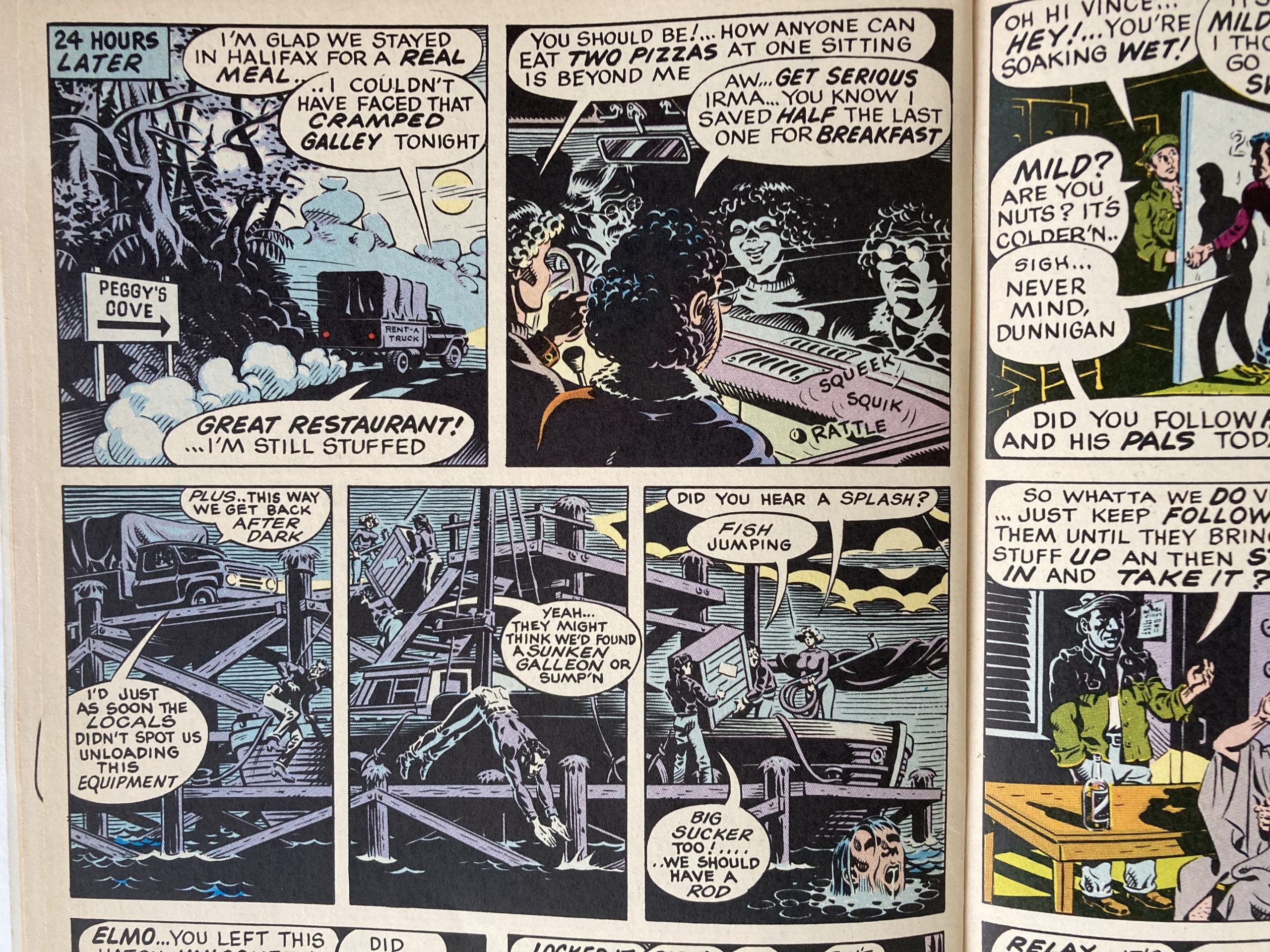
For whatever reason, this two-issue miniseries format was very refreshing. Not too long, not too short - more like this please. I guess it’s an “underground” comic, but it’s extremely slick and professional, with just enough of the author’s distinctive personality shining through to keep your curiosity piqued. It’s the kind of accessible, discrete, well-told genre story that you could recommend to almost anyone. The distinctive personality comes through in the half-cartoony, half-realistic, obsessively rendered bodies, which are consistently rubbery, dramatically lit and vaguely homoerotic. “Corben-esque” you might say.
The only snag I hit throughout was some fussiness in the plot when a bomb gets disarmed in a very convenient manner, but otherwise the story is pure craftsmanship. I was reminded of an old William Burroughs essay, “Beauty and the Bestseller,” in which he muses about the formula for a perfect blockbuster. Basically you want a generic high-stakes plot, but stuffed with authentic details: “something that the movie-going or reading public knows something about and about which they want to know more: the Mafia, how a hotel is run, what happens in General Motors, in TV, advertising, in Hollywood.” There’s a little of that in this story, which has a bunch of interesting tidbits about scuba diving, and lots of generously detailed, authentic-looking locations where something more simple and generic would’ve done the trick just fine.
* * *
DAPHNIS AND CHLOE: AN ADAPTATION OF THE ANCIENT STORY BY LONGUS (self-published, 2012/2023) - Chester Brown

If you’re not following Brown on Patreon, you might not know that he’s long been an ardent COVID skeptic. E.g., from July 21, 2020: “I know it contradicts everything the corporate media is telling you, but I’d urge you to contemplate the possibility that the science favours the covid-isn’t-real position.” Which is pretty interesting because I used to really admire him specifically for being such a clear, rational thinker, and now I usually find his arguments (for COVID skepticism, and most of the other conspiracies he posits) to be pretty sloppy. At first I thought, man, he’s really fallen pretty far, but I’ve gradually changed my tune. I still think his arguments are sloppy, but now I see that my own arguments are also sloppy, and his old arguments, which I used to admire, were probably sloppy too; I just wasn’t motivated to notice since I already agreed with his conclusions. Mucking my way through this “post-truth” era we’re in, I’m forced to admit that I really do take a lot on faith. I don’t think I’m wrong to do so, but if I had to, you know, take the stand, and justify my own understanding of the world, I wouldn’t be able to point to very many primary sources.
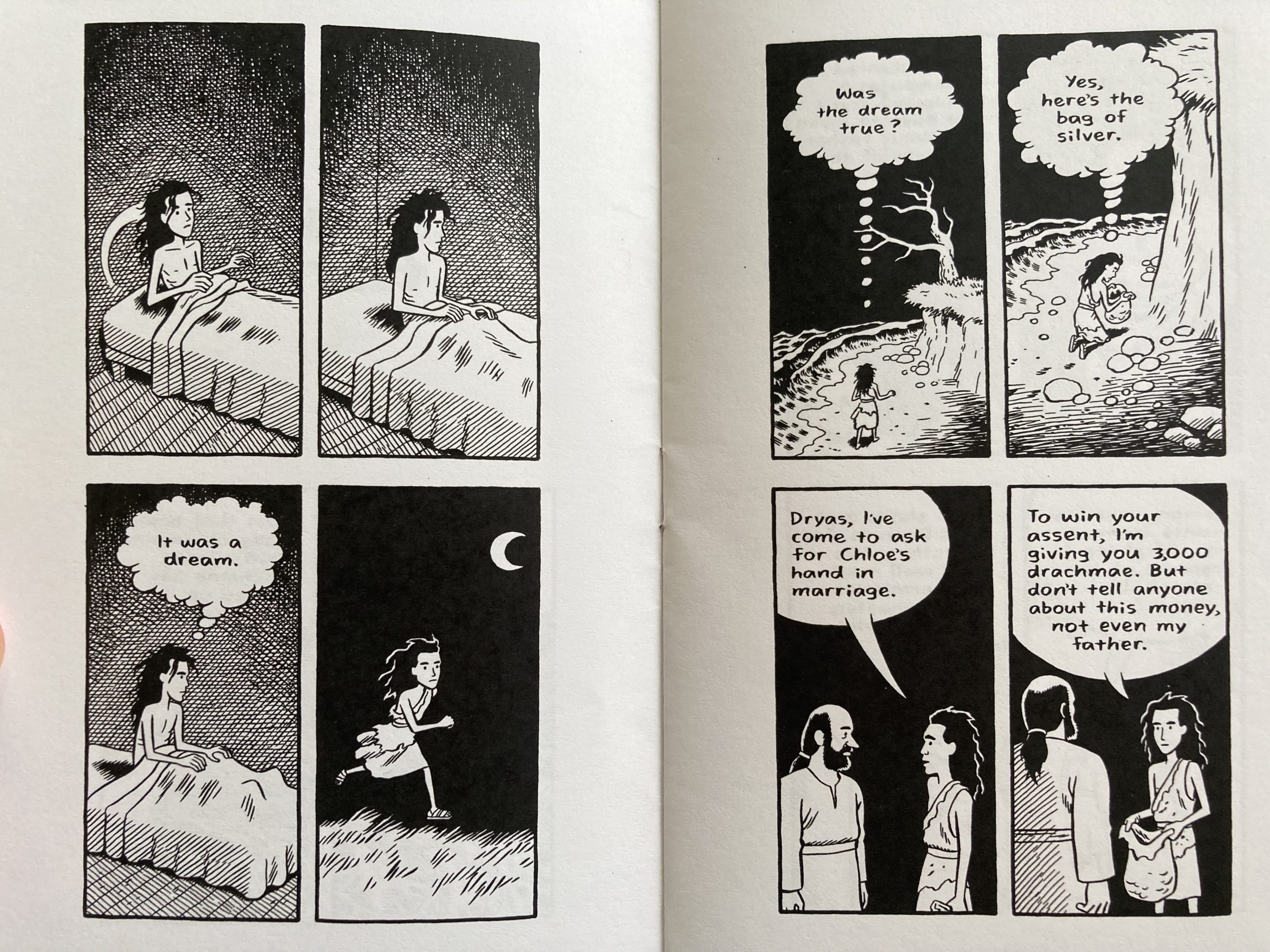
Anyway... if you’re not following Brown on Patreon, you’re also not getting access to the high-quality minicomics he regularly gives out as follower freebies. This one, Daphnis and Chloe, is a very simplified adaptation of an ancient Greek novella, which I haven’t read. Brown’s version is like a children’s fairytale, about a boy and girl who want to get married, and all the prohibitions on cross-class marriage that get in their way. It seems innocent enough, though if you follow Brown’s work you’ll assume (correctly) that it must be part of his ongoing project of prostitution apologetics. A big part of that project is the denigration of traditional ideas of romantic love, which the Daphnis and Chloe story, interestingly, seems to be championing. In the comic’s endnotes, Brown wonders if maybe the story’s author’s ultimate goal was actually to weaken the patriarchal family by disingenuously promoting romantic love. Brown dismisses this as far-fetched, but then in a later blog post finds it more plausible. He wonders if, through works like Daphnis and Chloe, the ruling class was trying to “weaken the marriages of the 'lower' classes by convincing them to base their unions on an ephemeral emotion.” It’s hard to picture a room full of cigar-smoking fat cats conspiring thusly... but it’s interesting to think about (unlike COVID skepticism).
* * *
THE AMAZING, ENLIGHTENING AND ABSOLUTELY TRUE ADVENTURES OF KATHERINE WHALEY (Fantagraphics, 2013) - Kim Deitch
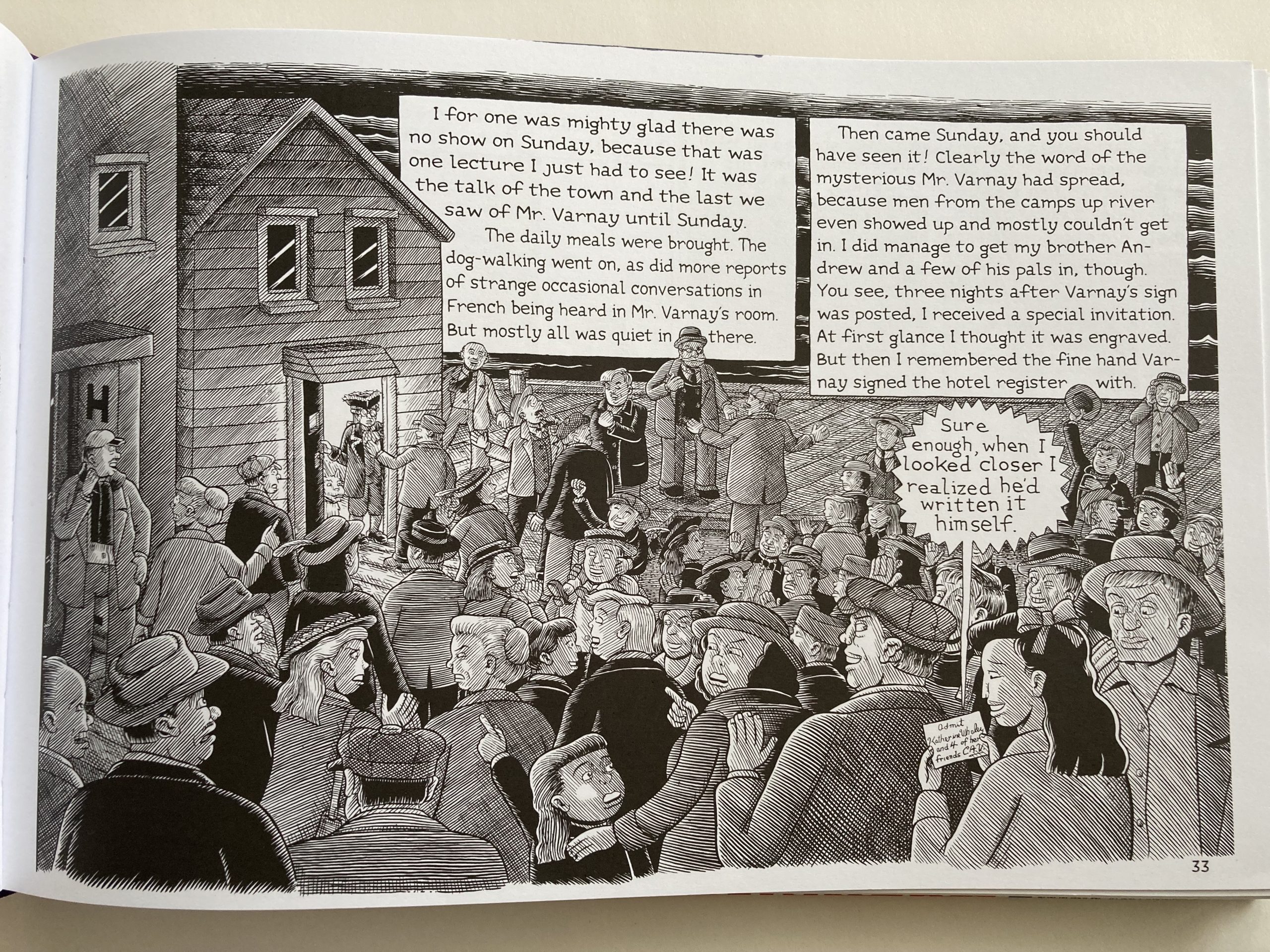
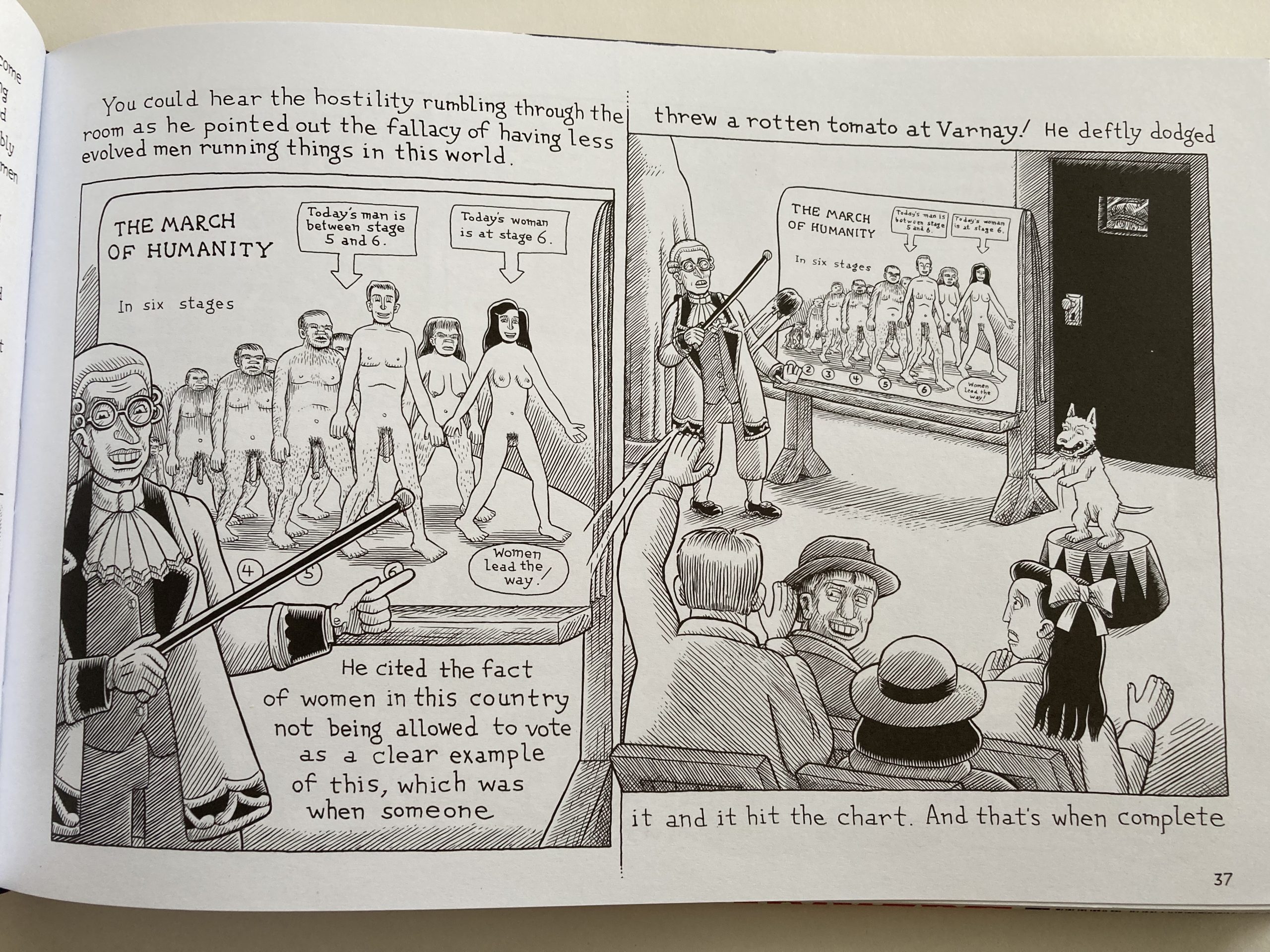

About 20 years ago I read a 40-page version of Deitch’s Boulevard of Broken Dreams in an issue of RAW, and didn’t think much of it. I knew enough about the animation industry to recognize the Winsor McCay and Fleischer Studios stand-ins, which kinda spoiled the whole thing from the get-go. The artifice was too apparent, the characters never felt real. Halfway between fictionalized and faithful, with each half neutralizing the integrity of the other. The plot in general I also found kinda stale: a talented, eccentric drunk pines after his coworker, and eventually loses his mind after he catches her with his charming brother. The drawing didn’t do much for me either. I could tell it was the work of a singular artist, but just... meh. Maybe I was too young.
After reading Katherine Whaley (which I’ll get to soon, and which I loved), I read Alias the Cat! and Reincarnation Stories. I enjoyed and respected both, but neither really grabbed me. I’ve also read a few excerpted bits of other books over the years. Same thing.
But Katherine Whaley, which I picked up on a whim, curious about the quasi-comics, illustrated-prose format, blew me away. Masterpiece. I was completely entranced the entire time. One of the central ideas was so cool and original it gave me chills. Everything that was a little out-of-joint in Deitch’s other works was perfectly aligned in this one. Namely:
1. Rather than the animation industry, the backdrop is the silent movie industry, about which I know absolutely nothing, so what I presume are Deitch’s inventions blend seamlessly with what I presume is real history. No snags in my suspension of disbelief. Another annoying thing about historical revisionism in fiction: it makes me feel like I’m learning incorrect math formulas or something... filling my head with misinformation that’s going to lead me astray someday. But since I don’t care at all about the silent movie industry, and will probably never think about it again for the rest of my life, I was able to relish this story’s mysterious brew of truth and falsehood anxiety-free.
2. No Waldo. Deitch’s entire oeuvre, pretty much, is one big tangled web of overlapping stories, and the common thread running through most of them is Waldo, Deitch’s marquee character. He’s the Felix the Cat-looking guy you probably associate with Deitch even if you’ve never read any of his work. Every one of Deitch’s books that I’ve read so far has worked as a self-contained story, but when Waldo shows up, which he often does, I’m reminded that, having not read most of Deitch’s other work, I’m missing out on some context, which rankles my completist sensibilities. But KW has no Waldo, so its self-contained-ness is perfectly pristine.
3. On a similar note, I find Waldo a little bit difficult to take seriously. Deitch’s stories are stuffed with all kinds of cool, weird ideas, but a lot of it, for my taste—the ghosts, the aliens, the cartoon character demons—is occasionally a shade too wacky. KW is not wacky at all. It’s still stuffed with cool, weird ideas, but more in a magical realism vein. A little more grounded in the plausible. More mysterious than zany.
4. Deitch uses a lot of meta trickery in his stories. Often, he’s purporting to be adapting true events into comics form. KW, on the other hand, is presented as a transcription of an actual document (Whaley’s prose autobiography), with illustrations added by Deitch. This just clicks better for me. It’s more elegant. There’s one less degree of separation between the purported source and finished product.
5. I think Deitch’s traditional comics are great, but there’s one interesting stylistic peculiarity of his that shines brighter in KW’s more limited visual approach. He’ll often draw a character or object or location from the exact same angle every time it appears. Over and over. He does it in his comics, but I found it much more noticeable in KW's illustrated-prose format. There’s something very uncanny about it. It really heightened the strange, magical spell cast by the story.
Three thumbs up.
* * *
ANUS CLENCHING ADVENTURES WITH HAROLD HEDD #2 (Last Gasp, 1973) - Rand Holmes

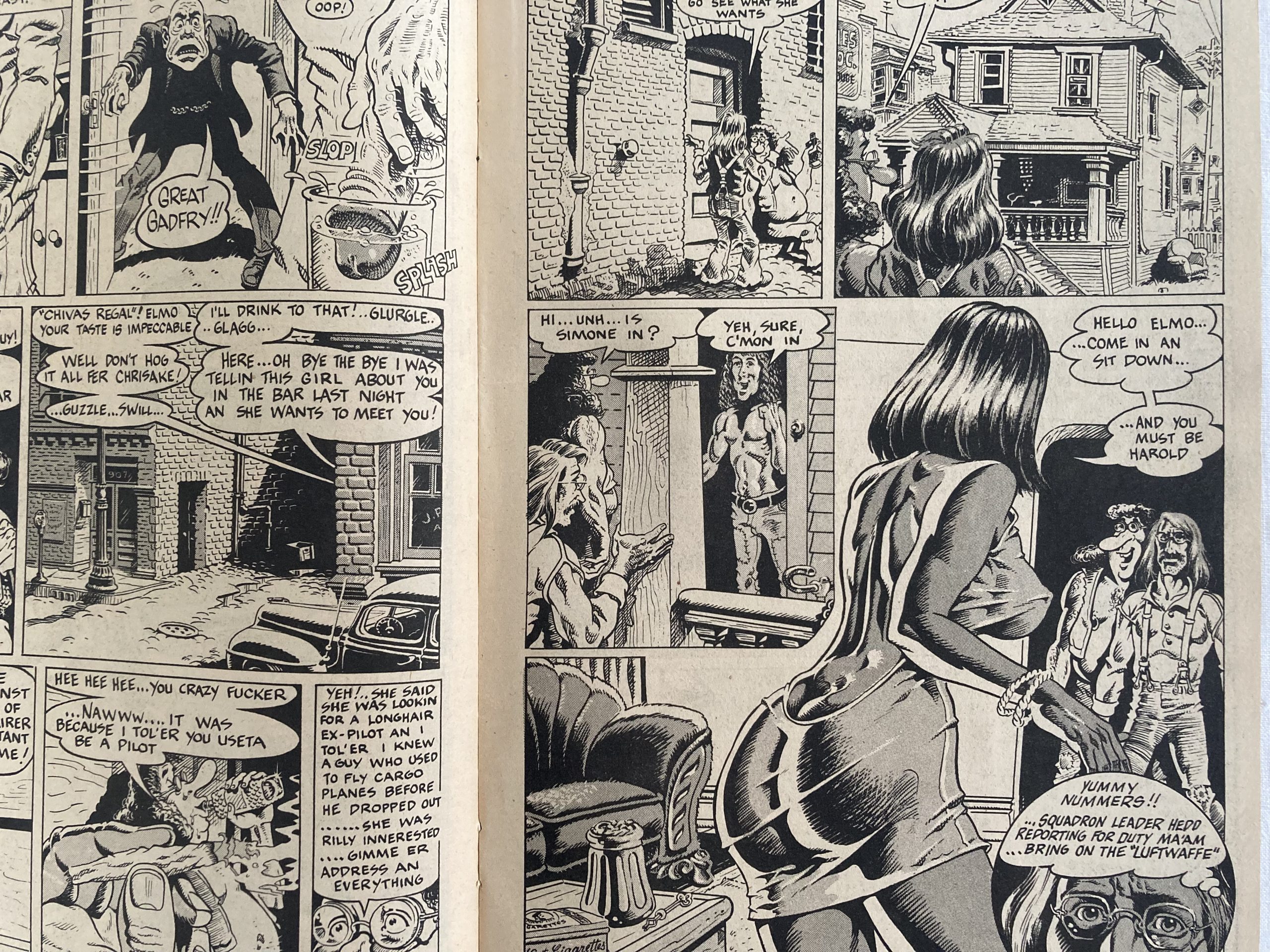

I like this cover a lot. It’s such an odd, intriguing little decision (big decision?) to have it all basically monochromatic except for that one corner. I can’t stop staring at it. Contemplating it... The story itself is fine. A fun ride. It’s kinda similar to the Hitler’s Cocaine story mentioned above, but much more brisk and compressed (it’s about smuggling marijuana in an old bomber plane). The drawing is a lot less polished (HC, which was drawn about 10 years later, is about as polished as a comic can get), though there’s plenty of pretty things to look at - some gorgeously rendered environments in particular. The figures look a little more “Spain-like,” you might say (Spain the cartoonist). They’ve got a sort of lanky, lithe twistiness to them that I always associate with underground cartooning. Maybe it’s a stoned-ness thing? It’s like the artists got so carried away, so lost in the anatomy, that the figures would end up as these long, winding journeys in human form... maybe it’s just me. At any rate, Holmes’ style here is more energetic and exploratory than it is in Hitler’s Cocaine, less honed and polished. Not as “solved.”
* * *
FRESCA ZIZIS (Last Gasp, 1977) - Melinda Gebbie


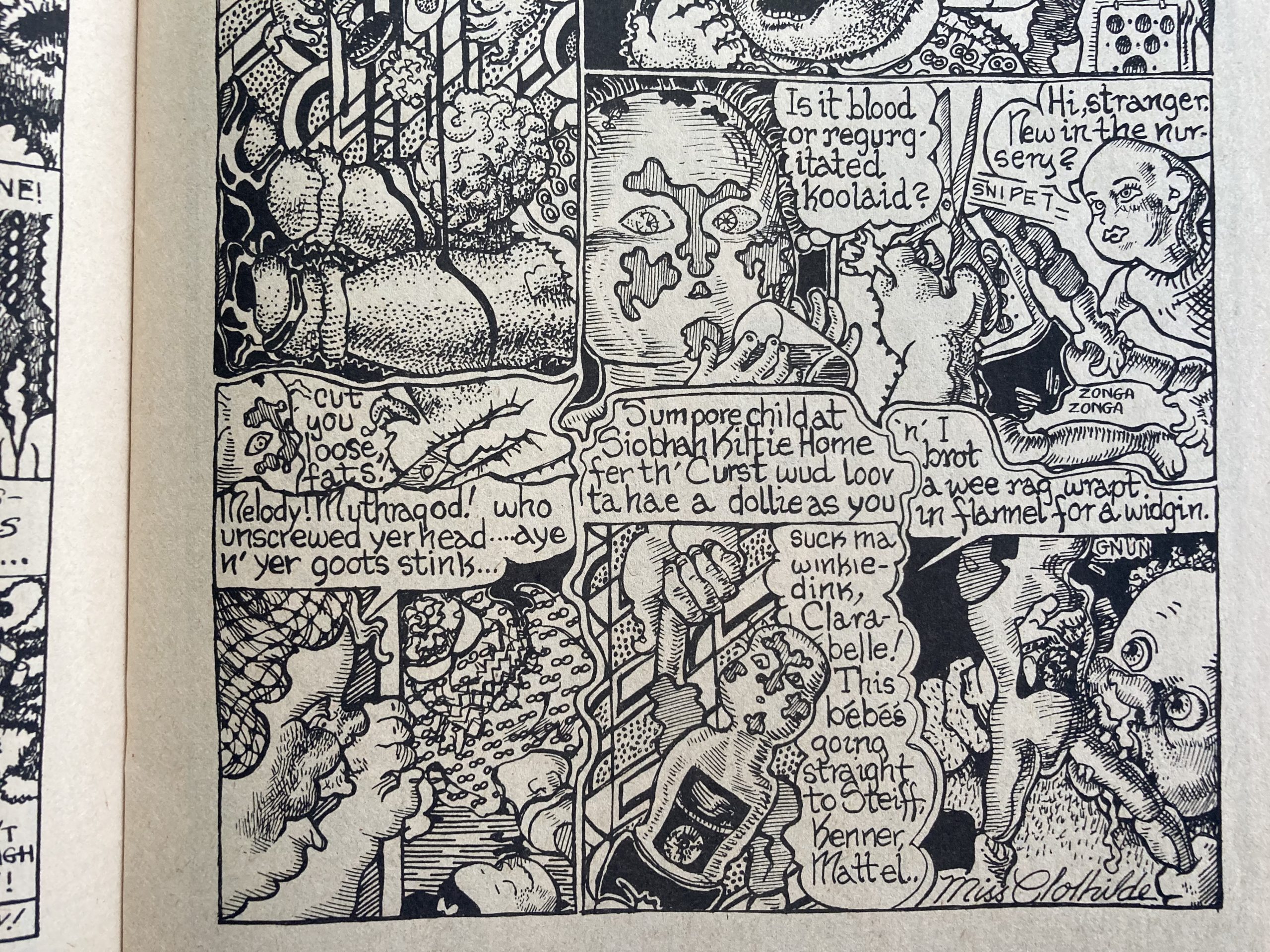
I really enjoyed the first story, but the rest of the book was rough going. It’s very “stoner-y,” which is one of those “you know it when you see it” kinds of things - hard to put into words. Insular, private, flighty, kinda sloppy. Not much effort seems to have been made to make the work intelligible to anyone but Gebbie. If you squint you can see the outlines of some kind of internal consistency, but the feeling is of peeking through barred windows at a fascinating world that you can’t quite reach.
But that first story is great. It’s an elegant snippet of surreal sci-fi snuff erotica (the setup is about as brisk as a hunky pool boy knocking on a beautiful woman’s door). The brief introductory narration mentions “female rage,” and the male snuffing recipients are apparently gang-rapists, but there’s no bitterness in the tone (not much, anyway). Rather, the story takes place in a sort of Dionysian dream world where anger and violence are subsumed by eroticism. Like Emerson wrote: “Even the corpse has its own beauty.” Except in this case it’s “Even the fiend has their own raw, amoral sexual potential.” Electric, original stuff... but, as mentioned, the other stories, while obviously the work of a very smart, talented artist, are mostly pretty impenetrable.
* * *
NIGHTCORE ENERGY (Organ Bank, 2019/2022) - Morgan Vogel


So poetic, so economical, so dark and intriguing... I’ve never read anything like it. It’s audacious. All my nitpicky evaluation metrics bounce right off this book - it’s too much smarter and cooler than I am. I also read Vogel’s Valle and The Necrophilic Landscape and some shorter pieces, all of which were really impressive, but Nightcore Energy is on a whole different level.
Speaking of coolness: what is coolness? Or at least, what do I mean when I call a comic book cool? Hard to say. Coolness, by its very nature, seems to me a slippery trait. When it comes to an individual person’s coolness, it’s relatively simple: coolness is having maximal attractiveness with the least amount of apparent effort. Effort implies desire, desire implies lack. If you want to become cool, you obviously are not cool. But coolness in art is different. You’ve obviously put in the effort to make the thing, there’s no denying that. But you can disguise the effort, hide the desire.
There’s two main ways you can attempt to hide yourself when you’re making a drawing: you can draw like an outsider artist or you can draw like a robot. Both approaches can conceal you, but only one can make you cool. (Here I want to stress that implicit in my theory of coolness is the possibility that this is all in my head and cool people are just genuinely cool and aren’t trying to hide anything. Perhaps emulating a “cool” approach to drawing appeals to them for reasons other than concealing their own flaws, perhaps the same reasons that attract “uncool” artists to “uncool” inspirations...)
The Platonic example of the robot style is Nick Drnaso. I haven’t read his books but friends tell me they’re great. Maybe so, but they’re not cool. The robot style hides a lot, but it doesn’t hide your effort. Like a brick wall, it’s totally opaque, but obviously didn’t happen by accident.
The outsider method, on the other hand, can actually succeed at coolness. I see Gary Panter as standing alone at the pinnacle of this visual approach. His work is as appealing as anything, but try as I might I can’t find any sign of him wanting it to be appealing. As far as I can tell he might just be scribbling it all down in some kind of trance. Less successful artists working in this style are often betrayed by their lettering (when it looks like regular, Joe Sixpack handwriting), or by their panel borders or word balloons... some neglected scrap of normality. But Panter’s style is seamless.
There’s also a hybrid approach, where you draw like a robot but in a ratty, outsidery sort of way. This is how I would classify Nightcore Energy, and I think it succeeds completely. When I look at Vogel’s body of work as a whole, I see ambition, experimentation, a probing, restless intelligence. But Nightcore Energy, in a vacuum, is seamless, anonymous. A sort of magic trick I just can’t crack. Maybe this all sounds kind of pejorative? It’s true I shake my head sadly at those artists who try and fall short, but when something is really seamlessly cool the only negative emotion I feel is jealousy. That and maybe a vague, principled desire for everyone to stop trying so hard to confuse me with their facades that maybe aren’t facades.
Which brings me to the last little wrinkle (giant gaping hole?) in my theory of coolness: is there even such a thing as a facade? It’s paradoxical: any mask you craft for yourself was crafted by you and you alone and thus is a completely pure, naked expression of your inner self. Which reminds me of a snippet from Walt Whitman’s notebooks:
“Understand that you can have in your writing no qualities which you do not honestly entertain in yourself. Understand that you cannot keep out of your writing the indication of the evil or shallowness you entertain in yourself. If you love to have a servant stand behind your chair at dinner, it will appear in your writing, or if you possess a vile opinion of women, or if you grudge any thing, or doubt immortality - these will appear by what you leave unsaid more than by what you say. There is no trick or cunning, no art or recipe, by which you can have in your writing what you do not possess in yourself...”