
Since I started this “Arrivals and Departures" venture I have reviewed 140 self-published and micropress comics. America’s semiquincentennial got me thinking about if I continued this column for a whole 250 years (lord willing!), that would mean writing about nearly 11,667 zine reviews. I’m sure at least a couple of those would be glowing. Here’s a toast to the bright, bright future of both comics criticism and our wonderful country.
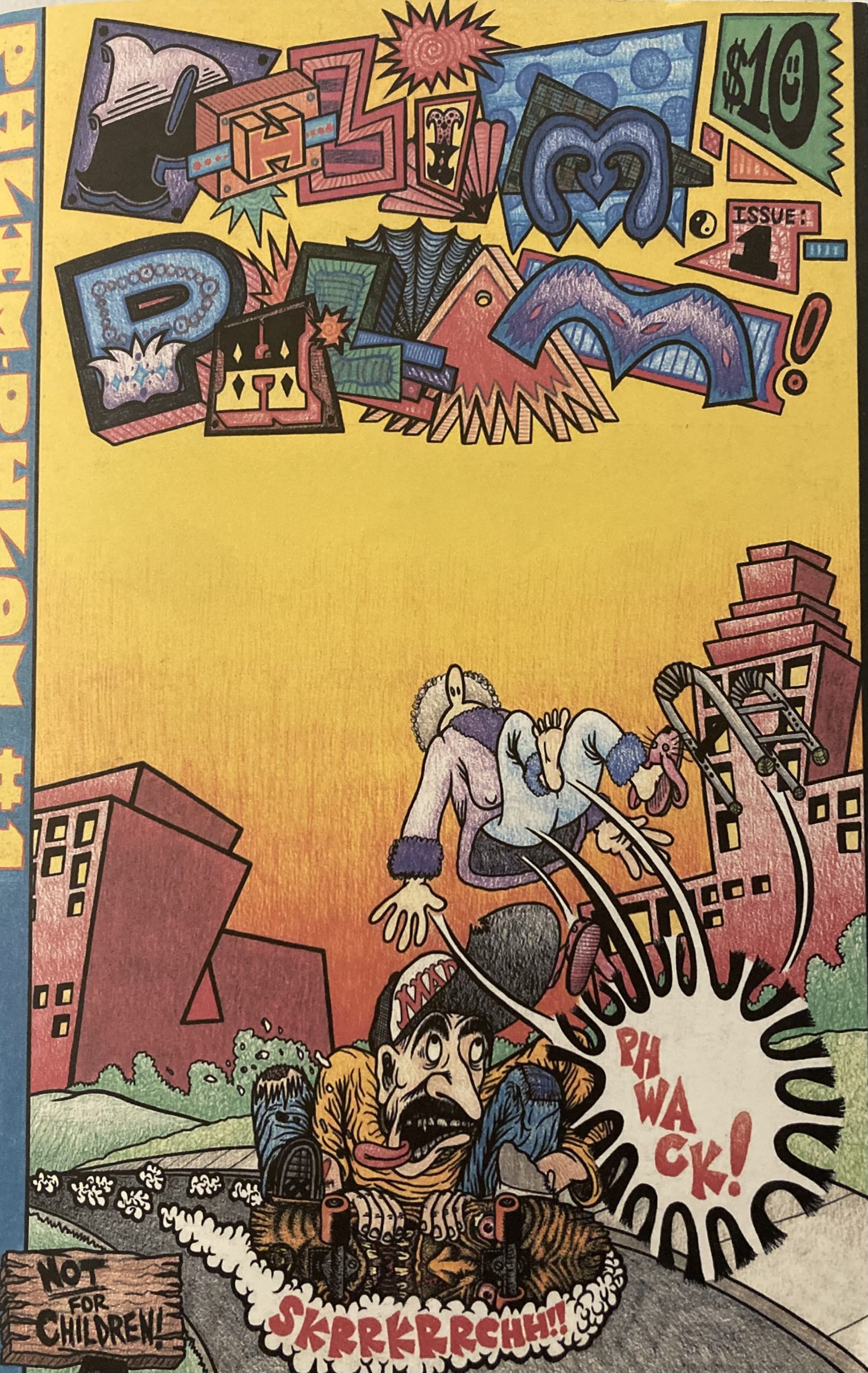
When the San Francisco street “performer” with a bullwhip asked for a volunteer, my dad grabbed my arm and raised it up. I joined him onstage, all of nine years old and trembling, as he put a Marlboro Red between my lips and stepped back. It took the man several times — I kept spitting it out — but he eventually lashed the cigarette out of my mouth. I sometimes think about that moment and where that man is now. The only thing I know for certain is that he would have loved Phlim-Phlam, a comic that feels tailored for proprietors of bygone sideshows and the carny adjacent. Jerry James leaves no negative spaces in this one-man anthology. Each oily pore, patch of rough stubble, or mesh of a trucker hat is rendered with intricate detail and cross-hatching. James’s faces have a Wolverton playfulness but with more a devious, drunky grit and he isn’t afraid to shy away from all his interests: “Clowns, trains, harmonicas, boobs, skateboarding, and fishing.” Honk, honk.
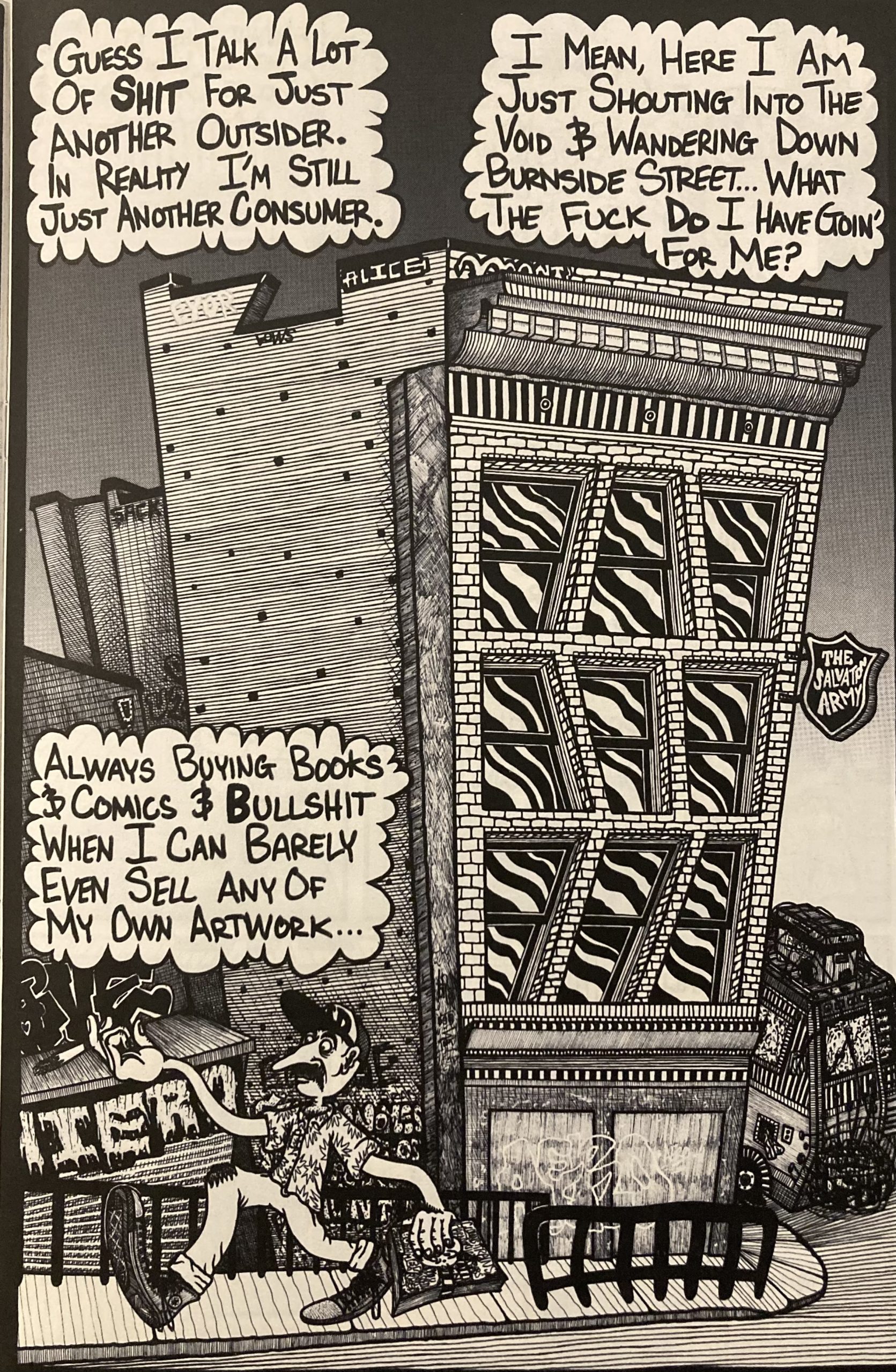
Now I didn’t bring that childhood story up for no good reason. The first Phlim-Phlam tale is about an unbalanced cowboy visiting an elementary school and presenting at an assembly. He brings up a youngster volunteer named Jerry, calls him Gary, then spells out Larry with the crack of his whip. It’s funny. This is followed by pages of angler puns and several other throwaway stories, like the one about a sniper searching for “Where’s Waldo” in a crowd. The best and longest portion seems at least semi-autobiographical. It depicts James spending a whole day trying to avoid the salami-log-nosed lunks populating the city before becoming himself the butt of a universal joke. Phlim-Phlam isn’t going to blow you away, but it is a pleasant diversion through the seedier side of life.
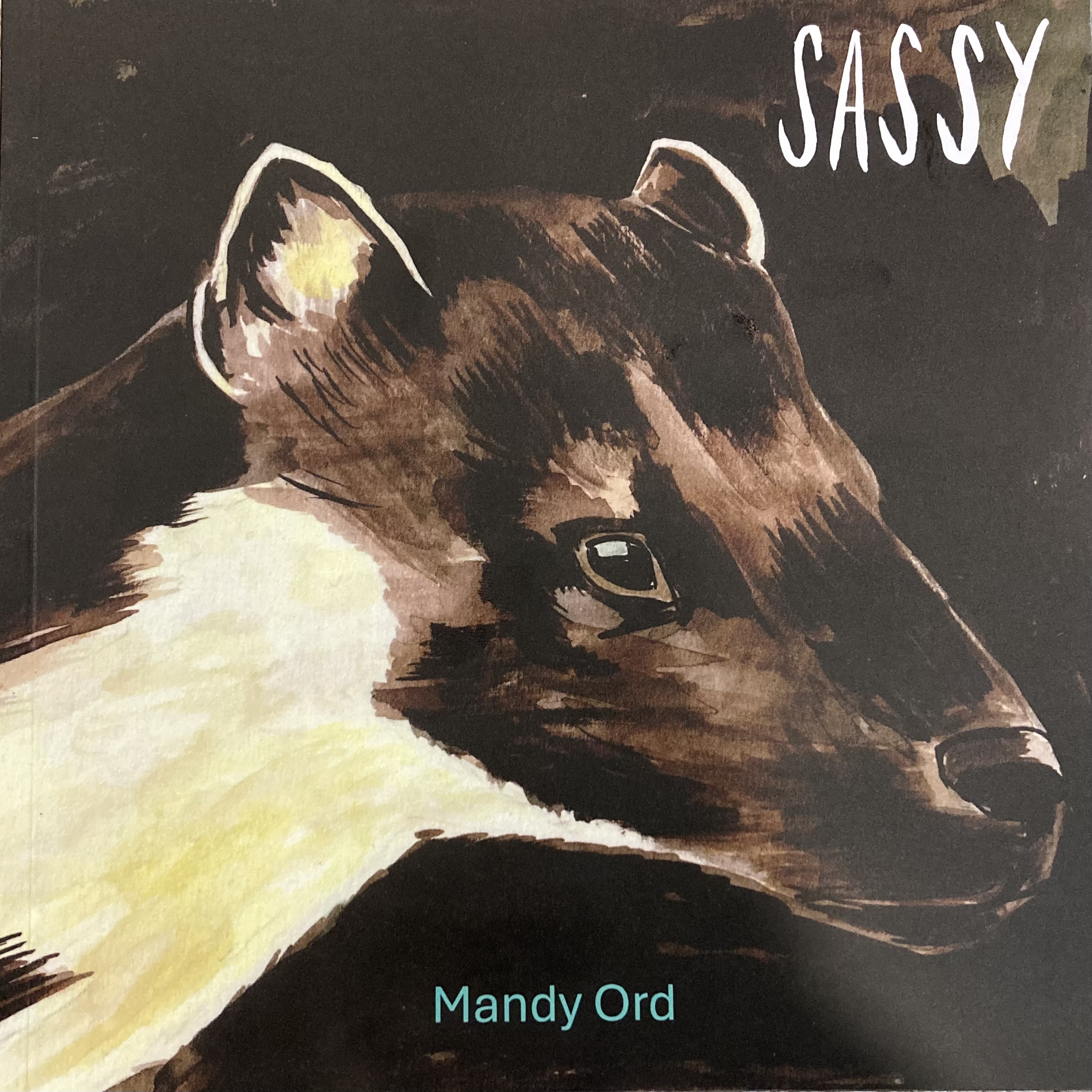
The subtitle of Sassy is “A Year of Animals” and that is exactly what you get. Each square panel is dated at the bottom, documenting an entire year of Ord interacting with various creatures, day by day and moment by moment. There are unwelcome cockroaches, birds of various magnificence, and many panels about Ord’s dog. Named Max, this grinning gremlin speedballs off the walls throughout the entire book, rightfully stealing countless scenes in his choppy wake. Without a narrative other than the simple passing of time, things start revealing themselves in Sassy like you’re peering through a peephole. Short glimpses in the way of single panels provide clues into unresolved and often never-again-mentioned instances where we learn more about Ord, like her cleaning job and a few serious medical appointments. Despite all that, the biggest mystery of all is why Australians spell it “pyjamas.”
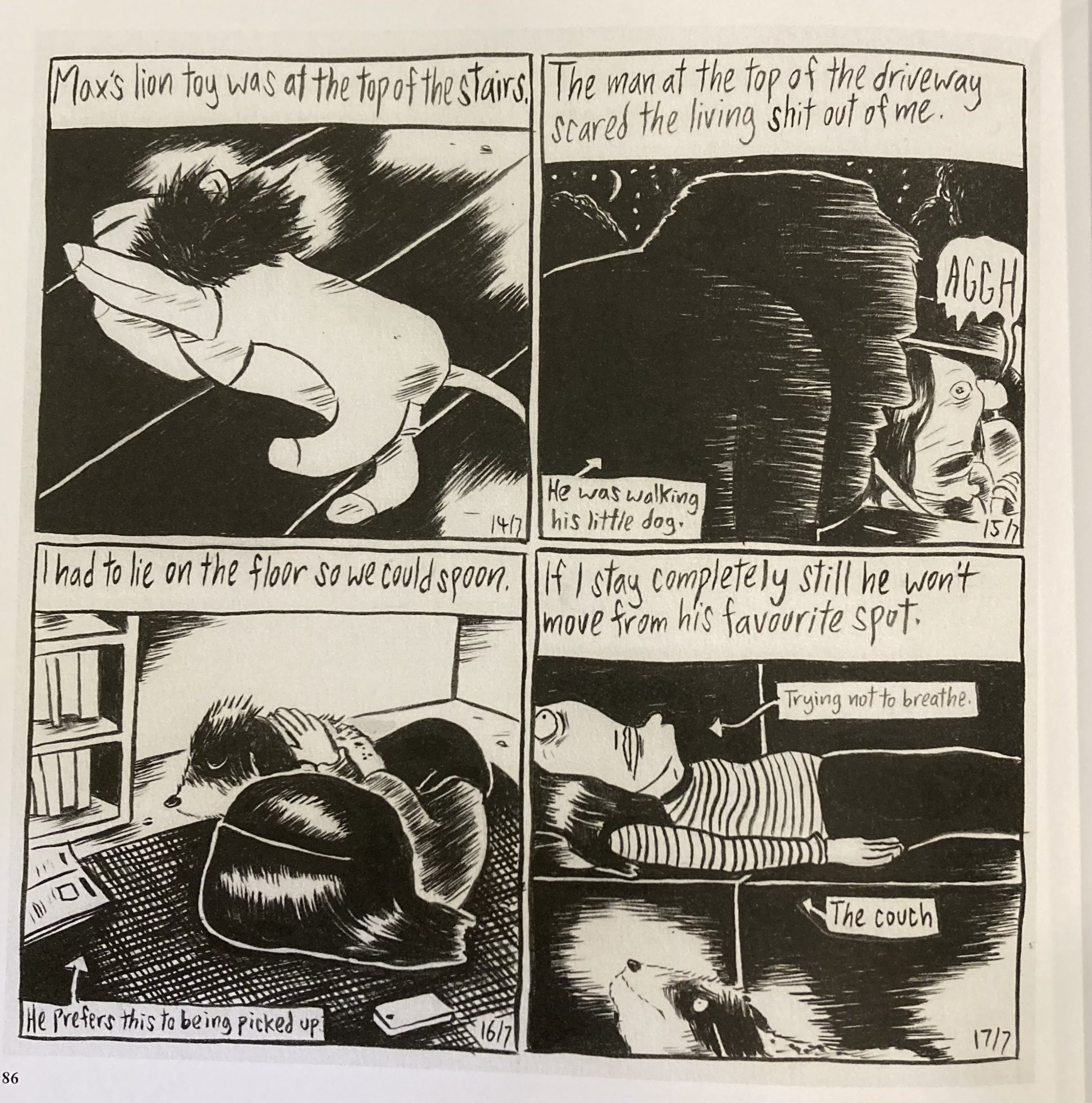
This book has a quaint throwback quality to it and I like basking in the presence of animals just as much as anyone else, but Sassy also has enough thick-inked weirdness peppered in to make it truly interesting. On one page, Ord expertly draws the face of a macaque monkey with a pair of deeply set, bored eyes. Feathered brushwork surrounds the face to render the hair with expertise. However, reaching out to pet the monkey is the most simple, most unadorned human hand you’ve ever seen, drawn in a single line with zero detail. It’s intriguing as a reader to see them collocated next to each other, a testament to Ord’s decision making and conviction. We’re also bestowed with a gift each time Ord draws herself. Her autobio avatar has one giant pupil and an absence for a nose. The angles are played with in a way that you have to recalibrate your eyes each time (“Oh, that’s a chin I’m looking at.”) to catch up with the Quasimodo intensity of each self-portrait. All in all, Sassy is a real tea-sipping, curl-up-on-a-bean-bag sort of book with an adequate amount of edge.
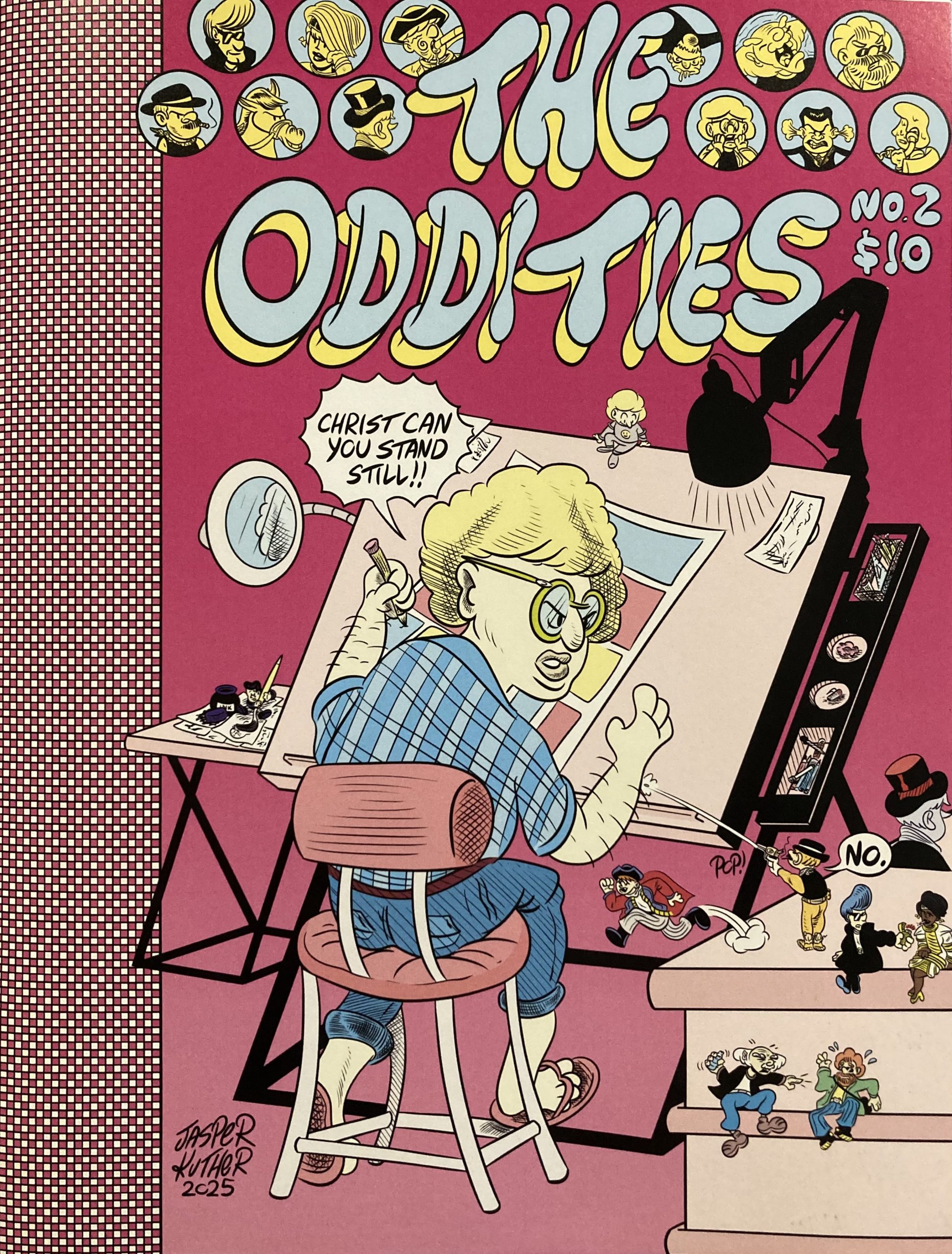
This is an interesting case. Here we have what, I assume, is a very young artist in Kuther with a fantastic grasp on intangibles like design, coloring, and page layout. He’s studied up and knows his stuff. But the holes in his practice are too overwhelming and too loud, so much so that they ultimately sink the ship while it’s still docked. The first story, “All For a Pint,” tells of a British soldier in 1776 who flees his post and goes AWOL by diving into the East River. He eventually pulls himself out and stumbles to a local tavern, dripping wet and fed up with the war he wants no part of. It’s a fun set-up — a redcoat who’s ready to spill the beans all for a plate of beans — but I was repeatedly taken out of the story by Kuther’s predilections. First, the only other patron in the place has modern hair, clothes, and glasses. Is this a time traveler? A hipster Revolutionary? Your guess is as good as mine!
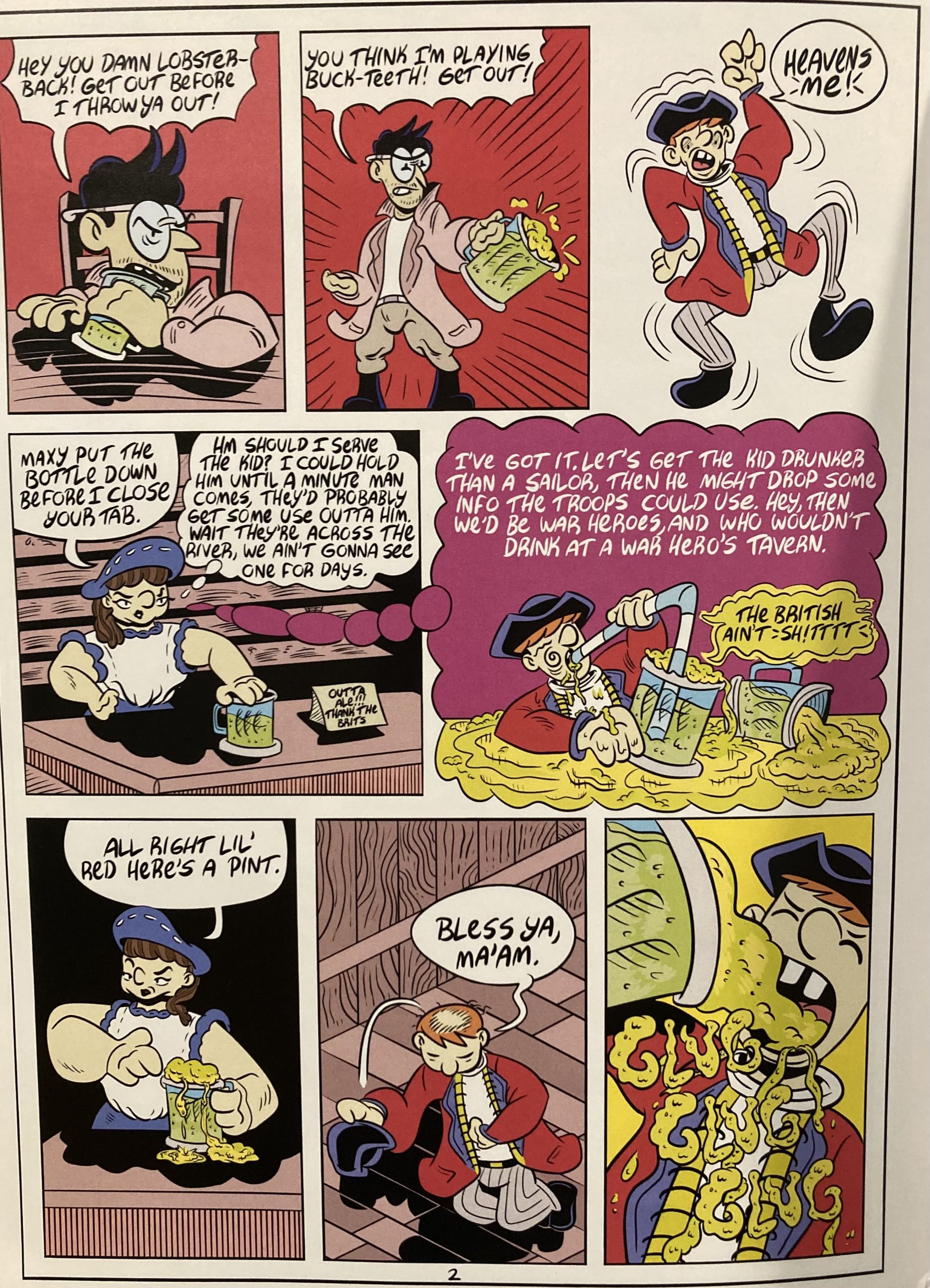
I will often go to bat for wonky anatomy. In fact, I prefer it! But Kuther’s hands are just too sloppily crafted even for me. In this story, and throughout Oddities, palms and feet look unformed or as if they were put on backwards or sideways. There are a dozen or so spelling and punctuation errors in these 18 pages, and that’s also something I can usually forgive, but not when it’s ladled on top of everything else. For Kuther (and everyone else reading this column) I recommend doing a deep dive into Tim Hensley and if he’s serious about upping the ante on his artistic chops, especially those small specific skills, then he must find that cherished convergence between cartoony and clarity.
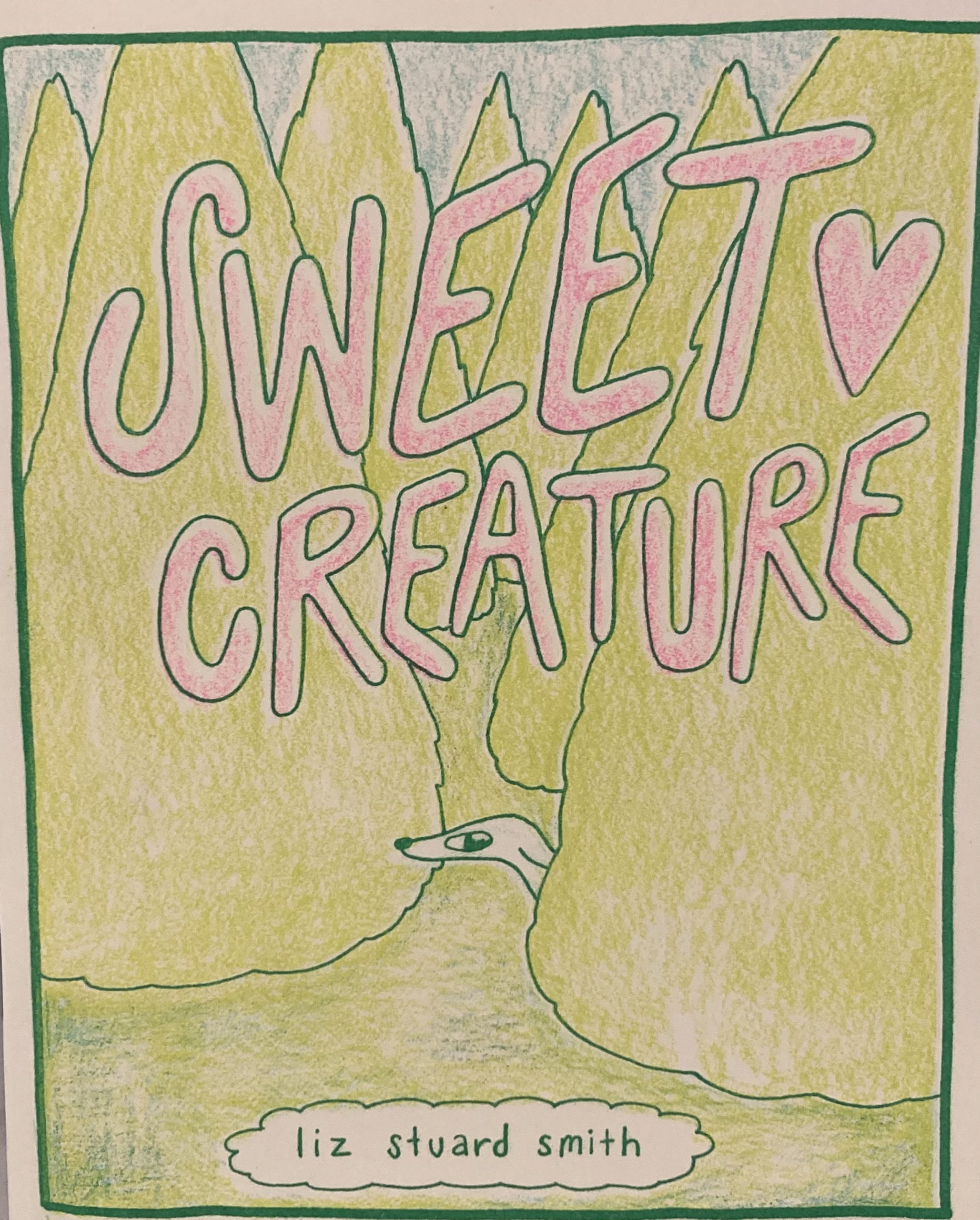
I’ll get the positives out of the way first. Smith draws nice trees and room interiors. The characters in Sweet Creature, including the titular greyhound-like Creature and the rubber-necked jaguar that is the Forest Spirit, are pleasantly peculiar. Smith finds the sweet spot where you can faintly detect several influences in her designs, but they still feel singular. The figures are all interestingly long, slanted, and slender and I hope that’s something Smith leans into even more in the future. But the writing is where I’m hung up.
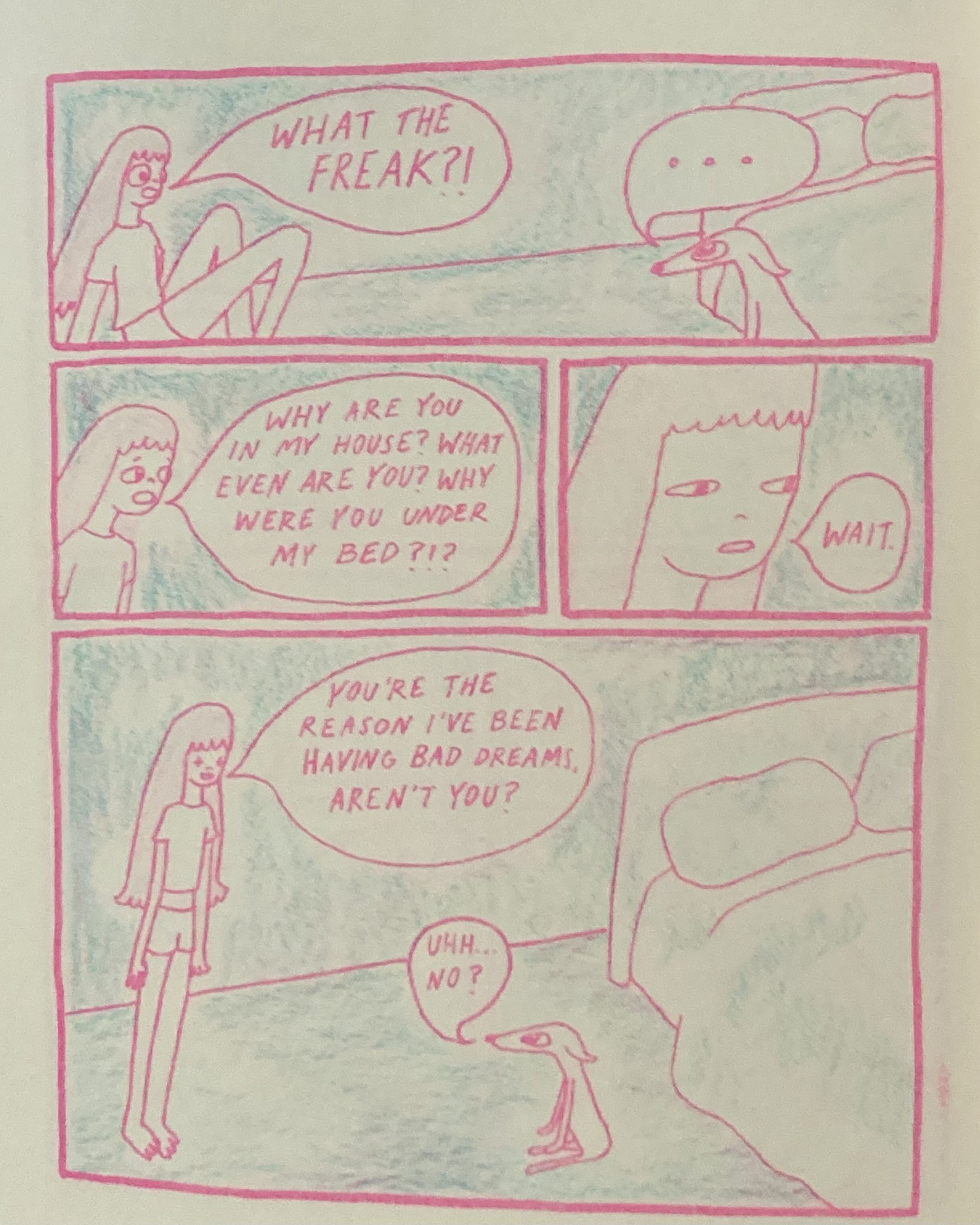
Liz Stuard Smith — and many others — through their pacing and dialog perpetuate the pox that is casual “umm… yeah” side-eye comedy; this nonchalant, noncommittal post-Jim-Halpert-LOL rottenness. It not only immediately dates your work, but it’s so, so tired. The couple instances it happens in Sweet Creature makes me question Smith’s motivation. Was this book just created to get some simple laughs at a live reading or an endeavor to push oneself as an artist? I know which one I find more reputable sitting here reading it at home. Speaking of motivation, I was hunting for it in the narrative as well. After a seemingly malicious animal was found under her bed, why did the girl chase it into the forest? When the animal must face punishment for its misdeed, why does the girl flip the script and risk her life trying to rescue it? Why does she hide in the trees when the forest is right outside her window, instead of just taking a walk on home? There are even more of these questions I can’t begin to answer and I don’t think Smith can either. The drawings are cool, specifically the deer henchmen, but ultimately Sweet Creature is a propeller-less fantasy lark.
There’s the buzzer. See you next month, I hope.
Questions, love letters, and submissions to this column can be directed to @rjcaseywrites on Instagram.