
It’s sweeps month and we all know nothing moves the needle more than alt-comics anthologies. I’ll be covering all these multi-artist extravaganzas that have recently crossed my path in a systematic way. First, I’ll vote for my MVP of the issue. Who stood out above the crowd, you know? Next, I’ll give you my biggest surprise. Did any aspect of the anthology stun or disappoint? Last but not least, you’ll get my final thoughts. And that’s the bottom line, ’cause Always-Right RJ Casey said so!
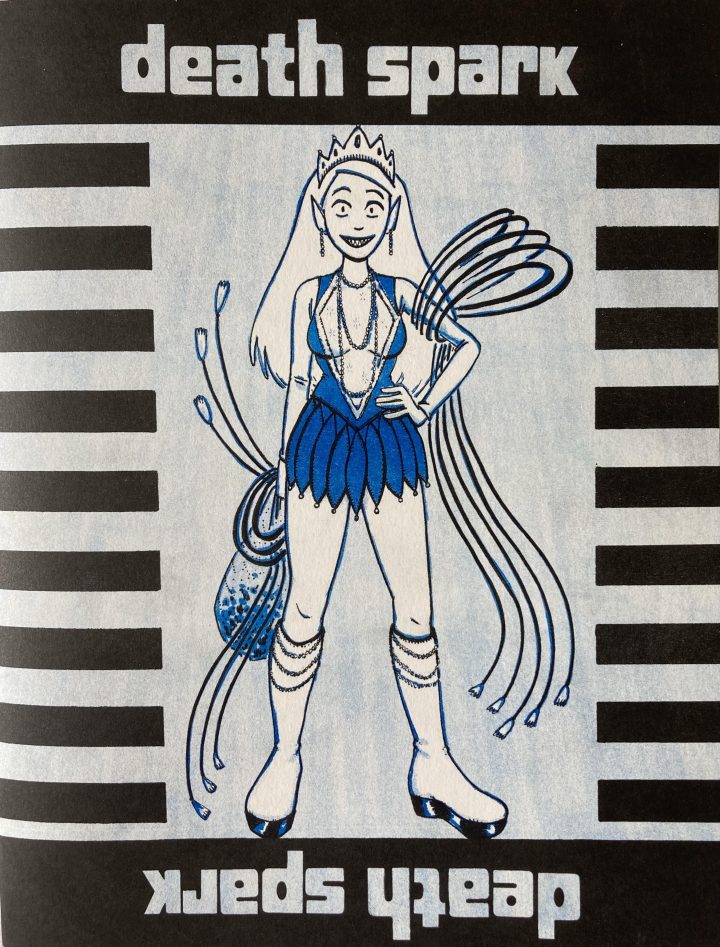
Death Spark #1, edited by Thomas Campbell
This is the first comic publication from Campbell, who’s behind the zine Comics Blogger and a small distribution operation. His tagline, “Too lazy to pitch, too dumb for academia, just right for zines,” makes me feel like we have the potential to be kindred spirits.
MVP: Audra Stang is the cover artist and “glue” player of this issue. I like when anthologies have the opportunity to hit the reset button and Stang provides that crucial feature here with thematically connected illustrations between stories. It helps that Stang draws so cleanly and confidently to where her drawings feel like a crisp glass of water on a muggy summer night.
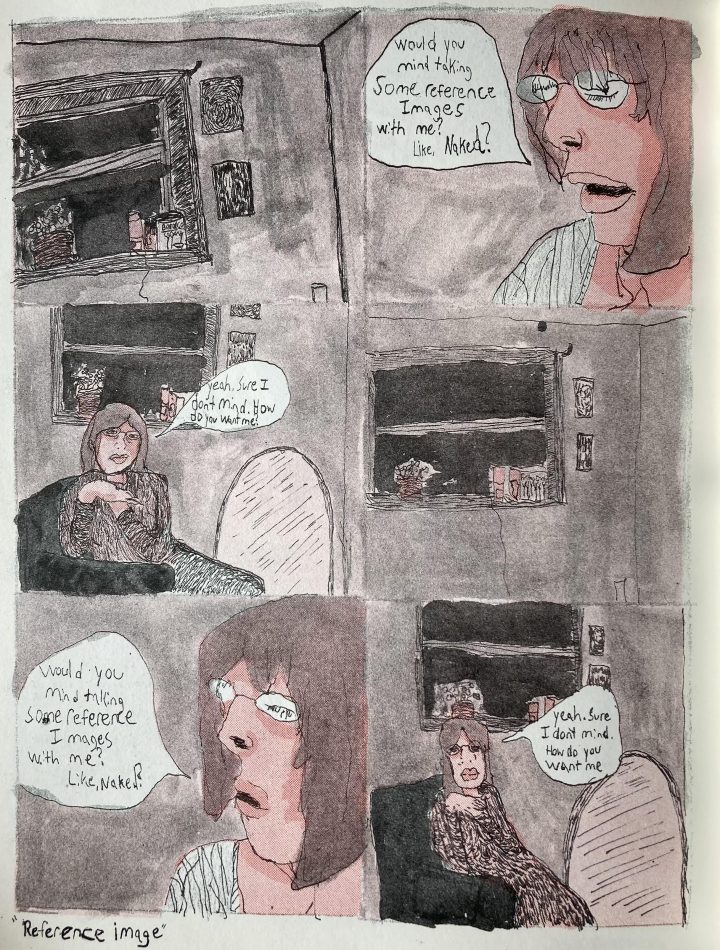
BIGGEST SURPRISE: Katie Lane’s story “Reference Image” continues her introspectively strange and sexual 2024 body of work (along with Sine Qua Non). I’m fascinated with the way Lane draws spindly faces and the writing gave me instant discombobulating deja vu. For most of the story, the same panel is drawn two times on every page — sometimes they are right next to each other, sometimes they are spread out on the page — and it had me playing “Spot the Difference” like in my kid’s Highlights magazine. The title itself and the conceit of the story is that one of those panels is the “real” one and the other is the reference image Lane has constructed. Have liberties been taken to make one feel more authentic and one a second-hand copy? Are the characters performing for the reader or the “camera” taking the reference photos? As a cartoonist or as a reader, do these things matter?
BOTTOM LINE: Death Spark has both broad jokey stories and deeply personal tracts. A tough road to wander is the one that includes drastic tone changes, but I’ve always got my hiking boots on. The book is risograph printed but not completely in cloying cotton-candy color (what a concept!). Campbell seems like someone who trusts his instincts and tastes and Death Spark certainly clicks into place right off the bat.
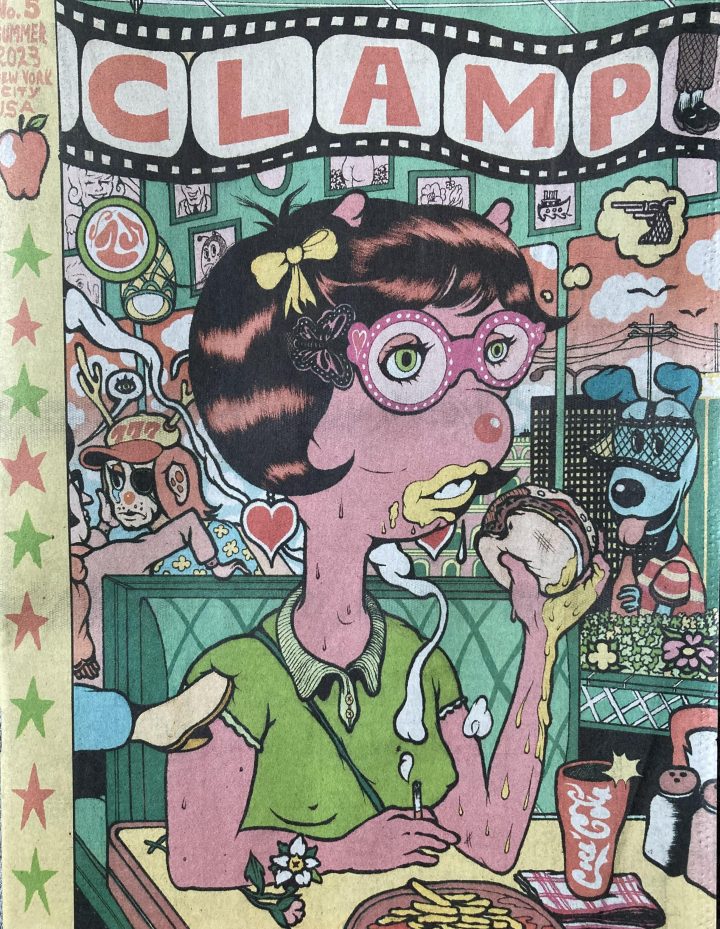
Clamp #5, edited by George Olsen
Here we have a newsprint anthology edited by artist George Olsen that features many of the East Coast budding assassins of art comics. You can really sit down with this comic and spend an hour or two with it, there's a lot of meat on the bone.
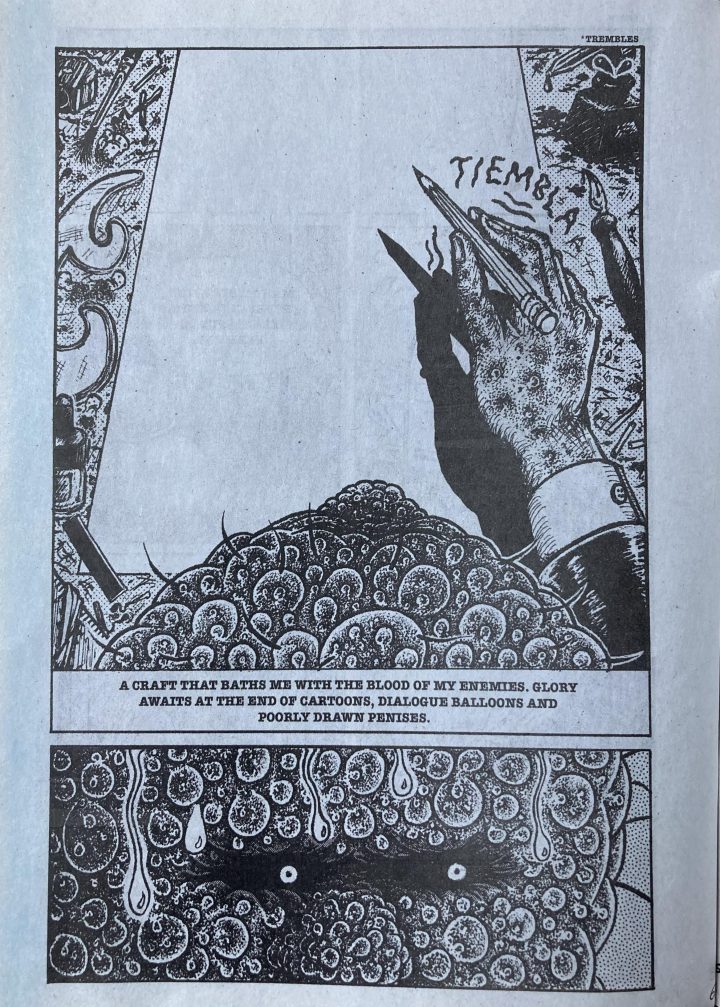
MVP: Ruben Castaneda Garcia comes in with an extremely strong showing titled “Canoclas the Deformed Cartoonist.” The story starts, “I have been trying to live as a cartoonist for the last three weeks,” which is just a funny line and goes from there, detailing the day of a pencil pusher with oozing boils for a face. Next to his drafting table is a pin-up poster and a pot of what could be shit or soup. As soon as Canocals gets close to making a mark on the white paper, he gets hungry and leaves, literally worming his way out onto the street. There he gets into an immediate tussle with a pants-less man that Garcia draws with his hairy scrotum hanging over a word balloon. It’s a revolting story and I loved it. It should also serve as the nail in the coffin of the tenuous “Cartoonists Writing about Drawing a Cartoon” genre.1
BIGGEST SURPRISE: I’m going to waste this section to discuss a personal bugbear. I’ve been adamant in this column from the beginning that each serialized comic should have an “In the previous issue…” section, however small, in the front. I feel even more strongly that every anthology should include a list of the artists in the order that they appear. I’ve been around comics long enough to know that tables of contents aren’t art, maaaan, but imagine a completely satisfying reading experience. Just imagine!
BOTTOM LINE: This issue of Clamp has some top dogs and personal favorites I’ve written about before like Juliette Collet, Molly Dwyer and Ashton Carless to name a few, but not everyone feels like they're totally bringing their very best here, but that is just the nature of the anthologized beast. There is an intriguing Mome-style interview with cover artist Nate Garcia that definitely makes the anthology worth tracking down, however.
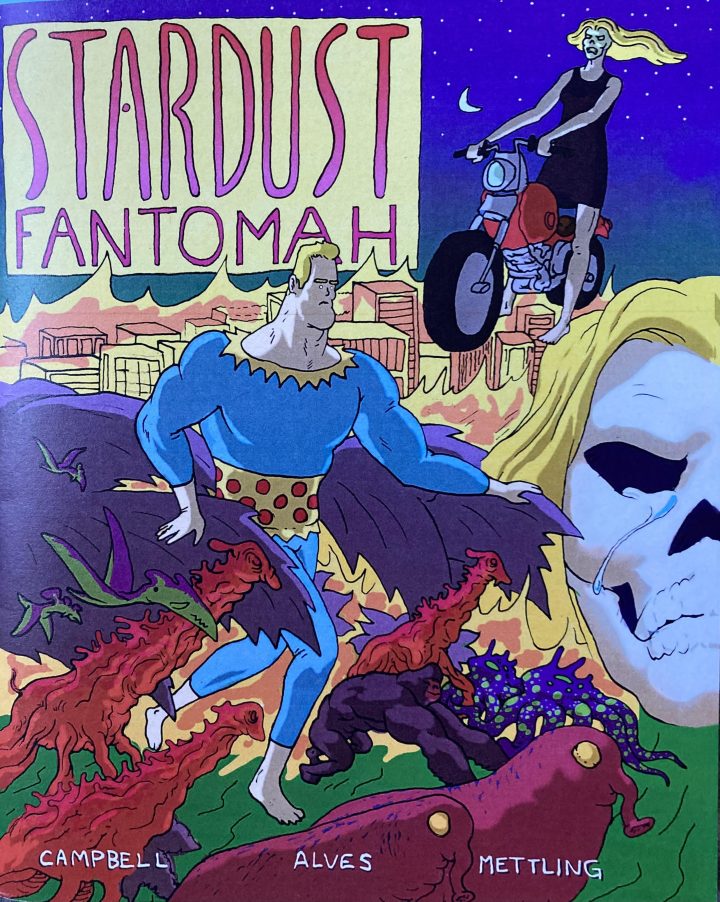
Stardust/Fantomah, edited by Ryan Alves
In this world nothing can be said to be certain, except death, taxes and themed anthologies. This “bootleg” is three stories based on the work of cartoonist Fletcher Hanks.
MVP: I didn’t think any of the trio of contributions were too sensational, but revenge-on-poacher stories are right up my mammal-loving alley. That gave the Fantomah story by Walker Mettling the edge here. Mettling could use some breathing room — larger panels, and not so many — when creating page layouts, especially when he’s drawing things like a herd of elephants and the main character’s head speeding around through the jungle. The grimy linework and combination of silliness (the poachers get put inside pachyderm bodies with their noggins sticking out the top) and cruelty (Fantomah extends their lives by 400 years so they agonizingly feel every tusk ripped from their bodies for centuries) make this the winner.
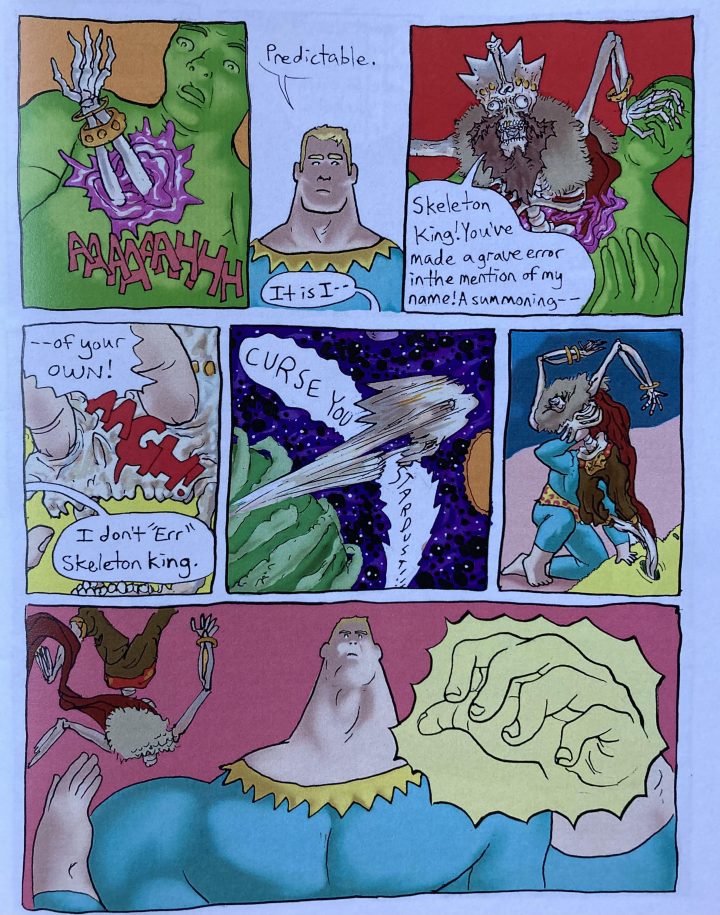
BIGGEST SURPRISE: Fletcher Hanks made stilted and strange comics, but you could always tell exactly what was happening, sometimes even to a comical degree because the caption at the top of the panel would relay exactly what was happening below it. In a few instances in this anthology, especially in the first story by Alves and CM Campbell, I had a hard time following the action, which feels like it’s thwarting the whole idea of harkening back to Hanks. A handful of counterproductive cartooning choices were made here like blocking Stardust with something in the foreground and simply cutting off the hero’s head with a panel border.
BOTTOM LINE: As artists, this might have been a fun exercise for everyone involved. As a reader, it was not. Why not just pick up the real Hanks comics that are now readily available? It turns out that creating a much lesser distortion of what was already warped leads down a one-way street to insipidity.
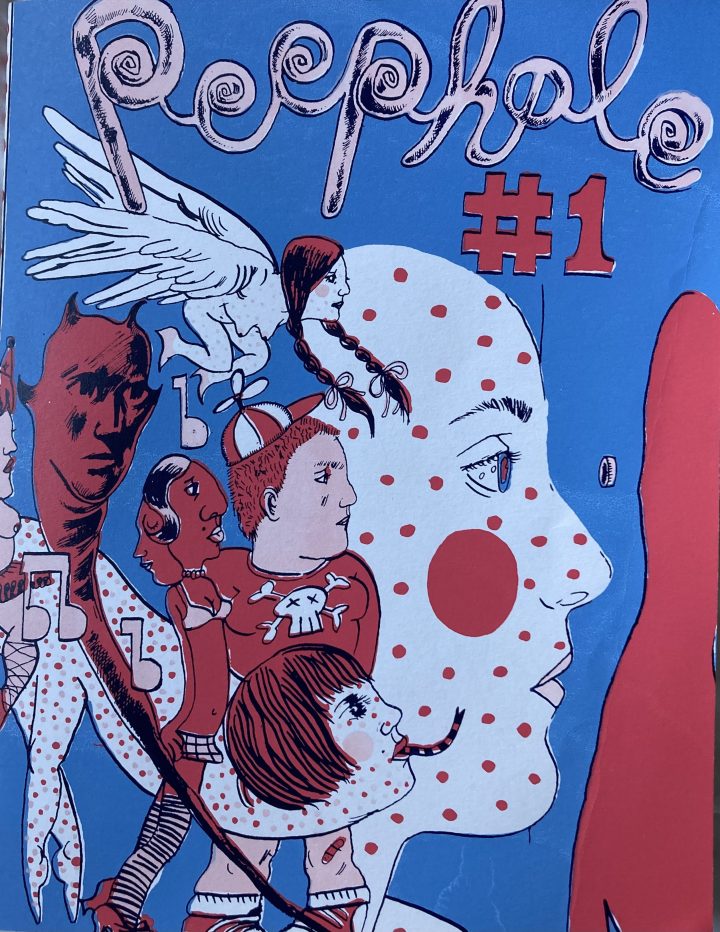
Peephole #1, edited by Juliette Collet
This new venture starts with a table of contents (oh mine gosh), photos of all the contributors as children and a stand-for-something treatise of the anthology. Collet motivates and moves in this intro and says she wants Peephole to focus on “work by young, brave women on the come-up.” Before the comics even start, this is enough to make me verklempt and think about art and my kids and immediately root for this whole endeavor.
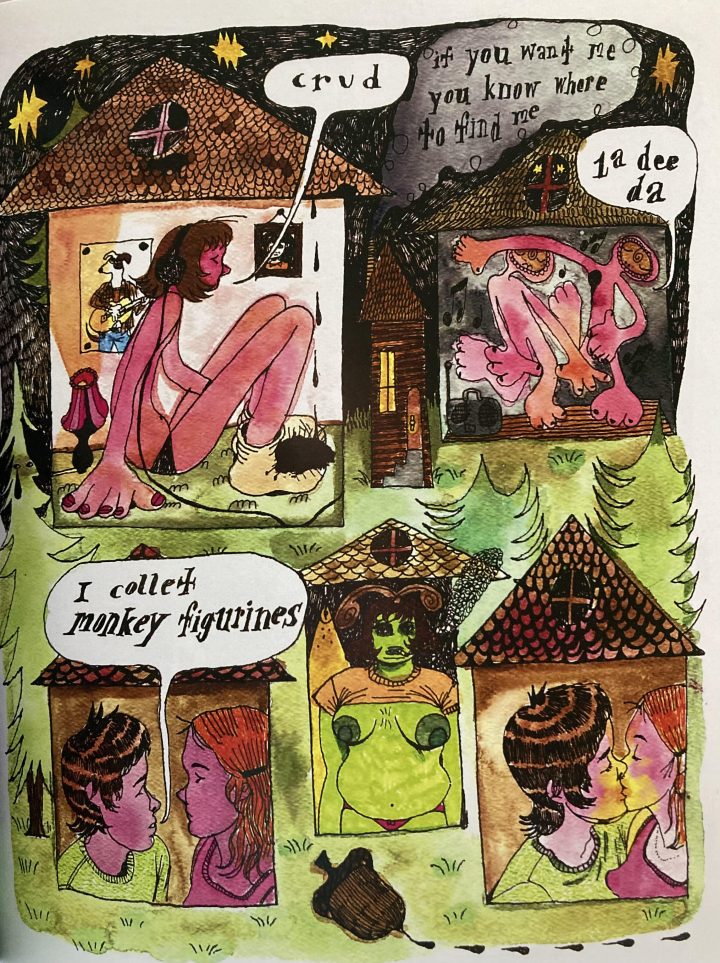
MVP: I was knocked out by the first story, done by Eliza Henderson, that’s a frank take on time-travel self-help. The ink wash is delicate and Henderson makes the right choice to keep all the warts-and-all smudges because they feel like teardrops hitting the page. But the real MVP has to be Daniela Loza with the story “Under the Pines.” Here, the manic buoyant energy of having a crush collides with the grounding of weak weed and sticking your bare toes in the mud. The watercolor on textured paper, especially the browns and greens, remind me of shag carpeting and the Pacific Northwest. Loza brings the whimsical and loamy.
BIGGEST SURPRISE: Did you all know that collage is in? Four of the stories in this book (and also the author bios at the end) use collage elements. They range from printing the text and pasting it on the page to fabric samples to photographs of medical supplies. Collet goes all out in her story about a group of high school students, using a different cut-out face from a yearbook for every single character. I’ve got my decoupaged finger on the pulse and you heard it here first… It’s the summer of collage, baby!
BOTTOM LINE: A character in one of Peephole’s stories states, “speak to me straightly, not sweetly.” And that’s really the motif of it all: finding the truth through art. Thankfully this anthology and the contributing artists are going to allow me to get a few winks of sleep, not because the comics are boring, but because it proves that we can have nice things. Also, add editing to Juliette Collet’s myriad of talents. I’m aware it’s getting redundant on “Arrivals and Departures” at this point, but I truly believe she is comics’ current north star.
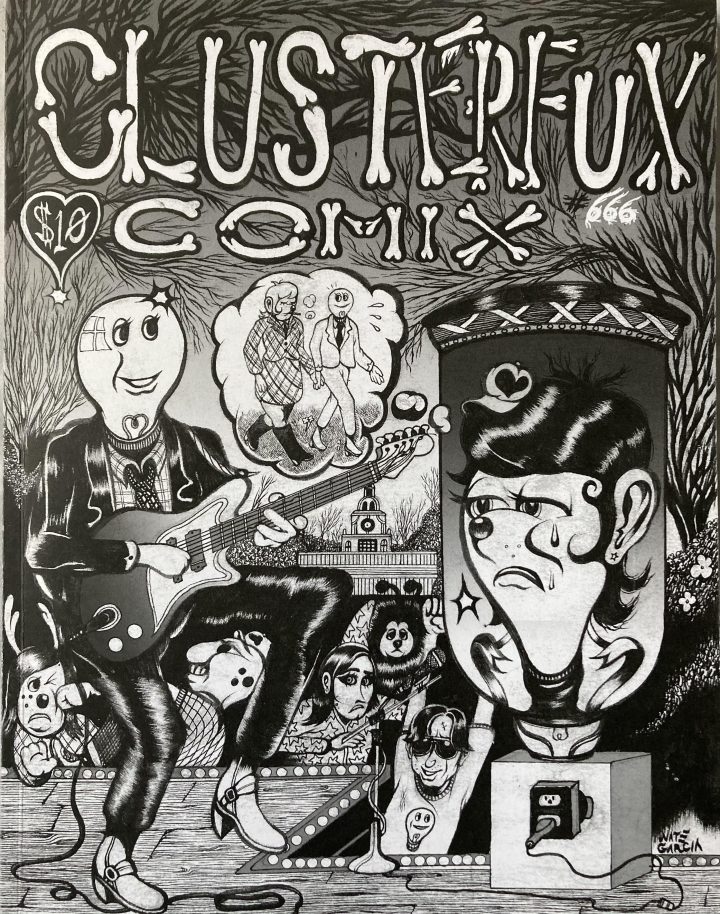
Clusterfux Comix #6, edited by Cameron Hatheway
Cover artist to the stars, Nate Garcia, provides another impressively busy one here, but in terms of the contents it sheathes, a rising tide can’t lift all shits. Clusterfux lives up to its name because much of it is disconnected and overwrought, amateurish (which can truly be a gift, unless it’s a lot of muddy sci-fi violence) without much ambition.
MVP: Are artists concerned with who they’ll be placed next to when submitting work for an anthology? Just a thought, because there are a few sparklers amongst the rest here. Erwin Papa draws big and expressively. His pacing and facials in “The Angriest Warrior” made me think he would have found success doing those movie parodies in MAD. Nathaniel Breen’s “Pipe World” was a fun read even though he might benefit by playing his inspirations a little closer to the vest. Something tells me Breen really liked that Image anthology Island. I’m beating around the bush however because the true MVP is Brother Malcolm. His four-panel pages are so clean and so sincere that it makes him feel like he’s on a different planet when thrown into this collection. Malcolm draws an autobiographical and unusual birthing story which I don’t see very often, especially from a dad’s perspective. He has a new fan.
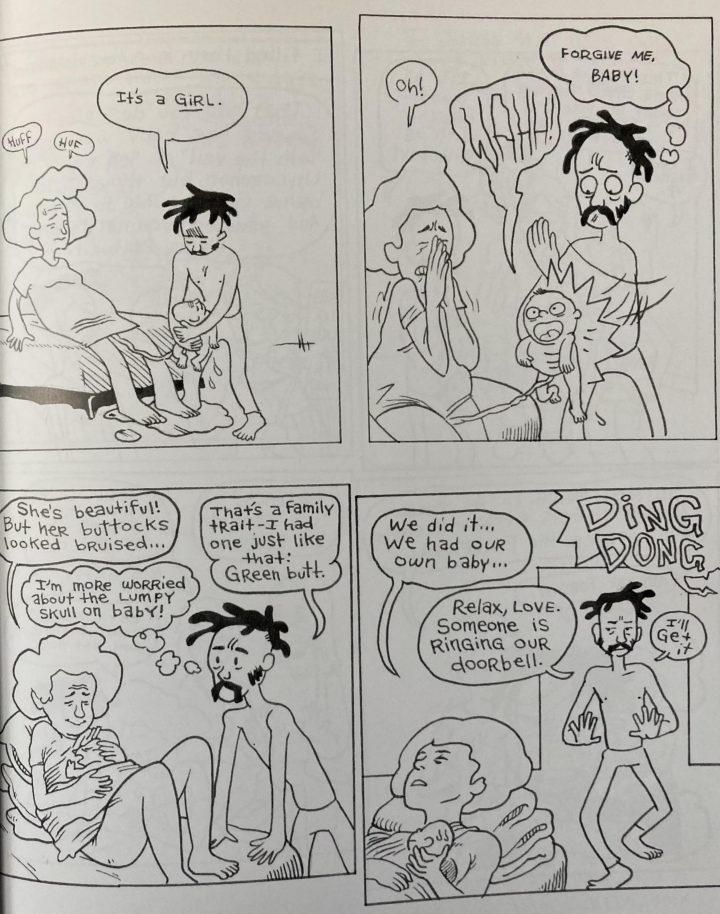
BIGGEST SURPRISE: Men lie, women lie, but numbers don’t. This is a 156-page, perfect-bound anthology that is being sold for $10. Help me figure out those margins.
BOTTOM LINE: Hatheway feels more like a collector than curator. Were the stories here blind submissions or were these artists sought after by him? Does Hatheway stand by, or even like, all of these comics or is he filling out a page count? Anthologies like Clusterfux have always been around and likely will always be. These books, and the overall comics landscape, could benefit from far more stringent editorial inclinations.
Short stories here, short stories there, short stories everywhere. I’ve read enough of ’em! For now, at least. Time to sink my teeth into something more hefty and substantial like Proust or Elfquest. See you next month, I hope.
Questions, love letters and submissions to this column can be directed to @rjcaseywrites on Instagram.