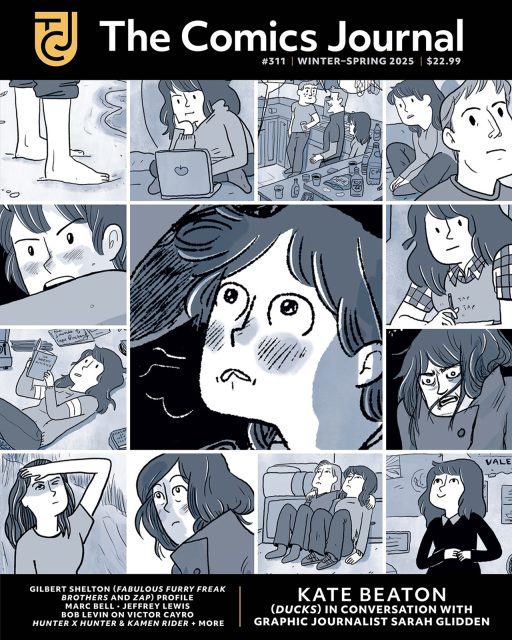

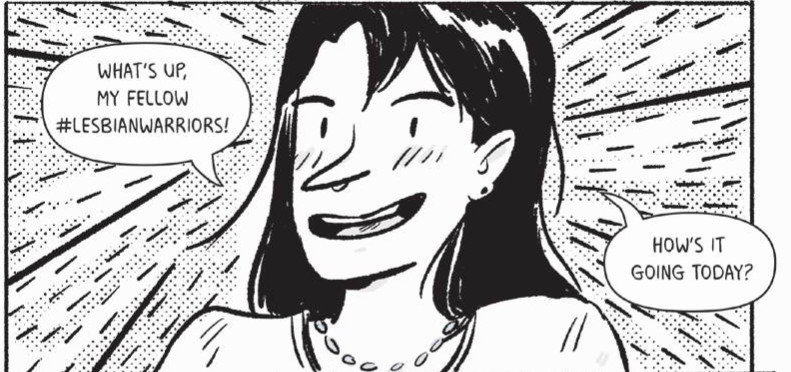
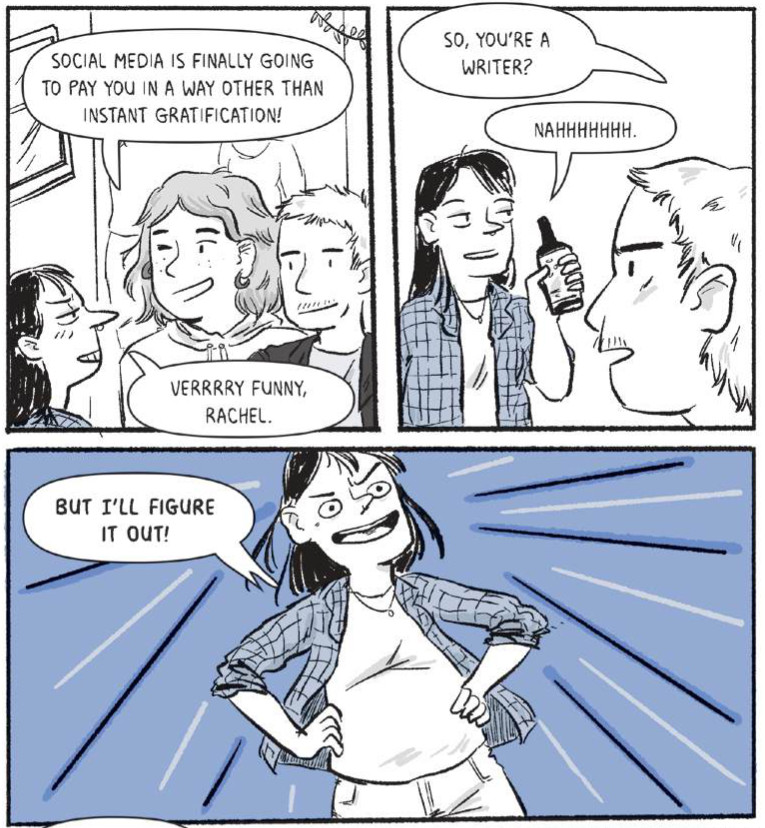
In the opening scene of Leo Rising: Queer Spaces, Sexuality, and Fame we meet Laura, warming up to find her tone for the latest update to her series, confidently and assuredly announcing herself fellow to her audience of #LesbianWarriors, a social media clique she’s built from the ground up that just might be her ticket out of small-town Alaska. But no identity is simple in an Archie Bongiovanni story, and no relationship uncomplicated. It’s not long before Laura’s certainty about her world and place in it will begin to upturn, just as her friend Rachel begins to find her own roots to grow in. It’s a vibrant follow-up to their previous graphic novel Mimosa, once again exploring the modern queer life through friendship and community and, of course, messy messy queer people. From their home in Minneapolis, Archie responded to my email queries during the course of ICE’s violent occupation of the Twin Cities.
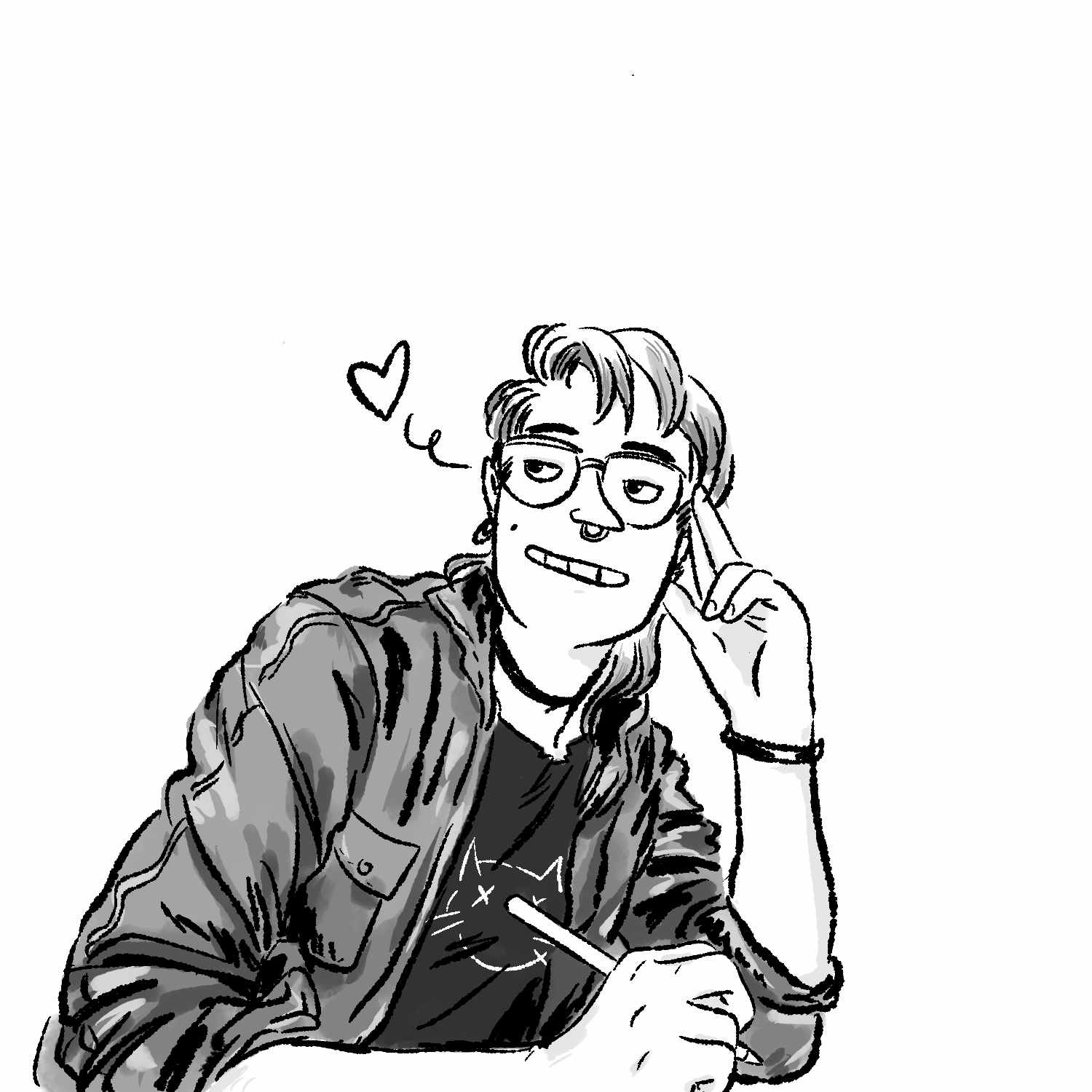
GREG BALDINO: Archie, you're on the ground in the occupied zone that is Minneapolis where ICE has been aggressively active. Liam Conejo Ramos, a five year old boy was abducted and detained. ICE agents shot and killed Renée Good and Alex Peretti. All of this in addition to countless illegal arrests and assaults as documented in the press. But community has rallied in support of their neighbors and once again the Twin Cities is the focal point of a national discussion about law enforcement and capitalism; as it was in 202 when Minneapolis police officers killed George Floyd during an arrest over suspicion of using a counterfeit $20 bill. What's it like waking up in this every morning?
ARCHIE BONGIOVANNI: It's been a lot of emotions here in Minneapolis. I am continuously impressed and amazed by the ways the communities here have stepped up and organized for each other. The biggest movement now is rent relief for all the folks that were unable to work due to ICE occupation. Organizers were hoping the government would step up, but as usual it's hyper-local groups doing the hands-on work.
That rent relief you mentioned is important, with a lot of people at high risk of abduction not being able to go to work and earn a living. It’s almost like the first year of the pandemic again, with people trapped at home and dependent on help just to stay functionally alive. Are any of those organizations still working on rent relief?
I'd say Smitten Kitten (A local queer-owned sex toy store) is still doing Rent Support here
How are the comics and queer communities in Minneapolis handling this? I feel like a lot of the graphic journalism and comics essays I've seen coming out of this are helping to channel and elucidate a lot of feelings, from both creators and readers.
As far as the comic community, there's a big push to draw about what's been happening on the ground and how locals are impacted. You can see the comics using the hashtag #iceoutcomics and you can read more about it here! I think comics are an amazing way to share information and to work through our own individual emotions, I made one myself here!
And what about the queer community? I know that Twin Cities Leather shut down their event programming to let their space be used for organizing and distribution, as have a lot of other organizations and businesses.
The queer community was definitely a part of the larger community showing up for each other and neighbors in general. I can't call out one specific person, business or organization because everyone was/is doing something.
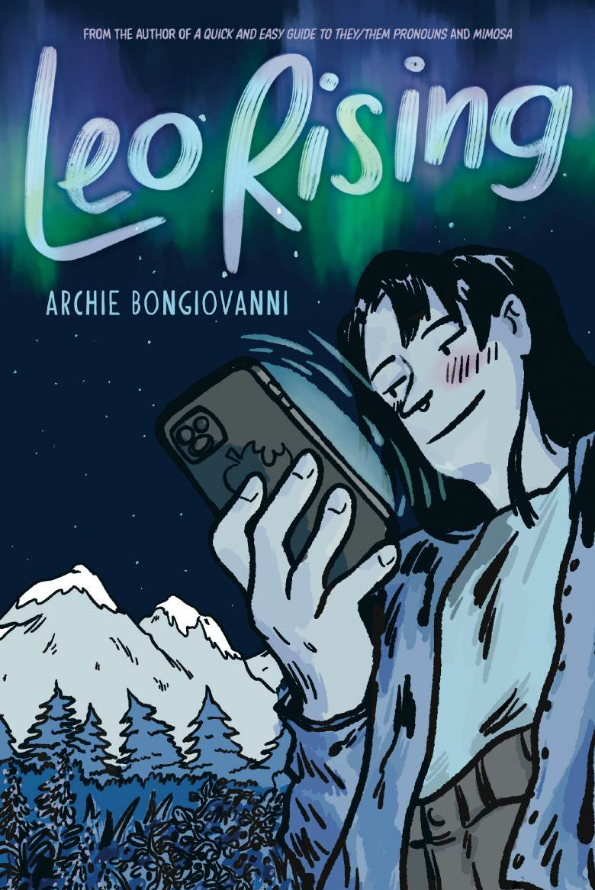
Your new book Leo Rising just came out from the Surely imprint of Abrams Comic Arts. I remember talking to you about launching a new book and having to promote it with all this happening, and you replied that you weren't even thinking about it with all the community work you were doing. Can you talk a bit about what debut time is like for a queer graphic novel these days?
The real work when it comes to releasing a new book is usually in the months before the release as well as the week of. Before the book comes out, you try and get as many pre-orders you can. You want people to know about the book and be excited before it's officially published. When it's published, ideally folks who've pre-ordered it are excited and share it on social media and write reviews and tell their friends about it. It's been a tough time in general for publishing and queer publishing in particular. There were places my publicist pitched Leo Rising that were offended by its content and were offended when we asked if they were interested in promoting it. Queer content is always going to be seen as more obscene as heterosexual work, but I think graphic novels become even tougher as there's a visual element to it (and some folks assume since it's a comic that it's appropriate for kids.)
All this said, it's still winter in the Midwest, which is its own obstacle. We both know this; you've got the colder winter there in Minnesota, I've got the darker winter here in Michigan. It's an ordeal just to go out to get an iced coffee so we can get through the day. But queerness doesn't wait for fair weather. How does the queer scene in your part of the world get through the time of the ice and snow?
The good thing about living in a place that has pretty severe winter weather every year is that folks are prepared for it. It takes a lot for Minnesotans to not show up for something they're excited about. Growing up in Alaska was the same way. It'd be -30 and school and work would still be on. The queer scene is just as active here in the winter as in the summer, just now with a coat check.
Speaking of Alaska, that’s the setting of your new book. Tell me about your own experiences with the land of the midnight sun!
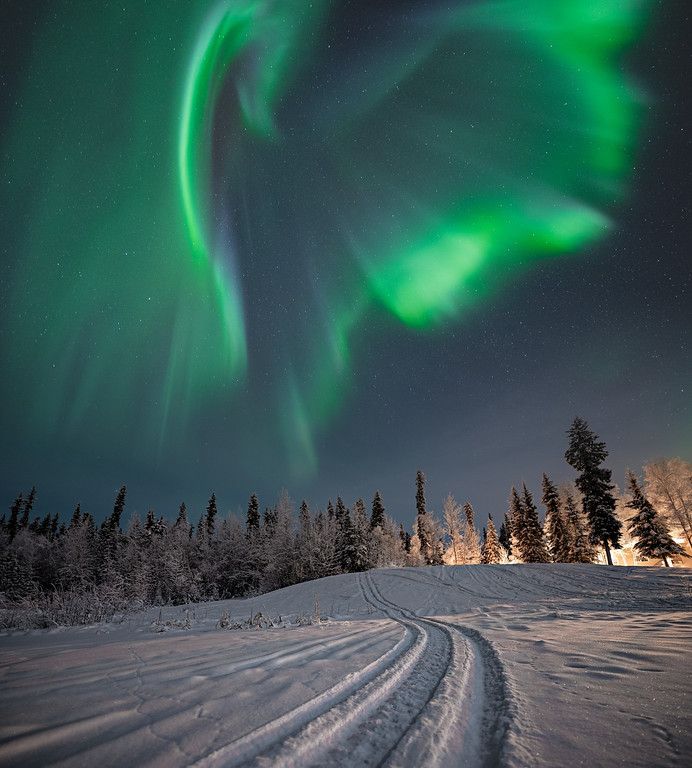
I always describe Alaska as a place of extremes. Extreme weather, extreme sports and extreme opinions. On one hand you have someone with gold buried in their yard and a closet full of guns and on the other hand you have someone with an organic strawberry farm who doesn't wear shoes and the only thing they have in common is they want the government out of their business. Another aspect of Alaska that I touch in Leo Rising is how big of an industry tourism is. It impacts a lot of businesses and jobs there and a lot of employment opportunities circle around it. Drinking is also an issue in Alaska, as I think it usually is in most rural places, and that's another aspect that comes into play in Leo Rising. I moved away for a lot of reasons but I still love the state and love visiting when I can. It's unique and challenging. Growing up I didn't think there was ANY sort of queer scene but as I got older and returned I see that it's there and thriving. That may be because queerness has become more accepted and visible in general, but also I think is a good reminder that most small cities have a lot more going on than we usually assume.
What impresses me about Leo Rising is how much is going on between the two main characters, Laura and Rachel. As much as this is about what’s happening to them in the present, this is a story fueled by their past together and how both of them are growing out in new, possibly divergent, directions. Where did you find these characters and what was it like when you found their story?
Laura's character came first to me, basically fully formed. I wanted this character stuck in-between a lot of things and who was cocky (aka fearful), who knew things were shifting for themselves but couldn't talk about it. I modeled Rachel off a bunch of people in Alaska I know, the folks that thrive there. Since Squarebanks is modeled after my hometown, I knew what it was like working in the tourism industry and feeling really stuck there. I also modeled their relationship after my own previous codependent friendships because it's just a right of passage! It took me longer to develop Rachel as a character, but ultimately I found both of them in a place of stagnancy, they weren't pushing themselves and they weren't pushing each other and I think that's also a reflection of what can happen when you stay in the small town you grew up in (not always ofc).
Last time we talked about your previous graphic novel Mimosa, I was saying how your silent splash pages really stood out for me. Leo Rising takes that further, there's a lot more quiet to it, but that quiet is revelatory. I'm curious about what artists you're finding inspiration in for your own evolving sense of dialogue and pacing.
I'm constantly reading new comics from the library and my taste is quite broad! It's hard to pick a single artist that I'm inspired by as I learn something from every comic I read. I've been getting back into manga where the setting always feels so solid so I took inspiration from that, as well as knowing the place was much more of a character in Leo Rising than my previous work. I wanted Squarebanks to feel real. I also wanted to spend the time translating this place I know SO WELL and can see so clearly onto the page. The Alaska Bird Observatory was a real place I worked at and while it doesn't exist today I have that space memorized. I've super enjoyed Beneath The Trees Where Nobody Sees, Cannon, Love Bullet, Gaysians, and So Long Sad Love!
What had you been taking in while working through this book? And I'm wondering here not just about the media and art (though I do wonder about those,) but the experiences and places? What are the things that helped you to shape this story from the outside?
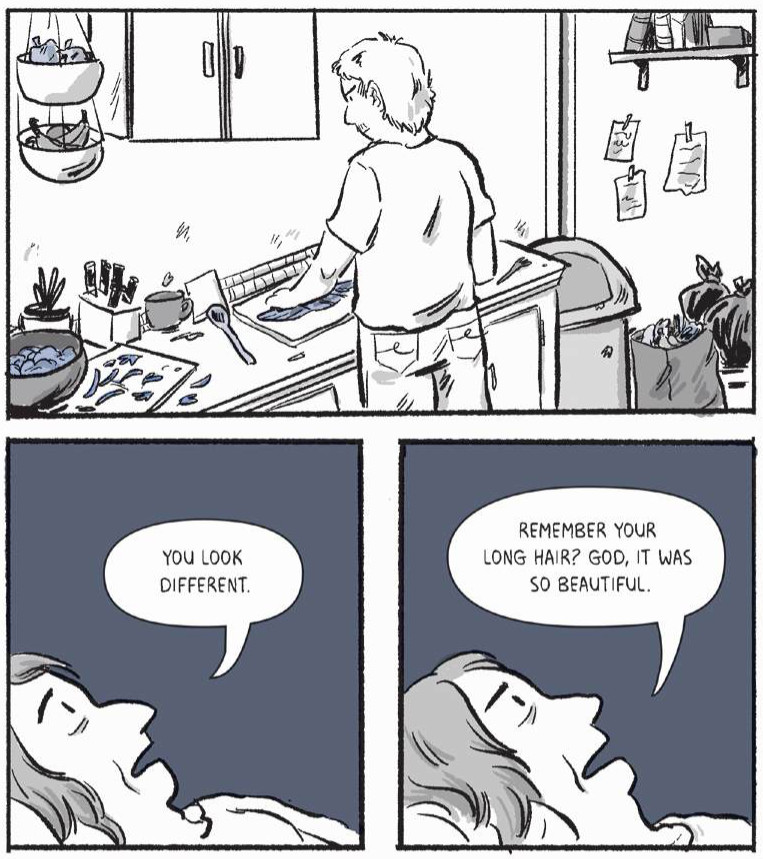
A lot of this book was conceived while I was a part of a year-long queer and trans writing cohort and a lot of what I was ingesting while working on this book was my classmates writing. It was wonderful to be immersed in so many thoughtful queer stories that were super varied. Leo Rising is a reflective book as well, so I was reflecting a lot on my life up in Alaska. It was also "after" COVID (obviously it's never ending), which was a time I had a surge of popularity on social media. While I was working on Leo Rising, I felt far enough away from that moment that I could accurately reflect on the pros (and cons) of finding such an intense online community and also thinking about how social media really shaped me as who I am today, good and bad.
Leo Rising is at its heart about friendship, which could be called the smallest scale of community. That need we have for people to share experience with runs through Mimosa and Grease Bats as well. But as a driving subject it's not limited to your graphic fiction. You also explore ideas of community in your nonfiction work. This is clearly a subject that matters a lot to you and comics are clearly something you love--but what I'm interested in is the fact that it WORKS and not just in your comics. So what is it that comics can do that makes them such an effective medium for telling stories about community?
I think it's the visual aspect that makes it so successful in talking about community. Drawing a moment or an expression on someone's face allows for reader's interpretation, there's some nuance there that is harder to capture in written work. I think also being able to see multiple characters and multiple points of view is also useful. I think there's also a lot of queer cartoonists making work right now, so it makes sense that comics have become a strong medium for exploring the themes of community!
One of the turning points for Laura is when she gets introduced to the late Leslie Feinberg's Stone Butch Blues, and having read it myself, yeah that book changes you. It’s a novel, it’s a memoir. It’s about lesbian life and it’s about transgender life. It’s about class struggle and workers’ rights, it’s about art and community. It challenges your assumptions about whatever label you try to slap on it.
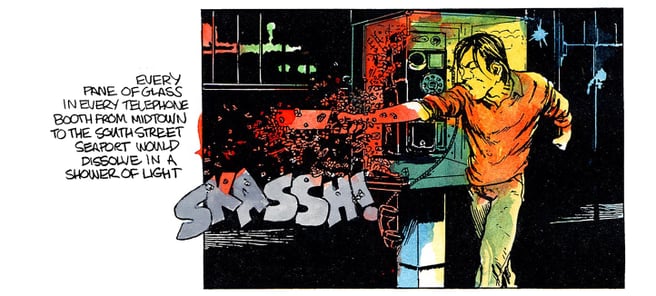
I came to it later on in my thirties, but for me the queer work that turned my world upside-down was 7 Miles a Second by David Wojnarowicz, with art by James Romberger and Marguerite Van Cook. Originally published by DC/Vertigo in 1996 and later reissued by Fantagraphics, it was adapted from Wojnarowicz's diaries and autobiographical writings by Romberger and Van Cook. It combined some of his final writings while he was dying of AIDS, paired with remembrances of his childhood experiences as a homeless street hustler in pre-gentrification New York City. Both of these are powerful books of uncompromising honesty. And I worry about how the people who need them are going to find works like these and others because is it just me or is queer culture getting watered down by what the straight cis mainstream allows to succeed? It really seems like there's a YA-ification going on in terms of what’s “allowed” to have an audience.
I think when it comes to a lot of mainstream stuff, yeah stuff is sanitized for sure! If it's trying to appeal to everyone, or everyone under the LGBTQ umbrella, it doesn't really appeal to anyone! I think it's specifics that make a compelling story or a compelling character, but that's just me! It was really important that Laura interacts with Stone Butch Blues by Leslie Feinberg because I think reading queer historical texts and having this WOAH moment is almost a right of passage! To me, it symbolizes a moment where we realize our queerness exists outside of our single community or timeline and has interacted with so many moments of the past. Part of being queer is being in communication with our history. We don't exist in a vacuum! I think with important queer texts, those that need to find it will. I stumbled upon Stone Butch Blues by someone lending me a copy and I think that's also a big part of how our history survives. Even though it may not be mainstream, I trust the queer community to continue to share these works.
You recently published an updated version of your truth or dare game Sweatgasm, originally self-published if I recall right, and now a slick polished version from Silver Sprocket. Normally, I’d ask “Where did you get the idea for this?” but I think a queer truth or dare with an adjustable threshold of horniness and such bon défis as “Put on a blindfold and try to guess the chest of every player by touch alone” speaks for itself. What was your experience like with the design and development of that game?
Working with Silver Sprocket and Plus One Exp on Sweatgasm was a dream! I had great editors and designers that helped make this sexy weird dream a reality! We were able to include so much variety and more game mechanics than in my DIY original version. I'm so proud of Sweatgasm and the team of folks who made it happen!
Let's end on a hopeful note because lord knows we need it. Two years from now, you are walking out of a comic shop in high spirits, mind racing with the possibilities of the medium. What was in that shop that made you feel so good? What do you want to see in the future of comics?
I just want to continue to see exciting and new work! There's so much that the medium can do! There's so many comics I stumbled upon which surprised me and I hope that continues. I'd love to see more comics aimed at adult readers outside of the superhero genre. My hope is that adults who haven't read a comic since they were a kid try out the medium and discover they love it!