
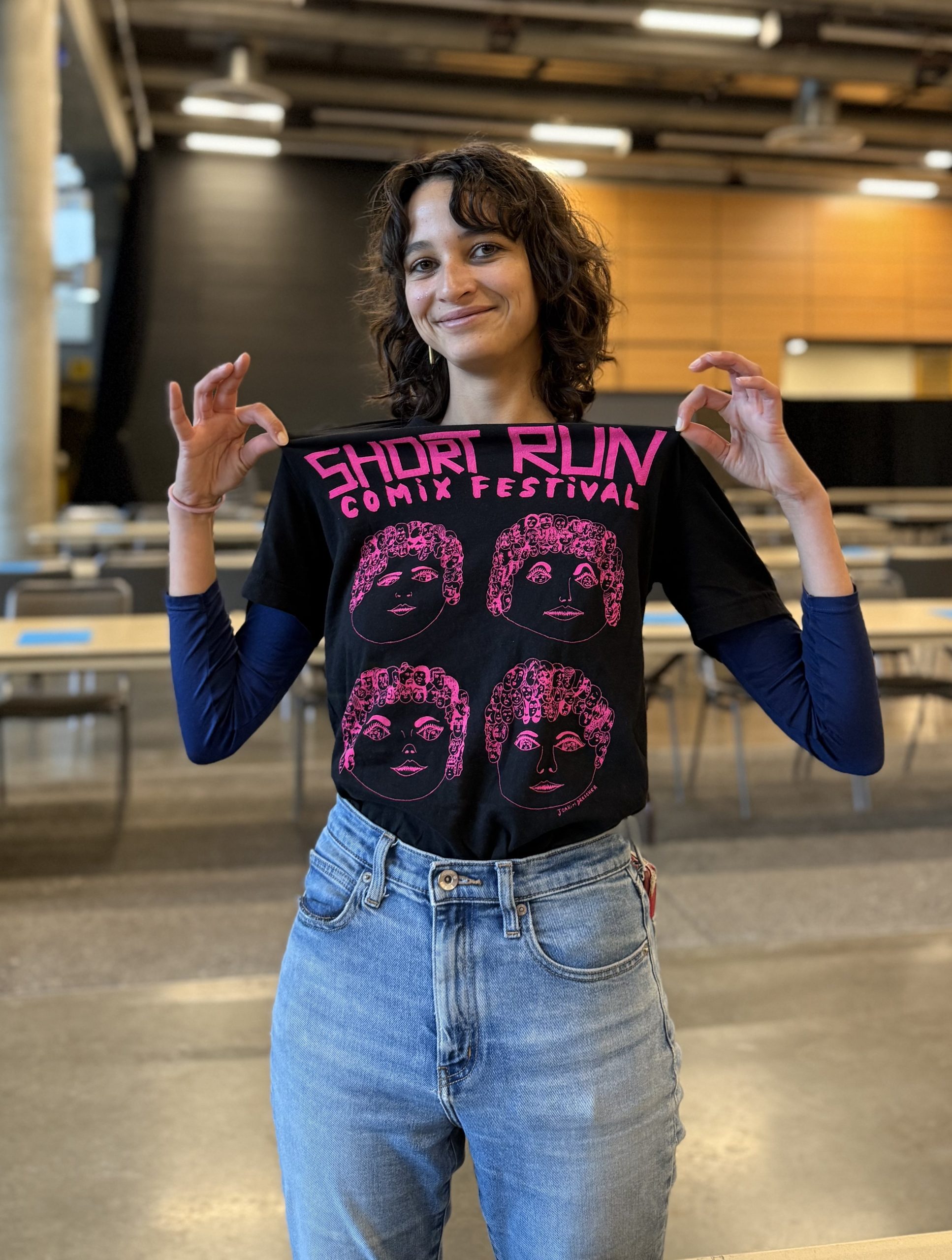
My name’s Maïa Hamilcaro-Berlin. I’m a French comic book artist living in Brussels. For the most part, I write comics that deal with feelings, friendships, love, boredom and the implicit bonds that humans can have with one another in La Chasse à l’Ourse, “The Bear Hunt,” published at Du Noir sous les Ongles, or Et les Saisons Encore “And Seasons Again.” I also take part in the fanzine collective life in Belgium and volunteer at an independent comic radio show, Radio Grand Papier. I spent one month in Seattle helping out with the Short Run Comix Festival. During this period, I joyfully kept a diary of my experiences with the events and artists connected with the festival for TCJ.
"Transmission of Cultural Heritage Through Comics" with Yasmeen Abedifard and Monyee Chau
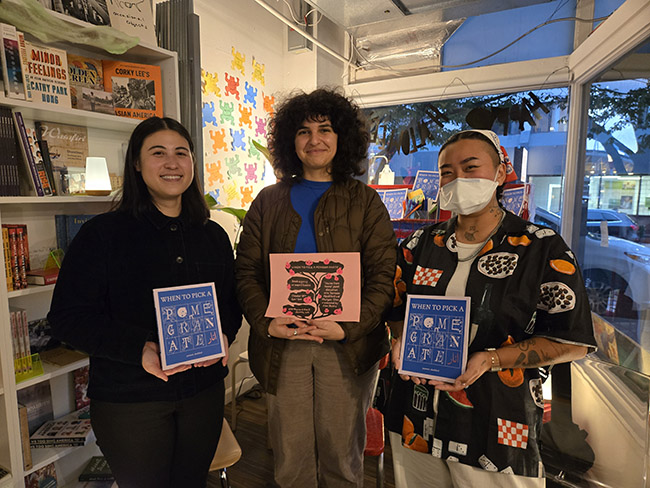
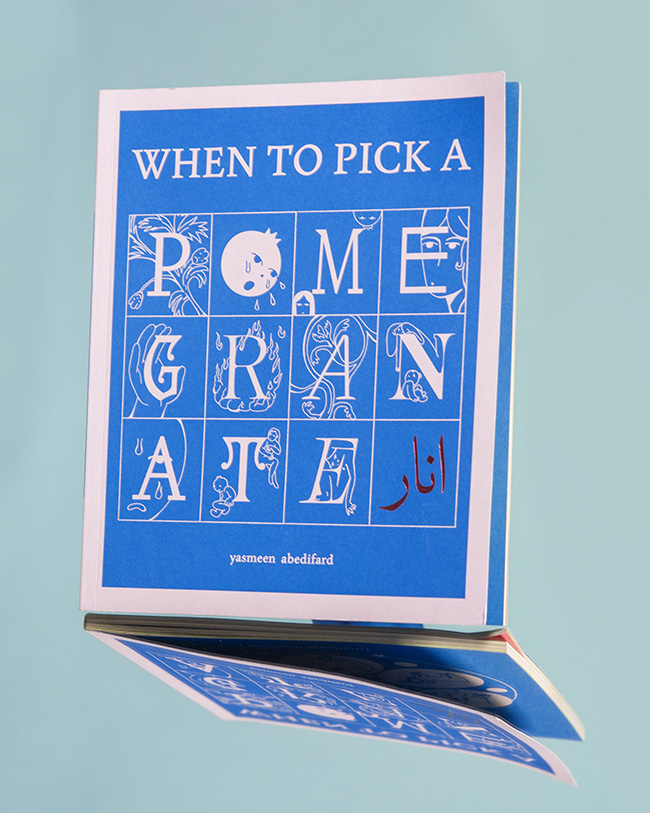
On Friday, Oct. 18, I went to Yasmeen Abedifard’s and Monyee Chau’s reading at Mam’s Books, in Seattle, part of Abedifard’s book tour for When to Pick a Pomegranate (WTPAP), recently published by Silver Sprocket. Alex Barsky, a comics author (Sun Cell), who runs a Risograph printing workshop, Zine Hug, in West Seattle, interviewed Abedifard, and invited artist Monyee Chau (Twelve Nights on Heaven's Headrest) to discuss comics, art transmission and the place of communities in their artistic works.
Mam’s Books is a small and wonderful one-year-old bookshop, located in the C-ID (Chinatown-International District), which specializes in Asian American literature. It is run by Sokha and named for his father. A safe and warm environment, it was the ideal place to host artists whose books are about their heritage and finding a sense of belonging in the comics and queer communities. Abedifard is an Iranian-American comic artist born in the San Francisco Bay Area, and Chau is an American-Taiwanese artist. Both create work about their social and aesthetic legacy. For example, by redrawing culturally specific iconography and making it their own, or by incorporating other languages into their artwork.
When Abedifard spoke about how the garden of her Iranian grandfather gave her special link to nature and fruit, Chau explained what it was like to grow up in a Chinese restaurant in a Chinese neighborhood. The place of food in their work, especially fruit, was an obvious entryway for their moderator as well. The three shared the metaphor of rotten fruit as depicting shame in first- or second- generation children from immigrant families.
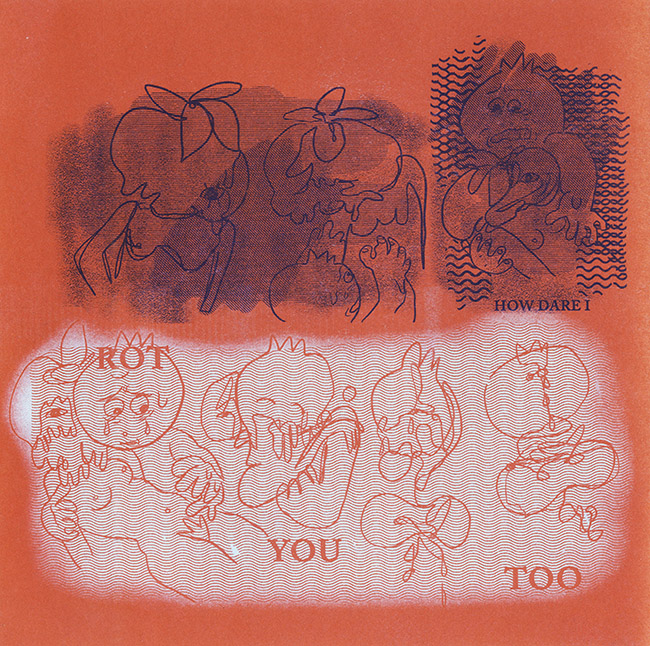
Fruit was so central to the idea of transmitting personal storytelling, that Yasmeen Abedifard decided to make a fruit a character, and name her book for it. WTPAP is composed of several stories, drawn from 2016 to 2024, and based on the stages of the plant life cycle. They follow a pomegranate and a girl, who take on different roles in the stories – muse and artist, gardener and seed, lover and fruit.
Abedifard drew inspiration for the structure of her books from Persian stories and iconography, as in Attar’s famous Sufi poem, “The Conference of the Birds,” or in the renowned fairy-tale “One Thousands And One Nights,” the main story is the sum total of small stories, each independent but all linked together.
She thoroughly explained her intention to convey some of her feelings linked to her family through a different way of writing stories, using a lot of metaphors, as Chau does in their work, which also include glass sculpture and ceramics. Both mix, shatter and make their own elements of their personal backgrounds to create meaningful stories.
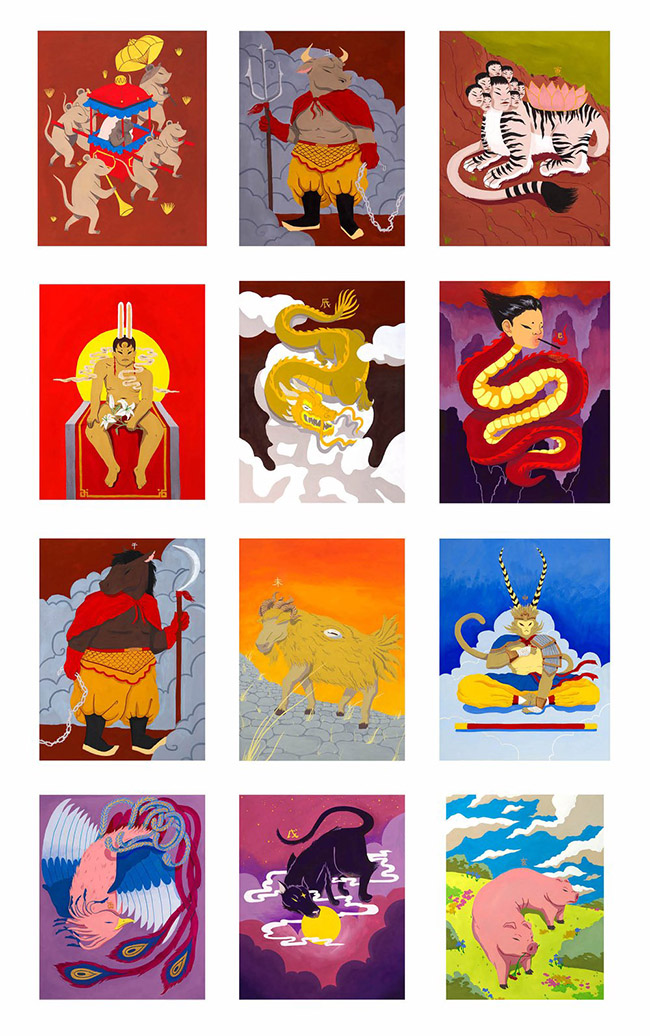
It was so heartwarming to see how these artists connected. Even Alex Barsky stepped out of her moderator role a bit to show her own work and relate to Abedifard and Chau’s stories. The three want to make their art and books as accessible as possible to their audiences.
As Chau said, it’s pretty easy for an artist nowadays, especially BIPoC queer artists, to feel like they want to give up. But this is why communities are important: seeing beautiful things made by someone from their community, feeling the care for the books and art work, or just experiencing the intimacy of a Friday night reading in a Chinatown bookstore keeps them inspired.
Joyful Readings at the Opening Show
Opening night of the long-awaited Short Run Comix Festival arrived on Halloween, Oct. 31. I went to the Public Display Art Community Space in downtown Seattle to meet up with Kelly Froh, the festival organizer, her great team, and special guests and exhibitors Heather Loase, Mita Mahato, Cara Bean, Powerpaola, November Garcia and Brandon Lehmann, who were getting ready to present their respective comics.
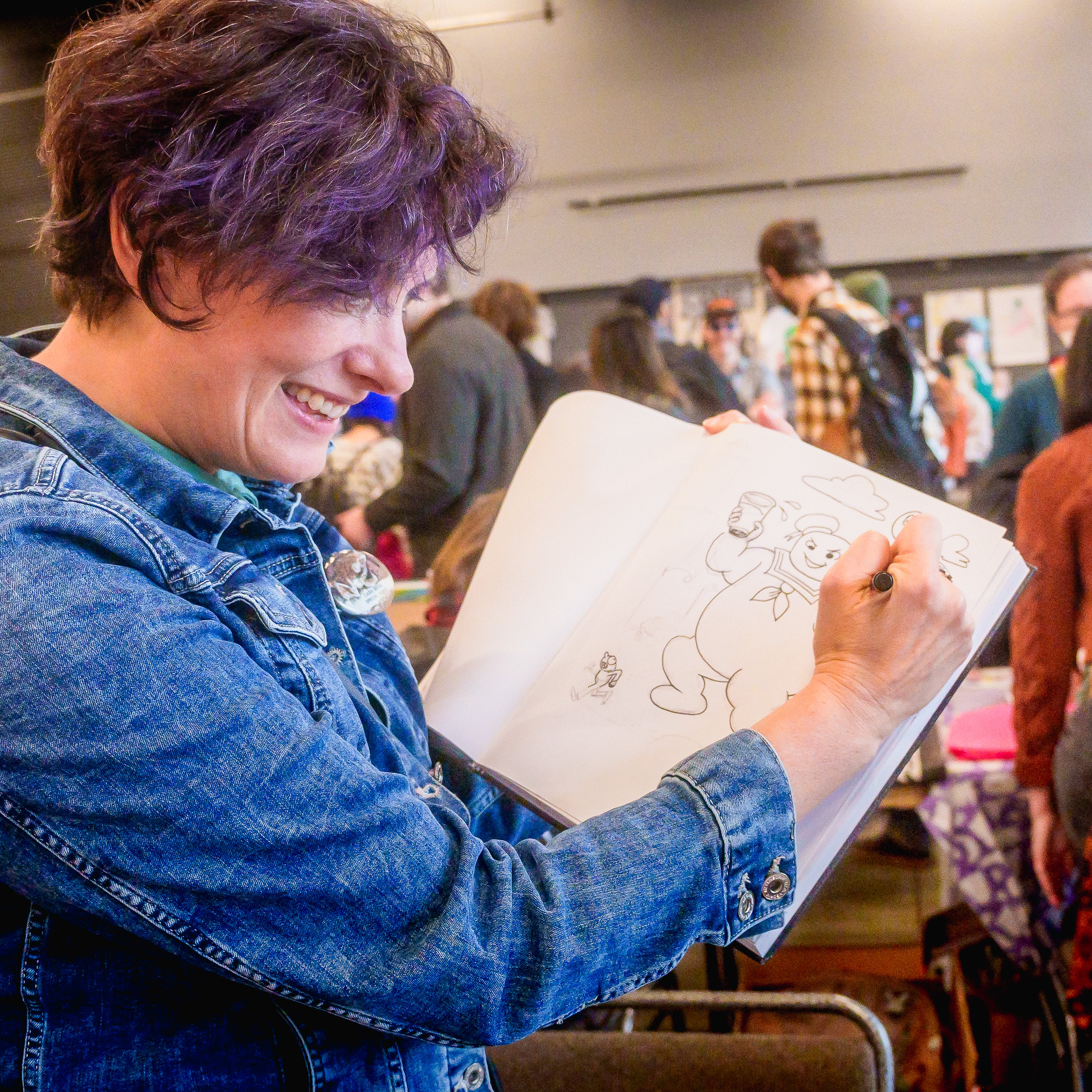
I don’t often get the chance to attend such funny and exciting readings. Cara Bean got the ball rolling with her Here I Am, I Am Me, an illustrated guide to mental health published by Workman Publishing. The cartoonist and educator said she was inspired to write her book after talking to her pupils about stigma, fear and anxiety. Here I Am, I Am Me takes a clear, simple and funny approach to these complicated subjects, which can sometimes be difficult to explain.
After Bean, Mita Mahato, a comics artist and poet from Seattle known for her cut-paper collages (Arctic Play, 2024; In Between: Poetry Comics, 2017) read a small comic strip made for the occasion, featuring a dialogue between a human, “Phil,” and a genus of deep-sea siboglinid polychaetes, “Osedax,” in the supermarket. Full of color, it denounces hyper-consumption.
Powerpaola followed up Mahato by turning on background music while she read the first chapter of her book All My Bicycles, published in the U.S. by Fantagraphics. It was a small, poetic pause of sadness about her life, her relationships and the places she’s lived, metaphorized by all the bikes she’s ridden.
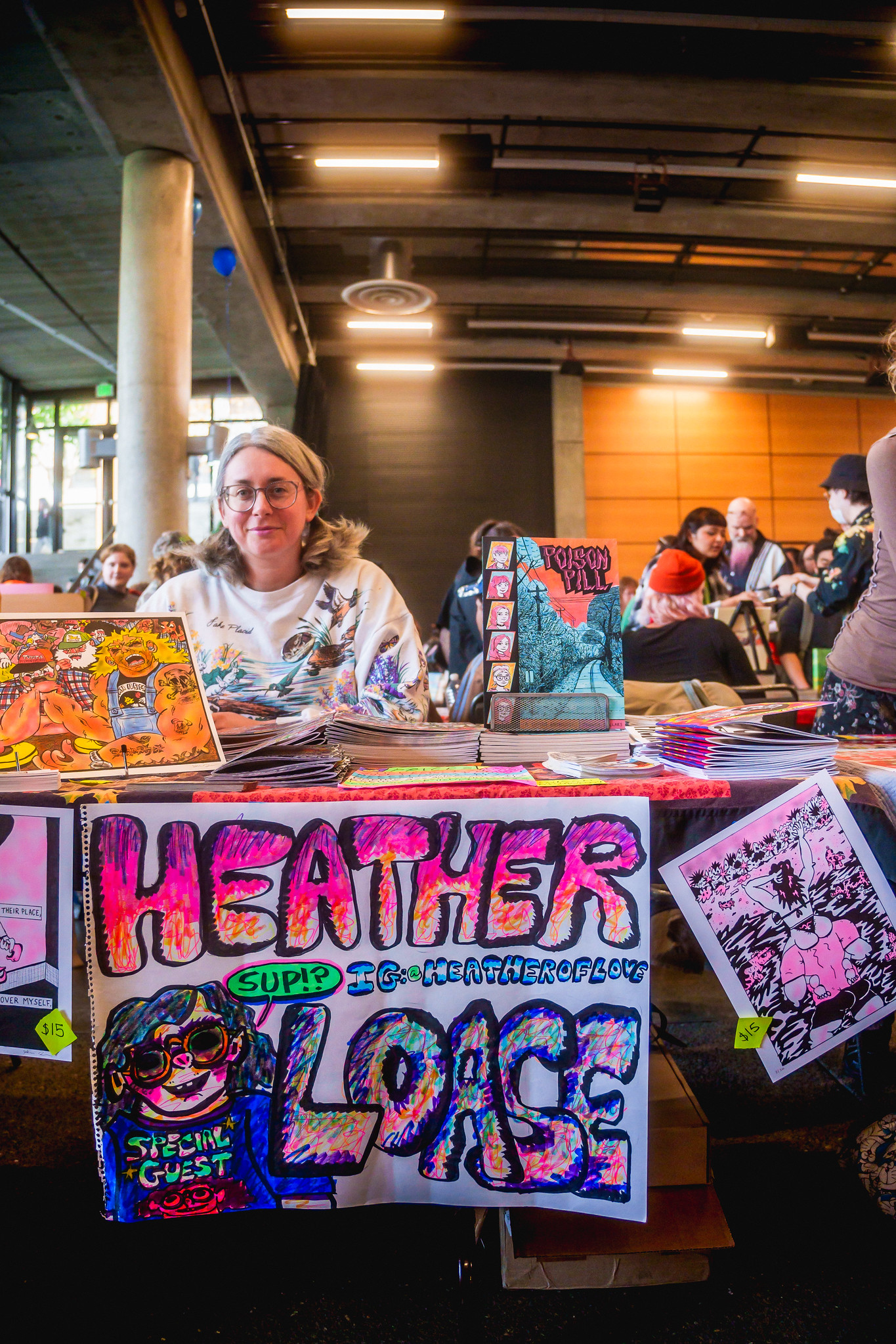
Heather Loase’s hilarious reading, meanwhile, took the audience for a ride — not on a bicycle, but on a bus — with NEEEXT Vol. 2, her latest fanzine. Accompanied by her friend, who played the sound effects of seagulls and crying people, Loase had me laughing out loud. In her fanzine, she presents herself as a candidate for Next TV dating competition, and her suitors (who, as per the show’s gimmick, await in the “Next Bus”), each funnier and more clichéd than the last, arrive to introduce themselves to her — and perhaps find, who knows — love?
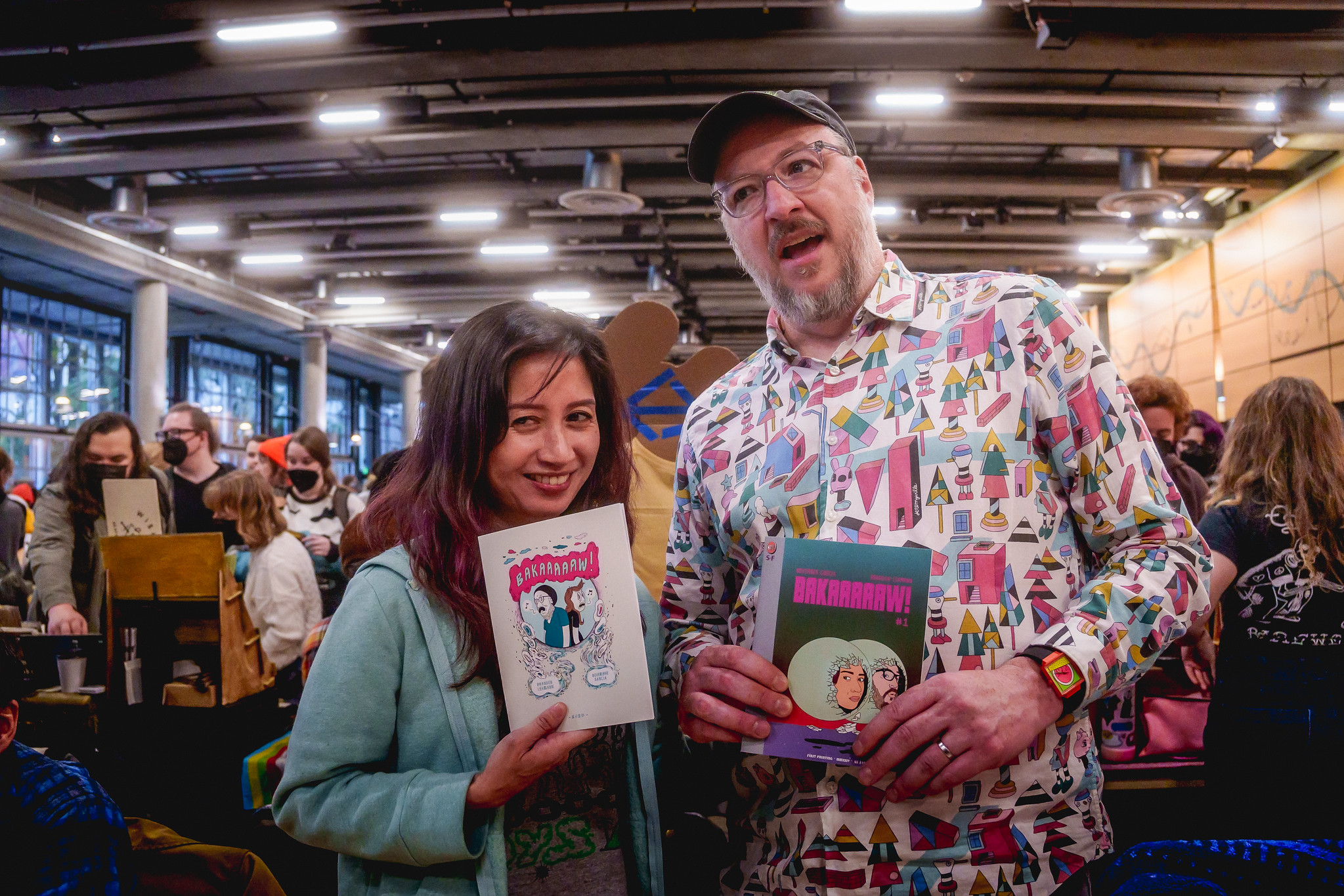
This joyous and festive moment, the first event to open the long weekend that was to be Short Run, closed with presentations by November Garcia and Brandon Lehmann. The two comics authors presented their fanzine about their friendship, which they had produced together. It was a lovely reading, co-prepared by both of them and emblematic of Short Run, where links and friendships are forged between comic book authors ... I’m really looking forward to going.
The Day Before: Creating Links with Books
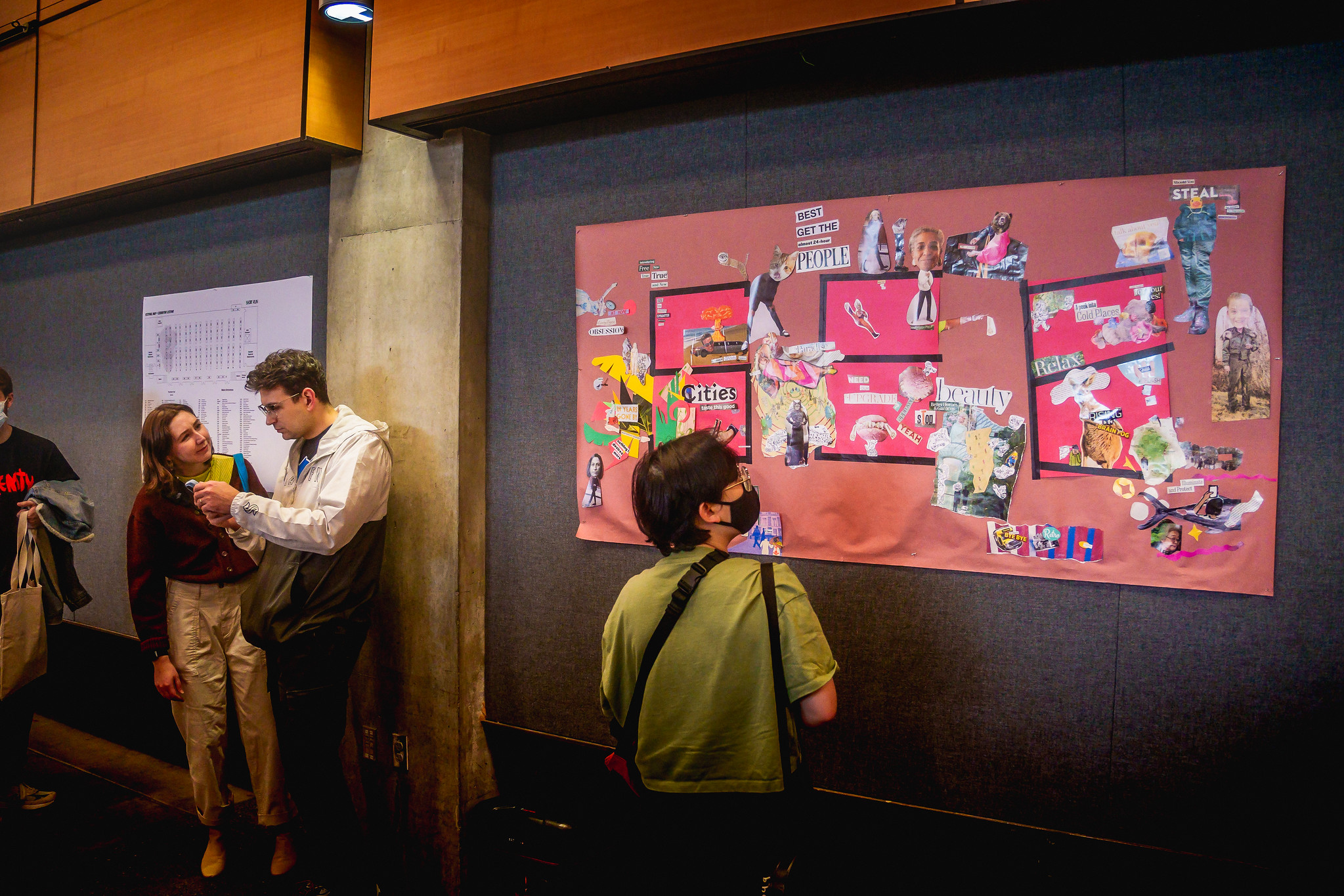
The following day, I attended a workshop by Mita Mahato, again at Mam’s Books. The 10 participants were invited to create a community collage fresco. In a studious silence, everyone got ready with their scissors to cut out words and images from magazines laid out on the table, inspired by Mahato’s collage books, available for reference. Everyone shared a great moment of collective creativity before I headed off to the Fantagraphics bookshop to attend a conversation between Julia Gfrörer and Conor Stechschulte.
It was, of course, my first time in this legendary bookshop. I felt like I’d walked into the dream of a 17-year-old teenager (probably me) walking into a shop with a desire to buy everything. Accompanied at the entrance by Daniel Clowes’ drawings on the shop front, I had time to browse the books and records before the two cartoonists began.
Gfrörer and Stechschulte talked about their artistic careers and the role community played in their desire to make comics. They both got into comics at the instigation of their friends – they used to get together to make fanzines, print them out in the evenings, take part in festivals, and make comics for anthologies. Surrounded by a small crowd of people with close or distant ties to comics, this evening could only confirm what they were saying: making comics also has a collective and social importance that is reflected in these moments of festivity, union and friendship. Stechschulte supported his presentation with his book Ultrasound, and Gfrörer presented her new book, World Within the World, a collection of minicomics made between 2010 and 2022 (Fantagraphics published both books). I stayed a bit, talking to people and appreciating the small exhibition on the wall of the store and gallery. But I soon went back home to prepare myself for the following day, a busy one: the Short Run Comix Festival day.
Finally ... Short Run
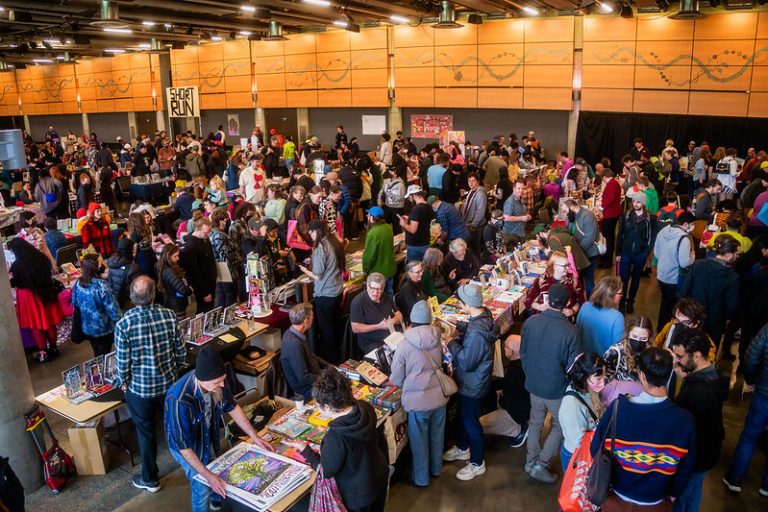
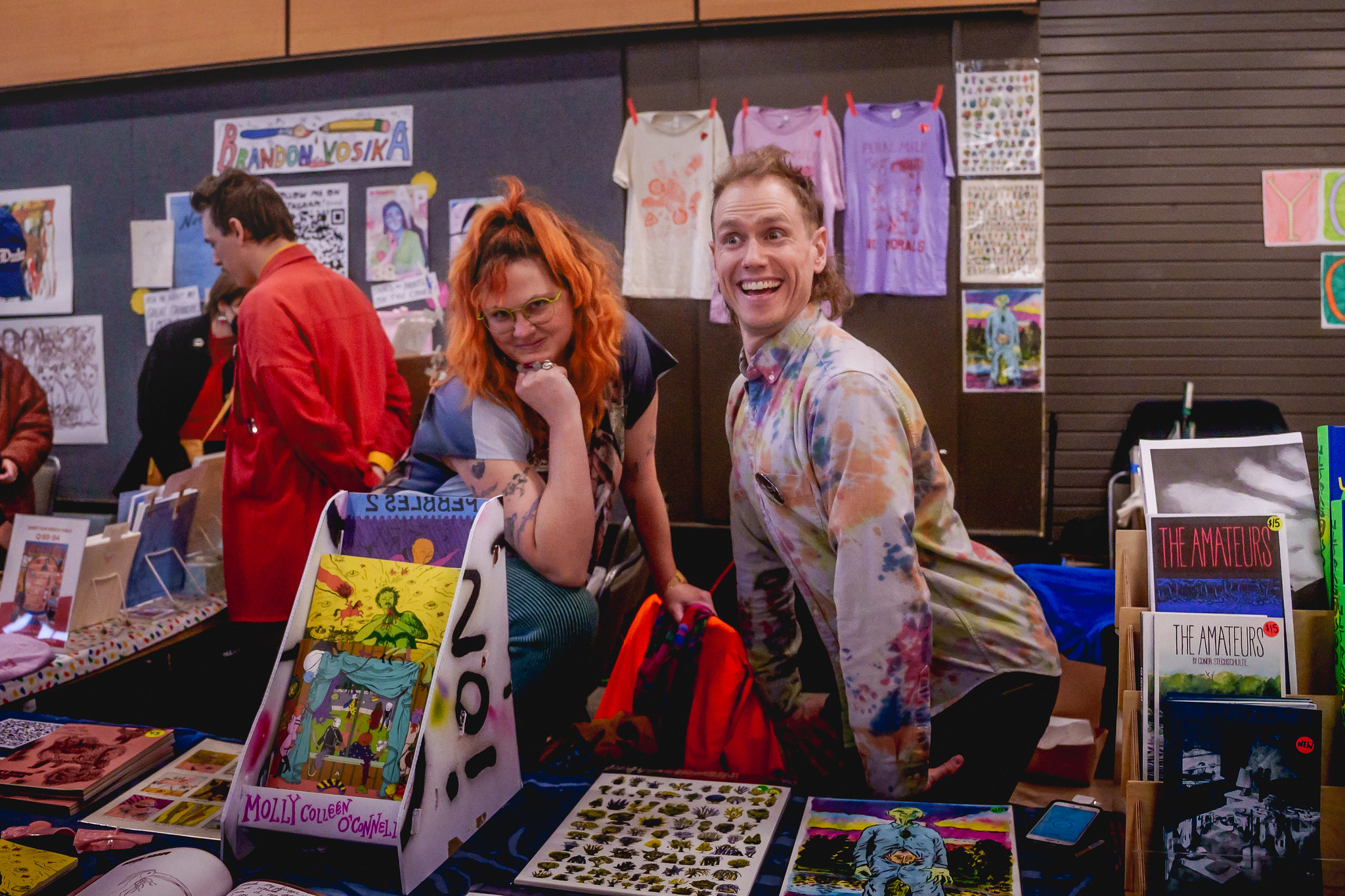
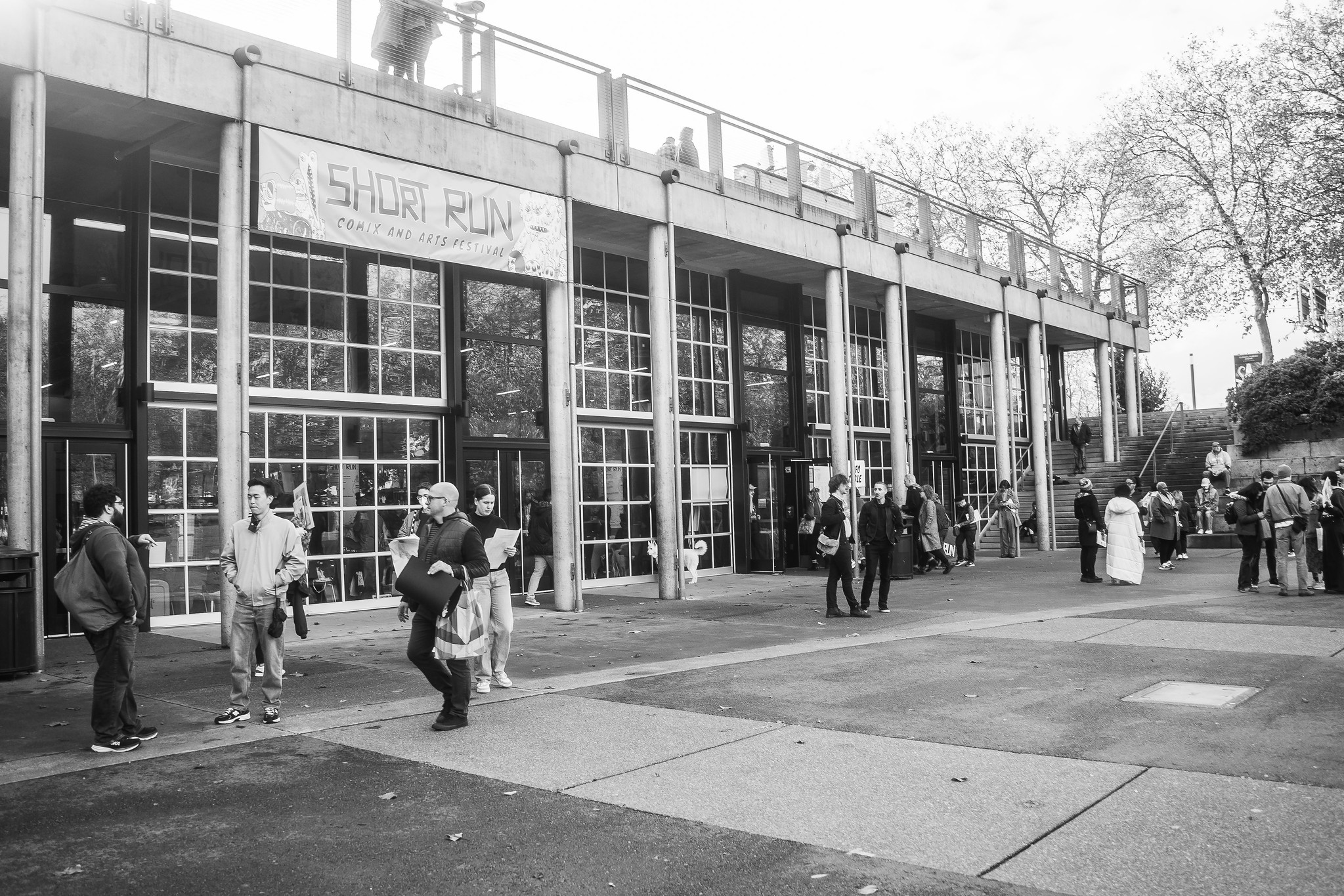
I don’t think I have the words to describe how much I was struck by the Short Run Comix Festival. It was my first time at this festival, and also my first time at a U.S. comic convention. I arrived before the official opening of the Fisher Pavillion to help set up, welcome the exhibitors, and then applaud, all in unison at 11 a.m., the start of this long-awaited day. In two hours — and once again, thanks to a phenomenal, close-knit team — the festival was up and running, transforming the place into a safe haven for independent comics. I felt like a kid in a candy store. I couldn’t stop wandering between the stands, buying two books here, three books there. ... Suffice it to say, I ended the day completely broke.
I was impressed by the quality of the work on display, a job once again done by Froh, who leads the show’s curation. Every stand was diverse and sharp. Everyone just seemed happy to be there. I took the opportunity to buy books I’ll be taking back to Europe from the Silver Sprocket and Peow2 stands: Leo Fox’s Boy Island and Loïc Locatelli’s drawings are now in my suitcase for my trip back home. I was able to buy Adam de Souza’s Blind Alley and wares from the people I’d met during my internship in Seattle, such as Zine Hug’s fanzines, Rooms 1-22, Sun Cell, or Kelly Froh’s Beat the Rust.
To me, Short Run and fanzines are also about supporting your friends. Buying their stories, their drawings and reading them later, at home, on the other side of the world. It’s a story that brings back memories of the festival, of chatting about comics with everyone, of buying tons of books. A transitional object that creates a bond across the Atlantic.
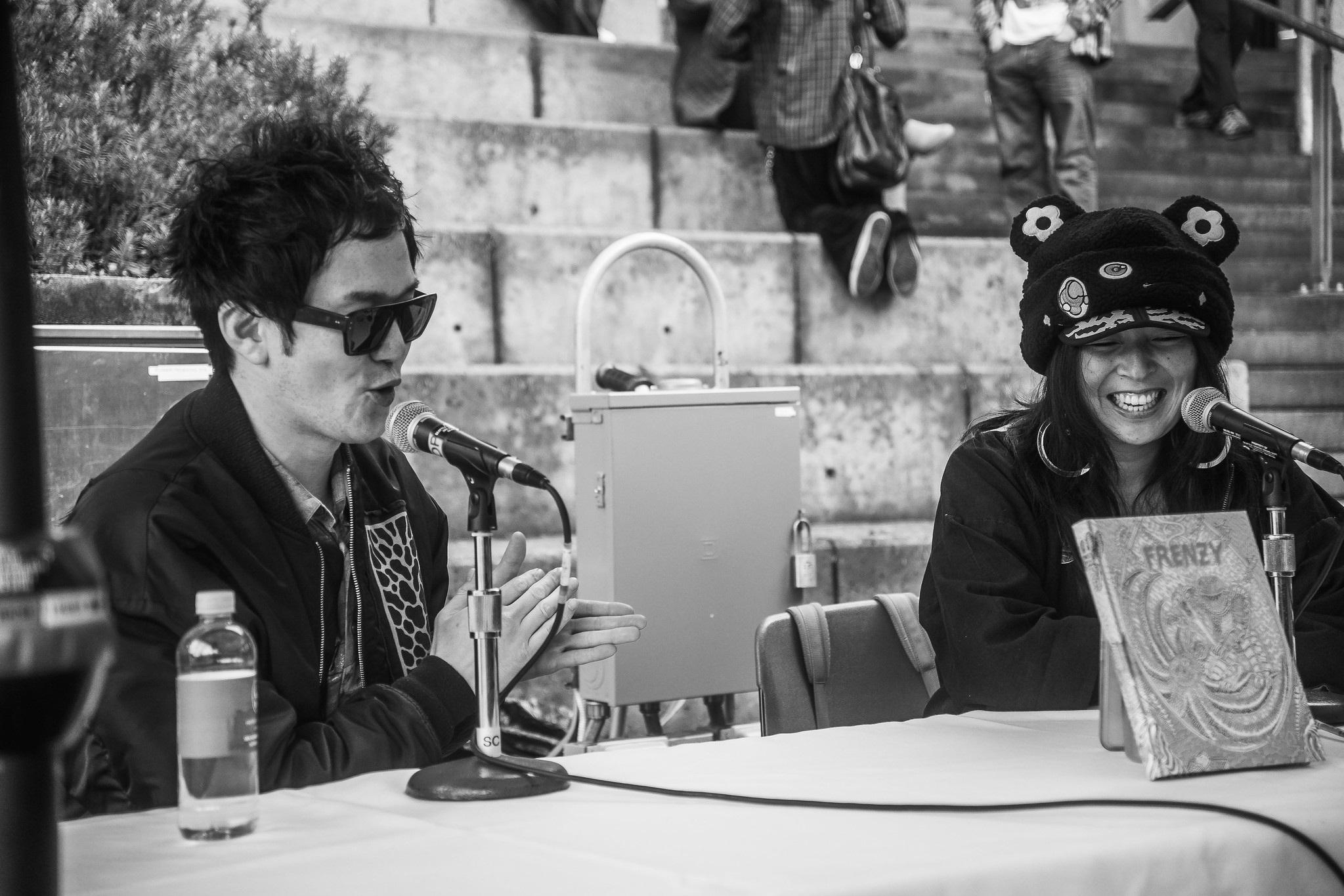
The Fisher Pavilion was crowded all day. Luckily, the weather was kind, as outside were The Short Talks: 40 minutes of creative conversations between comic book authors, booksellers and publishers who freely discussed their work. I attended the exchange between Tetsunori Tawaraya (lastest book Frenzy) and local artist Handa, where I learned that Tawaraya had a noise-punk band. Handa asked him about the colorful world he invoked in his drawings and his comic book influences. Tawaraya explained that he had grown up seeing yokai and reading manga. Drawing was also a way for him to connect with people when he arrived in San Diego and didn’t speak a word of English – he did portraits of people and musicians on the street in the late ’90s. The exchange between Handa and Tetsunori was jovial, interspersed with lots of laughter.
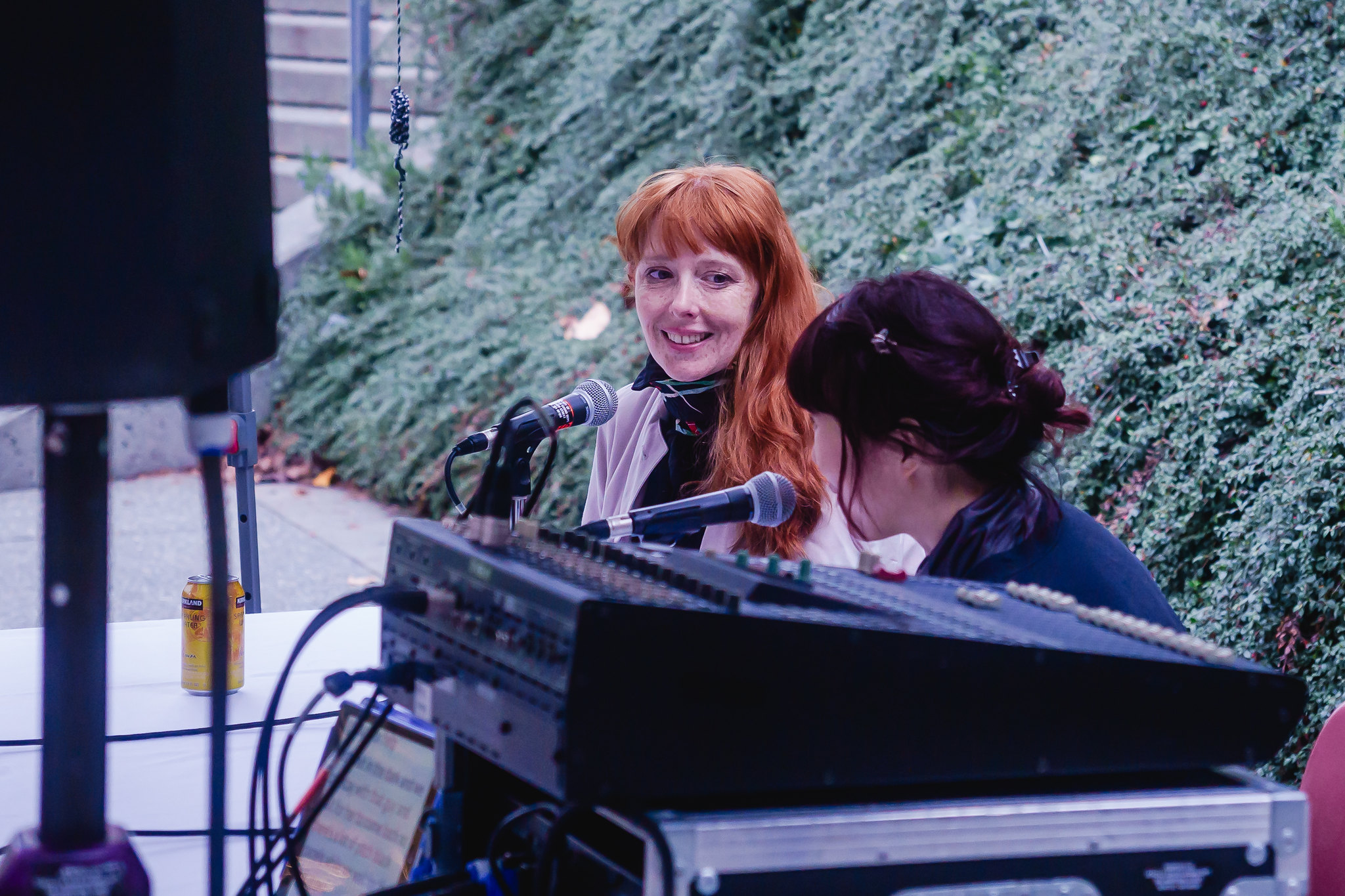
The second exchange I was able to follow was between Julia Gfrörer and Angela Fanche. The two New York friends seemed happy to be back together and focused more on the financial side of making comics. One makes a living from it, the other has a part-time job, but both stressed the importance of getting together to draw, of having a routine, of going to cafés or drink-and-draws with friends. Their exchange made me want to draw.
I’d been warned that the one-day Short Run went by incredibly quickly, but I was still surprised when the end of the festival was announced. I hadn’t had time to see all the books I wanted to, and plenty of other fanzines were calling my name (though by this stage, I’d run out of money). It gave me a nice feeling of wanting to come back to the festival: next year, or whenever the opportunity arises for me to return to Seattle.
This memorable day ended at Mini Mart City Park at the Short Run After-Party/ the Draw No Matter What Art Show. Visitors (almost all had tabled at Short Run) could see the work of Powerpaola, Tetsunori Tawaraya and Joakim Drescher hanging in the gallery, who responded to each other as the public talked and debriefed about their festival experiences. As someone who felt like drawing at the end of the Short Talks during the day, this exhibition confirmed my desire to do so. The artists’ colorful, overflowing drawings were a wild accompaniment to the end of this magnificent comics festival.
If I had one last thing to say about Short Run and its satellite events, I’d say that it’s a festival that proves to everyone that comics can be a collective art form, just waiting to be shared, enjoyed with friends and family, forging links across the world. So go for it, and see you there, in one, two or three years.