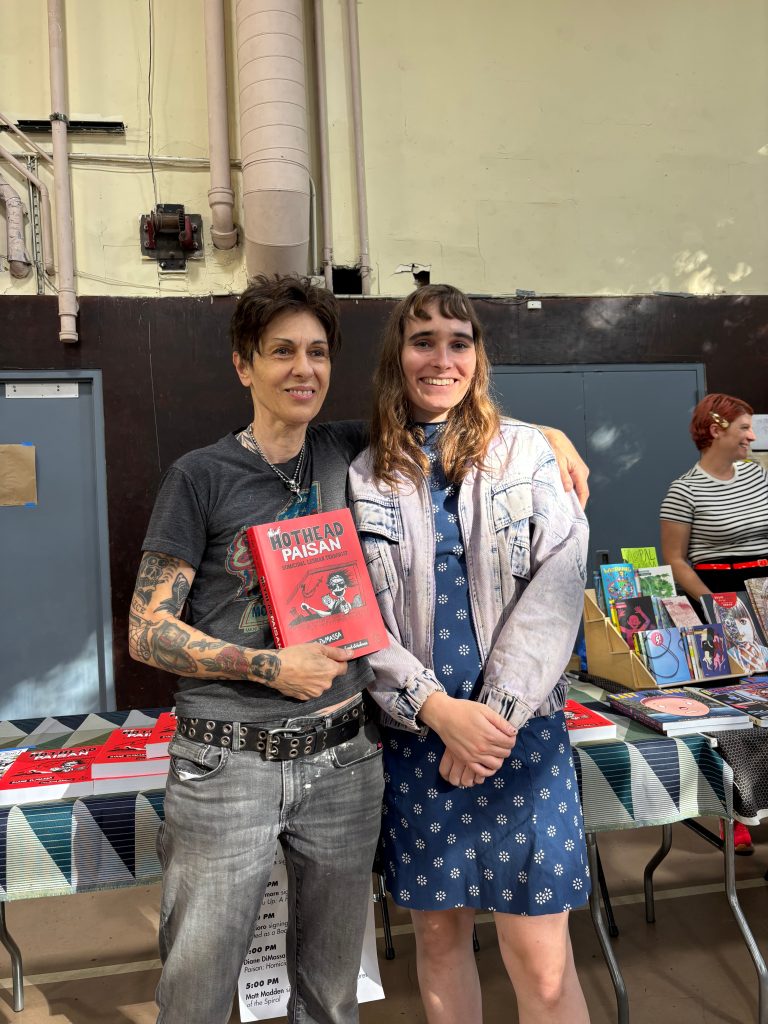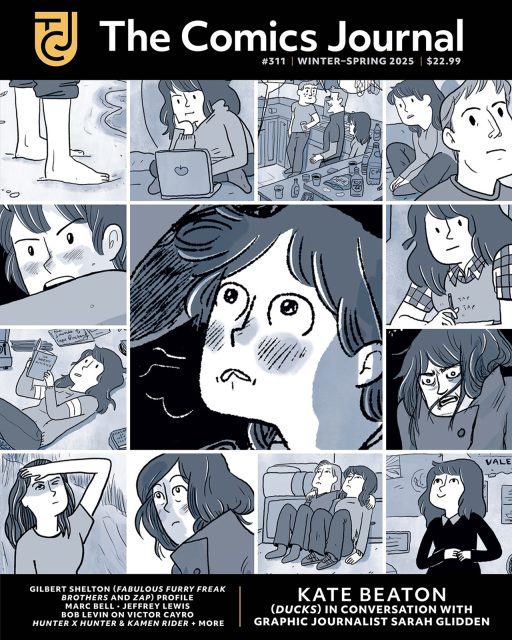

In the autumn of 2025, Japanese illustrator and manga artist Hisashi Eguchi was accused of tracing a photograph of a woman without her consent for a public promotional image. The image was withdrawn, corporate collaborations were suspended, and the dispute was eventually resolved through legal and contractual settlement.
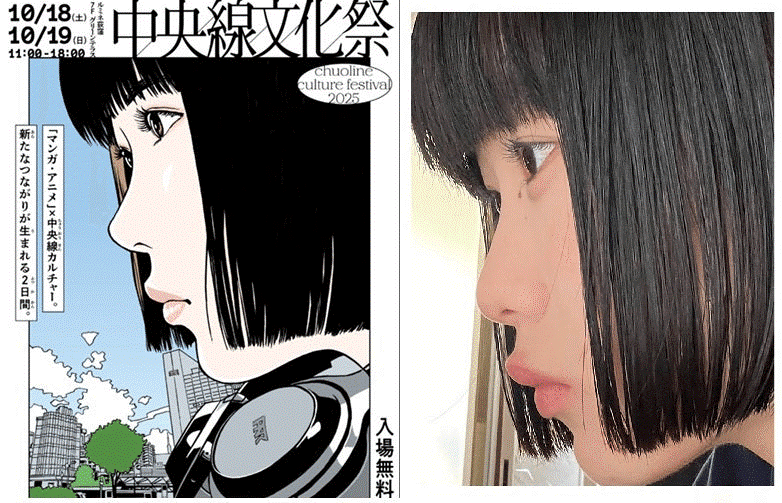
In Japan, the revelation triggered an intense public debate, with arguments rapidly polarizing between criticism and defense of Eguchi’s practice. For several months, Eguchi himself remained silent. On Dec. 30, however, he released a lengthy official statement on his personal X account.1 Following this statement and the completion of legal procedures, the controversy gradually subsided.
What interests me here is neither the legal question of infringement nor the moral question of whether tracing is permissible. Rather, I am interested in what this episode — now concluded — reveals about the peculiar status of images in contemporary Japanese visual culture, particularly images that circulate as “anonymous” yet feel unmistakably familiar.
The nameless aura
This controversy is complicated, but it exposes something essential about how images work in Japan — and how they circulate between the real and the imagined.
To a Western viewer, the photo below might register simply as the portrait of a quiet, modest-looking East Asian girl.
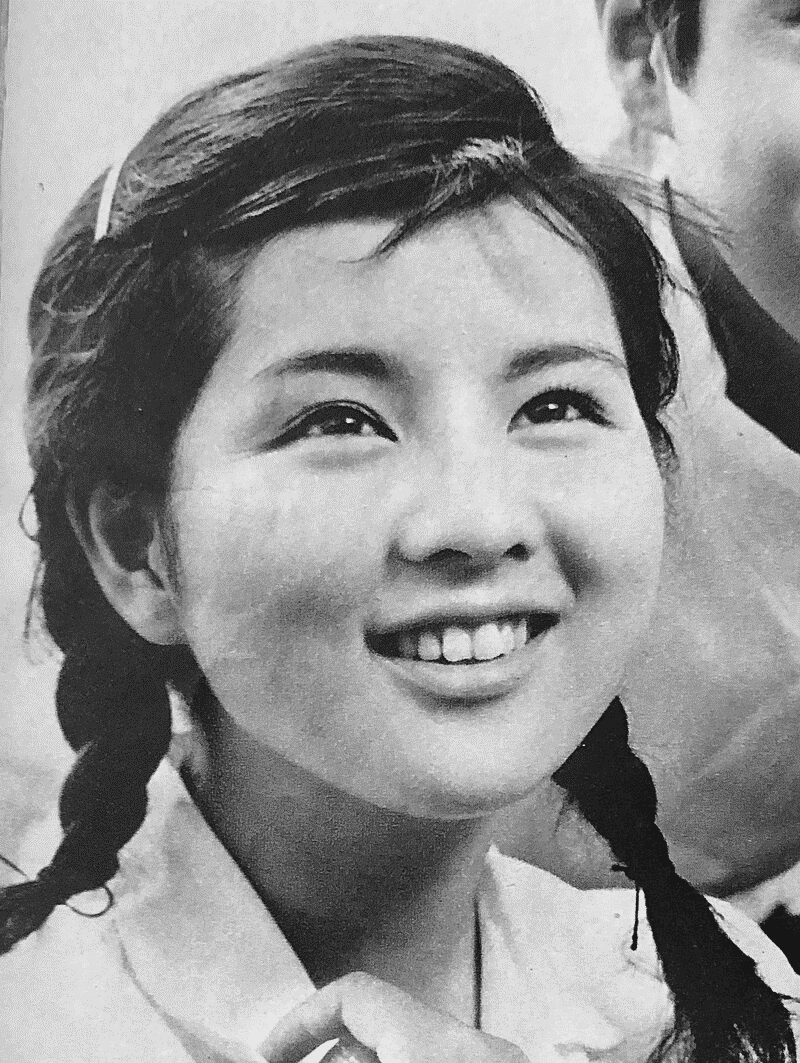
Yet for anyone who grew up in Japan, her face is instantly recognizable: Sayuri Yoshinaga (b. 1945), a legendary actress whose presence could make hearts flutter — regardless of gender. Over the decades she has starred in countless films and TV dramas, recorded songs, published books, and become a public voice for pacifism; her narration still greets visitors at the Hiroshima Peace Memorial Museum. Her image — whether from her teenage years or her eighties — runs through postwar Japanese memory like a continuous thread.
Now, place that next to an illustration by Hisashi Eguchi.
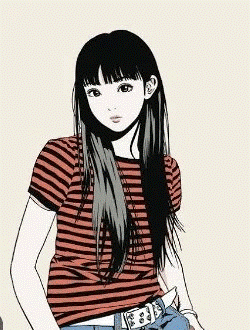
Online users have tried to match Eguchi’s drawings such as this to their photographic “sources,” but that’s not what interests me. What matters is this: the girl in Eguchi’s image carries the same aura of stardom, but has no name — no narrative like “Sayuri Yoshinaga” or “Marilyn Monroe” attaches to her. We sense a celebrity presence, but the point that anchors it, the proper name, is missing.
That absence — the blank where identity should be — is where Eguchi’s pop world begins.
When the image gains a name
After the controversy broke, a kind of scavenger hunt began on Japanese social media. Users started tracing Eguchi’s older illustrations back to their possible photographic sources.
Take, for instance, a Denny’s Japan advertisement that shows a young woman — seemingly anonymous, neither a Marilyn nor a Sayuri.
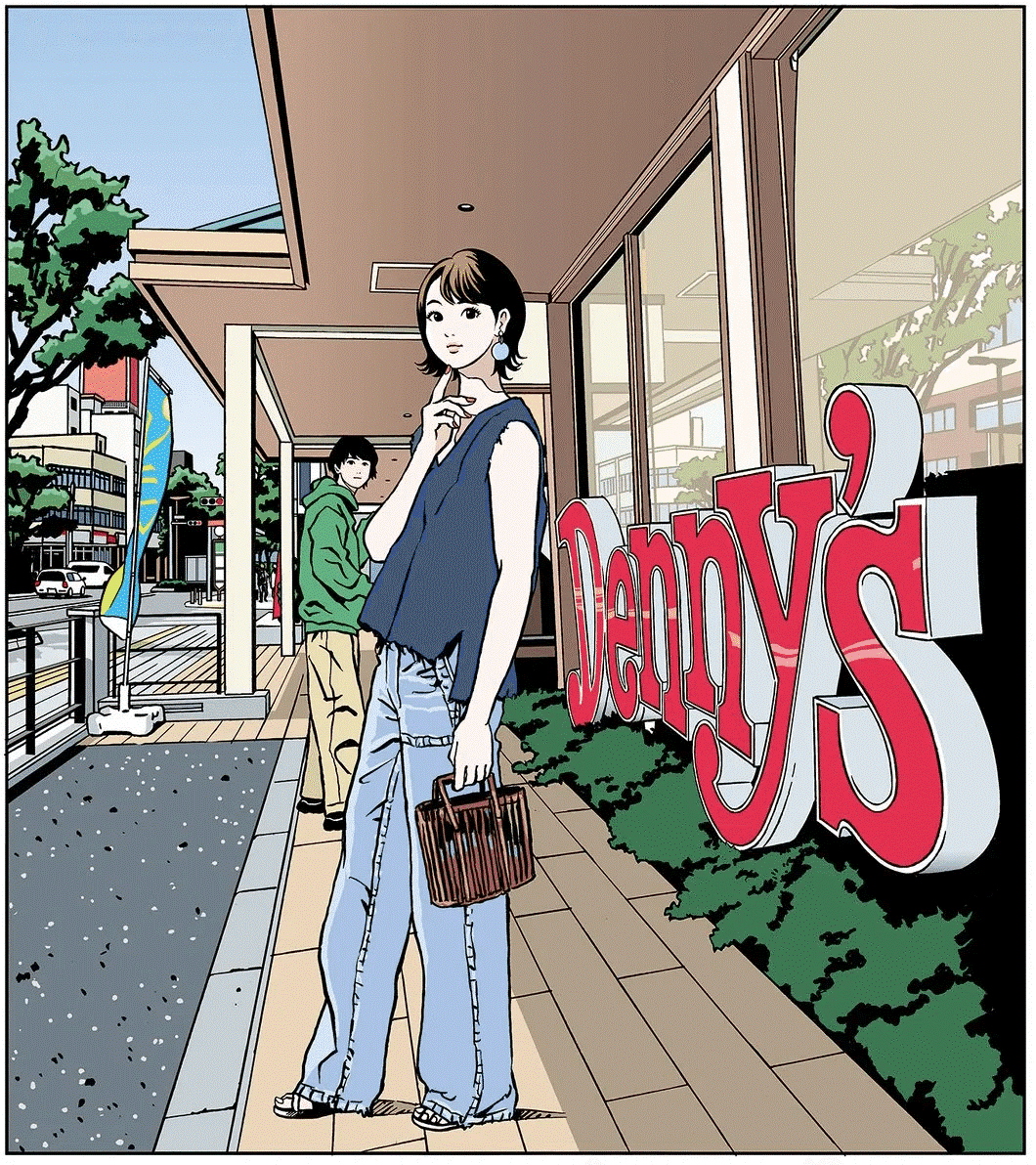
But once the online search began, people quickly identified her as being model and actress Yuko Araki. More precisely, the pose and outfit had been lifted from a fashion-magazine spread featuring her in a branded ensemble. (Source: Non-no, September 2018 issue.)
The debate that followed was heated and confusing. Some attacked Eguchi’s method on ethical or legal grounds; others defended it as a legitimate artistic practice. Those arguments, however, aren’t my concern here. What interests me is what his particular way of drawing actually achieves — how it reshapes the boundary between the fictional and the real.
Between the fictional and the real
Consider the jacket illustration Eguchi created for the 2018 reissue of Sunday Summer Train, a single by the four-member idol group RYUTist.
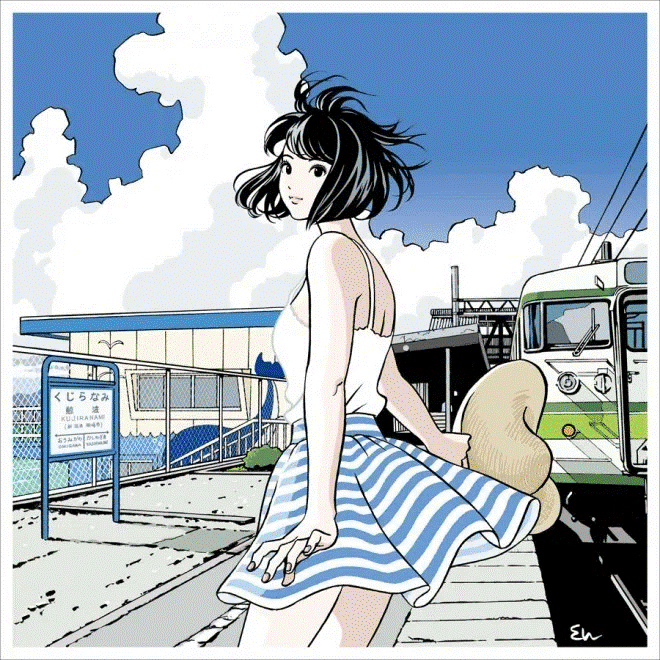
On the back of the jacket are his portraits of the four singers.
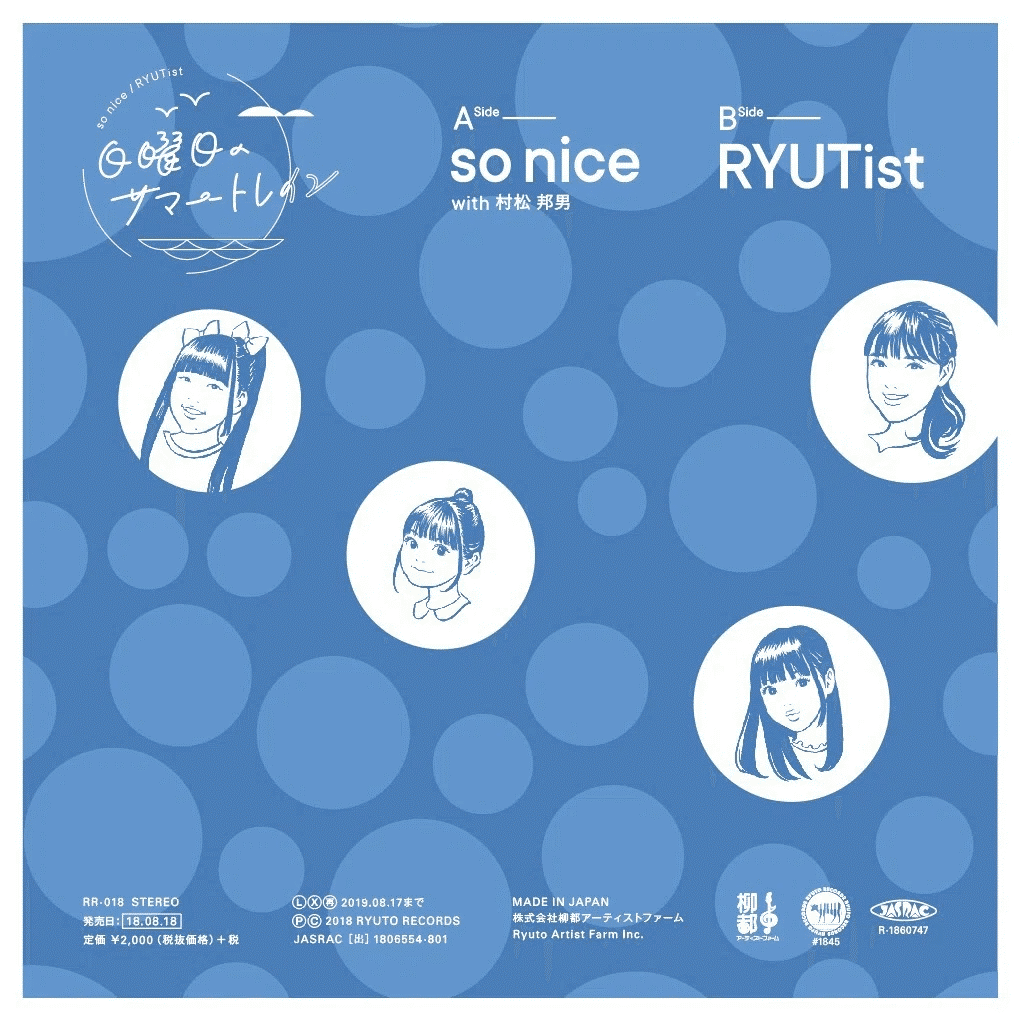
Eguchi, after all, began as a manga artist — one of the few in early-1980s boys’ manga magazines whose visual sensibility drew openly from women’s fashion media. Anyone familiar with these idols’ faces can recognize them easily, yet Eguchi filters each through his own stylized bishōjo (pretty girl) aesthetic, lending them a subtle layer of fictionality.
In Japan, idol culture has long revolved around Tokyo. But since the mid-2000s, “gotōchi idols" (local pop idols) have sprung up nationwide — regional groups tied to local revitalization campaigns, sometimes even backed by city governments. They often parody Tokyo’s polished idol imagery, leaning deliberately into a sense of provincial charm. RYUTist, based in Niigata, was one of them.
The girl on Eguchi’s jacket exists somewhere between the real and the imagined. Behind her, the station sign reads Kujiranami — a seaside stop on the Japan Sea coast, celebrated as the birthplace of sea-bathing in the region. The record’s release in 2018 happened to coincide with the station’s 130th anniversary.
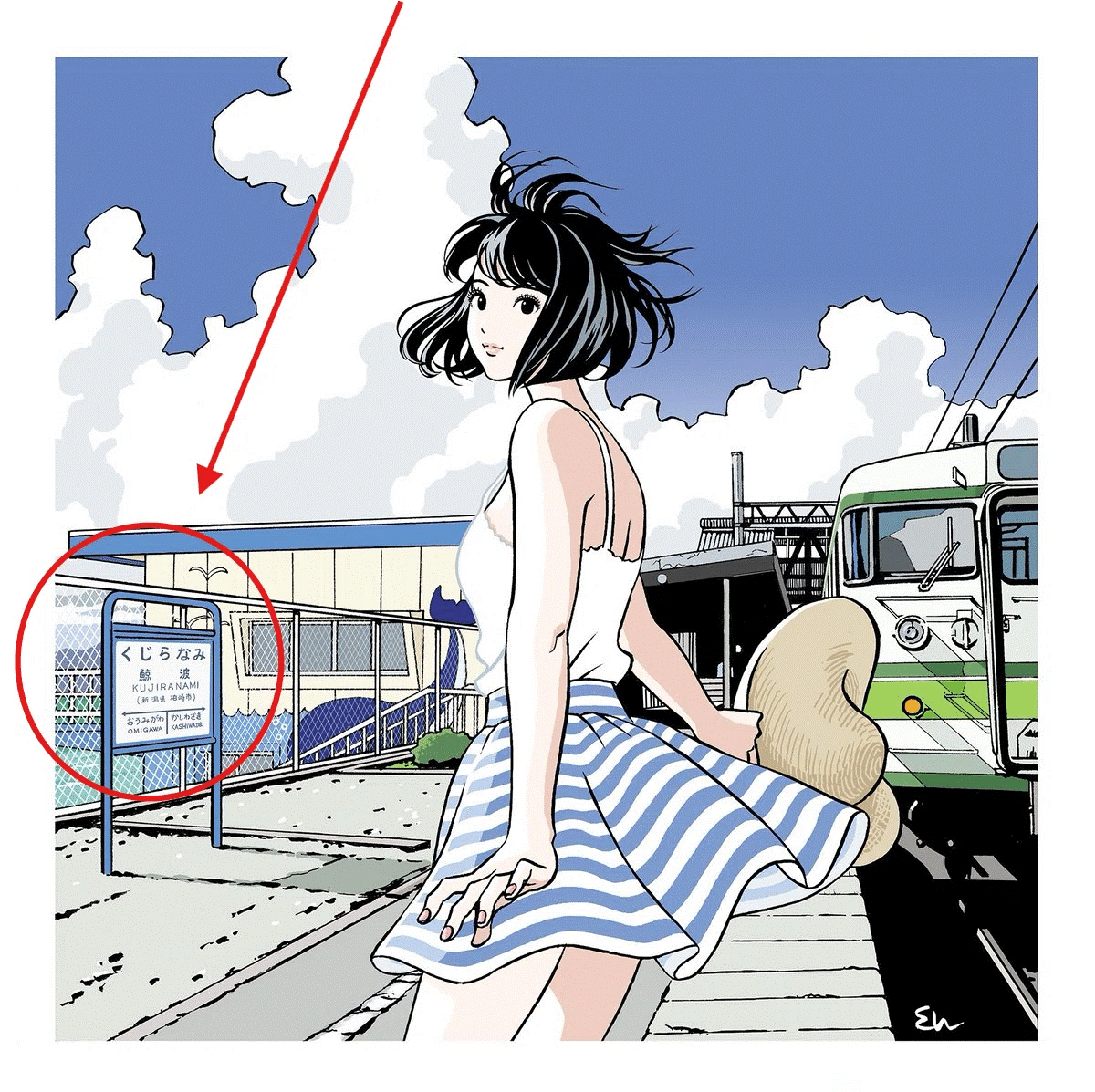
Incidentally, you can’t actually reach the coastline directly from that platform; you have to exit the station, cross the tracks, and walk a bit further.
Eguchi quietly rearranges such local facts, overlaying fiction upon reality. Through his imagined yet convincing heroine — a girl glowing with the aura of a real pop idol — he turns an ordinary seaside station into a sun-drenched scene, almost Californian in mood.
Picture-perfect youth
Another case shows how Eguchi blurs the line between reality and fiction. In 2015, he designed an advertising poster for MATCH, a soft drink produced by one of Japan’s major beverage companies. At the time, a pair of teenage idols appeared in the TV commercials under the slogan: “That picture-perfect youth, please.”
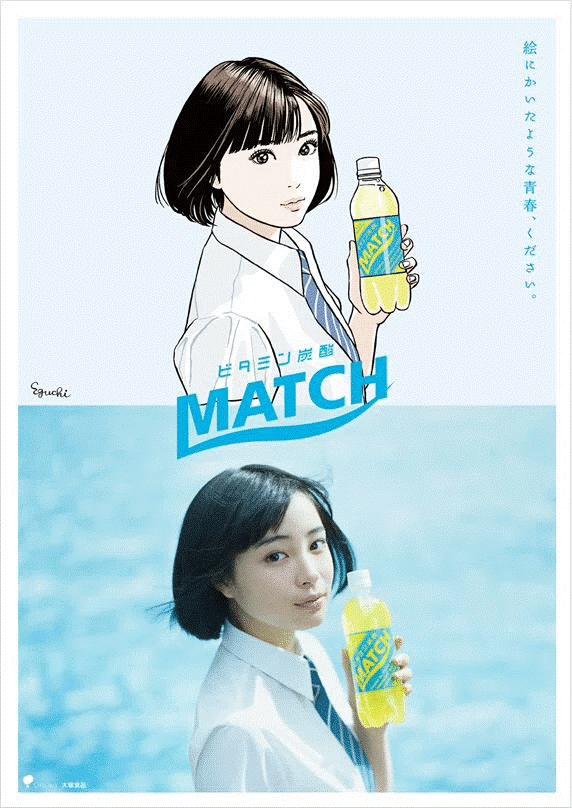
The girls in Eguchi’s drawings radiate the aura of pop idols and models, yet they are defined precisely by the absence of a fixed identity — a quality that, borrowing an old critical term, might be called postmodern.
Think again of the photograph of young Sayuri Yoshinaga introduced earlier. For many Japanese viewers, especially those of an older generation, her image is inseparable from a whole cultural narrative — the story of postwar hope, innocence, and moral clarity. To foreign viewers, she might simply appear as an anonymous girl. Even so, they might still sense an aura that stirs the imagination.
Eguchi’s MATCH illustrations capture that same kind of charisma — the aura that even non-Japanese viewers can feel when they encounter an image of a Japanese star, whether or not they know who she is. With deceptively simple, manga-like lines, Eguchi evokes this sense of presence while also drawing a likeness recognizable to domestic audiences, who instantly identify the figures as the pop-idol sisters Suzu and Alice Hirose.
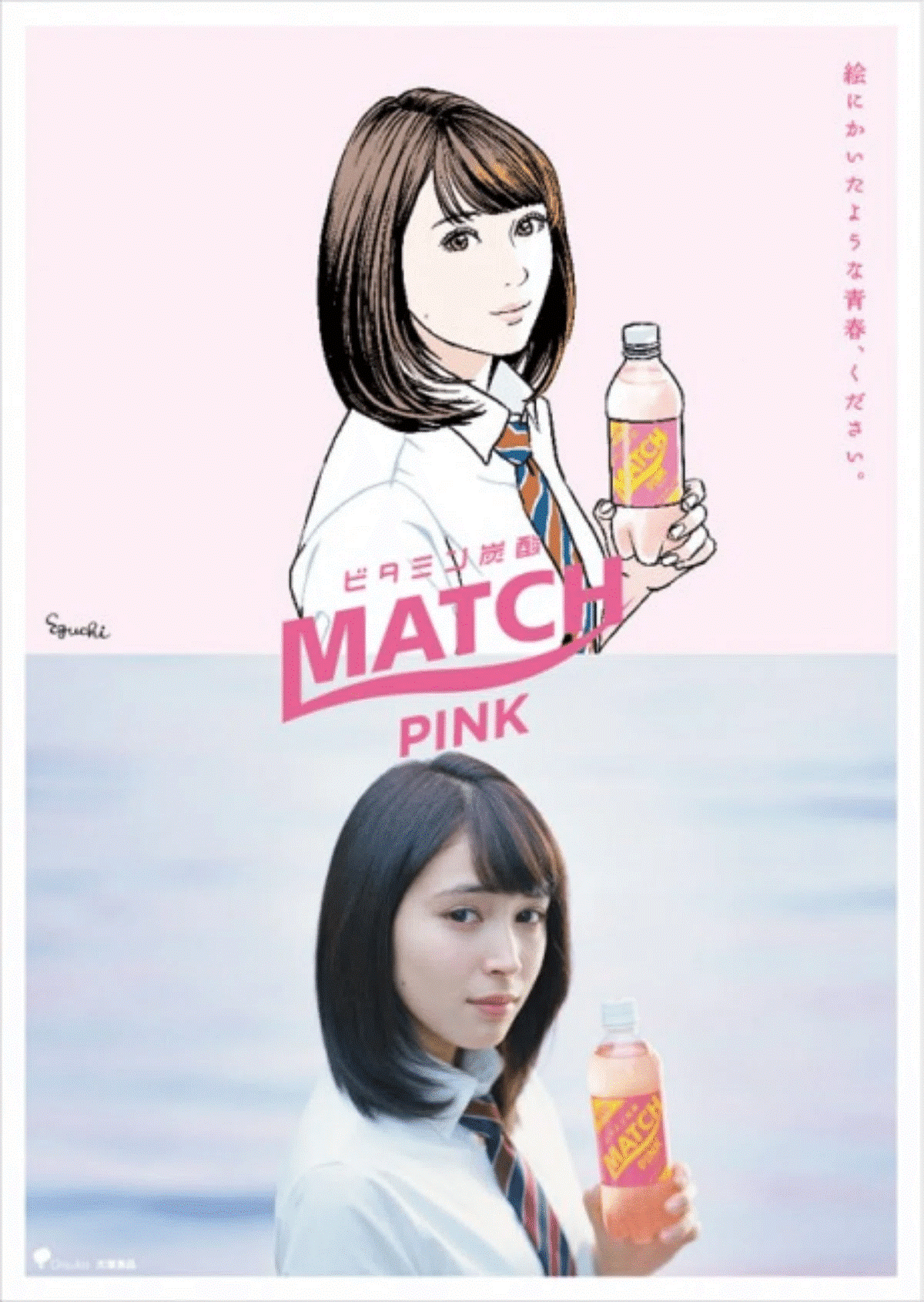
Eguchi’s genius lies in this dual resonance: his girls look universally familiar, yet intimately local — as if they belong to the shared imagination of Tokyo itself.
A profile of Eguchi
Hisashi Eguchi (b. 1956) made his debut in a weekly shōnen (boys’) manga magazine in the late 1970s. By the early ’80s, his romantic comedy series briefly overtook Dr. Slump — then the magazine’s biggest hit by Akira Toriyama — to reach the number-one spot. Soon afterward, however, Eguchi began drifting away from serialized manga, drawn more to illustration and design than to storytelling.
During Japan’s economic boom of the late 1980s, he became the face of a new, urbane sensibility. His illustrations graced the covers of popular, glossy “date-spot” magazines aimed at young men and women chasing Tokyo chic. Eguchi’s artwork defined the look of that bubble-era cosmopolitanism — clean, sexy, and self-aware.
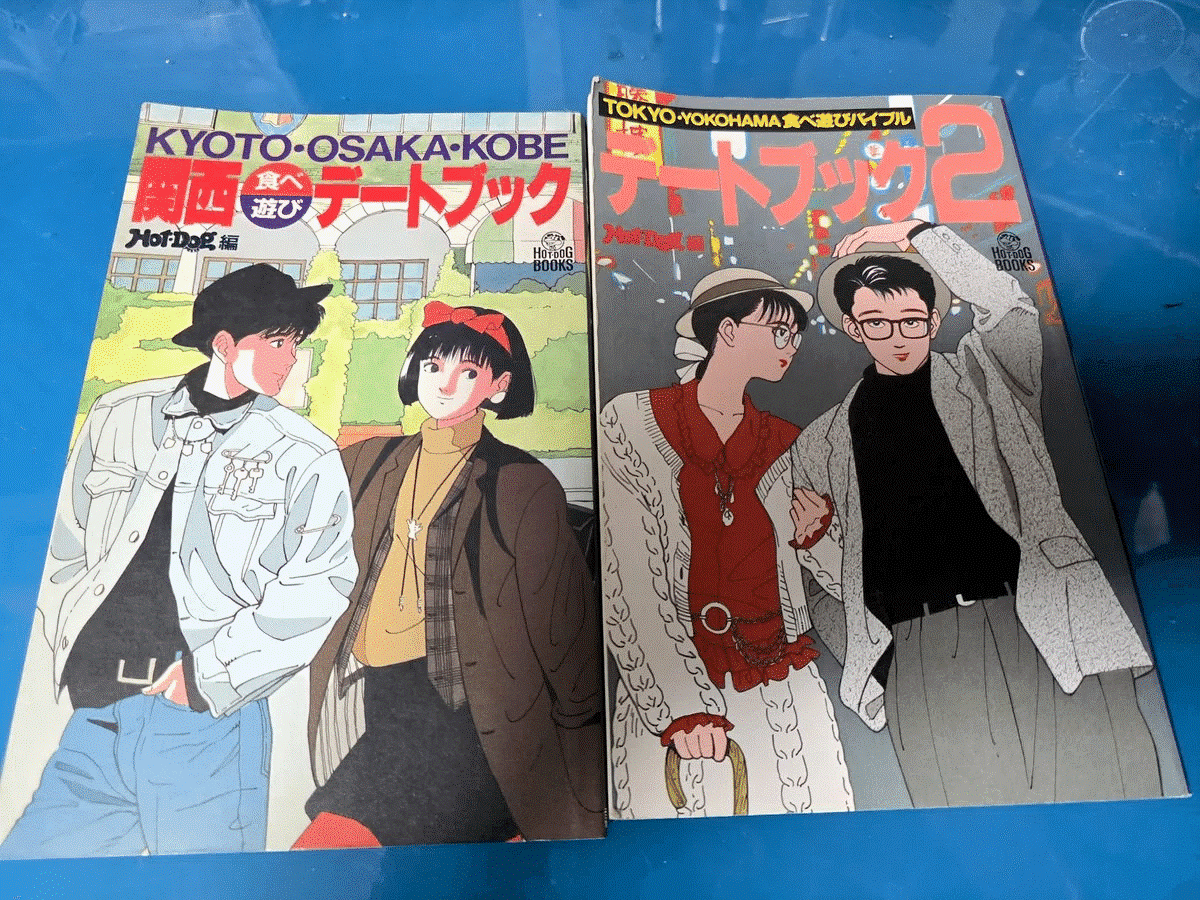
In the 1990s, his drawings appeared on Denny’s Japan menu covers, bringing his style into the everyday lives of diners across the country. By then, even people who had never read his manga recognized his line.
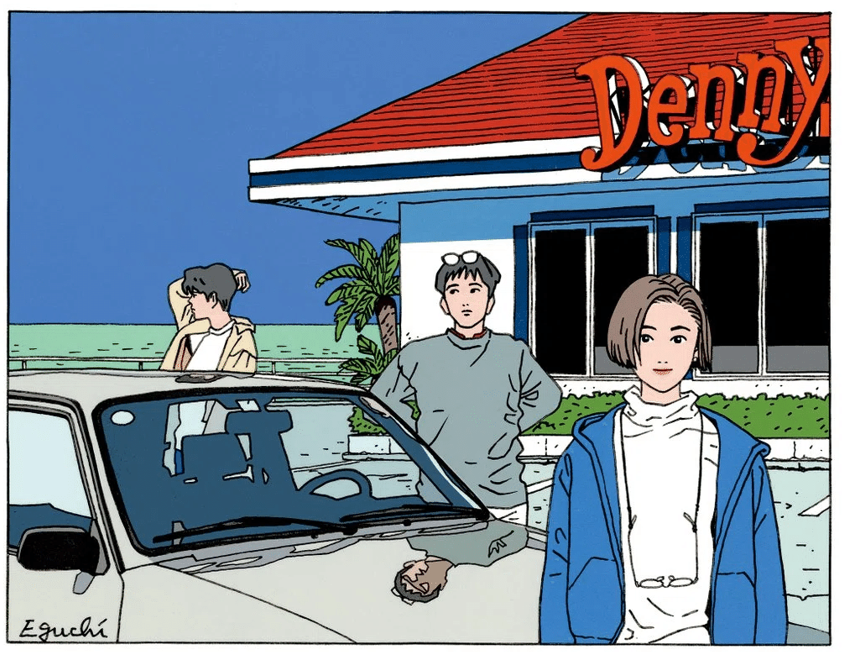
But by the 2000s, Eguchi had nearly faded from public view — a figure of the past. Around 2010, he was reportedly in financial trouble, struggling to keep both his Tokyo home and his Kichijōji studio — one of the city’s most stylish neighborhoods. He survived only thanks to a sympathetic real-estate agent who admired his work, tolerated his unpaid rent, and even organized an exhibition of his original drawings to help him get back on his feet.
His comeback came in 2015 with KING OF POP, a two-volume, 430-page retrospective spanning thirty-eight years of his illustrations. The book and its nationwide museum tour were a sensation, reestablishing him not just as an illustrator but as an artist — capital A.
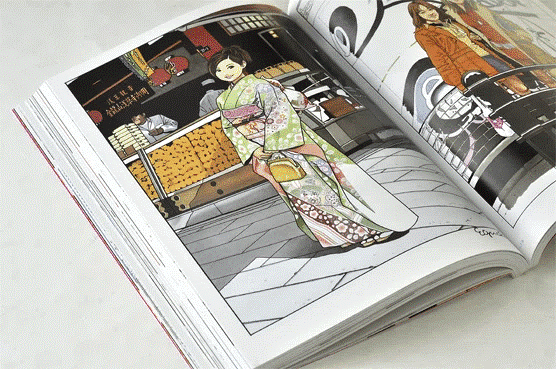
Corporate commissions soon followed: soft-drink campaigns with the Hirose sisters, a renewed partnership with Denny’s, and other high-profile projects. Emboldened, Eguchi began invoking the names of Warhol and Lichtenstein more explicitly, aligning himself with their Pop Art lineage.
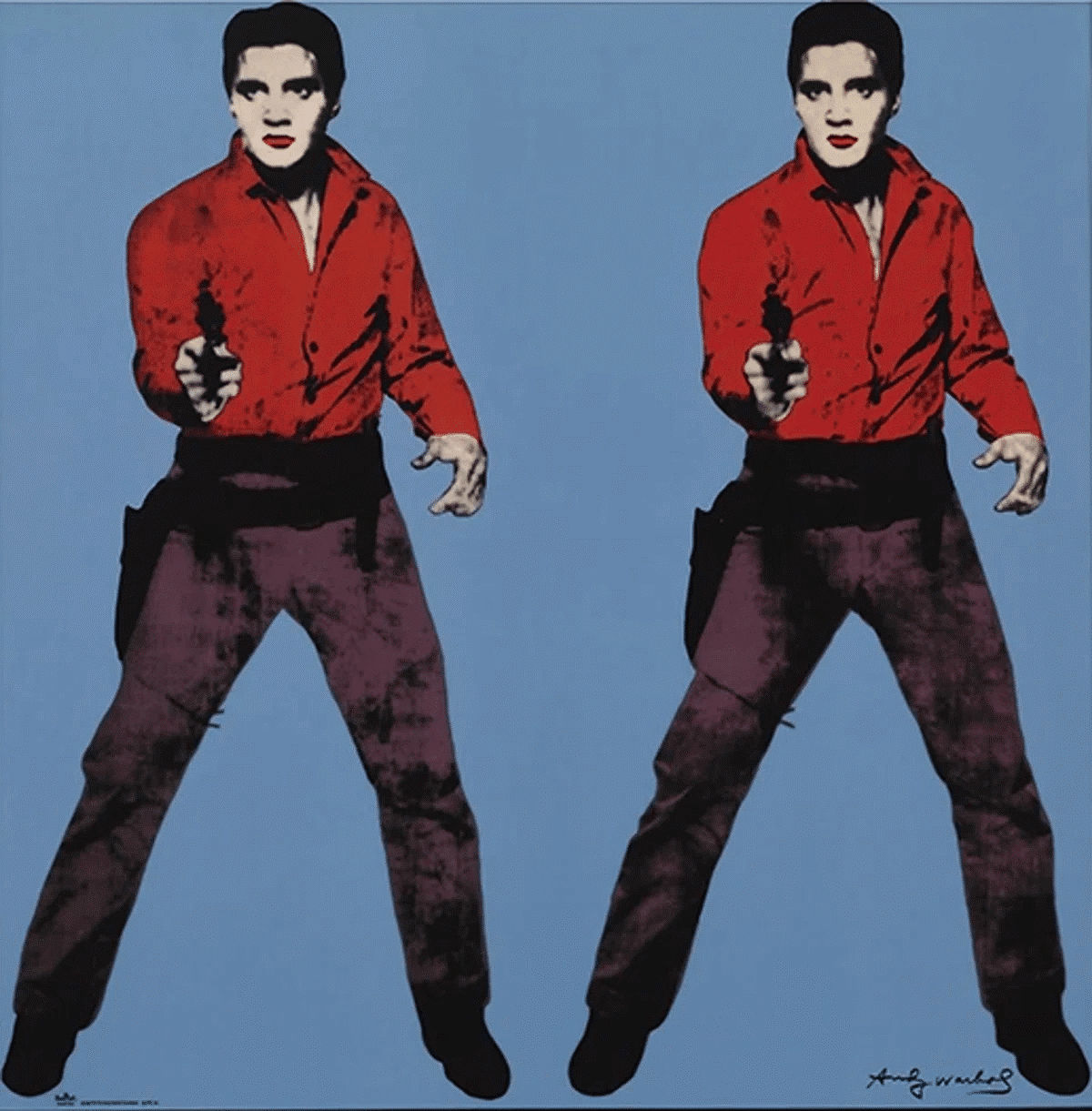
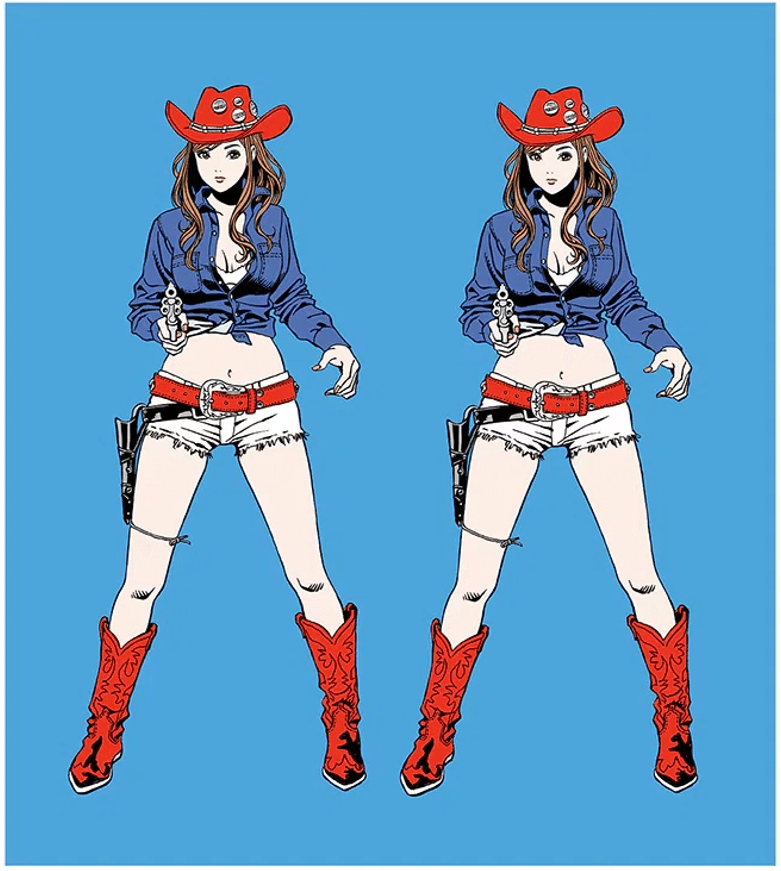
This wasn’t mere posturing. By the summer of 2017, walking through downtown Kichijōji, you could feel surrounded by his girls — fictional yet somehow alive — smiling from construction walls and billboards as if they were welcoming you home. Eguchi’s heroines had moved beyond magazines and record sleeves to inhabit the city itself. They had become part of Tokyo’s visual ecosystem.
His career as a manga artist
As noted earlier, Eguchi began his career in manga in the late 1970s. From the start, his girls looked different — refined, urbane, almost too stylish for the rough energy of boys’ comics. In his breakout series Stop!! Hibari-kun! (1981–83, now being released in English by Peow Studios), the title character appears to be a delicate fifteen-year-old girl but is, in fact, a boy — a twist that slyly poked at the adolescent male gaze and its obsession with fictional femininity.
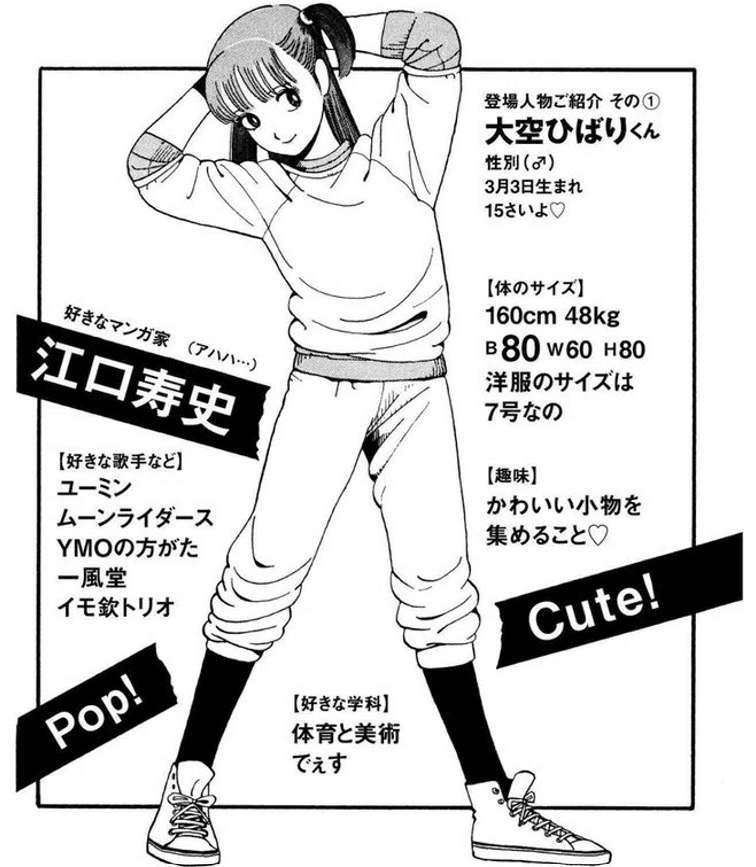
Eguchi first made his name with absurdist comedy, but under the influence of Katsuhiro Otomo — whose early work Short Peace (1979) stunned readers with its precision — he drastically refined his own visual language. What distinguished Eguchi from Otomo was the way he absorbed the aesthetics of girls’ fashion magazines. That fusion — Otomo’s discipline mixed with Seventeen and Non-no — created a tension between absurd humor and Pop Art sophistication. By the mid-1980s, his drawings were inching away from slapstick and toward fine-art sensibility.
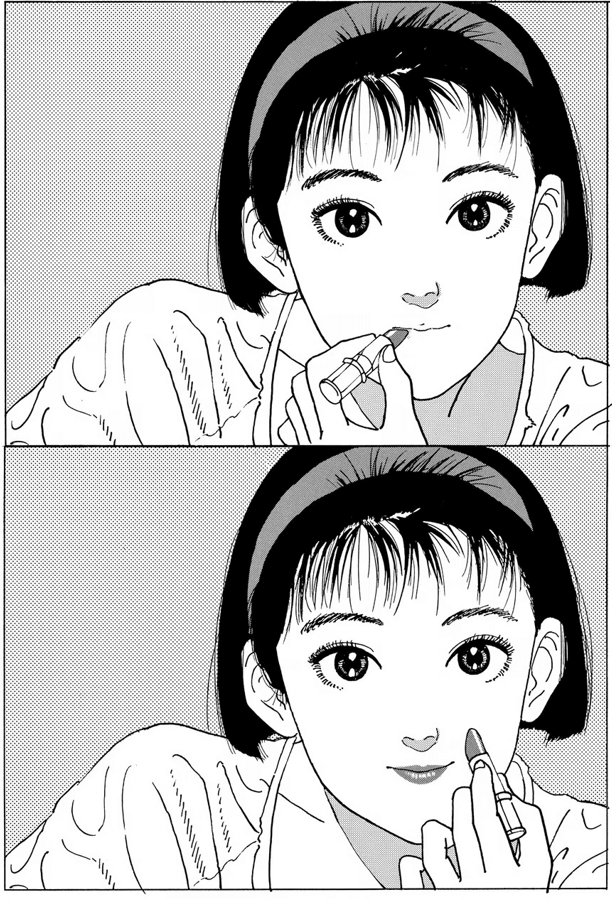
His 1985–86 series Paparinko Story — left unfinished and never collected in book form — appeared in Big Comic Spirits, a magazine aimed at young men in their early twenties. The art was meticulous, bordering on photographic, yet his girls didn’t feel like the eroticized bishōjo (“pretty girl”) types common in mainstream manga. Instead, by borrowing the visual language of fashion spreads — the tilt of a wrist, the way fabric catches light — he built an image of beauty that women could relate to rather than consume.
After his commercial decline in the 2000s, Eguchi found a second life in advertising, culminating in the 2015 King of Pop revival and museum tour. It was around this time that he began openly citing Warhol and Lichtenstein, positioning himself within a Pop Art genealogy rather than the manga lineage. His illustrations ceased to function merely within manga culture; they began to live directly in Tokyo’s cityscape.
By 2024, his girls appeared on construction fences along Hibiya Street near the Imperial Palace — elegant, translucent, and almost haunting — under the slogan: “The city etched by your footsteps — the city that holds your memory.”
In that moment, the circle closed. A manga artist who once parodied Tokyo pop culture had become its face — his drawings no longer confined to pages, but woven into the fabric of the city.
When an illustration crosses the line
Let’s return to the controversy itself. The Chuo Line Culture Festival — held every October since 2023 — is organized by a large shopping complex near Ogikubo Station in Tokyo. The Chuo Line, one of the city’s central rail arteries, runs west from downtown and connects neighborhoods long associated with youth culture and creative communities. The festival celebrates that spirit, and the 2025 edition focused on manga and anime.
Its publicity leaned heavily on the idea that many anime studios are located along the Chuo Line, that prominent manga artists live there, and that its streets often appear as backdrops in animation. The theme, though never stated outright, reflected Japan’s current global moment, when animated films were breaking box-office records overseas and the manga market had become a worldwide phenomenon.
Eguchi, who has worked for decades in Kichijōji — one of the line’s most iconic districts — was commissioned to create the festival’s main visual. The illustration was unveiled on Sept. 26.
A week later, on Oct. 3, a notice appeared on Eguchi’s official X account. It read, in essence: “The illustration for the Chuo Line Culture Festival was based on a photo of a woman’s profile I happened to see on Instagram. I didn’t realize she was a professional model until she contacted me recently. I have since received her post-facto approval for the illustration.”
That post was later deleted.
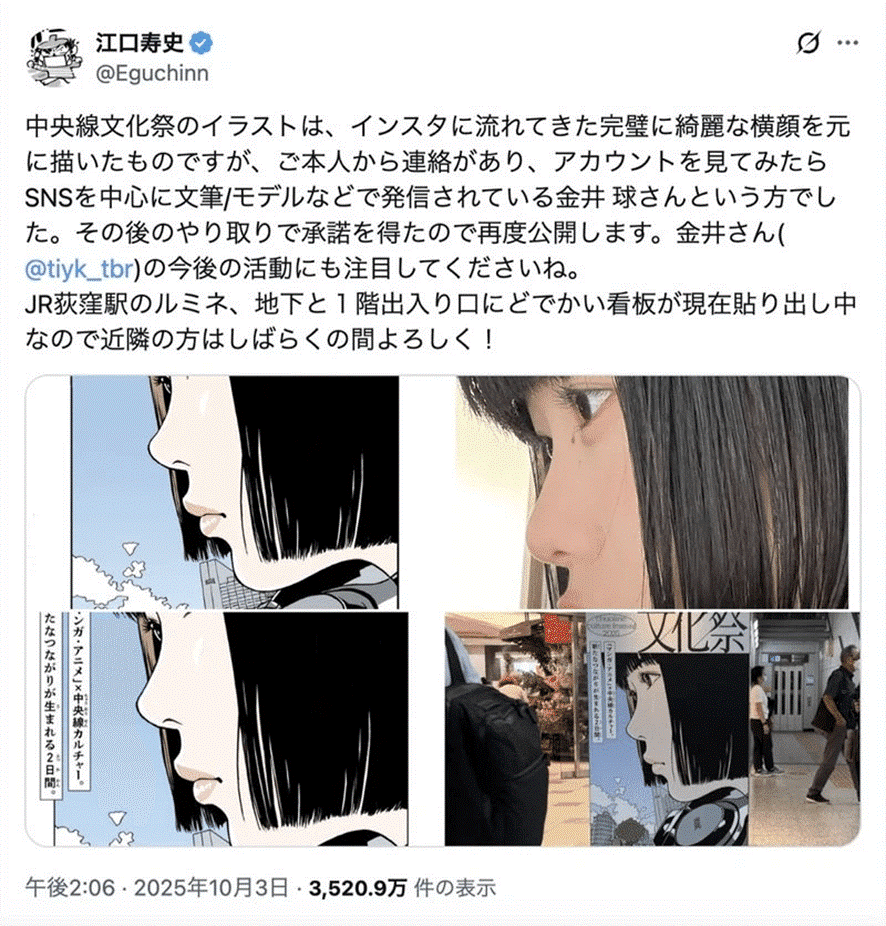
The model’s own statement on X struck a sharper tone, though she confirmed that she had indeed given permission after the fact:
“'My face is being displayed in Ogikubo without my consent!' I reached out to the event organizers, who connected me with Mr. Eguchi. I then gave my retroactive approval for the use of my image. I’m not a ‘nobody.’ I’m a person — with likes, dislikes, favorite bath detergents, and my own rights.”
The tweet went viral.
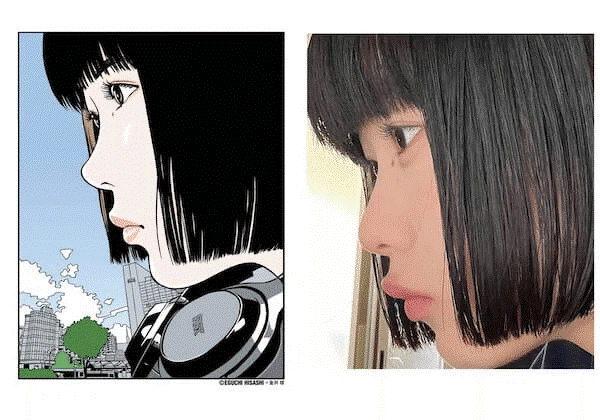
Her post, with its blend of irony and self-assertion, spread faster than any official statement could. Online, users began dissecting the issue from every angle: the ethics of tracing, the gray zone of portrait rights, and what it means to turn a stranger’s social-media photo into art.
The image that looked back
A quick look at the model’s Instagram account — she lists her birth year as 2001 — reveals numerous selfies and carefully composed shots. At first glance, she might not fit the image of a “professional model” in the conventional sense. And yet, in the everyday backdrops of Tokyo, her look carries the latent potential to become an Eguchi-style girl. Even if she had never heard of him, the mood and framing of her photos already echoed his world — the city filtered through soft light, the mix of casualness and artifice that defines contemporary Japanese youth culture.
Since Eguchi’s public resurgence in 2015, his aesthetic has seeped into Japanese urban life far beyond Tokyo. Take, for instance, a prep-school advertisement from early 2020. When I first saw it, I was certain it was by Eguchi.
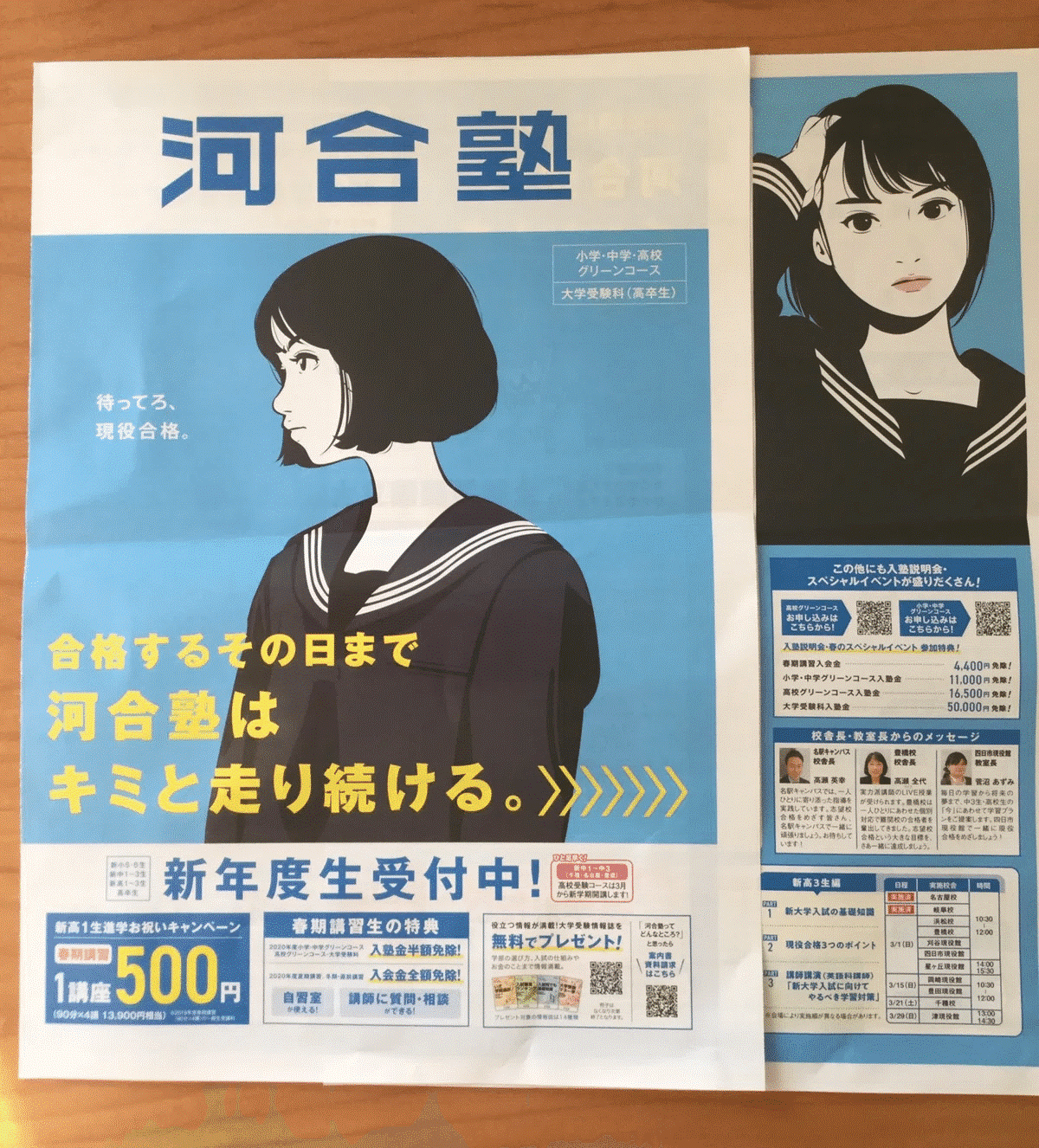
It wasn’t. Eguchi later denied it on X, good-humoredly posting: “Those pictures aren’t mine!!” The artist turned out to be Backside works, a Kanagawa-based illustrator rooted in street art. While Eguchi’s art gradually entered the realm of street aesthetics, Backside works began there, not as imitation, but as critical absorption, transforming the Eguchi idiom into genuine street art.
Another successor is KYNE, based in Fukuoka — often described as Japan’s Liverpool. Like Eguchi, he has collaborated with Adidas Japan, and his original paintings now sell at auction for high prices. Their success shows how Eguchi’s pop aesthetic has become part of Japan’s contemporary art language.
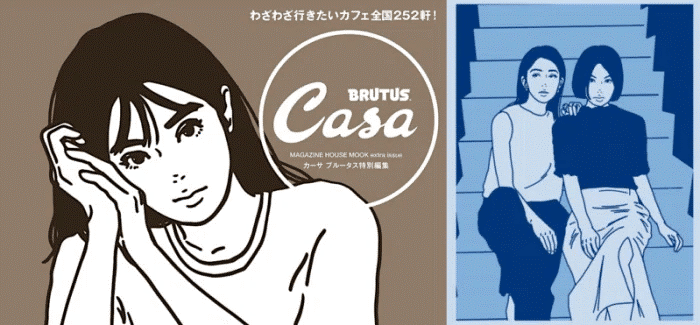
Against that backdrop, it’s easy to imagine how the young woman at the center of the 2025 scandal grew up surrounded by this visual atmosphere — an age when Eguchi’s style had already been canonized, and when his successors were thriving in galleries and on the streets. Her Instagram feed, consciously or not, spoke that language. From Eguchi’s perspective, her photo must have looked like the perfect fit — an image that harmonized effortlessly with the style he had spent decades refining. He probably saw it, admired it, and, perhaps too easily, scooped it up.
The fragile art of tracing
In Japan, there’s a popular summer-festival game called kingyo-sukui — literally, “goldfish scooping.” You try to lift goldfish from a shallow tank using a paper scoop that tears easily. The trick is finesse: move too fast, and the paper breaks; move too slow, and the fish slips away.
Eguchi’s tracing technique feels a lot like that — an act of delicate control, where everything depends on touch. Even when he bases an image on a photograph, his linework is unmistakably his own. After the scandal broke, one illustrator playfully posted a “tracing experiment” on her iPad, writing: “Super easy. If you start with a good model and composition, you’ll get a good picture, right? Making money off this feels like fraud, doesn’t it …?”
The comment went viral. But it also, unintentionally, proved Eguchi’s skills: what makes his lines unique can’t be replicated by simply tracing. His restraint — the minimal but decisive choice of what to keep and what to leave out — is where his art lives.
Take the opening image from his 2021 art book Kanojo (She): a portrait of actress Izumi Ashikawa (b. 1935), created to mark her 65th anniversary in the film industry. After the 2025 scandal, someone online paired the drawing with its source photo and accused him of plagiarism. But if you look closely, the difference is the whole story: his lines strip away photographic realism and rebuild it as something more luminous, more distilled.
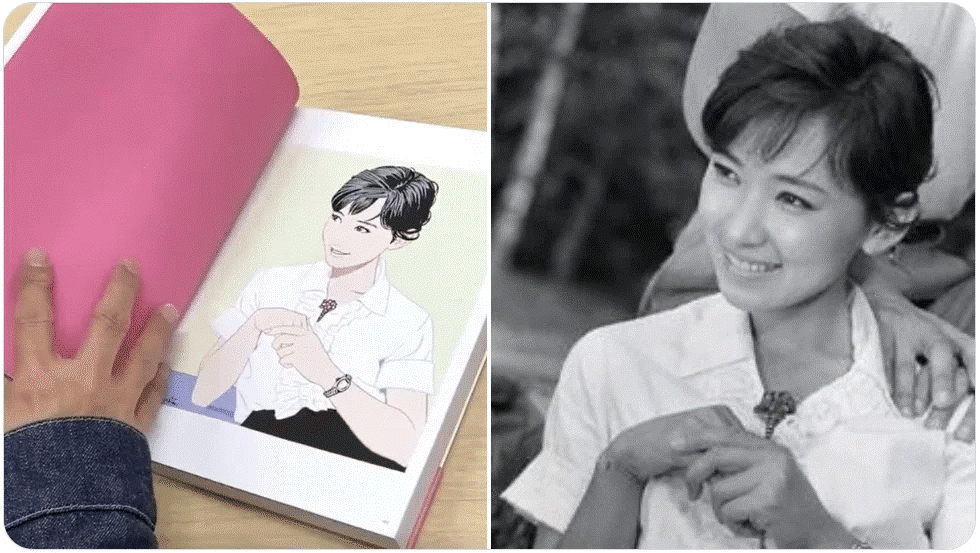
Another example: when Eguchi appeared on actress Riho Yoshioka’s radio show, he drew her portrait live and later posted it on Instagram. (Note: The right photo seems to be the one he referenced.)
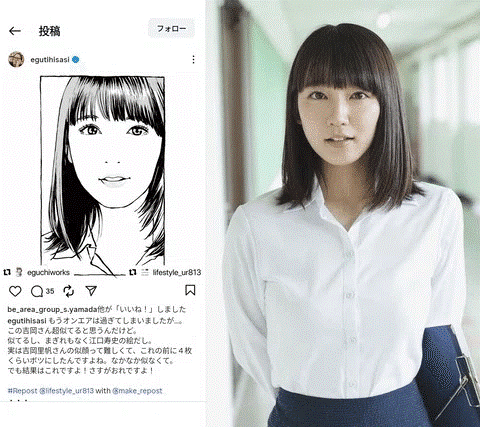
He captioned it with disarming honesty: “It looks like her — and it doesn’t. I threw away four drafts before I got here. Getting her likeness was harder than I thought. I want to praise myself for this one.”
Critics later read that as arrogance, but at the time, followers responded warmly: “It looks like Riho Yoshioka, and yet it doesn’t — but it’s such a beautiful Eguchi girl. That universality moves me.”
That reaction captures the essence of Eguchi’s gift: It looks like X, and yet it doesn’t. Between resemblance and absence, he finds the space where fiction breathes.
Between resemblance and rights
True artistic talent often crosses what seems impossible — the line between fiction and reality. Eguchi’s pen embodies that tension. But success and branding, when paired with genuine skill, can easily breed a dangerous kind of confidence.
As the originator of what people now call “the Eguchi style” — or perhaps more accurately, Eguchi-esque imagery that has become part of Japan’s visual landscape — he grew understandably sensitive toward younger artists whose work echoed his. Half-jokingly, he sometimes complained about creators who “borrowed too much” from his Pop sensibility.
The photo of the young model, however, didn’t trigger that irritation. It didn’t appear as an artistic statement; it was just another face adrift on social media. Once he traced and transformed it, it became what admirers call the universal Eguchi girl — a face that looks like someone and no one at the same time. That, to his fans, is the very charm: “It looks like X, and yet it doesn’t. That’s the universality that moves us.”
But here lies the paradox. That “universality” only works when the viewer does not know who X is — when the face feels familiar yet unplaceable. In his commissioned portraits of actresses like Ashikawa or Yoshioka, that anonymity collapses: we recognize the person behind the style. But when Eguchi borrows a pose or outfit from a magazine and redraws the face in his own hand, the original identity of X quietly disappears.
Yet what happens when the person behind X steps forward and says, “I am X”?
At that moment, the paper of the goldfish scoop — so delicate, so easily torn — gives way. Eguchi then finds himself judged not by aesthetics but by law: portrait rights, publicity rights, and the copyright of the original photograph. Once those frameworks assert themselves, the aura of his art begins to fade — not with an explosion, but with the quiet ebb of a tide.
When the law enters the frame
Tracing and plagiarism scandals are hardly new in Japan’s manga industry. After one hit basketball series ended, fans online demonstrated that several panels had been traced from photographs of famous NBA plays. Another artist, crushed by social-media outrage, suffered a breakdown and temporarily stopped working.
Eguchi’s case, though, is different. Those earlier incidents involved panels hidden within mass-produced comics; his controversy unfolded in a far more public arena — the city itself. Tokyo’s streets, train stations, and underground passages are filled with giant advertisements and digital screens. In such spaces, scandal spreads like fire. Once an image is tainted, advertisers rush to erase it. The girls who once brightened Denny’s menus vanished overnight.
In the world of commercial imagery, visibility is power — but also a liability. A single accusation can turn prestige toxic. What had once been the mark of “high art meets pop culture” quickly became an embarrassment to distance oneself from.
The lesson is simple but brutal: in Japan’s tightly regulated advertising environment, ethics, legality, and public sentiment are intertwined. Eguchi’s tracing was not judged merely as artistic misconduct, but as a failure of due diligence — a system failure shared by artist, agency, and client alike.
The machinery behind the image
Eguchi began his career as a manga artist, and in Japan, manga creators are treated as authors — full copyright holders of their work. This differs from the U.S. mainstream comics system, where intellectual property often belongs to the publisher. Even so, many Japanese artists sign exclusive contracts with one magazine or publishing house, a practice that became standard in the 1970s and ’80s. Eguchi rose to prominence in precisely that environment.
As his style grew more sophisticated — closer to the sensibility of fashion magazines — he struggled to maintain the grueling pace of weekly serialization. His manga output dwindled, while his work as an illustrator flourished. Because those contracts applied only to manga, he was free to take illustration commissions elsewhere. That independence gave him freedom — but also left him without the editorial safety net that usually shields manga artists from business risks.
By the mid-2000s, as the Internet reshaped everything, “tracing” became a flashpoint. Online communities started exposing it with forensic zeal, and several well-known artists were shamed into hiatus. Eguchi, having stepped away from serialized manga by then, seems never to have fully absorbed how perilous that accusation had become in the social-media era.
After King of Pop in 2015, his status shifted dramatically — from skilled illustrator to celebrated pop artist. Corporate commissions multiplied. Advertising agencies, eager to borrow his prestige, positioned themselves as cultural intermediaries between art and commerce. But most of these agencies operated outside the manga industry, and many failed to grasp how serious a “tracing” charge could be — an allegation that, in the manga world, can end a career.
Every writing or translation contract I sign as a writer includes a clause affirming that I own my work and bear full responsibility for any infringement. I doubt Eguchi’s advertising contracts included anything that strict. That lack of legal and ethical oversight, I suspect, created the very vulnerability that later consumed him.
The making of a Tokyo icon
Looking back at Eguchi’s earliest manga, his draftsmanship was already refined for late-1970s boys’ comics — a little out of place among the rough humor of the era. Under the influence of avant-garde peers like Katsuhiro Otomo, he pushed that precision further, studying proportion and design with almost obsessive care.
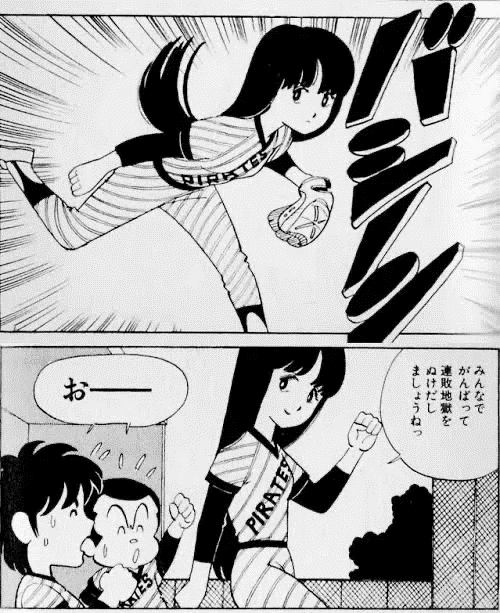
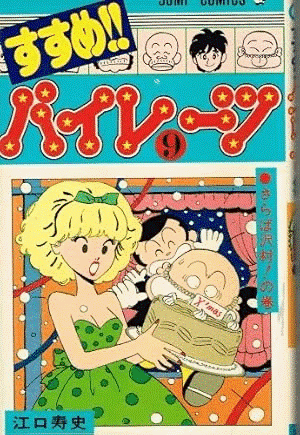
As his line matured, the girls he drew began to transcend the page. They no longer belonged solely to the manga world; they started to inhabit the streets. Each summer, Kichijōji — the neighborhood where Eguchi kept his studio — was filled with his heroines on billboards and banners, their expressions both approachable and untouchable. They became part of Tokyo’s visual rhythm, like seasonal flowers that reappeared without surprise yet never lost their charm.
Not everything he drew began with a photograph. For Eguchi, tracing functioned more as a form of study — a way to internalize proportion and gesture. His diligence was well known. Of American cartoonist Adrian Tomine, he once remarked, “His line isn’t particularly refined, but his color sense is excellent.” That kind of comment reveals Eguchi’s precision: an artist always dissecting what makes a line come alive.
Through decades of observation, his pen evolved into a filter, absorbing and reimagining whatever visual idioms crossed his path: manga, photography, street art, fashion design. By the mid-2010s, all those worlds — art, commerce, and media — had converged at a single intersection, only to collapse with one declaration: “I belong exclusively to myself, and I have my own human rights.”
That single statement, from the model at the center of the scandal, tore through the illusion. It marked the moment when Eguchi’s self-contained world — the Tokyo Pop universe he had built — met the limits of the real.
The missing institution
By the time Eguchi finally released his official statement on Dec. 30 after months of silence, the legal disputes surrounding the scandal had already been resolved, and the controversy itself was drawing to a close. What remained unresolved was not the question of guilt or legality, but the absence of any institutional voice capable of addressing the episode as a cultural problem.
In the wake of the Eguchi controversy, commentary proliferated. Some focused on legality, others on ethics, artistic method, or generational change. Yet across these competing arguments, a structural factor remained largely unexamined.
It was about Eguchi’s long-standing position outside the gadan — Japan’s insular fine-art establishment. The gadan has long functioned as the primary institution through which artistic legitimacy is granted, exhibitions organized, and cultural authority exercised. Yet it operates through a closed, lineage-based economy to which Eguchi never belonged.
Inside that world, access to exhibitions and media coverage still depends on lineage: who studied under whom, which master’s circle one belongs to. Artists’ work is priced by an old unit system called ichigō — roughly the size of a small portrait. If Artist A’s rate is $200 per ichigō and Artist B’s is $300, a four-ichigō portrait by A is valued at $800. Win a major prize or hold a big solo show, and your rate rises. It’s an archaic yet self-sustaining economy — a closed loop that defines who counts as “fine art” in Japan.
Within that system, Pop Art has always been an outsider. Takashi Murakami’s uneasy domestic reputation is a case in point. Internationally, he’s celebrated as the face of Japanese contemporary art; at home, many within the gadan still see him as a commercial provocateur. His global success only deepened that resentment.
Eguchi’s position was different. Even after he stopped making manga, he continued to call himself a manga artist. Peers read that not as arrogance, but as proof that his draftsmanship had simply outgrown the medium. (After all, many in the post-Otomo generation believed manga itself could become art.) By 2015, Eguchi’s public identity had shifted from “skilled illustrator” to “Tokyo pop artist.” Free from the gadan’s price-per-inch hierarchy, he worked digitally, producing no unique originals and selling limited-edition prints instead — a hundred at a time, controlling price through scarcity rather than prestige.
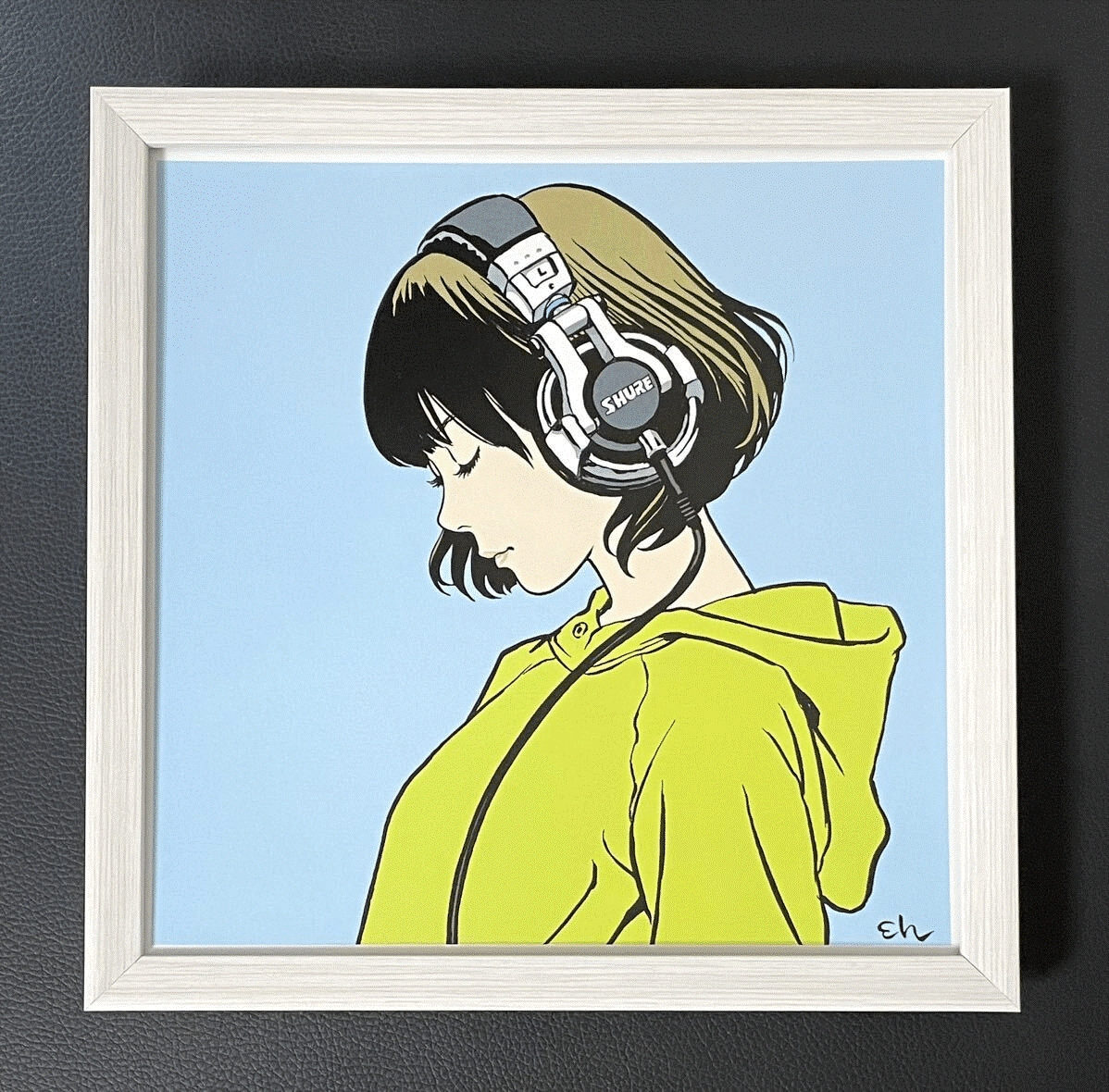
Several overlapping ideas supported this transition: the claim that manga descends from Hokusai’s woodblock lineage; that it inherits the tradition of bijinga (pictures of beautiful women); and that Eguchi could therefore be seen as a Japanese counterpart to Roy Lichtenstein. Those narratives kept his work safely outside the old hierarchies — and gave him freedom, but also isolation.
In the manga industry, when a creator faces scandal or sudden fame, an editorial department usually acts as a buffer, managing business so the artist can focus on drawing. Eguchi had long dissolved his exclusive publishing ties, yet still saw himself as a manga artist. That self-image bred a relaxed attitude, and, perhaps, a dangerous comfort. Even his chronic lateness with deadlines, once a source of editorial frustration, had come to be reinterpreted as a sign of “artistic temperament.”
When advertising agencies began treating him as a “great artist” — and, more bluntly, as a golden goose — in the mid-2010s, it likely inflated that self-perception even further. Rumors of tracing had surfaced before, but because many of his references came from fashion magazines, proof was hard to find. Readers of those magazines focus on trends and styling, not composition, so even when they felt déjà vu, few bothered to investigate.
The limits of Tokyo Pop
The Eguchi controversy revealed no hidden villain and produced no lasting verdict. What it exposed instead was the fragile balance that allows images to circulate as both familiar and anonymous. Once a face acquires a name — once someone steps forward to say “I am not nobody” — that balance collapses. In the absence of any institution capable of holding the image in place, the work slips out of art and into law, and then quietly disappears.
For decades, Eguchi’s girls have belonged to Tokyo — or, more precisely, to a distinctly Tokyo-like mode of polish and urban refinement — appearing in its magazines, its trains, and its streets. The controversy marked the moment when one of those faces turned back and looked at us, insisting on a name and a life beyond the image. When that happened, there was no cultural institution left to mediate the encounter. What followed was not judgment, but fading into oblivion.