

Rick Parker was drafted in 1966. By the time he was discharged he had endured boot camp, an "escape and evasion course" during which the recruits were literally tortured, Officer Candidate School, and the training to launch nuclear missiles. He was briefly in charge of the "Holdover Platoon" ("individuals deemed unfit for military service"), supervised a training exercise where soldiers were teargassed and then ordered to remove their gas masks ("to convince them all that the gas masks worked"), and led an honor guard at a military funeral.
Parker would later pinball his way around the comics industry: drawing for Marvel, and then writing and drawing The Bossmen, about the people who run Marvel; illustrating every issue of the 1990s Beavis and Butthead comic; writing and drawing his own webcomic, Deadboy; and, quite fittingly, working on The Pekar Project, illustrating stories by the late Harvey Pekar.
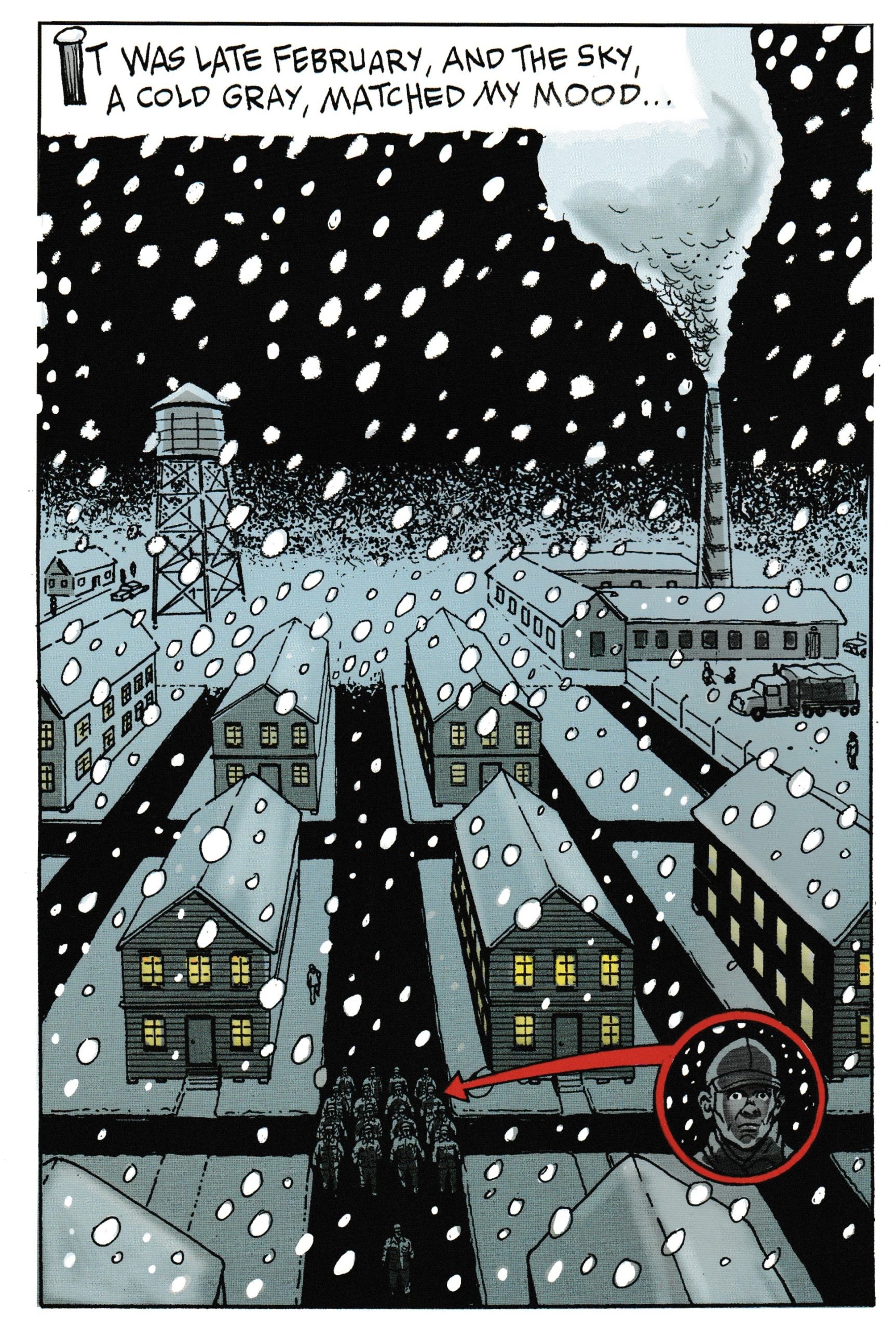
Drafted, Parker's memoir recounting his time in the Army, belongs alongside American Splendor, as representing the best in the genre. The writing is economical, witty, and — for anyone who has found themselves in an institutional setting where they did not understand what was expected of them -- entirely relatable. His art is clear and uncluttered in a classic newspaper-strip style, which makes it easy to overlook the skill and grace of the composition. Together these elements grant a lighthearted, semi-humorous gleam to stories that might otherwise be unbearably grim.
Parker never saw combat, but war remains in the background of his story as an omnipresent threat. The Vietnam War was then ongoing, and a nuclear war seemed to be, if not immanent, then at least entirely possible. Though he was fully committed to making it through his military stint in one piece, Parker does not appear here as a rebellious, quasi-heroic character like John Yossarian or Hawkeye Pierce. He is on the whole a passive figure, pushed around by bureaucratic forces much bigger, but also more petty, than himself. On those few occasions when he takes the initiative, he almost inevitably does the wrong thing, leaving himself in more dangerous, less comfortable, increasingly uncertain circumstances. Among the most pronounced of these blunders was signing up for Officer Candidate School on the extremely mistaken assumption that a lieutenant would have a better chance of survival than a private. "It's actually quite the opposite. Forward observers have one of the highest casualty rates among all our troops in the field."
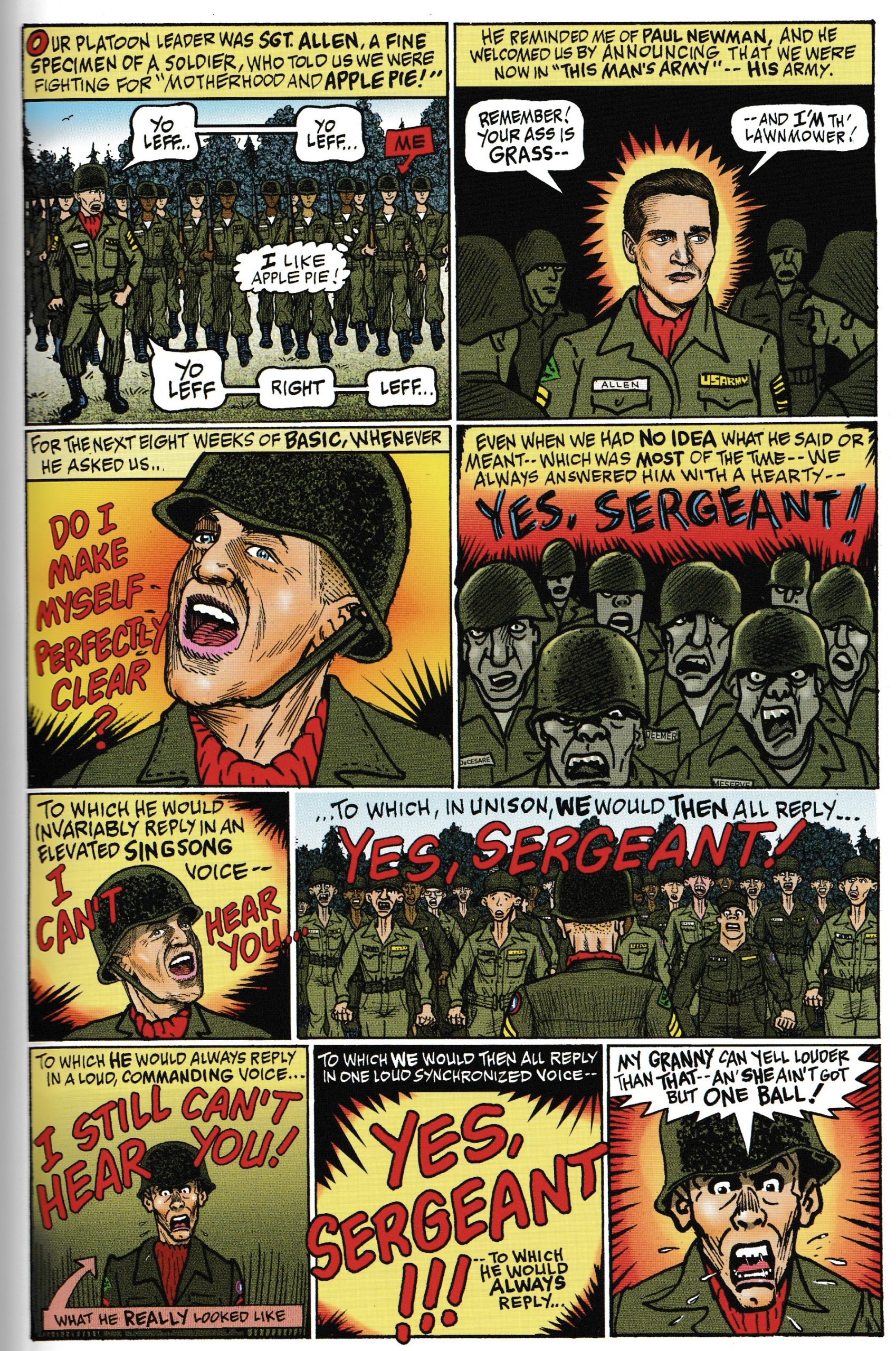
Parker doesn't ruminate on the political or moral questions raised by the draft, military discipline, Vietnam, the arms race, or the Cold War more generally. Yet his memoir is not merely anti-war; it is anti-military. The cruelty and tyranny of army life is illustrated in one anecdote after another, but the thing that comes across most clearly is the sheer pointlessness of it. What is gained by forcing new recruits to walk in the gutter rather than using the sidewalk? How is the nation's security improved by making mealtimes resemble a bizarre game of "Simon says"? Why can't sergeants learn to speak without shouting? Hierarchy, it seems, exists for its own sake, and petty tyrannies can only exercise petty powers in petty ways — but sometimes, however petty, that sort of bullying could get you killed.
Though recounted with a light, almost jovial tone, Drafted hits hard and leaves a mark. You will never view a Veteran's Day parade in quite the same way.